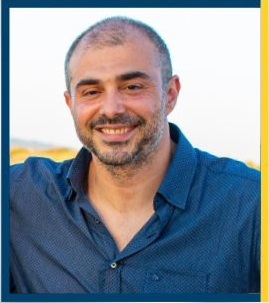
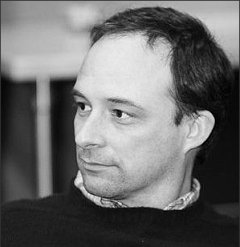
Nikos Giatrakos is an Assistant Professor at the School of Electronic & Computer Engineering, Technical University of Crete, and a core member of the Software Technology and Network Applications Lab (SoftNet) . His work bridges Big Data systems, IoT, and advanced analytics, with a focus on real-time processing and scalable architectures. Previously, he served as a postdoctoral researcher at the same laboratory. Education PhD in Computer Science, University of Piraeus (2012) Postgraduate Diploma in Information Systems, Athens University of Economics and Business (2008) BSc in Computer Science, University of Piraeus (2006) Research Focus : Nikos specializes in software architectures for Big Data streaming, including Distributed Big Data Processing , Federated Machine Learning , Cloud-to-Edge Data Management , and Approximate Query Processing . His work has also advanced Complex Event Processing and Outlier Detection in decentralized environments. Scientific Contributions : His research has led to the DAG* workflow optimizer for IoT, the SuBiTO framework for real-time neural learning, and the INFORE approach for cross-platform analytics. He received the Best System Demonstration Award at ACM CIKM 2020 for INforE. Academic Leadership : Nikos teaches Object-Oriented Programming, Data Science, and Distributed Systems. He has supervised numerous European and national grants as Principal Investigator and served on program committees for top-tier conferences like SIGMOD, VLDB, and DEBS.
Manolis G.H. Katevenis is a Professor at the Department of Computer Science, University of Crete, and the founder and Head of the Computer Architecture and VLSI Systems (CARV) Laboratory at the Institute of Computer Science (ICS), Foundation for Research and Technology – Hellas (FORTH) in Heraklion, Crete, Greece. He has held academic positions since 1986 and played a pivotal role in establishing the Computer Science Department at the University of Crete. His research spans computer architecture, interconnection networks, VLSI systems, and high-performance computing, with a strong focus on scalable, low-power, manycore systems and RISC-V. He has led numerous European R&D initiatives, including serving as Coordinator of the ExaNeSt project. PhD in Computer Science, University of California, Berkeley (1983) MSc in Electrical Engineering and Computer Science, University of California, Berkeley (1980) Diploma of Electrical Engineering, National Technical University of Athens (1978) Manolis Katevenis's research focuses on advancing scalable system architectures for high-performance and big data computing. His work in computer architecture includes RISC-V, exascale computing, and manycore systems. He has made foundational contributions to interprocessor communication, particularly through remote-write, remote-DMA, and remote-enqueue mechanisms, and has pioneered innovations in interconnection networks and low-latency network interfaces. His research integrates hardware and software co-design to optimize performance, energy efficiency, and scalability in large-scale computing systems. The recent publications highlight a strong trend in exascale computing, interconnection networks, and FPGA-based prototyping of manycore systems. His work emphasizes scalable, low-power architectures, with recurring themes in congestion management, fair scheduling, crossbar design, and hardware-software integration for HPC. The articles span high-impact journals such as IEEE/ACM Transactions on Networking, IEEE Micro, and Computer Networks, reflecting sustained contributions to computer architecture and networking. ACM Doctoral Dissertation Award (1984) David J. Sakrison Memorial Prize (1983) IBM PhD Fellowship (1981–1983) Greek State Fellowship (1973–1978) Stelios Pichoridis Award for Outstanding University Teaching (2015) Member of Academia Europaea (elected 2012) Award by the Secretary General of the Region of Crete (2003) IEEE Milestone recognition for the RISC Project (2015) Manolis Katevenis has supervised over 50 graduate theses and mentored many prominent Greek computer architects, including recipients of the ACM Maurice Wilkes Award. He has served as Principal Investigator or co-PI in over 30 R&D projects with a total budget exceeding 18 million euros, including major European initiatives such as ExaNeSt (which he coordinated), EuroEXA, EcoScale, SARC, ENCORE, and multiple HiPEAC Network of Excellence projects. His leadership extends to project coordination, architectural design, FPGA prototyping, and systems software development. Katevenis founded and leads the CARV Laboratory at FORTH-ICS, a major research team with 80–100 members focused on computer architecture and VLSI systems. The lab has spun off the Distributed Computing Systems (DCS) Laboratory and is central to European exascale computing efforts, including participation in the European Processor Initiative. CARV has developed large-scale prototypes such as the 768-core ExaNeSt system and the Formic FPGA platform for manycore research.
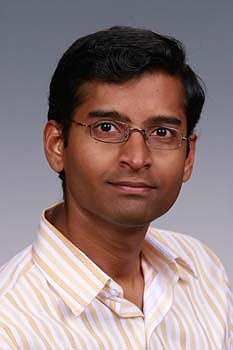
Sriram Krishnamoorthy is a Research Professor at Washington State University's School of Electrical Engineering & Computer Science and a research scientist at Pacific Northwest National Laboratory (PNNL), where he serves as the System Software and Applications Team Leader in PNNL's High Performance Computing group. Dr. Krishnamoorthy earned his B.E. from the College of Engineering, Guindy in Chennai, India, and his M.S. and Ph.D. degrees from The Ohio State University. He is a senior member of the Institute of Electrical and Electronics Engineers. His research focuses on parallel programming models, fault tolerance, and compile-time/runtime optimizations for high-performance computing. He has made significant contributions in areas including: Fault tolerance techniques that minimize rollback during failures Dynamic load balancing for irregular parallel applications Compiler and runtime optimizations for HPC applications GPU programming and heterogeneous computing Quantum chemistry simulations and quantum computing Dr. Krishnamoorthy's publications span computational science, high-performance computing, and quantum chemistry. His recent work shows strong trends toward quantum computing applications, fault tolerance in large-scale systems, and optimization of computational chemistry methods. He has developed techniques for density matrix quantum circuit simulation, floating-point error analysis, and scalable execution of coupled-cluster models. His scientific achievements have been recognized with several prestigious awards: Best Paper Award at International Conference on High Performance Computing (HiPC'03) Best Paper Award at International Parallel and Distributed Processing Symposium (IPDPS'04) U.S. Department of Energy Early Career award (2013) PNNL's Ronald L. Brodzinski Award for Early Career Exceptional Achievement (2013) The Ohio State University's Outstanding Researcher award (2008) Dr. Krishnamoorthy has advised numerous graduate students and collaborated extensively with researchers across computational science domains. His work on the NWChem project demonstrates significant grant funding and large-scale collaborative research efforts in computational chemistry. He leads research efforts in PNNL's High Performance Computing group, focusing on system software and applications development for next-generation supercomputing platforms.
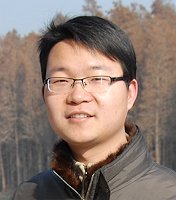
Dr. Zhenman Fang is an Associate Professor in the School of Engineering Science (Computer Engineering Option) and Associate Member in the School of Computing Science at Simon Fraser University, Canada. He founded and directs the HiAccel Lab, focusing on accelerator-rich architectures. His PhD (2014) is from Fudan University, China, with 15 months spent at the University of Minnesota. Prior to SFU, he was a Staff Software Engineer at Xilinx (2017-2019) and a postdoc at UCLA (2014-2017). His research spans: Hardware acceleration for ML, big data, genomics, and HPC FPGA-based customizable computing and near-data processing Compiler/runtime systems for heterogeneous platforms Performance/reliability optimization of accelerator-rich systems His recent publications (2024-2025) focus on FPGA acceleration for machine learning (e.g., on-device training, quantization), computational chemistry, image/video compression, database systems, and reconfigurable computing, demonstrating cross-domain applications of specialized hardware. Awards & Honors: Best Paper Awards: FPL 2024, MEMSYS 2017, TCAD 2019 Best Paper Nominations: ICCAD 2025, FCCM 2025, HPCA 2017, ISPASS 2018 SFU Research Excellence Horizon Award (2025) NSERC Alliance, CFI JELF, and Xilinx University Awards He advises 20+ PhD/Master's students in HiAccel Lab, focusing on accelerator design. Major grants include NSERC Alliance (2020) and CFI JELF (2019). The lab operates a 10-node cluster with FPGA/GPU infrastructure.
Dr. George A. Gravvanis is a Professor of Applied Mathematics and Numerical Computations at the Department of Physics and Applied Mathematics, Democritus University of Thrace. He also serves as Coordinator and SEP Member for Thematic Units at the Hellenic Open University. B.Sc. (1982) in Science (Joint Honours), University of Salford B.A. (1986), Mathematics, National and Kapodistrian University of Athens M.Sc. (1984), Numerical Analysis, Brunel University PhD (1992), Computer Science, Athens University of Economics and Business His research focuses on computational and numerical methods, including Mathematical Modeling , Parallel Algorithmic Design , Numerical Algorithms , Sparse Matrix Techniques , and PDE Solvers . He integrates these into Mathematical Software and Computer Science Mathematics . Recent article trends highlight his work in Sparse Regression for data imputation, Hybrid Multi-Projection Methods for distributed systems, and Unified Transform Techniques for PDEs. Subfields span High-dimensional Data , GPU Clusters , and Self-Organizing Clouds . He has taught undergraduate courses in Mathematical Software , Applied Numerical Analysis , and Scientific Calculations . He has coordinated research projects such as the CloudLightning initiative under Horizon 2020. His editorial contributions include roles on international journal boards and special edition editing. Dr. Gravvanis has reviewed for major academic organizations and journals, including ACM Computing Reviews and Mathematical Reviews (AMS) . His career spans academic roles and technical positions in national and EU social security informatics.
Dionysios Pneumatikatos is a Professor at the School of Electrical and Computer Engineering of the National Technical University of Athens (NTUA) since September 2019. Previously, he served as a Professor and Chair of the Department of Electronic and Computing Engineering at the Technical University of Crete (2000–2019) and is an Associate Researcher at the Foundation for Research and Technology (FORTH) since 1997. His primary affiliations include the Computing Systems Laboratory (CSLab) at NTUA and the Computer Architecture and VLSI Systems (CARV) Laboratory at FORTH. Education: B.Sc. in Computer Science, University of Crete (1989) M.Sc. and Ph.D. in Computer Science, University of Wisconsin–Madison (1991, 1995) Research Interests: Computer Architecture Reconfigurable Computing Hardware Acceleration (e.g., FPGA, RISC-V) Energy-Efficient Systems Reliable System Design Application-Specific Architectures His work focuses on heterogeneous parallel systems , bioinformatics accelerators , and virtualization frameworks for reconfigurable platforms . Recent Projects & Contributions: Coordinator of the FASTER (FP7) project Principal Investigator in EDRA (H2020), EXTRA , and dReDBox Key roles in AXIOM , DeSyRe , and VPLANET These projects explore FPGA-based HPC systems , RISC-V ecosystems , and disaggregated data center architectures . Teaching & Mentorship: Teaches courses on Computer Architecture , Parallel Processing , and Logic Design at NTUA and TU Crete Supervised multiple national/EU projects, fostering interdisciplinary research in embedded and high-performance systems Labs & Networks: Active member of the HiPEAC European Network Program Committee roles at ISCA , FPL , and DATE Led the 21st International Conference on Field-Programmable Logic and Applications (FPL)
Antony Chazapis is a postdoctoral researcher at the Computer Architecture and VLSI Systems Lab (CARV), Institute of Computer Science, Foundation for Research and Technology - Hellas (FORTH-ICS), and a visiting instructor at the Computer Science Department, University of Crete. He holds a PhD from the National Technical University of Athens (2009) and has extensive experience in both industry and academia, focusing on distributed systems, cloud computing, and high-performance computing (HPC). His research interests span Cloud-Native Architectures , Kubernetes , Containerization , Microservices , DevOps , MLOps , and AI/ML acceleration . He actively works on integrating cloud technologies with HPC, aiming to build next-generation European supercomputing and cloud infrastructures. The most recent publications highlight a strong trend in Kubernetes-HPC convergence , cloud-native workflows , and containerized HPC environments . His work explores orchestration, isolation, performance optimization, and runtime frameworks for heterogeneous accelerators, indicating deep engagement in modern distributed system design. He teaches the postgraduate course CS-548: Cloud-native Software Architectures , covering containerization, microservices, serverless computing, and advanced Kubernetes internals. Students engage in hands-on exercises and projects related to scaling, CI/CD, and cloud service integration. Antony Chazapis contributes to European research initiatives focused on unifying cloud and HPC technologies. He is also a creator and contributor to various open-source projects, demonstrating strong community engagement and practical software development skills.
Yannis Kotidis is a Professor at the Department of Informatics of the Athens University of Economics and Business (AUEB). He holds a Diploma in Electrical Engineering and Computer Science from the National Technical University of Athens (1995), and an M.Sc. (1997) and Ph.D. (2000) in Computer Science from the University of Maryland. Prior to joining AUEB, he worked as a Senior Technical Specialist at AT&T Labs-Research (1995–2006). Research Interests: Data Management, Sensor Networks, Complex Event Processing, Blockchain Technology, Time Series Analysis, and Distributed Systems. Projects: Led initiatives like DBSENSE (sensor network data management), RECOST (real-time stream processing), and INFORE (cross-platform analytics). Collaborated on Smart-Views (blockchain-based OLAP systems) and EasyFlinkCEP (streaming analytics). Recent publications focus on HPC resource allocation (RATS), time-series compression (Chimp/Sim-Piece), and decentralized data management using blockchain. His work emphasizes scalable solutions for big data challenges in distributed and sensor environments. Collaborations include teams at Siemens and Statoil, and academic partnerships addressing semantic data integration. He contributes to open-source tools like FlinkCEP, enhancing accessibility of big data analytics.
Nikos Giatrakos is an Assistant Professor at the School of Electrical and Computer Engineering (ECE) of the Technical University of Crete. His primary research focuses on Big Data Management, Real-Time Analytics, and distributed systems. He holds a PhD in Computer Science from the University of Piraeus (2012), an MSc from Athens University of Economics and Business (2007), and a Diploma in Computer Science from the University of Piraeus (2006). His research interests include Big streaming Data & Real-Time Analytics , Distributed/Decentralized Big Data Processing , Federated Machine Learning , Edge-to-Cloud Data Management , and Complex Event Processing . He has contributed to EU projects as a key investigator and received the Best Demo Award in ACM CIKM 2020 for innovative work in streaming analytics. Notable research trends in his articles emphasize real-time resource optimization (e.g., tumor simulations over HPC), adaptive event forecasting , and distributed systems for large-scale data processing. His work bridges theoretical algorithms with practical implementations, such as the SuBiTO framework for neural learning and the FERARI system for multi-cloud event processing. Awards : Best Demo Award (ACM CIKM 2020) Key Projects : EU-funded initiatives on extreme-scale analytics and federated learning Grants : Contributions to multi-site and cross-platform analytics research He leads efforts in extreme-scale analytics-as-a-service (e.g., the INFORE approach) and has developed tools like SheerMP for scalable streaming services. His work often addresses challenges in edge computing , IoT workflows , and geospatial event detection over maritime or movement data.
Nikolaos Lembesis is a tenured Assistant Professor in the Department of Chemistry at the University of Ioannina, specializing in Theoretical Physical Chemistry and Computational Chemistry. His research develops multi-scale computational simulation methods to understand structure-property relationships of matter for applications in energy, environment, and quality of life improvement. His educational background includes: PhD in Chemical Engineering, National Technical University of Athens (2013) BSc in Chemical Engineering, Technical University of Munich (2007) BSc and MSc in Chemical Engineering, National Technical University of Athens (2007) Dr. Lembesis's research integrates molecular dynamics, ab initio simulations, and stochastic methods to model materials at atomic-to-macroscopic scales. His group investigates perovskite solar cell interfaces, droplet absorption phenomena, and defect engineering using advanced computational techniques including classical/ab initio molecular dynamics and high-performance computing. Analysis of his 15 most recent publications (2023-2025) reveals dominant focus on perovskite photovoltaics, with recurring themes of interface engineering, strain manipulation, and defect passivation to enhance efficiency and stability. Key subfields include crystal orientation control, wide-bandgap perovskite optimization, and novel monolayer interface designs. His group offers undergraduate and master's thesis opportunities in Computational Chemistry, providing training in molecular simulation techniques, Unix/Linux systems, HPC resources, and software development for materials modeling. The research team utilizes multi-scale simulation approaches to study water-perovskite interactions, organic monolayer protection mechanisms, and thermomechanical properties of advanced materials, with strong emphasis on bridging computational predictions with experimental validation.
Bradford L. Chamberlain is a Distinguished Technologist at Hewlett Packard Enterprise and an Affiliate Professor in the Paul G. Allen School of Computer Science and Engineering at the University of Washington. With over two decades of experience in high-performance computing, he has made significant contributions to parallel programming languages, particularly as the technical lead of the Chapel programming language project since 2006. His educational background includes: Ph.D. in Computer Science & Engineering from the University of Washington (2001) M.S. in Computer Science & Engineering from the University of Washington (1995) B.S. in Computer Science from Stanford University (1992) Chamberlain's research focuses on improving programmer productivity for high-performance computing through innovative language design, compiler techniques, and runtime systems. His work centers around the Chapel programming language, which aims to provide a multiresolution programming model that allows developers to express parallelism at varying levels of abstraction while maintaining performance across diverse architectures from laptops to supercomputers. His research spans parallel language design, compiler optimization, data distribution strategies, locality management, and performance portability. Chapel builds on his earlier work with the ZPL language, where he developed region-based approaches for sparse parallel computing. His publication record over the past fifteen years demonstrates a consistent focus on practical approaches to parallel programming, with recent work emphasizing data locality, heterogeneous architectures, and performance portability. His articles show an evolution from foundational language design concepts to increasingly sophisticated implementations addressing real-world HPC challenges, particularly in the areas of domain mapping, iterator abstractions, and memory management for large-scale systems. As a Distinguished Technologist at HPE, Chamberlain has played a key role in growing the Chapel project from a modest effort to one involving nearly 20 full-time developers. His leadership has positioned Chapel as one of the most promising languages for addressing the challenge of productive parallel programming at scale. He has secured funding, established collaborations with academia and industry, and performed extensive outreach through talks, tutorials, and research visits. At the University of Washington, Chamberlain serves as a liaison between academia and industry, participating in student committees, teaching graduate courses like Parallel Computation, and fostering communication between the department and HPE/Cray. His teaching experience spans from undergraduate data structures to graduate seminars on parallel programming environments. He has also volunteered as a tutor for underrepresented students in computer science.
Tobias Grosser is an Associate Professor in the Department of Computer Science and Technology at the University of Cambridge. His research focuses on compiler technology, programming language design, and performance programming, with applications spanning hardware design, climate science, and quantum computing. He leads a research group developing innovative compiler frameworks and tools that bridge theoretical foundations with practical applications. Dr. Grosser completed his undergraduate studies in Computer Science at the University of Passau in Germany and pursued his PhD at École Normale Supérieure Paris as a Google PhD Fellow. Prior to joining Cambridge, he served as a Reader at the University of Edinburgh and held an Ambizione Fellowship at ETH Zurich. His research program centers on rethinking performance programming by re-connecting developers and compilers. He aims to make compilation more modular, predictable, automatic, and trustworthy while bringing open-source compiler innovation to increasingly diverse targets from GPUs to FPGAs and custom hardware. His work spans multiple domains including polyhedral compilation, constraint solving, quantum computing, and hardware design automation. Dr. Grosser is particularly interested in breaking down barriers between compilers and programmers by enabling their interaction through the programming language environment. His recent publications demonstrate a strong focus on compiler infrastructure development, particularly around the MLIR framework. He has pioneered work on Presburger arithmetic optimization with the FPL library, developed new intermediate representations for hardware description and quantum computing, and created tools for compiler education and prototyping like xDSL. His research shows a consistent theme of creating practical, high-performance compiler technologies that address real-world challenges across multiple domains. HiPEAC Technology Transfer Award 2021 for "Fast linear programming through transprecision computing on small and sparse data" OOPSLA 2021 Distinguished Paper Award for "FPL: Fast Presburger arithmetic through transprecision" Dr. Grosser actively mentors PhD students and postdoctoral researchers, currently supervising a team of over a dozen researchers working on various aspects of compiler technology. His group collaborates with industry partners including ARM and Xilinx, and maintains strong ties with the LLVM and MLIR open-source communities. He has secured funding for multiple research projects including work on verified compilation with Lean-MLIR, quantum compiler development, and hardware design automation. His research group operates at the intersection of multiple projects including Open-Source Electronic Design Automation, Seamless design of Smart Edge Processors, Lean-MLIR for verified compilation, FPL for fast Presburger arithmetic, and compilation frameworks for quantum computers. They maintain strong community engagement through regular Compiler Social events in Cambridge and active participation in LLVM developer meetings.
Professor Dionisios Pnevmatikatos holds the position of Professor at the School of Electrical and Computer Engineering, National Technical University of Athens (NTUA), where he leads research in Computer Architecture and Reconfigurable Computing. He previously served as a Professor at the Technical University of Crete (TUC) from 2000 to 2019, directing the Microprocessor and Hardware Laboratory (MHL) and chairing the department. His academic journey includes a B.Sc. from the University of Crete (1989), M.Sc. and Ph.D. from the University of Wisconsin-Madison (1991 and 1995). Research Interests: Focuses on Computer Architecture, Reconfigurable Computing, Application Acceleration, Custom Architectures, and Hardware Acceleration of Bioinformatics Algorithms. His work spans FPGA-based systems, parallel computing, and energy-efficient designs. Key Projects: Coordinator of FASTER (EU FP7), Principal Investigator in DeSyRe, AXIOM, dRedBox, and EDRAH2020 projects. Active in EU initiatives like H2020 OPTIMA and Vitamin-V for RISC-V ecosystems. Leadership roles in conferences include SAMOS 2018 and FPL 2011 program chairs. Teaching: Courses include Computer Architecture, Digital Systems Design, and Parallel Processing Systems at NTUA. Former roles include teaching at University of Crete and TUC. Labs: Affiliated with Computing Systems Laboratory (CSLab) at NTUA and FORTH-ICS since 1997. Involved in prototyping manycore architectures and network processors.
Dr. Fabien Chaix is a Research Fellow at the Institute of Computer Science (ICS) within the Foundation for Research and Technology - Hellas (FORTH), actively contributing to the CARV research group. His work centers on advancing high-performance computing systems with a focus on resilience engineering. Education background: Engineer Degree in Electronics and Informatics of Systems, INPG-ESISAR Research Master in Micro- and Nano- Electronics, Université Joseph Fourrier (2008) Ph.D. in Microelectronics, Grenoble Universités (2013) His research specializes in fault tolerance mechanisms for exascale supercomputers and large-scale system simulation. He plays a key engineering role in developing the EXANeSt and EuroEXA prototypes, European initiatives targeting energy-efficient exascale computing infrastructure. His microelectronics expertise directly informs system-level resilience solutions for next-generation HPC environments. Within FORTH-ICS, he operates through the CARV group which focuses on computer architecture innovation and virtualization technologies for high-performance systems.
Angelos Bilas is a Professor in the Department of Computer Science at the University of Crete and a collaborating researcher at FORTH-ICS. He holds a B.Eng. from the University of Patras (1993), and M.A. and Ph.D. from Princeton University (1995, 1998). His research focuses on computer systems, storage systems, and computer architecture, with recent emphasis on optimizing memory management and storage efficiency. Bilas has held roles such as Chair of the Department of Computer Science (2016–2020) and coordinated the FP7 EU project IOLanes (2010–2013). He serves on editorial boards, including ACM Transactions on Storage since 2016. His work has been recognized with awards like the Marie Curie Excellent Teams Award (2005–2009) and patents in storage and networking. Current affiliations: University of Crete (Professor), FORTH-ICS (Researcher) Educations: Ph.D. (Princeton, 1998), M.A. (Princeton, 1995), B.Eng. (Patras, 1993) His research interests span storage systems, parallel architectures, and runtime systems. Recent work includes TeraHeap (ASPLOS'23) for big data frameworks and Tebis (EuroSys'22) for LSM key-value stores. His publications emphasize optimization in memory-mapped I/O, storage efficiency, and heterogeneous acceleration. Awards include the Marie Curie Excellent Teams Award and four patents. He has supervised 35+ master's and 8+ Ph.D. students, contributing to over 45 EU/nationally funded projects. Current initiatives include the EVOLVE H2020 project (2019–2021) for HPC and big data integration. Labs/Teams: Active in FORTH-ICS and collaborations with industry on storage and cloud-HPC convergence.