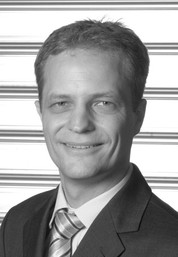
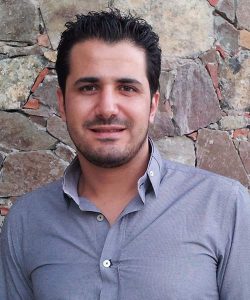
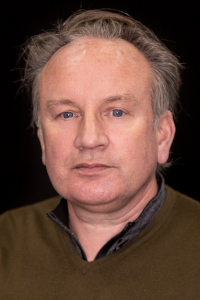
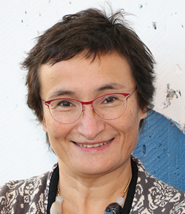
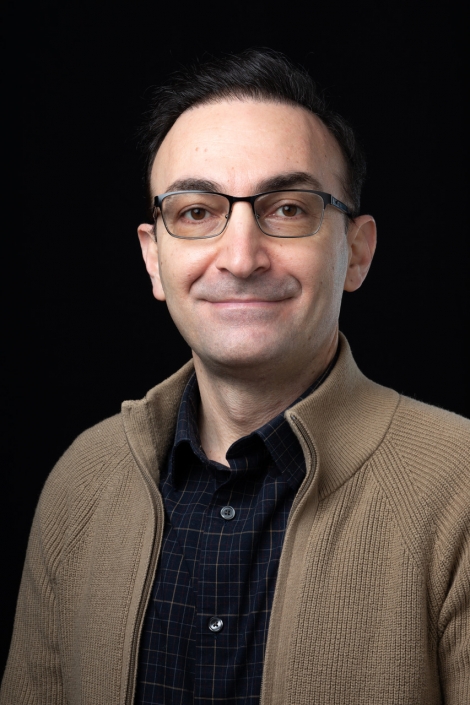
Xuesong Cai is an Associate Professor (Docent) in the Department of Electrical and Information Technology at Lund University, Sweden. He serves as an Associate Senior Lecturer and holds roles in ELLIIT and the NEXTG2COM Competence Centre. His research focuses on radio propagation, millimeter-wave (mmWave), and terahertz (THz) channel modeling for 5G and beyond wireless systems. He has published over 70 peer-reviewed papers and leads projects like 'Breaking the Barriers of Terahertz Communications.' Education: B.S. and Ph.D. (Hons.) from Tongji University (2013, 2018), with internships at Huawei and postdocs at Aalborg University, Nokia Bell Labs, and Lund University. Recognized with awards including the EU Marie Skłodowska-Curie Fellowship and Swedish Research Council grants. Key research interests include high-resolution parameter estimation, channel emulation, and radio-based localization. He is an Associate Editor for IEEE journals and a Senior IEEE Member. Projects span distributed MIMO, channel sounding technologies, and 6G initiatives. Supervised research students include Xu Y. and Al-Ameri A. His work contributes to UN SDGs related to innovation and infrastructure. Current grants include funding from the Crafoord Foundation and Swedish Research Council.
Dr. Muhammad Rahman is an Associate Professor at Northumbria University's Mechanical and Construction Engineering Department. He holds a PhD in Civil Engineering from Trinity College Dublin (2007) and has extensive research experience in sustainable construction materials, composite materials, and computational structural mechanics. Previously, he served as Head of Department and Head of Materials & Structures Research Cluster at Curtin University, Malaysia. His research focuses on energy, retrofitting buildings, water treatment, and slope stabilization. He has secured over £160k in grants, including projects from Innovate UK and Northumbrian Water. Dr. Rahman has supervised 7 PhD and 3 MPhil students, with two current PhD candidates. He is a Fellow of Engineers Australia, the Institution of Civil Engineers (UK), and the Higher Education Academy. He serves on the editorial board of Nature Scientific Reports and has organized international conferences. Education: PhD in Civil Engineering, Trinity College Dublin (2007) Awards: IMM Green Materials Award (Institute of Materials Malaysia) Grants: Includes projects on steel hybrid core walls, sewage sludge lightweight aggregates, and cold-formed steel beam performance. His publications span computational modeling, composite material development, and sustainable construction practices. He actively reviews grants and theses, contributing to both academic and industrial advancements.
Huaming Chen is a Senior Lecturer at the School of Electrical and Computer Engineering, The University of Sydney (equivalent to Associate Professor in the US system). He specializes in trustworthy AI, software security, and computational biology. His research focuses on integrating AI techniques into software engineering and scientific domains to enhance system reliability and ethical compliance. Currently, he advises PhD and master's students on projects involving AI in intelligent building systems, blockchain-driven governance frameworks, and open-source AI security. He holds roles as Area Chair for ACM MM, PC member for venues like ACM CCS and IJCAI, and Guest Editor for Computers & Security . His service extends to IEEE/ACM memberships and discipline expertise in Software Engineering and Electrical & Computer Systems. Awards include the 2020 IEEE CIS Student Grant and 2017 travel fellowships for bioinformatics and services computing conferences. Research interests span adversarial machine learning, AI ethics, computational biology applications, and secure AI system design. Key contributions include work on federated learning security, adversarial attacks on vision transformers, and privacy-aware STI/HIV risk prediction models. He actively promotes responsible AI through workshops and interdisciplinary collaborations.
Dr. Muhammad Shakil Ahmad is a Senior Lecturer in Human Resources at the TUIBS Leadership, Management & Human Resources department of Teesside University. With over 15 years of academic experience, he holds a PhD in Management from Universiti Teknologi Malaysia. Prior to his current role, he served as a tenured associate professor at COMSATS University Islamabad, Sohar University, and Kyung Hee University. He also led the Office of Research, Innovation, and Commercialization (ORIC) at COMSATS University Islamabad from 2013 to 2021. His research focuses on Green HRM, sustainability, ethical leadership, heritage tourism, and knowledge management. He has published in top-tier journals such as Personnel Review and Journal of Hospitality and Tourism Management , and presented at global conferences like ANZIBA and the International Business Conference in New Jersey. Dr. Ahmad has received several awards, including the 2015 Young Scholars Workshop Award and the Best Researcher Award at COMSATS University Islamabad (2013–2021). His work emphasizes innovative leadership, post-pandemic workplace recovery, and sustainable practices in hospitality and manufacturing sectors. He holds master’s and PhD scholarships from COMSATS University and was an International Scholar at Kyung Hee University (2019–2020). His research explores topics like AI-driven leadership, green computing adoption barriers, and workplace dignity’s impact on knowledge sharing.
Andrii Zakovorotnyi serves as Senior Research Associate at the Institute of Building Technology and Energy within the School of Engineering and Architecture at Lucerne University of Applied Sciences and Arts (HSLU). His research focuses on advanced building energy systems and thermal simulations. He holds a Bachelor's and Master's degree in Thermal Physics from Kiev Polytechnic Institute (2013, 2015), following which he joined HSLU as an intern before becoming a research assistant and later research fellow. His educational background directly informs his current research trajectory in energy-efficient building technologies. His research interests span Building Energy Simulation , Thermal Engineering , and Renewable Energy Systems , with particular expertise in CFD modeling of building environments and energy monitoring systems. Current projects address critical challenges like climate-resilient urban design through AI-based Mixed Reality (KlimaCoLab), seasonal thermal energy storage (ITC Hochleistung-Wärmedämmung), and optimization of photovoltaic-integrated energy storage systems. Analysis of his 15 most recent publications reveals strong emphasis on practical applications of building energy modeling, with recurring themes in geothermal cooling systems, cloud-based simulation platforms for self-sufficient buildings, and advanced data analytics for energy profiling. His work consistently bridges computational methods with real-world building performance validation. Project leadership includes significant contributions to national initiatives like BFE-Projekt CoolShift+, SCCER FEEB&D work packages, and Minergie 2017 development. His technical approach integrates Monte Carlo uncertainty analysis, clustering algorithms for energy data, and climate change adaptation strategies into building design frameworks. Based at the Center for Integrated Building Technology (Room C312), his laboratory work focuses on experimental validation of thermal building models and development of monitoring protocols for building automation systems. Current work includes the COOL2REGEN project investigating active building cooling with heat pumps and geothermal probes for high regeneration grades.
Teo Wee is an Associate Professor and Associate Director of Research at the School of Energy, Geoscience, Infrastructure and Society, Heriot-Watt University, UK. He also serves as Programme Director for the PhD in Engineering. His expertise lies in civil engineering and sustainable construction materials, focusing on geopolymer composites, ultra-high-performance concrete (UHPC), and fiber-reinforced cementitious systems. His research aligns with UN Sustainable Development Goals, emphasizing sustainable materials and structural innovation. Teo’s research interests include the mechanical behavior of novel composites, interfacial bonding in construction materials, and the application of recycled materials in sustainable binders. He has led studies on ambient-cured geopolymers, alkali-activated binders, and UHPC-reinforced structural members. His work often combines experimental and numerical methods to evaluate material performance under diverse conditions. He has published extensively in journals like Construction and Building Materials and Materials , with over 20 peer-reviewed articles since 2015. Additionally, he serves on the editorial board of Proceedings of Institution of Civil Engineers: Waste and Resource Management , reflecting his commitment to advancing sustainable construction practices.
Prof. Marc Hiller is a Professor of Power Electronic Systems at Karlsruhe Institute of Technology (KIT) within the Electrical Engineering Institute (ETI). He leads the Power Electronic Systems (LES) professorship, focusing on advanced converter topologies, power semiconductor characterization, and energy storage integration. His research spans topics such as high-efficiency traction drives, solid-state transformers, and grid-integrated renewable energy systems. Education & Professional Background Bachelor's and Master's in Electrical Engineering from TU Darmstadt (1993–1998) Doctorate at University of the Federal Armed Forces Munich (1999–2004), focusing on power converters for switched reluctance machines Senior roles at Siemens AG (1999–2015), including traction converter development and industrial converter project leadership Joined KIT as Full Professor in 2015 Research Interests Prof. Hiller’s work emphasizes cutting-edge power electronics applications, including: Wide-bandgap semiconductor modeling (SiC/GaN) High-efficiency energy conversion systems Modular multiport solid-state transformers Hybrid energy storage optimization Dynamic control strategies for electric drives Academic Leadership & Projects Program Director of the Master’s program Energy Engineering and Management at HECTOR School since 2018 Topic Chair for EPE ECCE Europe (since 2017) Deputy Spokesperson for Cluster 4 of the Copernicus Project ENSURE (since 2016) Labs & Teams His research group is based at KIT’s ETI institute across three campuses, collaborating on advanced power electronics hardware prototypes and grid emulation systems.
Dr. Lenos Hadjidemetriou is a Research Lecturer at the KIOS Research and Innovation Center of Excellence, University of Cyprus. He holds a Diploma in Electrical and Computer Engineering from NTUA (2010) and a Ph.D. in Electrical Engineering from the University of Cyprus (2016). His research focuses on renewable energy integration, energy storage systems, power electronics control, and smart grid cyber-security. He leads projects like OneNet, Smart5Grid, and national initiatives such as EMPOWER, collaborating with entities like the Cyprus Transmission System Operator. Research interests include grid resilience, digital twins, and ancillary services. He developed advanced research labs at the University of Cyprus for power systems testing and renewable energy applications. Current projects explore energy storage systems for grid ancillary services and cyber-security defenses against man-in-the-middle attacks. He has published over 75 papers, emphasizing smart grid challenges such as voltage management, harmonic mitigation, and 5G-enabled grid monitoring. His work bridges theoretical advancements with practical implementations, such as demonstrating 5G solutions for real-time grid control and developing thermal models for inverter reliability. Ongoing efforts include pilot projects for battery and flywheel storage systems to enhance grid stability. Grants and collaborations span European (Horizon 2020) and national funding, industry partnerships, and KIOS CoE’s complementary support from Imperial College London. His contributions address both technical and systemic challenges in transitioning to sustainable energy systems.
Dejan Mumovic is Professor of Building Performance Analysis and Director of the UCL Institute for Environmental Design and Engineering at the Bartlett School of Environment, Energy and Resources, University College London. He holds advisory roles including Expert Adviser for Climate Change and Decarbonisation (UK Department for Education) and co-founded key industry groups like CIBSE Education Guild and IBPSA-England. Education: Postgraduate Certificate in Learning and Teaching, UCL (2007) PhD, Glasgow Caledonian University (2004) MSc, Glasgow Caledonian University (2000) MEng, University of Belgrade (1999) Research Focus: Mumovic specializes in integrated building performance analysis, combining monitoring and simulation to address health, energy, and climate resilience. His work spans: building stock modelling, indoor environmental quality impacts on cognition, school decarbonization, and climate adaptation frameworks. Research aligns with UN Sustainable Development Goals (Good Health, Sustainable Cities, Climate Action). Publication Trends: Recent articles emphasize data-driven building stock analysis, climate resilience in schools, health-energy trade-offs in retrofits, and advanced simulation methodologies. Work consistently integrates empirical validation with policy applications. Awards & Honors: Fellow, Chartered Institution of Building Services Engineers (FCIBSE) 3rd Prize for Editorial Services, International Journal of Sustainable Built Environments (2012) Editorial Board: Building Simulation (Springer), Intelligent Buildings International (Taylor & Francis) Advising & Projects: Supervised 17 doctoral researchers. Led/co-led 60 research projects, including UK government collaborations on school decarbonization and EU initiatives on building performance. Key grants focus on net-zero learning environments and health-optimized building design. Leadership: Heads UCL IEDE laboratory. Co-founder of CIBSE School Design Group and IBPSA-England. Leads development of new UCL degree programmes in Sustainable Built Environments.
Mike Kane is a Lecturer in Architecture at the School of Architecture, University of Reading, where he serves as Third Year Studio Tutor and First Year Construction Technology Coordinator. He previously held the position of Senior Lecturer at London South Bank University from 1990 to 2017. Education: BA (Hons) Architecture, South Bank Polytechnic (1984–1986) Dip Arch, South Bank Polytechnic (1988) RIBA Part III Registered Architect Mike Kane's work focuses on architectural design, sustainable housing, and the integration of contemporary interventions in historic environments. His practice bridges design innovation with technical rigor, particularly in residential and urban development projects across the UK and Tobago. His research interests include architectural technology, construction detailing, and sustainability in housing design. His built projects have been widely featured in leading architectural journals such as RIBA Journal, Detail, and Architecture Today, reflecting a strong emphasis on design quality and environmental responsibility. His project themes often explore material innovation, urban regeneration, and the balance between modernity and heritage. Scientific Awards: Finalist, World Sustainability Centre Competition, Netherlands, 2010 Runner-up, Northshore International Architecture Competition, 2009 Finalist, iHub Sustainability Innovation Centre, RIBA Competition Joint winner, Aluminum Imagination Award, 1999 Mike Kane has contributed significantly to architectural education and practice. He has advised students at various levels and has led design studios with a focus on technical and sustainable design. He is a founding director of KMK Architects, London, and has served on the London Borough of Southwark Design Review Panel since 2007, contributing to urban design governance. His professional work encompasses public and private housing, medium-sized residential developments, and projects involving both modern and listed buildings. Labs, Teams, and Practice: As a founding director of KMK Architects, Mike Kane leads a practice engaged in diverse architectural projects with a focus on sustainability and context-sensitive design. His involvement with the Southwark Design Review Panel underscores his role in shaping urban design standards and community-focused development.
Tim Sharpe is a Professor in the Department of Architecture at the University of Strathclyde, Faculty of Engineering, United Kingdom. He is an internationally recognized expert in building performance evaluation, indoor air quality, ventilation, and sustainable housing design. His research directly informs policy and practice in building standards, public health, and climate resilience. He leads numerous research projects funded by Innovate UK, EPSRC, AHRC, Scottish Government, and NERC, and serves on key national and international advisory bodies including SAGE, WHO, RIBA, BSI, and NHBC. Education: PhD in Architecture, University of Strathclyde (1990) B.Arch (Hons), University of Dundee (1985) Bachelor of Architecture, University of Dundee (1983) His research interests focus on the intersection of building science, occupant health, and environmental sustainability. He investigates how building design, ventilation strategies, and retrofit approaches affect indoor air quality, thermal comfort, and occupant wellbeing—particularly in social and low-energy housing. His work spans technical evaluation, policy development, and knowledge transfer to industry and government. Recent research outputs show a strong trend toward sensor-based monitoring of indoor environments, health implications of airtight construction, and smart systems for personalized air quality feedback. His publications and projects emphasize data-driven decision-making, real-world performance validation, and human-centric design. Scientific and Professional Recognition: Chair, Scottish Government Adaptations Advisory Committee (2022) Member, WHO High-Level Expert Group on COVID-19 (2021) Expert Panel Member, UK Cabinet Office Technical Advisory Panel Chair, RIBA Presidents Awards for Research (2021–2022) Member, UK Government SAGE Environmental and Modelling Group (2020) Topic Expert, NICE Public Health Advisory Committee on Indoor Air Quality (2017–present) Visiting Professor, Guangzhou University (2012–present) Tim Sharpe actively supervises PhD students and has been involved in advising on over 70 research and consultancy projects. He has contributed to major initiatives such as the National Core Study PROTECT, the development of the Saltire Housing Awards, and the refinement of UK building regulations. His work is integral to advancing healthier, more sustainable built environments. He is affiliated with multiple research networks and labs focused on building performance, moisture in buildings, and urban climate resilience. These include the UK Centre for Moisture in Buildings (Chair, Ventilation sub-group), the Construction Leadership Council, and the Building Regulations Advisory Committee. His collaborative projects often involve interdisciplinary teams across engineering, public health, and architecture.
Virginia Dignum is Professor of Responsible Artificial Intelligence and Director of the AI Policy Lab at Umeå University's Department of Computing Science. She serves as senior advisor for AI policy to the Wallenberg Foundations and is an active member of the UN High Level Advisory Body on AI. Her institutional affiliations include the Faculty of Technology Policy and Management at Delft University of Technology. Her research centers on the complex interdependencies between people, organizations, and technology. Key interests include: Responsible AI: Moral/ethical issues in autonomous agent teams and regulatory frameworks Social interaction formalization: Developing computational architectures for agent deliberation based on social practices Human-agent teamwork: Investigating negotiation, trust, and collaboration dynamics in socio-technical environments Her work bridges theoretical AI foundations with real-world policy implementation. Analysis of her recent publications reveals strong focus on AI governance frameworks, explainability mechanisms, and fairness operationalization. Key trends include development of context-sensitive ethical assessment tools, regulatory sandbox implementations, and formal models for human-AI coevolution. Her research increasingly addresses planetary-scale AI impacts and children's rights in digital environments. Major recognitions include: Election to Swedish Royal Academy of Engineering Sciences (IVA), 2020 Fellowship in European Artificial Intelligence Association (EURAI), 2018 Veni Fellowship from NWO for agent-based organizational frameworks, 2006 AI Ethics Professional of the Year award, 2022 Dignum actively shapes global AI policy through leadership roles in the UN High Level Advisory Body, Global Partnership on AI (GPAI), and World Economic Forum Council on AI. She chairs major conferences including AAMAS'24 and serves as Ethics Chair for AAAI'24. Her advisory work extends to the European Commission, IEEE Global Initiative, and UNESCO AI Ethics Recommendation implementation. Current initiatives include the Vatican lecture series on AI ethics and regional AI policy development in Västerbotten. She directs Umeå University's AI Policy Lab, focusing on translating ethical principles into actionable governance frameworks. The lab develops tools for regulatory compliance assessment and stakeholder engagement in AI deployment. Recent projects address digital contact tracing governance and AI's impact on democratic processes.
Valentin Wagner is a doctoral researcher at the Institute of Building Structures and Structural Design (ITKE) within the University of Stuttgart . His work focuses on integrative computational design and construction methodologies for advanced fiber-composite structures. Research Focus: Experimental structural design, coreless filament winding, and adaptive robotic fabrication Key Projects: BUGA Fiber Pavilion, ICD/ITKE Research Pavilion 2014-15 Wagner's research combines structural engineering with computational design principles to develop lightweight composite systems through robotic fabrication. His publications analyze the structural behavior and detailing challenges of glass and carbon fiber components using epoxy resin matrices. The BUGA Fiber Pavilion (2019), a modular fiber-polymer composite structure with ETFE membrane cladding, represents a major project where Wagner explored experimental design approaches involving finite element simulations and empirical testing. This work builds on earlier research pavilions that implemented water spider web-inspired geometries and sensor-driven fabrication systems. Wagner's academic work intersects with multiple disciplines including: Coreless filament winding techniques Biomimetic construction systems Digital simulation workflows Adaptive robotic programming Fiber interaction mechanics High-performance composite detailing
Dr. Reza Foroughi is an Associate Professor and Assistant Department Chair in the Department of Sustainable Technology and the Built Environment at Appalachian State University. His work bridges construction engineering, sustainable design, and energy-efficient building systems, with a focus on smart and net-zero energy buildings. Education: Ph.D., Architectural Engineering-Construction, Pennsylvania State University M. Arch. Engineering, University of Guilan B.S., Architectural Engineering, University of Guilan Dr. Foroughi specializes in simulation-based energy optimization, kinetic building envelopes, and climate-responsive architectural design. His research explores optimum geometrical design parameters for windows, energy-efficient commercial buildings, and biomimicry in construction. He promotes integrated building systems and sustainable construction practices through both teaching and scholarly work. His recent publications reflect a strong trend in energy modeling, fenestration optimization, and interactive building systems, particularly in commercial and residential buildings across diverse U.S. climate zones. He frequently employs computational optimization methods to enhance building performance. Scientific Awards: Best Paper Award, 2018 IISE Annual Conference Dr. Foroughi is actively involved in curriculum development and interdisciplinary research, advising honors theses and supervising student projects. He teaches courses such as Construction Estimating, Planning and Scheduling, and Integrated Project Design and Delivery. He is affiliated with professional organizations including ASEE, USGBC (LEED Green Associate), DOE’s Building Science Race to Zero, and the Institute of Industrial and Systems Engineers (IISE), Construction Division. While no specific grants are listed, his research implies engagement with sustainability and building science funding initiatives. His work suggests involvement in building energy modeling and sustainable design research groups, particularly those focused on high-performance buildings and net-zero energy systems, though no formal lab name is specified.
Haotian Liu is a Visiting Assistant Professor in the School of Mechanical Engineering at Purdue University. His research focuses on thermal systems engineering, refrigeration technology, and energy efficiency optimization. He leads studies on advanced HVAC control systems, compressor design, and building energy technologies. Key projects include developing wall-embedded micro heat pumps for radiant heating and optimizing transcritical CO₂ refrigeration systems. His work emphasizes field validation and practical applications in residential and commercial settings. Liu is affiliated with Purdue's West Lafayette campus and can be reached at liu1460@purdue.edu . Recent research highlights include: Electromagnetic-thermal co-optimization of electric machines Experimental evaluation of low-GWP refrigerant blends Framework development for electrified transport refrigeration systems His publications span topics like compressor performance, heat exchanger design, and adhesive joint mechanics in HVAC&R applications. Liu has pioneered novel approaches to energy-efficient building technologies through the design of specialized facilities for next-generation systems evaluation. No scientific awards or formal advisees are listed in his current profile. Ongoing efforts include advancing sustainable refrigeration cycles and improving thermal comfort delivery in residential environments.