Tadeusz Tomczak is a faculty member at the Faculty of Information and Communication Technology , Wrocław University of Science and Technology , within the Department of Computer Engineering . His academic rank is Professor . Research Focus: Fast computational hardware, massively-parallel computing, and residue number systems. Expertise: GPU acceleration, fluid dynamics simulations, sparse geometries, and numerical methods. Recent publications highlight his work on Navier-Stokes solvers , Lattice-Boltzmann methods , and residue number systems , with applications in fluid dynamics, biomedical engineering, and high-performance computing. His research spans hardware acceleration, algorithm optimization, and computational modeling on GPUs.
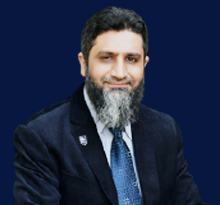
Professor Dr. Osman Hasan is a faculty member at the School of Electrical Engineering & Computer Science (SEECS) , National University of Sciences & Technology (NUST) , Islamabad, where he currently serves as Pro-Rector (Academics). His research primarily lies in formal methods, hardware verification, reliability analysis, and embedded systems, with applications in smart grids, robotics, and cybersecurity. His research interests include: Formal Methods and Theorem Proving Hardware and Software Verification Reliability and Safety Analysis of Critical Systems Smart Grids and Power Systems Approximate Computing and Energy-Efficient Design Robotics and Biomedical Systems His recent publications show a strong trend toward formal verification of hardware and cyber-physical systems, integration of machine learning with formal methods, and applications in power systems and robotics. He frequently employs higher-order logic theorem proving (e.g., HOL, ACL2) and model checking to ensure correctness and reliability. He has been actively involved in numerous international conferences such as FMCAD, FSEN, CICM, and ICTAC, serving on program committees and organizing workshops. His leadership as Pro-Rector highlights his commitment to enhancing academic quality and research excellence at NUST. He has supervised numerous students who have co-authored papers with him, indicating an active research group. His work bridges theoretical formal methods with practical engineering applications, particularly in safety-critical domains.
Милорад Б. Тошић is a Full Professor at the Faculty of Electronic Engineering, University of Niš, specializing in Computer Science. He earned all his academic degrees (BSc 1989, MSc 1992, PhD 1998) from the same institution in Electrical Engineering and Computer Science. His research spans Semantic Web Technologies, Distributed Systems, and E-Learning Systems, with notable contributions in federated testbeds, trust-based peer assessment, and collaborative wiki tagging. His work bridges theoretical computer science with practical applications in education and embedded systems. His publication trends show consistent contributions from 1991 to 2014, with recent focus shifting from hardware design (1990s) to semantic technologies and e-learning systems (2000s-2010s), demonstrating adaptability across evolving technological domains. US Patent Application No. 09/636,552 for Internet-Enabled Embedded Device Technology validated by Motorola, Microchip, Philips, and Delphi As former Science and Technology Advisor to the Serbian Minister (2002-2003), he contributed to national science policy. His current research involves 4 national and 3 international projects totaling 7 impact-factor journal publications. His patented embedded device technology has achieved commercial validation through major global electronics firms.
Uğur ÇİNİ is an Associate Professor in the Department of Electronics Engineering at Uskudar University, where he has served as faculty since 2019. Previously, he worked as a research assistant at Boğaziçi University and Southern Methodist University, and gained industry experience as an R&D engineer at İsbak Inc. and Anka Mikroelektronik Inc. His educational background includes: Undergraduate Degree in Electronics and Communications Engineering from Yıldız Technical University (1999) Master's Degree in Electrical and Electronics Engineering from Boğaziçi University (2003) Doctorate in Electrical and Electronics Engineering from Boğaziçi University (2010) Dr. ÇİNİ's research spans VLSI Design, Digital Arithmetic, Analog IC Design, Circuit Design for Biomedicine, and Embedded Systems. He specializes in CMOS circuit design, biomedical instrumentation, and FPGA-based implementations, with recent projects focusing on energy harvesting converters and high-speed logic circuits for practical applications. His publication record (2017-2023) demonstrates expertise in analog/digital circuit design for biomedical instrumentation, display technologies, and reconfigurable systems. Key trends include low-power optimization, precision amplifier development, and current-mode circuit innovations addressing real-world engineering challenges in medical devices and display drivers. No scientific awards are listed in the available information. He has supervised graduate theses on energy harvesting converters (2024), source-coupled logic (2023), and FPGA implementations (2022). Administratively, he advises 100-150 students, served as Deputy Head of Department (2021-2024), and participates in Quality, Internship, Erasmus, and International Students committees. As laboratory responsible since 2020, he led the 2024 establishment of the Power Systems and Electrical Machines Laboratory, demonstrating hands-on leadership in educational infrastructure development.
Тетяна Сергіївна Дьячук є старшим викладачем кафедри комп'ютерних систем та мереж Факультету комп'ютерних наук і технологій Запорізької національної технічної політехніки, де працює з 2006 року після закінчення університету з відзнакою. Вона є активним членом академічної спільноти, зосереджуючись на сучасних напрямках комп'ютерних наук та технологій. Освіта: Запорізька національна технічна політехніка, 2006 рік, спеціальність "Комп'ютерні системи та мережі", кваліфікація "Магістр комп'ютерних систем та мереж" (з відзнакою) Запорізька національна технічна політехніка, 2006 рік, кваліфікація "Менеджер-економіст" Наукові інтереси Тетяни Сергіївни охоплюють ключові напрями сучасних комп'ютерних технологій, зокрема розподілені та паралельні обчислення, блокчейн-технології, децентралізовані платформи та оптимізацію обчислень. Вона також активно займається дослідженнями в галузі Android-програмування та розробки мобільних додатків. Її наукова робота характеризується практичною спрямованістю, що знаходить відображення в численних публікаціях та конференціях. Аналіз наукових публікацій Тетяни Сергіївни показує чітку еволюцію її наукових інтересів від фундаментальних досліджень розподілених систем та алгоритмів планування ресурсів до сучасних технологій блокчейну, штучного інтелекту та автоматизації процесів програмування. Особливо вражає її здатність поєднувати теоретичні дослідження з практичними застосуваннями в різних галузях, від медичної діагностики до розробки мов високого рівня. Наукові досягнення: Понад 15 наукових публікацій в провідних наукових виданнях Активна участь у міжнародних наукових конференціях Реєстрація в наукометричних базах: Scopus, Web of Science, Google Scholar, ORCID Тетяна Сергіївна активно бере участь у науково-педагогічній діяльності, викладаючи курси, що відповідають сучасним тенденціям в комп'ютерних науках. Вона також займається науковою роботою зі студентами, сприяючи їх інтеграції в наукову спільноту через участь у наукових конференціях та проєктах. Незважаючи на те, що конкретні науково-дослідні гранти не зазначені в доступних джерелах, її публікаційна активність та участь у конференціях свідчать про продуктивну наукову діяльність. Хоча конкретні лабораторії або наукові групи, якими керує Тетяна Сергіївна, не зазначені в доступних джерелах, її наукова робота тісно пов'язана з розвитком сучасних технологій розподілених систем та обчислень, що ймовірно відбувається в рамках кафедри комп'ютерних систем та мереж Запорізької політехніки.
Prof. Dr. Remigijus Paulavičius is a Senior Researcher, Professor, and Group Leader at the Blockchain and Quantum Technologies Group of Vilnius University. He earned his Doctor of Science degree in Computer Science in 2010 from Vilnius University's Institute of Mathematics and Informatics, focusing on global optimization with simplex subdomains under the supervision of Dr. J. Žilinskas. Research Interests : His work bridges global optimization methods with blockchain and quantum computing. Key areas include non-convex bilevel programming, derivative-free optimization algorithms (e.g., DIRECT), and applications in blockchain scalability, consensus protocols, and quantum circuit design. Scientific Awards : Best Paper Award, Journal of Global Optimization (2014) Funding from Lithuanian State Science and Studies Foundation for doctoral students (2007–2009) Member, Young Academy of the Lithuanian Academy of Sciences (since 2019) Projects & Leadership : Leads research on blockchain simulators, quantum machine learning frameworks, and optimization toolboxes (e.g., DGO, DIRECTGO). Involved in international collaborations and conference committees, including AIChE and EUROPT. Publications : Over 70 works on global optimization algorithms, blockchain applications, and quantum computing, with recent focus on generative AI, energy consumption in blockchains, and reproducibility in machine learning.
Dr. Ernestas Filatovas is a Senior Researcher and Chief Researcher in the Project at Vilnius University's Institute of Data Science and Digital Technologies (formerly Institute of Mathematics and Informatics), where he has been affiliated since 2013. He leads the Blockchain and Quantum Technologies Group, focusing on cutting-edge research at the intersection of quantum computing, blockchain, and artificial intelligence. Previously, he served as an Associate Professor and Lecturer at Vilnius Gediminas Technical University's Faculty of Fundamental Sciences from 2013 to 2019. Dr. Filatovas earned his Doctor of Technology in Computer Science Engineering from Vilnius University Institute of Mathematics and Informatics in 2012. His dissertation, supervised by Prof. Dr. Olga Kurasova, focused on the interactive solution of multi-criteria optimization problems. His research spans multiple high-impact domains, with particular expertise in blockchain technologies, quantum computing, artificial intelligence, and machine learning. He has pioneered work in quantum blockchain implementations, reproducibility of AI research through blockchain verification, and quantum machine learning applications. His research bridges theoretical computer science with practical applications in financial markets, healthcare, and distributed systems. His extensive publication record—over 50 scientific papers, with more than 25 in Clarivate Analytics-indexed journals—demonstrates consistent productivity and international collaboration. Recent work shows a clear trajectory toward quantum-enhanced AI systems, blockchain-based research verification frameworks, and quantum algorithms for practical problems. Laureate of the 4th LMA Young Scientists' Conference (2014) INFOBALT scholarship 2nd place winner (2014) Lithuanian State Science and Studies Foundation funding recipient (2009, 2010) Recognized as one of Lithuania's most active doctoral students Master's degree with honors (2006) Dr. Filatovas leads multiple significant research projects, including the 2021-2024 project 'Solving the problems of reproducibility of scientific research in the field of artificial intelligence using blockchain technologies' as team leader, and the 2023-2027 project 'Development and validation of quantum machine learning methods using prepared datasets' as Chief Researcher. He has also contributed to international collaborations such as the Spanish-funded 'High Performance Solutions for Modern Scientific Computing Challenges' (2019-2021). His popular science contributions, including the VU news portal article 'Quantum Computing: Who and Why?', demonstrate his commitment to science communication. As a key member of Vilnius University's Blockchain and Quantum Technologies Group, Dr. Filatovas contributes to Lithuania's growing reputation in quantum computing research and blockchain innovation, working closely with international collaborators across Europe.
Mariusz Węgrzyn is a Lecturer in the Department of Automation and Computer Science at the Faculty of Electrical and Computer Engineering, Cracow University of Technology. His research focuses on algorithm design, embedded systems, and FPGA applications, with recent publications on square root computation, IoT-based fire detection, and test vector optimization for soft processors. University: Cracow University of Technology School: Faculty of Electrical and Computer Engineering Department: Department of Automation and Computer Science Academic Rank: Lecturer Research Trends: Mariusz Węgrzyn’s work spans hardware acceleration, numerical algorithms, and IoT systems. His 2025 publications emphasize FPGA efficiency and floating-point approximation, while 2021 studies explore energy optimization in safety systems and test vector reduction. Contact: Email: mariusz.wegrzyn@pk.edu.pl