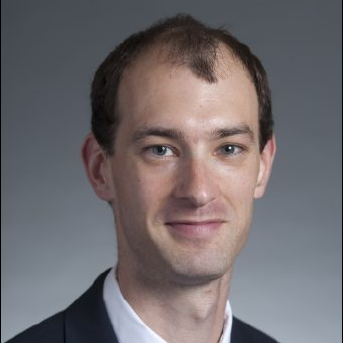
Todd C. Hufnagel is a Professor of Materials Science and Engineering at Johns Hopkins University's Whiting School of Engineering. He serves as Associate Director of the Materials Science in Extreme Environments University Research Alliance (MSEE URA), a consortium addressing threats from chemical, biological, and nuclear weapons through material science research. His expertise includes structural materials, nanomaterials, X-ray scattering, and metals analysis. Dr. Hufnagel earned his BS in Metallurgical Engineering from Michigan Technological University (1989) and his MS and PhD in Materials Science and Engineering from Stanford University (1991 and 1995). He has been at Johns Hopkins since 1996. His research focuses on dynamic material behavior, fracture mechanics, and advanced imaging techniques like X-ray phase contrast imaging. Notably, he co-developed the AXIOM system, a cutting-edge tool for materials analysis, and contributed to the MSEE URA's mission to enhance material resilience in extreme conditions. His awards include the Whiting School of Engineering Teaching, Advising, and Mentoring Award. His work spans experimental and computational studies of metallic glasses, fracture processes, and parameter optimization for microstructural design. He collaborates widely, integrating data science tools like OpenMSIStream to streamline laboratory workflows.
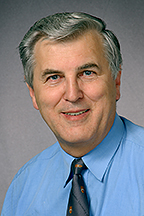
Dr. Andreas Lambertz is a senior researcher and Head of the Silicon-based Solar Module Group at Forschungszentrum Jülich, Germany, where he has been working since 1996. He is affiliated with the Institute of Energy Materials and Devices (IMD), specifically the Photovoltaics department (IMD-3), focusing on silicon heterojunction solar cell technology development and optimization. Dr. Lambertz earned his PhD from Utrecht University and completed his studies at the Aachen University of Applied Science. His extensive career in photovoltaics research spans over 25 years, with significant contributions to silicon thin-film technology. Early in his career, he conducted research at UNSW Sydney Photovoltaics Special Research Centre under a DAAD scholarship in 1996-1997. His research primarily focuses on silicon heterojunction (SHJ) solar cells and modules , with particular expertise in silicon thin-film research and tandem solar cell technology. Dr. Lambertz has made significant contributions to understanding and improving solar cell efficiency through innovations in transparent passivating contacts, nanocrystalline silicon oxide applications, and light management techniques. His work spans fundamental materials science to practical manufacturing applications, addressing critical challenges in photovoltaic technology including light-induced degradation, damp-heat stability, and material cost reduction. His technical expertise includes photovoltaics, materials science, thin film deposition, material characterization, semiconductor device physics, and optoelectronics. An analysis of Dr. Lambertz's recent publications reveals a strong focus on tandem solar cell technology, particularly perovskite-silicon configurations, with significant work on triple-junction solar cells. His research addresses critical challenges including light-induced degradation, damp-heat stability, materials optimization, and manufacturing cost reduction through approaches like 85% indium reduction using aluminum-doped zinc oxide contacts. The interdisciplinary nature of his work combines materials science, semiconductor physics, and engineering approaches to advance photovoltaic technology toward commercial viability. Among his recognitions, Dr. Lambertz received the WPVSEC Poster Award in September 2003. His extensive publication record, with over 180 publications and more than 4,300 citations, demonstrates significant impact in the photovoltaics research community. His research has practical implications for the photovoltaic industry, addressing challenges related to material costs, module stability, and manufacturing processes. Dr. Lambertz collaborates extensively within Forschungszentrum Jülich and with international partners. His laboratory work involves advanced characterization techniques including Raman spectroscopy, FTIR spectroscopy, and secondary ion mass spectrometry to investigate the microstructure of hydrogenated amorphous silicon layers and their interfaces. His research continues to address critical challenges in photovoltaics, including further improving the efficiency of silicon-based solar cells and optimizing manufacturing processes to reduce costs while maintaining high performance.
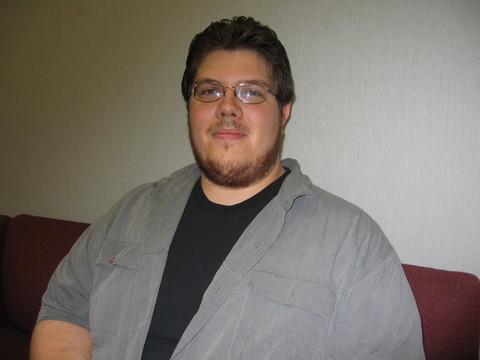
Aleksandra Foltynowicz Matyba is a Professor in the Department of Physics at Umeå University, leading the Optical Frequency Comb Spectroscopy Group. Her research focuses on developing and applying optical frequency comb techniques for precision measurements, molecular spectroscopy, and atmospheric analysis. She holds a PhD from Umeå University (2009) and conducted postdoctoral research at JILA, University of Colorado Boulder (2009–2011). Key research areas include optical frequency comb spectroscopy, high-resolution molecular line list generation, and applications in exoplanet atmosphere studies. She leads the ongoing research project Double-Resonance Spectroscopy of Small Molecules Using an Optical Frequency Comb (2021–2026). Notable achievements include being elected an Optica Fellow (2025) and pioneering sub-Doppler resolution techniques in cavity-enhanced spectroscopy. Publications emphasize advancements in methane spectroscopy, formaldehyde analysis, and novel instrumentation using antiresonant hollow-core fibers. Her work bridges fundamental physics with practical applications in environmental monitoring and space missions.
Pablo López Martín is a researcher at the Higher Polytechnic School of Nebrija University , specializing in Architectural Projects . He earned his PhD from Universidad Politécnica de Madrid with a thesis on modernist architectural experimentation through the works of Breuer, Mies, and Stam. Education: PhD in Architecture (2016), Universidad Politécnica de Madrid His research spans architectural history, urbanism, and thermophotovoltaic technology, reflecting interdisciplinary collaborations. Key trends in his recent work include advancements in III-V semiconductor devices , germanium-based TPV systems , and laser power conversion , alongside historical analyses of modernist architecture. He is affiliated with the At-the-oUTSET Nebrija Research Group on architecture and urbanism, focusing on socio-economic-territorial transformations. His publications include both technical studies and cultural analyses, such as the Bauhaus-Burg Giebichenstein comparison and Chillida's transatlantic modernism. Notable contributions include experimental characterizations of high-efficiency solar cells, thermal battery integration strategies, and nonlinear optical response studies for novel materials.
Henrik Grum Kjærgaard is a Professor in the Department of Chemistry at the University of Copenhagen's Faculty of Science, where he leads an active research group focused on molecular spectroscopy and atmospheric processes. His work bridges experimental gas-phase studies with advanced computational chemistry to investigate fundamental molecular interactions. His research centers on physical chemistry phenomena including OH-stretching dynamics, hydrogen bonding networks, and atmospheric reaction mechanisms. Specializing in high-resolution infrared and visible spectroscopy of gas-phase systems, he examines water clusters, atmospheric oxidants, and molecular vibrations with particular emphasis on temperature-dependent effects and quantum mechanical behavior. His group frequently combines experimental measurements with multireference and coupled-cluster theoretical methods. Analysis of his recent publications (2024-2025) reveals consistent focus on spectroscopic characterization of molecular complexes relevant to atmospheric chemistry, with recurring themes of hydrogen bonding thermodynamics, vibrational overtone spectroscopy, and radical formation mechanisms. His work demonstrates strong integration of experimental spectroscopy with quantum chemical calculations across diverse systems from water-dimethyl ether complexes to atmospheric oxidation products. Professor Kjærgaard maintains the Kjaergaard Group research laboratory at the University of Copenhagen, utilizing advanced spectroscopic instrumentation for gas-phase molecular studies. His research facility supports ongoing investigations into molecular clusters and atmospheric reaction pathways through both experimental and computational approaches.
Christopher Orban is an Associate Professor in the Department of Physics at The Ohio State University. His research spans plasma physics, computational physics, and physics education, with notable work on laser-plasma interactions, particle acceleration, and virtual reality (VR) applications in education. Key Research Areas: Plasma Physics Computational Physics Physics Education Virtual Reality in Teaching Laser-Plasma Interactions Astrophysical Jets Selected Publications (2025-2021): Laser-driven mixed radiation sources Machine learning in proton acceleration PIC code validation for ion acceleration VR-based physics education tools High-repetition-rate fusion experiments Object tracking algorithms for physics data
Stefan Witte is a Professor at the Department of Imaging Physics within the Faculty of Applied Sciences at Delft University of Technology. He concurrently holds the position of Associate Professor at the Vrije Universiteit Amsterdam since 2019. Previously, from 2014, he worked at the Advanced Research Center for Nanolithography (ARCNL), leading the EUV Generation and Imaging group and serving as Head of the Metrology Department. His academic journey began with a PhD (cum laude) in 2007 from the Vrije Universiteit Amsterdam, focusing on intense ultrafast laser development and precision spectroscopy with frequency combs. He then pursued postdoctoral research at the same university in nonlinear microscopy and biomedical imaging, followed by work at JILA, University of Colorado on ultrafast electron dynamics and lensless imaging using high-harmonic sources. Professor Witte's primary research interest lies in Optics for nanoscale metrology . His work encompasses ultrafast laser systems, frequency comb spectroscopy, nonlinear optical microscopy, biomedical imaging applications, and cutting-edge lensless imaging techniques with high-harmonic and soft-X-ray radiation. These research areas are critical for advancing nanoscale measurement science, particularly in semiconductor metrology and biomedical diagnostics. His exceptional contributions have been honored with multiple prestigious grants: an ERC Starting Grant (2014), an ERC Consolidator Grant (2019), and an NWO VICI grant (2022). He also leads as a Principal Investigator in the NWO-TTW Perspectief consortium LINX, dedicated to Lensless Imaging with soft-X-rays. At ARCNL, Professor Witte directed the EUV Generation and Imaging group, playing a pivotal role in the development of extreme ultraviolet (EUV) lithography technologies. His current research at TU Delft continues to innovate in optical metrology, pushing the limits of resolution and precision for nanoscale applications.
Prof. Dr. Alexander Andreev was a faculty member at the Max Born Institute for Nonlinear Optics and Short Pulse Spectroscopy, focusing on plasma physics and high-intensity laser research. He specialized in laser-driven acceleration techniques, plasma dynamics, and advanced laser-matter interaction diagnostics. His work includes developing novel schemes for laser wakefield acceleration, generating high-quality electron beams, and studying magnetic dipole phenomena in laser-cluster plasmas. Prof. Andreev is no longer employed at MBI but contributed significantly to fields like attosecond science and high-field physics. Research interests span plasma-based acceleration, laser intensity diagnostics, and quantum effects in ultra-intense laser interactions. His studies often involve experimental setups with petawatt lasers and advanced plasma targets.
Angela Rowe is an Assistant Professor in the Department of Atmospheric and Oceanic Sciences at the University of Wisconsin–Madison. Her research focuses on understanding cloud and mesoscale processes influencing high-impact weather events, leveraging radar observations and numerical modeling. Key areas include tropical oceanic convection, orographic precipitation dynamics, and the role of environmental conditions in convective organization. Her work integrates multi-wavelength radar data from field campaigns like NASA's CPEX-CV and S2noCliME to study systems ranging from frontal storms to mountain-influenced precipitation. Recent studies emphasize microphysical processes in hailstones, dust-convection interactions, and the impact of riming on precipitation fallout in winter storms. Publications from 2024-2025 highlight advancements in analyzing tropical convection patterns, mesoscale convective system evolution, and the influence of low-level jets on convective environments in South America. Educational contributions include workshops on phased array radar technology and effective scientific writing.
Vladimir V. Nikulin is an Associate Professor and Director of Graduate Programs in the Electrical and Computer Engineering Department at Binghamton University. He holds a PhD from Binghamton University and is an alumnus of the institution. Prior to his current position, he worked as a research scientist at the SUNY Research Foundation from 2001 to 2002. His roles include overseeing academic programs and advancing research in his field. Education: Dr. Nikulin earned his PhD in Electrical and Computer Engineering from Binghamton University. Additionally, his academic background includes undergraduate and graduate studies at the same institution, reflecting a deep institutional affiliation. Research Interests: His work focuses on cutting-edge communication and control technologies. Key areas include free-space laser communication, quantum communication protocols, optical sensor development, holographic analysis techniques, and energy systems optimization. He investigates atmospheric turbulence impacts on quantum links, robust control strategies for electric drives, and the integration of neural networks into industrial processes. His experimental studies often bridge theoretical models with practical implementations, such as beam steering systems and decentralized adaptive control methodologies. Articles Trends: Recent publications (2024–2020) highlight advancements in mitigating atmospheric distortions for quantum communication, neural network-driven industrial process modeling, and free-space optical system design. His work also explores hybrid cryptography methods and AI applications in human resources. These studies underscore his expertise in optics, quantum physics, control systems, and cross-disciplinary engineering solutions. Scientific Awards: No awards or fellowships have been explicitly listed in the provided text. Advising & Grants: While specific advising records or grant details are not mentioned, his role as Director of Graduate Programs suggests active mentorship of graduate students. His research projects likely involve funding from academic grants focused on optical communication systems and energy efficiency solutions. Notable contributions include experimental setups for quantum links and control systems for renewable energy grids. Labs & Teams: Dr. Nikulin has developed an internet-accessible engineering laboratory (2001) and collaborates on projects involving optical communication testbeds and quantum circuit experiments. His work often leverages advanced tools like holographic interferometry and Lyot filters for precise measurements and system optimization.
Caleb Farny is a Master Lecturer in the Department of Mechanical Engineering at Boston University, serving as Associate Chair for Undergraduate Programs. He holds a PhD from Boston University and specializes in physical acoustics with a focus on medical ultrasound applications. His research explores cavitation detection, transcranial imaging, and therapeutic ultrasound innovations. Education: PhD in Mechanical Engineering from Boston University. His work has been recognized with the 2025 Dean’s Faculty Leadership Fellow award. Research contributions include developing novel methods for brain structure imaging through the skull, advancing cavitation detection technologies, and improving HIFU (high-intensity focused ultrasound) safety monitoring. Publications span over two decades, addressing topics from medical imaging techniques to educational strategies in STEM. Notable work includes SVD-based cavitation signal analysis and optically mediated micro-cavitation systems. His academic leadership roles reflect a commitment to undergraduate education and curriculum innovation. No student advisees or grants are explicitly listed in the provided materials. His affiliations include primary faculty membership in Mechanical Engineering and administrative roles supporting undergraduate programs.
Fred Bijkerk is a Full Professor at the University of Twente's MESA+ Institute, specializing in XUV Optics. His research focuses on thin films, surface science, and material characterization with applications in advanced optics and nanotechnology. He has authored over 486 publications and holds an h-index of 30. His work contributes to the UN Sustainable Development Goals through innovations in sustainable materials and precision engineering. Key research areas include XUV actuators, piezoelectric thin films, fracture mechanics of advanced materials, and EUV source metrology. He collaborates internationally on projects exploring photon-material interactions, ferroelectric properties, and ultrafast ablation processes. Bijkerk has presented at numerous conferences, including invited talks on nanoscale interface probing and adaptive actuator systems. His contributions span peer-reviewed articles, patents, and book chapters, emphasizing interdisciplinary approaches to material science challenges. Collaborations involve institutions worldwide, addressing both fundamental and applied research questions. The MESA+ Institute provides a platform for his work in advanced materials and photonics systems development.
Grzegorz Glinka is a Professor in the Department of Mechanical and Mechatronics Engineering at the University of Waterloo, Canada. He specializes in fracture mechanics, fatigue analysis of steel structures, and multiaxial fatigue modeling. His research focuses on structural reliability, elasto-plastic stress-strain analysis, and computational methods for fatigue life prediction in welded components. He has served as a UN expert and published over 160 technical articles. Education: 1983 – DSc in Mechanical Engineering/Solids, Warsaw Technical University 1976 – Doctorate in Mechanical Engineering/Solids, Warsaw Technical University 1971 – Master's in Mechanical Engineering/Solids, Warsaw Technical University Research Interests: Professor Glinka’s work spans fatigue crack growth under random loading, creep analysis in notched components, and probabilistic fatigue models like the UniGrow framework. He develops computational tools for stress intensity factor estimation and welded structure optimization. Publications Trends: Recent work emphasizes magnesium alloy fatigue, probabilistic damage modeling, and stress analysis in complex geometries. He frequently collaborates on multiaxial fatigue and notch plasticity correction methods. Awards/Grants: No awards explicitly mentioned, but significant contributions to international standards via UN advisory roles. Active in graduate teaching and supervises research in fracture mechanics.
Donna Strickland is a Professor renowned for her groundbreaking contributions to high-intensity laser physics and chirped pulse amplification. Her work has revolutionized ultrafast laser technology, earning her the Nobel Prize in Physics 2018. She is affiliated with research groups focusing on Photonics and Atomic, Molecular, & Optical Physics. Her research spans topics such as laser wakefield acceleration, multi-frequency Raman generation, and mid-infrared light source development. Key achievements include pioneering chirped pulse amplification (CPA), enabling the generation of high-intensity ultrashort optical pulses. Her work has applications in medical physics, particle acceleration, and advanced spectroscopic techniques. She has been recognized with prestigious awards like the Nobel Prize and the CSIC Gold Medal. Her research often involves collaborations in experimental and computational studies, exploring phenomena such as plasma dynamics, nonlinear optical interactions, and ultrafast laser-material interactions. She actively engages in public lectures and academic symposia, contributing to science communication and institutional activities like the Fitzpatrick Institute for Photonics Annual Symposium.
Timothy Handy is a Postdoctoral Research Fellow at the University of Michigan's Climate and Space Sciences and Engineering department, associated with the Center for Laser Experimental Astrophysics Research. He earned his PhD in Computational Science from Florida State University (2014) under Prof. Tomasz Plewa, focusing on core-collapse supernova theory. His research bridges computational astrophysics and high-energy density physics, specializing in supernova explosion mechanisms, hydrodynamic instabilities (e.g., Rayleigh-Taylor), and plasma dynamics. He has conducted experiments at facilities like OMEGA and NIF to study astrophysical phenomena under extreme conditions. Key research interests include stellar evolution, nucleosynthesis, and the interplay between computational models and observational data. His work addresses challenges like shock revival in supernova progenitors and turbulence in supernova remnants. Timothy's contributions span both theoretical modeling and experimental design in laser-driven plasma systems. His publications emphasize late-stage supernova dynamics, Rayleigh-Taylor instability growth under high-energy fluxes, and turbulence in high-energy-density plasmas. He collaborates with experimental teams to validate numerical simulations against laboratory astrophysics data.