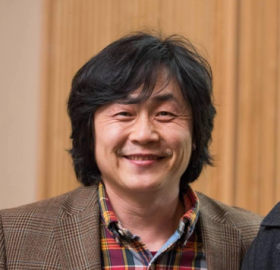
Dr. Young Sub Kwon is a Full Professor in the Department of Kinesiology at Cal Poly Humboldt, affiliated with the School of Applied Health. His research focuses on temperature regulation in high-intensity exercise physiology, virtual exercise laboratories, and fitness assessments for first responders. He holds a Ph.D. in Sports & Exercise Science from the University of New Mexico and has pioneered studies on cooling technologies for military and athletic applications, widely covered by major media outlets like NBC and the Wall Street Journal. Dr. Kwon teaches graduate courses including Exercise Testing and Physiology of Exercise. He has developed innovative virtual labs to enhance accessibility in exercise science education and co-authored a textbook on Exercise Physiology. His work includes collaborations with local fire departments and law enforcement to create fitness programs, involving over 20 students in research projects. Over 30 peer-reviewed publications and presentations at international conferences highlight his contributions to firefighter fitness, HIIT optimization, and thermal physiology. He has secured grants including the CSU Faculty-Student Collaborative Research Grant and led projects funded by the College of Professional Studies. His teaching philosophy emphasizes critical thinking, hands-on lab experiences, and student support through certification exam preparation. Dr. Kwon actively mentors students, fostering their academic and professional growth in kinesiology.
Dr. Helen Cai is a Senior Lecturer in International Business and Circular Economy at Middlesex University Business School, where she serves as Programme Leader for the BA International Business Administration and BA Business Management (Top-Up). She also leads the Doctor of Business Administration (DBA) programme delivered in China through a partnership with United Business Institutions (UBI). Additionally, she holds a Full Visiting Professorship at Jiaxing University, China. Her academic leadership extends to editorial roles as Senior Editor of Cogent Business and Management and member of the editorial board of the Journal of World Business . She is Vice President of Marketing for the International Case Study Research Association (ICRA). Dr. Cai’s research focuses on international business, sustainability, green innovation, and corporate environmental governance. She employs advanced methodologies such as fuzzy-set qualitative comparative analysis (fsQCA), econometrics, and scientometric analysis. Her work addresses critical issues including green supply chains, carbon emissions, foreign direct investment, and institutional influences on innovation. The 15 most recent publications highlight a strong trend toward environmental sustainability, circular economy, and data-driven policy analysis. Her recent work spans blockchain in green supply chains, AI in rehabilitation, carbon governance, land use, and migration policy, demonstrating interdisciplinary breadth and policy relevance. Bronze award, The First National Collegiate Olympiad Mathematical Mirror Competition (2022) Honourable Mention, Interdisciplinary Contest in Modelling (2022) First Prize, Asia and Pacific Mathematical Contest in Modelling (2021) Third Prize, THE International Case Competition (2021) Dr. Cai has extensive supervisory experience, currently guiding multiple PhD candidates and having chaired over 30 DBA viva panels. She has supervised over 60 BA, 150 MSc, and 75 MBA dissertations. She has participated in 72 PhD/DBA committees in roles including external examiner, internal examiner, and panel chair. Her grants and funding are not explicitly mentioned, but her research output and editorial roles suggest sustained scholarly engagement. She leads research teams focused on circular economy and international business, and her future work is likely to expand into AI-driven sustainability analytics, cross-border green innovation, and climate governance. Her prior industry experience as a Senior Economist at China’s Central Bank enriches her applied research perspective.
Asha Scielzo is a Lecturer in Law at American University Washington College of Law, where she serves as Director of the nationally ranked Health Law and Policy Program. She also teaches Health Care Compliance, Ethics & Governance at the University of Pennsylvania Carey Law School. She is an active leader in health law education and policy, with dual academic affiliations and national professional influence. Her research and teaching interests focus on health law, compliance, digital health, healthcare transactions, fraud and abuse, governance, and ethics. She integrates over 20 years of industry and legal practice experience into her experiential courses, emphasizing real-world application in regulatory and transactional health law. The available articles indicate interdisciplinary scholarship at the intersection of law and medicine, particularly in high-impact clinical journals like JAMA and Critical Care Medicine. These works reflect a strong engagement with public health policy, clinical ethics, and regulatory frameworks in healthcare. Professional Leadership & Service: Acting President, American Health Law Association (AHLA) Former Chair, AHLA Board Education Committee Former Chair, AHLA Diversity + Inclusion Council Board of Directors, American Society of Law, Medicine & Ethics (ASLME) Board of Directors, South Asian Bar Association of Washington, D.C. Faculty Advisor, South Asian Law Students Association She is deeply committed to mentoring law students and early-career health law professionals. Her leadership in national organizations and curriculum development across law schools underscores her impact on health law education and inclusion. She has contributed to the design of JD, LLM, and Master of Law programs at multiple institutions. She leads the nationally accredited Health Care Compliance Certificate program at American University, approved by the Compliance Certification Board, highlighting her role in shaping professional certification in health compliance.
Dimitris Papanikolaou serves as the John L. & Helen Kellogg Professor of Finance at Northwestern University's Kellogg School of Management and is a Research Associate of the National Bureau of Economic Research (NBER). His research critically examines the nexus between technological innovation and financial markets, with recent contributions spanning intangible capital measurement, innovation's impact on labor dynamics, executive markets, and financial frictions. Education: PhD in Financial Economics, Massachusetts Institute of Technology (2007) MS in Finance and Economics, London School of Economics (2001) BA in Economics and Finance, University of Piraeus (2000) Papanikolaou's research program centers on Asset Pricing , Macroeconomics , Innovation , Economic Growth , and Intangible Capital . He pioneers methodologies for quantifying innovation through textual analysis of patents while investigating how technological advances reshape financial markets and labor outcomes. His work reveals critical insights into human capital displacement, the economic value of intangibles, and the causal mechanisms linking financial constraints to innovation efficiency, employing rigorous empirical designs including natural experiments and administrative datasets. Analysis of his recent publications shows a pronounced interdisciplinary trajectory, merging finance, labor economics, and innovation studies through cutting-edge techniques like NLP and big data analytics. Key thematic clusters include AI's labor market effects (examining task exposure and wage dynamics), creative destruction measurement (using text-based innovation displacement metrics), and intangible capital's macroeconomic role (exploring firm scope, concentration, and growth implications). These works consistently establish causal relationships through exogenous variation in innovation shocks and patent data. Scientific recognition includes: Kellogg Research Mentorship Award Best Paper Award, London Business School Finance Symposium (2018) Best Paper Award, Red Rock Finance Conference (2017) Crowell Memorial Prize (second place), Panagora Asset Management Amundi Smith Breeden Prize, American Finance Association (2014 and 2013) Roger F. Murray Prize (second place), The Q Group (2011) As Co-Editor of the Journal of Financial Economics and former editorial board member for Management Science, the Journal of Finance, and the Review of Financial Studies, Papanikolaou shapes scholarly discourse in finance. His mentorship excellence—recognized by the Kellogg Research Mentorship Award—demonstrates commitment to developing next-generation scholars, though specific grant details remain undisclosed in available materials. Collaborative research networks with leading economists like Kogan, Schmidt, and Eisfeldt drive his high-impact publications. Papanikolaou's research ecosystem involves extensive collaboration with interdisciplinary teams leveraging computational methods for innovation measurement. Current projects focus on AI-labor market interactions and intangible capital dynamics, often utilizing proprietary patent datasets and administrative worker records to generate policy-relevant insights about technological disruption and market efficiency.
Antonio Dello Iacono is an Associate Professor (Reader) in Strength and Conditioning at the University of the West of Scotland's Division of Sport, Exercise, and Health within the School of Health and Life Sciences. With 20 years of combined experience in elite sport practice, teaching, and research, his work focuses on elite performance conditioning, training load monitoring, and technology integration in sports. He leads the Sports Performance Interest Group, coordinating industry-collaborative applied research projects. His research aims to develop personalized exercise prescription models to enhance individualized training outcomes, reduce overtraining risks, and improve health outcomes. Education & Positions Scientific Associate at University of Split (since 2017) Research Focus His primary research goals involve transitioning from rigid exercise protocols to personalized approaches tailored to individual abilities and stressors. Key areas include autoregulation methods in resistance training and interdisciplinary research integration. He contributes to UN Sustainable Development Goals related to health and well-being. Collaborations & Activities Peer reviewer for Frontiers in Physiology (2022) Invited speaker at ECSS conferences (2018–2021) Media engagements include discussions on mental training's physical benefits and collaborative partnerships Lab/Teams Leads the Sports Performance Interest Group, fostering applied research with industry partners.
Affiliations and Roles Professor Wang holds dual appointments as Professor of Physics and Mechanical and Aerospace Engineering at Cornell University. She is affiliated with the Sibley School of Mechanical and Aerospace Engineering and the College of Arts and Sciences. Education B.S. in Physics, Fudan University, Shanghai, China (1989) Ph.D. in Physics, University of Chicago (1996) NSF-NATO Postdoctoral Fellow, Theoretical Physics, Oxford University (1997) Visiting Member, Courant Institute of Mathematical Sciences, NYU (1997-1999) Research Her research focuses on the physics of living organisms, particularly insect flight dynamics , biophysics , and computational modeling . Key projects include: Dragonfly righting reflex mechanisms Neuro-mechanical control in fruit flies Unsteady aerodynamics and fluid-structure interactions Awards and Honors Simons Fellowship in Theoretical Physics (2020) Radcliffe Fellowship (2007) Cornell Provost's Award for Distinguished Scholarship (2005) David and Lucile Packard Fellowship (2002) Labs and Collaborations Her work integrates experimental and computational approaches, often conducted in collaboration with institutions like the Janelia Research Campus (HHMI) and the Joint Texas Experimental Tokamak (J-TEXT).
Professor Craig Wheeler is a distinguished academic in the School of Engineering at the University of Newcastle, specializing in Mechanical Engineering with a focus on bulk solids handling and belt conveyor technology. As Associate Director of the Centre for Bulk Solids and Particulate Technologies and Deputy Chairman for the Australian Society for Bulk Solid Handling, he has established the university as a global leader in fundamental and applied research within this field. Wheeler's research interests primarily center on reducing the energy intensity and environmental impact of ore and mineral transportation globally. His work develops novel theoretical approaches to model and optimize belt conveyor and bulk handling systems, with significant contributions in energy-efficient transportation, dust emission control, and innovative conveying technologies like the Rail Conveyor system. His research bridges fundamental computational techniques with practical industrial applications, addressing real-world challenges in bulk material handling. His extensive publication record demonstrates trends toward increasingly sophisticated modeling techniques, combining continuum mechanics, discrete element methods, and computational fluid dynamics to solve complex problems in bulk material flow and energy consumption. Recent work shows particular emphasis on large-diameter idler rollers for energy savings, rail-running conveyor systems, and advanced dust control methodologies. 2023 Engineers Australia - Australian Society for Bulk Solids Handling 2017 Significant Contributions to Engineers Australia's Warman Design and Build Competition (Weir Minerals) 2017 Australian Council of Engineering Deans National Award for Engineering Education Excellence 2016 Innovative Technology Award (Australian Bulk Handling) 2010 Rising Star Award (Newcastle Innovation, The University of Newcastle) 2009 Pro-Vice Chancellor's Award for Research Excellence 2006 Best Research and Development Project (Australian Bulk Handling Review) 2000 A.W. Roberts Award (Australian Society for Bulk Solids Handling) Professor Wheeler has successfully led numerous Linkage Projects with major companies including Rio Tinto, Veyance Technologies, and Laing O'Rourke, securing significant cash and in-kind contributions for research projects. His industrial consulting experience, built on a 10-year engineering career with BHP, provides valuable insights that bridge fundamental research with practical applications. He actively supervises research students and contributes to professional development courses both within Australia and internationally. As a key member of the Centre for Bulk Solids and Particulate Technologies in association with TUNRA Bulk Solids, Wheeler leads research teams focused on developing eco-friendly conveying solutions. His work has resulted in new licensed technologies, internationally recognized testing methods, design guidelines, and Australian Standards that have transformed industry practices worldwide.
Helen Oleynikova is a Lecturer at the Department of Mechanical and Process Engineering at ETH Zürich, where she is part of the Autonomous Systems Lab. She works on the intersection of perception and planning, particularly for micro-aerial vehicles. Her research focuses on real-time onboard mapping, planning, and localization using visual-inertial systems and signed distance fields. Research Interests: Helen's work spans robotics, autonomous systems, and computer vision, with a focus on enabling safe and efficient navigation in complex environments. She specializes in visual-inertial odometry, SLAM, 3D mapping using signed distance fields, and real-time path planning for MAVs. Her projects often involve embedded systems and FPGA-based high-speed vision for obstacle avoidance. Publication Trends: Her recent publications (2023–2019) show a consistent focus on real-time, onboard algorithms for autonomous navigation. Key themes include signed distance function maps, collision-free motion generation, global localization, and efficient exploration. She frequently publishes in top-tier robotics conferences such as ICRA and IROS, and journals like IEEE RA-L and Journal of Field Robotics. Professional Experience: Senior Researcher, Autonomous Systems Lab, ETH Zürich Senior Software Engineer, Isaac 3D Perception, Nvidia Senior Scientist, Microsoft Mixed Reality and AI Lab, Zürich Software Engineer, Google (StreetView) Contributor, Willow Garage (ROS, TurtleBot Arm) Education: PhD in Robotics, ETH Zürich (2019) MSc in Robotics, ETH Zürich BSc in Robotics, Olin College of Engineering (2011) Advising and Grants: While no formal students are listed, she has collaborated extensively with researchers at ETH Zürich and industry labs. Her work has been supported through institutional affiliations and industry research roles. She has contributed to open-source robotics software, particularly in ROS-based systems for manipulation and navigation. Labs and Teams: Helen is a key member of the Mobile Manipulation team at the Autonomous Systems Lab at ETH Zürich. She has also been involved in projects at Nvidia, Microsoft, Google, and Willow Garage, focusing on real-world deployment of autonomous systems.
Michael Roberts is a Professor in the School of Kinesiology at Auburn University, serving as Director of both the Molecular and Applied Sciences Laboratory and the Applied Physiology Laboratory. His research integrates nutrition and exercise science to investigate cellular biomarkers and whole-body physiological responses using cell culture, rodent models, and human studies. His primary research interests include Exercise Physiology , Nutrition Science , and Skeletal Muscle Adaptation , with emphasis on resistance training mechanisms, dietary supplementation, and molecular pathways underlying muscle hypertrophy/atrophy. His work employs advanced techniques in molecular biology to address questions relevant to athletic performance, aging, and clinical rehabilitation. Analysis of his recent publications reveals consistent focus on resistance training adaptations, creatine/nitrate supplementation, skeletal muscle remodeling, and microbiome-exercise interactions. His research demonstrates methodological diversity spanning cellular models, rodent studies, and human clinical trials, with particular attention to molecular mechanisms in aging populations and performance optimization. Dr. Roberts actively mentors through laboratory leadership roles, though specific student names aren't documented in provided materials. His editorial positions in physiology journals and frequent conference lectures indicate significant academic influence beyond direct research outputs. The Molecular and Applied Sciences Laboratory and Applied Physiology Laboratory form collaborative hubs for interdisciplinary research, utilizing techniques ranging from molecular analysis to whole-body physiological assessment. These facilities support investigations into exercise-nutrition interactions across diverse populations from athletes to older adults.
Professor Lisa Wood is the Pro Vice Chancellor of the College of Health, Medicine and Wellbeing at the University of Newcastle. She holds a PhD in Nutrition and Dietetics and has over 20 years of research experience in nutritional biochemistry, focusing on the interplay between diet, inflammation, and respiratory diseases like asthma and cystic fibrosis. Her work bridges nutrition science and respiratory medicine, emphasizing dietary guidelines for disease management. She leads the Nutrition and Metabolism Theme at HMRI and has supervised 22 PhD and 2 Masters students. Education: BSc (Honours) from the University of Sydney, PhD in Nutrition & Dietetics from the University of Newcastle. Professional roles include former Head of the School of Biomedical Sciences and Pharmacy (2020–2025) and interim Pro Vice Chancellor Student Engagement (2023–2024). Leadership in national organizations includes President of the Nutrition Society of Australia (2016–2021) and Chair of Asthma Australia’s Research Advisory Committee. Research Interests: Mechanisms of dietary factors (e.g., antioxidants, fatty acids, soluble fiber) on airway inflammation; obesity-related asthma; translational nutrition interventions. Key contributions include demonstrating that high fruit/vegetable diets reduce asthma exacerbations and identifying saturated fatty acids’ impact on bronchodilator efficacy. Her work informs clinical guidelines, including the Australian Asthma Handbook. Awards: 2022 Nutrition Society of Australia Medal, 2006 NSW Tall Poppy Award, and multiple mid-career recognitions. Over 210 publications (H-index 57/Scopus). Labs/Teams: Leads the Nutrition Research group in the Priority Research Centre for Asthma and Respiratory Diseases at HMRI. Collaborates with bariatric surgeons and clinical trial networks.
Dr. Gunjan Y. Parikh serves as an Associate Professor in the Department of Neurology at the University of Maryland School of Medicine, where she also functions as the Medical Director of the UMMC Neuro Critical Care Unit. Her clinical practice focuses on the intersection of neurology and critical care medicine, with particular expertise in managing patients with acute neurological emergencies including traumatic brain injury, intracerebral hemorrhage, and subarachnoid hemorrhage. Dr. Parikh completed her undergraduate education with a BA in Biochemistry from The University of Texas at Austin, followed by her MD from Texas A&M College of Medicine. Her clinical training includes an Internal Medicine internship at St. Vincent's Hospital - Manhattan, Neurology residency at Barrow Neurological Institute at Saint Joseph's Hospital and Medical Center (where she also served as Chief Resident), and specialized fellowship training in Neurocritical Care/Vascular Neurology at Columbia University Medical Center/Weill Cornell Medical Center. She further enhanced her research skills through an NINDS Research Fellowship in Neuroimaging at the National Institutes of Health. Her research program centers on identifying biomarkers during the resuscitation phase of patients with acute brain injuries that determine lesion repair, restoration of function, and recovery of consciousness. This work has led to significant contributions in characterizing the MRI signature of primary microvascular injury after head trauma and other acute brain injuries through both in vivo and ex vivo investigations. Her lab integrates multimodality monitoring with advanced neuroimaging techniques to translate findings to clinical care and develop outcome measures for clinical trials targeting currently untreatable aspects of brain injury such as demyelination and neurodegeneration. Analysis of Dr. Parikh's recent publications reveals a strong focus on translational neuroscience with emphasis on neuroimaging techniques, biomarker discovery, and clinical applications for acute brain injury management. Her work spans from basic science investigations of microvascular injury to clinical studies on patient outcomes, with particular attention to traumatic brain injury, intracerebral hemorrhage, and subarachnoid hemorrhage. Recent publications demonstrate increasing integration of data science approaches for predicting neurological deterioration and developing automated clinical assessment tools. Fellow of the Neurocritical Care Society (2024) Member, American Academy of Neurology Member, Neurocritical Care Society Member, National Neurotrauma Society Dr. Parikh serves as Site Co-PI for the DISCOVERY study (Determinants of Incident Stroke Cognitive Outcomes and Vascular Effects on Recovery) under NINDS/NIA U19 NS115388, and as SubK site-PI for the REACH-ICH study (Race/Ethnicity, Hypertension and Prevention of VCID and Stroke after Intracerebral Hemorrhage) under NINDS/NIH 5R01NS093870-08. Her research has been featured in multiple media outlets including MD Edge Psychiatry, News Medical, and SciTech Daily, highlighting her contributions to understanding vascular injury in traumatic brain injury. As Medical Director of the UMMC Neuro Critical Care Unit, Dr. Parikh leads a multidisciplinary team focused on providing high-reliability, quality care with emphasis on patient experience. Her research group actively investigates cerebral hemodynamics, neuroimaging biomarkers, and clinical decision support tools for patients with acute neurological conditions, with particular attention to improving triage and interhospital transfer of neuroscience patients.
Professor J. Debus is a distinguished academic in Radiation Oncology at Heidelberg University's Medical Faculty, with extensive research focused on particle therapy, medical physics, and cancer treatment optimization. His work spans clinical trials, radiobiology, and technical innovations in radiation delivery systems. Primary Affiliation: German Cancer Research Center (DKFZ), Heidelberg Research Focus: Particle therapy, radiation oncology, medical physics Key Collaborations: Mein S., Liew H., Tessonnier T., and other leading researchers in radiation oncology Professor Debus' research interests center on advancing particle therapy techniques including proton, carbon ion, and emerging modalities like helium and oxygen ion therapy. His work addresses critical challenges in radiation oncology such as normal tissue sparing, hypoxia-induced radioresistance, and precision treatment delivery. He has made significant contributions to understanding the biological effects of different radiation types and optimizing treatment protocols for various cancer types including head and neck cancers, brain metastases, and prostate cancer. His recent publications demonstrate leadership in clinical trials (GUARD, ESTRON, PROBASE) and technical innovations in radiation delivery systems, particularly in the emerging field of FLASH radiotherapy and ultra-high dose rate treatments. Professor Debus has published extensively on treatment planning optimization, radiation-induced biological effects, and imaging techniques for precise radiation delivery. Leading clinical trials in particle therapy Developing novel techniques for normal tissue protection Advancing understanding of radiation biology across different modalities Professor Debus has secured significant research funding for his work in radiation oncology and particle therapy. His research has contributed to clinical implementation of advanced treatment techniques at the Heidelberg Ion-Beam Therapy Center (HIT), one of the world's leading facilities for particle therapy. He supervises numerous doctoral students and postdoctoral researchers in the radiation oncology field. His laboratory and research team focus on translational research bridging basic radiobiology with clinical applications, with particular emphasis on optimizing treatment protocols for challenging tumor types and improving patient outcomes through precision radiation therapy.
Cecilio Angulo Bahón is a full Professor at the Polytechnic University of Catalonia (UPC), affiliated with the Barcelona School of Industrial Engineering (ETSEIB) and the Department of Systems, Automatics and Industrial Informatics Engineering . He leads research in Artificial Intelligence and Robotics , with significant contributions to healthcare data analytics, digital twins, and human-robot collaboration. His research spans machine learning for medical data harmonization, generative adversarial networks in health informatics, and evolutionary algorithms for control systems. Recent publications focus on synthetic healthcare data generation, climate-resilient agriculture , and UMAP-based data analysis . His work bridges AI theory with practical applications in industrial and healthcare domains. Scientific awards include the Sant Jordi 2023 Digital Polytechnic Initiative Award . He has supervised doctoral candidates like Carlos Flores-Vázquez and N. Raya, with key collaborations at the IDEAI-UPC Intelligent Data Science and AI Research Group and the Institute of Robotics and Industrial Informatics (CSIC-UPC).
Calvin R. Howell is a Professor of Physics at Duke University within the Trinity College of Arts & Sciences. Since 2001, he has held faculty positions at Duke, and in 2025 became the Director of the Triangle Universities Nuclear Laboratory (TUNL), a position he previously held from 2006 to 2016. His academic career at Duke includes progression from Instructor (1984-1985) to Assistant Professor (1985-1992), Associate Professor with Tenure (1992-2001), and ultimately Professor of Physics (2001-present). Professor Howell's research is centered on experimental nuclear physics with emphasis on the quantum chromodynamics (QCD) description of low-energy nuclear phenomena. His work focuses on structure properties of nucleons and nuclei and reaction dynamics in few-nucleon systems. The macroscopic properties of nucleon structure and the residual strong nuclear force between neutrons and protons in nuclei emerge from QCD at distances where the color interactions between quarks and gluons are strong. His research spans multiple areas including neutron scattering, photonuclear reactions, fission product yields, and precision nuclear physics measurements. Analysis of Professor Howell's recent publications (2021-2025) reveals a strong focus on fission product yield measurements across various actinide isotopes (235U, 238U, and 239Pu) using both neutron-induced and photon-induced fission techniques. His work combines experimental precision with applications in nuclear energy, nuclear security, and fundamental nuclear physics. Additional research threads include neutron-neutron interactions through deuteron breakup experiments, development of novel instrumentation like the HIFROST Dilution Refrigerator, and applications of nuclear physics techniques to plant biology through projects like PhytoPET. Professor Howell has received significant recognition including: Dean's Diversity Award (2016) Samuel DuBois Cook Award for Service (2008) Fellow of the American Physical Society (2006) He has secured substantial research funding with current grants including NEUTRON SCATTERING EXPERIMENTS FOR ACTINIDES USING MONOENERGETIC NEUTRON BEAMS (2025-2028), Alfred P. Sloan Foundation Graduate School Award (2017-2027), and multiple Department of Energy projects. His leadership extends to directing the REU Site: Undergraduate Research in Nuclear Particle Physics at TUNL and Duke (2022-2027). Professor Howell has also made significant service contributions, chairing the Tom Bonner Prize Committee for the APS Division of Nuclear Physics and serving on the Board of Trustees of the Southeastern Universities Research Association (2016-2019). As Director of TUNL, Professor Howell leads a major nuclear physics research facility that facilitates collaboration between North Carolina's Research Triangle Universities. His laboratory work includes the High Intensity Gamma-ray Source (HIGS) facility, where many of his photonuclear experiments are conducted. He has also been instrumental in developing interdisciplinary applications of nuclear physics, particularly in plant biology research through projects like PhytoPET, a modular positron emission tomography system designed specifically for plant imaging.
Heather Liddell is an Assistant Professor at Purdue University with joint appointments in Mechanical Engineering and Environmental & Ecological Engineering. She leads the Liddell Research Group, focusing on sustainable manufacturing, environmental life cycle assessment, and mechanics of multilayered systems. Her work bridges engineering and policy, addressing industrial decarbonization and sustainable supply chains. She holds a PhD in Materials Science from the University of Rochester, postdoctoral training at the U.S. Naval Research Laboratory, and prior DOE contract experience. Education: PhD (2013, Materials Science, University of Rochester), MS (2010, Mechanical Engineering, University of Rochester), BS (2008, Mechanical Engineering, University of Rochester). Research Interests : Industrial decarbonization strategies and circular economy frameworks Fracture mechanics in multilayer systems (e.g., coatings, composites) Environmental LCA of emerging technologies Lightweighting strategies for transportation sectors Awards include the 2024 EnergyTech Prize, ASEE Postdoctoral Fellowship (2017), and multiple Above and Beyond Awards. Her group includes 9 researchers studying topics like EEIO modeling, adhesion in lithium-ion batteries, and dairy forage drying LCA. Lab activities emphasize interdisciplinary collaboration, with projects funded by DOE and industry partnerships. Recent work addresses carbon performance reporting in Industry 4.0 and rebound effects in decarbonization initiatives.