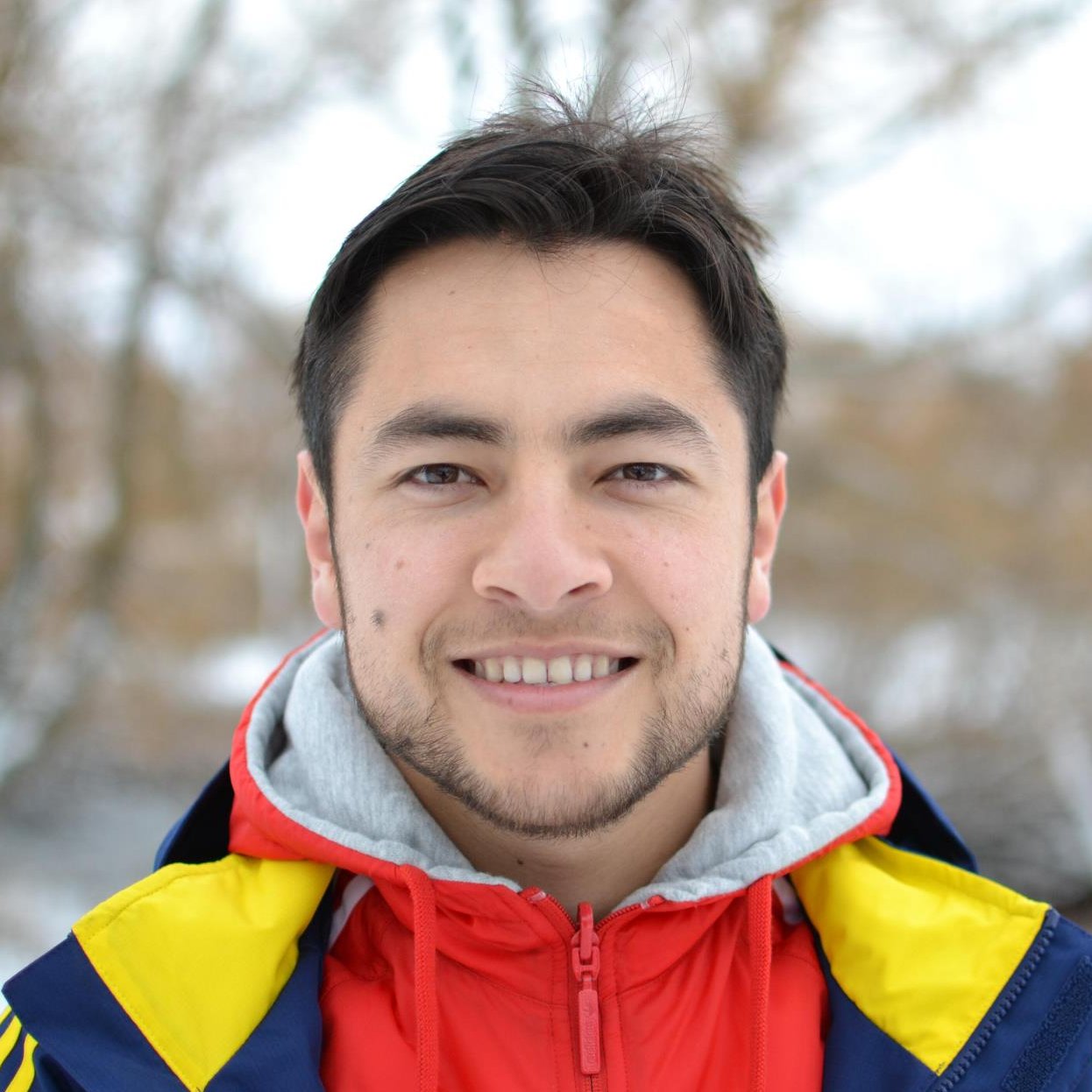
Luis Eduardo Ardila Perez is a Researcher at the Institute for Data Processing and Electronics (IPE) within the Karlsruhe Institute of Technology , affiliated with the Karlsruhe School of Elementary Particle and Astroparticle Physics . His work focuses on high-performance computing architectures for particle physics experiments. PhD Topic: Real-Time High-Performance Readout System (100 Tb/s) for the CMS Track Trigger Supervisor: Prof. Dr. Marc Weber His research spans high-energy physics detector systems , with expertise in: FPGA-based track triggering GPU acceleration for real-time processing ATCA modular electronics High-throughput data acquisition Cryogenic sensor readout Publication trends highlight: Advancements in quantum computing interfaces (RFSoC, SQUID multiplexers) Innovations in detector electronics (CMS, PANDA) Optimization of real-time data systems for extreme environments Development of scalable hardware architectures for large-scale experiments He contributes to: CMS experiment at CERN KSETA collaborative research school OpenIPMC open-source hardware initiatives
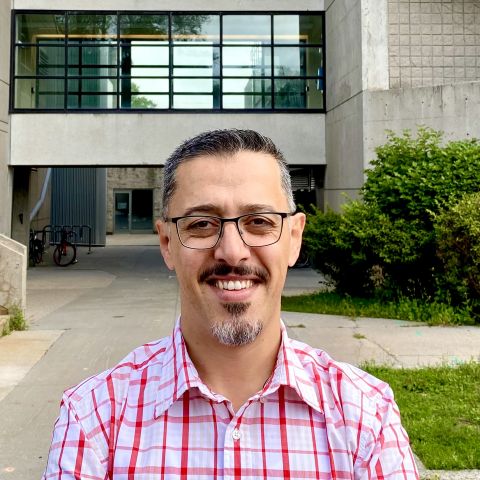
Dr. Mahmoud Alzoubi is an Assistant Professor at Queen's University , cross-appointed between the Robert M. Buchan Department of Mining Engineering and the Department of Mechanical and Materials Engineering . He leads an interdisciplinary research program that couples advanced transport phenomena with energy-efficient technologies for mining and renewable energy applications. Education: Ph.D. in Mining & Mechanical Engineering, McGill University (2018) M.Sc. in Engineering Systems & Management, Masdar Institute of Khalifa University in collaboration with MIT (2014) B.Sc. in Mechanical Engineering, Jordan University of Science and Technology (2005) Research Interests: His work centers on transport phenomena in porous media , with emphasis on phase-change heat and mass transfer , artificial ground freezing , thermal energy storage , microfluidic devices , and renewable HVAC cycles . By integrating high-fidelity experiments with large-scale numerical simulations performed on high-performance clusters, he advances sustainable solutions for energy-intensive mining operations and green building technologies. Publication Impact: Across 32 peer-reviewed articles (2013-2024), a dominant theme emerges: developing computationally efficient models for coupled thermo-hydraulic processes in freezing, storage and ventilation systems. Studies range from Stefan-problem analytical solutions for phase-change materials to large-eddy simulations of cough-jet dispersion for indoor-air safety, underscoring a methodological breadth that spans pure mathematics, experimental heat transfer, and applied computational fluid dynamics. Funding & Recognition: Total research funding secured: CAD 466,000+ (direct cash CAD 381,000 + high-performance computing allocation CAD 85,000) Former member, Canadian Hydrogen in Mining Advisory Committee , Natural Resources Canada Laboratory & Teams: Dr. Alzoubi directs a research laboratory at Queen’s University equipped with state-of-the-art instrumentation for multiphysics experimentation and access to national HPC facilities. The group collaborates closely with industry partners (mining, HVAC) and government laboratories to translate fundamental findings into scalable, energy-efficient technologies for northern mining and cold-region infrastructure.
Andy Donald is a Research Fellow and lead of the Applied Innovation Unit at Insight, University of Galway. His work focuses on automating AI/ML processes, explainable AI methods, surrogate modeling for computational systems, and real-world applications in cloud environments. Research Expertise Explainability & Ethics in AI/ML Multimodal Data Applications High-Volume Stream Analytics Knowledge Graph Construction Surrogate Modeling Industry Collaboration Leadership Andy collaborates with industry partners including Fidelity , Genesys , Connacht Rugby , Avaya , and Aró Digital to bridge academic research with scalable solutions.
Dr. Luca Di Mare is an Associate Professor of Engineering Science at the University of Oxford and a Fellow of St John's College. He leads research at the Oxford Thermofluids Institute, focusing on computational modeling of gas turbines. Previously, he headed the Whole Engine Modelling Group at Imperial College London's Vibration University Technology Centre, sponsored by Rolls-Royce. Research Focus: His group develops multi-fidelity models of gas turbine systems combining expertise in computational geometry , CFD , grid generation , and structural analysis . The Virtual Engine software developed under his leadership is being integrated into Rolls-Royce's engineering systems. He maintains additional research activities in turbulence modeling for compressors as a Visiting Academic at the Whittle Laboratory. Publication Trends: Recent works demonstrate strong focus on: Advanced turbomachinery modeling including aeroelastic phenomena and compressor design Hypersonic flow physics with emphasis on non-equilibrium thermochemistry Innovative shock tube methodologies for high-enthalpy flows Computational algorithm development for unsteady conjugate heat transfer Laboratories & Collaborations: Leads the Virtual Engine development team and collaborates extensively with the Whittle Laboratory on compressor research. Maintains significant industry partnership with Rolls-Royce plc through technology transfer initiatives.
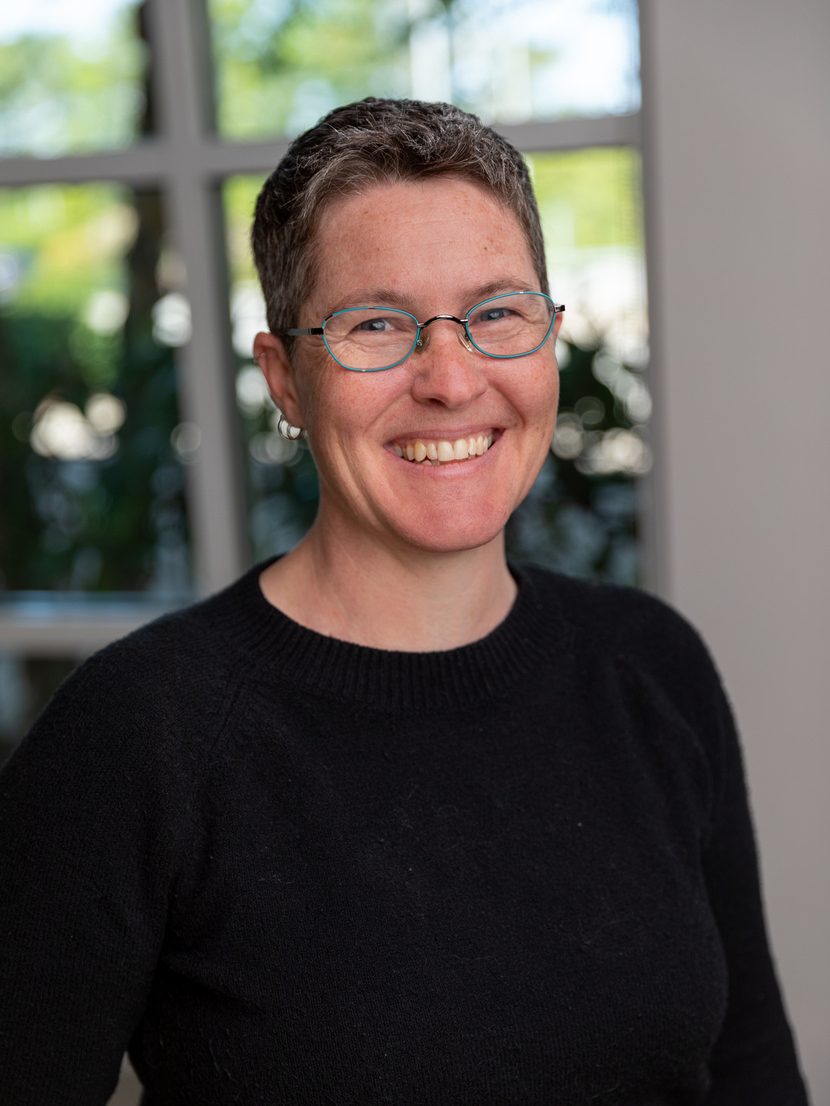
Dr. Jennifer Freeman is a Professor in the Department of Educational Psychology at the University of Connecticut and a partner with the National Center on Positive Behavioral Interventions and Supports (PBIS). She leads the national crisis preparation response and recovery workgroup within the Center, providing expertise in post-incident support and prevention strategies for schools affected by violence. Her educational background includes a Ph.D. from the University of Connecticut, an M.A. from Grand Valley State University, and a B.A. from Calvin College. Prior to her academic career, she served 10 years as a special education teacher across K-8 settings and as a district-level consultant for PBIS and Response to Intervention implementation. Dr. Freeman's research centers on multi-tiered systems of support for high-risk student populations, particularly examining PBIS effects on high school graduation rates for students with disabilities. She investigates evidence-based classroom management strategies and teacher professional development models, with significant focus on crisis response frameworks and behavioral interventions in secondary settings. Her work bridges research and practice through sustained school partnerships. Recent publications (2023-2025) reveal concentrated exploration of college and career readiness frameworks for students with emotional/behavioral disorders, elimination of seclusion practices, and equity-focused school climate policies. She consistently addresses systemic barriers through DisCrit-informed analysis while developing practical tools for educators. As an active educator, Dr. Freeman teaches undergraduate and graduate courses in special education, mentoring future practitioners through her dual expertise in classroom application and research methodology. Her national leadership in PBIS implementation and crisis recovery continues to shape evidence-based practices across diverse educational contexts.
Professor Arvind Kumar is a distinguished faculty member in the Department of Mechanical Engineering at the Indian Institute of Technology Kanpur. His research focuses on additive manufacturing technologies, heat transfer and CFD modeling, manufacturing process modeling, solidification, thermal storage technologies, and laser/plasma surface coating technologies. Professor Kumar earned his PhD and M.Sc (Engg) from the Indian Institute of Science Bangalore in 2008 and 2003 respectively, and completed his B.Tech from NIFFT, Ranchi in 2001. His academic journey has established him as a leading researcher in advanced manufacturing processes. His research interests span metal additive manufacturing (including DfAM and AM process development), heat transfer and computational fluid dynamics, multiphysics and multiscale modeling of manufacturing processes, machine learning applications in manufacturing, droplet-surface interactions, and thermal energy storage systems. His work bridges the gap between theoretical modeling and practical industrial applications. Professor Kumar's publication record shows a strong focus on laser-based additive manufacturing, particularly with titanium and aluminum alloys. His research examines thermal modeling, solidification phenomena, defect formation, and process optimization. Recent work (2023-2024) has concentrated on high-fidelity modeling of laser-material interactions, lattice structure performance, and thermal management in additive manufacturing processes. H.A.L. Chair Professor Position, IIT Kanpur (2024-2027) Best Poster Award, 7th International Conference on Solidification Science and Processing (2018) Best Research Paper Award, 12th IIR Conference on Phase Change Material (2018) PK Kelkar Young Faculty Research Fellowship (2018-2021) Marie Curie Fellowship, University of Southampton, UK (2011-12) Professor Kumar leads multiple research projects funded by CSIR, SERB, ISRO, and EU-Indo collaborations. His research group operates the Manufacturing Science Lab in the Northern Laboratories at IIT Kanpur, focusing on experimental and computational analysis of advanced manufacturing processes. Current projects include additive manufacturing of aerospace components, development of thermal models for laser powder bed fusion, and innovative thermal energy storage systems.
Changqing Cheng is an Associate Professor in the Department of Systems Science and Industrial Engineering at the State University of New York at Binghamton, where he also serves as a Core Faculty Member at the Binghamton Center of Complex Systems (CoCo). His primary research focuses on sensing and data-driven modeling, simulation and analytics for process monitoring, quality control and performance optimization of complex systems, with special interests in nonlinear dynamics, chaotic patterns, and recurrence behaviors. He applies these methodologies across manufacturing (optimal design, uncertainty quantification) and healthcare (data fusion, time series analysis, epidemic modeling). PhD, Industrial Engineering and Management, Oklahoma State University BS & MS, Engineering Mechanics, Dalian University of Technology, China Professor Cheng's research integrates advanced computational techniques with practical applications across multiple domains. His work on nonlinear dynamics and complex systems has led to innovative approaches for process monitoring and anomaly detection in manufacturing, as well as novel methods for healthcare analytics and epidemic modeling. His publications demonstrate a consistent pattern of high-impact research in top journals such as IEEE Transactions, Chaos, and Journal of Computational Physics, with a strong emphasis on methodological innovation and practical application. His research group has produced significant work in uncertainty quantification, deep learning applications in biomedical engineering, and network science applications to epidemic dynamics. The publications reveal a strong interdisciplinary approach that bridges engineering, computer science, and healthcare applications. Professor Cheng's work on basin stability estimation for complex systems and decomposition-enhanced deep learning for cardiac fibrillation detection represents cutting-edge contributions to their respective fields. INFORMS Data Mining and Decision Analytics Best Paper Award (2017) OSU Outstanding Doctoral Student Award OSU Distinguished Graduate Fellowship Material Handling Education Foundation Scholarship CIEADH Best Poster Award, IIE Research Conference Doctoral Colloquium Professor Cheng actively mentors PhD and Master's students, with several receiving prestigious awards including BU Distinguished Dissertation Award (2024) and Excellence in Systems Science Research Award. He serves as Associate Editor for IISE Transactions on Healthcare Systems Engineering and has received significant research funding supporting his students' work. His leadership extends to the Binghamton University Data Science Transdisciplinary Area of Excellence and the Northeast Regional Conference on Complex Systems where he has served as Program Chair for 2025. His lab maintains an active GitHub presence with code repositories for many of his publications.
Rafael Ferreira da Silva is a Research Assistant Professor in the Department of Computer Science at University of Southern California and a Senior Research Scientist at Oak Ridge National Laboratory. He serves as Group Leader for the Workflow and Ecosystem Services group at ORNL's National Center for Computational Sciences and is the Founder and Executive Director of the Workflows Community Initiative. Additionally, he is the Special Content Editor for the Future Generation Computer Systems journal and holds Senior Member status with both IEEE and ACM. Dr. Ferreira da Silva specializes in modeling and simulation of parallel and distributed computing systems, with expertise spanning scientific workflows, hybrid quantum classical systems, and autonomous science. His technical proficiency includes sophisticated scheduling algorithms, high fidelity modeling and simulation, multi-objective optimization, fault tolerant system design, and energy efficient computing across cloud, edge, and HPC environments. His research focuses on creating resilient digital infrastructures that dynamically adapt to changing research demands, accelerating scientific discovery through robust computational foundations. His recent publications demonstrate significant contributions to exascale workflow applications, HPC-quantum convergence, agentic workflow control mechanisms, and terminology standardization for scientific workflow systems. His work bridges multiple disciplines including high-performance computing, artificial intelligence, quantum computing, and autonomous laboratory systems, reflecting a broad research impact across computational science. Professional Recognition: Senior Member of IEEE Senior Member of ACM Special Content Editor for Future Generation Computer Systems journal With 149 scientific publications, 22 chair roles in conferences, 69 PC member roles in conferences, 18 research grants, and involvement in 270+ research projects, Dr. Ferreira da Silva maintains an extensive research portfolio and leadership position in the computational science community. His Workflows Community Initiative has fostered a thriving network of 51 international workflow users, developers, and researchers. As Group Leader at ORNL, he directs research efforts focused on advancing workflow technologies and their applications across scientific domains, with particular emphasis on creating interoperable systems that can operate across multiple computing facilities and environments.
Professor Kadir Sarıöz is a full-time faculty member at Istanbul Technical University in the Department of Shipbuilding and Ocean Engineering . His career spans over three decades of research and teaching in naval architecture and ocean engineering, focusing on seakeeping, ship maneuvering, hull-form optimization, and hydrodynamic simulation. Research Interests Professor Sarıöz’s work revolves around the hydrodynamic performance of marine vehicles. His investigations include: Seakeeping behavior of high-speed and conventional displacement hulls Experimental and computational ship maneuvering in calm water and waves Optimization algorithms for hull-form and propeller design under mission-specific constraints Dynamic positioning capability analysis under realistic environmental loads Simulation-based routing of large tankers through restricted waterways such as the Istanbul Strait Recent Projects 2021 – 2023: “Refakat Römorkörü Performansının Çok Serbestlik Dereceli Deneysel ve Hesaplamalı Analizi” (Revolving Fund, Principal Investigator) 2020: “Shell Antalya Terminali B şamandıra sistemindeki boru hattının tadilatı incelemesi” (Revolving Fund, Principal Investigator) Publication Trends Between 1990 and 2025, Professor Sarıöz has authored or co-authored more than 30 peer-reviewed journal and conference papers. Early works concentrated on practical seakeeping criteria and automated hull fairing, while recent contributions emphasize system-based maneuvering prediction, multi-objective optimization of naval combatant hulls, and environmentally driven dynamic positioning analyses. A clear progression from empirical and semi-empirical methods to high-fidelity CFD and experimental validation is evident. Laboratory & Facilities His research is supported by the university’s towing tank and planar motion mechanism facilities, equipped with modern motion controllers and servo-motor systems enabling precise captive maneuvering tests.
Triantafyllou Savvas serves as an Assistant Professor in the Department of Structural Engineering at the School of Civil Engineering, National Technical University of Athens (NTUA), with his faculty appointment documented since October 2020. His academic work is centered within one of Greece's premier engineering institutions, contributing to both advanced structural analysis education and cutting-edge computational research. Professor Savvas's research program focuses on computational structural mechanics with emphasis on developing advanced numerical methods for complex engineering challenges. His expertise spans material point methods for contact and fracture problems, wave-structure interaction phenomena (particularly for dams and flexible structures), vibroacoustics in porous media, and the mechanical behavior of textile reinforced mortar (TRM) systems for masonry strengthening. His work bridges theoretical computational advances with practical applications in infrastructure resilience against extreme events like tsunamis and earthquakes. Analysis of his recent publications (2021-2025) reveals a cohesive research trajectory centered on computational innovation: he has pioneered high-fidelity material point formulations for contact mechanics, developed multiscale virtual element methods for poroelastic media, established empirical models for TRM-masonry interfaces, and explored machine learning integration in topology optimization. His work consistently addresses critical gaps in simulating dynamic structural failures and wave impacts. Scientific Awards: No scientific awards were documented in the provided source materials. Advising and Grants: While the source materials do not specify current students or grant awards, Professor Savvas's extensive publication record across high-impact journals indicates active graduate research supervision and likely involvement in competitive research funding. His collaborative work with institutions like NTUA's Department of Structural Engineering suggests participation in national and international research consortia focused on computational mechanics and structural safety.
Ted Melnick is an Associate Professor at the Yale School of Medicine with joint appointments in Emergency Medicine and Biostatistics (Health Informatics). As Section Chief for Research in Emergency Medicine and Director of the Yale/VA Clinical Informatics Fellowship, he leads the ACCELERATE Lab focusing on improving digital health user experiences through rigorous systems engineering principles. Primary Appointment: Emergency Medicine Secondary Appointments: Biomedical Informatics & Data Science, Biostatistics Education: MD (Georgetown), MHS (Yale Clinical Informatics) His research examines electronic health records (EHR) and clinical decision support systems to enhance emergency care workflows and patient outcomes. Current projects include the NIH-funded ADAPT trial for opioid use disorder treatment optimization and national EHR use metrics development with the American Medical Association. Recent publications (2025) analyze AI scribe impacts on trainee burden, EHR audit log data imputation, and ED boarding challenges for geriatric patients. The lab also investigates healthcare disparities in digital systems and designs interventions for EHR-related physician burnout. Scientific Awards Society for Academic Emergency Medicine Young Investigator (2017) AHRQ K08 Career Development Award (2013) American College of Emergency Physicians Service to Section Award (2010) Dr. Melnick practices clinically at Yale New Haven Hospital and mentors faculty, fellows, residents, and students in high-impact health services and informatics research. The ACCELERATE Lab holds weekly meetings for collaborative project development.
Dr. Yuval Rishu Sanders is a Senior Lecturer at the School of Computer Science within the Faculty of Engineering and Information Technology at the University of Technology Sydney (UTS). He is affiliated with the Centre for Quantum Software and Information (QSI), where he conducts cutting-edge research in quantum computing and quantum information theory. Dr. Sanders holds a PhD from the University of Waterloo, Canada, and has established himself as a prominent researcher in the quantum computing field with numerous high-impact publications. Dr. Sanders' academic journey began with a Bachelor of Science (First Class Honours) from the University of Calgary in 2008, followed by a Master of Science from the same institution in 2011. He completed his Doctor of Philosophy at the University of Waterloo in 2016. His career progression includes positions as a Research Associate at Macquarie University (2016-2021) and at UTS (2021-2022), before becoming a Permanent Faculty member at UTS in September 2022. Dr. Sanders' research focuses on the theoretical foundations of quantum computing, with particular expertise in quantum algorithms, quantum simulation, and quantum error correction. His work addresses fundamental questions about the computational advantages of quantum computers over classical systems, with a special emphasis on developing practical quantum algorithms for real-world applications. He is particularly interested in improving the efficiency and accuracy of quantum simulations, developing better methods for quantum state preparation, and establishing rigorous computational cost models for quantum algorithms. Dr. Sanders has made significant contributions to the field of quantum linear systems solvers, quantum measurement theory, and quantum resource theories. His research statement emphasizes the need for reliable computational cost analysis to determine when quantum computers will outperform classical computers for useful tasks. Analysis of Dr. Sanders' publication record reveals a consistent focus on advancing the theoretical underpinnings of quantum computing. His most recent work (2024-2025) centers on improving quantum simulation techniques through better product formulae, while his earlier work (2018-2022) demonstrates expertise across multiple quantum computing subfields including quantum algorithms for fermionic systems, quantum error characterization, and quantum measurement theory. A notable trend in his research is the development of more efficient quantum algorithms that reduce resource requirements while maintaining accuracy, which is crucial for near-term quantum applications. Dr. Sanders serves as an Associate Editor for the IEEE Transactions on Quantum Engineering since February 2023, demonstrating his standing in the quantum computing research community. His publication record includes articles in prestigious journals such as PRX Quantum, Physical Review Letters, and New Journal of Physics, with significant citation counts indicating the impact of his research. Dr. Sanders is actively involved in funded research projects that advance quantum computing theory and applications. His current projects include 'Building the Theoretical Foundation of Refinement Techniques for Quantum Programming' (2025-2027), 'The QB-suite: a framework for quantum algorithm design and benchmarking' (2024-2027), and 'Quarkov Decision Processes' (2023-2027). He has also contributed to significant projects such as 'Tools for fault-tolerant resource estimation' (2022-2025) and 'Defence acquisition optimisation using quantum algorithms' (2021-2024). His research vision includes developing software tools that can automate the analysis of quantum computations, potentially enabling a 100,000-fold speedup in the design iteration process for quantum applications. As a member of the Centre for Quantum Software and Information at UTS, Dr. Sanders collaborates with a multidisciplinary team of researchers working on various aspects of quantum computing. His research group focuses on developing theoretical frameworks and practical tools for quantum algorithm design, with particular emphasis on making quantum computing more accessible and efficient. Dr. Sanders' work bridges theoretical quantum computing with practical applications, contributing to the broader goal of realizing useful quantum advantage.
Lauren Clack is an Assistant Professor at the Institute for Implementation Science in Health Care , Faculty of Medicine, University of Zurich. She holds a PhD in Psychology (University of Zurich) and an MSc in Applied Ergonomics (University of Nottingham). Education : PhD in Psychology, MSc in Applied Ergonomics. Research Focus : Implementation Science methodology, human-centered design, infection prevention, patient safety, and behavioral science in healthcare. Her work spans neonatal care, antimicrobial stewardship, and surgical safety. Scientific Contributions include systematic reviews on organizational readiness, fidelity frameworks, and tailored implementation strategies. Key awards: Best Paper Award (Swiss Society for Hospital Hygiene) and Pfizer Research Prize 2024 for her Lancet Infectious Diseases study. Leadership in multinational clinical trials (e.g., PROHIBIT study) and collaborations with institutions like Geneva University Hospital and Swissnoso. Her work integrates virtual reality training, pathogen transmission analysis, and patient-clinician co-design projects.
Takuya Terahara is an Assistant Professor at the Green Computing Systems Research Organization, affiliated with the School of Creative Science and Engineering. His research focuses on computational mechanics, fluid-structure interaction (FSI), and isogeometric analysis with applications in biomedical engineering (heart valves, aorta flow), aerospace systems (parachutes), and automotive aerodynamics (tire flows). His work combines T-splines and space-time methods to address challenges in contact mechanics, boundary layer representation, and multi-scale flow dynamics. Notable projects include modeling red blood cell deformation, heart valve FSI with leaflet contact, and spacecraft parachute structural analysis. Research trends highlight his expertise in integrating isogeometric discretization with lattice Boltzmann methods, boundary element analysis, and slip interface techniques. His computational frameworks enable high-fidelity simulations of complex systems requiring continuity, smoothness, and contact representation. Terahara has received research grants from the Japan Society for the Promotion of Science (JSPS), including projects on local mesh refinement for flow analysis (2020-2022) and fluid-structure interaction for heart valves (2017-2020).
Chris Hegna is a Professor and Director of the Center for Plasma Theory and Computation at the University of Wisconsin-Madison, College of Engineering. His research focuses on theoretical plasma physics, magnetic confinement, and fusion science, with applications to tokamak and stellarator systems. PhD (1989) in Physics from Columbia University MS (1987) in Physics from Columbia University BS (1986) in Physics from University of Wisconsin-Madison Professor Hegna’s work spans magnetohydrodynamic equilibrium, stability, and transport properties in non-symmetric magnetic confinement systems. He investigates the role of magnetic geometry, symmetry, and topology in plasma behavior, self-organization, and anomalous transport. His research supports the U.S. fusion science program and commercial magnetic fusion development. His 15 most recent publications (2024-2025) focus on turbulence suppression, stellarator optimization, MHD equilibrium modeling, and computational plasma physics. Topics include trapped-electron-mode turbulence, finite-beta effects, and synthetic diagnostics for experiments like Wendelstein 7-X and HSX. Scientific Awards: 2016 Harvey D. Spangler Professorship, University of Wisconsin-Madison 2014 John Dawson Award for Excellence in Plasma Physics Research Chris Hegna is actively involved in the University of Wisconsin-Madison’s magnetic confinement experiments (Pegasus Toroidal Experiment, HSX Plasma Laboratory, Madison Symmetric Torus) and serves on U.S. fusion program advisory committees. He teaches advanced courses in plasma magnetohydrodynamics and research in nuclear engineering and physics.