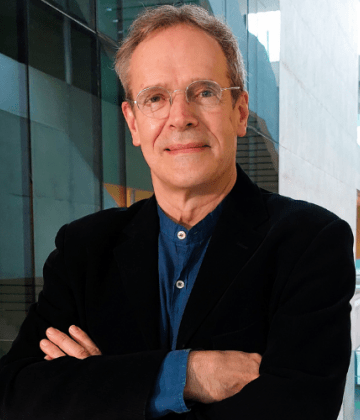
Bala Rajaratnam serves as a Professor in the Department of Statistics at the University of California, Davis, with his office located in the Mathematical Sciences Building at One Shields Avenue, Davis, CA 95616. His primary research focuses on advanced statistical methodologies, including: Covariance Estimation for complex datasets Graphical models in probabilistic systems High dimensional inference techniques Bayesian methods for uncertainty quantification Environmental Statistics applications Positivity constraints in causal inference His work bridges theoretical statistics with practical environmental data analysis, emphasizing robust computational approaches for modern statistical challenges. Professional correspondence may be directed to brajaratnam@ucdavis.edu.
Doudou Zhou is an Assistant Professor of Statistics & Data Science at the National University of Singapore. Previously, he was a Postdoctoral Research Fellow in Biostatistics at Harvard University (2022-2024), and earned a Ph.D. in Statistics from UC Davis (2022), advised by Prof. Hao Chen. He holds dual B.S. in Statistics and B.E. in Computer Science from USTC (2019). His research focuses on developing statistical methods and machine learning techniques for electronic health records (EHR) data, including federated learning, reinforcement learning, graph neural networks, and high-dimensional statistics. Key interests include representation learning for multi-institutional data harmonization and precision medicine applications. Notable awards include the 2023 Harvard Data Science Initiative Postdoctoral Fellowship and 2022 ICSA Student Poster Award. He teaches Applied Natural Language Processing (ST5230) and actively contributes to journal reviewing (e.g., JASA, Biostatistics). His work spans algorithm development in federated reinforcement learning and transfer learning for heterogeneous domains. He leads a research group exploring topics such as knowledge graph integration, multimodal EHR analysis, and fair federated learning systems. His code contributions include implementations for federated offline RL and change-point detection methods.
Marc Mezard is a Professor of Theoretical Physics at Bocconi University, where he leads the newly established Department of Computational Sciences. Previously, he served as Research Director at CNRS in Paris and held roles at Université Paris Sud. He earned his PhD in Physics from École Normale Supérieure in Paris in 1984. His research focuses on statistical physics of disordered systems, with applications to machine learning, information theory, computer science, and biophysics. His work bridges theoretical physics and interdisciplinary fields, including neural networks and deep learning, where he explores the impact of data structure on learning strategies. He teaches undergraduate courses in statistical and quantum physics and a doctoral course on complex systems. Key research themes include emergent phenomena in complex systems, with contributions to spin glass theory, compressed sensing, and algorithmic solutions for random satisfiability problems. His publications span foundational topics in statistical mechanics and modern applications in data science. Marc Mezard has collaborated extensively with institutions and researchers globally, contributing to the theoretical foundations of computational and physical sciences. His academic leadership includes directing École Normale Supérieure from 2012 to 2022, fostering interdisciplinary research initiatives.
Yuexi Wang is an Assistant Professor in the Department of Statistics at the University of Illinois. Their research focuses on Bayesian methodology, approximate Bayesian computation, and deep learning applications in statistical inference. Key areas include uncertainty quantification, sparse deep learning, and statistical modeling for count data. Education: Not explicitly stated in text. Research interests span Bayesian analysis, with emphasis on developing scalable methods for posterior approximation, adversarial simulation, and generative models. They have contributed to variable selection via Bayesian forests and uncertainty quantification in sparse neural networks. Recent work explores optimal transport-based methods for posterior sampling and Pochhammer priors in count models. Publications emphasize methodological advances in Bayesian deep learning, including data augmentation techniques and adversarial approaches. Articles often bridge theory and application in machine learning and computational statistics. No scientific awards explicitly mentioned. Advising and grants information unavailable in provided text.
Neill Campbell is a Professor of Visual Computing and Machine Learning in the Department of Computer Science at the University of Bath . He is the Director of the Centre for the Analysis of Motion, Entertainment Research and Applications (CAMERA) and co-director of the Centre for Mathematics and Algorithms for Data (MAD) . He holds an external position as Honorary Associate Professor at University College London and is a Royal Society Industry Fellow. His research spans visual computing, machine learning, and their applications in graphics, vision, and healthcare. His educational background includes a Master of Engineering and a Doctor of Philosophy in Engineering from the University of Cambridge, with his PhD focusing on Automatic 3D Model Acquisition from Uncalibrated Images. Neill Campbell’s research interests lie at the intersection of shape modeling , machine learning , and computer vision . He develops probabilistic and deep learning models to understand and generate visual content, with applications in digital humans, virtual production, biomechanics, and medical imaging. His work emphasizes uncertainty quantification, generative modeling, and alignment learning using Gaussian processes and Bayesian nonparametrics. He leads interdisciplinary projects that bridge computer science and mathematical sciences. The recent publications reflect a strong trend in probabilistic modeling , geometric deep learning , and medical applications . Topics include Gaussian process-based shape modeling, anomaly detection in safety-critical systems, and sparse approximations for geometric representations. His work increasingly integrates theoretical machine learning with real-world applications in health, engineering, and creative industries. Royal Society Industry Fellow Neill Campbell actively supervises PhD students across multiple Centres for Doctoral Training (ART-AI, SAMBa, CDE) and leads significant research grants such as MyWorld (UKRI Strength in Places Fund) and REMODEL (EPSRC). His group collaborates with industry leaders like Rolls-Royce, NVIDIA, Adobe, and DNEG, and he supports student internships and industrial placements. He is also involved in spin-out activities, including contributions to Forceteck Ltd. He leads the Visual Computing Group and is deeply embedded in research centers including CAMERA , MAD , and MyWorld . His team includes postdoctoral researchers and PhD students working on 3D reconstruction, biomechanics, inverse problems, and generative models, fostering a collaborative and interdisciplinary research environment.
Deniz Baglan is an Associate Professor of Economics and serves as the Director of Undergraduate Studies in the Department of Economics at Howard University, which is part of the College of Arts and Sciences. He holds a Ph.D. in Economics from the University of California, Riverside, and contributes significantly to econometric theory and its applications in macroeconomics and finance. Research Interests: His primary research lies in nonparametric and semiparametric econometric methods, particularly applied to panel data models. He investigates issues related to unobserved heterogeneity, dynamic modeling, and structural inference in economic and financial contexts. His work spans both theoretical developments and empirical applications, focusing on macroeconomic dynamics and empirical finance. Publication Trends: His recent scholarly output shows a consistent focus on advancing nonparametric techniques for panel data, including identification, estimation, and testing in models with fixed effects, time-varying parameters, and nonlinear structures. These contributions are published in notable journals such as Journal of Macroeconomics and Studies in Nonlinear Dynamics and Econometrics , reflecting a strong trajectory in methodological econometrics. Scientific Awards: No awards mentioned in the provided text. Advising and Grants: While specific students and grant details are not listed, his role as Director of Undergraduate Studies suggests active involvement in academic mentoring and curriculum development. As a faculty member publishing in top-tier econometrics journals, he likely contributes to research supervision at graduate levels and may participate in externally funded research projects. Labs and Research Teams: There is no mention of specific labs, research centers, or collaborative teams in the provided information.
Bikramjit Das is an Associate Professor and Associate Head of Pillar (Graduate Programme) at Singapore University of Technology and Design (SUTD). He holds a PhD in Operations Research from Cornell University and prior to SUTD, was a postdoctoral researcher at ETH Zurich’s RiskLab. His research focuses on extreme events analysis using applied probability, optimization, and statistical learning, with applications in finance, telecommunications, federated learning, and climate modeling. He teaches courses in Probability, Stochastic Modeling, and Analytics, and directs the Master of Science in Technology and Design (Data Science) program. Education: PhD in Operations Research (Cornell University), B.Stat & M.Stat (Indian Statistical Institute). Research emphasizes heavy-tailed distributions, risk contagion, and network modeling. Key areas include risk analysis in financial networks, robust optimization under uncertainty, and extreme value theory. His work bridges theoretical probability and real-world applications in data science and public policy. Notable contributions include studies on asymptotic independence in high dimensions, robust newsvendor models, and inference techniques for heavy-tailed data. His articles explore topics ranging from federated learning under noise to climate modeling and congestion phenomena in sparse networks. Collaborations include visiting positions at MIT and the Karlsruhe Institute of Technology. Active in academic leadership, he has contributed to technical reports on healthcare provider choice analysis and probabilistic flood risk assessments for nuclear power plants.
Professor Michael Pitt is a faculty member in the Department of Mathematics at King's College London, holding the rank of Professor of Statistics within the Faculty of Natural, Mathematical & Engineering Sciences. He completed his doctorate in Statistics at the University of Oxford (Nuffield College) in 1997, followed by postdoctoral research at Imperial College London. His career includes roles at the University of Warwick (1999-2016) as Assistant and Associate Professor before joining King's College. Education: PhD in Statistics, University of Oxford (1997) Postdoctoral Research, Imperial College London (1997-1999) Research Interests: Focuses on advanced statistical methodologies including particle filtering, sequential Monte Carlo (SMC), Markov chain Monte Carlo (MCMC), and their applications in financial econometrics and biostatistics. Key areas include: Development of computationally efficient algorithms for Bayesian inference Analysis of financial time series and stochastic volatility models Multivariate copula models for dependence structures Clinical outcome analysis in cardiology through statistical revascularization studies Publications: Recent work emphasizes methodological advancements in pseudo-marginal methods, correlated particle filtering, and adaptive sampling techniques. Notable contributions include applications in cardiac clinical outcomes and high-dimensional density modeling. Labs/Teams: Active member of the Research Centre for Non-Equilibrium Science (CNES) , focusing on interdisciplinary non-equilibrium systems, and part of the Statistics Group within the Department of Mathematics.
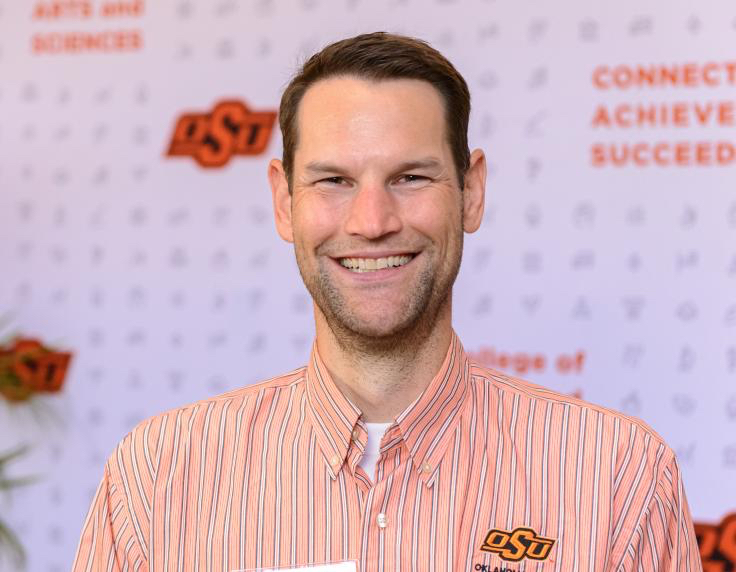
Joe Haley is a Professor in the Department of Physics at Oklahoma State University, where he has been a faculty member since 2013 (tenured 2018, full professor 2023). His research focuses on experimental high energy physics through the ATLAS experiment at CERN, particularly searching for vector-like quarks and new fundamental particles that could address Standard Model limitations. Dr. Haley earned a B.S. in Physics and Astronomy from the University of Washington (2003), followed by a Ph.D. in Physics from Princeton University (2009) for DZero experiment research at Fermilab. He conducted postdoctoral work at Northeastern University (2009-2013) with the CMS experiment at CERN. His research spans collider phenomenology, including Higgs boson studies, B meson lifetime measurements, and lepton universality tests in W boson decays. He employs neural simulation-based inference techniques and advanced τ-lepton reconstruction methods to analyze data from the Large Hadron Collider. Dr. Haley actively contributes to educational initiatives through multiple grants, including the US ATLAS Summer Undergraduate Program (2012-2025) and QuarkNet programs (2012-2024). He teaches core physics courses such as University Physics I-III and specialized topics in General Relativity and Particle Physics. As a strong advocate for equity in academia, Dr. Haley engages in inclusion programs and public outreach. His work intersects with Sustainable Development Goals in quality education, reduced inequalities, and clean energy research.
Andreas Asp Bock is a postdoctoral researcher at the Department of Applied Mathematics and Computer Science within the Technical University of Denmark . His work focuses on scientific computing and numerical linear algebra, with particular emphasis on matrix approximation techniques, preconditioning strategies, and optimization methods. Current affiliation: Technical University of Denmark (College of Engineering) Academic role: Researcher (postdoctoral level) Research interests include: Matrix factorization and truncation Bregman divergence applications Baysian inversion frameworks Curve registration algorithms High-dimensional data analysis Preconditioning for iterative solvers Recent publications demonstrate expertise in improving approximate factorization preconditioners, geometric curve registration, and divergence-based preconditioner design. Collaborations with Martin S. Andersen and others indicate ongoing contributions to sparse linear algebra and computational statistics. Supervision : Currently mentoring J. V. Galvão da Mata in a PhD project focused on Optimization methods for data-sparse models , active from 2022-2025.
Scott W Linderman is an Assistant Professor of Statistics at Stanford University with courtesy appointments in Electrical Engineering and Computer Science. He serves as an Institute Scholar in the Wu Tsai Neurosciences Institute and is affiliated with Stanford Bio-X and the Stanford AI Lab. Education: PhD in Computer Science (2016) - Harvard University SM in Computer Science (2013) - Harvard University BS in Electrical and Computer Engineering (2008) - Cornell University 3 years as Microsoft software engineer before graduate school His research focuses on machine learning and computational neuroscience , developing: Advanced state space models (rSLDS, GP-SLDS) behavioral time series methods (GIMBAL, Keypoint MoSeq) deep state space architectures (S5, ELK) point process models (PP-Seq) scalable inference algorithms (SIXO, Structure-exploiting VI) Key collaborations include: Prof. David Anderson (Caltech) - hypothalamic dynamics Prof. Bob Datta (Harvard Medical School) - behavioral sequencing Prof. Chris Ré (Stanford) - biomedical ML Prof. David Sussillo (Stanford) - neural network theory Scientific contributions: Developed SSM and Dynamax software packages Leonard J. Savage Award recipient (2016) Bridging reinforcement learning and neural dynamics Advancing 3D keypoint tracking and behavioral syllable analysis Labs & teams: Linderman Lab - computational neuroscience Stanford AI Lab - machine learning Wu Tsai Neurosciences Institute - interdisciplinary research Stanford Bio-X - cross-departmental collaboration
Chad M. Schafer is an Associate Professor in the Department of Statistics & Data Science at Carnegie Mellon University , specializing in statistical methodology for astronomy and cosmology. He co-chairs the LSST Informatics and Statistics Science Collaboration and is affiliated with the McWilliams Center for Cosmology at CMU. His research focuses on rigorous handling of complex models and high-dimensional data in the sciences, particularly astronomy. Ph.D. in Statistics, University of California, Berkeley (2004) M.S. in Statistics, University of Illinois at Urbana-Champaign B.S. in Statistics, Western Michigan University Former staff at Argonne National Laboratory (Mathematics and Computer Science Division) His research spans topics such as likelihood-free inference, Bayesian computation, photometric redshift estimation, and semi-supervised learning for supernova classification. He has applied statistical methods to cosmological surveys like SDSS and LSST, as well as climate modeling and hurricane track analysis. Recent publications highlight applications of statistical techniques to astrophysics, including Approximate Bayesian Computation for supernovae, SCA-based photometric redshift estimation , and high-dimensional density modeling . His work intersects astronomy, data science, and computational statistics. He has served in multiple educational roles, including: Teaching data science courses for CMU's Master of Science in Computational Finance (MSCF) program Steering Committee member for MSCF Instructor for the Summer School in Statistics for Astronomers at Penn State's Center for Astrostatistics Moderator of the methodology subsection of the arXiv Statistics area (2007-2018) Director of CMU's Summer Undergraduate Research Experience in Statistics program (2015-2018) His departmental affiliations and committee roles underscore his interdisciplinary approach, bridging statistical theory with practical applications in astronomy and finance.
Chara Podimata is an Assistant Professor of Operations Research and Statistics at the MIT Sloan School of Management and a Lead Researcher at Archimedes/Athena RC. She holds the Class of 1942 Career Development Professorship and focuses on the intersection of Theoretical Computer Science, Economics, and Machine Learning, particularly in incentive-aware machine learning, social computing, online learning, and mechanism design. PhD in Computer Science from Harvard FODSI Postdoctoral Fellow at UC Berkeley Diploma from National Technical University of Athens Her research explores the social aspects of computing, including how humans adapt to machine learning algorithms used in consequential decision-making. Recent work investigates policy questions related to AI and recommendation systems, adversarial robustness, and fairness in revenue management. She has received funding from Amazon, MacArthur Foundation, Google, and MIT GenAI Consortium. Key trends in her publications include strategic classification, contextual search, multi-armed bandits with evolving preferences, and incentive-compatible mechanism design. These works bridge theoretical foundations with practical applications in responsible AI and user behavior modeling. Amazon Research Award (2023) Google Research Scholar Award (2025) MacArthur x-grant Microsoft Dissertation Grant Siebel Scholarship As an advisor, Podimata collaborates with PhD students at MIT ORC, EECS, and MBAn capstone students. She is affiliated with the MIT Operations Research Center and previously worked with Microsoft Research and Google. Her personal page details her advising philosophy and research collaborations.
Linbo Wang is an Associate Professor at the Department of Statistical Sciences , University of Toronto, with cross-appointments to the Department of Computer and Mathematical Sciences at U of T Scarborough and the Department of Computer Science at U of T. He is also an Adjunct Associate Professor at the University of Washington and a Canada Research Chair in Causal Machine Learning. B.Stat. from Peking University (2011) PhD in Biostatistics from the University of Washington (2016) Postdoctoral Fellowship at Harvard T.H. Chan School of Public Health His research focuses on causal inference , machine learning , and biostatistics , particularly causal modeling, graphical models, and robust inference for high-stakes domains like healthcare and justice. Recent work includes causal mediation analysis, instrumental variable methods, and trustworthy AI frameworks emphasizing fairness , explainability , and stability . His publications span causal inference for longitudinal studies, missing data, high-dimensional models, and biomedical applications. Awards include the NSERC Discovery Accelerator Supplement , Ontario Early Researcher Award , and recognition as a Canada Research Chair . He is affiliated with the Vector Institute and the Data Sciences Institute , co-organizing conferences like the 23rd Meeting of New Researchers in Statistics and Probability and serving as tutorial co-chair for the 39th Conference on Uncertainty in Artificial Intelligence . Currently, he is accepting students and postdocs for research in causal inference and machine learning.
Dan Nettleton is a Professor at Iowa State University 's Department of Statistics , where he serves as the Laurence H. Baker Endowed Chair and Department Chair . His academic career focuses on statistical methods for high-dimensional biological datasets, including transcriptomic data (microarrays, RNA-seq), microbiome data, and genome-wide association studies, with applications in plant and animal sciences. He also contributes to statistical learning methodology and sports analytics. PhD , Statistics, University of Iowa (1996) MS , Statistics, University of Iowa (1993) BA , Mathematics, Wartburg College (1991) Nettleton's research addresses statistical challenges in analyzing complex biological datasets, including methods for genome-wide association studies, RNA-seq analysis, and genotype-by-environment interactions. He applies these methods to problems in plant genetics, microbiome studies, and sports prediction models. His work on random forests and predictive analytics has broad implications in both life sciences and sports statistics. His recent publications highlight interdisciplinary applications of statistics, including RNA-seq methodology, plant phenotyping with CNN models, and sports analytics using conformal prediction. Collaborations with plant and animal scientists underscore his impact on agricultural research and biological systems analysis. Advising : Nettleton actively advises graduate students, serves on doctoral committees, and contributes to student education in statistics and interdisciplinary research. No explicit grants are listed in the provided text. Labs/Teams : Affiliated with the Laurence H. Baker Center for Bioinformatics and Biological Statistics at Iowa State University, integrating computational and biological research.