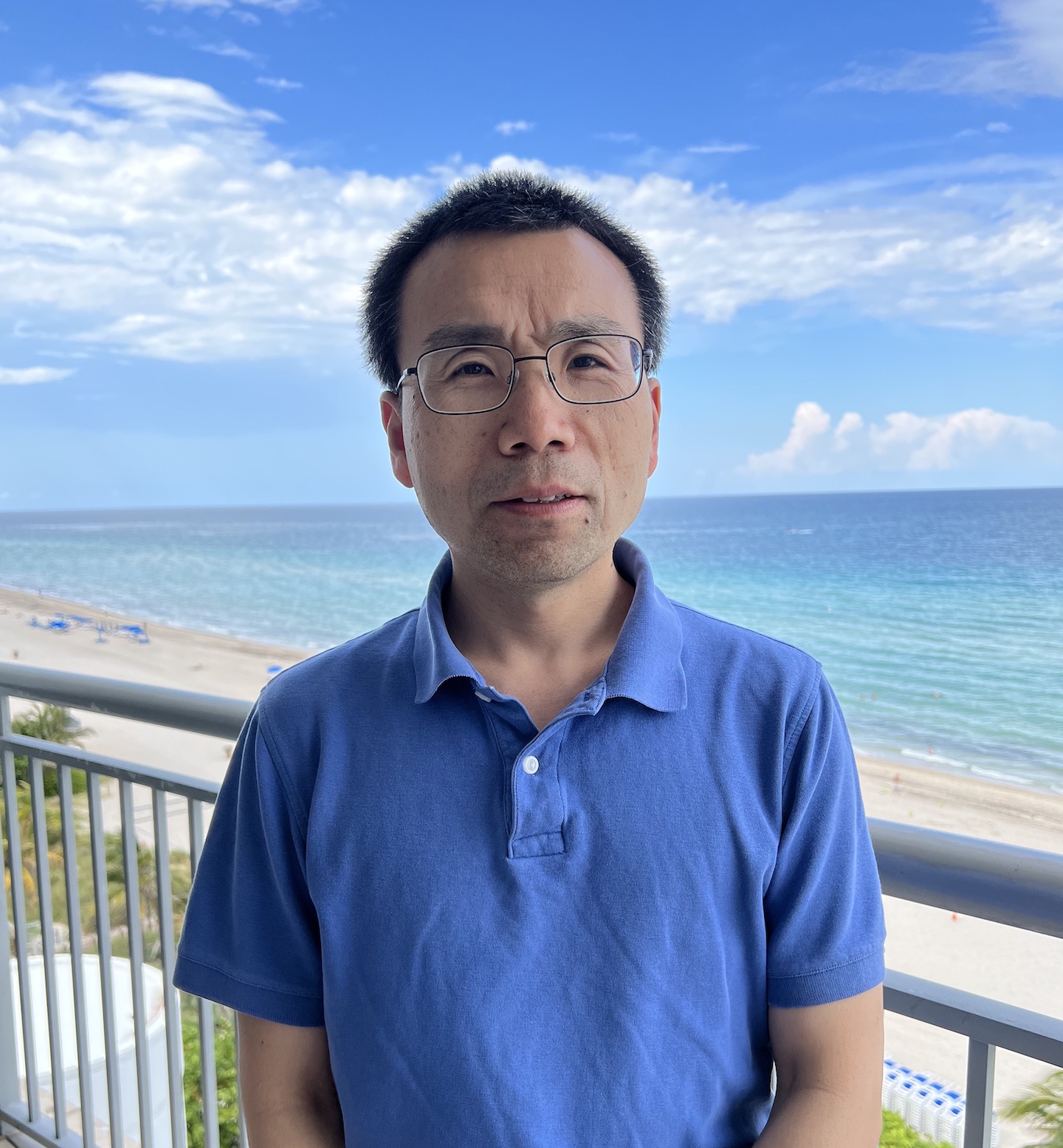
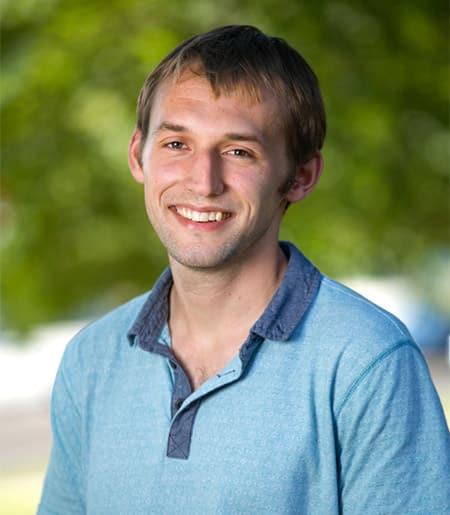
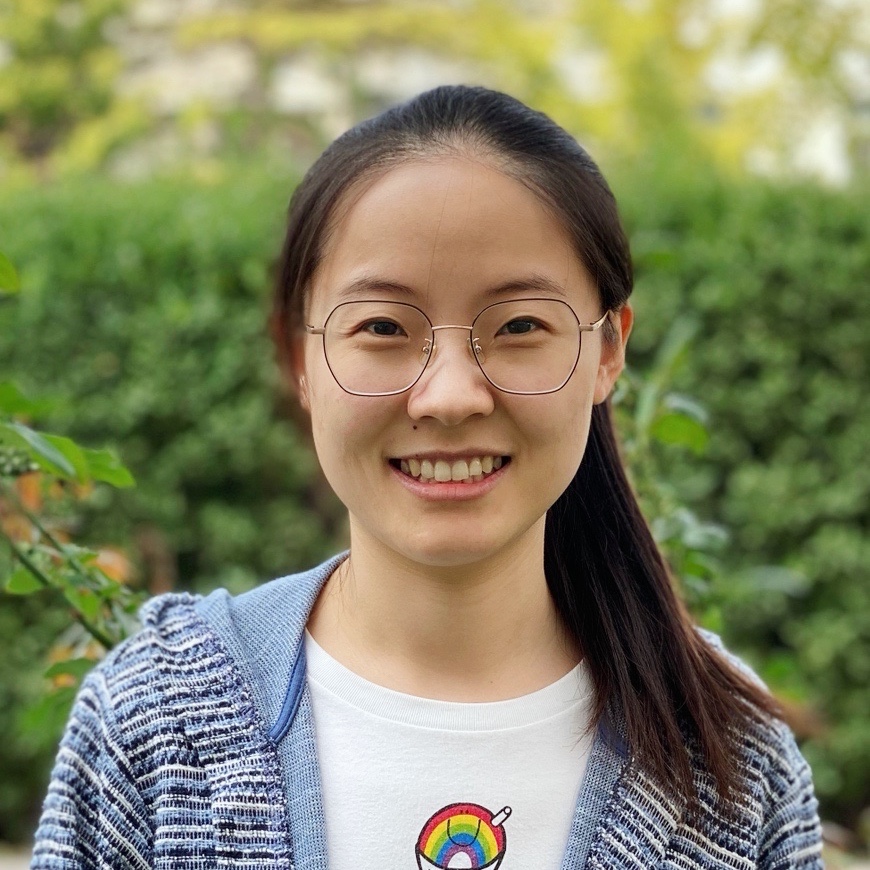
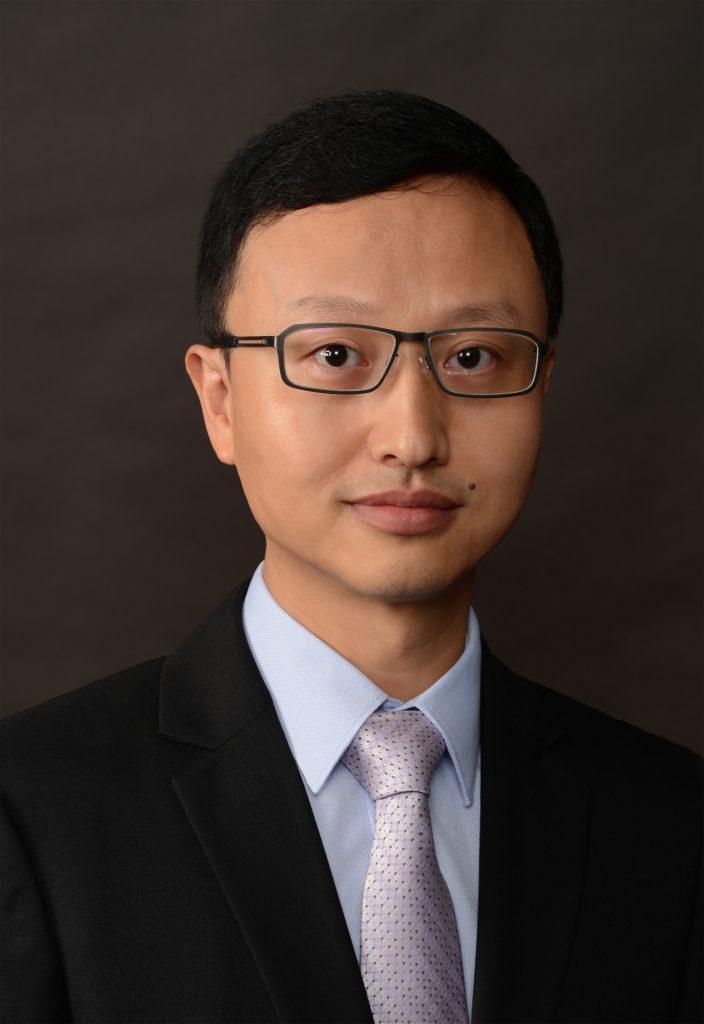
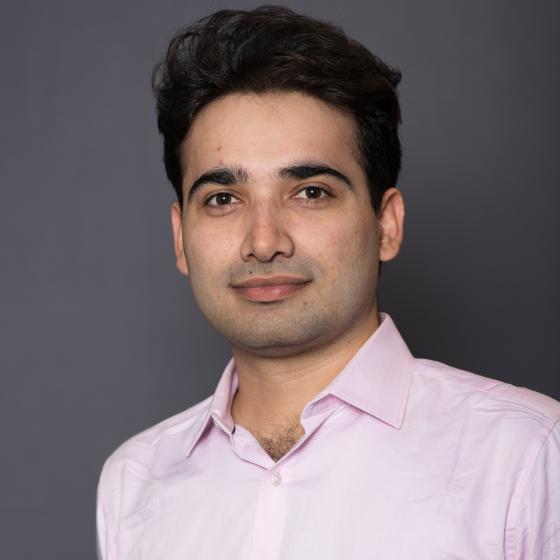
Xihao He is a Postdoctoral Assistant Professor in the Department of Mathematics at the University of Michigan, Ann Arbor. He works with Professors Erhan Bayraktar and Ibrahim Ekren. His research focuses on mean field games, optimal stopping, and principal-agent problems , with applications in stochastic processes and mathematical finance. Education : - Ph.D., Mathematics, The Chinese University of Hong Kong (2024), supervised by Professors Jun Zou and Xiaolu Tan. - B.S., Wuhan University, China (2019). Research Interests : Xihao explores theoretical frameworks in stochastic analysis, including viscosity solutions, optimal stopping under non-Markovian dynamics, and contract optimization in mean-field settings. His work bridges pure mathematics and applied finance, addressing complex systems with common noise and large-scale interactions. Recent Publications : His recent articles analyze limit theory in mean-field optimal stopping and develop mean-field extensions of stochastic representation techniques. These contributions advance understanding of high-dimensional stochastic systems and their applications in finance and game theory.
Suchuan Dong is a Professor in the Department of Mathematics at Purdue University , affiliated with the Center for Computational and Applied Mathematics . His work bridges Computational Mathematics and Machine Learning , focusing on High-Order Numerical Methods and Multiphase Flows . Academic Background Post-Doc in Applied Mathematics, Brown University (2004) Ph.D. in Mechanical Engineering, SUNY Buffalo (2001) M.S. in Physics, Zhejiang University (1995) B.S. in Aerospace Engineering, National University of Defense Technology (1992) His research centers on Neural Network-Based Numerical Methods and Data-Driven Scientific Computing , with applications to Computational Fluid Dynamics , Contact Line Dynamics , and High-Performance Computing . Publications highlight Physics-Informed Neural Networks , Energy-Stable Schemes , and Extreme Learning Machines for PDEs. The articles reflect trends in Neural Network Applications to Dynamic PDEs , Phase Field Modeling , and High-Dimensional Computing , often combining High-Order Numerical Methods with Interfacial Phenomena . His recent work focuses on Exact Time Integration Algorithms and Hidden-Layer Concatenation for stability and efficiency. He leads research in the Center for Computational and Applied Mathematics , emphasizing Thermodynamically Consistent Modeling and Flow-Structure Interactions . His teaching includes MA-36600: Ordinary Differential Equations (Spring 2025).
Alex Townsend is an Associate Professor of Mathematics at Cornell University, affiliated with the College of Arts and Sciences. He holds the Stephen H. Weiss Junior Fellowship and has been recognized for both research and teaching excellence. His research focuses on numerical analysis, scientific computing, and theoretical aspects of deep learning, with contributions to spectral methods, low-rank techniques, and computational algebraic geometry. Education: Townsend earned a DPhil (PhD) in Mathematics from the University of Oxford in 2014. Research Interests: Townsend's work spans several areas: novel spectral methods for differential equations, low-rank matrix and tensor techniques, theoretical foundations of deep learning, and computational algebraic geometry. His research emphasizes developing fast, accurate, and robust numerical algorithms with applications in science and engineering. Teaching & Mentoring: Townsend is a dedicated educator, having taught courses at MIT and Cornell on topics ranging from linear algebra and numerical analysis to advanced graduate-level subjects like kernel-based learning and top-ten algorithms of the 20th century. He has mentored numerous PhD students and postdocs, many of whom now hold academic and industry positions. Awards & Honors: 2022 Stephen H. Weiss Teaching Award 2022 Simons Fellowship in Mathematics 2018 SIAG/LA Early Career Prize 2015 Leslie Fox Prize in Numerical Analysis Grants & Funding: Townsend has secured significant funding, including an NSF CAREER grant (2021), to support his work on operator learning and spectral methods. Labs & Collaborations: While not tied to a specific lab, his research frequently intersects with computational mathematics and machine learning communities. He collaborates widely, contributing to open-source tools like Chebfun and Diskfun.
Jared L. Anderson serves as the Alice Hudson Professor in the Department of Chemistry at Iowa State University, where he leads an active research group focused on advancing separation science and analytical chemistry. His laboratory develops innovative approaches to chemical measurement and analysis using ionic liquids, polymeric ionic liquids, and magnetic ionic liquids for applications in pharmaceutical analysis, environmental monitoring, and nucleic acid diagnostics. Dr. Anderson's research interests center on separation science with particular emphasis on the application of ionic liquids in chromatographic separations and sample preparation. His group has pioneered techniques using magnetic ionic liquids for nucleic acid extraction, developed novel stationary phases for comprehensive two-dimensional gas chromatography, and created polymeric ionic liquid-based sorbent coatings for solid-phase microextraction. These innovations address critical challenges in pharmaceutical quality control, particularly in the analysis of genotoxic impurities in active pharmaceutical ingredients. His recent publications demonstrate a strong focus on practical analytical solutions, with research trending toward point-of-care diagnostic applications using smartphone technology, 3D printed extraction devices, and advanced nucleic acid analysis techniques. The work bridges fundamental chemistry with real-world applications in food safety, environmental monitoring, and clinical diagnostics. Dr. Anderson actively mentors graduate students and postdoctoral researchers, with several former trainees securing competitive academic positions and industry roles. His group maintains collaborations with academic research groups across Europe, South America, North America, and Asia, as well as numerous industrial partners in the pharmaceutical sector. The laboratory participates in the ACS Project SEED program, providing research opportunities for underrepresented high school students. The Anderson Research Group operates state-of-the-art facilities for developing and testing novel separation methodologies, with particular expertise in gas chromatography, liquid chromatography, and microextraction techniques. Current projects focus on creating tunable solvents for specific analytical challenges, with applications spanning from pharmaceutical quality control to environmental monitoring and clinical diagnostics.
Shuangning Li is an Assistant Professor of Econometrics and Statistics at the University of Chicago's Booth School of Business. He holds a Ph.D. from Stanford University's Department of Statistics, advised by Professors Emmanuel Candès and Stefan Wager, and a Bachelor of Science from the University of Hong Kong. Prior to his current role, he was a postdoctoral fellow in Statistics at Harvard University. His research focuses on causal inference, machine learning, and statistical methodology with applications in econometrics, networks, and genomics. **Education:** Ph.D. in Statistics, Stanford University (Advisors: Emmanuel Candès, Stefan Wager) Bachelor of Science, University of Hong Kong **Research Interests:** Causal inference in complex systems (e.g., networks, high-dimensional data) Statistical methods for experimental design and robustness Machine learning applications in genomics and reinforcement learning Randomization-based testing and knockoff filters **Recent Work Trends:** His articles emphasize methodological innovations in causal effect estimation, network interference modeling, and transfer learning. Recent work addresses challenges in stochastic congestion, multi-environment analysis, and cooperative learning frameworks. His 2024 paper advances covariate shift correction for conditional randomization tests, while his 2023 studies explore robustness in model-X inference and dyadic reinforcement learning dynamics. **Advising & Academic Background:** His doctoral training under Candès and Wager shaped his focus on rigorous statistical foundations. He has not yet listed advising relationships in available materials, but his research collaborations span academia and industry.
SHEN Lei is a researcher at the National University of Singapore (NUS), affiliated with the Department of Physics. With a PhD in Physics from NUS, he specializes in Multiscale Modeling and Simulation and Materials Informatics , leveraging machine learning and computational methods for advanced materials discovery. Research Focus: Density functional theory, molecular dynamics, finite element analysis, and data-driven design of materials. Teaching: Modules include Mechanics and Waves (PC1433), Applied Quantum Mechanics (PC2130B), and Mechanical Properties of Materials (ESP2109). His work spans spintronics, ferroelectricity, and energy storage materials, with recent publications on interatomic potentials, sliding heterostructures, and battery anodes. He has received the Teaching Commendation Award and declined the Lee Kuan Yew Postdoctoral Fellowship . Notable Trends: Recent articles emphasize machine learning in materials science, van der Waals heterostructures, quantum transport, and medical image analysis. Subfields include Rashba spin-orbit coupling, piezoelectric tensor modeling, and defect-informed neural networks. Scientific Awards: Teaching Commendation Award (AY15/16; AY16/17) Lee Kuan Yew Postdoctoral Fellowship (2014) (declined)
Michael W. Trosset is a Professor of Statistics at Indiana University in Bloomington, IN. He holds a Ph.D. in Statistics from the University of California at Berkeley and has previously worked at the Arizona Media Arts Center and the College of William & Mary. Educational background includes Princeton High School, Rice University (B.A. in Mathematics), and UC Berkeley (Ph.D. in Statistics). Research Interests: Statistical inference, numerical optimization, manifold learning, high-dimensional data analysis, and stochastic simulation. His work bridges classical statistical theory with modern computational methods, focusing on dimensionality reduction, network analysis, and algorithmic validation. Publication Trends: Recent articles emphasize geometric approaches to statistical computing, including continuous multidimensional scaling, latent structure inference in random graphs, and rehabilitating manifold learning techniques like Isomap. His work often integrates theoretical rigor with practical implementation. Academic Contributions: He has developed courses in statistical computing, multivariate analysis, and statistical learning, emphasizing both theoretical foundations and real-world applications in text mining, microarray analysis, and network inference.
Larry Goldstein is a Professor of Mathematics at the University of Southern California, specializing in probability theory, mathematical statistics, and their applications. He holds a Ph.D. in Mathematics from the University of California, San Diego (1984). His research focuses on distributional approximation via Stein’s method, high-dimensional statistics, concentration inequalities, and statistical efficiency, with applications in epidemiology and biomedical monitoring. He has organized and participated in numerous conferences, including the 'Stein’s Method: The Golden Anniversary' in Singapore (2022) and the 'BIRS Stein Conference' in Banff (2022). Goldstein teaches advanced courses such as Probability Theory, Statistical Consulting, and Mathematical Statistics, often incorporating modern computational tools like R. He has led international summer programs at the University of Perugia, Italy, on topics including mathematical statistics and high-dimensional probability. His work bridges theoretical foundations with practical applications, including modeling transdermal alcohol concentration and analyzing complex sampling designs in cohort studies. His contributions to Stein’s method include developing couplings for distributional approximation and concentration inequalities. Goldstein’s teaching emphasizes statistical inference, machine learning, and data analysis, reflecting his dual focus on rigorous theory and real-world problem-solving.
Liuba Shrira is a Professor of Computer Science at Brandeis University, affiliated with the Michtom School of Computer Science and the Benjamin and Mae Volen National Center for Complex Systems. Her research focuses on distributed systems, storage systems, blockchain technology, concurrent programming, and system architectures. She holds a Ph.D., M.S., and B.S. from the Technion – Israel Institute of Technology. Her work emphasizes reliable and highly available systems, including innovations in snapshot management, transactional memory, and adversarial cross-chain commerce. She has been recognized with awards such as the ACM Distinguished Scientist (2009), Lady Davis Fellowship (2010-2011), and a Best Paper Award (2020). Her research has been supported by grants from the National Science Foundation and other institutions. Recent publications highlight advancements in optimistic concurrency control, blockchain interoperability, and modular past-state systems. Shrira has also contributed to middleware design and distributed computing frameworks, with applications in both academic and industry settings.
Ping Ma is a Professor of Statistics with a courtesy appointment in Computer Science at the University of Georgia. His research focuses on developing innovative statistical and machine learning methodologies for complex high-dimensional data, with applications spanning bioinformatics, computational biology, social network analysis, and anomaly detection in power systems. Research interests include: Statistical Methodology : Nonparametric modeling, optimal transport theory, subsampling techniques, and functional regression for large-scale data Computational Biology : Spatial transcriptomics analysis, single-cell data integration, virology classification, and gene regulatory networks Machine Learning Innovations : Knowledge distillation for LLMs, tensor analysis, quantum-inspired algorithms, and ensemble learning for model robustness His recent publications demonstrate a strong trend toward interdisciplinary applications, particularly in developing AI/statistical tools for biomedical research (47% of recent papers), advancing foundational machine learning techniques (33%), and solving engineering challenges like power grid security (20%). Methodologically, 67% focus on novel algorithm development while 33% refine existing techniques for scalability.
Raaz Dwivedi is Assistant Professor in Operations Research and Information Engineering at Cornell University and Cornell Tech. His research develops statistical and computational methods for personalized decision-making, focusing on causal inference, reinforcement learning, and distribution compression. Recent publications advance kernel thinning techniques, counterfactual inference methods, and adaptive nearest-neighbor algorithms with applications in healthcare and recommendation systems. Research appears in top venues with 15+ publications since 2022. Awards and honors: Blackwell-Rosenbluth Award (2024) ASA Best Student Paper Award (2022) MIT LIDS Best Presentation Award Harvard Teaching Excellence Award FODSI Postdoctoral Fellowship Holds PhD in EECS from UC Berkeley and BTech from IIT Bombay.
Fabio Nobile is a Full Professor at the École Polytechnique Fédérale de Lausanne (EPFL) in the School of Basic Sciences (SB), Department of Mathematics (MATH), holding the CADMOS Chair in Scientific Computing and Uncertainty Quantification. He leads the CSQI (Chair of Scientific Computing and Uncertainty Quantification) group. His work focuses on numerical methods for partial differential equations (PDEs), uncertainty quantification, stochastic modeling, and computational fluid dynamics. He is involved in collaborative projects involving fluid-structure interaction, cardiac electro-mechanics, and energy systems. Professor Nobile has extensive teaching experience, including courses on advanced analysis, stochastic simulation, and numerical integration of stochastic differential equations. He supervises numerous PhD students and has contributed to over 200 peer-reviewed publications, covering topics such as low-rank approximation methods, multilevel Monte Carlo techniques, and optimal control under uncertainty. His research emphasizes interdisciplinary applications, including biomedical engineering (e.g., personalized cardiac simulations) and renewable energy (e.g., probabilistic load forecasting). He collaborates with industries and academic institutions globally, advancing computational methodologies for engineering and scientific challenges.
Jennifer Tang is a Postdoctoral Associate at the Massachusetts Institute of Technology (MIT), holding dual appointments in the Institute for Data, Systems, and Society (IDSS) and the Laboratory for Information and Decision Systems (LIDS). She conducts her research under Professor Ali Jadbabaie, focusing on interdisciplinary problems at the intersection of information theory, network science, and social dynamics. Her position is temporary as she actively seeks a permanent academic role through the 2025 job market. Her academic credentials include: Ph.D. in Electrical Engineering and Computer Science from MIT, advised by Professor Yury Polyanskiy Bachelor of Science in Engineering (B.S.E.) in Electrical Engineering from Princeton University, with independent work supervised by Paul Cuff Dr. Tang's research program centers on theoretical and applied aspects of information theory, including channel capacity, quantization, and data compression. She investigates prediction and estimation in high-dimensional settings, data analytics for complex systems, and mathematical modeling of social dynamics and inference in multi-agent networks. Her work employs tools from statistics, optimization, and network theory to address challenges in communication, decision-making, and societal systems, with particular emphasis on opinion dynamics under social pressure and efficient representation of probability distributions. Analysis of her publication record reveals consistent contributions to information-theoretic limits, social network modeling, and compression techniques. Her works frequently appear in top venues like IEEE Transactions on Information Theory and major conferences (ISIT, CDC, ACC), demonstrating expertise in bridging theoretical foundations with real-world applications in networked systems and societal challenges. Her scientific achievements have been recognized with: Best Student Paper Award at IEEE International Symposium on Information Theory (ISIT) 2022 Best Student Paper Award at IEEE Machine Learning for Signal Processing (MLSP) 2022 Student Competition Winner at the Shannon Centennial Celebration Dr. Tang maintains an active teaching portfolio, having served as instructor for MIT 1.022: Introduction to Network Models (Spring 2025) and teaching assistant for multiple core courses including 6.008 (Introduction to Inference), 6.041/6.431 (Probabilistic Systems Analysis), 6.437 (Inference and Information), and 6.439 (Statistics, Computation and Applications). She also contributed to the MIT Women's Technology Program as a Mathematics Instructor during summer 2017. Her research is embedded within MIT's Laboratory for Information and Decision Systems (LIDS) and Institute for Data, Systems, and Society (IDSS), two premier interdisciplinary laboratories fostering collaboration on data-driven decision-making, societal challenges, and foundational theory in information and systems.
Kasper Green Larsen is a Professor in the Department of Computer Science at Aarhus University. His research focuses on theoretical computer science, machine learning, algorithms, and data structures. He has made significant contributions to boosting algorithms, PAC learning theory, and computational geometry. His work often bridges algorithm design with complexity theory, addressing challenges in optimization, memory efficiency, and lower bounds analysis. Key research areas include: Algorithmic Learning Theory (e.g., boosting, bagging, and PAC learners) Data Structure Design (e.g., invertible Bloom tables, succinct representations) Computational Complexity (e.g., lower bounds for dynamic and oblivious algorithms) Geometric Algorithms (e.g., hierarchical searching, range queries) Recent publications emphasize foundational advancements in learning theory (e.g., optimal weak-to-strong learning) and data efficiency (e.g., memory-reduced Bloom filters). His work frequently appears in top conferences like IJCAI, ICALP, and SODA, reflecting rigorous theoretical contributions with practical implications.
Yiying Wu is a Distinguished Professor of Chemistry at The Ohio State University, affiliated with the College of Arts and Sciences. He holds a B.S. (1998) from the University of Science and Technology of China and a Ph.D. (2003) from the University of California, Berkeley. His research focuses on materials chemistry for energy conversion and storage, including dye-sensitized solar cells (DSSCs), electrocatalysis, and lithium-ion batteries. He has pioneered studies on nanomaterials, such as Co 3 O 4 nanowire arrays and graphene-based composites, to enhance battery performance and energy storage efficiency. Dr. Wu has received prestigious awards, including the Cottrell Scholar Award (2008) and NSF-CAREER Award (2010). His work is funded by the National Science Foundation and Department of Energy. Recent projects include developing localized high-concentration electrolytes for alkali metal batteries and designing superoxide-based potassium-oxygen batteries. His group emphasizes interdisciplinary approaches, combining materials synthesis, electrochemistry, and nanotechnology. Key research areas include: (1) DSSC optimization for efficiency and stability, (2) high-rate Li-ion batteries using mesoporous nanowire arrays, and (3) electrocatalysts for oxygen evolution reactions. Collaborations with industry and academic institutions have led to impactful innovations in energy storage technologies. Scientific Awards: Cottrell Scholar Award NSF-CAREER Award Advising & Grants: Dr. Wu has mentored students now in faculty, postdoctoral, and industry roles. His grants focus on advancing nanomaterials for energy applications. Recent publications highlight breakthroughs in potassium-ion batteries, solid-state electrolytes, and quantum spin liquid candidates. Labs/Teams: His research group operates at the interface of chemistry and engineering, with active projects on battery interfaces, nanomaterial fabrication, and electrochemical characterization.