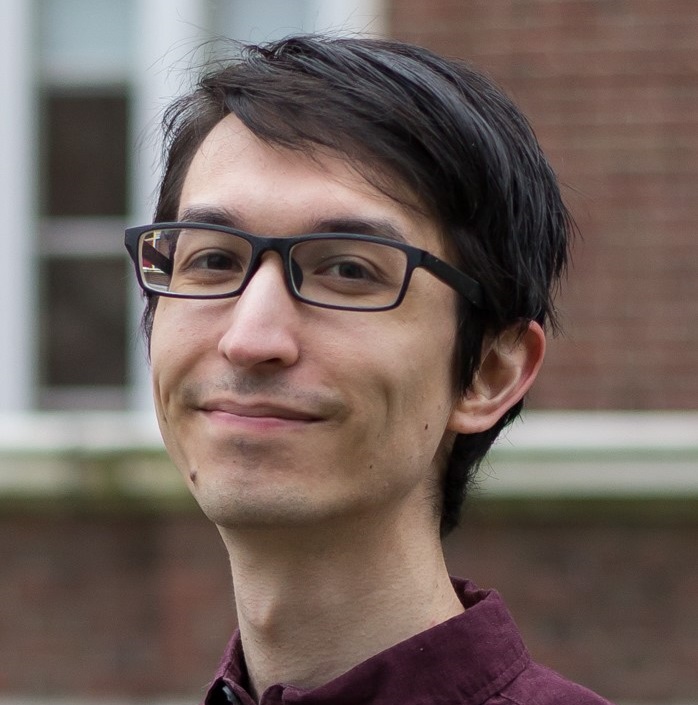
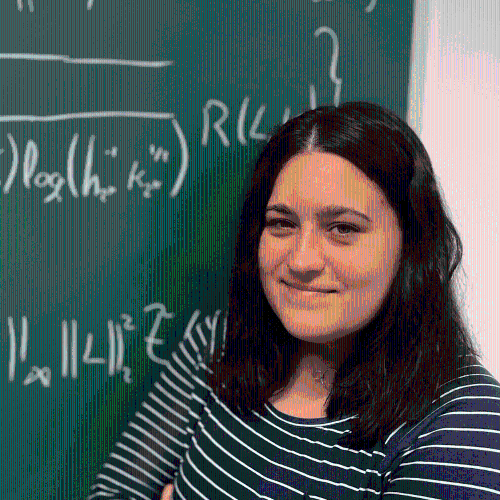
Francisco J. R. Ruiz is a Postdoctoral Research Scientist at Columbia University's Department of Computer Science and affiliated with the University of Cambridge's Engineering Department. He holds a Marie-Sklodowska Curie Fellowship under the EU Horizon 2020 program. His research focuses on statistical machine learning, Bayesian modeling, and inference, with notable contributions to stochastic inference for large categorical distributions. He completed his Ph.D. and M.Sc. at the University Carlos III in Madrid. His work addresses challenges in large-scale machine learning, including computational efficiency for high-dimensional categorical data. Recent contributions include methods like 'Augment and Reduce' for optimizing categorical distribution inference. Key Collaboration: Works with David Blei (Columbia) and Zoubin Ghahramani (Cambridge) Technical Expertise: Probabilistic modeling, neural networks, and scalable algorithms His seminar presentation at Columbia highlighted advancements in reducing computational complexity for large categorical distributions through latent variable augmentation and variational inference techniques.
Aad van der Vaart is a distinguished Professor of Statistics at Delft University of Technology (since 2021). Previously, he held Full Professorships at Leiden University (2012–2021) and Vrije Universiteit Amsterdam (1996–2012). His research focuses on foundational statistical theory and applications, including high-dimensional statistics, Bayesian methods, inverse problems, and genomics. He has made seminal contributions to nonparametric Bayesian inference, empirical processes, and semiparametric theory. Van der Vaart has authored influential textbooks such as Asymptotic Statistics (1998) and Fundamentals of Nonparametric Bayesian Inference (2017, with S. Ghosal). His work bridges theoretical rigor and practical applications, with over 34,830 citations (Google Scholar, 2023) and an H-index of 60. Key honors include the Spinoza Prize (2015, Netherlands’ highest science award), DeGroot Prize (2020), and membership in the Royal Netherlands Academy of Sciences. His academic journey includes roles such as Miller Fellow at UC Berkeley (2000), visiting positions at leading universities, and leadership in statistical societies. His research group actively explores modern challenges in statistical theory and methodology, including causal inference, adaptive estimation, and large-scale data analysis. Notable grants include an ERC Advanced Grant (2012) for Bayesian inverse problems. Collaborations span academia and industry, emphasizing interdisciplinary impact. While specific lab affiliations are not explicitly stated, his work is rooted in foundational mathematical statistics with broad applicability.
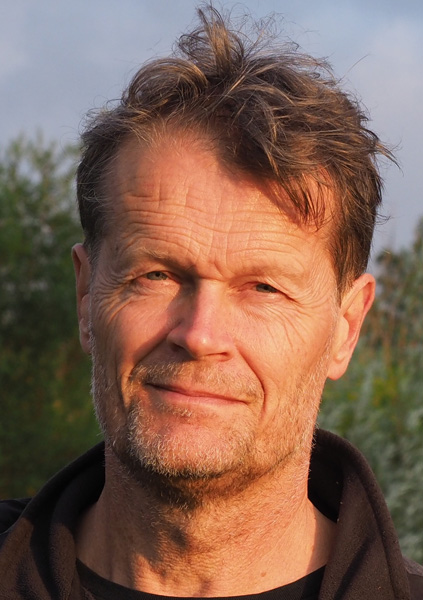
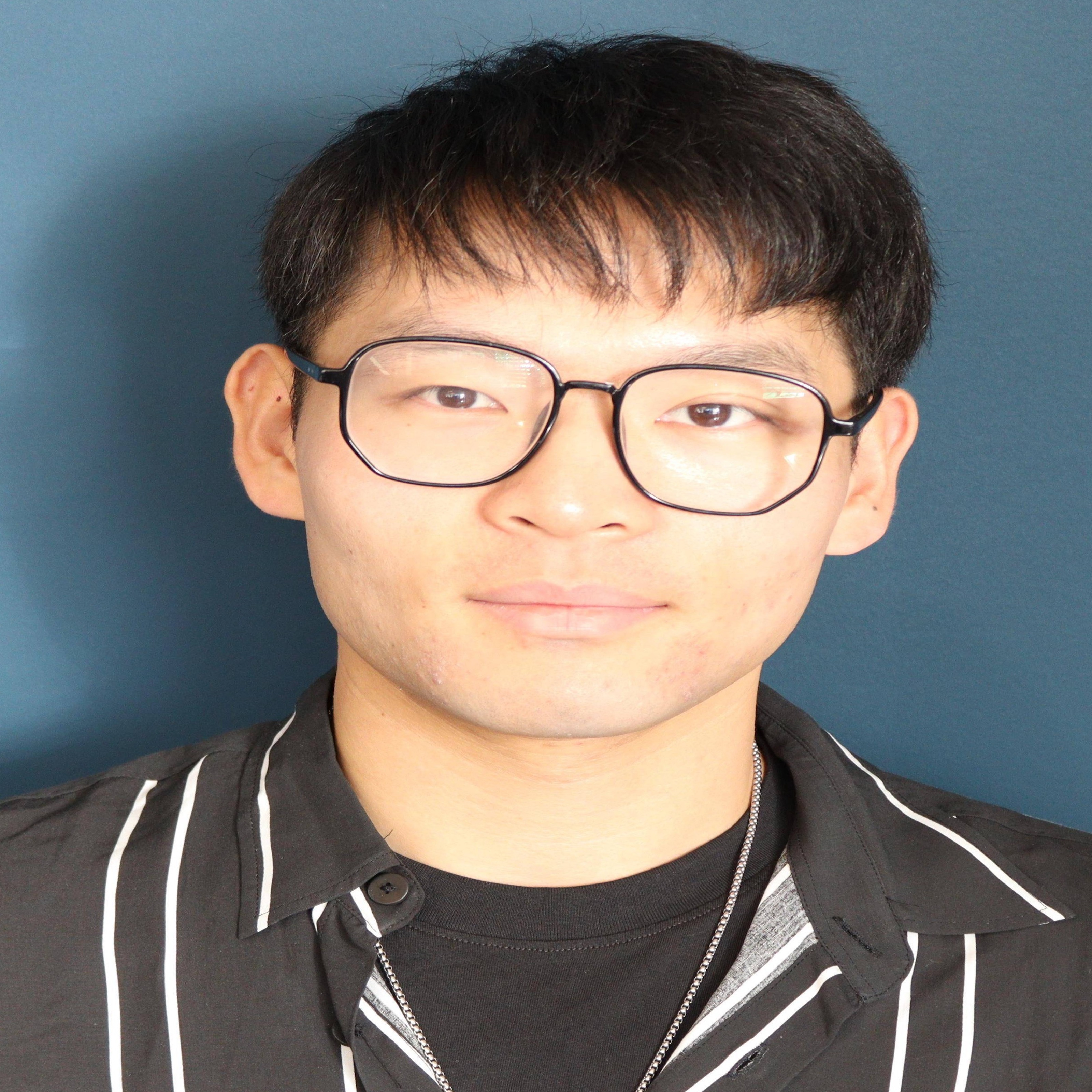
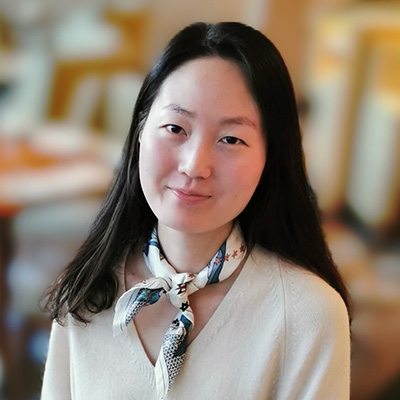
Dr. Andreas Alfons is an Associate Professor in the Department of Econometrics at Erasmus School of Economics, Erasmus University Rotterdam. His research focuses on robust statistical methods, machine learning, psychometrics, and software development for high-dimensional data. He leads the NWO Vidi project on robust analysis of rating-scale data and contributes to the interdisciplinary project on digital decision support. He is an editor for the Journal of Statistical Software and Journal of Data Science, Statistics, and Visualization. His research interests include robust statistical learning, high-dimensional data analysis, and open science practices. Key contributions include R packages like robmed , robustHD , and simFrame . Recent work addresses careless responding in surveys and robust mediation analysis. Publications span journals such as Computational Statistics & Data Analysis , Econometrics and Statistics , and Journal of Statistical Software . His work emphasizes reproducibility and software tools for statistical analysis.
Christos Thrampoulidis is an Assistant Professor in the Department of Electrical and Computer Engineering at the University of British Columbia (UBC), part of the Faculty of Applied Science. Previously, he held the same position at the University of California, Santa Barbara (2018–2020) and was a Postdoctoral Researcher at MIT (2016–2018). He earned his Ph.D. and M.Sc. in Electrical Engineering from Caltech (2016 and 2012) and a Diploma in ECE from the University of Patras, Greece (2011). His research focuses on machine learning theory , optimization , high-dimensional statistics , and statistical signal processing . Specific interests include the theoretical foundations of deep learning, neural collapse phenomena, and the analysis of overparameterized models. He has contributed to understanding imbalanced data challenges, model compression, and safe optimization techniques. Key academic achievements include the Qualcomm Innovation Fellowship (2014) and the A. Mentzeolopoulos Fellowship . He teaches graduate courses on Optimization and Signals & Systems at UBC. His research group (MILD Group) actively explores topics like language model geometry, federated learning, and algorithmic reasoning in transformers. Notable publications include work on neural-collapse geometry, imbalance-aware learning, and the theoretical underpinnings of transformers. He advises multiple Ph.D., M.Sc., and undergraduate students, fostering a collaborative environment centered on equity, diversity, and inclusion.
Dr. Aretha Teckentrup is a Lecturer in the Mathematics of Data Science at the University of Edinburgh's School of Mathematics. Her research focuses on integrating mathematical models with observational data, particularly in areas like uncertainty quantification, Bayesian inverse problems, and computational methods for partial differential equations (PDEs). She holds a PhD in Mathematics from the University of Bath and has held postdoctoral positions internationally, including in Florida. Her work emphasizes interdisciplinary approaches, blending statistics, numerical analysis, and applied mathematics. Notably, she has contributed to advancing Gaussian processes, multilevel Monte Carlo techniques, and sparse grid methods for high-dimensional problems. Her academic journey reflects a strong commitment to bridging theoretical foundations with practical applications. She has published extensively on topics such as probabilistic numerical methods, error estimation in Bayesian inference, and adaptive sampling strategies. Dr. Teckentrup is an active member of the SIAM community, having received the prestigious SIAG/UQ Early Career Prize in recognition of her contributions to uncertainty quantification. Her research continues to explore innovative solutions for data-driven modeling challenges in science and engineering. Dr. Teckentrup’s work often addresses the growing importance of combining data with physical models, exemplified by her development of numerical methods for weather prediction and stochastic dispersion modeling. She advocates for collaboration across disciplines and emphasizes the transformative potential of integrating computational tools with real-world data. Her career trajectory underscores the dynamic and collaborative nature of modern academic research in applied mathematics and data science.
Ye He serves as a Hale Visiting Assistant Professor in the School of Mathematics at the Georgia Institute of Technology, hosted by Prof. Molei Tao. His research bridges mathematical theory and artificial intelligence, focusing on developing rigorous frameworks for machine learning and data science applications. Education: Ph.D. in Mathematics, University of California, Davis (advised by Prof. Krishna Balasubramanian) Research Interests: Dr. He specializes in the mathematical foundations of artificial intelligence , with particular emphasis on scalable inference methods for complex data distributions. His work addresses fundamental challenges in sampling theory , diffusion-based generative modeling , and stochastic optimization , aiming to establish theoretical guarantees for practical machine learning algorithms. Current investigations focus on heavy-tailed distributions, non-log-concave sampling, and discrete data generation mechanisms. Publication Trends: His 11 most recent publications (2020-2025) reveal a concentrated research program advancing theoretical understanding of sampling algorithms and diffusion models. Work spans top venues including NeurIPS, COLT, and IEEE Transactions on Information Theory, with recurring themes in heavy-tailed distribution sampling, convergence analysis of Langevin dynamics, and optimization of generative architectures. The output demonstrates strong interdisciplinary connections between probability theory, statistics, and machine learning. Scientific Awards: No awards were documented in the source materials. Advising and Grants: The provided information contains no details regarding student supervision, research grants, or funding sources. Teaching responsibilities include undergraduate courses in calculus, linear algebra, and differential equations. Research Environment: Dr. He operates within Georgia Tech's School of Mathematics, collaborating closely with Prof. Molei Tao's research group. His office is located in Skiles 016, and his work contributes to the institution's strengths in mathematical data science and computational theory.
Wenrui Li serves as an Assistant Professor in the Department of Statistics at the University of Connecticut, where she develops advanced statistical methodologies for complex biomedical data structures. Her work bridges theoretical statistics and practical healthcare applications, with particular emphasis on network-based modeling and high-dimensional data analysis in oncology and epidemiology. Dr. Li's research program centers on statistics for network data, causal inference under interference, and Bayesian modeling of structured high-dimensional datasets. She pioneers techniques for handling network noise in graph-guided models, with direct applications to cancer genomics, multi-omics integration, and infectious disease surveillance. Her methodological innovations address critical challenges in noisy data environments where traditional statistical approaches fail. Analysis of her 2021-2025 publications reveals three dominant research threads: (1) Digital health interventions to reduce time burden in cancer care, exemplified by her TIME text-messaging system; (2) Graph-guided Bayesian methods for multi-omics data integration with noisy network priors; and (3) Epidemiological modeling of time-varying parameters in noisy surveillance systems. These threads demonstrate consistent focus on methodological rigor applied to pressing biomedical problems. No scientific awards, student advisement records, grant funding details, or laboratory affiliations were documented in the source materials. Her collaborative work spans biostatistics, oncology, and network science, with frequent co-authorship on interdisciplinary projects addressing cancer care optimization and disease modeling.
Shirin Jalali is an Associate Professor in the Department of Electrical and Computer Engineering at Rutgers University. She holds a Ph.D. and M.Sc. in Electrical Engineering and Statistics from Stanford University, with earlier degrees from Sharif University of Technology. Prior to Rutgers, she was a Research Scientist at Nokia Bell Labs and held roles at Princeton University and NYU Tandon School of Engineering. Her research focuses on computational imaging, machine learning, and information theory, addressing challenges like speckle noise mitigation and snapshot compressive imaging. She received the NSF CAREER Award in 2023 and serves as an Associate Editor for IEEE Transactions on Information Theory. Education: Ph.D. in Electrical Engineering, Stanford University, 2010 M.Sc. in Statistics, Stanford University, 2010 M.Sc. in Electrical Engineering, Sharif University of Technology, 2004 B.Sc. in Electrical Engineering, Sharif University of Technology, 2002 Research Interests: Her work spans high-dimensional inference, computational imaging, and machine learning applications in imaging systems. She develops algorithms for coherent imaging in speckle noise environments and explores structure learning through information-theoretic methods. Recent trends in her publications emphasize unrolled neural networks, Bayesian despeckling, and theoretical frameworks for compressive imaging systems. Awards and Roles: 2023 NSF CAREER Award Associate Editor, IEEE Transactions on Information Theory (since 2021) Leadership in research groups addressing imaging and machine learning challenges Grants and Labs: Her NSF CAREER grant funds theoretical work on snapshot compressive imaging systems. She collaborates across academia and industry, leading interdisciplinary projects in signal processing and AI-driven imaging solutions.
Joshua Speagle is an Assistant Professor jointly appointed in the Department of Statistical Sciences and the David A. Dunlap Department of Astronomy & Astrophysics at the University of Toronto. He is also an Associate Member of the Dunlap Institute for Astronomy & Astrophysics and a Member of the Data Sciences Institute. His research lies at the intersection of statistics, astronomy, and computer science, focusing on astrostatistics and data-intensive astrophysics. His research interests include astrostatistics, data science, machine learning, statistical inference, and Bayesian methods. He develops novel statistical learning techniques to extract insights from large, complex datasets, particularly from astronomical surveys. His work emphasizes interpretability, robust inference, and computational efficiency, with applications to galaxy formation, stellar photometry, and 3D dust mapping. The trends in his recent publications reflect a strong focus on interdisciplinary methodologies, particularly in Bayesian inference, nested sampling, and machine learning applied to astrophysical problems. His work consistently bridges theoretical statistics with practical applications in astronomy, emphasizing open-source software and reproducible research. Banting Postdoctoral Fellowship Dunlap Fellowship Joshua Speagle is deeply committed to mentorship and collaboration. He co-leads the Astrostatistics Research Team (ART) with Gwen Eadie, mentoring students and postdocs across disciplines. He is involved in graduate and undergraduate research programs, including the Astronomy & Astrophysics Summer Undergraduate Research Program (SURP). He teaches courses in statistics and astronomy and serves on committees within the University of Toronto and professional societies such as the AAS, ASA-AIG, and SSC-DSA. He co-leads the interdisciplinary Astrostatistics Research Team (ART), which fosters a collaborative, inclusive environment focused on cutting-edge research at the intersection of statistics and AI. The team emphasizes open and accessible science, releasing open-source tools like dynesty and brutus , and mentoring the next generation of data scientists.
Bastian Alexander Grossenbacher is a Full Professor of Machine Learning at the University of Fribourg, where he leads the AIDOS Lab within the Department of Informatics, Faculty of Science and Medicine. He holds secondary appointments at the Institute of AI for Health and the Helmholtz Pioneer Campus of Helmholtz Munich. He is also a TUM Junior Fellow and a member of ELLIS and AI-LIFE. He co-directs the Applied Algebraic Topology Research Network (AATRN) and is involved in the Topology, Algebra, and Geometry in Data Science (TAG DS) initiative. His research lies at the intersection of geometry, topology, and machine learning, with a focus on Geometric Deep Learning, Topological Deep Learning, and Topological Data Analysis. He develops novel machine learning methods that use topological and geometric priors to improve model robustness and interpretability, particularly in biomedical applications. His work spans theoretical foundations and practical implementations in areas such as single-cell analysis, medical imaging, and network science. The 15 most recent publications (2023–2025) reveal a strong trend toward integrating algebraic and differential topology into deep learning architectures. Key themes include the use of Euler Characteristic and magnitude transforms, curvature-based analysis of graphs and data, simplicial and manifold-based neural representations, and the application of topological methods to biomedical data. His articles appear in top-tier venues such as Nature Communications, ICML, NeurIPS, ICLR, and IEEE conferences, reflecting both theoretical depth and high-impact applications. ERC Starting Grant Bastian Rieck is actively involved in mentoring and academic leadership. He supervises PhD students and postdoctoral researchers in the AIDOS Lab and is open to new collaborations, particularly with candidates from interdisciplinary backgrounds. He has secured significant research funding, including the ERC Starting Grant, and leads multiple collaborative research initiatives. He emphasizes open science, sharing code, data, and educational materials publicly. He leads the AIDOS Lab, which focuses on advancing machine learning through topological and geometric principles. He is also a co-director of the Applied Algebraic Topology Research Network (AATRN), which hosts a large online seminar series. Additionally, he maintains DONUT, a curated database of non-theoretical applications of topology, and is active in the ELLIS and AI-LIFE networks, fostering international collaboration in AI and health.
María Alonso-Peña is an Assistant Professor at the University of Santiago de Compostela , affiliated with the Faculty of Biology and the Department of Statistics, Mathematical Analysis, and Optimization . Her research focuses on nonparametric statistical methods, particularly in circular regression models and their applications in neuroscience and animal behavior analysis. She holds a PhD in Statistics from the University of Santiago de Compostela (2022), with a thesis titled New approaches to nonparametric circular regression models . Education: PhD in Statistics (2022), University of Santiago de Compostela Research Interests: Nonparametric statistics, circular regression, optimization, and statistical modeling in neuroscience and ecology Her work bridges theoretical statistics with applied problems, such as analyzing neuronal spike counts and animal escape behavior using advanced circular regression techniques. She has collaborated with institutions like KU Leuven and Universidad de Granada. Recent research includes a grant from the Xunta de Galicia (ED481A-2019/139) for neuroscientific applications. Key contributions include frameworks for circular local likelihood regression and parametrically guided kernel density estimators for spherical data. These methods address challenges in modeling directional and multimodal datasets, with implications for fields like neuroscience and environmental science.
Dr. Mingjun Zhong is a Lecturer in the School of Natural and Computing Sciences at the University of Aberdeen. His research focuses on machine learning and computational statistics with applications in healthcare, energy systems, and medical imaging. He is actively engaged in teaching and academic service, including editorial roles in prominent journals. Position: Lecturer Institution: University of Aberdeen School: School of Natural and Computing Sciences Email: mingjun.zhong@abdn.ac.uk Dr. Zhong's research interests center on probabilistic and statistical machine learning methodologies applied to real-world data. He works on healthcare data analysis, non-intrusive load monitoring (NILM), spectroscopy, EEG/fMRI, and energy disaggregation. His methodological expertise includes variational inference, Markov chain Monte Carlo, Bayesian matrix factorization, and deep learning. He has developed lightweight and efficient neural network models for applications in medical imaging and smart grids. The most recent publications reflect a strong trend in applying advanced machine learning techniques—particularly deep learning, self-supervised learning, and capsule networks—to diverse domains such as medical diagnostics, energy disaggregation, and clinical decision support. There is a clear emphasis on developing efficient, interpretable, and robust models for real-world deployment, often addressing challenges like class imbalance, domain adaptation, and data scarcity. Scientific recognition includes: Fellow of the Higher Education Academy (FHEA) Associate Editor, Neural Processing Letters Review Editor, Frontiers in Applied Mathematics and Statistics Regular reviewer for top-tier journals and conferences in AI and machine learning Grant reviewer for multiple funding bodies Dr. Zhong advises a number of students, as evidenced by co-authorships on numerous publications. His research is supported by academic collaborations and likely external grants, though specific funding details are not mentioned. He teaches courses in Robotics, Machine Learning, and Knowledge Representation and Reasoning, contributing significantly to the curriculum in computing sciences. He is involved in interdisciplinary research, particularly through projects like ARCHERY (Artificial intelligence to Revolutionise the patient Care pathway in Hip and knEe aRthroplastY), which integrates AI into orthopaedic care. His work bridges computer science, statistics, and domain-specific applications, demonstrating a strong commitment to impactful, application-driven research.
Xubo Yue is an Assistant Professor in the Department of Mechanical and Industrial Engineering at Northeastern University. His research focuses on federated data analytics, Bayesian optimization, continuous optimization, Gaussian processes, and deep learning. He holds a PhD in Industrial & Operations Engineering from the University of Michigan, Ann Arbor (2023). His work bridges theoretical advancements with practical applications in advanced manufacturing, predictive maintenance, and sustainable materials discovery. Key affiliations include the Institute of Industrial and Systems Engineers (IISE), INFORMS, and the American Statistical Association (ASA). Recent research emphasizes scalable federated learning frameworks for distributed systems, causal inference in sensor networks, and sharpness-aware optimization techniques to enhance generalization. His methodologies are applied to interdisciplinary domains such as materials science, IoT systems, and renewable energy simulations. Research trends reveal a focus on: Federated learning architectures for privacy-preserving analytics Bayesian optimization for high-dimensional design spaces Integration of causal reasoning with machine learning systems Autonomous experimentation for accelerated materials discovery No scientific awards are explicitly listed in the provided information. His academic advising and grant activities are not detailed in the current data.
Javier Cabrera is a Professor in the Department of Statistics at Rutgers University with a joint affiliation at the Cardiovascular Institute. He holds a Ph.D. from Princeton University and is recognized as a Fulbright Scholar. His office is located at Hill Center 471, 110 Frelinghuysen Road, Piscataway, NJ. His research focuses on: Biostatistics and clinical trial methodology Data mining for functional genomics and DNA/protein arrays Statistical computing, machine vision, and high-dimensional data analysis Cardiovascular health applications using statistical modeling Recent publications (2022-2025) demonstrate strong emphasis on: Novel statistical methods for medical/biological data Machine learning applications in diagnostics and genomics Clinical risk modeling and epidemiological studies Big data reduction techniques and computational efficiency He frequently publishes in interdisciplinary collaborations at the intersection of statistics, biomedicine, and computational science. Awards: Fulbright Scholar He collaborates extensively with the Cardiovascular Institute, contributing statistical expertise to research on cardiovascular outcomes, disease risk modeling, and clinical data analysis.
Håkon Andreas Hoel serves as an Associate Professor in the Department of Mathematics at the University of Oslo, specializing in numerical methods for stochastic and partial differential equations, Monte Carlo techniques, and data assimilation. His work bridges theoretical probability with practical computational challenges in scientific modeling. His academic credentials include a PhD in Numerical Analysis from the Royal Institute of Technology (KTH) in Stockholm (2007-2012), preceded by a Master's (2006) and Bachelor's (2004) in Computational Science from the University of Oslo. Professional experience spans postdoctoral roles at KAUST, EPFL, and UiO, along with a junior professorship at RWTH Aachen (2019-2022). Research centers on developing efficient algorithms for uncertainty quantification, particularly multilevel Monte Carlo methods and ensemble Kalman filtering. His publications demonstrate consistent innovation in reducing computational costs for high-dimensional stochastic simulations while maintaining accuracy, with applications across natural sciences and engineering disciplines. Analysis of recent publications reveals a strong trajectory toward adaptive multilevel frameworks for spatio-temporal data assimilation, integrating statistical inference with numerical solution techniques for complex stochastic systems. This work emphasizes theoretical rigor alongside practical implementation challenges. No scientific awards or honors were documented in the source materials. The provided texts contain no information regarding graduate students supervised or research grants administered by Dr. Hoel. He is actively affiliated with the Computational Mathematics research group at UiO, which focuses on differential equations and computational methods within the Department of Mathematics.