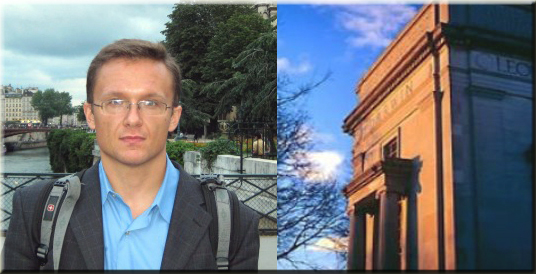
Einar Malvin Rønquist is a Professor and Head of the Department of Mathematical Sciences at NTNU since August 2013. He holds a MSc from NTNU (1980) and a PhD from MIT (1988). His research focuses on numerical solutions of partial differential equations, spectral element methods, reduced basis methods, and computational fluid dynamics. He has been a leader in several research initiatives, including the Computational Science and Visualization program at NTNU (2003–2011). Rønquist is a member of prestigious academies: NTVA (since 2005) and DNKVS (since 2010). He has supervised 8 PhD students and 25 MSc students. His work spans computational science, with notable contributions to parametric modeling, parallel computing, and fluid dynamics simulation. His administrative roles include Vice President of R&D at Nektonics, Inc. (1991–1999) and Deputy Head of NTNU’s Department of Mathematical Sciences (Fall 2012). His publications highlight advancements in numerical methods for PDEs, including spectral element techniques, reduced basis approaches, and high-order approximations for complex geometries.
Anna Seigal is an Assistant Professor of Applied Mathematics at Harvard University's School of Engineering and Applied Sciences (SEAS), with an affiliation in the Department of Statistics. Her research focuses on applied algebraic geometry, tensors, multilinear algebra, and algebraic statistics, particularly in the context of data science. She explores algebraic approaches to data analysis, including matrix/tensor factorizations, parameter estimation, causal inference, and optimization, with applications to physical and biological systems. Her work is supported by the Sloan Foundation and Harvard's Dean’s Competitive Fund. Research Interests: Algebraic statistics, tensors and multilinear algebra, applied algebraic geometry, and the mathematics of data science. She investigates group symmetries in models, dimensionality reduction techniques, and machine learning algorithms. Current projects include causal disentanglement via cumulants and invariant theory applications to maximum likelihood estimation. Her academic contributions span theoretical advancements and interdisciplinary applications, such as genomic template analysis and COVID-19 molecular phenotyping. She collaborates with postdocs and students on research projects and teaches courses like Applied Math 210. Awards and Funding: Supported by the Alfred P. Sloan Foundation and Harvard's internal grants. No explicit named awards listed, but her research is institutionally recognized. Labs/Teams: Leads a research group focused on applied algebra and geometry in data science. Collaborates across departments in SEAS and the Statistics Department.
Sidharth Jaggi is a Professor in the School of Mathematics at the University of Bristol, specializing in Information Theory and Coding Theory with applications in secure data systems. His work provides unconditional information-theoretic security guarantees for communication/storage systems under malicious attacks. Education: B.Tech M.Phil PhD Research Focus: Professor Jaggi develops theoretical frameworks for adversarial communication, covert channels, and sparse signal estimation. His CAN-DO-IT research team (Codes, Algorithms, Networks – Design and Optimization for Information Theory) bridges abstract mathematics with real-world applications in distributed data storage, secure computing, and epidemic testing via group-testing methodologies. Key innovations include fundamental limits for stealthy communication and robust coding against jamming adversaries. Publication Trends: Recent works analyze density-dependent group testing structures, causality benefits in security against limited-view adversaries, and hybrid coding strategies for jamming channels. These publications demonstrate convergence of information theory, high-dimensional geometry, and optimization for next-generation secure data systems. Research Leadership: Principal Investigator for "Information Theory for Interactive Distributed AI" (2024-2029) Research Group: Leads the CAN-DO-IT team focusing on theoretical foundations for secure, robust information systems with tangible industrial applications in data processing infrastructure.
Nicholas Zabaras is a Professor of Uncertainty Quantification and the Director of the Warwick Centre for Predictive Modelling at the University of Warwick. He is a Hans Fischer Senior Fellow at the TUM Institute for Advanced Study (TUM-IAS), hosted by Phaedon-Stelios Koutsourelakis. His research focuses on advancing computational methods for uncertainty quantification, predictive modeling, and multiscale/multiphysics systems. Key areas include Bayesian methods, stochastic modeling, and data-driven approaches for complex materials systems. Education: He holds a diploma in Mechanical Engineering from the National Technical University of Athens (1982), an M.Sc. in Materials Science and Engineering from the University of Rochester (1983), and a Ph.D. in Theoretical and Applied Mechanics from Cornell University (1987). He has held academic positions at the University of Minnesota, Cornell University, and the University of Warwick, where he now leads the Warwick Centre for Predictive Modelling. Research Interests: His work integrates computational mathematics, statistics, and scientific computing to address challenges in materials science, computational physics, and engineering systems. Specific themes include Bayesian uncertainty quantification, high-dimensional modeling, information-theoretic coarse graining, and stochastic model reduction. Awards: He has received the Royal Society Wolfson Research Merit Award (2014), the Michael Tien’72 College of Engineering Teaching Award (2009), and is a Fellow of the American Society of Mechanical Engineers (2006). Labs/Teams: Director of the Warwick Centre for Predictive Modelling, and leader of the Scientific Computing and Artificial Intelligence (SCAI) Laboratory at the University of Notre Dame, focusing on interdisciplinary research in AI-driven predictive modeling and uncertainty quantification.
Marcel Scharth is a Lecturer in Business Analytics at the University of Sydney Business School and affiliated with the Centre for Translational Data Science. He holds a Ph.D. from VU University Amsterdam (2012) and has conducted postdoctoral research at the University of New South Wales. His expertise spans Bayesian methods, computational statistics, machine learning, and financial econometrics. Research focuses include high-dimensional stochastic volatility models, Monte Carlo methods, and Bayesian machine learning applied to time series and longitudinal data. He teaches courses like QBUS2810 (Statistical Modelling), QBUS2820 (Predictive Analytics), and QBUS5001 (Quantitative Methods for Business), emphasizing statistical reasoning and computational skills. His work has been published in top journals such as the Journal of Econometrics and the Review of Economics and Statistics. He actively engages in AI discourse, contributing to media articles on prompt engineering for generative AI and the limitations of models like ChatGPT. Professional activities include Effective Altruism collaborations and open-source contributions via GitHub repositories like forecasting and Machine Learning for Business .
Professor Shenghua Gao is an Associate Professor at the School of Computing and Data Science of the University of Hong Kong (HKU), concurrently serving as Assistant Director for Shanghai Initiatives. He holds a PhD from Nanyang Technological University. His research focuses on integrating machine learning, spatio-temporal data analysis, and database systems to address challenges in mobility prediction, traffic management, and geospatial representation learning. He has contributed significantly to trajectory modeling, indexing frameworks for multi-dimensional data, and the application of large language models (LLMs) in spatio-temporal contexts. Key research interests include: Spatio-Temporal Data Science: Developing frameworks for efficient processing and analysis of point cloud, trajectory, and traffic data. Machine Learning for Databases: Innovating indexing algorithms (e.g., BMTree, MAST) and query optimization techniques leveraging ML. Trajectory and Mobility Prediction: Creating personalized models for next-location prediction and transfer learning across regions. Geographic AI (GeoAI): Enhancing road network representation and urban function inference using physics-guided and foundation models. Recent work highlights include the ST-LLM+ framework for traffic prediction, the MAST system for point cloud analytics, and the exploration of City Foundation Models for urban challenges. His publications span top venues in databases (SIGMOD, VLDB) and AI/data science (ICML, NeurIPS). While no awards are explicitly mentioned, his prolific output and leadership roles indicate significant academic contributions. He is actively involved in teaching and supervising research in the School’s undergraduate and postgraduate programs, including MSc(AI) and MPhil/PhD tracks.
Dr. Milada (Millie) Walkova is an Associate Professor of English for Academic Purposes at the University of Leeds , affiliated with the School of Languages, Cultures and Societies and based in the Language Centre . She joined the university in 2018 and teaches on pre-sessional EAP courses and the online MA in Teaching English for Academic Purposes . She also holds a faculty position at the Technical University of Košice , Department of Languages. Her educational background includes: PhD in English Linguistics DELTA (Cambridge), with specialism in English for Academic Purposes MA in British and American Studies (thesis in EAP) PG Cert in English Language Teaching Higher Education Academy (HEA) Fellow Dr. Walkova’s research centers on linguistic approaches to academic writing , particularly in cross-cultural contexts. Her key interests include argument construction, self-mention, citation practices, and the teaching of academic vocabulary and transition markers. She advocates for evidence-based EAP pedagogy and has developed models such as the three-dimensional framework for self-mention. Her work often compares Slovak and English academic discourse, revealing cultural and linguistic differences in scholarly communication. Her recent scholarly output includes two edited books: Teaching Academic Writing for EAP (2024) and Linguistic Approaches in EAP: Expanding the Discourse (2024), both published by Bloomsbury. Her publications span high-impact journals such as English for Specific Purposes , Journal of English for Academic Purposes , and Discourse and Interaction . The articles show a consistent focus on empirical analysis of academic genres, EAP pedagogy, and contrastive rhetoric, with a strong trend toward practical applications in teaching and research writing support. She is actively involved in the academic community: Administrator, Critical Friend Network Initiative, BALEAP (2023–2025) Editorial Board Member: ESP Today (2023–), Ostrava Journal of English Philology (2021–), Language Scholar (2019–2023) Member, Pedagogic Research in the Arts (PRiA) working group Professional memberships: BALEAP, EATAW, AALL, ISSOTL Dr. Walkova supervises PhD students in linguistic aspects of academic writing and encourages scholarship in EAP. She leads module development in EAP and contributes to pedagogic research within the Faculty of Arts, Humanities and Cultures. Her work bridges theoretical linguistics and practical language teaching, aiming to enhance the academic success of non-native English speakers in global higher education.
Audrey Repetti is an Associate Professor in the Department of Actuarial Mathematics and Statistics within the School of Mathematical and Computer Sciences at Heriot-Watt University in Edinburgh, UK. She also holds a dual affiliation with the Institute of Sensors, Signals, and Systems in the School of Engineering and Physical Sciences, and is part of the Maxwell Institute for Mathematical Sciences - Edinburgh. Her research spans mathematical imaging, optimization, and computational methods with applications across astronomy, medical imaging, and optical engineering. Dr. Repetti's research focuses on developing advanced mathematical frameworks for solving imaging inverse problems. Her work centers on optimization algorithms, Bayesian uncertainty quantification, and the integration of machine learning with traditional mathematical approaches. She has made significant contributions to radio interferometric imaging, computational optical imaging with photonic lanterns, and uncertainty quantification in medical imaging. Her research bridges theoretical mathematics with practical applications in astronomy, healthcare, and engineering. Analysis of her recent publications reveals a clear trajectory toward integrating traditional mathematical imaging approaches with modern machine learning techniques. Her work increasingly focuses on 'hybrid' methodologies that combine data-driven models with optimization frameworks. Key themes include plug-and-play algorithms, uncertainty quantification in imaging, and the development of efficient computational methods for high-dimensional inverse problems. Her research demonstrates strong interdisciplinary connections between mathematics, signal processing, astronomy, and medical imaging. Dr. Repetti is actively involved in academic service, including co-organizing the 2026 ICMS Workshop on Imaging inverse problems and generating models. She has received research funding supporting her work in computational imaging and inverse problems, though specific grant details aren't listed in the provided materials. Her teaching portfolio includes advanced courses in scalable inference, deep learning, and statistics for sciences. She leads several research projects with associated software toolboxes including BUQO (Bayesian Uncertainty Quantification by Optimization), SARA-COIL (Compressive optical imaging with a photonic lantern), and CALIM (Self direction-dependent effect calibration and imaging in radio-interferometry). These projects demonstrate her commitment to developing practical computational tools that advance both theoretical understanding and real-world applications in imaging science.
Ilija Bogunovic is an Assistant Professor (UK Lecturer) in the Department of Electronic and Electrical Engineering at University College London (UCL), Faculty of Engineering Sciences. His research focuses on algorithmic sequential decision-making for robust, reliable, and safe artificial intelligence, with applications in large language model alignment, reinforcement learning, and human feedback integration. His research interests lie at the intersection of machine learning, optimization, and decision theory. He investigates robustness in Bayesian optimization, bandits, and reinforcement learning under adversarial attacks, model misspecification, and distributional shifts. His work spans both theoretical foundations and real-world applications in energy systems, mobility, and AI safety. A central theme is developing algorithms that are provably robust and efficient in uncertain and potentially corrupted environments. The recent publications highlight a strong trend in robust decision-making, particularly in reinforcement learning and preference optimization. Key themes include adversarial robustness in large models, distributional robustness in RL, safe multi-agent systems, and robust Bayesian optimization. The work frequently involves theoretical analysis of regret and sample complexity, combined with practical algorithm design for high-impact applications. Scientific Awards: Google Research Scholar Program Award (Machine Learning & Data Mining), 2023 EPSRC New Investigator Award, 2023 Ilija Bogunovic actively supervises PhD and MSc students, with several of his advisees leading papers accepted to top venues like NeurIPS and ICLR. He has secured competitive research grants, including the EPSRC New Investigator Award, to support his work on robust decision-making. He is building a research team focused on robust and safe AI. He leads a research team and has initiated an online reading group on modern adaptive experimental design and active learning, fostering a collaborative research environment.
Milica Todorovic is a Visiting Professor at Aalto University's Department of Applied Physics , leading machine learning research within the Computational Electronic Structure Theory (CEST) group. Her work bridges quantum mechanical simulations and machine learning algorithms to optimize material functionality, particularly for solar cell components and organic-inorganic interfaces . Research Interests include: Data-driven materials science Active learning for molecular datasets Bayesian optimization in atomic structure prediction Quantum simulations of surfaces and adsorbates Thermodynamic property modeling for atmospheric molecules Article Trends (2017-2025) show focus on machine learning applied to materials science , with subfields spanning bayesian optimization , conformational analysis , and density functional theory . Key collaborations include Patrick Rinke and Hanna Vehkamäki . Activities include organizing workshops like the Young Researcher’s Workshop on Machine Learning for Materials Science (2019) and International Workshop on Machine Learning for Materials Science (2018).
Selin Aslan serves as an Assistant Professor in the Department of Mathematics at Koç University, Istanbul, Turkey, where she conducts research at the intersection of computational mathematics and imaging science. Her academic appointments and research activities are centered within the university's mathematics department, contributing to both undergraduate and graduate education in mathematical sciences. Her educational qualifications include: PhD in Mathematics from Virginia Polytechnic Institute and State University (2018) Master's in Mathematics from Rochester Institute of Technology (2013) B.A. in Mathematics from Ege University (2010) Dr. Aslan's research program focuses on developing advanced computational methods for solving inverse problems in imaging, with particular expertise in phase retrieval, tomographic reconstruction, and ptychography. Her work bridges theoretical mathematics with practical applications in medical imaging, microscopy, and materials science, emphasizing algorithmic innovation and computational efficiency. She integrates techniques from deep learning, optimization theory, and high-performance computing to address challenges in image reconstruction under physical constraints. Analysis of her publication record reveals a consistent trajectory toward solving complex imaging problems through hybrid approaches that combine physics-based models with data-driven techniques. Her recent work demonstrates increasing emphasis on scalability for large datasets, robustness in photon-limited scenarios, and real-time processing capabilities, with applications spanning biomedical imaging to advanced microscopy. No scientific awards were documented in the available sources. Information regarding student advising and research grant activities was not specified in the provided materials, though her publication record suggests active research collaboration. Her computational focus implies engagement with high-performance computing resources for large-scale image reconstruction tasks. While specific laboratory infrastructure details were unavailable, her research on multi-GPU implementations and distributed computing indicates utilization of advanced computational facilities for handling large-scale imaging datasets.
Nicholas Tan Jerome is a Researcher at the Karlsruhe Institute of Technology (KIT), specifically working at the Institute for Process Data Processing and Electronics (IPE). His research focuses on scientific data management, real-time monitoring, low-latency computing, and scientific visualization for large-scale physics experiments and medical imaging applications. Dr. Jerome earned his PhD in Electrical Engineering from KIT in 2019, following an MSc (2010) and Dipl.-Ing. (2009) from University of Applied Science Mannheim. His educational background in electrical and automation engineering provides the foundation for his current research in scientific data systems. His research program addresses critical challenges in managing and visualizing data from large-scale scientific experiments. Dr. Jerome has developed innovative approaches for real-time data processing, low-latency visualization, and scientific data management systems. His work bridges computer science, electrical engineering, and domain-specific applications in physics and medical imaging, with particular focus on applying machine learning to time-series forecasting and causal inference in complex experimental setups. Analysis of his recent publications reveals a strong trajectory in neutrino physics data systems (KATRIN experiment) and advanced visualization frameworks (BORA). His work demonstrates consistent innovation in making scientific data more accessible and interpretable for researchers working with complex experimental setups. Dr. Jerome has received recognition through publications in high-impact journals including Science, Nature Communications, and Physical Review Letters. His collaborative approach is evident in his extensive co-authorship across physics, computer science, and biomedical domains. He has advised or collaborated with numerous researchers across disciplines, contributing to projects that integrate data acquisition, processing, and visualization for scientific discovery. His current work focuses on developing practical tools that help scientists make better, faster decisions from noisy and high-dimensional experimental data. Dr. Jerome leads development of the BORA framework for personalized data display in large-scale experiments and contributes to the KATRIN experiment's scientific data management infrastructure. His technical expertise spans real-time systems, scientific visualization, and machine learning applications for experimental physics.
Linbo Wang is an Associate Professor at the Department of Statistical Sciences , University of Toronto, with cross-appointments to the Department of Computer and Mathematical Sciences at U of T Scarborough and the Department of Computer Science at U of T. He is also an Adjunct Associate Professor at the University of Washington and a Canada Research Chair in Causal Machine Learning. B.Stat. from Peking University (2011) PhD in Biostatistics from the University of Washington (2016) Postdoctoral Fellowship at Harvard T.H. Chan School of Public Health His research focuses on causal inference , machine learning , and biostatistics , particularly causal modeling, graphical models, and robust inference for high-stakes domains like healthcare and justice. Recent work includes causal mediation analysis, instrumental variable methods, and trustworthy AI frameworks emphasizing fairness , explainability , and stability . His publications span causal inference for longitudinal studies, missing data, high-dimensional models, and biomedical applications. Awards include the NSERC Discovery Accelerator Supplement , Ontario Early Researcher Award , and recognition as a Canada Research Chair . He is affiliated with the Vector Institute and the Data Sciences Institute , co-organizing conferences like the 23rd Meeting of New Researchers in Statistics and Probability and serving as tutorial co-chair for the 39th Conference on Uncertainty in Artificial Intelligence . Currently, he is accepting students and postdocs for research in causal inference and machine learning.
Chad M. Schafer is an Associate Professor in the Department of Statistics & Data Science at Carnegie Mellon University , specializing in statistical methodology for astronomy and cosmology. He co-chairs the LSST Informatics and Statistics Science Collaboration and is affiliated with the McWilliams Center for Cosmology at CMU. His research focuses on rigorous handling of complex models and high-dimensional data in the sciences, particularly astronomy. Ph.D. in Statistics, University of California, Berkeley (2004) M.S. in Statistics, University of Illinois at Urbana-Champaign B.S. in Statistics, Western Michigan University Former staff at Argonne National Laboratory (Mathematics and Computer Science Division) His research spans topics such as likelihood-free inference, Bayesian computation, photometric redshift estimation, and semi-supervised learning for supernova classification. He has applied statistical methods to cosmological surveys like SDSS and LSST, as well as climate modeling and hurricane track analysis. Recent publications highlight applications of statistical techniques to astrophysics, including Approximate Bayesian Computation for supernovae, SCA-based photometric redshift estimation , and high-dimensional density modeling . His work intersects astronomy, data science, and computational statistics. He has served in multiple educational roles, including: Teaching data science courses for CMU's Master of Science in Computational Finance (MSCF) program Steering Committee member for MSCF Instructor for the Summer School in Statistics for Astronomers at Penn State's Center for Astrostatistics Moderator of the methodology subsection of the arXiv Statistics area (2007-2018) Director of CMU's Summer Undergraduate Research Experience in Statistics program (2015-2018) His departmental affiliations and committee roles underscore his interdisciplinary approach, bridging statistical theory with practical applications in astronomy and finance.
Victor Chernozhukov is a Professor at the Department of Economics and Center for Statistics at the Massachusetts Institute of Technology (MIT) . He also holds international fellowships at the University College London's CEMMAP and is a Professor by Courtesy at the New Economic School in Russia. His research spans econometrics, high-dimensional statistics, quantile regression, and causal inference. Education: Ph.D. in Economics from Stanford University (2000), M.S. in Statistics from University of Illinois at Urbana-Champaign (1997) His work focuses on developing statistical methods for high-dimensional data, including central limit theorems , post-selection inference , and quantile regression . He has contributed to partial identification , Bayesian inference , and extreme value analysis , with applications to economic policy evaluation. Recent publications emphasize high-dimensional causal inference , adaptive confidence bands , and set estimation . His research has been supported by the National Science Foundation and recognized with the Alfred P. Sloan Research Fellowship . Scientific Awards: Alfred P. Sloan Research Fellowship (2005-2007) Castle-Krob Career Development Chair (2004-2007) Grants include long-term support from the National Science Foundation since 2001 and software development collaborations for Stata and MATLAB implementations.