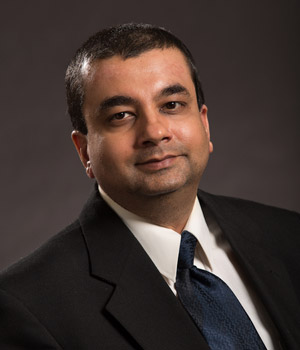
Stuart Berry is an academic researcher affiliated with the College of Science and Engineering , contributing to interdisciplinary studies at the intersection of optimization, traffic engineering, and network environments. His role as a lecturer involves both teaching and research, focusing on practical applications of heuristic methods in complex systems. Research Institutes : College of Science and Engineering Academic Rank : Lecturer Research Interests Traffic assignment and optimization Heuristic and computational modeling Opportunistic network environments Green transport planning Audio engineering and production systems Equilibrium problem analysis Publication Trends His work spans transportation engineering , network optimization , and heuristic algorithms applied to diverse systems, from small manufacturing firms to ad-hoc networks. Recent papers focus on integrating mathematical modeling with simulation for solving real-world problems in green logistics and service matching .
Vitalii Naumov is an Associate Professor at the Chair of Transportation Systems, Faculty of Civil Engineering, Cracow University of Technology. His expertise spans transportation planning, logistics optimization, and sustainable urban development. He holds BEng, PhD, and DSc degrees. Research focuses include freight transport efficiency, public transport synchronization using genetic algorithms, and cargo bike integration in urban logistics. His work emphasizes environmental impact assessment and stochastic demand modeling in logistics systems. Key collaborations involve researchers like Hanna Vasiutina and Andrzej Szarata, with over 10 joint publications. He has contributed to projects like sustainable grain transit infrastructure and emissions reduction strategies for urban deliveries. Prof. Naumov’s methodologies include simulation modeling, fuzzy-logic systems, and big data analytics applied to transport systems. He advises on optimizing multimodal transport terminals and logistics chain structures.
Konstantinos Parsopoulos is a Professor at the Department of Computer Science & Engineering, University of Ioannina. He holds a Dipl. Mathematics (1998) and M.Sc. in Mathematics of Computers and Decision Making (2000) from the University of Patras, where he also earned his Ph.D. in Intelligent Optimization (2005). Prior to his current role, he served as a Lecturer at the Department of Mathematics, University of Patras (2008–2009). His academic journey includes positions as Assistant Professor (2009–2016), Associate Professor (2016–2022), and Professor (since 2022) at the University of Ioannina. His research focuses on Numerical Optimization, Computational Intelligence (including Evolutionary Computation and Swarm Intelligence), and Computational Operations Research. These areas encompass the development and analysis of metaheuristics, algorithm portfolios, and optimization techniques for real-world applications such as logistics, financial forecasting, and engineering systems. His work emphasizes parallel computing strategies, reinforcement learning for parameter adaptation, and software tools like SOMO-VCB for stochastic optimization. Parsopoulos has contributed to diverse optimization challenges, including crowdshipping models, neural network-based differential equation solvers, and variance counterbalancing in stochastic systems. His publications span topics from theoretical algorithm design to practical implementations in MATLAB and distributed computing environments. Despite his extensive contributions, no scientific awards are explicitly mentioned in the provided texts. In terms of academic leadership, he has advised numerous students (though no names are listed) and has been involved in grants related to optimization software and algorithmic research. His collaborations extend to cross-disciplinary projects in visual sensor networks, traffic light optimization, and bioinformatics, reflecting the broad applicability of his optimization methodologies.
Amol Mali is an Associate Professor in the Department of Computer Science at the University of Wisconsin-Milwaukee, currently on sabbatical for Spring 2025. His research bridges theoretical AI with practical applications across diverse domains, leveraging his interdisciplinary background spanning computer science and mechanical engineering. Education PhD, Computer Science, Arizona State University, Tempe, May 1999 MS, Mechanical Engineering with specialization in Robotics, Indian Institute of Technology, Kanpur, India, June 1994 BS, Engineering in Mechanical Engineering, Victoria Jubilee Technical Institute (VJTI), University of Bombay, India, July 1991 Research Interests Dr. Mali's work spans Data Science , Internet of Things , and Artificial Intelligence with specialized focus on Planning , Autonomous Agents , and Computer Game Design . His research extends to Robot Motion Planning and AI in Healthcare , while actively addressing Ethics, Diversity, Inclusion, and Equity implications in technology development and Higher Education practices. Publication Trends His 2016-2023 publications reveal a strong emphasis on AI applications in gaming (machine learning, motion planning, symbolic systems), health-focused AI/IoT implementations, and human-computer interaction innovations like ergonomic keyboard design. Work consistently connects theoretical AI frameworks to real-world problem-solving across healthcare, education, and accessibility domains. Scientific Awards No scientific awards were mentioned in the provided information. Advising and Grants The available documentation does not specify doctoral advisees, grant funding, or research team leadership roles. Labs and Teams No dedicated research laboratories or collaborative teams are referenced in the source material.
Adrian ALEXANDRESCU is an Associate Professor at the Department of Computer Science and Engineering within the Faculty of Automatic Control and Computer Engineering at “Gheorghe Asachi” Technical University of Iași. He is a member of the Open Infrastructure Research Center and specializes in interdisciplinary research areas such as blockchain technology, distributed systems, artificial intelligence (genetic algorithms, neural networks), and IoT applications. His work bridges theoretical computer science with practical implementations in education, healthcare, and smart technologies. His research interests focus on leveraging blockchain for secure transactions, optimizing distributed systems, and enhancing e-learning through gamification. He has contributed to projects involving sensor networks for health monitoring, real-time driver sobriety tracking, and decentralized identity management systems. His academic contributions span over 20 years, with notable work on genetic algorithms for task mapping in heterogeneous systems and cloud-based solutions for ambient assisted living. Dr. ALEXANDRESCU’s publications emphasize blockchain’s role in trustless systems, IoT-driven healthcare environments, and AI-driven solutions for education and logistics. His work on decentralized article retrieval systems and plagiarism detection frameworks underscores his commitment to ethical and efficient digital ecosystems. Despite no explicitly listed awards, his prolific publication record reflects sustained academic excellence. He advises on projects at the intersection of cloud computing, distributed architectures, and smart technologies. His labs and collaborations focus on developing scalable solutions for real-world challenges such as secure real estate transactions and community-driven academic publishing systems.
Milod Kazerounian is an Assistant Teaching Professor in the Department of Computer Science at Tufts University's School of Engineering. He holds a Ph.D. in Computer Science from the University of Maryland, College Park (2021), and dual Bachelor's degrees from the University of Connecticut (2015). His research focuses on enhancing type systems for dynamic languages like Ruby, integrating formal verification, programming language design, and machine learning methodologies. Education: Bachelor of Arts & Science, University of Connecticut (2015) Ph.D., University of Maryland, College Park (2021) Research Interests: Type systems for dynamic languages Formal verification techniques Programming language design Machine learning applications in type systems Teaching: Currently instructs courses in Data Structures, Programming Languages, and How Systems Fail at Tufts University. Awards: Recipient of the NSF Graduate Research Fellowship (2017–2021), multiple teaching recognitions, and numerous undergraduate scholarships.
Dr. Rakib Abdur is Associate Professor and Systems Security Group member at Coventry University's Institute for Future Transport and Cities, specializing in formal verification of autonomous systems. Research focuses on modeling and verifying safety/security properties in resource-constrained environments using temporal logics and model-based testing. Holds PhD in Computer Science from University of Nottingham (2011) on verifying resource-bounded agents, with prior positions at University of West of England and University of Nottingham Malaysia Campus. Current work includes developing simulation frameworks for automotive cybersecurity risk assessment and context-aware security models. Leads projects on enhanced intrusion detection systems using meta-heuristic optimization and cybersecurity roadmaps for connected infrastructure. Contributions include formal methods for analyzing qualitative/quantitative properties in safety-critical autonomous systems.
Univ.-Prof. Dr. Georg Moser is a Professor in the Department of Computer Science at the University of Innsbruck. His research focuses on theoretical computer science, complexity analysis, automated reasoning, and formal methods. He leads the Theoretical Computer Science (TCS) group, with expertise in term rewriting systems, programming language semantics, and algorithmic learning theory. Key research areas include: complexity analysis of programs via rewriting techniques, automated tools for resource analysis (e.g., ATLAS), and foundational work on proof theory and logic. His work bridges theory and practice, addressing challenges in program verification and probabilistic systems. Selected publications (2021–2025) highlight advancements in reinforcement learning, quantum program analysis, and modular rule-based systems. He teaches courses like 'Discrete Mathematics' and 'Introduction to Theoretical Computer Science'.
Carles Serrat Piè is an Associate Professor in the Department of Mathematics at Universitat Politècnica de Catalunya-BarcelonaTECH, affiliated with the EPSEB school. He leads research in applied statistics and durability of civil infrastructure through the GRBIO group. His work focuses on survival analysis, building material degradation, and statistical modeling in construction engineering. Education: PhD and BSc in Mathematics from UPC and Universitat Autònoma de Barcelona. He advises PhD students in structural durability and data science applications. His research spans 255+ publications across journals like Journal of Building Engineering and Applied Sciences, with an h-index of 11. Key research areas include building condition assessment methodologies, predictive modeling for urban systems, and statistical analysis of construction defects. Notable contributions include the FOAM assessment framework and UAV-based inspection techniques. He received the 2023 Premis Catalunya Construcció award. Active in educational innovation through projects like EngiMath@UPC+, developing blended learning strategies for engineering mathematics. Collaborates internationally on OER development and STEM education initiatives.
Bahar Cavdar is an Assistant Professor in the Department of Industrial and Systems Engineering at Rensselaer Polytechnic Institute (RPI), specializing in operations research applications for complex logistical systems. Her work bridges theoretical optimization with real-world infrastructure challenges, particularly in time-sensitive environments requiring rapid decision-making. Her academic credentials include: Ph.D. in Industrial and Systems Engineering from Georgia Institute of Technology M.S. in Operations Research from Georgia Institute of Technology B.S. in Industrial Engineering from Middle East Technical University Dr. Cavdar's research centers on Supply Chain Management and Logistics, with deep expertise in stochastic optimization for dynamic systems. She develops mathematical models addressing multi-trip vehicle routing under uncertainty, capacity allocation with customer time preferences, and infrastructure network restoration. Her methodological approach integrates queueing theory, game theory, and heuristic algorithms to solve problems where timing constraints critically impact system performance. Analysis of her 2022-2025 publications reveals three dominant thematic trajectories: (1) Infrastructure resilience in power grids and disaster response through crew routing and network fortification; (2) Behavioral operations examining word-of-mouth dynamics and wage theft in labor markets; and (3) Time-sensitive logistics optimization for delivery systems and predictive maintenance. These intersect at the nexus of computational operations research and practical implementation challenges. No scientific awards were documented in the provided materials. Dr. Cavdar mentors graduate researchers in industrial engineering with focus areas spanning infrastructure restoration algorithms and behavioral supply chain models. While specific grant details remain unspecified, her publication topics indicate sustained funding for projects involving network optimization under uncertainty, disaster response logistics, and human-centric operations management. She teaches specialized courses including ISYE 4960: Game Theory and Applications in Supply Chain Management.
Jennifer Pazour is a Professor and the PhD Program Director in the Department of Industrial and Systems Engineering at Rensselaer Polytechnic Institute (RPI), where she also holds the James M Tien '66 Dean's Fellow in Decision Sciences and Engineering Systems position. Her research focuses on mathematical modeling to guide decision making for logistics and supply chain challenges in modern on-demand systems. Dr. Pazour's educational background includes: Ph.D. in Industrial Engineering from the University of Arkansas (2011) M.S. in Industrial Engineering from the University of Arkansas (2009) B.Eng. in Industrial Engineering from South Dakota School of Mines and Technology (2006) with a minor in Mathematics Dr. Pazour's research addresses the fundamental differences between modern and traditional supply chain systems, particularly focusing on how resources are acquired, managed, and allocated to fulfill customer requests in environments with dispersed locations and small-unit orders. Her team develops mathematical and computational representations of sociotechnical systems, creating optimization models, solution approaches, and managerial insights across diverse applications including resource sharing platforms, peer-to-peer transportation systems, on-demand warehousing, and crowdsourced order fulfillment. Methodologically, her work spans integer linear programs, bi-level optimization formulations, queuing models, and analytical models. Her recent publication trends show a strong focus on omnichannel retail logistics, autonomous robotics in store fulfillment, and optimization frameworks for platform-based systems. A significant portion of her work addresses the balance between platform efficiency and supplier autonomy in ridesharing and delivery platforms, while more recent research explores volunteer management and nonprofit operations through optimization frameworks. Her research demonstrates how mathematical models can provide actionable insights for both industry applications and policy recommendations. Dr. Pazour has received numerous prestigious awards: Fellow of the Institute of Industrial and Systems Engineers (2025) RPI School of Engineering Faculty Research Excellence Award (2024) National Science Foundation CAREER Award (2018) Johnson & Johnson WiSTEM2D Scholar (2018) Office of Naval Research Young Investigator Award (2013) IISE Dr. Hamed K. Eldin Outstanding Early Career IE in Academia Award (2017) As an advisor, Dr. Pazour has successfully mentored multiple PhD students through to graduation, including Joyjit Bhowmick (2024), Rosemonde Ausseil (2022), Hannah Horner (2021), and Kaan Unnu (2020). Her research is supported by significant funding from the National Science Foundation, Office of Naval Research, Johnson & Johnson, and other organizations, totaling millions of dollars in active research grants. She has served as an Associate Editor for several prestigious journals and held leadership positions in professional societies including INFORMS and IISE. Dr. Pazour leads a vibrant research group focused on logistics and supply chain optimization, with current projects spanning omnichannel retail logistics, autonomous robotics, peer-to-peer transportation platforms, and nonprofit resource sharing systems. Her team collaborates with industry partners including W.W. Grainger and has developed practical tools such as a cost calculator for on-demand warehousing systems. She actively engages with the academic community through her research blog and teaching initiatives, including a YouTube channel dedicated to supply chain education.
Xiang Fang serves as Associate Dean of Faculty and Associate Professor of Business Analytics at the University of Colorado Denver Business School. Her research spans supply chain management, healthcare analytics, and game theory, with publications in journals like Production and Operations Management and Decision Sciences . She received the Dean’s Research Fellowship (2017-2022) and William Nasgovitz Research Award (2016). Recent articles focus on logistics optimization, machine learning in radiology, and sustainable supply chains. Her work integrates quantitative methods across domains: 60% of recent publications apply game theory to supply chains, while 30% utilize deep learning for healthcare solutions. Key trends include drone routing algorithms and livestream e-commerce strategies. Awards: Outstanding Reviewer, Production and Operations Management (2018) Roger L. Fitzsimonds Scholarly Achievement Award (2013) Izzet Sahin Research Award (2010)
Dr. Irfan Mehmood is Associate Professor in Business Data Analytics at University of Bradford's School of Management. Develops applied AI solutions across medical imaging, surveillance, and sustainable business contexts. Research domains include: Computer vision for healthcare diagnostics Generative AI and deep learning Biometric recognition systems Intelligent surveillance technologies Sustainable business analytics frameworks Teaching portfolio covers Applied Machine Learning, Business Forecasting, and Data Science methodologies. Research demonstrates strong translational focus with applications in precision agriculture, endoscopic analysis, and facial recognition systems.
Panagiotis Stamatopoulos is an Assistant Professor at the Department of Informatics and Telecommunications, National and Kapodistrian University of Athens, where he has been employed since 1993. He holds a PhD in Computer Science (1988) and a Diploma in Physics (1982) from the University of Athens. His research spans artificial intelligence, constraint programming, natural language processing, machine learning, and optimization. Specific interests include: Hybrid approaches combining constraint programming with operations research Natural language understanding for database access Parallel processing and distributed constraint solving Multi-agent systems and web intelligence applications His publications show consistent focus on constraint satisfaction algorithms, text summarization techniques, educational timetabling systems, and AI applications in diverse domains like sports analytics and robotics. Recent works demonstrate increased attention to NLP evaluation metrics and multimodal learning. He has supervised numerous diploma theses and led projects funded by the European Union (EDS, APPLAUSE, PARACHUTE, PARROT), University of Athens, and Olympic Airways. Stamatopoulos teaches undergraduate courses in Introduction to Programming and Logic Programming, plus postgraduate courses in Advanced Artificial Intelligence. He previously taught Artificial Intelligence, System Programming, and Expert Systems.
Michael Berry is a Professor in the Min H. Kao Department of Electrical Engineering and Computer Science at the University of Tennessee, Knoxville, part of the Tickle College of Engineering. He holds a PhD in Computer Science from the University of Illinois at Urbana-Champaign, an MS in Applied Mathematics from North Carolina State University, and a BS in Mathematics from the University of Georgia. His research focuses on data science, machine learning, text mining, nonnegative matrix factorization, parallel computing, and their applications in biomedical and environmental domains. Notable contributions include work on tensor decomposition for big data analysis, algorithms for text mining, and computational tools like PolyLens and CodeAssessor. Berry's publications emphasize interdisciplinary applications, such as using nonnegative tensor factorization for biomedical literature analysis and developing GPU-accelerated methods for traffic flow analysis. His work spans conferences like the International Conference on Soft Computing in Data Science (SCDS) and journals in computational science. He has contributed to software tools like FutureLens for text visualization and SHEPPACK for interpolation algorithms. His research also addresses environmental challenges via parallel ecosystem modeling and spatial control problems. No scientific awards or grants are explicitly mentioned in the provided text.