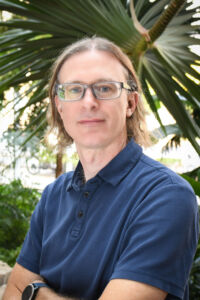
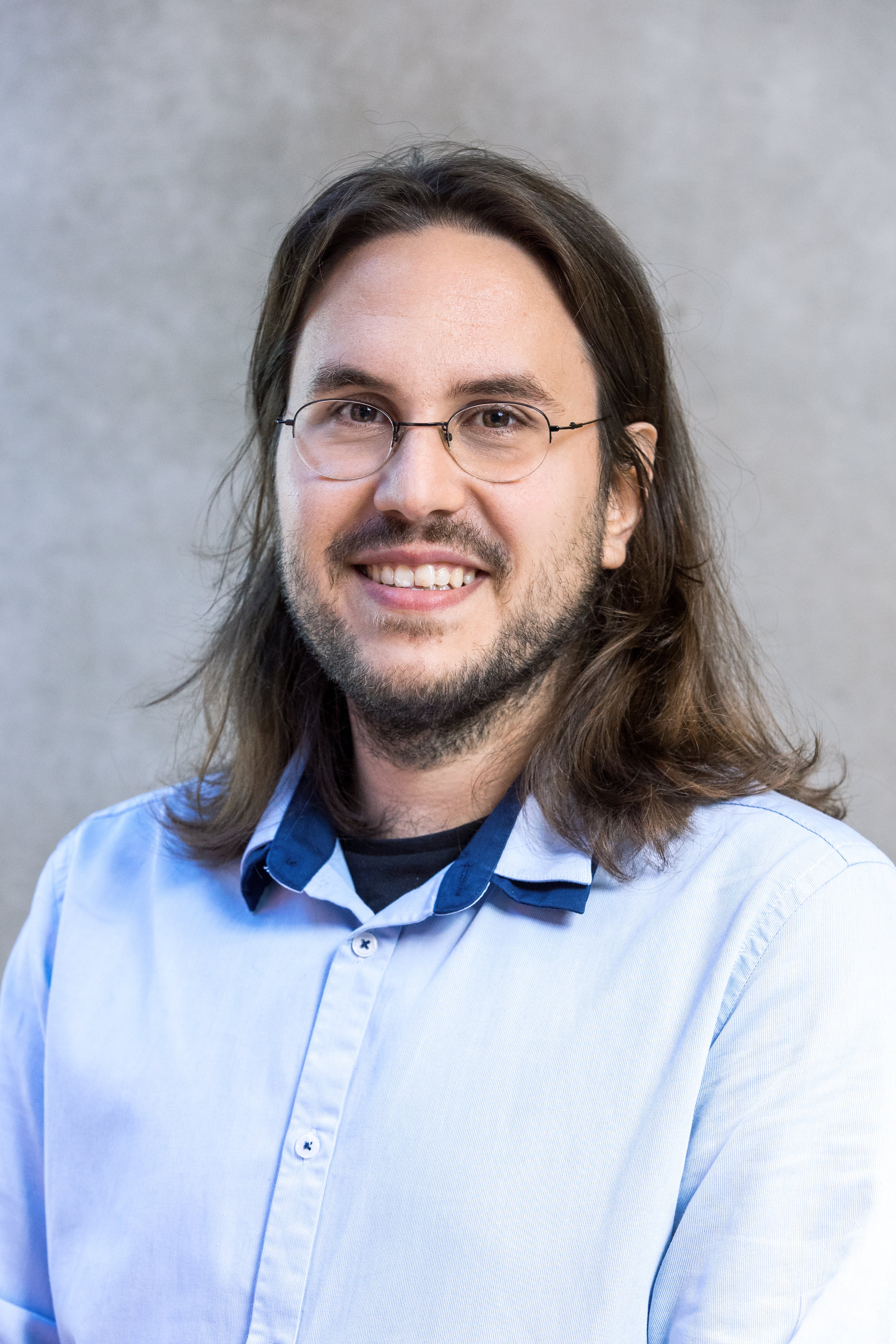
Jim Luedtke is a Professor in the Department of Industrial and Systems Engineering at the University of Wisconsin-Madison. His research focuses on operations research, integer programming, and stochastic optimization methods for solving discrete and uncertain decision problems. Educational Background: BS in Industrial Engineering from University of Wisconsin-Madison MS in Operations Research from Georgia Institute of Technology PhD in Industrial and Systems Engineering from Georgia Institute of Technology Postdoctoral Research at IBM T.J. Watson Research Center His work spans applications in power systems optimization, healthcare analytics, and network design, with particular emphasis on developing cutting-edge algorithms for chance-constrained and multistage stochastic programming problems. Recent publications demonstrate strong focus on Benders decomposition techniques, Lagrangian dual methods, and distributionally robust optimization frameworks. Scientific Awards: NSF CAREER Award (2010) for "Risk Management via Stochastic Programming: Models, Computation, and Applications"
Elina Rönnberg is a Professor and Deputy Head of Department at the Department of Mathematics, Linköping University, where she leads research in discrete optimisation and intelligent decision-making. Her work bridges theoretical method development and real-world applications in sectors such as healthcare, aviation, mining, and transportation. She is actively involved in the Wallenberg AI, Autonomous Systems and Software Program (WASP) and has collaborated with industry leaders like Saab and Scania. Her research focuses on advanced optimisation techniques including Dantzig-Wolfe decomposition, Lagrangian relaxation, column generation, branch-and-price, and logic-based Benders decomposition. She also explores hybrid methods combining mathematical programming with constraint programming and machine learning. Applications span nurse rostering, electric vehicle routing, aircraft arrival scheduling, and underground mine planning. Recent publications highlight a strong trend toward integrating AI and machine learning—particularly graph neural networks—with classical optimisation frameworks to accelerate solution methods. Her work emphasizes practical impact, robustness, and scalability in solving complex scheduling and resource allocation problems. Nurse Rostering with Strategic Planning of Skills for Sick-Leave Robustness (2024) Pricing for the EVRPTW with Piecewise Linear Charging (2024) Speeding Up Logic-Based Benders Decomposition with Graph Neural Networks (2024) Elina supervises several PhD students and has co-supervised doctoral research at international institutions including Makarere University (Uganda) and the University of Exeter (UK). She has contributed to applied projects through student theses in collaboration with Scania and Saab, focusing on electric vehicle routing and search-and-rescue optimisation. She previously served as a Specialist in Optimisation at Saab Aeronautics (2014–2020) and co-founded Schemagi, a scheduling tool aimed at improving quality in healthcare. She teaches courses such as Introduction to Optimization (TAOP07) and Project - Applied Mathematics (TATA62). Her research group, 'Mathematics and algorithms for intelligent decision-making,' operates within the Division of Applied Mathematics (TIMA) at the Department of Mathematics. The team develops decision support tools that enhance efficiency and sustainability in complex systems, particularly under the growing demands of electrification and digitalisation in transport and logistics.
Stavros G. Vougioukas is a Professor and Vice Chair in the Department of Biological and Agricultural Engineering at the University of California, Davis. His research focuses on agricultural robotics, mechanization, and automation for specialty crops, with particular emphasis on robotic harvesting systems and precision agriculture technologies. He leads initiatives in developing actuator systems, perception, and control mechanisms to optimize crop management. Key areas of expertise include robotic fruit harvesting, autonomous vehicle navigation in orchards, and site-specific pest management strategies. His work integrates mechanical engineering principles with advanced automation to address labor shortages and improve agricultural efficiency. Recent projects emphasize data-driven solutions for yield estimation, worker activity analysis, and economic viability of robotic systems. Academic contributions span over 50 peer-reviewed publications (2023-2025), with a focus on robotic orchard platforms, crop transport systems, and sensor-based automation. Notable innovations include vacuum suction end-effectors for fruit harvesting and GNSS-free navigation systems for autonomous vehicles. He also explores sustainable agricultural machinery through techno-economic analyses of electric/hybrid tractors. Current research bridges robotics and agricultural economics, addressing labor cost optimization and precision irrigation. His lab collaborates with industry partners to translate prototypes into field-ready solutions, emphasizing practical applications for specialty crop production systems.
Martin Müller is a Professor in the Department of Computing Science at the University of Alberta, where he conducts research in artificial intelligence, game theory, and heuristic search. He holds the Canada CIFAR AI Chair at Amii and is an Amii Fellow, underscoring his leadership in AI. His research group focuses on Monte Carlo tree search, reinforcement learning, combinatorial game theory, and automated planning, with applications in games such as Go, Hex, and NoGo. His research interests span Monte Carlo and exact methods in game-tree search , exploration in heuristic search and machine learning , and algorithms in combinatorial game theory . He has developed open-source software like MCGS (Minimax-based Combinatorial Game Solver) and contributes to game-playing systems such as Fuego for Go. His work bridges theoretical foundations with practical implementations in AI-driven game solvers. Recent publications show a strong trend in reinforcement learning , particularly in deep Q-learning, policy gradient methods, and anomaly detection in deep RL. His team also explores combinatorial game solving , sparse reward environments , and imperfect information games . The research integrates machine learning with classical AI techniques, emphasizing empirical validation and algorithmic innovation. Canada CIFAR AI Chair Amii Fellow Best student paper award at IEEE Conference on Games 2024 Best paper award at IEEE COG 2021 Outstanding paper award at AAAI-18 Faculty of Science Dissertation Award (2016) Dissertation Award from the Canadian Artificial Intelligence Association (2013) Müller has supervised numerous PhD and MSc students, including Hongming Zhang, Henry Du, and Timo Bertram, many of whose theses focus on game AI, reinforcement learning, and combinatorial optimization. He is funded by NSERC, Mitacs, and Compute Canada. His group collaborates on projects involving neural networks for game playing, SAT solving, and planning algorithms. He is currently on sabbatical but remains academically active, teaching a graduate course on combinatorial games in 2025 and hosting visiting researchers. His lab is involved in the development of MCGS, a solver for sum games, and contributes to open-source AI software. The team publishes regularly in top venues such as NeurIPS, ICML, AAAI, and IEEE Transactions on Games. Future work includes advancing combinatorial game solvers, improving deep RL robustness, and exploring generalization in game representations.
Professor Vedran Dunjko is a faculty member at the Leiden Institute of Advanced Computer Science (LIACS), Leiden University, with affiliations to the Leiden Institute of Physics (LION). He leads the Applied Quantum Algorithms group and co-founded the Quantum@LIACS initiative, focusing on the intersection of quantum computing, machine learning, and artificial intelligence. His research interests include quantum machine learning, quantum-enhanced reinforcement learning, quantum heuristics, and the application of AI to quantum computing challenges. Dunjko's work bridges theoretical foundations with experimental implementations on near-term quantum devices, exploring both quantum advantages in learning and the use of classical AI for quantum system design. The recent publications show a strong trend toward proving quantum advantages in learning tasks, optimization, and topological data analysis, with publications in Nature , Nature Communications , and NeurIPS . Key themes include quantum policy gradients, quantum TDA, and reinforcement learning for quantum circuit optimization. ERC Consolidator Grant (2024) PNAS Cozzarelli Prize (2018) Editor’s Suggestion in Physical Review Letters (2014, 2018) Featured in Physics (American Physical Society) (2014, 2018) Dunjko advises several PhD candidates and postdocs, including Rahul Bandyopadhyay, Sofiene Jerbi, and Lea Trenkwalder. He has received competitive grants, most notably the ERC Consolidator Grant in 2024. His group fosters international collaborations with institutions across Europe and industry partners. The Applied Quantum Algorithms group and the Quantum@LIACS team combine theoretical investigations with practical implementations on quantum hardware, focusing on scalable quantum algorithms and AI-driven quantum discovery.
Julian Berger is a postdoctoral researcher at the Max Planck Institute for Human Development in the Center for Adaptive Rationality , where he explores how to enhance decision-making through hybrid human-AI systems. He is also a fellow of the Joachim Herz Foundation and has received funding from the Foundation of German Business and the Danish Data Science Academy. Education: M.A. Psychology in Business and Economics, Universidade Catolica Portuguesa (2021) B.A. Politics, Administration and International Relations, Zeppelin Universität (2018) His research spans human-AI collaboration , collective intelligence , and interpretable machine learning . A recurring theme in his work is developing methods to combine human expertise with AI capabilities for accuracy in domains like medical diagnostics , credit scoring , and football analytics . He has authored publications in high-impact venues such as PNAS , Nature Human Behavior , and Science and Medicine in Football . Scientific awards and funding include: Fellowship for interdisciplinary economics, Joachim Herz Foundation (2024) PhD funding from the Foundation of German Business (Stiftung der deutschen Wirtschaft) Research grant from the Danish Data Science Academy His recent article trends emphasize ensembling techniques that leverage complementary human and AI errors, algorithmic fairness, and practical heuristics like Hybrid Confirmation Trees. These works demonstrate significant improvements in diagnostic accuracy and decision cost-efficiency. Beyond academia, Berger works as a consultant and ML engineer with Simply Rational , focusing on interpretable models for financial and sports analytics. His work bridges theoretical research with real-world applications, prioritizing fairness, transparency, and human accountability in AI systems.
Thorsten Koch serves as Head of the Department of Applied Algorithmic Intelligence Methods within the Division of Mathematical Algorithmic Intelligence at Zuse Institute Berlin (ZIB). His research spans mathematical optimization, energy systems modeling, quantum computing applications, and scientometrics. Koch leads significant research projects including FAN (focusing on AI in scholarly communication), UNSEEN (energy scenarios), HPO-NAVI (research software visibility), and Multi-Energy Models for European Energy System Planning. Koch's research interests center on developing advanced optimization algorithms for complex systems, particularly in energy networks and scientific data analysis. His work bridges theoretical mathematics with practical applications in gas network optimization, wind farm design, portfolio management, and quantum computing. He has pioneered methods for large-scale mixed-integer programming, scenario generation, and the integration of machine learning with traditional optimization techniques. His recent publications demonstrate growing emphasis on quantum optimization, scientometrics, and the application of AI to scientific communication infrastructure. His publication trends reveal a strategic expansion from traditional mathematical optimization into quantum computing applications and scientific data infrastructure. Recent work shows increasing collaboration across disciplines - connecting energy systems analysis with financial modeling, integrating machine learning with optimization solvers, and applying computational methods to scientometrics. The 15 most recent articles highlight three major thrusts: quantum optimization (33%), energy systems modeling (27%), and scientific data infrastructure (40%), reflecting his leadership in both theoretical algorithm development and practical implementation for societal challenges. Koch actively contributes to research infrastructure through leadership roles in projects like KOBV (Berlin-Brandenburg Cooperative Library Network), HDC (Humanities Data Centre), and CIB (future library networks). His work on the DeepGreen initiative focuses on establishing legally secure workflows for implementing open-access components in scientific publication licensing agreements, demonstrating his commitment to open science principles and research data management.
Matthew Stephenson is a Lecturer at Flinders University's College of Science and Engineering, specializing in Artificial Intelligence applications for games. He leads the Data for Decisions initiative within the Factory of the Future Transdisciplinary Hub, focusing on AI-powered scenario generation for smart digital twins. Additionally, he is a member of IRL CROSSING, an international lab studying human-autonomous agent teaming dynamics. PhD in Computer Science (Australian National University, 2019) B.Sc.(Hons) in Computer Science (University of Canterbury, 2015) His research applies AI, Machine Learning, and Data Science to game domains, including intelligent agent development for physics-based environments, procedural content generation, and game analytics. He also investigates deceptive behaviors in multi-agent systems and leverages games as testbeds for real-world AI solutions. Recent publications focus on large language models for game benchmarking, physical reasoning challenges, and evolutionary game generation. Scientific awards include an honourable mention at Foundations of Digital Games (FDG'18). He supervises students in procedural generation, game AI, and physics-based task creation, with teaching roles in computational intelligence and neural networks courses.
Forest Agostinelli is an Assistant Professor in the Department of Computer Science and Engineering at the Molinaroli College of Engineering and Computing, University of South Carolina, where he is also affiliated with the AI Institute. His research focuses on designing AI algorithms for pathfinding problems, integrating deep learning, reinforcement learning, heuristic search, and formal logic. He holds a Ph.D. in Computer Science from the University of California, Irvine, an M.S. from the University of Michigan, and a B.S. in Electrical and Computer Engineering from The Ohio State University. Research Overview : Agostinelli’s work emphasizes solving pathfinding problems in domains like robotics, theorem proving, and molecular optimization. His group develops explainable AI methods to enable collaboration between humans and machines. Key projects include DeepCubeA (solving the Rubik’s Cube via deep reinforcement learning) and neural activation function research. Funding & Awards : He has secured grants from NSF, NASA EPSCoR, and South Carolina’s ASPIRE and MADE programs. Notable awards include the NSF Graduate Research Fellowship and the Graduate Education for Minority Students Fellowship. Teaching : He teaches courses in Artificial Intelligence (CSCE 580) and Deep Reinforcement Learning and Search (CSCE 790), mentoring over 15 students at undergraduate and graduate levels. Labs & Collaborations : Active in AI-driven education and interdisciplinary projects, his lab contributes to tools like ALLURE for children’s learning and Bioinformatics platforms like CircadiOmics.
Banu Lokman is a Professor of Operational Research (OR) at the University of Portsmouth, serving as Associate Head (Research and Innovation) in the School of Organisations, Systems and People within the Faculty of Business & Law. She leads the Centre for Innovative and Sustainable Finance and contributes to the Centre for Operational Research & Logistics. Her expertise spans multi-criteria decision-making, optimization, and their applications in healthcare and sustainability. She holds editorial roles at OMEGA and the IMA Journal of Management Mathematics and organizes the NATCOR MCDM courses. Previously, she served as Deputy Director of CORL (2011–2024), Secretary of the International MCDM Society, and Board Member of INFORMS MCDM Section. She currently chairs the INFORMS MCDM Section as President-elect/Vice-President. Education: BSc, MSc, and PhD in Industrial Engineering from Middle East Technical University (METU, Turkey), followed by postdoctoral research at Aalto University (Finland). She taught at METU (2014–2019) and held visiting roles at Aalto University. Research Interests: Focuses on developing optimization methods for multi-criteria decision problems, particularly in healthcare (e.g., optimizing prostate biopsy decisions with Portsmouth NHS Trust) and sustainability. Her work emphasizes algorithms for nondominated set representation, robust efficiency analysis, and cluster ensemble methods. Key Awards: Bernard Roy Award (2022) for outstanding contributions to Multiple Criteria Decision Aiding, and Young Researcher Award (2015). Advising & Grants: Leads a healthcare-related PhD project and contributes to projects like the Social Investment Fund collaboration with Waltham Forest Council. She actively supervises students and participates in research initiatives on supply networks and data control systems. Labs & Teams: Engaged with interdisciplinary teams in operational research and logistics, particularly in applying OR to real-world challenges such as energy market optimization and MRO supply networks.
Ebru Cankaya is a Senior Lecturer II in the Department of Computer Science at the University of Texas at Dallas (UTD), part of the Erik Jonsson School of Engineering and Computer Science. She holds a Ph.D. in Computer Science from Ege University (Turkey) and has extensive academic experience across multiple institutions, including adjunct roles at Southern Methodist University and visiting professorships at Izmir University of Economics and Earlham College. Her research focuses on cybersecurity, risk modeling in databases, lossless text compression, and cloud computing. She has received numerous teaching awards, including the 2019 Outstanding Faculty of the Year award at UTD. Educational Background: Ph.D. in Computer Science, Ege University (2004) M.S. in Computer Science and IT & Management, Ege University (2004/2009) MBA in Economics and Administrative Sciences, Ege University (2000) B.Sc. in Computer Engineering, Ege University (1994) Research Interests: Computer and Network Security: Including access control models (e.g., Bell-LaPadula, Chinese Wall) and cryptographic techniques. Risk Modeling in Databases: Focusing on privacy-preserving data storage and obfuscation strategies. Text Compression: Innovations in encoding methods like Star Encoding and hybrid techniques. Cloud Computing: Security and dependability in distributed systems. Awards and Recognition: 2022: Teaching Award, Jonsson School 2019: Outstanding Faculty of the Year 2013: Faculty of the Month (NACURH) Multiple nominations for University and System-Wide Teaching Awards TUBITAK/EBILTEM Research Awards (2003–2004) Her professional activities include organizing doctoral symposiums (e.g., COMPSAC 2012/2013), participating in faculty development programs (e.g., Working Connections IT Institute), and mentoring undergraduate researchers. She has held academic roles across Turkey and the U.S. since 1997, including research assistantships at Ege University and a decade-long tenure at Ege University as a lecturer and assistant professor.
Santiago Segarra is the W. M. Rice Trustee Associate Professor in the Department of Electrical and Computer Engineering at Rice University, with courtesy appointments in Computer Science and Statistics. He joined Rice in 2018 and collaborates with Microsoft Research since 2022. His expertise spans network theory, machine learning, graph signal processing, and optimization. Segarra earned his B.Sc. in Industrial Engineering from ITBA (2011), and M.S. and Ph.D. in Electrical and Systems Engineering from the University of Pennsylvania (2014-2016), followed by a postdoc at MIT (2016-2018). Research Focus: His work integrates algebraic topology, signal processing, and machine learning to analyze networked systems. Key areas include social/technological network clustering, graph-based data analysis, and applications in neuroscience and communication networks. Recent projects address fair graph learning, distributed GNN training, and network topology inference. Awards: Penn’s Wolf Award for Best Dissertation (2017), Argentine National Engineering Honors (2011), and ITBA’s Best Thesis Award (2011). Grants/Sponsors: Supported by NSF, ONR, and industry collaborations. Labs/Groups: Leads the Rice Wireless group and collaborates with Microsoft Research on applied network science. Advises students in interdisciplinary research combining theory and real-world applications.
Antonia Krefeld-Schwalb is an Assistant Professor at the Department of Marketing Management, Rotterdam School of Management, Erasmus University. With a background in cognitive science and management, her research bridges computational modeling, eye-tracking, and consumer decision-making to address sustainability challenges. Current Affiliation: Assistant Professor, Rotterdam School of Management Research Focus: Sustainable consumer behavior, decision-making processes, and methodological improvements Key Collaborations: Columbia University, University of Geneva, Erasmus Sustainability Program Her cognitive science training informs methodological approaches like mouse/eye tracking and computational modeling applied to marketing problems. She investigates structural parameter interdependencies, external validity threats in surveys, and climate risk communication effectiveness. Recent research trends include climate adaptation strategies, sustainable behavior interventions, and meta-scientific analyses of statistical practices in consumer research. She advocates for heterogeneous population sampling and preregistration to enhance validity. Scientific Honors: Veni Grant (NWO) She develops targeted sustainability interventions through collaborations like the Erasmus Sustainability Program. Her work appears in journals such as PNAS, Journal of Marketing Research, and Psychological Review.
Sebastijan Dumancic is an Assistant Professor at Delft University of Technology, focusing on neuro-symbolic AI through program synthesis and probabilistic programming. He leads the RAIL lab and collaborates with institutions like Harvard, MIT, and CNRS. His research bridges symbolic AI and machine learning, applying program synthesis to scientific discovery, transportation, and robotics. He holds an FWO-funded PhD from KU Leuven and has participated in initiatives like ELLIS and the Symbolic Computation and Machine Learning Initiative. Program synthesis Probabilistic programming Neuro-symbolic AI Constraint-based learning His recent articles highlight advancements in program synthesis, neuro-symbolic integration, and constraint satisfaction. Projects like Find2Fix and Intelligent Greenhouse Horticulture (funded by NWO) demonstrate practical applications. ELLIS Membership University Teaching Qualification He supervises numerous MSc and PhD students in projects involving logic programming, program synthesis, and probabilistic modeling. Active in workshops and symposia, he contributes to neuro-symbolic AI and scientific discovery.
Yassine Ghannane is a Research Fellow at the Department of Computer Science , University of Copenhagen , specializing in Algorithms and Complexity . University: University of Copenhagen Department: Department of Computer Science Research Focus: Theoretical computer science, permutation-based evolutionary algorithms, computational complexity His recent work includes runtime analysis and theory development for permutation-based evolutionary algorithms, as well as module-based neural network mapping heuristics. Publications span 2022–2024 with interdisciplinary applications in machine learning and optimization. Contact: yagh@di.ku.dk | Office: Universitetsparken 1, 2100 København Ø, Denmark