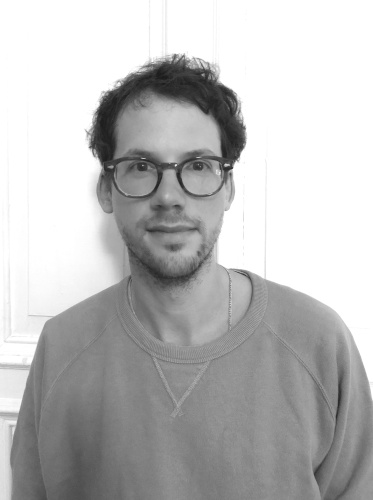
Yassine Ghannane is a Research Fellow at the Department of Computer Science , University of Copenhagen , specializing in Algorithms and Complexity . University: University of Copenhagen Department: Department of Computer Science Research Focus: Theoretical computer science, permutation-based evolutionary algorithms, computational complexity His recent work includes runtime analysis and theory development for permutation-based evolutionary algorithms, as well as module-based neural network mapping heuristics. Publications span 2022–2024 with interdisciplinary applications in machine learning and optimization. Contact: yagh@di.ku.dk | Office: Universitetsparken 1, 2100 København Ø, Denmark
Giovanni Pantuso is an Associate Professor at the Department of Mathematical Sciences, University of Copenhagen, specializing in stochastic programming and optimization under uncertainty . His work bridges mathematical methods with practical applications in transportation, logistics, and production planning. Education : PhD in Operations Analysis from the Norwegian University of Science and Technology (Feb 2014) Research Focus : Developing mathematical frameworks for decision-making under risk, with applications to maritime fleet renewal, car-sharing systems, and ride-sharing logistics. Teaching : Courses in Advanced Operations Research: Stochastic Programming, Risk Optimization, and Introduction to Numerical Analysis. His methodological contributions include novel algorithms for stochastic programming and decomposition methods, while applied work spans electric car-sharing systems, first-mile transportation challenges, and production planning under uncertainty. Current research explores dynamic fleet management and cost-service tradeoffs in shared mobility.
Athanasios Kolios serves as Professor and Head of the Structural Integrity and Loads Assessment section within the Department of Wind and Energy Systems at the Technical University of Denmark (DTU). His work focuses on advancing wind energy technology through structural analysis, materials science, and system optimization for both onshore and offshore applications. His primary research domains include wind turbine structural integrity, offshore wind farm layout optimization, and structural health monitoring systems. He investigates critical challenges in operation and maintenance strategies, techno-economic metrics for wind projects, and materials behavior under dynamic loading conditions. His fingerprint analysis reveals dominant expertise in Wind Turbine Engineering (100%), Offshore Wind Turbines Engineering (45%), and Offshore Wind Farms Engineering (36%). Recent publications demonstrate strong emphasis on data-driven approaches for wind energy systems, including structural optimization algorithms, virtual sensing techniques, and techno-economic assessments of offshore projects. His work consistently bridges theoretical engineering principles with practical industry applications, particularly in Brazilian and European offshore wind contexts. Scientific Awards: No scientific awards were documented in the provided information Professor Kolios actively supervises five PhD candidates across major research initiatives while mentoring Master's students in structural wind energy applications. His research portfolio includes six significant projects addressing critical industry needs: PhD Supervision: Chopard (anomaly interpretation), Piovesan (risk-based technology qualification), Yildirim (floating turbine uncertainty), Rodrigues Faria (autonomous operation), Al-Hagri (offshore structure maintenance) Master's Supervision: Rushil S. Mahajan (monopile buckling analysis) Current Projects: Decision support systems, life cycle cost modeling, floating wind turbine modeling, autonomous operation frameworks, sustainable offshore structure design As section head at DTU Wind and Energy Systems, he leads an internationally collaborative research group focused on structural integrity assessment, load prediction methodologies, and materials innovation for next-generation wind turbines. The team maintains strong industry partnerships and contributes to global wind energy standards development through participation in initiatives like ISSC.
Alvaro Torralba is an Associate Professor in the Department of Computer Science at Aalborg University, Denmark, affiliated with the Technical Faculty of IT and Design. His research focuses on symbolic search, heuristic functions, and planning algorithms within artificial intelligence and machine learning. Notable projects include the ConAn initiative exploring contrastive analysis for state-space exploration. He has contributed extensively to classical planning, probabilistic planning, and automated planning competitions, earning awards such as the First Prize in the Agile Track of the 10th International Planning Competition (IPC’23). His work often bridges theoretical advancements with practical applications, including game-based network update synthesis and believable non-player character development. Research outputs include over 60 publications since 2011, with a focus on optimizing search algorithms and enhancing planning efficiency through techniques like operator-potential heuristics and bidirectional search strategies. His scientific contributions span algorithmic innovation, verification methodologies, and large-scale abstraction evaluation. Collaborations and datasets include foundational work on PDDL generators and pattern databases, with open-access resources available via Zenodo. As a program committee member and award-winning researcher, Torralba actively contributes to advancing the frontiers of AI planning and decision-making systems.
Jens Myrup Pedersen is a Professor at Aalborg University's Department of Electronic Systems within The Technical Faculty of IT and Design. He is affiliated with the Cyber Security Group and focuses on improving digital wellbeing through cybersecurity research. His primary research interests include botnets, network security, machine learning applications in cybersecurity, and cybersecurity education. He leads or participates in projects such as Cyber Safe Robotics , AI:SECURITY , and GAMESS , addressing topics like AI-driven security, gamification in education, and secure software development. Pedersen has contributed to over 235 publications since 2003, emphasizing cybersecurity threats, network analysis, and educational methodologies. His work extends to cybersecurity training platforms like Haaukins and The Privacy Universe , designed to enhance user awareness through gamification. Pedersen collaborates internationally, engaging in initiatives like the European Cyber Security Challenge and cybersecurity hackathons. He holds roles in professional organizations such as the Danish Cybersecurity Board and the IDA association. Recent research highlights include NLP security ethics, OT cyber resilience, and cryptocurrency forecasting tools. His projects often bridge academia and industry, focusing on real-world impact through student-driven projects and cross-disciplinary collaborations.
Richard Martin Lusby is an Associate Professor in the Department of Technology, Management and Economics at DTU Management, Technical University of Denmark. His academic work focuses on Operations Research with specialization in mathematical optimization applied to transportation and energy systems. His research spans railway scheduling, container logistics, maritime transport, and energy storage optimization. Department: Department of Technology, Management and Economics Section: Section for Operations Research, Division for Management Science Location: Building 358, Room 145A, Academy Road, 2800 Kgs. Lyngby, Denmark Contact: rmlu@dtu.dk, Tel: 45253084 ORCID: 0000-0002-8652-6219 Professor Lusby's research interests center around mathematical optimization methods applied to complex transportation and energy systems. His work spans railway scheduling problems, container logistics optimization, maritime transport operations, and energy storage scheduling. He develops advanced algorithms including Lagrangian Relaxation, Benders decomposition, and stochastic programming approaches to solve challenging real-world problems in these domains. His research has practical applications in improving efficiency and sustainability in transportation networks and energy systems. His recent publications demonstrate a strong focus on optimization techniques for transportation systems, particularly in railway operations and container logistics, as well as energy storage scheduling. The research shows a consistent pattern of developing sophisticated mathematical methods to address complex operational challenges in transportation networks, with increasing attention to sustainability considerations in maritime shipping and energy systems. Professor Lusby has been involved in significant research projects including the SWITCH project (Sustainable Network Design - Electrifying Container Shipping), which received funding from Den Danske Maritime Fond. This project explores how battery-powered ships could replace fossil fuels in global shipping through mathematical modeling and AI-driven optimization. He also supervises PhD students, including Georgios Vassos who completed a thesis on "Procurement Policy Analysis in Intermodal Container Logistics". His work has practical implications for improving efficiency in transportation networks, reducing environmental impact in maritime shipping, and optimizing energy systems operations. Through his research, Professor Lusby contributes to both theoretical advances in optimization methods and their practical applications in critical infrastructure sectors.
Niels Erik Olesen is a Postdoc researcher at the Department of Biotechnology and Biomedicine, Technical University of Denmark (DTU), affiliated with the Nano Bio Integrated Systems group. He serves as Contact Person for the DTU project "Active Wearable Sensors for Monitoring of Levodopa in Parkinson’s Disease" (2023-2025) and is a Member of the International Electrotechnical Commission (2022-2026). His ORCID profile (0009-0001-3908-5043) and institutional email nieol@dtu.dk confirm his active DTU affiliation. Research interests center on electrochemical sensors and drug delivery systems. Early work (2012-2018) focused on biopharmaceutics, including thermodynamic modeling of cyclodextrin formulations, bile salt interactions, and drug-polymer solubility prediction using DSC/ITC techniques. Current research pivots to wearable sensor technology, specifically microneedle-based porous gold electrochemical sensors for real-time levodopa monitoring in Parkinson's disease patients, as evidenced by his active project and 2024 conference presentation. His 15 most recent publications (2015-2018) reveal strong methodological innovation in pharmaceutical formulation science. Key themes include DSC-based solubility prediction (7 articles), cyclodextrin-bile salt displacement mechanisms (4 articles), and polymer molecular weight effects on drug miscibility (3 articles). The shift toward electrochemical sensors is documented in his 2023 project but not yet reflected in publications, indicating emerging research direction. No scientific awards or fellowships were mentioned in the provided sources. Olesen leads the DTU research project on Parkinson's disease wearable sensors (100% focus on levodopa monitoring) and presented preliminary work as Guest Lecturer at a conference in November 2024. No student advisement is documented, though his project involves interdisciplinary collaboration. The International Electrotechnical Commission membership (2022-2026) suggests industry-standardization contributions. He operates within DTU's Nano Bio Integrated Systems group, focusing on nanoscale biointegration. His current project team develops microneedle-based electrochemical sensors for continuous levodopa monitoring, aiming to translate lab research into clinical Parkinson's management tools through wearable technology.
Konstantin Pavlikov is an Associate Professor at the Department of Business & Management (DBM) under Strategic Organization Design (SOD) at the University of Southern Denmark. His research focuses on Operations Research, Integer Programming, and Stochastic Programming , with particular emphasis on vehicle routing optimization and network flow modeling. Education : PhD in Operations Research (University of Florida, 2014), MSc in Applied Mathematics (Moscow State University, 2007) His work spans combinatorial optimization and network interdiction problems , developing exact and approximate solution algorithms for complex logistics challenges. Recent publications analyze heterogeneous vehicle routing capacity inequalities and two-commodity flow formulations for routing problems. Scientific contributions have been recognized with the Best Reviewer Award (2019). He actively reviews for journals like Computational Management Science and supervises academic works through examination roles.
Baoze Wei is an Associate Professor at Aalborg University's Department of Electric Power Systems and Microgrids, part of the Faculty of Engineering and Science. His research focuses on advanced control strategies for power electronics, microgrid stability, and energy management systems. He leads and collaborates on projects such as the Digital Twin-based Reliability Framework for Aviation Systems and Holistic Optimization of Green Fuel-Powered Microgrids. Key contributions include work on distributed energy systems, fault-tolerant architectures, and predictive maintenance for power electronics. His research emphasizes practical applications in renewable integration, smart grids, and industrial electrification. Wei has supervised one PhD student, Q. He, and contributed to projects funded by entities like Horizon JU and Huawei. Notable collaborations include work on hybrid-electric aircraft systems (HECATE) and advanced control algorithms for distributed converters. His research spans technical areas such as voltage source inverters, uninterruptible power systems (UPS), and DC shipboard microgrids. His publications reflect expertise in model predictive control, energy trading strategies, and condition monitoring. Current research trends include data-driven lifetime prediction for power electronics components and optimization of multi-energy systems. He actively participates in international conferences, contributing to both theoretical advancements and real-world system implementations.
Vera Hemmelmayr is an Associate Professor at the Institute for Transport and Logistics Management, School of Business, Vienna University of Economics and Business (WU Vienna). She earned her PhD from the University of Vienna and completed her habilitation at WU. Prior to her current role, she held postdoctoral positions at the University of Vienna and CIRRELT in Montreal, and conducted research collaborations at Georgia Institute of Technology, University of Bologna, and Northwestern University. Research Interests: Vera's research centers on combinatorial optimization in logistics, with emphasis on enhancing solution methods and real-world applications. She specializes in metaheuristics, parallel algorithms, and hybrid exact-heuristic techniques. Her work addresses critical challenges in waste collection, city logistics, nonprofit logistics collaboration, and sustainable urban transport—particularly the integration of cargo bikes into freight distribution networks. Publication Trends: Her recent publications reflect a consistent focus on vehicle routing problems, green logistics, and optimization under uncertainty. Themes include two-echelon delivery, drone-truck collaboration, stochastic demands, and multi-depot systems. Methodologically, she advances matheuristics, adaptive large neighborhood search, and simulation-optimization frameworks applied to urban and humanitarian logistics. Scientific Awards: No specific awards mentioned in the provided text. Advising and Grants: While no students are listed, Vera has served as project leader for multiple research initiatives funded by the Austrian Science Fund (FWF) and the Austrian Research Promotion Agency (FFG), indicating leadership in securing competitive grants and managing research teams. Labs and Teams: Although no formal lab name is given, her affiliation with the Institute for Transport and Logistics Management suggests active participation in a research group focused on logistics optimization, likely involving collaboration with national and international partners in both academia and industry.
Daniel Barkoczi is a Research Fellow at the University of Southern Denmark's Faculty of Business and Social Sciences, specializing in computational models of collective behavior. His research examines how individual decision-making strategies interact with social structures to produce group-level outcomes in domains including organizational learning, innovation diffusion, and collective problem-solving. He holds a PhD in Psychology from Humboldt University Berlin and a Master's in Cognitive and Decision Science from University College London. Prior to joining SDU, he conducted research at the Max Planck Institute for Human Development and Linköping University's Institute for Analytical Sociology. Barkoczi's research integrates computational modeling, behavioral experiments, and network analysis to investigate: Mechanisms of social influence in networked environments Collective adaptation in complex systems Optimization of group problem-solving strategies Algorithmic impacts on opinion formation Cross-environmental analysis of search behavior His publication trends show consistent focus on collective intelligence phenomena, with recent work exploring adaptive systems (2023), algorithmic influence (2021), and team-based problem solving (2020). Earlier research established foundations in social learning strategies (2016-2018) and recommendation systems (2015-2017). Barkoczi collaborates with the Strategic Organization Design (SOD) research group and maintains affiliations with international research networks including the Max Planck Institute and Linköping University.
Falke Bjernemose Øtker Carlsen is a researcher affiliated with the Department of Computer Science at Aalborg University's Technical Faculty of IT and Design. Their work focuses on distributed systems, formal verification, and traffic simulation, with recent contributions to model checking and heuristic-based traffic scenario generation. Current affiliation: Department of Computer Science, Aalborg University Research areas: Formal verification, model checking, traffic simulation Contact: falkeboc@cs.aau.dk Recent research activity spans two key domains: (1) Formal Verification of concurrent systems through distributed model checking frameworks like CGAAL, and (2) Traffic Simulation using SUMO with application to urban mobility scenarios. Both projects demonstrate interdisciplinary approaches combining theoretical computer science with applied systems analysis. Their publication record includes work on temporal logic applications, search strategies for model checking, and case studies in traffic analysis. Collaborations appear to focus on European computer science research networks.
Maria Papaioannou is a Postdoctoral Researcher at the Department of Applied Mathematics and Computer Science (DTU Compute) at the Technical University of Denmark, specializing in cybersecurity engineering with contributions to UN Sustainable Development Goals through secure technology development. Her research focuses on Machine Learning applications for Internet of Things security, including intrusion detection systems, honeypot optimization, and user-centric authentication. She investigates technical implementations of tiny machine learning for resource-constrained devices while addressing human factors in security adoption, particularly for emerging technologies like passkeys. Recent publications reveal strong thematic convergence across machine learning-driven security solutions for IoT ecosystems, emphasizing both algorithmic innovation and usability considerations. Her review articles systematically analyze research gaps in intrusion detection scalability, passkey adoption barriers, and adaptive deception technologies, highlighting interdisciplinary connections between cybersecurity, human factors, and embedded systems engineering.
Kristoffer Wernblad Sigsgaard is a Postdoctoral researcher at the Department of Civil and Mechanical Engineering , Technical University of Denmark (DTU), specializing in offshore energy systems and maintenance engineering. His work contributes to UN Sustainable Development Goals including affordable energy (SDG7), industry innovation (SDG9), and climate action (SDG13). Research Focus: Maintenance planning, modularization in engineering systems, and data-driven optimization Key Collaborations: Offshore oil/gas sectors, sustainability transition initiatives Recent publications address performance assessment frameworks, spare parts logistics, and heuristic optimization methods. His work intersects mechanical engineering principles with practical maintenance challenges in energy infrastructure.
Professor Peter Nielsen is a faculty member at Aalborg University's Department of Materials and Production, part of The Faculty of Engineering and Science. He specializes in Artificial Intelligence for Operations Research, focusing on logistics optimization, unmanned aerial vehicles (UAVs), and heuristic algorithms. His work bridges theoretical research and practical applications in industrial automation and sustainable systems. He has led or participated in multiple research projects, including the ORMS project (Operational Reliability Management System) and the ValuePole initiative, which addressed value chain optimization for SMEs. His research emphasizes AI-driven solutions for maritime search and rescue, UAV operations in dynamic environments, and autonomous systems for healthcare logistics. Notable research interests include optimizing routing and scheduling problems, trustworthiness in autonomous vehicle algorithms, and cross-infection risk mitigation in indoor environments. His contributions span over 210 publications, with recent work highlighted in journals like Journal of Intelligent and Robotic Systems and Marine Policy . Peter has advised two PhD students and contributed to academic activities as a peer reviewer for Production & Manufacturing Research . His work often integrates computational fluid dynamics (CFD) and Taguchi methods for optimizing ventilation systems and reducing disease transmission risks.