Paul Carini is an Associate Professor in the Department of Environmental Science at the University of Arizona. His research focuses on microbial genomics, environmental microbiology, and microbial diversity in extreme environments. He is affiliated with the School of Animal and Comparative Biomedical Sciences through a joint Micro Graduate Program. His work emphasizes genomic sequencing of understudied microbes, particularly those from arid soils and subseafloor sediments. He explores microbial adaptation strategies to nutrient-poor and extreme conditions, including anaerobic respiration and toxic gas utilization. Recent studies highlight culturomics advancements, such as high-throughput cultivation and predictive modeling of microbial growth. Key contributions include genome-based taxonomic frameworks for uncultivated archaea and bacteria, and insights into microbial roles in climate change mitigation. His research bridges traditional cultivation methods with modern genomic tools, addressing challenges in capturing Earth's microbial biodiversity.
Jiaxiang Zhang is Professor of Artificial Intelligence in the Department of Computer Science at Swansea University's Faculty of Science and Engineering. He holds a PhD in Computational Neuroscience from the University of Bristol and previously held positions at the University of Birmingham, MRC Cognition and Brain Sciences Unit (Cambridge), and Cardiff University where he founded the Cognition and Computational Brain Lab. Zhang's research integrates computational modeling, machine learning, brain imaging (MEG/EEG/fMRI), and experimental approaches to study human cognition, aging, and neurological disorders. Key focus areas include: Neural mechanisms of decision-making and problem-solving Computational models of cognitive processes AI applications in healthcare diagnostics and neuroimaging Brain network dynamics in neurological conditions Recent publications emphasize deep learning models for neural data, multimodal brain connectivity, decision-making impairments in Parkinson's disease, and neuroinformatics tools. His work shows strong clinical translation through epilepsy biomarker development and emergency department outcome prediction. Zhang has led research grants from ERC, MRC, BBSRC, and Wellcome Trust. As primary investigator for multiple projects, he oversees significant computational neuroscience initiatives. He is available for postgraduate supervision.
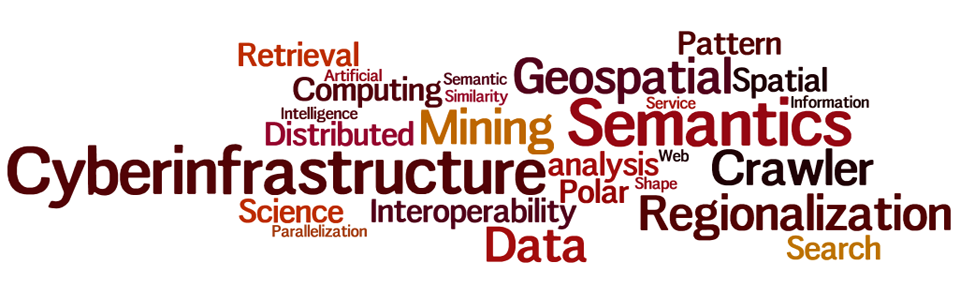
Wenwen Li is a Professor at Arizona State University (ASU), holding roles as Director of the CyberInfrastructure and Computation Intelligence (CICI) Lab and Research Director at the Spatial Analysis Research Center (SPARC). She specializes in geographic information science, cyberinfrastructure, and geospatial big data. Her work focuses on developing intelligent cyberinfrastructure for environmental and urban studies, leveraging AI and semantic technologies. Li's research has been supported by NSF, USGS, and Google.org, among others. Education: Ph.D. in Earth System and Geoinformation Science (George Mason University, 2010), M.S. in Signal and Information Processing (Chinese Academy of Sciences, 2007), and B.S. in Computer Science (Beijing Normal University, 2004). Research Interests : Cyberinfrastructure, spatial-temporal data mining, semantic interoperability, GeoAI applications in climate science, and urban studies. Her lab, CICI, pioneers projects like the Arctic Permafrost Thaw analysis and disaster response systems. Awards : 2023 AAG and UCGIS Fellowships, 2021 NSF Mid-Career Award, 2015 NSF CAREER Award, and the 2024 Greg Leptoukh Lecture Award (AGU). She chairs AAG's Cyberinfrastructure Specialty Group and serves on editorial boards of key journals. Grants & Service : Leads NSF-funded projects on GeoAI, climate modeling, and Arctic science. Active in AAG leadership roles and global initiatives like the Polar Cyberinfrastructure Portal. Recruits Ph.D. students in Geography and Computer Science. Labs & Teams : Directs the CICI Lab, advancing interdisciplinary GeoAI research and training. Collaborates with global partners on environmental and computational geography projects.
Dr. Lucie Lu is a Senior Lecturer in the Department of Finance at the University of Melbourne, affiliated with the Faculty of Business and Economics. She joined the institution in 2023 and specializes in asset pricing, credit risk, international finance, and sustainable finance. Her research examines investor behavior in global markets, risk transmission mechanisms, and sustainable investment strategies. Dr. Lu holds a Ph.D. in Finance from McGill University, an MSc in Finance and Economics from the London School of Economics and Political Science, and a BA in Economics from Fudan University. Her work investigates topics such as heterogeneous investors' roles in risk-sharing, default risk propagation in credit markets, and institutional investors' preferences for sustainable investments. Her recent publications explore cross-market risk transmission, institutional investment dynamics, and structural credit modeling. While no specific awards are listed, her contributions to finance theory and empirical analysis are evident in her scholarly output. Dr. Lu does not currently list advisees or grants in the provided information. Her research extends to interdisciplinary areas, combining quantitative finance with global economic trends, reflecting her expertise in both theoretical and applied financial frameworks.
Professor Ricardo Alonso is a Professor of Management at the London School of Economics (LSE), Department of Management since 2014. Previously, he held academic positions at the University of Southern California and Kellogg School of Management. He holds a PhD in Managerial Economics & Strategy from Northwestern University and an MS in Electrical Engineering from the Universidad Politécnica Madrid. His research focuses on organizational economics, contract theory, and information economics, with notable contributions to Bayesian persuasion, delegation mechanisms, and political economy. Key publications include work on voter persuasion, optimal delegation, and organizational adaptation. His academic leadership roles include directing the LSE Master’s in Management Programme and the PhD Programme in Business Economics. Alonso has been recognized with the Excellence in Refereeing Award from the American Economic Review (2009) and has served as a referee for top journals like Econometrica and the Review of Economic Studies. His work bridges theoretical economics with practical applications in management strategy and policy design. Education: PhD, Managerial Economics & Strategy, Kellogg School of Management, 2007 MSc, Management Economics, University of Essex, 2001 MS, Electrical Engineering, Universidad Politécnica Madrid, 1996 Research Interests: Organizational design, strategic communication, political persuasion, and incentive structures in multi-agent systems. Professional Service: Research Fellow at CEPR (2015–present), grant reviewer for NSF and ERC, and discussant at major academic conferences. Industry Experience: Over a decade in telecommunications leadership roles at Telefónica across Europe and the Americas, including launching greenfield operators and e-commerce platforms. His research explores how organizations optimize decision-making through delegation and information design, with applications in corporate strategy and public policy. Recent work analyzes persuasion strategies in elections and investor contexts, leveraging tools from game theory and behavioral economics.
Bill Howe is an Associate Professor at the University of Washington's Information School, with adjunct appointments in Computer Science & Engineering and Electrical Engineering. He serves as Founding Program Director and Faculty Chair of the UW Data Science Masters Degree, Founding Associate Director and Senior Data Science Fellow at the UW eScience Institute, Director of the Urbanalytics Lab, and Co-Founding Director of the Center for Responsible AI Systems and Experiences. He also co-founded Urban@UW and created the first Data Science MOOC through Coursera. His research focuses on making data science accessible in public sector applications with emphasis on equity, privacy, and compliance. Current interests include: Algorithmic fairness in urban and social contexts Privacy-preserving synthetic data generation Machine learning for heterogeneous data Database systems and high-performance computing Human-computer interaction for data systems Responsible AI development and deployment Publication analysis reveals strong focus on responsible data science, with recent work emphasizing differential privacy, COVID-19 data equity, urban mobility fairness, and relational data systems. Earlier foundational work established contributions to scientific workflow systems and data pricing models. Awards and Honors: Runner-up Best Paper Award (VLDB 2023) Best Paper Award (SIGMOD 2019) Best Paper Award (VIs 2019) Best Paper Award (InfoVis 2018) He leads the Urbanalytics Lab and advises multiple students including An Yan (fairness in urban mobility), Sean Yang (machine learning embeddings), and Dominik Moritz (visualization systems). His projects span EZLearn for automatic claim validation, privacy-preserving synthetic data, and Myria middleware for polystores.
Professor L.J. Sluys is a Full Professor and Chair of Computational Mechanics at the Faculty of Civil Engineering and Geosciences, Delft University of Technology (TU Delft). He has been a leading figure in computational mechanics since 1999, heading the Computational Mechanics group and serving as head of the Department of Materials, Mechanics, Management and Design (3MD) from 2018 to 2024. His research is centered on the computational modeling of material behavior, particularly focusing on failure processes and high-performance materials. His research interests include computational mechanics of materials, modeling of failure and fracture processes, multi-scale methods, and the computational modeling of high-performance materials such as composites and concrete. He employs advanced numerical techniques including the finite element method, extended finite element method (XFEM), level-set methods, and cohesive zone modeling to simulate complex mechanical behaviors under static and dynamic loading conditions. His work spans civil, mechanical, and materials engineering domains, with applications in infrastructure, energy, and sustainable materials. The recent publications highlight a strong trend in modeling fracture, fatigue, and degradation in heterogeneous materials such as composites, concrete, and geological formations. His work integrates multi-physics and multi-scale approaches, often coupling mechanical, thermal, and chemical effects. There is a consistent focus on numerical robustness, model validation, and the development of adaptive computational frameworks for simulating progressive damage and failure. Research Fellow of the Netherlands Academy of Arts and Sciences (KNAW) Professor Sluys has taught core courses such as Introduction to the Finite Element Method and Computational Methods in Non-linear Solid Mechanics for over a decade, indicating a strong commitment to academic education. He has supervised numerous students, though specific names are not listed in the provided texts. He leads an active research group in computational mechanics, contributing to both fundamental and applied research in solid mechanics. His work involves collaboration with international institutions and industry partners, particularly in the areas of infrastructure durability and advanced materials.
Bhama Ramkhelawon, PhD, is the Florence and Joseph Ritorto Associate Professor of Surgical Research in the Department of Surgery and Associate Professor in the Department of Cell Biology at NYU Grossman School of Medicine. She is also the Director of Vascular Surgery Scientific Research, leading a dynamic research program focused on vascular biology and disease mechanisms. Her research centers on understanding the molecular and cellular mechanisms underlying vascular aneurysms, peripheral vascular disease, and the interplay between metabolism, inflammation, and aging in the cardiovascular system. Utilizing advanced techniques such as single-cell transcriptomics, mouse models, and clinical data analysis, her lab investigates how immune cells, platelets, and metabolic pathways contribute to vascular pathologies. Recent publications highlight a strong trend in vascular mechanobiology, aging-related transcriptomic changes, adenosine signaling, and inflammatory responses in vascular tissues. Her work bridges basic science with clinical applications, particularly in post-surgical complications like endoleaks and aneurysm repair outcomes. Bhama Ramkhelawon has made significant contributions to the field with over 80 publications in high-impact journals such as Circulation Research , JCI Insight , and Cell Systems . Her research is supported by active clinical trials focusing on vascular aneurysms and peripheral vascular disease, indicating ongoing funding and translational research efforts. She mentors students and researchers as part of her role as a principal investigator and director. Her lab is involved in multi-disciplinary collaborations, integrating cell biology, immunology, and vascular surgery to advance understanding of cardiovascular diseases.
Daniel Müller-Gritschneder is an Adjunct Teaching Professor (Privatdozent) at the Technical University of Munich (TUM), affiliated with the Chair of Electronic Design Automation. He leads the 'Electronic System Level' research group, focusing on embedded systems, TinyML, virtual prototyping, and hardware resilience. He temporarily served as head of the Chair of Real-Time Systems (2019–2020) and holds a senior membership in IEEE. His research spans: TinyML : Optimizing neural network inference for microcontrollers. Virtual Prototyping : Fast simulation for embedded software development (e.g., ETISS simulator). Runtime Verification : Hardware monitoring for safety-critical systems. Fault Tolerance : Cross-layer resilience against soft errors. Design Automation : NoC synthesis and RISC-V toolchain optimization. His publications emphasize RISC-V-based systems, TinyML deployment, fault injection, and embedded AI. Recent works show trends toward compiler-assisted security, thermal management, and automated design-space exploration for edge devices. Awards: Best Paper Award (SiPS 2019) Habilitation Award (Bund der Freunde der TUM, 2019) 2nd Best Paper (SMACD'15) Best Paper nominations at DAC'07, DATE'10, Analog'10, NOCS'13 He advises researchers in the Electronic System Level group and contributes to EU projects (e.g., Scale4Edge). His lab develops tools like ETISS, MLonMCU, and Seal5 for RISC-V and TinyML ecosystems.
Dr. Ivan Duric is a Research Fellow at the Department of Agricultural Markets, Agricultural Marketing and World Agricultural Trade, Leibniz Institute of Agricultural Development in Transition Economies (IAMO), Halle (Saale), Germany. Since October 2008 he has led and contributed to numerous international research projects focusing on digital transformation, trade policy, and value-chain analysis in agriculture and food systems. Education: Doctorate (Dr.) “summa cum laude” in Agricultural Economics, Faculty of Agriculture, Martin Luther University Halle-Wittenberg. Research Interests: Dr. Duric’s core expertise lies at the intersection of digital technologies and agri-food economics . His work explores how machine learning, blockchain, and immersive analytics reshape agricultural value chains, enhance transparency, and improve competitiveness. He continually investigates price transmission mechanisms , the impact of trade policy shocks (e.g., export bans, import restrictions), and pathways to strengthen food security in transition and emerging economies. Across more than forty peer-reviewed articles and policy briefs, a clear trend emerges: rigorous empirical assessment of how policy interventions and digital innovations jointly determine market outcomes—from wheat-to-bread chains in Serbia to salmon value networks spanning Norway, France and Poland. Awards & Recognition: Doctoral degree awarded “summa cum laude” (highest distinction), Martin Luther University Halle-Wittenberg. Grants & Collaborative Projects: Dr. Duric has co-ordinated or served as senior researcher in major EU and German-funded initiatives including AGRICISTRADE, AgriDigital, AGRIIMMERSE, VALUMICS, SecureFood, GERUKA, eTrust-Food, DITAC, GTRS, STARLAP, TAAST, UaFoodTrade , and the IAMO XR Lab . These projects investigate global grain trade, digital platform adoption, consumer trust, resilience of food systems, and immersive data analytics. Labs & Teams: He is a founding member and scientific lead of the IAMO XR Lab , where virtual-reality and immersive analytics are leveraged to visualize and interpret complex agricultural market data, creating new avenues for stakeholder engagement and policy dialogue.
Andre Marquand is an active researcher in neuroscience, psychiatric disorders, and neuroimaging, with a strong focus on machine learning applications for clinical data analysis. His work spans autism, major depressive disorder, schizophrenia, and neurodegenerative diseases like Alzheimer’s. Research Interests: Neuroscience, neuroimaging, normative modeling, autism, psychosis, computational psychiatry, and brain network analysis. Projects: Co-Investigator in 11 finished projects, including biomarker development for ADHD, psychosis recovery, and Alzheimer’s disease. Recent Publications highlight trends in leveraging multimodal neuroimaging, extreme value statistics, and digital phenotyping to dissect heterogeneity in psychiatric and neurological conditions. His studies often employ normative modeling to personalize brain disorder trajectories. Collaborations: Long-term partnerships with institutions like King’s College London and MRC units, alongside experts in psychiatry and neuroimaging. Supervised Work: Mentored 3 projects, though student names are not explicitly listed.
Professor Ben Liang is a faculty member at the Department of Electrical and Computer Engineering , University of Toronto, holding the L. Lau Chair . He has served on editorial boards of IEEE Transactions on Mobile Computing , IEEE Transactions on Wireless Communications , and Wiley Security and Communication Networks . His research focuses on networked systems , mobile communications , and distributed machine learning , with applications in wireless network virtualization, edge computing, and resource optimization. He explores stochastic scheduling , computation-communication co-design , and multi-resource fair allocation . Key publication trends: Wireless federated learning (2024-2025) Network virtualization and MIMO systems (2022-2025) Online distributed optimization (2023-2025) Stochastic resource management (2020-2024) Scientific Awards: Fellow of IEEE Best Paper Award, ACM MSWiM 2013 INFOCOM 2010 Finalist Ontario ERA Award 2007 IFIP Networking 2005 Best Paper Intel Foundation Graduate Fellowship 2000 Polytechnic University valedictorian 1997 Affiliated with IEEE , ACM , and Tau Beta Pi , he teaches courses like ECE368: Probabilistic Reasoning and ECE421: Machine Learning , emphasizing stochastic networks and random processes .
Amrita Basak serves as an Associate Professor in the Department of Mechanical Engineering within the College of Engineering at Pennsylvania State University. Her research focuses on advancing metal additive manufacturing technologies, particularly for gas turbine applications. She maintains her laboratory in 233 Reber Building at University Park, PA. Her primary research interests center on laser-based additive manufacturing processes including Laser Powder Bed Fusion (L-PBF) and Laser Directed Energy Deposition (LDED). Specific expertise spans nickel-based superalloys, melt pool dynamics, microstructure-property relationships, fatigue behavior of additively manufactured components, and AI-driven process optimization. Her work addresses critical challenges in thermal distortion control, surface roughness effects, and high-temperature performance of turbine components. Analysis of her recent publications reveals strong emphasis on integrating machine learning with experimental methods to optimize additive manufacturing processes. Key trends include Gaussian process regression for melt pool modeling, Bayesian optimization for thermal management, reinforcement learning for parameter control, and multi-fidelity modeling approaches. Her research bridges fundamental materials science with practical engineering applications in aerospace and energy sectors. Scientific Awards: NSF CAREER Award (2024) for gas turbine research DARPA Young Faculty Award (2022) for multi-laser additive manufacturing Materials Research Institute Roy Award (2023) Professor Basak actively mentors graduate students including R. Pal, N. Menon, and A. Kushwaha who appear as first authors on multiple publications. Her research is supported by significant grants including NSF CAREER funding, Office of Naval Research grants (2024), and DARPA funding. Current projects include 'On-Demand 3D Printing of Food-Grade Biopolymer-Encapsulated Ferrate(VI) for Individualized and Equitable Access to Drinking Water' and metal additive manufacturing research for gas turbine hot section components.
Kishlay Jha is an Assistant Professor at the University of Iowa's College of Engineering in the Department of Electrical and Computer Engineering. He is also a researcher at the Center for Bioinformatics and Computational Biology and the Iowa Initiative for Artificial Intelligence. PhD in Computer Science from University of Virginia (2022) Email: kishlay-jha@uiowa.edu Office: 3320 Seamans Center, Iowa City, IA 52242 Phone: (319) 467-0096 His research focuses on data science and artificial intelligence with emphasis on data mining, machine learning, and their applications in biomedical domains. He develops methodologies for transforming heterogeneous clinical, genomic, and bibliographic data into actionable knowledge for scientific advancement. Recent work includes: Semantic knowledge integration in biomedical language models Dynamic representation learning for evolving systems Hypergraph-based contrastive learning for healthcare applications Continual learning frameworks for time-sensitive domains Knowledge-guided representation learning Biomedical hypothesis generation He leads the Data Mining and Machine Learning Laboratory, where his team develops innovative tools for both biomedical discovery and general AI applications.
Hannah Wunsch is a Professor of Anesthesiology at Weill Cornell Medical College , Cornell University. She serves as an Attending Anesthesiologist at NewYork-Presbyterian/Weill Cornell Medical Center. M.D. from Washington University School of Medicine (2003) M.Sc. from London School of Hygiene and Tropical Medicine (2002) A.B. from Harvard University (1997) Her research focuses on critical care medicine , with particular emphasis on sepsis outcomes , mechanical ventilation practices , opioid use in postoperative and ICU settings , and health services research utilizing large administrative datasets. Key trends in her recent publications include ICU staffing models , opioid prescription patterns , mechanical ventilation strategies , and long-term outcomes after critical illness . She has published extensively in top-tier journals like Critical Care Medicine , JAMA , and The Lancet .