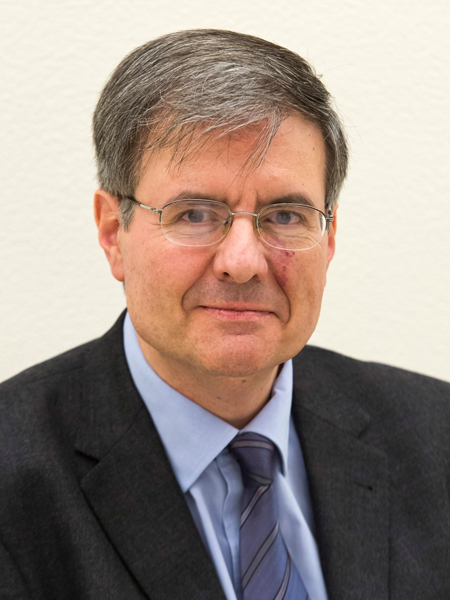
Martin Ostoja-Starzewski , Ph.D. (McGill), is a Professor of Mechanical Science & Engineering at the University of Illinois at Urbana-Champaign , with affiliate appointments at the Beckman Institute and National Center for Supercomputing Applications . His research spans continuum mechanics , stochastic wave propagation , and fractal media , focusing on scaling laws and the statistical-to-representative volume element transition. 2006–Present: Professor, UIUC 2001–2005: Canada Research Chair, McGill University 2023: Rothschild Distinguished Visiting Fellow, University of Cambridge 2022: Member, European Academy of Sciences and Arts 2024: Academia Europaea Foreign Member His work pioneered continuum mechanics with spontaneous second law violations and tensor random fields for stochastic PDEs. He authored four foundational books, including Tensor-Valued Random Fields for Continuum Physics (2019), and edited 16 special issues. Recent 2025–2023 articles explore odd elasticity , fractal thermodynamics , and stochastic wavefronts , bridging non-equilibrium thermodynamics to granular Couette systems . Scientific accolades include the Worcester Reed Warner Medal (2018) and ASME , AAM , SES fellowships. As part-time faculty at Beckman Institute (2008–Present), he integrates bioimaging with mechanics across electrosurgery and traumatic brain injury modeling.
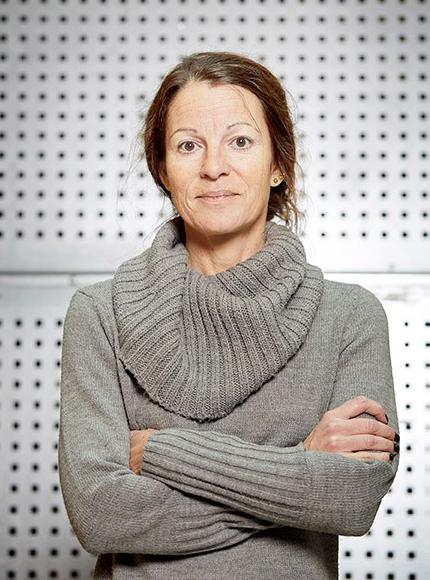
Manuel Arellano is Professor of Economics at the Center for Monetary and Financial Studies (CEMFI) in Madrid since 1991, with prior appointments at the University of Oxford (1985-89) and London School of Economics (1989-91). A leading econometrician specializing in panel data analysis, his work bridges theoretical econometrics and labor economics applications. He earned his undergraduate degree from the University of Barcelona and Ph.D. from the London School of Economics. Arellano's research focuses on econometric methodology for panel data, particularly dynamic models with heterogeneity. His seminal book Panel Data Econometrics (2003) established foundational frameworks for nonlinear and dynamic panel estimation. Current work extends to distributional analysis of random coefficients and robust inference under uncertainty, maintaining consistent emphasis on labor market applications like unemployment duration and policy evaluation. His publication history reveals a 30-year trajectory advancing panel data econometrics, evolving from specification testing (1987-1995) to sophisticated dynamic and nonlinear models (2003-2014), with persistent focus on practical implementation and labor economics applications. Major honors include: President of the Econometric Society (2014) Foreign Honorary Member of the American Academy of Arts and Sciences (2014) Rey Jaime I Prize in Economics (2012) ISI Highly Cited Researcher status (2010) Fellow of the Econometric Society (2002) No information on student advising or research grants appears in the source materials. Similarly, details about research laboratories or collaborative teams are not documented in the provided texts.
Ares Rosakis is the Theodore von Kármán Professor of Aeronautics and Mechanical Engineering at the California Institute of Technology (Caltech). He has served as Chair of the Division of Engineering and Applied Science (2009–2015) and Director of the Graduate Aeronautical Laboratories (GALCIT) (2004–2009). Rosakis holds visiting professorships at Nanyang Technological University (2018–2023) and Northwestern University (2018). Education : B.A. and M.A. in Engineering Science (Oxford, 1978); Sc.M. and Ph.D. in Engineering (Solid Mechanics, Brown University, 1980–1982) Academic Career : Caltech faculty since 1982 (Assistant, 1982; Associate, 1988; Full Professor, 1993) As a world-leading expert in dynamic failure mechanics of solid materials, Rosakis has pioneered research in dynamic ductile failure of metals, intersonic/supershear ruptures in composites and earthquakes, and Coherent Gradient Sensing (CGS) interferometry . His work spans experimental mechanics, solid mechanics, geophysics, and thin film stress measurement. His 15 most recent articles (2010–2014) focus on dynamic shear ruptures , fault mechanics , brittle failure , high-strain-rate deformation , and laboratory earthquake simulations , reflecting his cross-disciplinary expertise in materials science, geophysics, and mechanics. Scientific Awards & Recognitions Foreign Member of the Royal Society (2024) Two Honorary Doctorates (2023) U.S. National Academy of Engineering (2011) NASA Group Achievement Award (2009) Timoshenko Medal (2018) Multiple SEM and ASME awards (1989–2013) Research Leadership includes directing GALCIT and developing advanced optical and infrared diagnostic methods for real-time crack propagation and temperature measurement. His work bridges fundamental mechanics with applied material failure analysis , influencing aerospace, seismology, and nanotechnology.
**Pernilla Wittung Stafshede** is a Full Professor with Tenure and Head of the Chemical Biology division at Chalmers University of Technology (Gothenburg, Sweden). She previously held professorships at Umeå University (Sweden) and Rice University (USA). Her research focuses on protein folding, metalloproteins, biophysical methods, and applications to diseases like cancer and Parkinson’s. She leads the Wittung-Stafshede Lab , part of Chalmers’ Chemical Biology infrastructure. **Research Interests**: Protein folding mechanisms, metal transfer proteins, spectroscopic techniques, amyloid formation, and biophysical studies of macromolecules. Her work bridges fundamental biochemistry with disease mechanisms, leveraging advanced experimental and computational methods. **Awards**: Notable honors include the Arrhenius Medal (2016), membership in the Swedish Royal Academy of Sciences (2016), and sustained Wallenberg Scholar funding (2010–2022). She is recognized for pioneering contributions to chemical biology. **Key Contributions**: Her lab’s work spans protein dynamics, metallomics, and disease-related protein misfolding. Recent publications highlight systems biology approaches to yeast metabolism and drought stress responses in plants.
Willy Zwaenepoel is a Professor and Dean of the Faculty of Engineering at the University of Sydney. He holds a B.S. from the University of Gent and M.S./Ph.D. from Stanford University. Previously, he served as Dean of the School of Computer and Communication Sciences at EPFL and was a faculty member at Rice University. His expertise spans operating systems, distributed systems, and high-performance computing. Education: B.S., University of Ghent, Belgium (1979) M.S., Stanford University (1980) Ph.D., Stanford University (1984) Research Interests: Dr. Zwaenepoel focuses on distributed systems, operating systems, and their applications in database replication, virtual machine performance, and software update mechanisms. His work includes foundational contributions to distributed shared memory (e.g., Treadmarks) and startups like iMimic Networking. Awards: ACM Fellow (2000) IEEE Fellow (1998) Fellow of the Australian Academy of Technical Sciences and Engineering (2020) Recipient of the IEEE Tsutomu Kanai Award (2007) Key Contributions: His research addresses challenges in distributed systems performance, such as latency reduction in key-value stores and efficient graph processing. Current projects explore I/O optimization in virtualized environments and causal consistency for geo-replicated systems. Students/Advising: Advises Ph.D. students and postdocs, including William in database replication. His mentorship led to the Rice University Teaching Award (2000).
Vienna University of Economics and BusinessAustria
Katrin Rabitsch is an Associate Professor of Economics at Vienna University of Economics and Business (WU Vienna), affiliated with the Department of Economics. Her research focuses on International Macroeconomics/Finance, Quantitative Macroeconomics, Business Cycles, and Monetary Economics. She has published extensively in top journals like European Economic Review , Journal of International Economics , and Macroeconomic Dynamics . Her work explores topics such as monetary policy transmission channels, fiscal multipliers, macroprudential policies, and asset pricing dynamics. Notable recent contributions include analyzing nonlinear inflation dynamics, firm entry costs in asset pricing, and agent-based economic forecasting models. Rabitsch also engages in policy-oriented research, examining the effects of borrower heterogeneity on financial stability and the role of imperfect information in monetary policy design. Her teaching and research are supported by affiliations with institutions like the Department of Economics at WU Vienna. Rabitsch’s methodologies often involve advanced DSGE modeling, VAR analysis, and computational simulations to address complex macroeconomic questions.
Prof. Jens Markus Melenk is a Professor at TU Wien's Faculty of Mathematics and Geoinformation, leading the Computational Mathematics Research Group (E101-02-1). His research focuses on advanced numerical methods for partial differential equations, with a strong emphasis on hp-FEM (hp-Finite Element Method), fractional diffusion equations, and wave propagation problems. He has contributed significantly to the development of robust and efficient algorithms for complex domains and heterogeneous media. Key research interests include the application of hp-FEM to fractional operators (e.g., integral fractional Laplacian), boundary element methods (BEM), and the analysis of wavenumber-explicit convergence for Maxwell's equations and elastic wave equations. His work bridges theoretical analysis and computational implementation, addressing challenges in multiscale problems and singular perturbations. Notable contributions: Exponential convergence of hp-FEM for fractional Laplacian problems, wavenumber-explicit error estimates for wave equations in heterogeneous media. Collaborations: Active involvement with researchers like Markus Faustmann, Christoph Schwab, and Dirk Praetorius. Supervised theses: Includes works on hp-FEM for fractional operators, RBF interpolation, and error estimators for elliptic PDEs. His research group develops and analyzes numerical schemes for challenging PDE scenarios, with applications in electromagnetism, acoustics, and computational mechanics.
Donatella Sciuto is a Full Professor of Computer Science and Engineering at Politecnico di Milano, serving as Executive Vice Rector overseeing research strategies. She holds a PhD from the University of Colorado, Boulder and an MBA from Bocconi University. Her research focuses on embedded systems design, low-power electronics, and cyber-physical systems, with contributions to smart cities and ICT infrastructure. Education: Bachelor's in Electronic Engineering, Politecnico di Milano (1984) PhD in Electrical and Computer Engineering, University of Colorado, Boulder MBA, SDA Bocconi School of Management Research Interests: Embedded systems, multiprocessor architectures, hardware/software co-design, power-efficient computing, and building automation via IoT technologies. She leads the Embedded Systems Design research group at Politecnico di Milano and coordinates EU-funded projects in smart cities and reconfigurable systems. Awards: IBM Women Leaders in AI (2021) IEEE Fellow (2011) EDAA Fellow (2010) Outstanding Contribution Award, IEEE Computer Society (2009) Professional Roles: Board Member: Bank of Italy, Istituto Italiano di Tecnologia, STM, Avio Former President, IEEE Council of Electronic Design Automation (2011-2013) Executive Committee Member, Design Automation and Test in Europe (DATE) conference Labs/Teams: Leads the Embedded Systems Design and Design Methodologies group at Politecnico di Milano, collaborating with CEFRIEL on executive education programs in embedded systems and IoT.
Dragi Kimovski is a Habilitated Assistant Professor in Distributed Systems at Klagenfurt University, Austria, focusing on Edge Computing and AI. He previously held roles at the University of Innsbruck and the University of Information Science and Technology in Macedonia. His research spans Edge/Fog/Cloud computing, multi-objective optimization, and high-performance computing. He has coordinated major projects like 6GContinuum and KärtnerFog, and led initiatives such as DataCloud and ASPIDE. His teaching includes courses on Distributed Computing, Cloud Computing, and IoT. He is the co-creator of the Carinthian Computing Continuum and maintains a blog on Edge AI World. His work emphasizes sustainable and efficient computing solutions for emerging technologies. Education: Not explicitly listed in the provided text. Research Interests: Edge Computing, Fog Computing, Cloud Computing, Multi-objective Optimization, High-Performance Computing, AI in Distributed Systems. His work addresses challenges in resource management, latency reduction, and scalability across heterogeneous environments, with applications in healthcare, IoT, and 6G networks. Projects: 6GContinuum (Coordinator): Focuses on AI services over 6G networks. KärtnerFog (Scientific Coordinator): Develops adaptive Fog infrastructures over 5G. DataCloud (WP5 Leader): Manages Big Data pipelines on the Computing Continuum. ASPIDE (Scientific Coordinator): Advances exascale programming models for data processing. Teaching: Klagenfurt University: Courses include Distributed Computing, IoT, Cloud Computing, and Advanced Programming. University of Innsbruck: Taught Advanced Parallel and Distributed Systems. University of Information Science and Technology: Courses in High-Performance Computing and Network Architectures. Labs/Teams: Co-created the Carinthian Computing Continuum, an automated SDN testbed for Edge computing research. Active in interdisciplinary teams addressing extreme data processing and sustainable computing.
Zoran Obradovic holds the prestigious L.H. Carnell Professorship of Data Analytics at Temple University where he serves as Professor in the Computer and Information Sciences Department and the Statistics Department. He also directs the Center for Data Analytics and Biomedical Informatics and maintains secondary appointments at Temple's Fox School of Business. Internationally, he serves as Research Professor at The Mathematical Institute of the Serbian Academy of Sciences and Arts, and as Visiting Professor at both the School of Medicine and School of Management at the University of Belgrade. His research spans multiple cutting-edge domains of data science: Bioinformatics and protein disorder prediction Healthcare informatics and clinical decision support systems Machine learning for complex networks and big data Spatial and temporal data analytics Applications in healthcare management, social networks, and earth science Dr. Obradovic pioneered research on intrinsically disordered proteins, earning multiple CASP awards. His work addresses challenges related to heterogeneous, spatial, and temporal data analytics with applications across healthcare, power systems, earth science, and social sciences. His research has been funded by prestigious organizations including NIH, NSF, DARPA, DOE, and industry partners. With approximately 450 publications and an H-index of 68 (over 33,000 citations), his scholarly impact is substantial. He serves as editor-in-chief of the Big Data journal and chairs the SIAM Data Mining conference steering committee, reflecting his leadership in the field. Scientific Recognition Elected Member of Academia Europaea (2015) Foreign Member of Serbian Academy of Sciences and Arts (2015) Asia-Pacific Artificial Intelligence Association Fellow (2021) Multiple best paper awards at international conferences Temple University's President's Outstanding Faculty Research Award (2009) Three consecutive CASP awards for protein structure prediction (2002-2006) Dr. Obradovic has mentored approximately 50 postdoctoral fellows and Ph.D. students, many of whom now hold positions at leading academic institutions and tech companies including Amazon, Facebook, IBM, Microsoft, and Uber. He has served on editorial boards for 13 journals and organized numerous international conferences in data mining and bioinformatics. His Center for Data Analytics and Biomedical Informatics develops advanced data science methods addressing real-world challenges in healthcare, science, engineering, and business applications, with active recruitment for Ph.D. students and postdoctoral researchers.
Dawid Wolosiuk is affiliated with TU Wien's Research Department of Building Physics and Building Ecology (E259-03). He holds a Dipl.-Ing. (Diploma in Engineering), Dr.techn. (Doctor of Technical Sciences), and BSc degrees. His research focuses on building performance simulation, data integration in construction, and architectural accessibility. He leads projects like ViDeA (Visual Design for All) and MOTIVE, exploring ontology-driven approaches for building design and energy-efficient systems. His work bridges computational tools, data management, and sustainable architecture. Education: BSc, Dipl.-Ing. in Architecture/Engineering, Dr.techn. from TU Wien Research emphasizes ontological frameworks for building data, visual accessibility evaluation, and renewable energy integration in buildings. He collaborates on open data initiatives for occupant-centric design and has developed computational tools for assessing architectural spaces' accessibility. Key projects include BAU_WEB (ontology-based building product data), MOTIVE (vacuum glazing integration), and AGelFa (aerogel-based insulation systems). His contributions span academic publications, conference presentations, and technical reports, advancing building physics and eco-friendly construction practices.
University of Natural Resources and Life Sciences ViennaAustria
Christine Sindelar serves as Associate Professor and Head of the Hydraulics Laboratory at the Institute of Hydraulic Engineering and River Research, Department of Landscape, Water and Infrastructure, University of Natural Resources and Life Sciences, Vienna (BOKU). Her academic leadership spans experimental river research, fluid mechanics, and hydraulic engineering with a strong emphasis on practical applications for river management and restoration. Her educational trajectory includes a habilitation in Experimental River Research and Fluid Mechanics (2022), a PhD-equivalent doctorate in Civil Engineering from Graz University of Technology (2011), a degree in Technical Mathematics from the University of Linz (2000), and teacher certification in mathematics, psychology, and philosophy (1997). Habilitation: Experimental River Research and Fluid Mechanics (2022) PhD: Civil Engineering, Graz University of Technology (2011) M.Sc.: Technical Mathematics, University of Linz (2000) B.Ed.: Teaching Certification, University of Linz/Salzburg (1997) Dr. Sindelar's research integrates experimental and computational methodologies to address critical challenges in river systems. Her work focuses on sediment transport dynamics, fish passage engineering, scale modeling of hydraulic structures, and nature-based river restoration solutions. She pioneers innovative techniques such as 1:1 physical modeling and Lagrangian particle tracking to investigate complex fluid-particle interactions and river morphodynamics. Her leadership in the Responsible River Modeling Center (RRMC) drives advancements in sustainable river management practices across European waterways. Analysis of her 15 most recent publications reveals a dominant focus on sediment pulse dynamics (33%), fluid-particle interactions (27%), and scale modeling techniques (20%). Her work consistently bridges fundamental fluid mechanics with practical engineering applications, particularly in regulated river systems and hydropower infrastructure. Key emerging trends include the application of nature-based solutions for ecological restoration and advanced measurement techniques for turbulent flow structures. Her scientific recognition includes: Manfred Schwanninger Preis - BOKU Teaching Award (2021) ÖAW Stipendium 'For Women in Science' (2011) Dr. Sindelar has mentored 20 graduate students through thesis supervision, with research spanning hydraulic structure design, sediment transport modeling, and river restoration techniques. Her externally funded research portfolio includes 14 active projects totaling over €2.5 million in grants from diverse sources: Competitive Grants: Austrian Science Fund (FWF): PiCASSO XL (€480,000), Particle Collision Model (€320,000) European Commission: Mura-Drava-Danube Corridor (€1.2M) Industry Partnerships: Multiple hydropower-related physical modeling projects (€650,000) Municipal Projects: City of Vienna: Wienfluss restoration (€180,000) As Head of the Hydraulics Laboratory, she directs a multidisciplinary team conducting cutting-edge experimental research using advanced facilities including 1:1 scale river modeling systems, high-resolution particle tracking velocimetry, and specialized sediment transport measurement apparatus. The laboratory serves as a national hub for river engineering research and collaborates extensively with European water management authorities on transboundary river projects.
Jürgen Eckert is a Professor and Director at the Erich Schmid Institute of Materials Science of the OAW and holds the Chair of Materials Physics at the University of Leoben . He is a Corresponding Member of the Division of Mathematics and Natural Sciences in Austria since 2017. His research spans Materials Science , Condensed Matter Physics , and Metallurgy , focusing on metallic glasses , high-entropy alloys , microstructure engineering , and additive manufacturing . He has pioneered work on crystallization kinetics , phase transformations , and mechanical property optimization . Recent publications (2024-2025) highlight advances in 3D-printed titanium alloys , nitrogen-stabilized nanocrystalline alloys , and multi-stage heterostructures , reflecting his interdisciplinary approach combining experimental physics , computational modeling , and materials engineering . THERMEC 2023 Distinguished Award Gottfried Wilhelm Leibniz-Preis (2009) ERC-Advanced Grant (2013) DGM-Preis der Deutschen Gesellschaft für Materialkunde (2014) Dr. honoris causa, Slovak Technical University (2018) He leads the ERC Project INTELHYB and collaborates with institutions in India , Germany , and Europe , advancing heterogeneous materials design and sustainable metallurgical solutions .
Gerhard A. Holzapfel is a Full Professor of Biomechanics and Head of the Institute of Biomechanics at Graz University of Technology (Austria) since 2007. He holds adjunct and visiting positions at KTH Royal Institute of Technology (Sweden) and the University of Glasgow (Scotland). His academic journey includes a PhD in Mechanical Engineering from Graz University of Technology, a Habilitation from TU Vienna (1996), and prestigious awards such as the START-Award (1997) and the Warner T. Koiter Medal (2021). His research focuses on constitutive modeling of biosolids, nonlinear continuum mechanics, and medical image processing. Notable contributions include studies on arterial wall mechanics, fibrous tissue behavior, and computational biomechanics. Holzapfel leads interdisciplinary teams exploring mechanobiology, vascular pathologies, and biomaterials, with applications in cardiovascular engineering and disease modeling. Education: PhD in Mechanical Engineering, Graz University of Technology Habilitation, TU Vienna (1996) Research Highlights: Multi-scale modeling of biological tissues Biaxial mechanical testing and microscopy integration Computational fluid-structure interaction (FSI) in vascular systems Biomechanical implications of medical interventions (e.g., stents, angioplasty) Awards: Warner T. Koiter Medal (2021) Corresponding Member, Austrian Academy of Sciences (2012) Erwin Schrödinger Prize (2011) START-Award (1997) Labs & Teams: Leads the Institute of Biomechanics at TU Graz, collaborating with international teams on vascular biomechanics and mechanobiology.
Pawel Swietach is Professor of Physiology at the University of Oxford, Head of the Proton Transport Group (DPAG), and Handa Tutorial Fellow at Corpus Christi College. His work bridges cardiac physiology , cancer pH biology , and blood oxygen transport , with a focus on acid-base regulation and its therapeutic implications. PhD in Physiology (Oxford, 2004) First Class BA in Physiological Sciences (Oxford, 2001) His research uncovers how pH gradients govern cell function in heart and cancer, including: Proton-calcium crosstalk in cardiomyocytes Metabolic adaptation to acidosis in tumors Biochemical control of oxygen release in stored blood His 15 most recent publications (2020-2025) span Nature Reviews Cancer , Nature Cardiovascular Research , and Cell Reports , focusing on acid-driven oncogenesis, histone modifications from propionate metabolism, and novel methods for imaging oxygen transport. Key findings include tumor-stroma acid exchange via gap junctions and nuclear pH's role in cardiac gene expression. Honors include: ERC Consolidator Grant (2017) Royal Society University Research Fellowship (2008-2016) CRUK-U.S. Fulbright Scholar (2018) Academia Europaea membership (2024) He leads cross-disciplinary projects funded by British Heart Foundation, ERC, MRC, and industry partners, translating pH biology into clinical tools like FlowScore for blood storage quality assessment.