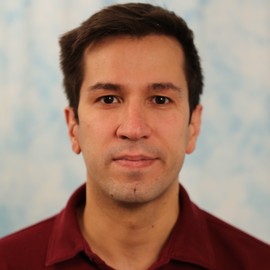
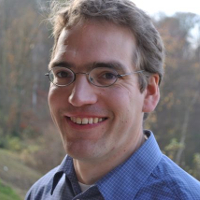
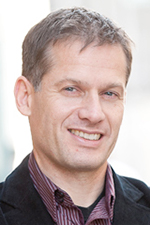
Yannis Kevrekidis is a Professor at Princeton University with a distinguished career in computational mathematics and chemical engineering. He is currently a Hans Fischer Senior Fellow at the Technical University of Munich (TUM-IAS) and has held visiting positions at institutions like the Zuse Institute Berlin and Caltech. Education : National Technical University of Athens (Chemical Engineering) University of Minnesota (PhD in dynamical systems) Research Interests : Equation-Free and Variable-Free Modeling Complex Systems Dynamics Multiscale Computation Integration of Machine Learning with Scientific Computing Pattern Formation & Instability Analysis Key Article Trends : Advanced data-driven modeling of dynamical systems Manifold learning for reaction coordinates Projective integration methods Coarse-grained modeling across disciplines Applications in epidemiology, neuroscience, and fluid dynamics Scientific Awards : Guggenheim Fellowship Humboldt Research Award Computing in Chemical Engineering Award (AIChE) Bodossaki Academic Award Allan P. Colburn Award Collaborations : Extensive international collaborations with institutions in Germany, Austria, and the UK Key role in the Complex Systems Modeling and Computation focus group at TUM-IAS
Shimeng Yu is a full professor at the Georgia Institute of Technology's School of Electrical and Computer Engineering, holding the Dean’s Professorship. He earned his B.S. from Peking University (2009) and M.S./Ph.D. from Stanford University (2011/2013). His research focuses on semiconductor devices, non-volatile memories, 3D integration, and AI hardware accelerators. Yu leads SRC/DARPA JUMP 2.0 centers on memory/storage and 3D integration, with over 400 publications and 30,000+ citations (H-index 82). He serves on flagship conference committees (e.g., IEDM, VLSI) and editorial boards (IEEE EDL, JETCAS). Education: B.S., Microelectronics, Peking University (2009) M.S./Ph.D., Electrical Engineering, Stanford University (2011/2013) Research Themes: Emerging non-volatile memories for AI Monolithic 3D integration Energy-efficient computing systems His work spans device fabrication, circuit design, and system-level co-optimization. Recent projects are funded by NSF, DARPA, DOE, and industry partners (TSMC, Intel, Samsung), totaling >$17M. His lab, located at the Pettit Microelectronics Research Center, develops prototypes with cleanroom access. Awards: IEEE Fellow (2024) ACM/IEEE DAC Under-40 Innovators Award (2020) NSF CAREER Award (2016) Multiple editorship roles and distinguished lecturer appointments (IEEE EDS/CASS) Grants & Funding: Lead of two SRC/DARPA JUMP 2.0 centers Total research funding exceeds $17M
Dr. Weihua Zhuang is a University Professor and University Research Chair in the Department of Electrical and Computer Engineering at the University of Waterloo. She holds prestigious fellowships from IEEE, Royal Society of Canada, and other organizations. Her research focuses on future communication networks, including 6G, network virtualization, autonomous vehicles, and smart grids. She has led groundbreaking work on MAC protocols like VeMAC for vehicular networks and has contributed extensively to AI-driven network management. Education : Doctorate in Electrical Engineering, University of New Brunswick, Canada (1993) M.Sc. and B.Sc. in Electrical Engineering, Dalian Maritime University, China Research Interests : Dr. Zhuang's work spans wireless networking, IoT, autonomous systems, and smart infrastructure. She explores solutions for network architecture evolution, machine learning applications in communication systems, and service customization for dynamic environments. Her recent projects include digital twin-driven networks, cross-modal transmission strategies, and AI-native slicing for 6G. Awards : Women's Distinguished Career Award (IEEE VTS, 2021) R.A. Fessenden Award (IEEE Canada, 2021) Fellowships from IEEE, RSC, CAE, EIC Grants & Professional Activities : She led the Tier I Canada Research Chair in Wireless Communication Networks (2010–2024) and has held roles such as IEEE VTS President (2023–2024). Her grants include the NSERC Discovery Accelerator Supplements and PREA awards. She edits journals like IEEE Transactions on Vehicular Technology and co-chairs major conferences. Labs & Teams : Her research group focuses on network architecture, AI-driven protocols, and vehicular communication. Collaborations include projects on 6G, satellite-terrestrial integration, and edge computing for autonomous systems.
Hjalti H. Sigmarsson is an Assistant Professor at the University of Oklahoma's School of Electrical and Computer Engineering within the Gallogly College of Engineering. His research focuses on reconfigurable RF/microwave hardware, spectral management for cognitive radios, heterogeneous integration packaging, and nanomaterial-based device development. Education : B.S.E.C.E., University of Iceland (2003) M.S.E.C.E., Purdue University (2005) Ph.D., Electrical and Computer Engineering, Purdue University (2010) Research Interests : His work advances agile communication systems through tunable microwave components and explores novel packaging techniques for heterogeneous material integration. His nanomaterial research targets next-generation RF devices, while his radar systems development contributes to meteorological observations and mobile phased arrays. Scientific Contributions : He has pioneered liquid metal-tuned filters, substrate integrated waveguide technologies, and evanescent-mode cavity resonators. His publications demonstrate expertise in hybrid acoustic-electromagnetic filters, SAR imaging, and filter shape optimization. Awards : DARPA ASP program recognition (2008) Best paper awards at IMAPS (2008, 2009) Outstanding student paper, IMAPS (2009) Best paper, Microwave/Radio Applications session at IMAPS (2008, 2009) Labs & Centers : He leads research at the University of Oklahoma's Radar Innovations Lab and contributes to the Advanced Radar Research Center. His work includes the Horus All-Digital Phased Array Weather Radar project.
Dr. Swati Chandna is a Senior Lecturer at the School of Computing and Mathematical Sciences, Birkbeck, University of London. She holds an honorary position as an Honorary Lecturer in Statistics at University College London (UCL) from January 2023 to January 2026. She earned her PhD in Statistics from Imperial College London in 2013. Her research focuses on statistical modeling, network analysis, and bioinformatics, with notable contributions to stochastic networks, single-cell genomic data analysis, and complex-valued signal processing. Teaching responsibilities include modules such as Bayesian Methods, Analysing Data, Statistical Analysis, and Project Applied Statistics. She serves as Admissions Tutor for Graduate Certificate and Diploma in Statistics for Data Science and as School Ethics Lead at Birkbeck. Her work bridges theoretical statistics with practical applications in genomics, environmental modeling, and biomedical research. Dr. Chandna’s recent research explores topics like covariate-driven network estimation, stochastic modeling of genomic data, and bootstrap techniques in source separation. Her publications reflect interdisciplinary collaboration across statistics, computer science, and life sciences.
Xiaowei Chen is an Associate Professor in the Department of Geology and Geophysics at Texas A&M University. His research focuses on observational seismology, with an emphasis on earthquake rupture processes, induced seismicity, subsurface structure analysis, and applications of distributed acoustic sensing (DAS). He holds a PhD from the University of California, San Diego (2013), and has held prior academic positions including the Stubbeman-Drace Presidential Professorship at the University of Oklahoma (2020). His work integrates field observations, dense seismic arrays, and advanced computational methods to address critical questions in crustal dynamics and seismic hazard assessment. **Education:** PhD, University of California, San Diego, 2013 MS, University of California, San Diego, 2010 BS, University of Science and Technology of China, 2007 **Research Interests:** Chen investigates how anthropogenic activities influence fault behavior, interactions between seismic and aseismic slip, and factors controlling earthquake rupture characteristics. He studies these phenomena in tectonically active regions (e.g., western US, Japan) and intraplate settings (e.g., Oklahoma), leveraging DAS technology for high-resolution subsurface imaging. Recent projects include forecasting induced seismicity via machine learning and analyzing pore-pressure diffusion mechanisms in Oklahoma. **Awards:** Stubbeman-Drace Presidential Professor, University of Oklahoma (2020) Editor's citation for excellence in refereeing, JGR-Solid Earth (2018) **Advising & Grants:** While no formal advisees are listed, Chen’s collaborative research involves multidisciplinary teams addressing induced seismicity, fault dynamics, and crustal structure. His work is supported by grants from agencies like the USGS and SCEC. **Labs & Teams:** Engages with the Texas A&M Seismology Group and collaborates with institutions like the University of Oklahoma and the University of California system on projects involving seismic array deployments and DAS applications.
Mohamed-Slim Alouini is a Professor of Electrical Engineering and Associate Dean of the Computer, Electrical and Mathematical Science and Engineering (CEMSE) Division at King Abdullah University of Science and Technology (KAUST) in Saudi Arabia. He also serves as the Associate Vice President for Research and holds the UNESCO Chair in Education to Connect the Unconnected. With over 500 journal publications and more than 46,000 citations, he is a world-renowned expert in wireless communications who was elected IEEE Fellow in 2009 at the age of 39. Education: PhD in Electrical Engineering, California Institute of Technology (Caltech), 1998 MS in Electrical Engineering, Georgia Institute of Technology (Georgia Tech), 1995 Diplôme d'Etudes Approfondies (DEA) in Electronics, Université Pierre & Marie Curie (Sorbonne University), 1993 Diplôme d'Ingénieur, École Nationale Supérieure des Télécommunications (Télécom Paris Tech), 1993 Habilitation, Université Pierre & Marie Curie (Sorbonne University), 2003 Dr. Alouini is a world-renowned expert in wireless communication and networking with research interests spanning diversity combining techniques, MIMO systems, multi-hop/cooperative communications, optical wireless systems, cognitive radio, UAV communications, and advanced modulation schemes. His current focus addresses the technical challenges of uneven information and communication technology distribution, particularly targeting rural, low-income, disaster-prone, and hard-to-reach areas through integrated ground-airborne-space networks. His work bridges theoretical foundations with practical implementations to solve real-world connectivity problems. His recent publications (2020-2024) demonstrate a clear research trajectory toward integrated communication networks combining terrestrial, aerial, and space components. There's growing emphasis on UAV communications, satellite systems, optical wireless technologies, and rural connectivity solutions, with increasing integration of machine learning techniques for network optimization. His work shows consistent focus on addressing the digital divide, with several publications specifically targeting 6G challenges for connecting underserved populations and recycling existing infrastructure for enhanced rural connectivity. Scientific Awards: Member of the European Academy of Sciences and Arts (2019) Fellow of the African Academy of Sciences (2018) IEEE Fellow (2009) Abdul Hameed Shoman Award for Arab Researchers (2016) OIC Science & Technology Achievement Award (2017) Multiple recognitions as Highly Cited Researcher NSF CAREER Award (1999) Dr. Alouini has mentored numerous successful students and post-doctoral fellows who have secured positions at top institutions worldwide including Harvard, Caltech, Imperial College, and faculty positions at Korea University, Hanyang University, and universities across the Middle East. His December 2018 PhD graduate Qurrat-Ul-Ain Nadeem received the prestigious Marconi Society Paul Baran Young Scholars award, while post-doctoral fellows have won IEEE ComSoc Young Professionals Best Innovation Award and attended the Lindau Nobel Meeting. His Communication Theory Lab at KAUST drives significant research in wireless communications with funding supporting extensive publication output and innovative projects. Dr. Alouini leads the Communication Theory Lab at KAUST and holds the UNESCO Chair in Education to Connect the Unconnected, focusing specifically on technical solutions for connecting underserved communities. His lab works on integrated ground-airborne-space networks to bridge the digital divide, with particular emphasis on rural, low-income, and hard-to-reach areas. The team develops practical solutions using UAVs, satellite communications, and recycled infrastructure to provide cost-effective connectivity where traditional approaches fail.
Professor Dong Xu is a Tenured Professor in the Department of Computer Science at the University of Hong Kong (HKU), part of the School of Computing and Data Science. He holds a B.Eng. and Ph.D. from the University of Science and Technology of China (USTC). His career includes tenured roles at Nanyang Technological University and the University of Sydney, alongside postdoctoral research at Columbia University. His research focuses on Artificial Intelligence, Computer Vision, Multimedia, and Machine Learning , with applications in autonomous driving, AR/VR, medical image analysis, and video surveillance. Xu has authored over 150 papers in top journals and conferences, including CVPR, ICCV, and IEEE Transactions. He actively contributes to the academic community as an editorial board member for journals like ACM Computing Surveys and IEEE Transactions, and through leadership roles in conferences such as ACM Multimedia and ICME. Notable awards include Fellowships from IEEE and IAPR, and the IEEE Signal Processing Society Distinguished Lecturer title (2021–2022). Education: B.Eng. (USTC, 2001), Ph.D. (USTC, 2005) Professional Service: Program Coordinator of ACM Multimedia 2024, Guest Editor of over ten special issues.
Eugene Koonin is a Senior Investigator at the National Center for Biotechnology Information (NCBI), National Library of Medicine (NLM), NIH, and holds adjunct professorships at Georgia Institute of Technology, Boston University, and the University of Haifa. A leading figure in evolutionary biology and computational genomics, he has made foundational contributions to comparative genomics, virus evolution, and the analysis of horizontal gene transfer. Education: BS in Biochemistry, Moscow State University (1978) PhD in Molecular Biology, Moscow State University (1983) Research Interests: His work spans evolutionary genomics, virus-host coevolution, discovery of novel viruses through metagenomics, and the evolutionary regimes of human cancers. He pioneered the Clusters of Orthologous Genes (COG) system and investigates thermodynamic principles underlying evolution. Publications: His recent work includes groundbreaking studies on gut viromes, RNA virus diversity, anti-CRISPR protein discovery, and SARS-CoV-2 pathogenicity. These publications reflect his integrative approach to computational biology. Scientific Awards: NIH Distinguished Investigator (2019) Benjamin Franklin Prize for Open Access (2019) Doctor Honoris Causa, Wageningen University (2018) Georgy Gamow Prize (2018) Member, National Academy of Sciences (2016) Israel Pollak Lecture Award (2011) Leadership & Collaborations: He has chaired major conferences (e.g., Gordon Research Conference on Genomics) and served as Editor-in-Chief of Biology Direct and Associate Editor of Genome Biology and Evolution . His lab at NCBI includes researchers like Kira Makarova and Yuri Wolf.
P. (Saday) Sadayappan is a Professor in the School of Computing at the University of Utah. He serves as a lead researcher in high-performance computing, with a focus on compiler optimization and algorithm-architecture co-design. His current projects include NIH SBIR Phase 2 funding for large-scale image analysis and NSF grants for tensor applications and cyber-infrastructure for AI. Research Interests : Compiler Optimization for High Performance Computing Optimization of Sparse/Dense Matrix/Tensor Computations Scalable Machine Learning Algorithm-Architecture Co-Design Optimization Research Trends in Publications : His work emphasizes optimizing computational workflows for emerging hardware architectures, with a focus on accelerating machine learning and scientific computing through compiler-level innovations. Recent trends include co-design for CNNs, sparse matrix optimizations, and distributed algorithms. Scientific Awards : ACM SIGPLAN Most Influential PLDI Paper Award (2018) Grants & Projects : NSF (2022–2027): Comprehensive Framework for Tensor Applications NSF AI Institute ICICLE (2021–2026): Cyber-infrastructure for environmental AI NIH SBIR (2023–2025): Next-gen machine learning for image analysis Labs & Teams : Collaborates with institutions like Ohio State University and RNET Technologies on projects involving parallel computing, sparse algorithms, and compiler design.
Márton Karsai is an Associate Professor and Head of the Department of Network and Data Science at the Central European University in Vienna, and a Research Professor at the HUN-REN Alfréd Rényi Institute of Mathematics in Budapest. He leads the Computational Human Dynamics Lab, focusing on data-driven modeling of social and biological systems. He is also the Editor-in-Chief of the journal Advances in Complex Systems . His research interests lie at the intersection of network science, human dynamics, and socioeconomic systems. He specializes in temporal and spatial networks, modeling contagion processes (both social and biological), and analyzing large-scale human behavioral datasets. His work integrates computational methods with real-world data to understand complex social phenomena such as mobility patterns, migration, segregation, and epidemic spread. He is particularly known for using remote sensing and digital trace data to infer poverty and socioeconomic conditions in urban areas. The recent publications highlight a strong trend in applying network science and machine learning to societal challenges. His work spans high-impact journals in complex systems, data science, and computational social science, with recurring themes in epidemic modeling, urban analytics, socioeconomic inference, and the structure of temporal and spatial networks. The research is highly interdisciplinary, combining physics, computer science, and social science methodologies. He has been invited to speak at major events such as the Conference on Complex Systems, the Lake Como School on Complex Networks, and workshops on data for vulnerability assessment. He served as general co-chair of CCS 2021 in Lyon, demonstrating leadership in the complexity science community. General Co-Chair, Conference on Complex Systems (CCS) 2021, Lyon Invited speaker, 4th Workshop on Data for the Wellbeing of the Most Vulnerable @ ICWSM'23 Invited speaker, Complexity72h Workshop Invited lecturer, Lake Como School on Complex Networks Invited talk, Hungarian Academy of Sciences on COVID-19 modeling While specific grant details are not listed, his coordination of projects on segregation, migration, and poverty inference—often in collaboration with the Complexity Science Hub—suggests active involvement in externally funded interdisciplinary research. He advises students through the Department of Network and Data Science at CEU, though specific advisees are not named. His lab, the Computational Human Dynamics Lab, serves as a hub for data-driven research on social systems.
Professor Xiaodong Liu is a faculty member at Edinburgh Napier University, affiliated with the School of Computing, Engineering and the Built Environment . His research spans Internet of Things , Edge Computing , Artificial Intelligence , and Cybersecurity , with a focus on decentralized systems and data-driven decision-making. Research Themes : IoT orchestration, federated learning, smart city infrastructure, building maintenance optimization, and automotive cybersecurity. Current Projects : Leading Swarmchestrate (EU-funded), Long-range Perceptive Autonomous Vehicles (Royal Society), and Met-Bot for Disaster Surveillance (Royal Society). His recent publications emphasize privacy-preserving edge learning , semantic IoT data validation , and deep learning for weather prediction . As a supervisor, he has guided PhD students in areas like federated learning, smart building systems, and IoT security. Collaborations include partnerships with institutions in Scotland, China, and Italy, alongside funding from European Commission , Royal Society , and Scottish Funding Council . He contributes to international conferences and journals, with notable work in IEEE Transactions , ACM TAAS , and MDPI publications.
Ruben Martins is an Assistant Professor at Carnegie Mellon University's School of Computer Science and serves as the program director of the Master of Science in Computer Science (MSCS) . His research focuses on the intersection of constraint programming, program synthesis, analysis, and verification, with recent work aiming to make formal methods tools more accessible through automated reasoning. Ruben earned his Ph.D. with honors from the Technical University of Lisbon, Portugal (2013) , followed by postdoctoral research at the University of Oxford (2014-2015) and UT Austin (2015-2017) . Research Interests : Ruben's work bridges constraint programming and program synthesis , with applications in software verification , optimization , and automated reasoning . He has developed award-winning tools like Open-WBO , a modular MaxSAT solver that has won gold medals in international competitions. His publications span top-tier venues such as POPL , PLDI , FSE , SAT , and CP , often addressing real-world challenges from program analysis to network security. Scientific Awards include: Distinguished Paper Award at PLDI 2018 Distinguished Paper Award at FSE 2021 Distinguished Paper Award at SAT 2022 Gold medals for Open-WBO in MaxSAT competitions Teaching & Advising : Ruben mentors Ph.D., Master’s, and undergraduate students in research projects related to program synthesis, formal methods, and constraint solving. He teaches courses such as Bug Catching: Automated Program Verification and Advanced Topics in Logic: Automated Reasoning and Satisfiability , emphasizing hands-on experience with tools like Why3. His advising spans topics from AI-driven program repair to network protocol verification , fostering collaboration across disciplines.
Prof. Dr. Arne Traulsen is a Scientific Member and Director of the Department of Theoretical Biology at the Max Planck Institute for Evolutionary Biology in Plön, Germany. He leads interdisciplinary research integrating biology, physics, mathematics, and computer science to study evolutionary dynamics, particularly in cancer evolution, metaorganisms, and population structure. His work often involves collaborations with clinicians, experimentalists, and bioinformaticians. Education: Diploma in Theoretical Physics (2002) Doctorate from Kiel University (summa cum laude, 2005) Research Interests: Arne’s research focuses on evolutionary game theory, finite populations, group selection, mathematical models for cancer , and population structure . His team explores how mutations accumulate, how cooperation evolves, and how eco-evolutionary dynamics shape biological systems. Recent work connects chaotic turnover in ecosystems and evolutionary responses to treatment with broader biological questions. Scientific Awards: Postgraduate Grant of Studienstiftung des Deutschen Volkes Postdoc Grant of Deutsche Akademie der Naturforscher Leopoldina Emmy-Noether Grant of Deutsche Forschungsgemeinschaft Young-Scientist Award for Socio- and Econophysics (2012) Advising and Collaborations: While specific student names are not listed, Arne has hosted numerous research groups and mentored interdisciplinary teams. His work spans collaborations with institutions like Kiel University , the CRC 1182 Metaorganisms , and global researchers in evolutionary biology and computational modeling .
Erik Luijten is the Associate Dean for Research and Doctoral Education at the McCormick School of Engineering, Northwestern University, where he also holds a Professorship in Materials Science and Engineering (with courtesy appointments in Engineering Sciences and Applied Mathematics, Physics and Astronomy, and Chemistry). His leadership includes overseeing research administration, doctoral programs, and global initiatives. He previously chaired the Department of Materials Science and Engineering. Educated at Utrecht University (M.Sc. Physics) and Delft University of Technology (Ph.D. Physics), Luijten specializes in computational materials science , focusing on soft matter systems like complex fluids, colloids, and active matter. His research combines advanced simulations (e.g., Monte Carlo methods) with theoretical frameworks to study self-assembly, electrokinetic phenomena, and dielectric effects. Notable contributions include accelerating simulation techniques for systems with long-range interactions and designing programmable materials. His work emphasizes practical applications , such as drug delivery via nanoparticle self-assembly, sustainable catalytic processes for plastic recycling, and dynamic hydrogel networks. Recent publications highlight innovations in active matter dynamics, nanoparticle crystal growth, and mesoporous catalytic architectures. Luijten’s awards include the NSF CAREER Award (2004) and Fellowship of the American Physical Society (2013) . He leads the Computational Soft Matter Lab , fostering interdisciplinary collaborations across engineering, physics, and chemistry. His academic service roles include the Racheff Assistant Professorship (2001–2003).