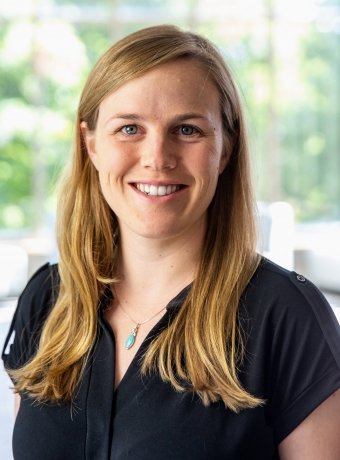
Cynthia Looy is a Professor of Paleobotany and Paleoecology at the University of California, Berkeley. Her research focuses on plant responses to major environmental changes, particularly the end-Permian mass extinction and glacial-interglacial transitions during the Late Carboniferous to Middle Permian. She leads the Looy Lab, which investigates Paleozoic flora dynamics, mass extinction mechanisms, and paleoclimatic reconstruction. Her work integrates field studies, geochemical analyses, and fossil record analysis to explore how plant communities adapted to abrupt environmental shifts. Key research themes include Permian-Triassic boundary studies, evolutionary innovations in conifers, and the ecological consequences of past climate changes. Lab Website: looylab.org Focus areas: Paleobotanical systematics, paleoecological modeling, mass extinction drivers Publications emphasize interdisciplinary approaches to reconstructing ancient ecosystems, with contributions to understanding fungal proliferation, coal forest refugia, and seed dispersal adaptations in prehistoric conifers.
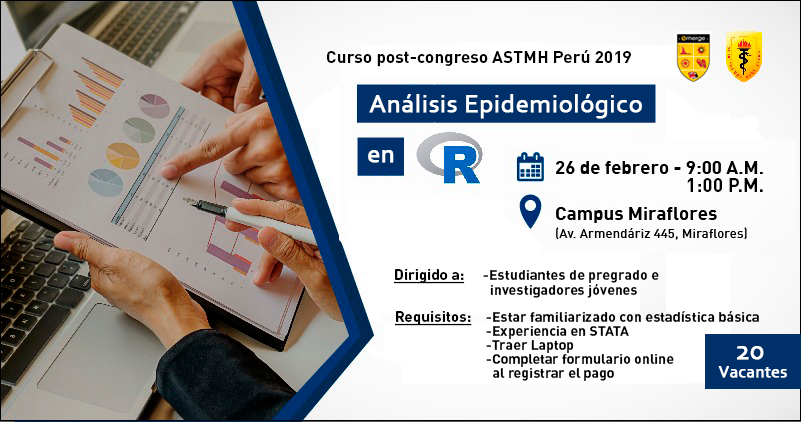
Mr Andree Valle Campos is a Research Fellow at the Department of Infectious Disease Epidemiology and Dynamics under the Faculty of Epidemiology and Population Health at the London School of Hygiene & Tropical Medicine . Based in the United Kingdom, he specializes in Epidemiology , Health Data Science , and Outbreak Response Data Analysis , with a focus on software development in R. Contributes to modules: Statistics for Health Data Science , Health Data Management , and short courses in epidemiology. Active in the Epiverse-TRACE project, developing R packages for outbreak analysis. His research spans Malaria Transmission in the Peruvian Amazon, SARS-CoV-2 seroprevalence, and Guillain-Barré Syndrome epidemiology. He integrates Open Science , Software Development , and Teaching into his work. Key projects include the finalsize and serosurvey R packages. He has led workshops and tutorials on Epidemiological Analysis with R , ggplot2 Visualization , and Reproducible Science . His affiliations include collaborations with institutions in Peru and participation in international networks like The GRAPH Network . He maintains a public CV and contributes to open-source tools and educational resources.
Daniel C. Hyde is an Associate Professor in the Department of Psychology at the University of Illinois Urbana-Champaign, affiliated with the College of Liberal Arts & Sciences and the Beckman Institute. His research spans Cognitive Neuroscience , Developmental Psychology , and Numerical Cognition , focusing on the origins of conceptual knowledge in quantitative, spatial, and psychological reasoning through infancy to adulthood using ERP, fNIRS, and behavioral measures. Ph.D., Harvard University Faculty Member, Neuroscience Program Faculty Affiliate, Beckman Institute Key research themes include: Developmental Cognitive Neuroscience Number and mathematical development Theory of Mind and social reasoning Executive Function and cognition Early educational interventions Neural and behavioral mechanisms Scientific recognition includes: Association for Psychological Science Fellow (2022) International Congress of Infant Studies Distinguished Early Career Award (2018) University of Illinois LEAP Scholar (2016-18) Helen Corley Petit Scholar (2018-19) He directs the Brain and Cognitive Development Lab , collaborating on global initiatives like ManyNumbers and ManyBabies to advance understanding of early cognitive development through multi-lab studies.
Dr. Paloma Marí-Beffa is a Senior Lecturer at the School of Psychology and Sports Science , Bangor University. Her research focuses on Cognitive and Applied Neuropsychology , particularly Executive Functions , with applications to populations ranging from Schizophrenia to Martial Artists . She employs methods like ERP , Transcranial Magnetic Stimulation , and 3D virtual environments , exploring how verbal instructions , curiosity , and Martial Arts can enhance cognitive control. Education: PGCert in Teaching in Higher Education (Bangor University, 2001–2003) PhD in Experimental Psychology and Psychobiology (University of Almería, 1995–1997) MSc in Experimental Psychology and Behavioral Neurophysiology (University of Granada, 1992–1995) BSc in Psychology (University of Granada, 1987–1992) Research Trends: Her 15 most recent articles (2018–2025) span topics like ERP analyses , Stroop paradigms , Differential Outcomes Effect , and Martial Arts interventions . Keywords include Cognitive Neuroscience , Executive Functions , Task Switching , and Neurocognitive Aging . Activities: 2023: Bangor University Community Day stall 2022: Wales Martial Arts Practitioner-Researcher Network talk 2021: Workshop at University of Almería 2018: Public lecture on Martial Arts and brain function
Marine Lunven is a Senior Lecturer in Intervenional Neuropsychology at École Normale Supérieure (ENS), Paris, where she conducts research at the Laboratory of Interventional Neuropsychology. Her work focuses on spatial cognition, visual neglect, and neurodegenerative disorders, particularly Huntington’s and Parkinson’s diseases. She is actively involved in developing and validating digital cognitive tools for remote monitoring and assessment. Her research interests span neuropsychology , spatial cognition , prism adaptation therapy , cognitive decline in neurodegeneration , and digital phenotyping . She employs advanced neuroimaging, behavioral testing, and computational methods to understand the neural basis of attention and time perception, especially in patients with right hemisphere damage or basal ganglia disorders. Recent publications (2020–2024) highlight her focus on digitized cognitive assessments (e.g., SelfCog, DAT), speech-based biomarkers in Huntington’s disease, and the anatomical underpinnings of rehabilitation efficacy. Her work shows a strong trend toward integrating clinical neuroscience with digital health technologies for early detection and monitoring of cognitive decline. Scientific Contributions: Developed and validated digital cognitive tests for Huntington’s and Parkinson’s diseases. Investigated the role of the striatum in time perception using neurodegenerative models. Explored the efficacy and neural predictors of prism adaptation therapy in neglect patients. Used graph-based methods and speech analysis to detect spatial and cognitive impairments. She supervises master’s level internships, indicating active mentorship. Collaborators include Paule Bartolomeo, Charlotte Jacquemot, and Anne-Catherine Bachoud-Levi. While no formal awards or grants are listed, her publication record in high-impact journals reflects significant scientific contributions. Her laboratory focuses on interventional neuropsychology, combining behavioral interventions with neurocognitive assessment to improve outcomes in brain-damaged and neurodegenerative patients. The lab appears to emphasize translational research, bridging clinical observation with digital innovation.
Dr Marcin Słowik is an Associate Professor in the Faculty of Geographical and Geological Sciences at Adam Mickiewicz University (AMU) in Poznań, Poland. He is a member of the Geohazards Research Unit and can be reached at slowik@amu.edu.pl or +48 61 829 6039 (room 168). Education & International Experience: Fulbright Scholar (2023) – collaborated on the Congaree River channel-change reconstruction, South Carolina, USA. Research Interests: His work centres on fluvial geomorphology , especially the evolution of river planforms during the Late Glacial and Holocene, and the impact of human activities on river valleys. He integrates geological, geophysical and remote-sensing data (including GPR and LiDAR) to reconstruct past river behaviour and to inform modern river-restoration strategies. Recent projects have focused on meandering and anabranching rivers in post-glacial and loess terrains of Poland and Hungary, and on subtropical systems of the Atlantic Coastal Plain. Publication Trends: Between 2024 and 2016 Słowik has published extensively in Catena , Earth Surface Processes and Landforms , Global and Planetary Change , Journal of Geophysical Research – Earth Surface and other leading journals. The work clusters around (i) channel-planform change driven by climate, tectonics and human pressure, (ii) sedimentary preservation of fluvial forms, and (iii) multi-method reconstructions combining GPR, coring and GIS to decipher floodplain architecture. Scientific Awards & Recognition: Fulbright Research Scholarship (2023) – University of South Carolina. Grants & Collaborations: Słowik leads or co-leads several Polish and international projects, including NCN and bilateral Polish-Hungarian studies on the Drava and Sió Rivers. He collaborates with teams in Hungary, Germany and the USA, and contributes to the Geohazards Research Unit laboratories equipped with GPR, differential GPS and sediment-analysis facilities. Laboratories & Teams: He is affiliated with the Geohazards Research Unit laboratories at AMU, which house ground-penetrating radar, UAV and sediment-core analytical capabilities used by graduate students and visiting researchers.
Hanna Kędzierska is a postdoctoral researcher (Adiunkt – stażysta podoktorski) at the Faculty of English, Adam Mickiewicz University in Poznań, Poland. She holds a PhD in Linguistics with distinction from the University of Wrocław (2022), following her M.A. and B.A. in English Philology from the same institution. Her research focuses on the cognitive and neural mechanisms underlying speech processing, particularly in relation to figurative language, foreign-accented speech, and predictive processing. B.A. in English Philology, University of Wrocław, 2015 M.A. in English Philology, University of Wrocław, 2017 PhD in Linguistics (with distinction), University of Wrocław, 2022 Her research interests lie at the intersection of psycholinguistics, neurolinguistics, and cognitive science, with a strong emphasis on empirical methods such as ERP studies and corpus analysis. She investigates how listeners process idioms, irony, and non-native accents, and how context influences language comprehension and production. Her work integrates theoretical linguistics with experimental methodologies to understand the mental representation and real-time processing of language. The trend in her recent scholarly output reflects a consistent focus on speech processing under cognitive load , particularly in non-native and figurative contexts. Using ERP evidence, she explores how familiarity with foreign accents modulates prediction and comprehension mechanisms. Her work spans semantics, pragmatics, and syntax , often examining Polish and English within bilingual or second-language frameworks. The recurring themes include contextual prediction, hemispheric asymmetry, idiom processing, and grammatical change , demonstrating a multidisciplinary approach combining corpus linguistics, psycholinguistics, and neuroscience. She has been actively involved in competitive research grants, contributing as a co-investigator in projects funded by the National Science Centre (NCN) and DAAD. These include Across-Domain Investigations in Multilingualism (ADIM) and studies on foreign accent perception from a German-Polish perspective. While no formal advising role is specified, her participation as a principal investigator in two University of Wrocław grants suggests leadership in research mentoring. She teaches courses such as Introduction to Linguistics, Psycholinguistics, Neurolinguistics, and Descriptive Grammar, indicating strong engagement in academic instruction. Dr. Kędzierska is affiliated with research platforms including ORCID and ResearchGate, and presents her work regularly at international conferences like AMLaP, Poznań Linguistic Meeting, and Slavic Cognitive Linguistics Conference. Her lab environment appears to be collaborative, involving joint presentations with scholars such as Joanna Błaszczak, Krzysztof Hwaszcz, and Marzena Żygis, suggesting active participation in cross-institutional research teams focused on multilingualism and cognitive linguistics.
Oliver Frauenfeld is a Professor and Director of Undergraduate Programs at the College of Arts and Sciences, Texas A&M University. His research focuses on climate change impacts on permafrost dynamics, land use/cover changes, and cryosphere-atmosphere interactions in the Northern Hemisphere and Tibetan Plateau regions. He leads the Water Program at Texas A&M, emphasizing interdisciplinary approaches to environmental challenges. Key research areas include permafrost degradation, Arctic freshwater dynamics, and the biogeophysical effects of land cover changes. His work integrates climate modeling, remote sensing, and field observations to assess environmental changes and their socio-economic implications. Publications highlight trends in permafrost-area shrinkage, thermokarst lake evolution, and infrastructure vulnerability due to thawing permafrost. His studies utilize large Earth System Model ensembles to disentangle natural vs. anthropogenic climate forcings. While no formal awards are listed, his extensive publication record reflects significant contributions to cryospheric sciences. Advising/mentoring and grant activities are not explicitly detailed in available texts, though his role as program director suggests active academic leadership. Laboratory and fieldwork affiliations include the Water Program and collaborations in the Qilian Mountains and Tibetan Plateau, focusing on mountain permafrost systems and hydrological monitoring.
Professor Ted Shepherd holds the Grantham Chair in Climate Science at the University of Reading's Department of Meteorology. His research focuses on atmospheric dynamics, climate variability, and the development of 'storylines' to bridge scientific insights with policy decisions. He leads a team exploring extreme event attribution, climate risk, and teleconnections between weather systems. His work integrates computational analysis with atmospheric science to address climate change impacts at regional scales. Prior contributions include studies on ozone depletion and stratospheric circulation. He chairs the Science Review Group for the Met Office Hadley Centre and collaborates with organizations like EDF on climate risk assessments. Shepherd’s methodologies, such as storylines, are adopted by the IPCC to enhance climate communication. He advises policymakers on actionable climate science, emphasizing local resilience strategies against weather extremes. Research highlights include investigating Arctic sea-ice impacts on Eurasian climate, tropical Pacific dynamics affecting rainfall, and causal networks for decision support. His funded projects include XAIDA (extreme event attribution) and Huracán (North Atlantic climate risks). Shepherd advocates for climate science that prioritizes societal relevance, emphasizing equitable access to climate information.
Bahtiyar Efe is an Associate Professor at Istanbul Technical University's Department of Meteorological Engineering, with an affiliation to the Eurasia Earth Sciences Institute. His research focuses on atmospheric blocking events, air quality analysis, climate trends, and GIS applications in meteorology. He has contributed to over 16 peer-reviewed articles since 2012, with recent work addressing thunderstorm activity at Istanbul International Airport, spatiotemporal climate variations in the Marmara region, and the impact of the 2020 pandemic on air quality. His expertise spans extreme weather phenomena, climate modeling, and environmental policy evaluation. Notable contributions include developing two-dimensional blocking indices using GIS and analyzing global blocking trends using innovative statistical methods. Collaborations with international researchers, such as Dr. Anthony R. Lupo, highlight his global academic network. His articles frequently explore interdisciplinary topics like tourism climate indices, urban pollution dynamics, and hydrological modeling under climate change scenarios. Efe’s work aligns with UN Sustainable Development Goals related to climate action and clean air.
Dr. Andrea Joyce is an Associate Professor of Public Health in the Department of Public Health within the School of Social Sciences, Humanities and Arts at the University of California, Merced. Her work uniquely bridges entomology and public health, focusing on the intersection of insect ecology and human health concerns, with particular emphasis on vector-borne diseases and agricultural pest management. Dr. Joyce's educational background demonstrates a clear progression in environmental and biological sciences: Ph.D. in Entomology from Texas A&M University (2007) M.S. in Entomology from the University of California, Riverside (1997) B.A. in Environmental Studies from the University of California, Santa Cruz (1992) Her research program centers on two primary areas: Vector Ecology and Integrated Pest Management (IPM). In Vector Ecology, she focuses specifically on mosquitoes of public health importance, particularly Culex pipiens (associated with West Nile virus) and Aedes aegypti (associated with dengue fever). Her laboratory investigates species identification, habitat preferences, and factors influencing disease transmission dynamics. Dr. Joyce emphasizes that mosquitoes represent "the world's most dangerous animal," responsible for more human deaths worldwide annually than any other animal. Her IPM research explores environmentally compatible approaches to pest management through integrated biological, cultural, and chemical control methods. This work includes significant investigation into insect population genetics of both agricultural pests and beneficial parasitoids used for biological control, which is essential for developing alternatives to conventional insecticides. Dr. Joyce's publication record demonstrates her expertise across entomology and public health domains. Her recent work includes studies on invasive insect species, the relationship between environmental factors and disease transmission, and genomic approaches to pest management. Her research consistently addresses practical applications for protecting both agricultural communities and public health systems. Among her professional recognitions is the prestigious Fulbright Fellowship, highlighting the international significance of her work. Dr. Joyce's research has been supported by a diverse portfolio of funding sources including the Center for Disease Control (CDC), USDA-Almond Board, USAID, Conacyt, UC-Mexus, and the Mosquito Research Foundation. These grants reflect the interdisciplinary nature of her work, spanning public health, agriculture, and international collaboration. Her laboratory conducts both field and laboratory research to develop sustainable approaches for managing insect pests while minimizing risks to human health, beneficial organisms, and the environment.
Venugopal Balasubramanian is an Associate Professor at Seton Hall University's Department of Speech-Language Pathology since its inception in 1998. He has previously held teaching positions at the University of Hawaii, University of Louisiana in Lafayette, and University of Wisconsin at River Falls. Ph.D. in Communication Disorders (SUNY Buffalo, 1986) First Doctoral Degree in Linguistics (University of Mysore, India, 1981) Dr. Balasubramanian's research focuses on the neural bases of language and cognition in adults, particularly in relation to aphasia, traumatic brain injury, prosodic processing, speech production in apraxia, and neurogenic stuttering. His work also explores cognitive model-based analysis of dyslexias/dysgraphias and treatment efficacy of neuroscience-based interventions like transcranial direct current stimulation (tDCS). He has received multiple awards including the British Council Fellowship , Provost's Research Award (2005) , and Rotary International Faculty Research Award (2001) . Dr. Balasubramanian serves on the editorial board of the Journal of Neurolinguistics (2010) and mentors graduate and doctoral students in speech-language pathology. Teaches doctoral courses on Neurobiology of language Graduate courses on Neuroscience, Aging and dementia, Right hemisphere syndrome, and Traumatic brain injury (online via Echo 360) During 2018, he pursued translational research at Johns Hopkins University School of Medicine's Department of Neurology and Neurosurgery and served as visiting faculty there for one year.
Robert Stephen Cantrell serves as Professor and Chair of the Department of Mathematics at the University of Miami's College of Arts and Sciences, while also holding the position of Senior Chief Liaison Officer and Founding Director of the Institute of Mathematical Sciences of the Americas. His research spans Mathematical Modeling , Applied Mathematics , and Computational Mathematics , with significant contributions to Calculus and interdisciplinary applications in Computer Science . His work emphasizes theoretical frameworks for complex systems analysis and real-world problem-solving through quantitative methods. As Founding Director of the Institute of Mathematical Sciences of the Americas, he spearheads collaborative research initiatives across the Western Hemisphere, fostering academic partnerships and advancing mathematical sciences infrastructure. His leadership extends to departmental administration and strategic development of mathematical research programs at the University of Miami.
Alden Adolph is an Assistant Professor in both the Engineering Fundamentals and Mechanical and Aerospace Engineering departments at Michigan Technological University . He holds a PhD, BE, and AB in Engineering Sciences from Dartmouth College, with a research focus on cryospheric processes and climate impacts. PhD, Engineering Sciences, Dartmouth College BE, Engineering Sciences, Dartmouth College AB, Engineering Sciences, Dartmouth College His research explores snow and ice physics , climate change feedback mechanisms , and remote sensing applications in cryosphere monitoring. Key areas include snow hydrology, albedo dynamics, and snowpack stability modeling. The 15 most recent publications highlight trends in computational snow modeling , climate-snow interactions , and remote sensing innovations . Topics span microstructural analysis, black carbon effects, and coupled atmospheric-snow simulations, emphasizing climate sensitivity and hazard prediction. His work bridges fundamental snow physics with applied engineering solutions for environmental monitoring and climate adaptation.
Philippos Vlachos is a Professor at the Department of Special Education, School of Humanities & Social Sciences, University of Thessaly, where he has served since 1998. He is the Director of the Laboratory of Educational Neuroscience and Developmental Disorders. Dr. Vlachos has held significant administrative roles including President of the Department of Special Education (2011-2015) and Director of the Postgraduate Program in Special Education (2019-2023). He has also been a member of the University Senate and various deanships. Dr. Vlachos completed his postgraduate studies in Educational Sciences at the University of Patras and his doctoral thesis at the University of Thessaly. His academic journey began with studies in pedagogy and biology. Before joining the University of Thessaly, he worked for ten years in Primary Education while simultaneously teaching in various educational programs across multiple Greek universities. His research focuses on educational neuroscience and developmental disorders, particularly investigating neural mechanisms of reading, numeracy, and attention, along with associated learning difficulties. Dr. Vlachos examines the relationship between cerebral laterality and cognitive abilities, with emphasis on special education applications. His work bridges neuroscience and educational practice to improve understanding and intervention for students with learning disabilities. Analysis of Dr. Vlachos' recent publications reveals a strong focus on brain-based learning approaches, cerebral lateralization, and specific learning disorders. His research spans dyslexia, dysgraphia, developmental language disorders, and the impact of genetic syndromes on cognitive development. Recent work increasingly integrates neuroimaging techniques with educational interventions, demonstrating the practical applications of neuroscience in special education settings. Dr. Vlachos has served as scientific director for seven research programs investigating the relationship between cerebral lateralization, cognitive abilities, and academic performance in children and adults with developmental or neurological disorders. He has participated in dozens of research and educational initiatives, contributing significantly to the field of educational neuroscience in Greece. As Director of the Laboratory of Educational Neuroscience and Developmental Disorders, Dr. Vlachos leads a research team focused on understanding the neural underpinnings of learning processes and disorders. His laboratory serves as a hub for interdisciplinary research connecting neuroscience, psychology, and educational practice, with particular emphasis on developing evidence-based interventions for students with special educational needs.