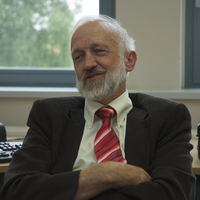
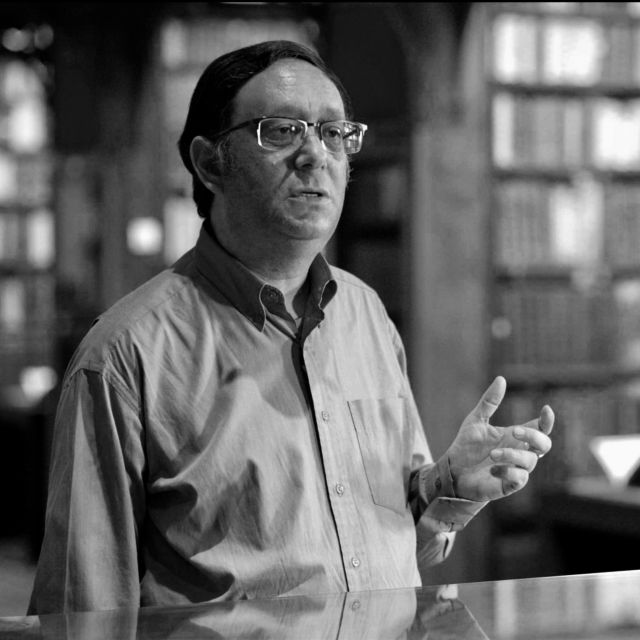
Bénédicte Lemmelijn is a full professor at the Faculty of Theology and Religious Studies of KU Leuven , where she serves as dean and head of the Center for Septuagint Studies and Textual Criticism . She is also a member of the interdisciplinary centres of the Faculty and the LECTIO – KU Leuven Institute for the Study of the Transmission of Texts, Ideas and Images . Her research focuses on Septuagint Studies Textual Criticism Translation Theory in Biblical Contexts Exegesis of the Old Testament She has led projects on Jerome’s translations, Exodus 11:1-10, and the Enneateuch, emphasizing diachronic and theological analysis. Recent publications highlight her expertise in biblical textual history and translation theology, including studies on Ezekiel and Psalms. She teaches courses in Old Testament exegesis, Hellenistic Greek, and Biblical Theology. As a supervisor, she has guided PhD projects on topics like the Two Jobs of Jerome and Jerome’s Psalms Translation . Her work intersects with councils such as the Universiteitsraad and Academische Raad .
Mario Tafferner serves as an Assistant Professor of Old Testament Language and Literature at Tyndale Theological Seminary in Badhoevedorp, The Netherlands, and as an Affiliated Researcher in the Department of Old Testament at Evangelische Theologische Faculteit (ETF) Leuven. His academic journey includes a PhD in Theological Studies with concentration on Old Testament from Trinity Evangelical Divinity School (2016-2022), a Master of Arts in Near Eastern Linguistic and Cultural Studies from Philipps-Universität, Marburg (2012-2015), and a Bachelor of Arts in Theology from Freie Theologische Hochschule Gieß (2009-2012). Tafferner's research focuses on the Former Prophets, the relationship between Israelite and West Semitic (particularly Ancient South Arabian) writing and culture, and the theological anthropology of the Old Testament. His work demonstrates a strong interdisciplinary approach connecting biblical studies with epigraphy, linguistics, and ancient Near Eastern studies. His recent publications reveal a particular interest in royal inscriptions and their relationship to biblical texts, as well as exploring theological implications of biblical narratives for contemporary issues. Tafferner's scholarly output shows a clear trajectory of examining the intersection between biblical texts and ancient Near Eastern contexts, with particular emphasis on comparative literary analysis and linguistic studies. His work on the Mesha Inscription and Old Sabaic royal inscriptions demonstrates methodological sophistication in comparative epigraphy. European Association of Biblical Studies (2021-present) Fellowship of European Evangelical Theologians (2021-present) As a researcher and educator, Tafferner bridges academic biblical scholarship with theological reflection, evidenced by his Robert D. Orr Endowed Fellowship at the Center for Bioethics & Human Dignity, which connects his biblical expertise with contemporary ethical concerns.
Prof. Dr. Geert W. Lorein is a Professor of Old Testament at the Evangelical Theological Faculty Leuven (ETF Leuven) since 2012, having previously served as Associate Professor (2005-2012), Assistant Professor (2004-2005), and Lecturer (2003-2004) at the same institution. He also teaches Latin at Atheneum D'Hek in Landen since 2022. His academic career spans several decades with significant contributions to Old Testament studies, particularly in the areas of Ezra-Nehemiah, the Intertestamental period, and Targum studies. His educational background includes: 1997: Doctorate in Theology (Dr. theol. / Ph.D.), Rijksuniversiteit Groningen 1986-1988: Certificates in Avestan and Akkadian I, Katholieke Universiteit Leuven 1985-1986: Diplôme d'études approfondies (DEA), Faculté Libre de Théologie Evangélique, Vaux-sur-Seine 1983-1985: Aggregation in Protestant Religious Education, Bijbelinstituut-België Heverlee 1982-1983: Candidacy in Biblical Philology, Katholieke Universiteit Leuven 1977-1982: Candidacy, License, and Aggregation in Classical Philology, Katholieke Universiteit Leuven Prof. Lorein's research focuses on Old Testament studies , with particular expertise in the Intertestamental period , Ezra-Nehemiah , Targum literature , and Biblical interpretation history . His scholarly work demonstrates a strong interest in how biblical texts were understood across different historical periods, especially examining the theological developments between the Old and New Testaments. He has made significant contributions to understanding the Antichrist theme in intertestamental literature and has engaged deeply with the historical context of post-exilic Jewish communities. His recent publications show a consistent focus on Old Testament interpretation, with increasing attention to the relationship between biblical texts and their historical contexts. Lorein has produced substantial commentary work, particularly on Ezra-Nehemiah, and has explored how early interpreters understood the relationship between believers and society. His scholarship bridges traditional biblical studies with contemporary applications, examining issues like religious freedom, church-state relations, and the role of religious education in modern society. Prof. Lorein serves as editor-in-chief of "De Brug," a commentary series on the Old Testament, since 2001. He is actively involved in several academic organizations including NOSTER (since 2022), Oudtestamentisch Werkgezelschap (since 2020), Ex Oriente Lux (since 2017), Fellowship of European Evangelical Theologians (since 2008), and Tyndale Fellowship (since 2006). Outside academia, Prof. Lorein has significant church ministry involvement, serving as founding member of אמונה since 2019, deputy-chairman of Evadoc since 2012, and previously as president of the Federal Synod of Protestant and Evangelical Churches in Belgium (2012-2022). He has been actively engaged with Evangelical student groups since 1983 as a founding member of Vriendenkring Evangelische Studentengroepen / Ichtus Vlaanderen.
Dr. Josiah D. Peeler serves as Assistant Professor of Biblical Studies and Languages at Mid-Atlantic Christian University since 2022 and Adjunct Professor at Abilene Christian University since 2018, with prior teaching experience as a Biblical Hebrew Tutor at University College London in 2021. Education: Ph.D. in Hebrew and Old Testament Studies, University of Edinburgh, UK MA in Old Testament and Hebrew, Abilene Christian University, Texas, USA MSt in Classical Hebrew Studies, University of Oxford, UK BA in Biblical Studies, Florida College, Florida, USA His research centers on linguistic analysis of prophetic texts , specializing in semantic structures within Jeremiah, Ezekiel, and Kings. He investigates metathesis phenomena, Hebrew literary devices, and theological concepts like chesed (divine love) in exile contexts, bridging ancient Near Eastern warfare metaphors with textual criticism. His work employs historical-grammatical methods to decode rebellion narratives and hope motifs in Judahite literature. Recent publications (2016-2023) reveal consistent focus on Hebrew textual mechanics in prophetic judgment oracles. He examines syntactic anomalies (e.g., word order shifts in Ezek 7:15) to reconstruct siege warfare imagery, analyzes tear symbolism in Deuteronomistic history, and explores covenantal loyalty concepts during Babylonian exile. His scholarship intersects linguistics, archaeology, and theology through rigorous philological analysis of Masoretic Text variants. Professional affiliations include Society of Biblical Literature, European Association of Biblical Studies, Evangelical Theological Society, and National Association of Professors of Hebrew.
Heiko Wenzel serves as Professor of Old Testament Studies at Free Theological University Giessen and as Post-doctoral Research Assistant in Old Testament Studies at ETF Leuven. His academic profile bridges biblical scholarship with Islamic studies, focusing particularly on the Book of the Twelve (Minor Prophets) and interfaith dialogue between Christian and Islamic scriptural interpretation traditions. Wenzel's educational background includes a Ph.D. from Wheaton College (2008), an MA in Islamic Studies and Theology from Justus-Liebig-Universität Giessen (2000), and M.Div. equivalent from Freie Theologische Akademie Giessen (1996). His classical language training (Latinum, Graecum, Hebraicum) completed in 1991/1992 provides foundational expertise for his biblical scholarship. His research centers on Old Testament exegesis with three interconnected strands: 1) The Book of the Twelve, where he examines both textual details and broader canonical questions; 2) Biblical anthropology, particularly how the Hebrew Bible conceptualizes human nature; and 3) Islam-Christian relations, exploring connections between biblical texts and Islamic theological interpretation. His work demonstrates how ancient texts continue to shape modern religious identities and intergroup relations. Analysis of his recent publications reveals a growing emphasis on comparative religious studies, particularly examining how biblical texts are interpreted across religious boundaries. His scholarship often bridges textual analysis with theological implications, creating a rich interdisciplinary approach that moves from detailed grammatical studies to broad theological reflections on scriptural interpretation across faith traditions. Wenzel maintains active membership in key scholarly organizations: Society of Biblical Literature (2007-present) European Association for Biblical Studies (2009-present) Evangelical Theological Society (2012-present) His teaching career spans multiple institutions, beginning as a Teaching Assistant at Freien Theologischen Akademie/Hochschule Giessen (2006-2010) where he taught both Old Testament and Islamic Studies, then advancing to Professor at Free Theological University Giessen (2010-present) while simultaneously serving as Post-doctoral Research Assistant at ETF Leuven (2012-present). This dual appointment reflects his interdisciplinary expertise bridging traditional biblical scholarship with contemporary interfaith concerns.
Markus Zehnder is a Professor of Old Testament at Evangelische Hochschule für Leitung und Management (IHL) Bad Liebenzell since 2023. He also serves as a Guest Lecturer at STH Basel (Switzerland) and Professor for Biblical Studies at Ansgar College and Theological Seminary, Kristiansand (Norway). Previously, he held academic roles at institutions including Biola University, Basel University, and the Swiss National Science Foundation. Education: Ph.D. (Dr. Theol.) from Basel University (1997) Habilitation from Basel University (2003) Postdoctoral studies at Hebrew University of Jerusalem and Harvard University (1998-2001) Courses in University Didactics at Biola University and Ruhr-Universität Bochum His research focuses on Old Testament ethics, migration, interreligious relations, and the intersection of biblical law with contemporary issues. He has published extensively on topics like the annihilation of Canaanites, socioeconomic ethics, and violence in biblical texts. Markus Zehnder has contributed to 15 edited volumes and over 30 journal articles. His work spans structural analysis of Leviticus, divine status of the Messiah, and comparative studies with Confucian ethics. He co-directs the Norwegian Summer Academy for Biblical Studies and actively participates in academic societies including the Society of Biblical Literature and Norwegian Old Testament Society.
Hector Patmore is an Associate Professor in Biblical Studies at the Faculty of Theology and Religious Studies at KU Leuven (since 2019), and an Anglican priest. He holds degrees from Durham University (BA, MA, PhD in Theology) and the University of Oxford (MTh). Before joining KU Leuven, he conducted postdoctoral research at the Protestant Theological University in the Netherlands and served as a Lecturer at Cardiff University (UK). His academic work includes visiting roles at institutions in Oxford, Nottingham, Strasbourg, and Jerusalem. Patmore's research focuses on the evolution of Biblical texts, particularly Targum manuscripts, and their impact on Jewish and early Christian demonologies. He leads the ERC-funded project 'TEXTEVOLVE: A New Approach to the Evolution of Texts Based on the Targums' and has completed a UK AHRC-funded project on demonological development. He has authored books such as Adam, Satan, and the King of Tyre (2012) and The Transmission of Targum Jonathan in the West (2015), and co-edited Demons in Early Judaism and Christianity (2022). His teaching emphasizes contextualizing the New Testament within Jewish traditions. Patmore has advised two doctoral students: Isaac Ampong (PhD 2024, 'The Role and Significance of Children in the Gospel of Matthew') and Jeroen Verrijssen (PhD 2020, 'The Medieval European Liturgical Targum'). His grants include the ERC and UK AHRC projects. He has also led over 20 study programs in Israel and the Palestinian Territories, contextualizing Biblical texts through historical and geographical frameworks. His work engages deeply with liturgical manuscripts, ancient Jewish-Christian exchanges, and philological methods. The Research Unit Biblical Studies at KU Leuven serves as his primary academic platform, where he collaborates on textual analysis and manuscript preservation projects.
W. Creighton Marlowe is a Guest Associate Professor of Old Testament at Evangelische Theologische Faculteit Leuven (ETF Leuven) since 2007, with prior roles including Professor and Academic Dean at Tyndale Theological Seminary (NL) and leadership at Kiev Christian University. He holds a Ph.D. in Old Testament Studies from Mid-America Baptist Theological Seminary and has conducted post-doctoral work in Hebrew philology at the University of Leiden. His research focuses on Old Testament exegesis, Hebrew philology, and biblical poetry structures like chiasms. He has authored books such as Other Voices in Old Testament Interpretation (2019) and Q&A in Genesis 1–11 (2022), and contributed to journals like The Asbury Journal and Scandinavian Journal for the Old Testament . His work often explores theological themes in Genesis, Psalms, and Isaiah, emphasizing literary patterns and intertextual connections. Marlowe is a member of scholarly societies including the Society of Biblical Literature (SBL) and the Near East Archaeological Society (NEAS). He was honored in Who’s Who in Biblical Studies and Archaeology (1993). His ministry experience includes pastoral roles in the US and Netherlands, reflecting his integration of academic and practical theological commitments.
Creig Marlowe is a Professor in the Old Testament department at the Evangelical Theological Faculty in Leuven, Belgium. He has established himself as a significant scholar in Old Testament studies with numerous publications spanning several decades. His academic focus centers on Hebrew Bible interpretation, textual analysis, and theological implications of biblical texts. Institution: Evangelical Theological Faculty Leuven Department: Old Testament Marlowe's research interests include Biblical Studies, Hebrew Bible and Ancient Near East, Hermeneutics, Biblical Hebrew poetry, and Comparative Semitic Linguistics. His scholarly work demonstrates particular expertise in textual structure analysis, including chiastic patterns in biblical texts, and theological interpretation of key passages across the Old Testament. He has contributed significantly to discussions on translation issues, particularly regarding the rendering of terms like 'Sheol' and 'Spirit' in English Bible versions. His recent publications show continued engagement with contemporary issues, including leadership lessons from Ecclesiastes applied to modern political contexts. Marlowe's work often bridges traditional biblical scholarship with contemporary theological concerns, demonstrating the ongoing relevance of Old Testament texts for modern readers. Key publication focus areas: textual structure, translation issues, theological interpretation Recent scholarly contributions: communion theology, leadership studies, spirit theology Marlowe's academic career reflects deep commitment to rigorous biblical scholarship while maintaining relevance for contemporary theological discussion and practical application.
Pierre Van Hecke is a Professor at the Faculty of Theology and Religious Studies at KU Leuven , where he chairs the Biblical Studies Research Unit and directs the LECTIO Institute . He has held leadership roles including head of the Colloquium Biblicum Lovaniense and active memberships in university councils. Education: Not explicitly mentioned in provided text Affiliations: Faculty of Theology and Religious Studies (current) KU Leuven (current) LECTIO Institute (director) Colloquium Biblicum Lovaniense (head) Research Focus: Van Hecke specializes in Hebrew Bible studies, metaphor analysis, and textual criticism. His work integrates computational methods with traditional biblical scholarship. Current research trends involve exploring semantic domains in biblical texts, metaphor networks in prophetic literature, and manuscript-based approaches to understanding ancient religious thought. He supervises projects on topics like Hebrew pedagogy development and multilingual manuscript analysis. Key Topics: Hebrew Bible linguistics Metaphor theory in religious texts Textual transmission history Computational biblical analysis Ancient Near Eastern intellectual networks Exegetical methodology
Michael Rosenfeld is a postdoctoral researcher at the Free University of Brussels (Vrije Universiteit Brussel), affiliated with the Centre for Literary and Intermedial Crossings and the Study Center on Zola and Naturalism. His research focuses on 19th and 20th century French and Belgian literature, queer and gender studies, and the analysis of autobiographies and intimate documents. PhD in Literature from Sorbonne Nouvelle University – Paris 3 and Université catholique de Louvain (2020) Previous postdoctoral mandate at STRIGES, Université libre de Bruxelles (2021-2022) His work includes reconstructing censored queer historical documents, such as his critical edition of The Italian Invert based on Émile Zola’s archives. He has also edited interdisciplinary texts on queer intellectual collaborations (1880-1920) and co-authored a critical correspondence collection. Michael has received international recognition for his translation efforts, including the French Voices Award, and is funded by the Research Foundation – Flanders (FWO) for his current research mandate. Scientific Awards FWO Postdoctoral Fellowship (2022-2025) French Voices Award translation grant (2019) He previously taught Hebrew language and Jewish/Israeli literature at the University of Strasbourg (2014-2017) and currently teaches French literature at the Free University of Brussels. His research intersects with the 19th Century Writing Team (Baudelaire, Flaubert, Zola) and broader queer historical narratives.