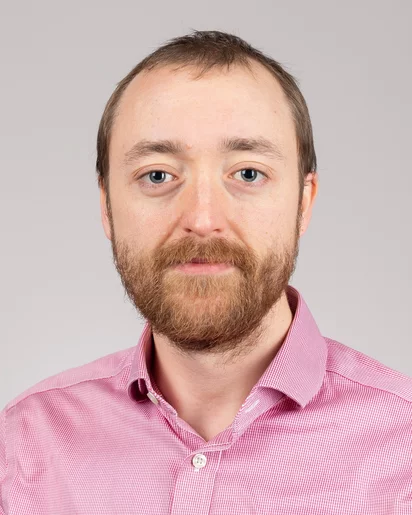
Jes Vollertsen is a Professor and Head of Research Group at the Department of the Built Environment, Aalborg University. His primary affiliations include the Division of Civil and Environmental Engineering and the Urban Pollution Research Group. He leads projects like AAU Water and AAU Circular Plastics, focusing on wastewater treatment, microplastics, and urban pollution mitigation. His research interests span environmental engineering, water treatment processes, microplastic pollution, and sustainable infrastructure. He has published extensively on topics like microplastic distribution in marine environments, stormwater management, and anaerobic digestion effects on polymers. Notable awards include the Eddy Wastewater Principles/Processes Medal (2013) . He has supervised 13 PhD students and contributed to over 350 publications. Recent work includes collaborations on microplastic detection tools (siMPle software) and urban runoff analysis. His projects emphasize interdisciplinary approaches to environmental challenges, with active roles in conference organizing and media engagement on pollution issues.
Dr. Alfonso Chinnici is a Senior Lecturer in Mechanical Engineering at the University of Adelaide, affiliated with the School of Electrical and Mechanical Engineering under the Faculty of Sciences, Engineering and Technology. He specializes in Sustainability, Net-Zero Technologies, and Energy Innovation, with a focus on hydrogen production, decarbonization of heavy industries, and solar thermal energy systems. Dr. Chinnici has secured over $10 million in R&D funding and holds 4 patents. He leads research in the Australian Heavy Industry Low-Carbon Transition CRC and advises international bodies like the International Energy Agency and South Australian Government on green fuels and critical mineral supply chains. His research integrates advanced engineering principles with clean energy solutions, addressing challenges in clean tech analysis, decarbonization pathways, and techno-economic evaluations. Key areas include combustion science, multi-phase flows, and circular economy practices. Dr. Chinnici has published over 100 articles in top journals, with recent work focusing on hydrogen-blended combustion systems, concentrated solar thermal processes, and CO2 mineralization technologies. He actively collaborates with industry partners to bridge research innovation with practical industrial applications.
Professor Sarah Eno is a distinguished experimental particle physicist and Professor in the Physics Department at the University of Maryland, College Park. She leads research in the CMS collaboration at CERN and is Principal Investigator of the CalVision project for advanced calorimetry. Her work focuses on precision studies of weak force interactions, QCD dynamics, and searches for new physics beyond the Standard Model. Eno has been a key member of multiple major experiments including AMY, CDF, D0, and CMS. Education: Ph.D. in Physics, University of Rochester (1984–1990) Postdoctoral Research, University of Chicago (1989–1993) Undergraduate Degree, Gettysburg College (1980–1984) Research Interests: Experimental particle physics, weak boson properties, calorimeter development, radiation-resistant materials, and detector R&D for future colliders like FCC. Her instrumentation work includes studies of scintillator performance and dual-readout calorimetry systems. Professional Recognition: Elected APS Fellow (2009), AAAS Fellow (2020), UMD Distinguished Scholar-Teacher (2014), and recipient of the DOE Outstanding Junior Investigator Award (1995–1999). She chairs the FCC collaboration board and leads US representation in global Higgs factory initiatives. Teaching: Courses include Physics 105 (Physics for Decision Makers), Physics 276/375 (Experimental Physics), and Physics 485 (Electronic Circuits). She advises graduate students in collider physics and detector development. Labs/Teams: Active in CMS collaboration at LHC and FCC detector design. Leads CalVision project for advanced calorimetry. Collaborates with international teams on future collider infrastructure.
Dr. Todd Elder is a Visiting Postdoctoral Research Associate at the University of Maryland's Institute for Research in Electronics & Applied Physics (IREAP). He holds a Ph.D. in Applied Physics from Columbia University (2023) and a B.S. in Physics and Mathematics from Georgia State University (2016). His research focuses on 3D magnetic field optimization for stellarators, magnetic reconnection mechanisms, and fusion energy systems. As a DOE Fusion Energy Sciences Fellow, he collaborates with Dr. Matt Landreman (IREAP) and Prof. Per Helander (Max Planck Institute for Plasma Physics). His work emphasizes advancing stellarator design through coil optimization, accessibility improvements, and DESC framework applications. Research interests also include magnetic null dynamics, plasma impurity interactions, and inertial confinement fusion processes. Key contributions include studies on umbilic-torus stellarator configurations and exponential reconnection enhancement via laminar flows. Dr. Elder has published extensively on topics ranging from helical coil systems to diffusive tunneling in fuel-pusher mixtures. His 2021 paper on spatially-bounded reconnection and 2023 DESC-based optimization studies are particularly notable. Awards include the DOE Fusion Energy Sciences Fellowship. His research aligns with UMD's Stellarator Group and involves collaborations across national laboratories and international institutions like the Max Planck Institute. Current projects aim to bridge computational plasma physics with engineering design for next-generation fusion reactors.
Professor Graham Nathan is a leading academic at The University of Adelaide's School of Electrical and Mechanical Engineering within the Faculty of Sciences, Engineering and Technology. He holds prestigious fellowships from the Academy of Technological Sciences & Engineering and the Combustion Institute, and is an ARC Discovery Outstanding Researcher Awardee. His research focuses on clean energy technologies, particularly high-temperature processes involving combustion, solar thermal systems, and hydrogen-enabled industrial decarbonization. Professor Nathan leads major initiatives such as the $215M Heavy Industry Low-carbon Transition Cooperative Research Centre and the Australian Solar Thermal Research Initiative. He has pioneered innovations like the Gyrotherm low-NOx burner and contributed to reducing CO₂ emissions in alumina production through solar thermal hybridization. His work spans over 300 peer-reviewed publications, 17 patents, and collaborations with industry giants like Alcoa and Calix. Key research areas include solar-driven industrial processes, carbon capture via mineral carbonation, and hydrogen production systems. He actively advises on clean energy transitions and has led landmark projects for low-carbon technologies in heavy industries. Major Roles: Director of the Centre for Energy Technology, Research Director of the Heavy Industry CRC, Node Leader in Solar Fuels Program Notable Achievements: Sydney Olympic Torch Combustion System Design, ISF Workshop Co-founder, HiTeMP Forum Chair Industry Partnerships: Alcoa, Hatch, Calix, Rio Tinto, BHP
Petros Gikas is a Professor of Environmental Engineering at the Technical University of Crete , currently serving as Dean of the School of Chemistry . His work focuses on energy-positive wastewater treatment, biosolids management, and nitrogen utilization via microorganisms, with leadership roles in European Commission working groups and editorial boards of journals like Journal of Environmental Management . Education: Ph.D. in Chemical Engineering from Imperial College London (1996) MSc in Chemical Engineering from National Technical University of Athens (1990) Research Interests span liquid/solid waste management , water reuse , heavy metal effects on microorganisms , and integrated water resource strategies . His projects emphasize sustainable technologies like gasification, anaerobic digestion, and microalgae-based CO₂ conversion. Article Trends highlight expertise in wastewater treatment , climate change adaptation , microplastics in compost , and digitalization for waste recycling , with collaborations across Europe and Indonesia. Funding includes the European Commission and Unified Waste Management Association of Crete. Scientific Leadership : Special Advisor to Greece’s Special Secretariat for Water Associate Editor for Journal of Environmental Management Editorial Board Member for Water , Heliyon , and others Labs & Collaborations : Leads the Environmental Process Design laboratory, collaborating on EU-funded initiatives like LIFE B2E4SustWWTP and CO₂-BioProducts. Projects include landfill gas utilization, advanced primary filtration, and biosolids-to-energy pilots.
Monika Stefania Raczkiewicz is an Assistant Professor at the Department of Radiochemistry and Environmental Chemistry, Faculty of Chemistry, Maria Curie-Skłodowska University. Her work focuses on environmental chemistry and nano-biochar applications for pollution mitigation. University: Maria Curie-Skłodowska University School: Faculty of Chemistry Department: Department of Radiochemistry and Environmental Chemistry Research Interests: Her research spans environmental chemistry, radiochemistry, and nanotechnology, with a primary emphasis on developing nano-biochar for heavy metal and organic pollutant remediation. Key applications include soil restoration, sewage sludge treatment, and sustainable resource recovery. Publications Trends: Recent work highlights nano-biochar synthesis optimization, chemical modification effects, and comparative studies of nano vs. conventional biochars. Research integrates pyrolysis engineering, feedstock variability, and ecotoxicity reduction.
Dr. Alex King III is a Professor and Chair of the Department of Physics, Engineering and Astronomy at Austin Peay State University (APSU), where he has been a faculty member since 2000. He holds a Ph.D. in Physics from the University of Illinois at Chicago and has secured over $2.8M in research funding from agencies including the National Science Foundation and Tennessee Space Grant. Education: Ph.D. Physics (High-Energy Physics Theory), University of Illinois at Chicago M.S. Physics, Southern Methodist University B.A. Physics and Chemistry, Austin College Research Leadership: Established APSU's first engineering program (BSE in Engineering Physics) in 2017 and directs the Tennessee Governor's School for Computational Physics, a summer program for high-school students focused on computational modeling of engineering problems. Research Focus: Specializes in computational approaches to applied quantum mechanics and mathematical physics, with applications spanning particle physics, optics, and physics education reform. Publication Trends: His 15-year publication record shows evolution from theoretical high-energy physics (1996-1999) to applied computational methods in physics education and optical systems (2006). Core themes include quantum chromodynamics, particle colliders, genetic algorithms, and STEM curriculum development. Grants & Leadership: Principal Investigator for 30+ external grants Founding Director of Engineering Physics program Director of Tennessee Governor's School for Computational Physics
Estela Reinoso Maset is a Researcher at the Faculty of Environmental Sciences and Natural Resource Management (MINA), Norwegian University of Life Sciences (NMBU). Her work focuses on environmental radiochemistry, particularly the geochemical behavior of radionuclides and trace elements in natural systems. Key research areas: Uranium speciation, radionuclide mobility, alum shale waste characterization, selenium speciation in animal nutrition, and contaminant transport modeling Expertise: Advanced analytical techniques (ICP-MS/MS, synchrotron XRF, gamma spectrometry) and geochemical modeling (PHREEQC, Visual MINTEQ) Fieldwork: Chernobyl and Fukushima exclusion zones, Hanford sediments, Norwegian alum shale sites Her recent publications emphasize uranium-phosphate mineral interactions (2020-2023), alum shale weathering dynamics (2023-2025), and selenium bioavailability in swine nutrition (2022). Notable methodologies include flow-through reactor experiments, synchrotron-based imaging, and microbial activity assays using tritiated leucine.
Carl Caleman is a Research Fellow at the Center for Free-Electron Laser Science (CFEL) and holds an affiliation with the University of Uppsala, Department of Physics and Astronomy. He is a key member of the Coherent Imaging Team, focusing on the theoretical and computational aspects of X-ray free-electron laser (XFEL) interactions with matter. His work bridges physics, chemistry, and biology, with a strong emphasis on ultrafast dynamics and radiation effects in biomolecular systems. His research interests encompass a wide range of topics, including X-ray Free-Electron Lasers (XFELs) Molecular Dynamics Simulations Radiation Damage in Biomolecules Single Particle Imaging Ultrafast Ionization and Fragmentation Dynamics Protein and Viral Capsid Stability Surface Science of Liquids and Ionic Liquids Charge Transfer Processes He develops and applies advanced computational models to simulate the complex, non-equilibrium processes that occur when intense X-ray pulses interact with biological and chemical systems. The analysis of his recent publications (2023–2025) reveals a consistent focus on using hybrid computational methods—combining collisional-radiative models with molecular dynamics—to study radiation damage, molecular explosions, and structural changes in proteins, viruses, and aqueous systems exposed to XFELs. His work is pivotal for advancing the field of serial femtosecond crystallography and single-particle imaging, where understanding and mitigating radiation damage is critical. He frequently publishes in high-impact journals such as Nature Communications , Physical Review Letters , and Physical Chemistry Chemical Physics , often as a corresponding author, indicating his leadership in collaborative research projects. Carl Caleman is actively involved in a large network of international collaborations, working with scientists from DESY, XFEL.EU, CSSB, EMBL, and other institutions. His research is supported by access to major XFEL facilities and high-performance computing resources. He advises and mentors junior researchers and students within his team, fostering the next generation of scientists in the field of ultrafast science. His work has significant implications for structural biology, materials science, and radiation therapy. He is associated with the following laboratories and research teams: Coherent Imaging Team, Center for Free-Electron Laser Science (CFEL) Collaborative Research Center on Structural Dynamics of Biomolecular Machines (CSSB) DESY (Deutsches Elektronen-Synchrotron) European XFEL
Dr. Adam Hugh Clark is a tenure track scientist at the Paul Scherrer Institute (PSI) in Switzerland, specializing in advanced spectroscopic techniques and heterogeneous catalysis. He holds a Bachelor's degree in Physics from the University of Nottingham , and a Master's and PhD in Molecular Modelling and Materials Science from University College London . At PSI, he focuses on uncovering structure-activity relationships in catalytic materials using time-resolved X-ray absorption spectroscopy (XAS). Education B.Sc. in Physics, University of Nottingham M.Sc. and PhD in Molecular Modelling and Materials Science, University College London Research Interests Clark’s research centers on heterogeneous catalysis , particularly ceria-based materials for semi-hydrogenation and perovskite oxides for oxygen evolution reactions (OER). He develops and applies highly time-resolved XAS and modulation-excitation spectroscopy to study dynamic material properties during reactions. His work bridges materials science and operando XAS , with applications in electrochemistry and sustainable chemical processes. Recent projects include platinum single-atom catalysts for vinyl chloride production and LaFe0.8Ni0.8O3 perovskites for redox studies. Publications & Software Development His 2025 publications span quantum simulation , MOF synthesis , and high-energy particle physics collaborations. Earlier works (2019–2020) introduced ProQEXAFS , a Python-based software for rapid QEXAFS data processing. He also advanced fluorescence-detected XAS for low-concentration samples and contributed to understanding Fe-doped Co perovskites in OER. Institutional Roles Clark manages the SuperXAS beamline at the Swiss Light Source and leads software development for quick-scanning XAS analysis . Since 2025, he has served on the ChemCatChem early career advisory board , promoting interdisciplinary catalysis research. Labs & Collaborations He works within the Operando Spectroscopy group at PSI, collaborating with institutions like CERN and ETH Zürich on projects involving density functional theory (DFT) , synchrotron techniques , and advanced detector systems (e.g., CMS). His affiliations include the Particle Physics LTP and Advanced Spectroscopy and X-ray Sources LSX laboratories at PSI.
Dr. Piotr Bartmiński is an Adjunct Professor at the Department of Geology, Soil Science and Geoinformation, Faculty of Earth Sciences and Spatial Management, Maria Curie-Skłodowska University. His work focuses on environmental telemetry, soil science, and polar ecosystems, with a particular emphasis on organic matter dynamics and spectral soil properties. Education: Not explicitly stated in the provided text. Affiliation: Institute of Earth and Environmental Sciences, Maria Curie-Skłodowska University. Dr. Bartmiński's research spans Arctic and temperate soil systems, with key interests in: Soil spectroscopy and classification Impact of land use on soil chemistry Ecotoxicology of biogas residues and industrial byproducts Pedogenesis in technosols and loess-derived soils His publication record shows a strong focus on: Arctic soil properties (Spitsbergen, Bellsund Coast) Land use effects on selenium, arsenic, and phosphorus content Methodological advancements in soil particle analysis Ecological impacts in protected areas (Roztoczański National Park) Dr. Bartmiński leads the NCN Sonata 11 project on hyperspectral imaging for vegetation season parametrization. He collaborates with researchers across Poland and participates in multi-center studies. His publications have amassed over 29 total impact factor points, with an h-index of 9 (Google Scholar). Available for consultation via email or Microsoft Teams, Dr. Bartmiński frequently works in the field but maintains academic engagement through teaching and research activities.
Sneha Daradmare is a Research Fellow at the School of Chemistry, University of St Andrews. Her research focuses on advanced material synthesis, including alginate-based composites, Pickering stabilizers, and corrosion-resistant coatings. She specializes in microfluidic fabrication techniques and nanotechnology applications. Contact: sd314@st-andrews.ac.uk. Research Interests: Her work spans polymer chemistry, environmental remediation, and sustainable materials. Key areas include functionalizing alginate hydrogels for biomedical uses, developing self-healing coatings using graphene oxide composites, and creating eco-friendly stabilizers via ultrasonic spray methods. She explores nanoscale material design for corrosion protection and water treatment applications. Publications Trends: Daradmare's recent work emphasizes scalable synthesis of nanoparticles using microfluidics, with a focus on aqueous two-phase systems and surfactant-free methods. Her studies on metal-organic frameworks (MOFs) and alginate-composite adsorbents highlight environmental applications. Corrosion protection research combines graphene-based composites with encapsulated corrosion inhibitors. Awards: No scientific awards explicitly mentioned in the text. Advising & Grants: No student names or grant details provided. Research activities are centered on experimental material synthesis and characterization. Labs/Teams: Affiliated with the University of St Andrews School of Chemistry facilities, though specific lab names not disclosed.
Professor Godwin Ayoko is a leading academic in Chemistry and Environmental Science at Queensland University of Technology (QUT), where he holds a Professorship in the School of Chemistry & Physics. He earned his PhD in Chemistry from the University of Sussex (England) in 1986. His research focuses on environmental analytics, nanosensors for pollutant detection, and multivariate data analysis. Key roles include Acting Head of the School of Physical and Chemical Sciences (2006), leadership in research grants (e.g., ARC-funded projects on airborne particles and water quality), and supervision of over 20 HDR students. He has authored/co-authored over 200 publications and holds prestigious awards like the RACI Environmental Chemistry Medal (2014) and Fellowships from the Royal Society of Chemistry (2016) and RACI (2008). His work spans environmental toxicology, material synthesis for pollution control, and receptor modeling for pollution source identification. Research Interests: Ultra-trace detection of environmental contaminants using nanosensors; application of modern analytical techniques for pollution monitoring; receptor modeling for source apportionment; synthesis and characterization of inorganic materials. His projects address real-world challenges like emissions from vehicles, stormwater pollution, and microplastic impacts in urban waterways. Grants & Collaborations: Major grants include an ARC LIEF grant for aerosol mass spectrometers (2006), studies on compressed natural gas bus emissions (2006), and current projects on nanoscale platforms for biomolecule detection. Collaborations span institutions like the University of Southern Queensland and international partners. His research bridges fundamental science with applied solutions for environmental sustainability. Awards & Recognition: Recognized for contributions to environmental chemistry through awards from RACI and QUT. His leadership in academic administration and pedagogy includes supervision excellence and innovation in teaching analytical methods. He is a Technical Assessor for NATA and active in professional societies like the Royal Society of Chemistry.
Martine Baelmans is a Full Professor at the Faculty of Engineering Sciences at KU Leuven, where she leads the Applied Mechanics and Energy Conversion (TME) research group. She serves as the subdivision head of the EnergyVille TME - Baelmans Subdivision and is an active member of the EnergyVille Division, KIEM – KU Leuven Institute for Energy and Society, and Leuven.AM – KU Leuven Institute for Additive Manufacturing. Her extensive academic service includes roles on the Faculty Council of Engineering Sciences, Department Council of Mechanical Engineering, and as a vice-rector member of the Education Quality Assurance Committee and KU Leuven LERU Curriculum Vitae Coordination. Professor Baelmans' research spans multiple areas of energy conversion, thermal engineering, and nuclear fusion. Her work focuses on plasma edge simulations for nuclear fusion reactors, thermal-hydraulics of liquid metal systems, optimization of heat transfer devices, and district heating network design. She employs advanced computational methods including finite-volume, Monte Carlo, and topology optimization techniques to address complex engineering challenges in energy systems. Her recent publications demonstrate expertise across a broad spectrum of energy-related research. The articles reveal a strong focus on nuclear fusion plasma edge modeling, thermal management systems, and optimization of energy infrastructure. The work spans from fundamental plasma physics to practical engineering applications in district heating networks and compact heat exchangers, showing both theoretical depth and practical relevance to energy system design. Professor Baelmans has received significant research funding for multiple projects including 'Modeling and optimization of transport phenomena in electrochemical processes' (2024-2028), 'Optimization of balanced compact heat exchangers' (2024-2028), and several projects related to plasma edge simulations for nuclear fusion reactors. Her research group actively contributes to advancing the scientific understanding of plasma physics for fusion energy and developing innovative thermal engineering solutions.