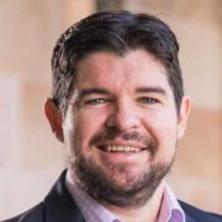
Jonathan Klick is the Charles A. Heimbold, Jr. Professor of Law at the University of Pennsylvania Carey Law School. He also holds the Erasmus Chair of Empirical Legal Studies at Erasmus University Rotterdam. His research focuses on the causal effects of laws and regulations using econometric methods, addressing topics such as abortion access, alcohol’s impact on crime, police effectiveness, and rational choice theories of addiction. Klick’s work has been published in top-tier journals including Journal of Economic Perspectives , Journal of Law & Economics , and Stanford Law Review . He has contributed to debates on legal reform, antitrust policy, and regulatory analysis. Notable publications include analyses of private policing efficacy, exoneree compensation systems, and the economic implications of property rights. Klick frequently engages with media, including op-eds in The Daily Pennsylvanian , discussing issues like university admissions policies and constitutional governance. His interdisciplinary approach bridges law, economics, and public policy, emphasizing empirical rigor in legal scholarship.
Thane J. Messinger is a faculty member in the Finance Department at the Shidler College of Business , University of Hawaii at Manoa. His work bridges business law , legal education , and corporate governance . Education: A.L.M., Harvard University (2007) J.D., University of Texas at Austin (1991) M.B.A., Texas State University (1985) Certificates in Negotiation (2001) and Mediation (2000) from Harvard Law School Postgraduate work in comparative educational systems, Mansfield College, Oxford University (1985) Messinger’s research focuses on business law , legal frameworks , and negotiation strategies . His publications include textbooks, law review articles, and contributions on topics like smart contracts , data privacy , and alternative dispute resolution . His work often examines intersections between technology , regulation , and legal education . Recent publications highlight trends in digital contracting , mediation practices , and statutory drafting . He serves as an Associate Editor for the Midwest Law Journal and an Advisory Editor for the American Business Law Journal , with editorial contributions spanning decades. Messinger has advised students on law school pathways since 1996 and engaged in guest presentations on international trade law and venture funding . His professional experience includes academic administration , corporate law practice , and technology start-up mentorship .
Dr. Tyler Riordan is a Postdoctoral Research Fellow in Strategy and Entrepreneurship at the University of Queensland Business School within the Faculty of Business, Economics and Law. His current research evaluates post-disaster reconstruction incentivisation programs across physical, financial, social, and emotional resilience dimensions in Queensland and New South Wales. Previously, he co-authored the 'Queensland Tourism Workforce Crisis Resilience and Recovery Strategy' and developed the multilingual 'Humanising food delivery work in Australia toolkit'. His educational background includes a PhD in Hospitality and Anthropology (2023), BA (Honours) in Anthropology (2013), and dual BA in Anthropology & History with Diploma in Languages (Spanish) (2012), all from the University of Queensland. With over eight years of hospitality industry experience and professional work in community development with vulnerable populations across Australia and Latin America, his research bridges academic and practical domains. Riordan's research centers on labor dynamics in the digital platform economy, particularly focusing on how disadvantaged communities—including migrants—navigate employment, training, and precarious work conditions. His work examines algorithmic hostility in digital hospitality, justice frameworks for gig workers, and disaster resilience implications for labor markets. Key trends in his publications reveal growing interdisciplinary integration of disaster studies with labor economics, emphasizing emotional and social dimensions of resilience alongside physical and financial aspects. His professional engagements include media contributions to The Conversation on hospitality labor issues and submissions to government inquiries like the Victorian On-Demand Workforce standards. Current funding supports his work on the 'Evaluating the Resilient Homes Fund' project (2024-2027) with Natural Hazards Research Australia. Though not available for student supervision, his research directly informs policy through toolkits and industry strategies.
Hanming Fang is the Joseph M. Cohen Term Professor of Economics and Department Chair at the University of Pennsylvania's School of Arts & Sciences. He holds secondary appointments in Wharton’s Department of Health Care Management and Department of Business Economics and Public Policy. His research focuses on applied microeconomics, public economics, and the Chinese economy, with notable contributions to health insurance markets, population aging, and political economy. Fang is a Fellow of the Econometric Society and recipient of the Kenneth Arrow Prize for work on Medigap insurance markets. Education: Ph.D. in Economics from the University of Pennsylvania (2000). Prior positions include Yale University and Duke University. Research Interests: Applied microeconomic theory, empirical microeconomics, public economics, Chinese economy, insurance markets, discrimination, health policy, and population aging. His recent work examines labor market effects of health reforms, SOE resurgence under anti-corruption campaigns, and high-speed rail impacts on EV adoption in China. Awards: 17th Kenneth Arrow Prize (2008) Econometric Society Fellowship (2018) Professional Roles: Co-editor of Journal of Health Economics ; editorial board member of Annual Review of Economics ; NBER Research Associate (acting director of Chinese Economy WG 2014-16); Senior Fellow at Leonard Davis Institute and Center for the Study of Contemporary China. Key Projects: Studies include corruption’s economic effects, ACA insurance market dynamics, and China’s industrial policy evolution. Active in cross-disciplinary teams like the Australia-China Population Aging Research Hub.
Prof. Martin Lengwiler is a Professor of Modern General History and currently serves as the Dean of the Faculty of Humanities at the University of Basel. He holds positions at the Department of History within the Faculty of Humanities. His research focuses on modern European history, welfare state development, social policy, and the history of insurance and science. Key projects include studies on social protection, demographic change, and Argentine public health in a transnational context. He has authored and edited numerous publications, including Auf dem Weg ins Jetzt. Seit 1960 (2025) and works on global history, disability studies, and health economics. Education: Doctorate in History Research Interests: 20th-century urban history, global welfare systems, insurance economics, and the cultural history of Basel. His recent articles address topics such as Sino-German arms trade, child welfare norms, and the intersection of health and finance. As dean, he oversees academic and administrative affairs in the Faculty of Humanities.
Shannon Prier is a quantitative analyst at the RAND Corporation and a Professor of Policy Analysis at the RAND School of Public Policy. Her work bridges policy research and quantitative modeling, with a focus on national security, homeland security, macroeconomics, and supply chain resilience. Research Interests: Her primary research areas include Air Force sustainment, combat operations, systemic risk, critical infrastructure protection, and economic impact modeling. She applies econometric and policy analysis methods to challenges in military logistics, climate risk, public health, and urban governance. Her interdisciplinary work spans defense, economics, and public administration. Recent Research Trends: Over the past five years, her publications have consistently addressed high-impact policy issues, including climate risk to national functions, pandemic effects on workers' compensation, financial inclusion for unbanked populations, and smart city data systems. These works reflect a strong emphasis on applied policy solutions, regulatory assessment, and systemic interdependencies in critical sectors. Scientific Contributions: While no formal awards are listed, her body of work demonstrates significant influence in public policy circles, particularly through RAND’s research dissemination. Her reports inform federal and state-level decision-making in areas such as infrastructure resilience and labor policy. Advising and Grants: There is no public information on students she may have advised or specific grants she has led. However, her research is typically conducted under RAND’s sponsored project framework, involving collaboration with government agencies such as the Department of Homeland Security and the U.S. Air Force. Labs and Teams: As a RAND researcher, she is part of interdisciplinary project teams, including RAND Project Air Force and the Department of Homeland Security’s CREATE center. These affiliations enable her to contribute to large-scale, policy-relevant studies with national security and economic implications.
Suzanne Gradisher is an Associate Professor in Business Law and the Coordinator of the Legal Social Environment of Business at the Department of Finance, University of Akron College of Business. She holds a JD, MBA (Finance), MTax, and CPA (inactive), with 14 years of teaching experience and over 15 years of corporate legal and accounting expertise. Education: JD and MTax from the University of Akron, MBA from Kent State University, BS from University of Nevada Las Vegas. Teaching: Courses include Business Law, Taxation, Estate Planning, and Personal Finance. Research: Focuses on estate planning, financial literacy, insurance law, and business ethics. Her scholarly work spans topics like retained asset accounts, life insurance beneficiary designations, and retirement distribution rules post-SECURE Act. She actively contributes to legal and financial services discourse through presentations and publications. Scientific Awards: Professor of the Year (Beta Gamma Sigma, 2024) Regional Chapter Advisor of the Year (Delta Sigma Pi, 2023 and 2022) Service: Leadership roles in academic committees, Ohio TAG, and financial planning competitions. Organized study abroad programs and served as a faculty mentor.
Łukasz Jasiński is an Adjunct Professor at the Faculty of Economics , Maria Curie-Skłodowska University in Lublin. His work bridges theoretical economics with practical policy analysis, focusing on the Austrian School of Economics , Interventionism , and Healthcare Systems . He serves as a scientific mentor for the Winter School of Economics and co-edits key economic publications. Current affiliation: Maria Curie-Skłodowska University Expertise: Austrian School theory, Health economics, Insurance markets Location: Room 617, Faculty of Economics His research explores the tension between free markets and government intervention , particularly in healthcare systems. Publications like Health Insurance in the United States of America (2025) and Markets vs Public Health Systems (2022) demonstrate his focus on medical savings accounts , insurance innovation , and healthcare access . Recent publications show dominance of health economics topics (4/9) with emphasis on US systems and Austrian critiques of ObamaCare, alongside foundational work in capital theory and entrepreneurship . His articles form a coherent critique of regulatory frameworks across healthcare, insurance, and labor markets. Scientific Awards: Robin Cosgrove Ethics in Finance Award (2016) Kościuszko Foundation Exchange Program Scholarship (2024/25) As a media expert for UMCS, he provides commentary on economic issues. He also founded the UMCS Austrian School of Economics Student Circle and contributes to the Mises Institute as both scholar and educator.
Mahmut Yasar is a Professor of Economics, Goolsby – Jacqualyn A. Fouse Endowed Chair, and Distinguished Teaching Professor at the University of Texas at Arlington College of Business. He also serves as a Research Associate at the Federal Reserve Bank of Dallas. Prior to joining UTA in 2007, he taught at Emory University in both the Department of Economics and Goizueta Business School, and has held visiting positions at Lappeenranta University of Technology in Finland, National Taipei University of Technology, National Tsing Hua University, and Tongji University in China. Dr. Yasar's research focuses on productivity, trade and investment, technology transfer, innovation, environmental economics, and applied microeconometrics. His work examines how international linkages affect firm performance, technology adoption, and environmental outcomes. He has made significant contributions to understanding the relationship between foreign direct investment, exports, and productivity growth at the firm level, as well as the environmental implications of trade and investment decisions. His recent publications reveal a strong trend toward interdisciplinary research connecting international economics with environmental sustainability, corporate finance, and technological innovation. Many studies employ sophisticated econometric techniques on firm-level or plant-level data from developing and developed economies. The research consistently demonstrates how international connections facilitate knowledge transfer and productivity growth while also examining the environmental consequences of global economic integration. Distinguished Paper Award (Academy of Management) Outstanding Research Award (Agricultural & Applied Economics Association) President's Award for Excellence in Teaching-Tenured Outstanding Graduate Teaching Award (College of Business, UTA) Professor of the Year Medallion (Beta Gamma Sigma) Academy of Distinguished Teachers Inductee (2020) Top 7th percentile in International Economics (ResearchGate IRS) Dr. Yasar has served on over 100 Ph.D. dissertation committees across multiple departments at UTA. His grant activities include significant projects such as 'Quantifying the Effects of Foreign Acquisitions in the U.S. Agrifood Industry' ($98,994 from NC State University) and 'Housing Reconstruction Demand Surge: Measurement, Modeling, and Vulnerability Assessment' ($251,076 from NSF). He has been an active reviewer for over 60 academic journals and served as associate/co-editor of Emerging Markets Finance and Trade and the International Economic Journal during 2007-2020.
Agnieszka Marciniuk is a Researcher in the Department of Statistics at Wrocław University of Economics. She serves as Coordinator of the Statistics Teaching Team and Treasurer of the PTS Wrocław Branch. Her work focuses on actuarial science, life insurance, stochastic modeling, and financial instruments for retirement planning. She has published extensively on equity release contracts, marriage-based financial instruments, and the socio-economic impacts of online education. Her research interests include life annuity equity release mechanisms, stochastic interest rate modeling, and the application of copulas in insurance products. She actively participates in international academic events, such as the Wrocław-Marburg Statistical Seminars. Recent articles highlight her expertise in demographic factors affecting pension benefits and cross-national comparisons of financial instruments. Her work frequently addresses aging populations and financial protection for retirees, combining mathematical rigor with practical policy implications. She maintains an active academic presence, with consultations scheduled in both on-site and online formats, and oversees diploma and master’s seminars in statistics and economics.
Kevin Liu is a Senior Lecturer at the University of New South Wales (UNSW), based in the School of Risk and Actuarial Studies within the Faculty of Business. His expertise spans Superannuation (Australian retirement savings systems), retirement planning, risk management, and decision analytics. He focuses on governance structures within pension systems, systemic risk, and the intersection of finance and public policy. Research interests include pension reform comparisons between Australia and China, trustee governance practices in superannuation funds, and the implications of systemic risk within financial systems. He teaches courses like 'Retirement Saving and Spending Over the Lifecycle,' emphasizing interdisciplinary problem-solving for real-world financial challenges. Recent articles highlight his focus on superannuation fund performance linked to outsourcing practices, systemic risk analysis using social network approaches, and pension policy reforms. His work often bridges academic research with practical applications for regulators and industry stakeholders. While no specific awards or grants are listed in the provided texts, his active publication record indicates sustained research engagement. He currently has no listed advisees or lab affiliations in the scraped data.
Dimitris Chronopoulos is a Professor of Banking and Finance at the University of St Andrews Business School and Director of Research at the Business School Centre for Responsible Banking and Finance. He holds a PhD from the University of Essex, an MSc in Accounting and Finance from the same institution, and a BSc in Economics from the University of Patras. His research focuses on the intersection of financial intermediation and corporate finance, with particular emphasis on bank payout policies, liquidity regulation, and taxation impacts. He has published in top journals such as the Journal of Corporate Finance and Journal of Financial Stability , and serves as an Associate Editor of the European Journal of Finance . His research interests span deposit insurance, banking reforms, and intergenerational mobility, with recent work examining the effects of negative interest rates on Eurozone banks and the role of regulatory oversight in shaping financial reporting quality. Chronopoulos is a member of prestigious associations including the American Finance Association and the European Finance Association. His work contributes to UN Sustainable Development Goals related to economic stability and responsible finance. Notable projects include investigating domestic bank-sovereign bond holdings funded by the British Academy. Media engagements highlight his analysis of consumer spending during the pandemic and banking sector dynamics. Chronopoulos teaches courses on financial systems and portfolio management, reflecting his expertise in both theoretical and applied finance.
Dr. Julia Constantino Chagas Lessa is a Lecturer at the Essex Law School, University of Essex, specializing in maritime law and international shipping regulations. Her academic work focuses on the intersection of legal frameworks with practical maritime operations and human rights considerations, particularly regarding seafarers' rights and regulatory compliance. Dr. Constantino Chagas Lessa's research interests include: Maritime Labour Convention implementation and impact Smart ports and digitalization in maritime transport Autonomous vessels and technological challenges Seafarers' rights during global crises International trade law and multimodal transport Corporate liability in maritime contexts Her teaching responsibilities at Essex Law School include Essex Law Key Skills (LW100), Legal Research and Academic Skills (LW517), Carriage of Goods By Sea (LW604), Maritime Law and Wet Shipping (LW620), and Career Development Learning Part 1 (LW111). Dr. Constantino Chagas Lessa's publications reveal a consistent focus on contemporary challenges in maritime law, with particular attention to how legal frameworks operate in practice to protect vulnerable maritime workers. Her research spans from analyzing the economic impact of smart ports in Brazil to examining the effects of the Covid-19 pandemic on seafarers' rights and welfare.
Yuhai Xuan is Dean’s Professor of Finance and Senior Associate Dean at The Paul Merage School of Business, University of California, Irvine. He previously served as Associate Dean of Master’s Programs from 2020 to 2024 and has held faculty positions at Harvard Business School and the University of Illinois at Urbana-Champaign. He is an Associate Editor for the Journal of Financial Economics , Management Science , Journal of Financial and Quantitative Analysis , and other leading finance journals. Education: PhD in Business Economics, Harvard University AM in Business Economics, Harvard University Research Interests: Professor Xuan’s research focuses on empirical corporate finance, corporate governance, and behavioral finance . His work explores how ownership structures, board dynamics, social ties, and regulatory changes shape firm behavior and financial outcomes. He investigates topics such as capital allocation, analyst incentives, financial constraints, and the real effects of financial decisions. His research often leverages novel datasets and quasi-experimental designs to identify causal relationships in financial markets. Publication Trends: His recent publications, appearing in top journals like Journal of Financial Economics and Management Science , reflect a strong emphasis on governance mechanisms, behavioral biases in finance, and the impact of policy changes . A recurring theme is the role of incentives and power dynamics in financial decision-making, whether among directors, analysts, or venture capitalists. His work bridges theory and practice, with implications for regulators, investors, and corporate leaders. Scientific Awards: Jensen Prize (First Place Winner) for best corporate finance paper in Journal of Financial Economics All-Star Paper, Journal of Financial Economics Distinguished Service Award, Management Science (multiple years) Excellence in Teaching Awards at UC Irvine, Illinois, and Harvard CICF Best Paper Award Dean’s Impact Award, University of Illinois Advising and Grants: Professor Xuan has chaired or co-chaired PhD dissertation committees for students placed at institutions including Babson College, Nankai University, and SUNY Buffalo. While specific grant funding is not listed, his extensive publication record in top journals and invited presentations at over 40 universities and major conferences indicate strong research support. He has served on numerous editorial and program committees, reflecting leadership in the academic finance community. Labs and Teams: While no formal lab is mentioned, Professor Xuan leads a collaborative research network, frequently co-authoring with scholars from institutions worldwide. His work involves interdisciplinary teams focusing on finance, governance, and policy. He has also played leadership roles in academic programs, including as Academic Director of the Online MBA at Illinois and Senior Associate Dean at UCI Merage School.
Dr. Raun van Ooijen is an Assistant Professor at the University of Groningen's Faculty of Medical Sciences, Department of Health Sciences. He holds affiliate roles as a fellow at Netspar and the Aletta Jacobs School of Public Health, and serves as a scientific advisor and former program lead at DatapoortNoord.nl. His research focuses on health economics, public health, and public economics, particularly examining health-related risks over the life cycle, work disability, long-term care, and the socioeconomic impacts of social insurance programs. He has led projects funded by Netspar (2022-2025) and ZonMw (2022-2025), addressing topics like employer roles in workplace accommodation and household risk capacity. Key research trends include analyzing employer policies' effects on sustained employment of disabled workers, innovative financing mechanisms for long-term care using housing wealth, and the interplay between aging populations and social insurance systems. His work frequently combines register data and survey research to evaluate policy impacts. Teaching: Health Systems and Prevention courses at the Research Master level Publications span Scandinavian Journal of Work, Environment & Health , Journal of Health Economics , and BMJ Open He contributes to policy debates on aging societies through media engagement and collaborative initiatives like the Groningen Well-being Index. His interdisciplinary approach bridges economics, public health, and labor market dynamics.