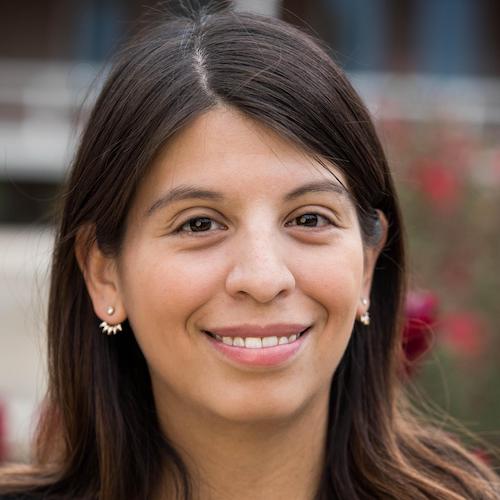
Anastasia Semykina is a Professor of Economics and Deputy Dean (Research and Innovation) at RMIT University's School of Economics, Finance & Marketing. She holds a PhD from Michigan State University (2006) and previously served as Charles and Joan Haworth Professor of Economics at Florida State University. Her expertise spans theoretical and applied econometrics, with a focus on panel data models, missing data estimation, and their application in labor economics, education economics, transition economies, and economic psychology. She teaches advanced econometrics and microeconomics courses at both undergraduate and graduate levels. Research Interests: Theoretical and Applied Econometrics Labor Economics Economics of Education Transition Economies Economics and Psychology Health Economics Her recent publications address topics such as panel data methodologies, healthcare cost-effectiveness analysis, and educational policy evaluation. She is actively involved in supervising PhD and Master's research students in econometrics and applied economics.
Esteban G. Tabak is a Professor of Mathematics at the Courant Institute of Mathematical Sciences, New York University. He holds a Ph.D. in Mathematics from MIT (1992) and a Hydraulic Engineer degree from the University of Buenos Aires (1988). His research spans fluid dynamics, data science, and optimization, with notable contributions to optimal transport theory, atmospheric and ocean modeling, and machine learning methodologies. He leads the Research and Training Group in Mathematical Modeling and Simulation at NYU. Research Interests include Data Analysis, Optimal Transport, Applied Mathematics, and Physics, particularly in fluid dynamics and geophysical flows. His work bridges theoretical advancements with practical applications, such as sea ice dynamics, internal waves, and turbulence modeling. Publications highlight innovations in density estimation, constrained optimization, and energy spectrum analysis of oceanic internal waves. Collaborations span disciplines, including biomedical applications (e.g., heart transplant diagnostics) and climate science. His methodologies, such as dual ascent algorithms and prototypal analysis, emphasize data-driven solutions to complex systems. Teaching includes courses on partial differential equations, fluid dynamics, and mathematical modeling. His work has been supported by grants addressing stratified flows, internal wave energy spectra, and turbulent mixing.
Nezir KÖSE is a Professor and currently serves as the Dean of the Faculty of Economics and Administrative Sciences at Beykent University. He has previously held academic positions at Istanbul Gelişim University and Gazi University, where he advanced from Research Assistant to full Professor. His academic career spans over three decades, with continuous contributions in teaching, research, and administrative leadership. Beykent University – Faculty of Economics and Administrative Sciences (2020–Present) Istanbul Gelişim University – Faculty of Economics, Administrative and Social Sciences (2017–2020) Gazi University – Faculty of Economics and Administrative Sciences (1990–2017) Education: Doctorate, Institute of Social Sciences, Gazi University (1992–1998) Degree, Faculty of Economics and Administrative Sciences, Gazi University (1990–1992) Licence, Faculty of Science, Gazi University (1985–1989) His primary research interests include Econometrics , Macroeconomics , Financial Economics , Time Series Analysis , and Energy and Environmental Economics . He has made significant contributions to the analysis of inflation, exchange rate volatility, foreign direct investment, oil price impacts, and financial stability, with a regional focus on Turkey and emerging markets. His recent publications (2023–2025) reflect a dynamic research agenda involving cryptocurrency markets , climate change economics , machine learning applications , and nonlinear macroeconomic modeling . His work frequently employs advanced econometric techniques such as panel data analysis, VAR/SVAR models, GARCH models, and time-varying parameter estimation. Scientific Awards: No awards mentioned in the provided text. Nezir KÖSE has supervised numerous graduate students, including PhD candidates who have completed theses on topics such as foreign direct investment, financial stability, oil price effects, and inflation uncertainty. He has also contributed to academic grants and collaborative research projects, particularly in energy and financial economics. He teaches core courses including Econometrics I & II , Time Series Analysis , and Nonparametric Statistics , demonstrating a strong commitment to pedagogy. He has authored several textbooks in econometrics and statistics, enhancing educational resources in Turkish academia. There is no indication of lab or team leadership, but his collaborative publications suggest active participation in research groups.
Gunnar Blohm is an Assistant Professor in the Department of Biomedical and Molecular Sciences at Queen's University, affiliated with the School of Medicine and Faculty of Health Sciences. His research focuses on sensorimotor neuroscience, particularly 3D sensorimotor control, eye-hand coordination, and computational modeling of neural processes. He holds a Ph.D. from Université Catholique de Louvain and has held postdoctoral positions at York University and his alma mater. Cross-appointed to the School of Computing, Department of Psychology, and Department of Mathematics and Statistics, he is also Vice-Director of the Connected Minds initiative. His research integrates behavioral experiments, brain imaging (MEG/EEG), and patient studies to understand how sensory information is transformed into goal-directed actions. Key areas include visuomotor transformations, multisensory integration, and Bayesian processes in neural computations. Blohm leads the Computational Sensorimotor Neuroscience Lab, emphasizing collaborative projects like Neuromatch Academy and contributions to open science initiatives. Affiliated with Queen's Centre for Neuroscience Studies and Ingenuity Labs, his work bridges computational approaches with clinical applications, aiming to develop frameworks for understanding brain dysfunction and clinical tools. His recent articles explore topics like saccade dynamics, pupil responses, and generative adversarial collaborations in scientific discourse.
Aleksandr (Sasha) Aravkin is Associate Professor in the Department of Applied Mathematics and Adjunct Associate Professor of Health Metrics Sciences, Mathematics, and Statistics at the University of Washington. He serves as Director of Mathematical Sciences at the Institute for Health Metrics and Evaluation (IHME), where he leads the Mathematical Sciences and Computational Algorithms team and contributes to strategic direction for applying mathematical sciences to analytic challenges. Dr. Aravkin earned his PhD in Mathematics (Optimization) and MS in Statistics from the University of Washington in 2010, following a BSc in Mathematics and Computer Science in 2004. His educational background forms the foundation for his interdisciplinary research approach. His research expertise spans large scale optimization, machine learning, data science, convex and variational analysis, algorithm design, robust statistics, inverse problems, and uncertainty quantification . These methodologies are applied across diverse domains including health metrics, computational medicine, tracking and navigation, seismic imaging, computational finance, and neuroscience. Dr. Aravkin has pioneered approaches for fusing physics-based and data-driven models, enabling innovative solutions to complex problems. Dr. Aravkin's publication record demonstrates a strong focus on health metrics and Global Burden of Disease studies, with recent work emphasizing meta-analytic approaches for risk-outcome relationships. His research spans epidemiological modeling, health effects of various exposures, and forecasting disease burden across populations. The publications reveal a consistent pattern of high-impact work in top journals including The Lancet and Nature Medicine, often addressing critical public health questions through rigorous statistical and mathematical frameworks. At IHME, Dr. Aravkin has led significant projects including the Burden of Proof Studies (2019-2024) which analyzed 153 risk-outcome pairs, and COVID-19 Modeling (2020-2023) where his team developed forecasting models and excess mortality estimation methods. He has also been instrumental in developing the Evidence Score model, requiring novel algorithmic approaches. His work bridges theoretical mathematical sciences with practical applications to improve global health policy and practice.
Xiaoxiao Zhou is an Assistant Professor in the Department of Biostatistics at the University of Alabama at Birmingham (UAB), affiliated with multiple centers including the Center for Outcomes and Effectiveness Research and Education (COERE), Center for Clinical and Translational Science (CCTS), and the Global Center for Craniofacial, Oral and Dental Disorders (GC-CODED). She holds a PhD in Statistics from The Chinese University of Hong Kong (2022) and completed a postdoctoral fellowship at Duke University's Department of Statistical Science. Her research focuses on causal inference, Bayesian methods, longitudinal data analysis, and survival analysis, with applications in Alzheimer’s disease, cardiovascular conditions, and neurodegenerative disorders. Dr. Zhou’s work integrates advanced statistical techniques with medical and behavioral data, including neuroimaging and latent variable modeling. Key areas include handling intercurrent events in clinical trials, causal mediation analysis, and joint modeling of longitudinal and survival outcomes. She collaborates widely with clinicians and biostatisticians to address real-world challenges in healthcare and disease progression studies. Her scholarly contributions span over a dozen peer-reviewed articles, emphasizing methodological innovations in biostatistics and their practical applications. She advises students such as Zhenying Ding and actively participates in academic committees. Outside academia, she enjoys outdoor activities like mountain hiking and weight lifting.
Professor Valentyn Panchenko is a leading academic in Economics at the UNSW Business School, specializing in advanced econometric methodologies and financial modeling. Holding a PhD from the University of Amsterdam and an MPhil from the Tinbergen Institute, his research bridges theoretical econometrics with real-world financial applications, emphasizing big data analysis, network structures, and dependence modeling in economic systems. His expertise spans financial econometrics, time series analysis, non-parametric statistics, and agent-based economic simulations. He focuses on Granger causality, model evaluation, structural economic modeling, and bounded rationality with heterogeneous agents. His work has secured significant grants including ARC Discovery Projects and DECRA fellowships, enabling cutting-edge research on market dynamics and economic interactions. Professor Panchenko's publications appear in top-tier journals like the Journal of Econometric Theory, AEJ: Micro, Journal of Economic Dynamics & Control, and Journal of Banking & Finance. His methodological contributions include novel approaches to copula-based forecasting, nonlinear causality testing, and evolutionary learning models in strategic economic environments. While specific student advising details aren't provided, his research leadership demonstrates sustained impact across econometric theory, financial markets, and experimental economics.
Ke Wu is a Professor in the Department of Computer Science and Engineering at the University of Michigan. Their research focuses on the intersection of machine learning, biostatistics, and healthcare technology, with an emphasis on mobile health interventions, causal inference, and Bayesian methods. They lead a small, hands-on research group mentoring PhD students and postdocs. Key interests include developing predictive models for health outcomes, improving treatment effect estimation, and leveraging mobile technology for caregiver support. Their work has addressed critical challenges in clinical decision-making, public health surveillance, and healthcare innovation. Research projects span synthetic data generation for electronic health records, mHealth app development for care partners of traumatic brain injury patients, and algorithmic fairness in reinforcement learning. Ke Wu emphasizes interdisciplinary collaboration and has contributed to global health studies, including analyses of pneumonia etiology in low-resource settings and the PERCH study. Their group's methodologies often integrate wearable sensor data and machine learning to address real-world health challenges. Advising priorities include fostering student independence while maintaining close mentorship, with expectations for consistent research productivity and professional development. Students are encouraged to pursue teaching roles (e.g., GSI positions) and internships aligned with career goals. Funding support for conference participation is available through institutional and external grants. Ke Wu's contributions extend to statistical methodology, including Bayesian latent class models and dynamic risk prediction frameworks. They actively engage in translational research, bridging computational methods with clinical and public health applications, and prioritize open-source software development to advance reproducible research practices.
Associate Professor Richard Burns is a Senior Fellow at the Australian National University's National Centre for Epidemiology and Population Health, working within the Department of Health Economics, Wellbeing and Society. With a distinguished academic career spanning epidemiology and population health, he contributes significantly to global health research initiatives including the Global Burden of Disease Study. BMus (ANU) BA (CSU) PGDE (UC) MSc (Manchester) MBiostats (USyd) PhD (USQ) Professor Burns' research focuses primarily on mental health, wellbeing, and the global disease burden, with particular expertise in life expectancy, psychological wellbeing, and dementia. His work bridges epidemiological methods with practical applications for population health improvement. His research fingerprint shows strong concentration in mental health (100%), wellbeing (49%), global disease burden (47%), and life expectancy (25%). His recent publication record demonstrates remarkable productivity, with 112 research outputs including 18 publications in 2024 alone. These works span high-impact journals including The Lancet, The Lancet Neurology, and Genes, focusing on global health metrics, mental health services, cognitive function, and healthy aging across diverse populations. His research shows a clear trend toward interdisciplinary approaches combining epidemiology, neuroscience, and public health policy. Professor Burns has successfully secured multiple research projects, including the Internal Validation of Defence Wellbeing Measure (2023-2025), Mental Health Analysis and Modelling, and the Request for Quotation application: Defence Wellbeing Research Framework. He collaborates extensively with researchers across Australia and internationally. As a registered supervisor, Professor Burns mentors students in epidemiology and population health research. His laboratory work focuses on the PATH through Life Project and other longitudinal studies examining mental health trajectories across the lifespan. His team employs advanced statistical modeling and neuroimaging techniques to understand the complex interplay between biological, psychological, and social determinants of health.
Ardo van den Hout is a Professor of Statistics at the Department of Statistical Science, University College London. He holds a PhD in Social Statistics from Utrecht University (2004) and has previously worked at the MRC Biostatistics Unit in Cambridge. His research focuses on advanced statistical methodologies including longitudinal data analysis, survival analysis, multi-state models, and applications in aging research and public health. He has authored influential works such as Multi-state Survival Models for Interval-censored Data (2017). Research Interests Development and application of multi-state models for complex health data Survival analysis techniques for interval-censored and longitudinal datasets Methodological advancements in cognitive decline and disease progression modeling Integration of socio-economic factors in health expectancy analysis Key Contributions Pioneered penalized likelihood approaches for multi-state models Developed frameworks for estimating life expectancies in health and disease Advanced methods for handling missing/misclassified data in longitudinal studies Awards Recipient of the Gopal Kanji Prize 2012 for outstanding contributions to statistics Professional Activities Maintains an active research program with collaborations across biostatistics, epidemiology, and health economics. Supervises doctoral students focusing on statistical methodologies with real-world health applications. His work frequently addresses critical questions in aging populations, cancer research, and public health policy.
Gilles Chemla is a Professor of Finance at Imperial College Business School and Co-Director of the Centre for Financial Technology. He holds affiliations with the Centre National de la Recherche Scientifique (CNRS), the Centre for Economic Policy Research (CEPR), and the Rimini Centre for Economic Analysis (RCEA). His academic journey includes a PhD in Economics from the London School of Economics, an MSc from Paris School of Economics, and an engineering degree from Ponts Paristech. Chemla’s research focuses on corporate finance, fintech innovation, causal inference methodologies, and corporate governance. His work bridges theoretical economics with practical applications in finance, energy markets, and policy. Recent articles explore AI adoption in finance, crowdfunding dynamics, and executive compensation dynamics. He has contributed to top journals like Journal of Financial Economics and Journal of Empirical Finance . Education: PhD in Economics, London School of Economics (1996) MSc in Economics, Paris School of Economics (1992) Engineering Degree in Mathematics and Economics, École des Ponts ParisTech (1992) Awards: Multiple teaching prizes (unspecified). Professional Roles: Non-executive director roles in corporations and financial institutions Associate Editor, Journal of Empirical Finance Chemla’s research also addresses interdisciplinary topics such as medical trial biases and policy-relevant experiments. He advises on fintech innovation, financial regulation, and energy market dynamics, leveraging mathematical modeling and data science expertise.
Christina J. Diaz is an Associate Professor in the Department of Sociology at Rice University, specializing in social demography, immigration, and family formation. Her research focuses on the health and well-being of Latin American immigrants and the cultural, social, and economic impacts of immigration on U.S. society. Prior to joining Rice in 2021, she was an Assistant Professor at the University of Arizona's School of Sociology. Education: Ph.D. in Sociology (demography/ecology), University of Wisconsin-Madison, 2015 M.S. and M.A. in Sociology, University of Wisconsin-Madison and DePaul University B.A. in Sociology, DePaul University, 2007 Research Interests: Dr. Diaz’s work examines immigration’s role in shaping cultural dynamics, educational outcomes, and demographic trends. She investigates how immigrant-origin populations influence U.S. societal structures, including cuisine, language curricula, and family formation patterns. Her research bridges historical and contemporary perspectives, emphasizing the intersection of immigration with health, education, and inequality. Recent Work Trends: Her publications analyze topics like segmented assimilation, educational mobility, and the socioeconomic implications of immigration. Recent work emphasizes methodological rigor (e.g., IV estimates for sibship size) and interdisciplinary approaches, such as linking cultural studies to demographic shifts. Honors & Awards: Reuben Hill Award (National Council on Family Relations, 2017) Student Paper Award (ASA Sociology of Population Section, 2015) Best Poster Award (Population Association of America, 2014) CTE Faculty Fellow (2024–27) Advisory & Teaching Roles: She advises the Hermes Telehealth Committee (2022) and teaches courses on family sociology, immigration, and advanced quantitative methods. Her teaching emphasizes practical skills like statistical modeling (Linear Models, STaRT workshops).
Ridhi Kashyap is a Professor of Demography and Computational Social Science at the University of Oxford, where she contributes significantly to demographic research through innovative computational approaches. She is affiliated with the Leverhulme Centre for Demographic Science, where she co-leads the Digital and Computational Science strand. Her work bridges traditional demographic methods with cutting-edge computational techniques to address pressing social issues related to population dynamics and inequalities. Dr. Kashyap's research spans multiple areas of demography, with particular focus on: Mortality and population health, including pandemic impacts on life expectancy Gender inequality, especially son preference and digital gender gaps Marriage and family dynamics in relation to educational expansion and gender norms Migration and ethnicity patterns using digital data sources Sustainable development goals related to digital access and gender equality Her methodological expertise lies at the intersection of demography and computational social science. She leverages agent-based models, microsimulation, and machine learning techniques applied to novel data streams such as digital trace data from social media platforms. A notable example of her work is the digitalgendergaps.org platform, which nowcasts global digital gender inequalities in internet and mobile access - a key sustainable development goal indicator where official data is lacking. Her research demonstrates how computational approaches can fill critical data gaps and provide timely insights for policy decision-making. Analysis of Dr. Kashyap's recent publications reveals a strong focus on digital demography and computational approaches to understanding population dynamics. Her work frequently examines gender inequalities through digital lenses, including analyses of LinkedIn data to understand professional gender gaps and social media data to track digital access disparities. She has made significant contributions to understanding pandemic mortality patterns, particularly in India and the US, and has pioneered methods for using social media data to nowcast demographic phenomena. Her research consistently bridges theoretical demographic concepts with practical computational methodologies. Dr. Kashyap has been actively involved in several significant research initiatives, including leading the development of the Digital Gender Gaps dashboard and contributing to the creation of the World Cybercrime Index. Her work with the Leverhulme Centre for Demographic Science has positioned her at the forefront of computational demographic research. Within her academic role, Dr. Kashyap supervises graduate students and collaborates with interdisciplinary teams across demography, computer science, and public health. She has secured funding for projects that leverage digital data to address demographic research questions, particularly those related to gender inequality and sustainable development goals. Her work with social media data platforms demonstrates innovative approaches to overcoming traditional data limitations in demographic research. Dr. Kashyap co-leads the Digital and Computational Science strand at the Leverhulme Centre for Demographic Science, where she oversees a team of researchers working at the intersection of demography and computational methods. Her team develops innovative approaches to using digital trace data for demographic research, with particular focus on gender inequality metrics and pandemic impact assessment. The Digital Gender Gaps project represents one of her team's flagship initiatives, providing near-real-time monitoring of a key sustainable development indicator.
Li Zhongfei is a Chair Professor and Vice Dean of the School of Business at Southern University of Science and Technology (SUSTech). He is a member of the State Council's Discipline Review Group, National Outstanding Young Scientist, National Model Teacher, and recipient of the State Council's Special Government Allowance. His career spans roles as Distinguished Professor at Lingnan College, Executive Dean at Sun Yat-sen University, and leadership positions in academic societies such as the Chinese Society for Systems Engineering. Education : PhD in Management (1997-2000) and Master's in Operations Management (1988-1990) from the Chinese Academy of Sciences, and a Bachelor of Science in Mathematics from Lanzhou University. Research Interests : His work focuses on Technological Finance Green Finance Pension Finance Financial Engineering and Risk Management Insurance and Actuarial Science with applications to financial markets, digital finance, and sustainability. Scientific Trends from his publications include: ESG rating impacts on capital markets Green innovation under carbon pricing Machine learning in cryptocurrency forecasting Robust portfolio optimization under uncertainty Climate risk and policy analysis Post-pandemic economic recovery and systemic risk Scientific Awards : Recipient of the National Teaching Achievement Award, Guangdong Province Philosophy and Social Sciences prizes, Zhong Jiaqing Operations Research Award, and recognition as a Top 2% Scientist (Stanford, 2023). He was honored as a National Model Teacher and 'Top Ten Most Respected Business School Deans in China.' Grants & Projects : Principal investigator in NSFC key projects, including 'Intelligent Investment and Risk Management under Dual Carbon Strategy' and 'Financial Innovation and Risk Management.' His projects address fintech, pension funds, and climate risk. Labs & Teams : Leads advanced research teams in SUSTech's School of Business and collaborates with international institutions like the University of Waterloo and Hong Kong Polytechnic University.
Associate Professor Feng Chen is a faculty member at the School of Mathematics & Statistics, University of New South Wales, specializing in statistical methodology development and applications. His research bridges theoretical statistics and practical implementations across financial modeling, spatiotemporal processes, and public health analysis. PhD in Statistics from University of Hong Kong (2008) MSc in Applied Probability & Statistics from Lanzhou University (2004) BSc in Mathematics from Lanzhou University (2001) Research focuses include: Nonparametric and semiparametric statistical methods Point process modeling with emphasis on Hawkes processes Statistical computing and algorithm development Applications to financial data, earthquake analysis, and public health Recent publications demonstrate methodological advances in: Hawkes process estimation with complex data structures Renewal process applications in seismology GARCH modeling with missing data Spatiotemporal clustering analysis Scientific recognition includes: UNSW Science Staff Impact Award (2023) Professional roles: Director of Research Postgraduate Studies (2023--) Associate Editor for multiple journals Statistics Honours Coordinator (2013-2018) Active participant in statistical societies