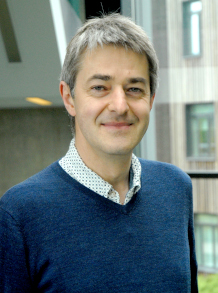
Professor Radu Calinescu is a faculty member in the Department of Computer Science at the University of York. His research focuses on formal methods for adaptive, autonomic, and dependable IT systems, with applications in cloud computing and health informatics. He is affiliated with the High Integrity Systems research group. DPhil in Computation from University of Oxford Licence Diploma in Computer Science from Iasi, Romania His research interests span formal methods, automated software engineering, and their application to complex systems. Recent work includes architectural frameworks for self-adaptive systems, runtime verification techniques, and probabilistic modeling approaches. Current research projects include: BRAID: Ethical guidelines for medical AI CHEDDAR: Cloud computing communication hubs DOMINOS: Disruption mitigation in AI systems He has published extensively on topics including: Adaptive systems architecture Formal verification techniques Risk-aware decision-making Model-driven engineering Cloud computing reliability Health informatics safety
Jasleen Kaur is a Postdoctoral Research Fellow and Developer Manager at the UbiLab within the School of Public Health Sciences at the University of Waterloo. She also holds an Adjunct Assistant Professor position at the same institution. Her work bridges IoT, AI, and public health to address critical challenges. B.Tech, M.Tech, and PhD in Computer Science & Engineering from India Postdoctoral Research Fellowship at UbiLab, University of Waterloo Research Interests: Digital Health, IoT & AI in Healthcare, Wearable Technology Design, Health Data Analytics, and Big Data. Her research focuses on integrating IoT and AI for public health outcomes, including: Developing big data ecosystems for infodemic management using social media analytics Creating early warning systems for climate-related health impacts Designing lightweight operating systems for mhealth IoT devices Building interoperable APIs for antimicrobial resistance data Advancing centralized healthcare infrastructure via pervasive computing Selected Publications highlight her expertise in AI-driven misinformation detection, AMR surveillance systems, mental health data management, and pandemic analytics. She previously contributed to India's Antimicrobial Resistance initiatives and COVID-19 data management during the pandemic. Labs & Teams: She actively contributes to the UbiLab at the University of Waterloo, focusing on ubiquitous health technologies, and collaborates with institutions like the Indian Council of Medical Research (ICMR) .
Dr. Christine Pelletier is a researcher affiliated with the University of Groningen in the Faculty of Economics and Business . Her work spans interdisciplinary domains at the intersection of industrial engineering, medical informatics, and agent-based modeling. Research Focus: Key contributions include developing integrative educational frameworks for industrial engineering, creating ontologies for enterprise systems, and optimizing gas and healthcare data networks through agent-based approaches. Her research addresses societal challenges in energy policy and health/social care systems. Publication Trends: From 2001–2015, her work focused on: Ontology-driven data integration (2001–2005) Agent-based modeling for energy systems (2005–2009) Pedagogical innovation via serious games (2015) Medical data warehouse methodologies (2005–2006) Contact: Email c.m.p.pelletier@rug.nl for collaboration or inquiries.
Dr. Ramkiran Gouripeddi is an Assistant Professor in the Department of Biomedical Informatics at the University of Utah . His work bridges clinical practice and informatics research , focusing on data integration , machine learning , and exposome modeling for translational research. He holds an MS in Biomedical Informatics from Arizona State University and an MBBS from MGR Medical University, India. Research Interests : Clinical & Clinical Research Informatics, Exposure Health Informatics, Big Data Ecosystems, Metadata Discovery, Biomedical Ontologies, Global Health, Computational Modeling Projects : Lead developer of the OpenFurther platform for biomedical data integration, Principal Investigator for the bioCADDIE metadata discovery pilot, and Informatics Lead for the PaTH PCORnet and CTSA Accrual networks. Publications : Focus on environmental risk factors , machine learning for diabetes , SARS-CoV-2 , and EHR-based readmission prediction . Collaborations : Center for Clinical and Translational Science (CCTS), FURTHeR team, PRISMS Center. His research combines clinical expertise (as a practicing physician) with informatics innovation , emphasizing scalable solutions for clinical trial recruitment , reproducible analytics , and environmental health studies .
Karsten Ulrik Niss is a part-time lecturer at Aalborg University's Faculty of Medicine, specifically within the Department of Health Science and Technology and the Danish Centre for Health Informatics. His work focuses on healthcare IT systems, organizational development, and telemedicine implementation. Research Interests: Telehealth systems, EHR integration, medical imaging informatics, organizational change in healthcare Key Expertise: Stakeholder analysis, clinical workflow optimization, medical IT evaluation His research explores the intersection of technology and human factors in healthcare settings, particularly through network analysis of telehomecare systems and bottom-up organizational development approaches. Recent publications examine video consultations for specialized treatments and systemic impacts of PACS/RIS implementations. Notable contributions include the MIEMIS framework for medical information system evaluation and studies on EHR implementation challenges. His work spans both theoretical modeling and practical case studies across multiple medical domains.
Dragos Vieru is a Full Professor of Information Technology at TÉLUQ University in Montreal, Canada. He joined the faculty in 2011 after accumulating more than 15 years of practical experience in information technology project management within the public health sector. Professor Vieru served as Director of the School of Business Administration from 2015 to 2018 and maintains an active research role as a regular researcher at the Information Systems Research Group (GReSI - HEC Montréal). His international academic engagement includes visiting professorships at the University of Münster (Germany), Budapest University of Technology and Economics (Hungary), Academy of Economic Studies (Romania), and Corvinus University of Budapest (Hungary). His academic credentials include: Ph.D. in Administration (major in Information Technologies; minor in Organizational Studies) from HEC Montréal M.Sc. in Management of Information Systems from John Molson School of Business, Concordia University M.Eng. in Industrial Engineering from Polytechnic University of Bucharest, Romania Professor Vieru's research spans IT innovation, organizational ambidexterity, digital transformation, digital ecosystems and platforms, inter-organizational information systems, global sourcing of IT services, and ethics of artificial intelligence. With over 50 publications in leading journals like the International Journal of Information Management and Information Systems Management, his work frequently examines the intersection of technology, organizational behavior, and management practices. His recent scholarship increasingly focuses on the ethical dimensions of emerging technologies, particularly artificial intelligence in organizational contexts. Professor Vieru has made significant contributions to the academic community through his leadership as chair of the Socio-Technical Issues in Organizational Information Technologies mini-track at the Hawaii International Conference on System Sciences since 2013. His certification as a LEGO Serious Play® Designer and Facilitator informs his innovative teaching and research approaches. His professional affiliations include: Member of the Association for Information Systems (AIS) Member of Groupe de recherche en systèmes d'information (GreSI) Professor Vieru actively bridges theoretical research with practical applications, leveraging his extensive industry experience to address real-world challenges in information technology management across various organizational contexts.
Thashmee Karunaratne is an Associate Professor in Digital Learning at the School of Industrial Engineering and Management, KTH Royal Institute of Technology. She specializes in analytics-based design for digital transformation, focusing on data-informed education and semantic interoperability. Her work bridges education technology with cross-border digital public services. Current projects: SkillsMatch, De4A, eSHARE Key collaborations: EU-funded initiatives, international ICT4D programs Research emphasizes GDPR-compliant learning analytics , non-cognitive skill development , and teacher training in Ukraine, Rwanda, and developing nations. She explores institutional readiness for data sharing and evidence-based decision-making frameworks. Recent publications analyze digital health service requirements , small dataset analytics , and teacher-facing dashboards . Her work spans educational transformation, ICT adoption in developing regions, and agile methodologies in industry settings. Technical contributions include semantic interoperability frameworks and canonical evidence-based approaches for cross-domain systems. She advocates for blended learning models and works with educational stakeholders in Africa, Asia, and Latin America.
Katarina Fast Lappalainen is a Lecturer in Legal Informatics and Public Law at the Department of Law, Stockholm University. She serves as Course Director for Legal Informatics (6 credits) and actively participates in national and international speaking engagements. Key affiliations: Digital Futures research center (Societal Committee), Digital Humanities project (Steering Group), Digital Equality Working Group (Co-Director, Berkeley Center), European Women Lawyers Association (Deputy Council Representative) Her research explores the legal implications of digital transformation across: AI governance in public administration and tax control Healthcare digitalization and inter-organizational systems Whistleblower protections and EU legal integration Fundamental rights in data economies and AI applications Recent publications analyze: AI tools in multi-actor elderly care (2024) Constitutional challenges in public data utilization (2023) Digital evidence admissibility in cloud environments (2022) Scientific awards: Stockholm University Teacher of the Year (2022) She contributes to EU data policy analysis and child rights in algorithmic decision-making, while maintaining expertise in Swedish tax law evolution and constitutional protections against retroactive legislation.
Stine Emilie Junker Udesen is a researcher at the University of Southern Denmark's Faculty of Health Sciences, affiliated with the Institute for Health Services Research. Her work focuses on emergency care integration within nursing homes, healthcare system optimization, and acute care delivery in geriatric populations. Master of Public Health Specialist Consultant in Clinical Pharmacology, Pharmacy, and Environmental Medicine Active in cross-sectoral healthcare research Her research explores: Emergency Department outreach to nursing homes Mobile acute care teams Interactions between primary and emergency healthcare systems Infection and delirium management in elderly care Workforce dynamics in nursing home emergency care Recent publications emphasize preventive strategies for older adults, novel acute care models, and policy implications for healthcare systems. She has presented findings at conferences in 2021 and contributes to open-access research in journals like The Lancet Healthy Longevity and Age and Ageing . Collaborates with experts in emergency medicine, nursing, and primary care Research outputs include 6 journal articles, 1 PhD thesis, and 1 conference abstract
Ausma Bernot is a Lecturer at Griffith University's School of Criminology and Criminal Justice, specializing in the intersection of technology and crime. She is a member of the Griffith Criminology Institute and contributes to research on surveillance studies, technology governance, and digital security issues. Her research interests focus on critical surveillance studies, technology's impact on crime, the role of technology in policing, and public, cyber, and state security in China. Bernot's work examines how digital technologies reshape social control, governance, and resistance, with particular attention to China's surveillance infrastructure and its global implications. Her publications appear in top journals including "Regulation and Governance," "Internet Policy Review", and "Intelligence and National Security." Bernot's most recent publications demonstrate a consistent focus on surveillance technologies, digital governance, and the societal impacts of technology. Her work spans multiple domains including policing technologies, LGBTQ+ activism under digital surveillance, pandemic response through surveillance, and geopolitical aspects of technology governance. She has developed expertise in China's digital surveillance systems while also contributing to broader discussions on internet governance and open data initiatives. Bernot actively engages with policy communities, having presented her insights to New Zealand's Department of the Prime Minister and Cabinet, as well as participating in international conferences and workshops. She serves as an Associate Supervisor for doctoral research on mediums in homicide investigations. Her professional activities include participation in auDA's Asia Pacific Internet Governance Academy and chairing sessions at the Future of Queensland Government Summit. She has received several research grants including ANZSOC conference registration bursary, ASPA 2024 conference travel grant, and internally funded projects on Chinese security technology and Open Government Data in Indonesia.
Professor Kecheng Liu is a distinguished academic at the University of Reading's Henley Business School, Department of Information Systems, with an extensive publication record spanning over two decades. His research has significantly contributed to the fields of organizational semiotics, information systems, and business informatics, establishing him as a leading authority in semiotic approaches to information systems design and digital transformation. Professor Liu's research interests focus on the intersection of semiotics and information systems, with particular expertise in organizational semiotics, pervasive computing, healthcare information systems, and digital business ecosystems. His work develops theoretical frameworks that bridge the gap between human understanding and digital systems, creating more effective and meaningful information architectures. His research has evolved from foundational semiotic modeling to contemporary applications in AI ethics, digital transformation, and sustainable business practices, demonstrating both theoretical depth and practical relevance across multiple domains. His publication portfolio reveals a consistent trajectory of scholarly contributions, with recent work emphasizing digital business ecosystems, AI ethics, healthcare information interoperability, and sustainable development. Professor Liu has successfully secured research funding across various domains, particularly in healthcare informatics and digital transformation projects. His collaborative network spans multiple continents, with frequent partnerships across Europe, China, and the Middle East, demonstrating strong international research connections. Professor Liu leads a research group focused on organizational semiotics and digital transformation, working closely with both academic and industry partners to translate theoretical insights into practical applications. His team has developed several frameworks for business-IT alignment and semiotic modeling that have been adopted in healthcare, finance, and public sector organizations.
Dr. Liming Zhu is a Conjoint Full Professor at the School of Computer Science and Engineering, University of New South Wales, and leads the Software and Computational Systems Research Program at Data61, CSIRO. This research program comprises over 200 personnel working across key technology domains including big data analytics infrastructure, computational science platforms, trustworthy systems, distributed systems, business process management, legal informatics, provenance tracking, behavior analytics, blockchains, and software engineering. His research expertise spans software architecture in enterprise and embedded systems, dependable and secure distributed systems, DevOps and continuous deployment methodologies, big data analytics infrastructure and pipelines, blockchain applications, software ecosystems, and model-driven development. His work intersects with multiple Fields of Research including Computer Software, Distributed Computing, Software Engineering, Computer System Security, and Data Security. Zhu's publication record demonstrates significant scholarly impact with 97 journal articles, 186 conference papers, 39 preprints, 7 book chapters, and 1 authored book. His research program at Data61 focuses on translating theoretical advances into practical systems that address real-world challenges in data management, system security, and software development processes. The research program has particular strength in developing infrastructure for computational sciences, including specialized applications in imaging processing and bioinformatics/life sciences. Software and Computational Systems Research Program, Data61, CSIRO (Leadership role) School of Computer Science and Engineering, University of New South Wales (Conjoint Full Professor) Dr. Zhu actively supervises PhD students at UNSW, having successfully guided 6 doctoral candidates to completion as primary supervisor. His teaching focuses on software architecture courses, connecting academic theory with industry practice. The research program he leads serves as a bridge between academic inquiry and practical application, working closely with industry partners to develop innovative solutions in data platforms, trustworthy systems, and software engineering practices.
Eduardo Guagliardi is a psychiatrist and medical educator specializing in Mental Health Informatics at Universidade Federal de Pernambuco, where he collaborates with NUTES (Health Technology Nucleus). His work focuses on digital health applications for mental healthcare services, particularly telepsychiatry and electronic health records for psychiatric care in Brazil's public health system. His research interests center on Mental Health Informatics, Telepsychiatry, and Electronic Health Records, with particular emphasis on improving mental healthcare delivery through digital solutions. His work addresses critical challenges in psychiatric services including patient management systems, clinical decision support tools, and information sharing across healthcare settings. He has developed frameworks for electronic patient records specifically for Psychosocial Care Centers (CAPS) in Brazil. His publication portfolio shows consistent focus on practical applications of health informatics in mental healthcare, with recurring themes around depression management, psychotic disorder treatment, and digital tools for clinical decision-making. His work bridges clinical psychiatry with information technology to improve patient care coordination and documentation standards. As a blogger and web curator, he actively disseminates knowledge about technology applications in mental healthcare, maintaining the platform www.psiquiatriadigital.com. He has contributed to developing electronic health record models for Psychosocial Care Centers in Lages, Santa Catarina, and served as a mental health teleconsultant through NUTES/UFPE.
Ana Belén Gil González is an Associate Professor in the Department of Computer Science and Automation at the University of Salamanca, Spain. She is affiliated with multiple research groups including BISITE (Bioinformatics, Intelligent Computer Systems and Educational Technology), CAUSAL (Academic Culture, Heritage and Social Memory), and MIDA (Data Mining). Her work spans across artificial intelligence, educational technology, blockchain applications, and intelligent systems. Dr. Gil González earned her PhD from the University of Salamanca in 2011 with a thesis on "Intelligent Recovery of Digital Educational Content," supervised by Dr. Juan Manuel Corchado Rodríguez and Dr. Sara Rodríguez González. Her research interests focus on applying artificial intelligence and data mining techniques to solve real-world problems. She has made significant contributions to educational technology, developing intelligent systems for digital content retrieval and personalized learning. In healthcare, she has worked on AI applications for medical diagnosis, including breast cancer prediction and Papanicolaou test analysis. Her work in blockchain technology addresses applications in supply chain management and smart cities with a focus on privacy preservation. Additionally, she has explored therapeutic robotics through projects like i-Teddy, which uses doll therapy to improve human interaction. Analysis of her recent publications (2022-2024) reveals a strong interdisciplinary approach with work spanning healthcare AI, educational technology, blockchain applications, and therapeutic robotics. Her research shows increasing focus on explainable AI in medical applications, privacy-preserving technologies for smart cities, and innovative approaches to educational technology. She maintains an active collaboration network across multiple research groups at the University of Salamanca. Dr. Gil González is actively involved in mentoring through her teaching and research supervision. Her extensive publication record across diverse domains suggests successful funding acquisition for her research projects. She is a key member of the BISITE research group, which focuses on bioinformatics, intelligent computer systems, and educational technology. Her work with the CAUSAL group explores academic culture and social memory, while her involvement with MIDA centers on data mining applications. These collaborative environments provide rich interdisciplinary contexts for her research across technology, education, and social applications.
Professor Weizi Li serves as Professor of Informatics and Digital Health, Deputy Director of the Informatics Research Centre, and Programme Director for MSc Digital and Technology Solutions and MSc Informatics (BIT) at Henley Business School, University of Reading. She directs the EPSRC Future Blood Testing for Inclusive Monitoring and Personalised Analytics Network+, demonstrating leadership in digital health innovation. Her research integrates artificial intelligence, machine learning, and information systems to solve critical healthcare challenges. Key focus areas include digital health analytics, decision support systems for clinical pathways, and personalized medicine applications. Current work targets inflammatory arthritis detection, diabetes management through glucose monitoring, and reducing healthcare inequalities via predictive attendance systems implemented at Royal Berkshire NHS Foundation Trust. Recent publications reveal consistent application of multimodal machine learning to healthcare data, emphasizing uncertainty quantification, risk stratification, and real-world clinical implementation. Her work bridges technical AI advancements with practical healthcare delivery improvements across diverse patient populations. Professor Li has earned significant recognition for research impact including the ESRC O2RB Excellence in Impact Award (2018), Research Engagement and Impact Award (2020), and Times Higher Education STEM Award (2025). Her contributions to patient safety and digital health innovation have been acknowledged through Health Service Journal awards and British Computer Society fellowship. ESRC O2RB Excellence in Impact Award (2018) Research Engagement and Impact Award (2020) Shortlisted for 2022 Impact Award Health Service Journal Patient Safety Award Times Higher Education STEM Award (2025) Fellow of British Computer Society As Principal Investigator, she has secured major funding from EPSRC, NIHR, ESRC, The Health Foundation, NHS, and Innovate UK totaling over £3 million. Current projects include the £1.16M NIHR RMD-Health initiative for rheumatic disease detection and the £600k EPSRC grant for inflammatory arthritis prediction. Her Royal Berkshire NHS partnership has successfully implemented machine learning systems reducing outpatient non-attendance. She leads the Informatics Research Centre's digital health team, fostering collaborations between academia, NHS trusts, and industry partners to translate AI research into clinical practice through the EPSRC Future Blood Testing Network+ and multiple collaborative innovation funds.