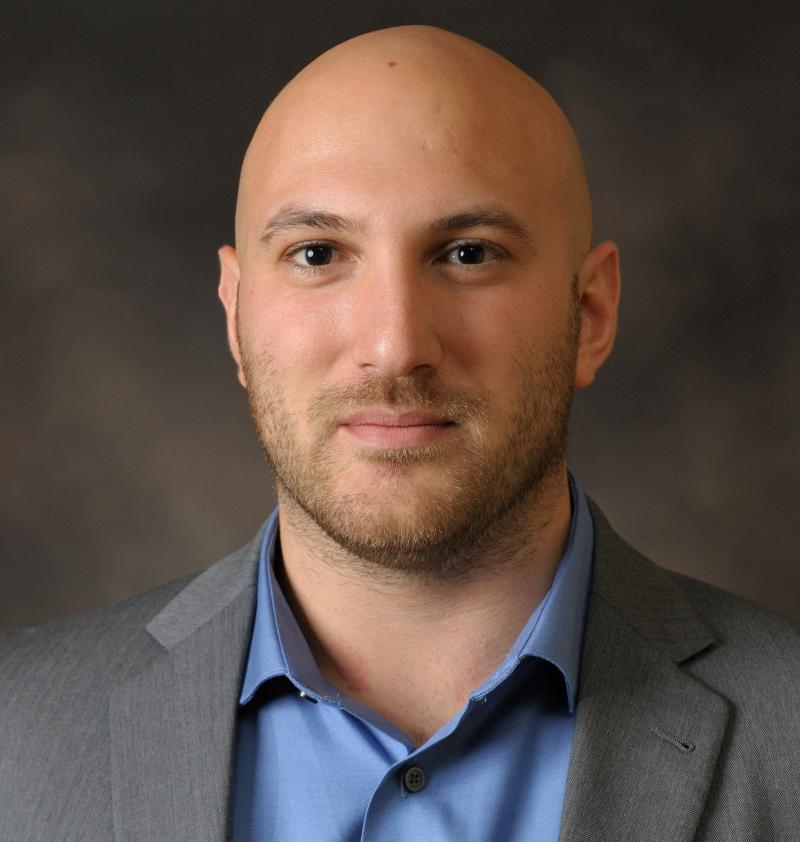
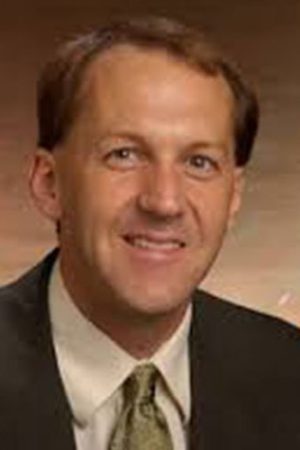
Dimitrios Skarlatos is an Assistant Professor in the Computer Science Department at Carnegie Mellon University's School of Computer Science. His research bridges computer architecture and operating systems with a focus on performance, security, and scalability. His work revolves around two central themes: (1) redesigning abstractions and interfaces between hardware and OS layers to improve performance and scalability, and (2) uncovering security vulnerabilities and building defenses at the hardware-OS boundary. Research Focus: Operating system security and vulnerability prevention Virtual memory systems and page table optimizations Serverless computing architectures Hardware-software co-design for security Datacenter resource management Dr. Skarlatos advises five PhD students and has published extensively on systems research. He received his PhD from the University of Illinois at Urbana-Champaign, where his dissertation received the ACM SIGARCH & IEEE CS TCCA Outstanding Dissertation Award for contributions to redesigning hardware-OS abstractions.
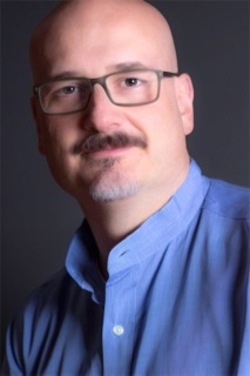
Ryan Riley is an Assistant/Teaching Professor in the Department of Computer Science at Carnegie Mellon University’s Qatar campus, where he also serves as the Associate Area Head. His expertise lies in cybersecurity, hardware security, and malware analysis. His research interests include: Cybersecurity and hardware security, particularly focusing on Intel SGX and secure enclaves Malware analysis and detection, including kernel-level rootkits and Android native code variants Side-channel attacks and memory access control mechanisms Distributed algorithms in wireless sensor networks Mobile app security, including dynamic code loading and hidden attacks through web interfaces Dr. Riley’s work addresses critical challenges such as cross-layer attack prevention, memory permissions hardening, and data-centric security. His contributions span both theoretical frameworks and practical implementations, emphasizing the importance of secure system design. While specific grant details are not detailed here, his research has explored innovative solutions in hardware-managed isolation, cryptographic techniques, and real-world system vulnerabilities. He has advised students in these areas, though their names are not listed in the provided information.
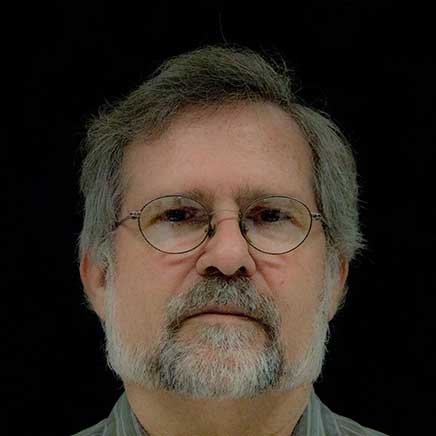
George V. Neville-Neil is an Industrial Visitor at the Department of Computer Science and Technology, University of Cambridge. His work focuses on networking, operating systems, and time protocols. He is known for authoring The Kollected Kode Vicious and co-authoring The Design and Implementation of the FreeBSD Operating System . He teaches courses on programming and has contributed to FreeBSD's development through research and publications. Neville-Neil holds a bachelor’s degree in computer science from Northeastern University. He is active in professional organizations like ACM and Usenix. His research interests include code spelunking (analyzing large codebases), optimizing network performance in FreeBSD, and securing IPv6 implementations. He has explored topics like hardware performance counters and socket programming through publications and conference talks. His articles span decades, reflecting a consistent focus on system-level software, networking protocols, and performance. Notable contributions include analyses of FreeBSD's networking stack, IPv6 security, and kernel optimization techniques. Neville-Neil’s work often bridges theoretical concepts with practical implementations, emphasizing real-world applicability. No scientific awards are explicitly listed, but his extensive publications and contributions to open-source projects highlight his influence. He collaborates with industry and academia, as evidenced by his roles as a columnist and co-author. His involvement in conferences like BSDCan and SIGCOMM underscores his active participation in the computer science community. Neville-Neil’s work environment includes the Department’s research groups, though specific labs or teams are not detailed. His current efforts likely continue in system software and networking, leveraging his expertise in both academia and industry.
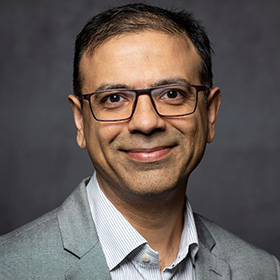
Zahra Tarkhani is an Assistant Professor in the Department of Computer Science and Technology within the School of Technology at the University of Cambridge. She is based in the William Gates Building (Room GC01) at 15 JJ Thomson Avenue, Cambridge CB3 0FD, and can be contacted at zt233@cam.ac.uk. Her research focuses at the intersection of hardware security, confidential computing, and privacy-preserving systems. Key interests include trusted execution environments, secure machine learning implementations, memory safety mechanisms, and security for wearable brain-computer interfaces. Her work bridges theoretical security principles with practical system implementations, particularly addressing challenges in heterogeneous computing environments. Analysis of her 11 publications from 2017-2024 reveals a strong trajectory toward secure machine learning systems, with recent work systematizing knowledge in confidential computing for ML. Earlier research established foundations in memory protection (Tiles/μTiles), enclave orchestration (Sirius), and heterogeneous enclave management (Snape), demonstrating consistent innovation in privilege separation and compartmentalization techniques. Her scientific contributions address critical gaps in hardware-software security interfaces, with applications spanning cloud infrastructure, edge computing, and biomedical devices. The publications demonstrate technical depth in both architectural design and implementation security.
Shoaib Akram is a Lecturer at the ANU School of Computing, Australian National University. He holds a Ph.D. in Computer Science and Engineering from Ghent University (Belgium) and an M.S. in Electrical and Computer Engineering from the University of Illinois at Urbana-Champaign. He has received prestigious awards such as the Fulbright Scholarship (2007-2009) and a Marie Curie Fellowship (2010-2012). His research focuses on optimizing storage-intensive applications, computer architecture, and hardware-software interfaces, particularly for modern data-centric systems. He leads the Vertically Integrated Computer Systems (VICS) research group and has published extensively in top-tier conferences like PLDI, ASPLOS, and ISPASS. He teaches foundational computer architecture courses to over 400 students annually and restructured ANU’s computer systems curriculum. Education: Ph.D. in Computer Science and Engineering, Ghent University (Belgium) M.S. in Electrical and Computer Engineering, University of Illinois at Urbana-Champaign (USA) Research Interests: Storage-Intensive Applications Non-Volatile Memory Systems Garbage Collection Algorithms Big Data Framework Optimization Performance Analysis Hardware-Software Co-Design Awards: NVMW Memorable Paper Award (2019) HiPEAC Paper Awards (ASPLOS 2023, PLDI 2018) Marie Curie Fellowship (2010-2012) Fulbright Scholarship (2007-2009) Teaching & Service: Introductory and Advanced Computer Architecture Courses Program Committee Member for ISCA, MICRO, HPCA, and ASPLOS Artifact Evaluation Committee for OOPSLA and PLDI Labs/Groups: He leads the ANU's Vertically Integrated Computer Systems (VICS) research group, focusing on interdisciplinary system-level research.
Dr. Michael Norrish is an Associate Professor at The Australian National University , affiliated with the School of Computing and the Mathematical Sciences Institute . He specializes in formal methods, interactive theorem proving (particularly with the HOL4 system), and formal semantics for complex systems. His work emphasizes rigorous software verification and foundational computer science research. Dr. Norrish holds a PhD in Computer Science from the University of Cambridge (1999) , along with a BA and BSc(Hons) from Victoria University of Wellington. His research has led to significant contributions in verified compilers (e.g., CakeML), formalized algorithms (e.g., AKS primality test), and reproducibility challenges in scientific software. Research Interests include: - Formal verification of theorem provers - Verified systems programming - Machine learning integration in automated reasoning - Reproducibility in computational research His recent articles focus on advancing theorem proving tools (e.g., HOL4), reproducibility debt in scientific software, and verified compiler frameworks like PureCake and Pancake. He co-organized the 15th International Conference on Interactive Theorem Proving (ITP 2024) and leads projects on AI trustworthiness in Health, Safety & Environment (Tech4HSE). Current projects include: - Tech4HSE: AI Trust & Trustworthiness (ANU, 2024–2029) - Formalization of mathematical algorithms in HOL4
Alan Sill serves as Managing Director of the High Performance Computing Center at Texas Tech University and holds an adjunct professorship in the Department of Physics. He co-directs the NSF-funded Center for Cloud and Autonomic Computing (CAC@TTU), a collaborative research center. His roles also include President of the Open Grid Forum and membership in international advisory boards for cloud/grid computing standards. Sill earned a Bachelors in Physics and Mathematics from Lewis and Clark College (1977) and a Ph.D. in Particle Physics from The American University (1987). Research focuses on large-scale computing systems, distributed infrastructure design, renewable energy integration in data centers, and detector development for particle physics. He has pioneered standards for grid computing, autonomic systems, and cloud interoperability, contributing to projects like the Open Science Grid and SURAgrid. His publications emphasize HPC monitoring frameworks (e.g., Monster, Redfish-Nagios), cloud standards, and energy-efficient computing. He has advised on over 600 scientific papers across particle physics and computational fields. Sill's visiting roles include Visiting Professor of Distributed Computing at the University of Derby (2016-2020) and guest scientist positions at Fermilab and Lawrence Berkeley National Lab. He is a key member of CERN's CMS Collaboration and past leader of high-energy physics detector teams.
James Wolfer is a Professor in the Computer Science and Information Systems department at Indiana University South Bend (IUSB) since 2001. His research focuses on biologically-inspired computing, medical imaging applications, and computer science pedagogy. He holds a Ph.D. in Computer Science from Illinois Institute of Technology and has contributed to fields such as genetic programming, deep learning, and haptic interfaces. Education: 1993: Ph.D., Computer Science, Illinois Institute of Technology 1981: M.S., Computer Information Science, Andrews University 1975: B.A., Religion, Andrews University His research interests include applying natural algorithms to medical imaging, remote sensing, and art, alongside innovating computer science education through robotics and haptic technologies. He has served on committees for IEEE EDUCON and the Eurographics Education Committee, and is an executive member of the International Society for Engineering Pedagogy (IGIP). Key Contributions: Developed haptic interfaces for teaching computer graphics and biomedical applications. Introduced robotics into the computer organization curriculum via an AT&T/SBC Fellowship. Authored over 10 publications on pedagogical models, medical imaging algorithms, and parallel computing. Awards: AT&T/SBC Fellow (for integrating robotics into CS education) He has advised multiple student projects, including SMART Summer Fellowships focused on self-organizing maps, mammography analysis, and haptic palpation. His work bridges theoretical computing with practical biomedical and educational applications.
Abrar Qureshi is a Professor and Program Lead of the Computer Science & Software Engineering department at Harrisburg University of Science and Technology. His work focuses on software engineering education, embedded systems design, and cybersecurity applications. Dr. Qureshi leads initiatives to integrate hands-on learning through robotics and mobile development projects, emphasizing real-world industry alignment. His research spans formal methods for embedded systems, network anomaly detection, and requirement prioritization frameworks. Research interests include: Formal verification techniques for embedded software Data-driven approaches to network security Innovative pedagogical methods in software engineering education Optimization of test case selection in constrained environments Recent publications (2010-2016) demonstrate focus on: Wireless sensor network optimization Statistical intrusion detection systems UML formalization for real-time systems Fuzzy decision-making in requirement prioritization No scientific awards or grants are explicitly listed in the provided materials. Dr. Qureshi currently oversees the Computer Science & Software Engineering program curriculum and student capstone projects involving mobile and embedded systems development.
Dr. Vinod Ahuja is an Assistant Professor in the Department of Computing & Software Engineering at U.A. Whitaker College of Engineering, Florida Gulf Coast University. He holds a Ph.D. in Information Technology and an MS in Management Information Systems from the University of Nebraska-Omaha, along with an MBA and Computer Science Diploma from Quaid-i-Azam University Islamabad, and additional certifications in banking from Institute of Bankers Pakistan. Research Interests: His work emphasizes open collaboration , particularly in open source software and citizen science , focusing on organizational engagement in open source development and volunteer performance in citizen science projects. His research spans interdisciplinary domains such as cybersecurity, automotive software, agricultural technology, and digital innovation. Publication Trends: His recent work (2025-2018) covers AI integration in open source, corporate boundaries in collaborative development, financial gains from open source, and methodologies for crowdsourced classification, with a focus on metrics for software impact and community engagement models. Professional Involvement: He actively contributes to the Linux Foundation Project CHAOSS as a maintainer and participates in peer review at major conferences including ICIS, AMCIS, and CSCW.
Sohum Sohoni is a Professor in the School of Computing and Augmented Intelligence within the Ira A. Fulton Schools of Engineering at Arizona State University. His research spans computer science education, programming pedagogy, computer architecture, and image quality assessment with GPU acceleration. He has developed innovative educational approaches for computer architecture courses using the PLP instruction set architecture and has contributed significantly to understanding programming education through analysis of error messages and embedded questions. His research interests focus on Computer Science Education , particularly programming education techniques, computer architecture pedagogy, and engineering education methods. He has made substantial contributions to understanding how students learn programming concepts, develop effective debugging skills, and comprehend computer architecture principles. His work bridges theoretical computer science concepts with practical educational applications, emphasizing hands-on learning experiences and innovative assessment methods. His publication trends reveal a strong focus on computer science education research with particular emphasis on programming education (2015-2018), computer architecture education using PLP (2014-2017), and image quality assessment with GPU acceleration (2012-2018). His work consistently combines theoretical computer science concepts with practical educational applications, demonstrating his commitment to improving how computing concepts are taught and learned. His advising work includes mentoring students like Christopher Mar, Harsha B. M. Kadekar, Shaowen Lu, Thien D. Phan, and Vignesh Kannan, who have co-authored publications with him across various computing education topics. His research has been supported through various educational technology projects focused on online learning environments, software engineering education, and computer architecture instruction. He has been actively involved in developing virtualized learning environments for IoT education, creating innovative approaches for software engineering education, and designing effective methods for teaching computer architecture concepts. His work demonstrates a consistent commitment to improving computing education through evidence-based pedagogical approaches and technological innovation.
Dr. Jeremy Holleman is an Associate Professor and Program Coordinator of Electrical Engineering at the University of North Carolina at Charlotte. He directs the assessment efforts within the Electrical and Computer Engineering department. His research focuses on low-power analog/mixed-signal circuits, biomedical interface design, neuromorphic computation, and machine learning hardware for resource-constrained systems. He holds a Ph.D. (2009) and M.S. (2006) from the University of Washington and a B.S. (1997) from Georgia Institute of Technology. Dr. Holleman's work emphasizes energy-efficient computing architectures and hardware implementations of machine learning, including contributions to MLPerf Power benchmarks and TinyML standards. His academic background includes over 20 years of experience in analog circuit design, neuromorphic systems, and biomedical signal processing. Notable projects include a 1 Tera-OPS/Watt analog deep learning engine and ultra-low-power neural amplifiers for bio-potential recording. He has published extensively across IEEE journals and conferences, with over 50 peer-reviewed articles. His research has been applied in medical implants, wireless neural interfaces, and energy-harvesting systems. Current initiatives include advancing analog deep learning architectures and sustainable AI hardware optimization. Dr. Holleman’s lab collaborates on hardware-software co-design for embedded machine learning and neuromorphic systems.
Paul C. van Oorschot is a **Professor** at **Carleton University**, specializing in **Computer Security and Cryptography**. His research focuses on authentication systems, network security, privacy, and cybersecurity education. He has authored influential works on TLS interception mechanisms, password authentication schemes, and IoT security best practices. His contributions include cryptographic protocols like Owl PAKE, analyses of authentication systems (e.g., OAuth, SSO), and critiques of cybersecurity education curricula. Key areas of research include: **Privacy in Authentication Systems** (e.g., web SSO privacy differences) **Memory Safety** (e.g., vulnerabilities in C programming) **TLS/SSL Security** (interception mechanisms, protocol analysis) **IoT Security** (critical analysis of best practices) **Cryptographic Protocols** (PAKE, DNSSEC improvements) Publications span top venues like IEEE Security & Privacy, ACM Transactions, and **over 200 peer-reviewed articles** since 1988. He is an active contributor to security education and standardization efforts, emphasizing practical applications and interdisciplinary approaches.
David López Vilariño is a Lecturer at the University of Santiago de Compostela, affiliated with the Department of Electronics. His research focuses on LiDAR data processing, FPGA acceleration for high-performance computing (HPC), and embedded systems. He teaches courses such as Fundaments of Electronic Instrumentation , Heterogenous Programming , and The Physics of Computing , contributing to bachelor’s and master’s programs in Physics, Informatics Engineering, and High Performance Computing. His research interests span LiDAR-based applications in urban planning, infrastructure monitoring, and medical imaging. He has developed algorithms for LiDAR data analysis, FPGA-based motion estimation, and GPU-accelerated medical image processing. Notable contributions include tools like the Open Lidar Visualizer and Analyser for 3D point cloud visualization. Dr. Vilariño’s work bridges computer architecture, signal processing, and geomatics. His recent publications emphasize optimizing HPC workloads using FPGAs and Intel OneAPI, as well as automated LiDAR-based detection of power lines, road points, and pedestrian zones. He collaborates on interdisciplinary projects involving parallel computing, embedded vision systems, and real-time surveillance applications. Teaching responsibilities include coordinating courses for the Máster Universitario en Computación de Altas Prestaciones, a joint program with the University of A Coruña. No academic awards are listed, but his active role in teaching and research grants underscores his contributions to the field.
Manuel Jesús Bellido Díaz is a Full Professor at the University of Seville's Department of Electronic Technology. His research focuses on digital circuit design, embedded systems, microelectronics, and FPGA implementations. He leads the 'Investigación y Desarrollo Digital' (Digital Research and Development) group and has been involved in numerous projects, including the SEPIC project on embedded systems for critical infrastructure and the USECHIP microelectronics chair. He has advised doctoral students such as Germán Cano (2022), David Guerrero (2012), and Alejandro Millán (2008). Education: Doctorate in Electronic Engineering (University of Seville). His research interests span power optimization, timing models, and hardware/software co-design. Recent projects include secure IoT boot mechanisms (IRIS), FPGA-based time synchronization cores, and energy-efficient CMOS gate implementations. He has authored over 100 publications, including books and journal articles on topics like trigonometric computation algorithms and embedded file systems. Grants and projects include funding from TSI-020100-2008, SOL2024-31823, and OTRI/08-FCIE13. His work also involves patents for trigonometric function calculators and FPGA-oriented file systems. Labs/Teams: Active in the Digital Technology Research Group, collaborating on hardware-oriented solutions for IoT and embedded systems.