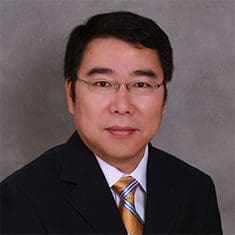
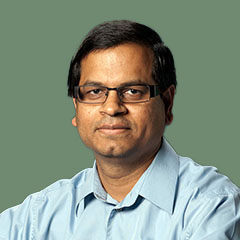
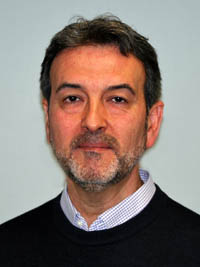
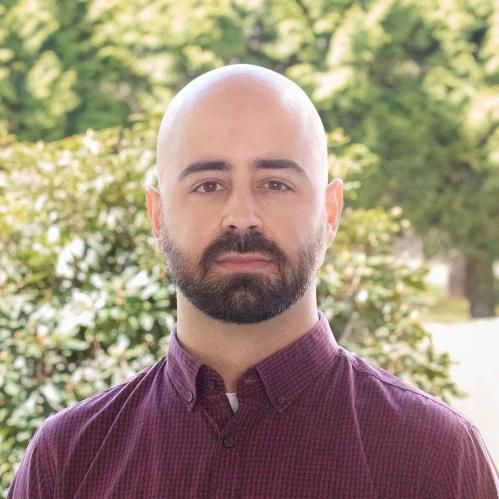
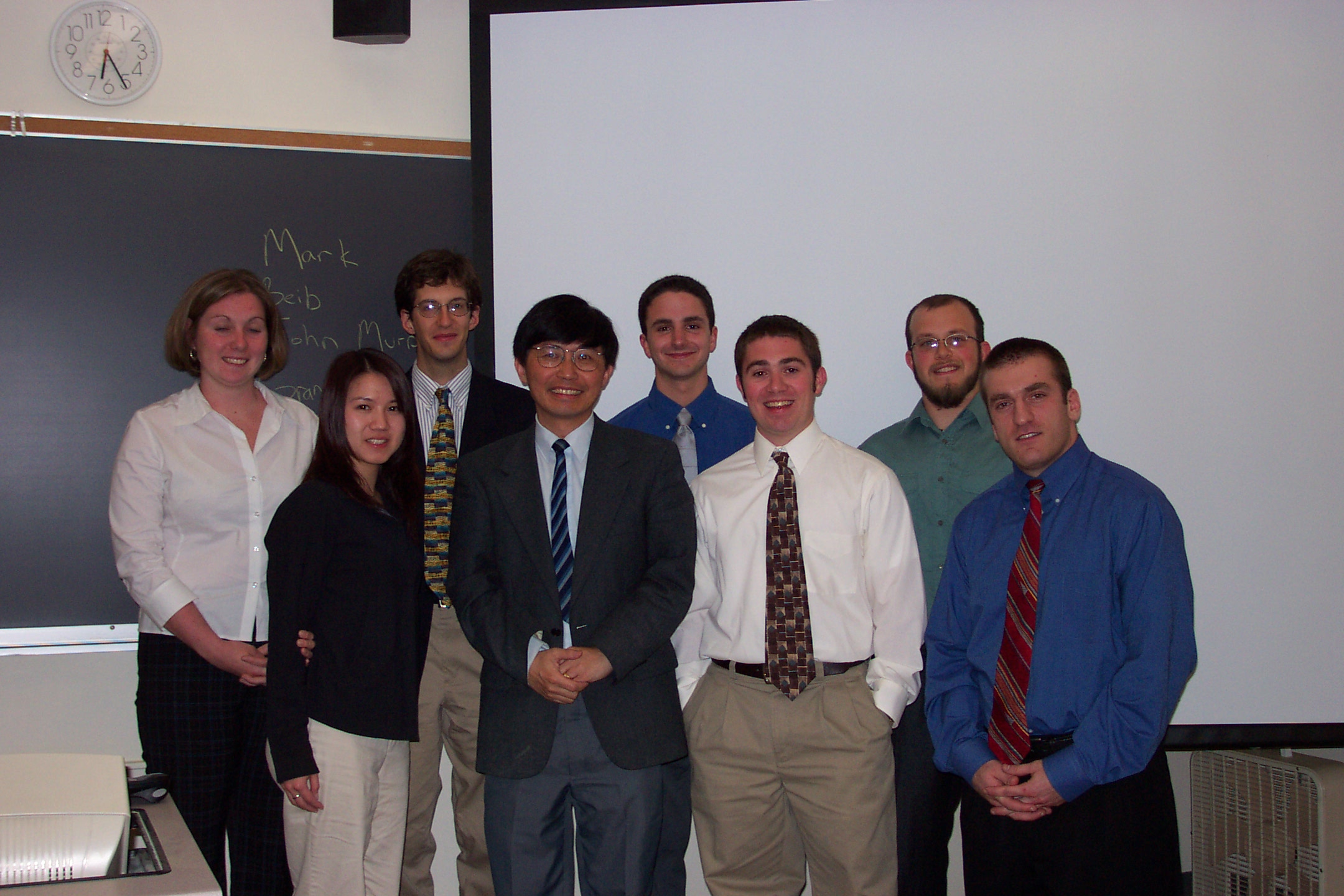
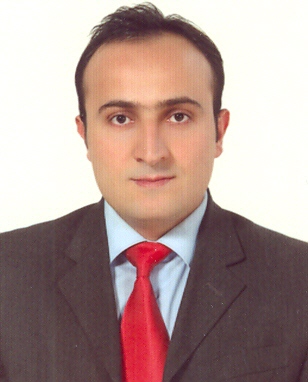
Yun Raymond Fu is the COE Distinguished Professor of Electrical and Computer Engineering at Northeastern University, with a joint appointment in the Khoury College of Computer Sciences. His research focuses on Artificial Intelligence, Machine Learning, Computer Vision, and Big Data Analytics, leading the SMILE Lab. He holds a PhD from the University of Illinois at Urbana-Champaign and joined Northeastern in 2012. His work spans anomaly detection, video analysis, and multimodal learning, with over 200 publications in top journals and conferences. Education: PhD in Electrical and Computer Engineering, University of Illinois, 2008. Research Interests: Machine Learning, Computer Vision, Pattern Recognition, Deep Learning, and Cyber-Physical Systems. His lab develops algorithms for video anomaly detection, social media analytics, and domain adaptation. Awards: Includes 7 Young Investigator Awards, 12 Best Paper Awards, and fellowships from IEEE, IAPR, AAAS. Recently recognized as a AAAI Fellow and recipient of the Edward J. McCluskey Technical Achievement Award (2024). Labs & Entrepreneurship: Founded AI startup Giaran (acquired by Shiseido in 2017). SMILE Lab explores cutting-edge AI applications in healthcare, autonomous systems, and multimedia.
Hirokazu Kato is a Professor at Kyoto University's Graduate School of Informatics, Department of Applied Mathematics and Physics. He has held academic positions at multiple institutions including Osaka University (PhD 1996), Hiroshima City University (1999-2003), and Nara Institute of Science and Technology (2003-2007). His research spans augmented and virtual reality, human-robot interaction, computer graphics, and healthcare technology. Kato has collaborated extensively with institutions like Chuo University and Nagoya University. Key research areas include AR/VR applications in social interaction, medical training, and industrial automation. He has developed systems for pain relief via robotic touch, AR-enhanced job interview training, and mixed-reality educational platforms. Over 217 publications since 1989 reflect his contributions to fields like near-eye display optimization, gesture recognition, and multimodal interaction design. Notable projects include: Augmented Reality face filters for social anxiety mitigation Huggable robots with intra-hug gesture modeling AR-based physical therapy systems using patient-specific motion simulation General software frameworks for AR industrial tasks His work bridges technical innovation with human-centric applications, emphasizing real-world usability across education, healthcare, and manufacturing domains.
Tung Kieu is a Tenure Track Assistant Professor in the Department of Computer Science at Aalborg University (Denmark), affiliated with The Technical Faculty of IT and Design and the Daisy Center for Data-intensive Systems. His research focuses on data engineering, time series analysis, anomaly detection, and machine learning applications in traffic forecasting and smart systems. Education: Ph.D. in Computer Science (Awarded May 2021). Research interests include time series forecasting, traffic modeling, robust autoencoder architectures for anomaly detection, and spatio-temporal data analysis. His work contributes to UN Sustainable Development Goals related to smart cities and infrastructure. Recent publications explore bias mitigation in text-video retrieval (BiMa), topology-aware traffic forecasting (TEAM), and stochastic routing in uncertain road networks. His frameworks emphasize lightweight algorithms (LightTS), causal relational learning, and continual calibration for quantized models (QCore). Collaborations involve international teams in data management and AI, with notable work on ensemble methods, explainable AI, and transfer learning in smart building systems.
Ge Jin is an Associate Dean of Graduate Studies and Professor of Computer Information Technology and Graphics at Purdue University Northwest's College of Technology. His research focuses on computer graphics, virtual reality, medical visualization, and serious games. He has led federally funded projects including NSA/NSF grants and industry-sponsored initiatives. Education: D.Sc. in Computer Science (George Washington University) M.S. in Computer Science (Seoul National University) B.S. in Computer Science (Peking University) Research Interests: Jin’s work spans virtual reality applications in education and healthcare , cybersecurity training through games , and medical visualization systems . His projects integrate technologies like VR, game engines, and machine learning for practical solutions in safety education, digital manufacturing, and disaster management. He emphasizes experiential learning through immersive environments and interdisciplinary collaboration. Recent Trends in Publications: His recent work (2018-2020) highlights cybersecurity education via games, VR-based training modules, and NLP-driven health informatics. Earlier research includes medical visualization tools for surgery and disaster management systems leveraging 3D modeling and cluster computing. Awards & Recognition: Teaching Incentive Program Award (Purdue University Northwest) Chanute Prize (Society of Innovators of Northwest Indiana) Outstanding Faculty for Undergraduate Education (College of Technology) Grants & Advising: Jin has secured over $2M in grants including NSF SFS Expanding the Pipeline and NSA Curriculum Development grants. He advises teams on cybersecurity game development and VR lab projects, fostering collaborations across departments and industries. Labs & Teams: His work involves interdisciplinary teams working on VR safety simulations, medical visualization platforms, and cybersecurity education tools. Current efforts focus on scaling VR training modules for K-12 and higher education audiences.
William (Bill) Lidinsky is an Industry Professor of Information Technology and Management at Illinois Institute of Technology's College of Computing. He serves as Director of the School of Applied Technology and Interim Director of the Center for Cyber Security and Forensics Education. He is also Graduate Adviser and leads the Computer Security and Forensics Laboratory. His research focuses on computer networking, security, forensics, vulnerability testing, and steganography. He has held significant IEEE roles, including chairing the IEEE 802.1 Standards Committee from 1980-1999, where he developed the Spanning Tree protocol used globally in Internet switches. Education: M.B.A., University of Chicago M.S.C.E., Illinois Institute of Technology B.S.E.E., Illinois Institute of Technology His professional affiliations include IEEE and ACM. He has been recognized with the University Teaching Award. Key projects include contributions to Ethernet and WiFi standards, and he holds patents like the Metropolitan Area Network Arrangement (1990) and Digital Communication Network Architecture (1988). His work bridges academic research with industry standards development, emphasizing practical cybersecurity solutions and network infrastructure innovation.
Dr. Le Gruenwald is the David W. Franke Professor and Samuel Roberts Noble Foundation Presidential Professor at the School of Computer Science, University of Oklahoma. She also served as Program Director for Data Management Systems at the National Science Foundation (NSF) and held roles including Director of the University of Oklahoma's School of Computer Science. Her academic journey includes a PhD from Southern Methodist University (1990), an M.S. from the University of Houston, and a B.S. in Physics from the University of Saigon, Vietnam. Research Interests: Her work focuses on Database Management Information Privacy & Security Mobile/Distributed Databases Data Mining Quantum Computing Applications in Databases Outlier Detection in Data Streams Key Projects: Includes NSF-funded research on GPU-accelerated spatial data processing, cloud query optimization, and big data hubs. Notable projects: "Spatial Data Management on GPUs" (2013), "Big Data Innovation Hub for the South" (2015), and quantum data science initiatives (2023). Awards: 2012 NSF Directorate Recognition 2007 Distinguished Alumnus Award (SMU) 2009 ACM Recognition Award 2016-2017 Semantic Big Data Workshop Leadership Advising & Grants: Oversees NSF grants totaling millions, focusing on cyberinfrastructure, ecological forecasting, and medical data analytics. No formal student advisees listed but collaborates extensively with researchers globally. Labs & Teams: Leads initiatives in quantum database optimization, mobile-cloud systems, and GPU-accelerated spatial analytics within OU's School of Computer Science.
Dr. Saraju P. Mohanty is a Professor in the Department of Computer Science and Engineering at the University of North Texas (UNT), where he leads the Smart Electronic Systems Laboratory (SESL). He holds honorary and adjunct positions at IIIT-Naya Raipur, MNIT Jaipur, and Oriental University, Indore, in India. Education: Ph.D. in Computer Science and Engineering, University of South Florida (USF), 2003 Masters in Systems Science and Automation (AI), Indian Institute of Science (IISc), 1999 B.E. in Electrical Engineering (Honors), College of Engineering and Technology, Bhubaneswar (OUAT), 1995 Dr. Mohanty's research is centered on Smart Electronic Systems, with a strong focus on IoT, VLSI, hardware security, and healthcare applications. His work integrates machine learning, embedded systems, and nanoelectronics to develop secure and efficient solutions for smart cities, agriculture, and medical devices. He has authored over 550 peer-reviewed publications and five books, including a PROSE Award-winning textbook. His recent publications reflect a growing emphasis on AI-driven solutions for synthetic media detection, smart farming, driver monitoring, and personalized health. These works demonstrate a trend toward intelligent, edge-based systems that leverage sensor data and lightweight AI for real-time decision-making. Scientific Awards and Honors: Fulbright Specialist Award (2021) IEEE Consumer Electronics Society Outstanding Service Award (2020) IEEE-CS-TCVLSI Distinguished Leadership Award (2018) PROSE Award for Best Textbook (2016) Top 2% Scientist globally (PLOS Biology, 2019–2022) Multiple Best Paper and Best Poster Awards UNT Toulouse Scholars Award (2016–2017) President’s Scout Award, India (1988) Dr. Mohanty has supervised 3 postdocs, 18 Ph.D. students, 29 M.S. theses, and over 40 undergraduate research projects. Eleven of his advisees have received outstanding student awards. He has received multiple UNT Provost’s Thank a Teacher and Honors Day recognitions. His research has been funded by NSF, SRC, US Air Force, NIDILRR, and Mission Innovation. He has held key editorial roles, including Editor-in-Chief of IEEE Consumer Electronics Magazine and founding EiC of IEEE VLSI Circuits and Systems Letter. He is actively involved in IEEE leadership and conference organization, serving on steering committees for IEEE-iSES, ISVLSI, and OCIT. Laboratories and Teams: He directs the Smart Electronic Systems Laboratory (SESL) at UNT, which focuses on cutting-edge research in IoT, edge computing, hardware security, and smart healthcare. The lab fosters interdisciplinary collaboration and has produced numerous award-winning student projects and publications.
Dr. José Manuel Claver Iborra is a Full Professor at the Department of Computer Science, School of Engineering (ETSE-UV), University of Valencia. He holds a PhD in Computer Science (Parallel and Distributed Computing program) from the Technical University of Valencia and an MSc in Physics (specialized in Electronics and Computer Science) from the University of Valencia. As an IEEE Senior Member, he focuses on cloud computing, video coding, parallel/distributed systems, reconfigurable computing, and network protocols for real-time applications. Current Research: Cloud-based video encoding, GPU acceleration for DNA analysis, FPGA-based network protocols, and indoor localization systems Academic Leadership: Coordinator of the UV-Tirant node in the Spanish Supercomputing Network (RES) His recent publications analyze GPU-based motion estimation, heterogeneous computing for video standards (H.264/AV1), and QoS scheduling algorithms. He supervises PhD and Master's theses on sensor networks, FPGA programming platforms, and parallel applications. Scientific Awards IEEE Senior Member He has directed funded projects on cloud infrastructure, distributed video processing, and reconfigurable systems since the 1990s.
ROI MENDEZ FERNANDEZ is a Professor at the University of Santiago de Compostela, affiliated with the Department of Communication Sciences within the Faculty of Communication Sciences. He is also part of the Institute of Studies and Development of Galicia (IDEGA) and the Audiovisual studies research group focused on audiovisual communication technologies. His academic career includes a doctoral thesis in 2017 titled Advanced visualization and interaction applied to virtual scenarios , supervised by Dr. Julian C. Flores González and Dr. Enrique Castelló Mayo. His research interests center on virtual TV set technologies , mixed reality applications in education , motion capture systems , and cloud-based educational platforms . Recent work explores the viability of tools like Cloudclass in primary education, telepresence in art education, and benchmarking human pose estimation solutions for virtual television. Notable contributions include developing distributed virtual TV architectures, cyclorama illumination calibration, and low-cost sensor integration for natural interaction systems. His projects often bridge academic research with practical applications in media production and educational technology. He actively collaborates with the COGRADE research group on computer graphics and data engineering.
Hwa Chang is a tenured Associate Professor in the Department of Electrical & Computer Engineering at Tufts University , where he has been a faculty member since 1987. He directs the Tufts Wireless Lab and oversees the Computer Engineering Program . His research focuses on wireless communications, sensor networks, distributed computing, and engineering education. Education: Ph.D. in Electrical and Computer Engineering (Drexel University, 1987), M.S. in Computer Science (Montana State University, 1983), B.S. in Engineering Science (National Cheng Kung University, 1977). Research Interests: Wireless Sensor Networks (WSNs), energy-efficient routing, mobile ad hoc networks, grid computing, and network security. Notable projects include the Wireless Grid initiative and WISeNET , exploring resource-sharing in dynamic environments. Awards: Outstanding Alumni Award (National Cheng-Kung University, 2005) Excellent Leadership and Service Award (New England Association of Chinese Professionals, 2005) $600K NSF grant for Virtual Markets research (2002-2004) Advising & Grants: Advised ~150 master students and 160 senior design projects Ph.D. graduates include Amlir Davis (2013), Na Wang (2009) Recipient of grants from BBN, NSF, and industry partnerships like A$W Technology Corp. Professional Activities: Leadership roles in New England Association of Chinese Professionals, IEEE, and global science organizations. Editor-in-chief for multiple conference proceedings.
Glenn Van Wallendael is an Associate Professor at Ghent University's Faculty of Engineering and Architecture , affiliated with the Department of Electronics and Information Systems . He leads research in video coding, digital watermarking, and immersive media technologies. Academic Focus: Video compression standards (HEVC, H.266), AI for multimedia, virtual reality Key Collaborations: iMinds, imec, European research consortia Research Interests include: Video compression algorithms (HEVC, SVC, MV-HEVC) Digital watermarking for copyright protection Machine learning applications in image/video analysis Quality of Experience (QoE) in immersive environments Recent Publications (2024-2025) show expertise in: Deepfake detection using vision transformers Medical image landmarking tools Lightweight geometric approximation methods AI-driven video quality assessment Doctoral Mentorship includes supervising: 2021: Hannes Mareen (video forensics) 2020: Vasileios Avramelos (light field coding) 2017: Johan De Praeter (adaptive video encoding)
John Regehr is a Professor in the School of Computing at the University of Utah. His research focuses on compilers, formal verification, software testing, and embedded systems. He has contributed to tools like Alive2, YARPGen, and ARMor, which address compiler correctness, fuzz testing, and secure isolation. His work emphasizes uncovering compiler bugs, optimizing low-level code, and ensuring system reliability. Key collaborations include Eric Eide, Yang Chen, and Nuno P. Lopes. His articles span compiler verification, fuzzing techniques, and embedded system safety, reflecting a strong commitment to both academic rigor and practical impact. Research interests include compiler optimization validation, undefined behavior analysis, and program synthesis. His work on peephole optimizations and formal methods has influenced LLVM and industry practices. He also explores scheduling algorithms for real-time systems and memory safety in constrained environments like TinyOS. Notable contributions include foundational papers on compiler bug detection (e.g., 'Finding and understanding bugs in C compilers') and tools like Minotaur for SIMD optimization. His lab's work often bridges theory and practice, with applications in security, performance, and embedded software reliability.
Eva Rodríguez is an Associate Professor in the Department of Network Engineering at Pompeu Fabra University's School of Engineering, specializing in cybersecurity, digital rights management, and IoT security. With over 50 publications since 2003, she has established herself as a leading researcher in secure network architectures and privacy-preserving technologies. Her research focuses on applying machine learning techniques to cybersecurity challenges, particularly in mobile and IoT environments. Rodríguez has published extensively on deep learning for intrusion detection, privacy protection mechanisms, and security frameworks for next-generation networks (5G/6G). She has also made significant contributions to RISC-V processor security through the Horizon Europe Vitamin-V project. Recent work shows a strong emphasis on federated learning approaches for privacy preservation in fog computing environments and the development of security management architectures for resilient wireless ecosystems. Her publication record demonstrates consistent leadership in both theoretical frameworks and practical implementations of security solutions. Among her notable contributions are comprehensive surveys on deep learning techniques for mobile network security and machine learning methods for IoT privacy protection, which have become important references in these rapidly evolving fields. As a research supervisor, she has mentored several doctoral students including Norma Gutiérrez and Beatriz Otero, who now appear as co-authors on her recent publications. Her collaborative work extends across multiple European research projects, demonstrating strong integration within the international cybersecurity research community.
Prof. Dr. Ünal Çavuşoğlu is an Associate Professor at the Department of Software Engineering, Faculty of Computer and Information Sciences, Sakarya University. With a doctorate in chaos-based encryption algorithms (2016) and a master's degree comparing network simulation tools (2014), his research focuses on cybersecurity, machine learning, and chaos theory. He has contributed extensively to intrusion detection systems, IoT security, and cryptographic protocols. Education: Doctorate (2016), Master's (2014), and Bachelor's (2011) in Computer Engineering. Research Interests: Cybersecurity frameworks, machine learning adaptation for threat detection, chaotic encryption, and IoT communication protocols. Recent Work: 2025 publications on homomorphic encryption and LSTM-based intrusion detection demonstrate cutting-edge applications of deep learning in security domains. His 2019-2024 publications reveal a trajectory from foundational chaos theory to applied IoT and cloud security solutions. Key methodologies include genetic algorithms, fractional calculus, and hybrid encryption systems.
Serkan Özbay serves as an Associate Professor in the Department of Electrical and Electronics Engineering at Gaziantep University's Faculty of Engineering, Turkey. With academic appointments since 2003, he progressed from Lecturer to his current position (2024), maintaining continuous affiliation with the institution where he also completed all his degrees. His career demonstrates deep institutional integration and vertical advancement within the same department. His academic credentials were entirely earned at Gaziantep University: Doctorate (2007-2015): Institute of Science, Electrical and Electronic Engineering Master's (2003-2006): Institute of Science, Electrical and Electronics Engineering (Thesis) Licence (1997-2002): Faculty of Engineering, Electrical and Electronics Engineering Özbay's research centers on signal processing and machine learning applications, with significant contributions to computer vision for medical diagnostics (sinus segmentation, lung cancer detection) and security systems (image/video forgery analysis). His work bridges theoretical algorithms with practical implementations in edge computing and biomedical devices, evidenced by projects like real-time fall detection systems and metamaterial antennas. Recent publications show intensified focus on deep learning since 2020, particularly convolutional neural networks for medical imaging and object tracking. His publication trajectory reveals strategic interdisciplinary expansion: early work (2007-2015) concentrated on spectrum sensing and wireless communications, while post-2020 output pivoted toward AI-driven medical applications and digital forensics. Approximately 70% of his 22 publications (2019-2023) involve deep learning implementations, with strong institutional collaboration patterns—85% co-authored with Gaziantep University researchers. Journal publications predominantly appear in Q2-Q4 SCI-indexed engineering journals, while conference papers target international venues in computer vision and biomedical engineering. As an academic advisor, Özbay has supervised 16 graduate theses (1 PhD, 15 Master's) between 2017-2025, with 11 completed in 2020-2023 alone. Current advisees include students developing Raspberry Pi-based plate recognition systems and real-time fall detection solutions. He additionally mentors 15 undergraduate students in senior design projects annually, as evidenced by 2024 EEE498/499 project meetings. Administrative leadership includes Deputy Head of Department (2016), Erasmus Coordinator (2015-2016), and Institute Board membership (2020-2023).