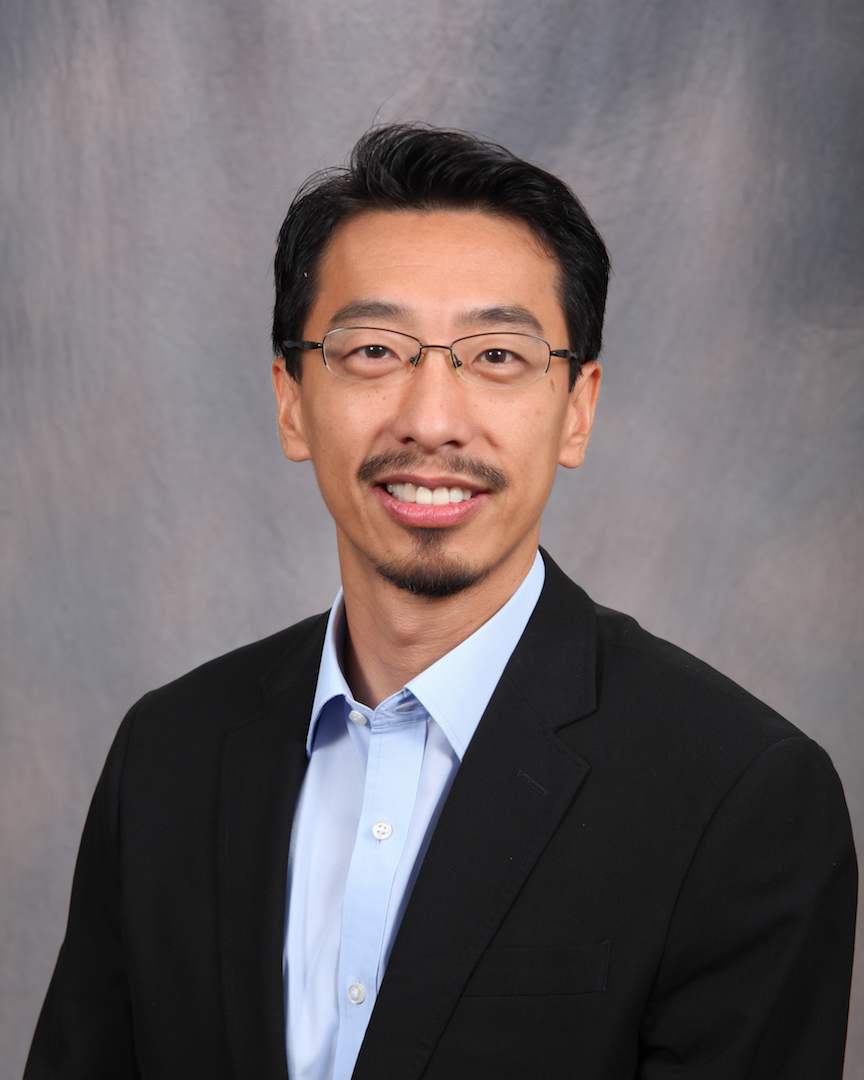
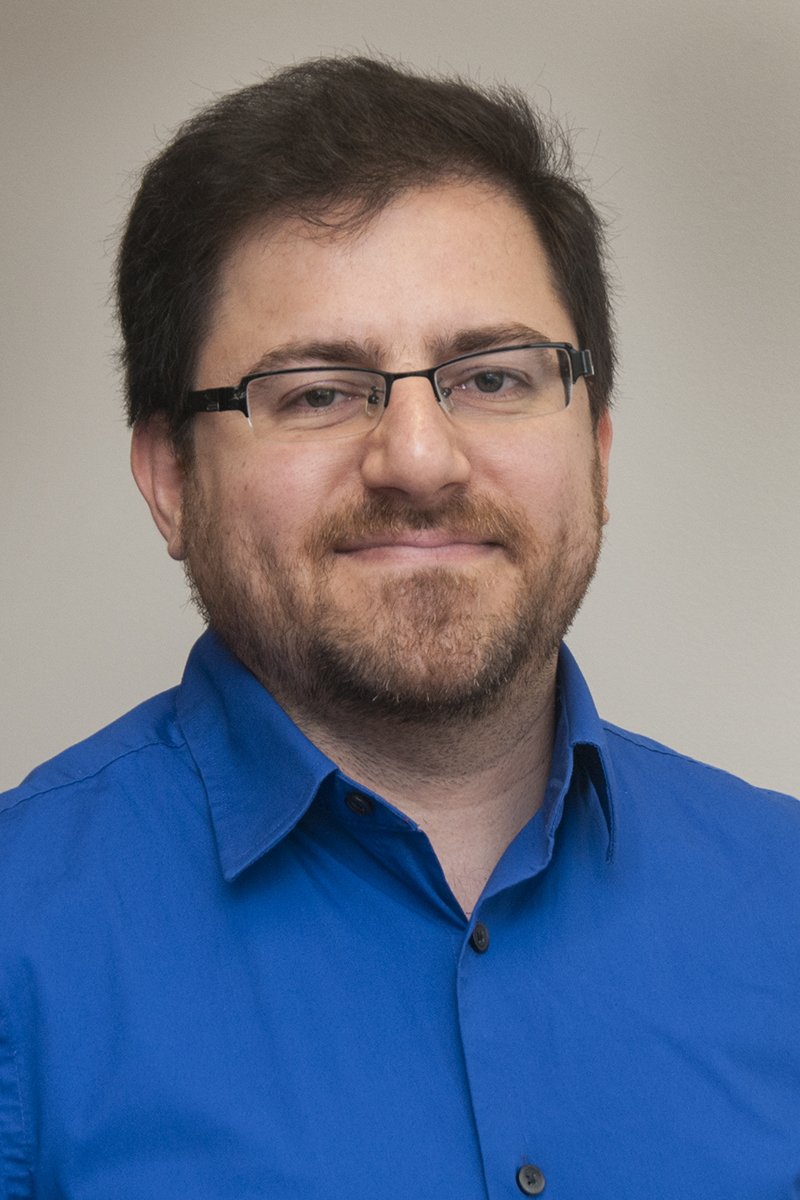
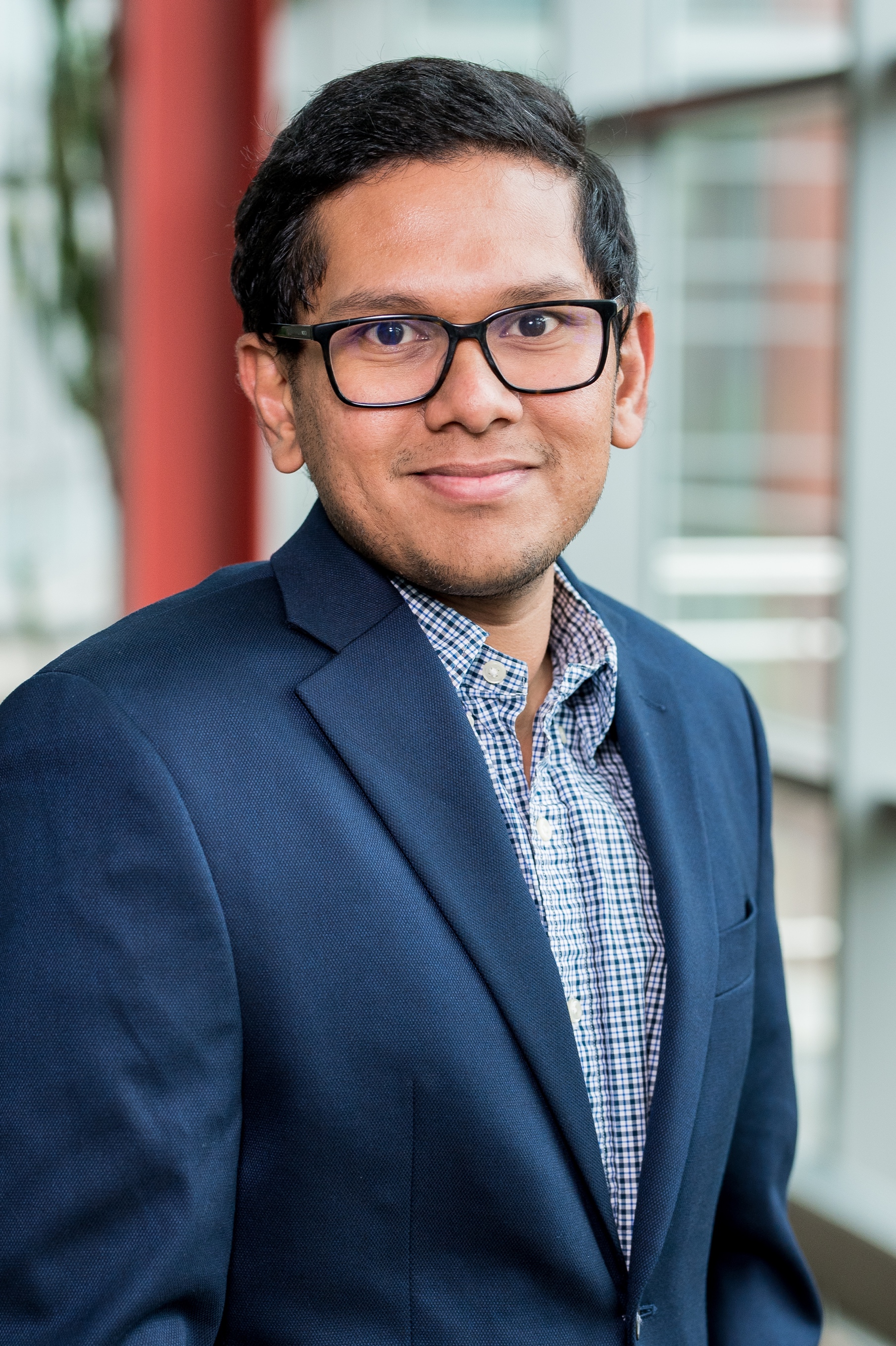
Dr. Chao Tian is an Associate Professor in the Department of Electrical and Computer Engineering at Texas A&M University, part of the College of Engineering. He holds a Ph.D. from Cornell University (2005) and a B.E. from Tsinghua University (2000). His research focuses on information theory, distributed storage systems, coding theory, and machine learning applications, including large language models (LLMs) and privacy-preserving techniques like steganography and private information retrieval (PIR). He has received notable awards, including the 2017 IEEE Jack Wolf ISIT Best Student Paper Award and the 2014 IEEE ComSoc DSTC Best Paper Award. Dr. Tian’s work bridges theoretical foundations and practical applications, such as optimizing storage codes for distributed systems, developing secure PIR protocols, and exploring LLMs in energy and steganographic contexts. His group has pioneered methods for variable-order Markov chain modeling with transformers and designed quantization techniques for perceptual quality. Recent activities include a faculty development leave at MIT/Harvard and delivering distinguished lectures globally on AI and information theory. He advises students on cutting-edge topics like LLM-based steganography and diffusion models. His publications span journals like IEEE Transactions on Information Theory and conferences such as NeurIPS and ISIT, with a focus on coding theory, privacy, and machine learning. He has also contributed to open-source tools like the CAI toolbox for investigating information-theoretic limits. Current projects include optimizing cryptocurrency mining in energy markets and advancing federated learning with adversarial robustness.
Marcus Botacin is an Assistant Professor in the Department of Computer Science & Engineering at Texas A&M University (TAMU), USA. Previously, he held positions as Visiting Assistant Professor (2022-2024) and Lecturer at the Federal University of Paraná (Brazil). His research focuses on malware analysis, hardware-assisted security, and antivirus technology. He earned his Ph.D. in Computer Science from UFPR (2021), M.Sc. from UNICAMP (2017), and B.Sc. in Computer Engineering from UNICAMP (2015). Education: Ph.D., Computer Science, Federal University of Paraná, Brazil (2021) M.Sc., Computer Science, University of Campinas, Brazil (2017) B.Sc., Computer Engineering, University of Campinas, Brazil (2015) Research Interests: Botacin's work addresses challenges in malware detection (static/dynamic methods, sandboxing), hardware-enhanced security mechanisms (e.g., branch monitoring), and antivirus internals. He emphasizes practical solutions and ethical considerations in cybersecurity, advocating for culturally aware threat models (e.g., Brazilian financial malware studies). Publications & Trends: His recent work explores adversarial ML attacks on malware detectors, HPC-based detection frameworks, and automated malware generation risks. He frequently publishes in top venues like ACM CCS, USENIX Security, and IEEE TDSC. Awards: Top-3 Best Ph.D. Thesis in Computer Security (Brazilian Computer Society, 2022) Best PhD Thesis Award from UFPR (2022) MLSec Evasion Challenge 1st place (2021/2020) Advising & Grants: Supervises 15+ students at TAMU and leads NSF-funded projects (e.g., $523K grant for HPC malware detection frameworks). Serves on 21+ conference program committees and reviews for over 50 journals. Lab & Projects: Develops Corvus (public malware analysis sandbox) and explores hardware-accelerated AV solutions like Terminator and HEAVEN.
Thomas Pasquier is an Assistant Professor in the Department of Computer Science at the University of British Columbia, where he is affiliated with both the UBC Security & Privacy Group and the Systopia Lab. His research focuses on designing and implementing computer systems that are inherently observable and transparent, with particular emphasis on security, privacy, and system accountability. Dr. Pasquier earned his PhD in Computer Science from the University of Cambridge in 2016, following an MPhil in Advanced Computer Science from the same institution in 2012. His educational background also includes a Diplôme d'Ingénieur from Institut Supérieur d'Electronique de Paris and a Diplôme Universitaire de Technologie from Conservatoire National des Arts et Métiers. His primary research interests span Security, Intrusion Detection, Digital Provenance, Operating Systems, Distributed Systems, Data Protection, and Privacy. His work specifically addresses the design of systems with built-in observability and transparency mechanisms, focusing on provenance-based security solutions. Analysis of his recent publications reveals a consistent focus on provenance-based intrusion detection systems, with significant contributions in making these systems more practical, usable, and robust. His research also extends to eBPF technology in the Linux kernel, exploring security applications and performance optimizations. Amazon Research Award 2023 for Building Robust Provenance-based Intrusion Detection Incredible Instructor Award Dr. Pasquier has advised numerous graduate students at both UBC and the University of Bristol, where he previously held an Assistant Professor position. His students have gone on to careers at major technology companies including Amazon, Salesforce, Huawei, and Oracle Labs. He has served on program committees for prestigious conferences including ACM ASPLOS, EuroSys, USENIX Security, and ACM CCS. His research is conducted within the Systopia Lab at UBC, which focuses on systems research broadly construed, with particular emphasis on security, privacy, and performance optimization. The lab collaborates with industry partners including Amazon through the Amazon Research Awards program.
Kia Bazargan is an Associate Professor and the Leroy and Ruth Fingerson Co-op Professor at the University of Minnesota, College of Science and Engineering. He currently serves as Director of the Co-op Program and focuses on VLSI-CAD, FPGA physical design, and hybrid binary-unary computing. University: University of Minnesota School: College of Science and Engineering Department: Electrical and Computer Engineering His research emphasizes stochastic computing and unary computing, where numbers are encoded as streams of bits. He explores techniques to reduce hardware costs while maintaining efficiency, particularly for edge computing and neural network applications. Recent publications highlight his work on hybrid binary-unary computing, FPGA-based inference acceleration, and lossless compression of lookup tables. Grants from Cisco Systems and the National Science Foundation support his projects. Scientific Awards: PFI-TT Grant (2020-2024): Commercializing hybrid computing for modern applications Uniqomp NSF Grant (2020-2021) EAGER Grant (2015): Studying complex dynamical systems His lab (4-162 EE/CSci) investigates scalable computing paradigms to bridge the gap between ASICs and FPGAs in performance and energy efficiency.
Prof. Dr.-Ing. Marc Reichenbach serves as the Chair of Integrated Systems at the Institute for Applied Microelectronics and Data Technology at the University of Rostock. His office is located at Albert-Einstein-Straße 26, 18059 Rostock, Room 102 (1st floor), with contact information including telephone (0381) 498 7270 and email marc.reichenbach@uni-rostock.de. Professor Reichenbach's research focuses on the intersection of hardware design and artificial intelligence, with particular expertise in memory technologies and computing architectures. His work spans several key areas: Development of specialized computer architectures for deep learning applications Advanced VLSI design and CPU architecture Emerging memory technologies, particularly RRAM (Resistive Random-Access Memory) FPGA-based acceleration systems Hardware implementations for neural networks and AI applications Analysis of Professor Reichenbach's recent publications (2023-2025) reveals a strong focus on memory computing technologies, particularly RRAM-based systems. His work demonstrates expertise across multiple dimensions of computer architecture including ASIC design, FPGA acceleration, and novel memory systems. The publications show a clear trajectory toward implementing AI and machine learning capabilities directly in hardware, with applications ranging from edge computing to satellite systems. A significant portion of his recent work addresses the challenges of implementing neural networks using emerging memory technologies, focusing on efficiency, reliability, and performance optimization. Professor Reichenbach teaches several advanced courses including: Computer architectures for deep learning applications Project seminar Embedded Systems Advanced VLSI Design (Advanced CPU Design) His research group appears to be actively engaged in several cutting-edge projects related to hardware acceleration for AI applications, memory computing, and embedded systems design. The group collaborates on projects involving digital twins for hardware systems, real-time operating systems for heterogeneous architectures, and specialized computing systems for various applications from medical devices to drone technology.
Dharanidhar Dang serves as Assistant Professor in the Department of Computer Engineering at the College of AI, Cyber and Computing, The University of Texas at San Antonio (UTSA), where he advances hardware-centric artificial intelligence solutions through photonic and memristor technologies. Education Ph.D., Texas A&M University His research program bridges hardware innovation and biomedical applications, with primary focus on photonic computing architectures for real-time AI acceleration and memristor-based neuromorphic systems. He investigates critical challenges in hardware reliability (particularly degradation in memristor crossbars), energy efficiency in photonic accelerators, and co-design methodologies that optimize both algorithms and physical implementations. His biomedical work applies machine learning to macrophage biology, identifying predictive signatures for inflammatory diseases through computational immunology approaches. Analysis of his 2020-2025 publications reveals three dominant research trajectories: 1) Silicon photonic accelerators (P-ReTI, P-ReTiNA, SOFTONIC) targeting real-time and energy-efficient AI, 2) Memristor reliability frameworks addressing aging effects in deep learning hardware, and 3) Translational biomedical applications where machine learning deciphers macrophage behavior in inflammatory bowel disease and preterm infant lung conditions. This tripartite focus demonstrates exceptional versatility across hardware engineering and life sciences.
Dong Li is an Associate Professor at the University of California, Merced , where he directs the Parallel Architecture, System, and Algorithm Lab (PASA) and co-directs the High Performance Computing Systems and Architecture Group . He co-founded Yotta Labs Inc. and previously held research roles at Oak Ridge National Laboratory (2011-2014) and a PhD from Virginia Tech. Research Interests: Dong's work focuses on High performance computing (HPC) Memory heterogeneity and non-volatile memory Systems for machine learning and AI Fault tolerance in large-scale systems His innovations include heterogeneous memory optimization for recommendation models and GNNs, CXL memory integration, and persistent memory debugging tools. Recent Publications highlight advancements in CXL-based inter-node communication Memory tiering for laminography reconstruction ML-guided memory optimization for DLRM and GNN Fault tolerance benchmarks and error analysis Awards & Recognition: NSF CAREER Award (2016) Oracle Research Award (2022) ASPLOS Distinguished Artifact Award (2021) Virginia Tech Early Career Alumni Award (2023) Advising & Funding: Dong has mentored 22 students (8 PhD, 6 Master’s, 8 undergraduates) and secured grants from NSF, NVIDIA, Meta, and national labs (Argonne, Lawrence Berkeley, Lawrence Livermore). Collaborations include Microsoft (DeepSpeed, Intel PMDK), AMD, SK Hynix, and Intel/MICRON hardware donations.
Guido Masera is a Full Professor at the Department of Electronics and Telecommunications (DET) at the Polytechnic University of Turin, where he has been actively involved in teaching and research for over two decades. He serves as a Member of the Board of Directors, Member of the GEDI Observatory for Gender Equality, Diversity and Inclusion, and Member of the Permanent University Observatory for monitoring the academic supply chain. His research interests span across channel decoders, circuits for communications, cryptography, deep learning, digital integrated circuits, field programmable gate arrays (FPGA), and hardware design. His work focuses on VLSI architectures for image and video coding, digital architectures for error correcting codes, application specific approximate computing, VLSI architectures for machine learning, digital architectures for bio-inspired processing, digital architectures for post-quantum cryptography, bio-inspired electronics for robotics and biomedical applications, RISC-V extensions and hardware accelerators, and circuit architectures for efficient machine learning and artificial intelligence. His recent publications (2025) demonstrate a strong focus on RISC-V architecture, particularly in the context of cryptographic implementations, hardware security, and post-quantum cryptography. His research group VLSILAB is actively engaged in cutting-edge research in hardware security, efficient processor design, and specialized computing architectures. Among his notable recognitions are the Premio Francesco Carassa awarded by the Telecommunications and Information Technologies Group Association (gtti) in 2010, and his recognition as a Fellow of the Institute of Electrical and Electronics Engineers (IEEE) since 2007. He also serves as an Associate Editor for several prestigious journals including ELECTRONICS (2019-present), IEEE TRANSACTIONS ON CIRCUITS AND SYSTEMS (2015-2019), and IET CIRCUITS, DEVICES & SYSTEMS (2013-2016). Professor Masera has advised numerous PhD students working on advanced topics in VLSI design, post-quantum cryptography, hardware accelerators, and machine learning implementations. His current research projects include ISOLDE (2023-2026) and TRISTAN (2022-2025), both EU-funded projects focused on RISC-V technology and domain-specific ecosystems. He leads the VLSILAB research group at the Department of Electronics and Telecommunications, which focuses on cutting-edge research in VLSI architectures, hardware security, and specialized computing systems. The group collaborates with industry partners and participates in major European research initiatives.
Mahdi Fazeli is an Associate Professor at the School of Information Technology, Halmstad University, Sweden, specializing in hardware security and trust, energy-efficient computing, and embedded and cyber-physical systems. His academic journey began with a Ph.D. in Computer Engineering from Sharif University of Technology, Iran, in 2011. His career progression includes positions as Associate Professor at Bogazici University (2019-2021) and Iran University of Science and Technology (2016-2019), and Assistant Professor at the same institution (2011-2016). His research interests focus on hardware security and trust, reliable VLSI circuits and systems, energy-efficient computing, and dependable embedded systems. His work bridges the gap between theoretical security concepts and practical implementations in real-world systems, particularly in IoT and embedded environments. He has established himself as a leading researcher in Physical Unclonable Functions (PUFs), hardware trojans detection, and energy-efficient security solutions for resource-constrained devices. His publication record shows a clear progression and deepening expertise in hardware security, with recent work focusing on cutting-edge applications in edge computing, vehicular networks, and IoT security. His 2023-2025 publications demonstrate significant contributions to magnetic memory-based security primitives, anomaly detection systems, and energy-efficient security mechanisms. Throughout his career, Fazeli has led multiple research initiatives including the Dependable Systems and Architecture Lab (DSA) and the Networked and Embedded Systems Lab at Iran University of Science and Technology. His leadership extends to heading the Hardware Group and serving as Vice Chair for Educational Affairs, demonstrating his commitment to both research excellence and academic administration.
Dinesh Manocha is a Distinguished University Professor of Computer Science at the University of Maryland, with joint appointments in the Department of Electrical and Computer Engineering and the University of Maryland Institute for Advanced Computer Studies (UMIACS). He is also affiliated with the Maryland Robotics Center and the Institute for Systems Research. His educational background includes a Ph.D. in Computer Science from the University of California at Berkeley (1992) and a B. Tech in Computer Science and Engineering from the Indian Institute of Technology, Delhi, India (1987). Professor Manocha's research spans multiple domains with significant emphasis on: Computer Graphics and Visualization Robotics and Motion Planning Virtual and Augmented Reality Systems Geometric Computing Algorithms AI Applications for Autonomous Systems High Performance Computing His extensive publication record shows consistent innovation in multi-agent navigation, collision avoidance algorithms, and applications in virtual environments. Recent work focuses on trajectory prediction for autonomous vehicles and physics-based simulation for immersive experiences, with algorithms integrated into industry-standard systems like ROS (Robot Operating System). Among his numerous honors, Professor Manocha is recognized as: ACM, IEEE, AAAS, and AAAI Fellow Member of the IEEE VGTC Virtual Reality Academy Recipient of the Pierre Bézier Award from the Solid Modeling Association University of Maryland Distinguished University Professor Multiple best paper awards across premier conferences He has supervised 54 PhD students throughout his career and currently advises numerous graduate researchers. His research has attracted significant funding from NSF, Google, Amazon, Facebook, and industry partners. Notably, he co-founded Impulsonic, a company developing physics-based audio simulation technologies acquired by Valve Corporation in 2016. Professor Manocha leads the GAMMA research group, which continues to advance geometric algorithms with applications across multiple disciplines.
Prof. P. (Paris) Avgeriou is a full professor of Software Engineering at the Faculty of Science and Engineering , University of Groningen (RUG). His research focuses on software architecture , technical debt management , and self-adaptive systems through empirical studies and industrial collaborations. His work explores architectural decision-making using financial investment models, machine learning for debt detection, and dependency analysis in software systems. Recent projects include SDK4ED for energy-efficient embedded systems and DebtViz for debt visualization. Key article trends include technical debt lifecycle analysis (2023-2025), self-adaptive systems (2025), and modular architecture challenges (2024). Keywords span Computer Science , Machine Learning , and Software Systems . As an ancillary academic activity , he serves as editor for the Journal of Systems and Software (Elsevier). His collaborations extend to institutions in the Netherlands, Brazil, and Italy, with research outputs appearing in IEEE and ACM venues.
Charith Mendis is an Assistant Professor in the Siebel School of Computing and Data Science at the University of Illinois at Urbana-Champaign, with joint appointments in the Department of Computer Science, Electrical and Computer Engineering, and the Coordinated Science Lab. His research focuses on the intersection of compilers, program optimization, and machine learning systems. Dr. Mendis received his educational background from prestigious institutions: Ph.D. in Computer Science from Massachusetts Institute of Technology (2020) S.M. in Computer Science from Massachusetts Institute of Technology (2015) B.Sc. in Electronics and Telecommunication Engineering from University of Moratuwa (2013) His primary research interests center around compiler technology and machine learning systems. Mendis leads the ADAPT lab at UIUC, where his team works on creating high-performance ML optimization techniques and automated compiler construction using machine learning and formal methods. His work bridges the gap between traditional compiler design and modern machine learning approaches, with applications in tensor compilers, graph neural networks, and sparse computation. He has developed novel frameworks for optimizing deep learning workloads, verification of compiler transformations, and performance modeling for emerging hardware architectures. Mendis has established himself as a leading researcher in compiler optimization for machine learning systems, with a particular focus on tensor compilers, graph neural networks, and performance modeling. His recent publications demonstrate increasing sophistication in combining formal methods with machine learning techniques to solve challenging problems in compiler optimization and verification, with multiple papers accepted at top-tier conferences including OOPSLA, PLDI, POPL, and SIGMOD. His notable scientific achievements include: Google ML and Systems Junior Faculty Award (2025) DARPA Young Faculty Award (2024) NSF CAREER Award (2024) Distinguished Paper Award at POPL (2025) William A. Martin Thesis Award for Outstanding SM thesis, MIT (2015) Multiple teaching excellence awards at UIUC (2021-2023) Dr. Mendis actively mentors students through the ADAPT lab, offering research opportunities for undergraduates, master's students, and PhD candidates interested in compiler technology and machine learning systems. His research is supported by significant funding from the ACE center (part of JUMP 2.0), National Science Foundation (NSF), DARPA, IIDAI, and industry partners including Google, Intel, Amazon, and Qualcomm. He teaches advanced courses in compiler construction and machine learning for compilers. He leads the ADAPT lab at UIUC, which focuses on developing advanced compiler technologies for modern machine learning workloads. The lab maintains active collaborations with industry partners and has established itself as a leading research group in compiler optimization for AI systems. Current projects include tensor compilers, graph neural network optimization, and automated verification of deep learning systems.
Eric P. Xing is a Professor at the Language Technologies Institute of Carnegie Mellon University , and currently serves as President of the Mohamed bin Zayed University of Artificial Intelligence . His work bridges machine learning methodology with computational biology and large-scale AI systems . Research Focus: Developing machine learning theory for high-dimensional, dynamic data Building foundation models for biology (AIDO, scLong, ProteinAligner) Designing scalable AI architectures (Pollux, LLM360, PAN) Advancing interpretable and controllable NLP systems Scientific Leadership: Founded the SAILING Lab at CMU Co-chaired ICML 2014 and ICML 2019 Recipient of the Jay Lepreau Best Paper Award (OSDI 2021) Education & Mentorship: Advises PhD students across machine learning and computational biology Alumni include faculty at ETH Zurich, University of Chicago, and UC San Diego
Kristin Y. Pettersen is a Professor at the Department of Technical Cybernetics, Norwegian University of Science and Technology (NTNU), and a Professor II at the Norwegian Defence Research Institute (FFI). She is a co-founder of Eelume AS, a company specializing in underwater robotics solutions. Education: Civil Engineering and PhD in Technical Cybernetics from NTNU Her research focuses on advanced control systems for marine and underwater vehicles, particularly snake robots and autonomous underwater vehicles (AUVs). Key areas include formation control, path following, adaptive guidance algorithms, and safety-critical control in dynamic environments. Recent work explores machine learning integration and energy-shaping techniques for robust locomotion. Publications highlight trends in Model Predictive Control (MPC) , Collision Avoidance , and Task-Priority Operational Space Control for redundant and underactuated systems. Her work bridges theoretical control theory with practical applications in marine robotics, including autonomous inspections and cooperative transport. Labs/Teams: Collaborates with NTNU's Faculty of Information Technology and Electrical Engineering and co-founded Eelume AS, advancing subsea robotic manipulation technologies.
Jovan Stojkovic is an incoming Assistant Professor at the Department of Computer Science at the University of Texas at Austin, set to join in Fall 2026. Prior to his appointment at UT Austin, he will spend a year at Meta working with the AI and Systems Co-design group. His research focuses on cloud computing and datacenters, with particular emphasis on cloud-native workloads and machine learning inference. Education: PhD in Computer Science from the University of Illinois at Urbana-Champaign, advised by Professor Josep Torrellas Undergraduate studies at the School of Electrical Engineering, University of Belgrade, Serbia, where he was recognized as the best student of the Computer Engineering and Information Theory Department every year from 2017-2020 Research Interests: Jovan's research focuses on cloud computing and datacenters , with two primary domains: Cloud-native workloads , such as microservices and serverless computing. He investigates how to co-design novel hardware platforms and software systems that deliver orders-of-magnitude improvements in performance, energy efficiency, and resource utilization for these emerging workloads. Machine Learning (ML) inference , particularly large language models (LLMs). His work addresses the challenges of ML inference through smart scheduling, workload placement, and system-level configuration tuning to reduce energy, power, and thermal overheads while maintaining performance and accuracy guarantees. Publication Trends: Jovan's publications demonstrate a strong focus on optimizing cloud infrastructure for emerging workloads. His research spans across serverless computing, microservices, and large language model inference. A clear trend emerges in his work: addressing the performance, energy efficiency, and resource utilization challenges of modern cloud workloads through innovative hardware-software co-design approaches. His most recent work shows increasing focus on LLM inference optimization, particularly in the areas of thermal management, power efficiency, and scheduling for many-adapter environments. Awards and Honors: HPCA Best Paper Award (2025) IEEE MICRO Top Picks Honorable Mention (2024) 6 patents with IBM and Microsoft on: Serverless systems, Processor overclocking in the cloud, and Energy-efficient LLM inference W. J. Poppelbaum Memorial Award (2025) for hardware and architecture innovation Mavis Future Faculty Fellowship (2024–2025) Invited to present at 11th Heidelberg Laureate Forum (2024) Kenichi Miura Award (2022) for excellence in High Performance Computing Multiple student travel grants to ISCA, MICRO, ASPLOS, and HPCA Advising and Grants: Jovan is actively seeking prospective PhD students for his research group at UT Austin. His research has been supported through collaborations with major tech companies including IBM, Microsoft, and Meta. His six patents with IBM and Microsoft demonstrate the practical impact of his research in serverless systems, processor overclocking, and energy-efficient LLM inference. His work on serverless computing (MXFaaS, EcoFaaS) and LLM inference optimization has received significant recognition in top-tier computer architecture conferences. Research Groups: During his PhD at UIUC, Jovan worked with Professor Josep Torrellas on cloud infrastructure research. He has collaborated extensively with researchers at IBM Research (particularly Hubertus Franke) and Microsoft (particularly Íñigo Goiri and Ricardo Bianchini). His upcoming position at UT Austin will establish his independent research group focused on cloud computing and datacenter systems. His year at Meta working with the AI and Systems Co-design group will further strengthen his expertise in AI infrastructure.