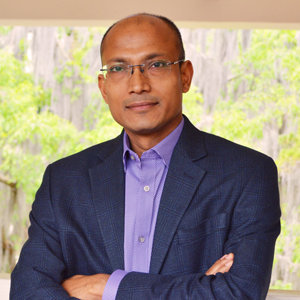
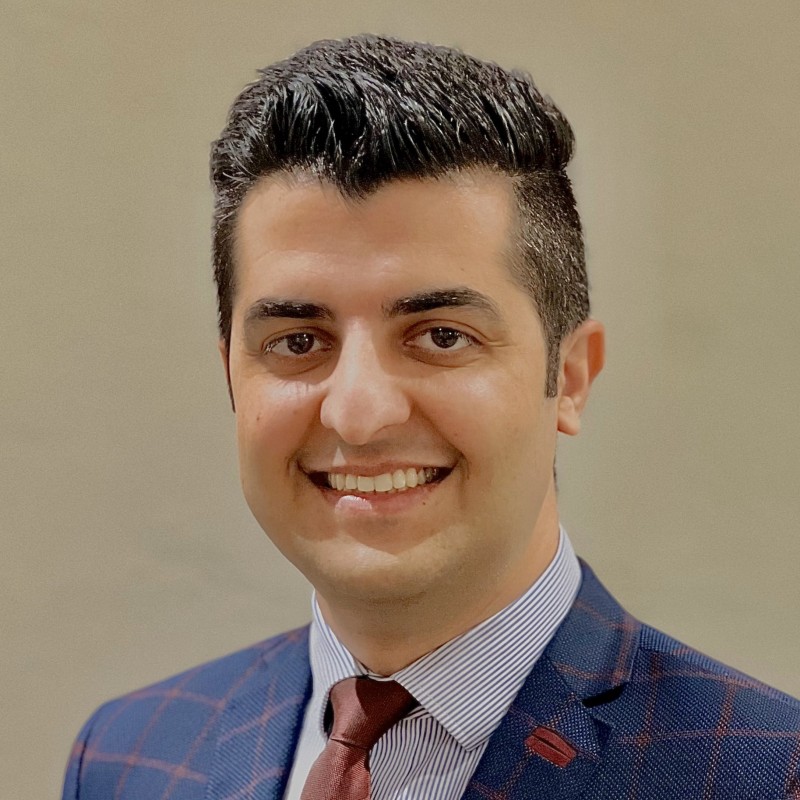
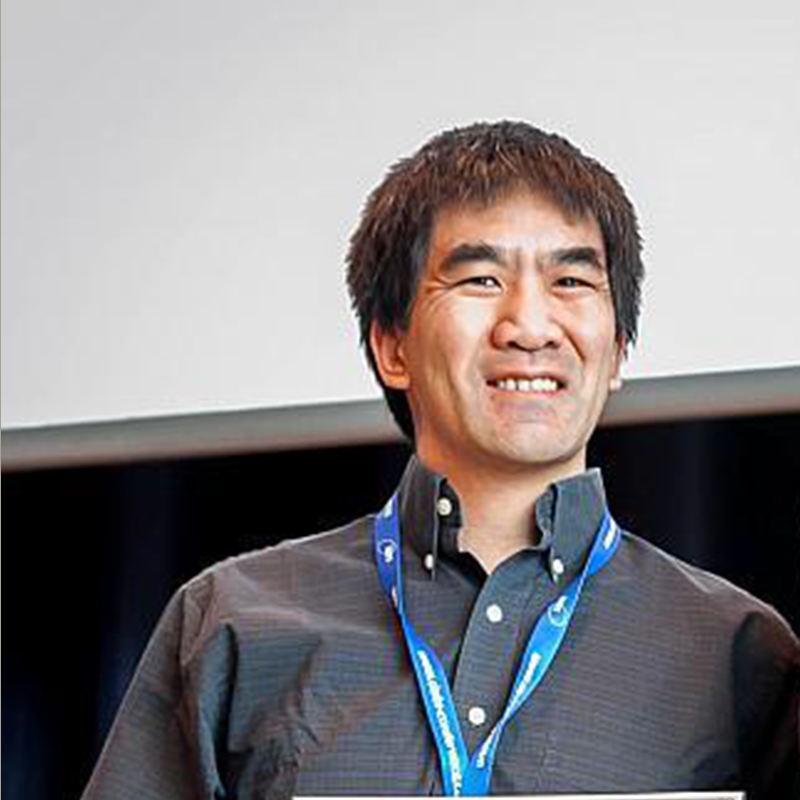
Dr. Sandip Ray is the Warren B. Nelms Endowed Professor in the Department of Electrical and Computer Engineering at the University of Florida. He directs the RISING Lab and serves as Director of Industry Programs at the Warren B. Nelms Institute for the Connected World. His research develops secure systems for automotive, IoT, and industrial applications. Key focus areas include hardware security, post-silicon validation, formal methods for trustworthy computing, and digital twin technologies. He leads initiatives like the Veterans Florida hardware security training program and REU Site on Secure Transportation. Recent work explores wearable health monitors, network-on-chip obfuscation, vehicular platoon security, and digital twin frameworks for medical and environmental systems. His lab integrates physical platforms with virtual simulations for cybersecurity education and resilience testing.
Dr. Swarup Bhunia is the Semmoto Endowed Professor and Director of the Warren B. Nelms Institute for the Connected World at the University of Florida's Department of Electrical and Computer Engineering. He leads the Nanoscape Lab, focusing on hardware security, IoT systems, and wearable devices. His research spans adaptive computing, food safety detection using NQR spectroscopy, and AI-driven hardware security frameworks. Education: PhD in Electrical Engineering, Purdue University (2005) MTech in Computer Science, Indian Institute of Technology (1997) BE in Computer Science, Jadavpur University (1995) Research Interests: Hardware and systems security IoT-driven healthcare and environmental monitoring Energy-efficient computing architectures Anti-counterfeiting and authentication systems His lab develops technologies like wearable health sensors, bee behavior monitoring systems, and secure edge devices. Recent projects include the 'SAMURAI' AI protection framework and NQR-based substance authentication. Scientific Awards: 2024 IEEE Fellow & UFRF Professorship 2013 IBM Faculty Award and Schroeder Chair Professorship NSF CAREER Award (2011) Advising & Grants: Mentor to students like Rohan Reddy Kalavakonda (Attributes of a Gator Engineer Award) and Sudipta Paria (Graduate Research Excellence) Recipient of grants from IBM, NSF, and the Semiconductor Research Corporation His work includes collaborative initiatives like the Cade Museum's microelectronics education program and the Nelms IoT Conference. Labs & Teams: Nanoscape Lab: Specializes in secure IoT systems and hardware IP protection Warren B. Nelms Institute: Leads industry-academia partnerships in connected technologies Current projects include drone-based battery charging (D2DC) and 'BoW' mobile battery systems for EVs.
Hadi Mardani Kamali is an Assistant Professor at the University of Central Florida (UCF) in the Department of Electrical and Computer Engineering . His research focuses on VLSI design and testing , Hardware security and trust , FPGA design , Electronic design automation (EDA) , and Applied machine learning in hardware contexts. Dr. Kamali is actively engaged in research projects related to IC/IP protection , security-aware EDA , and security of learning models .
Fareena Saqib is an Associate Professor in the Department of Electrical and Computer Engineering at the University of North Carolina at Charlotte (UNCC), serving as Director of the Hardware and Embedded Design and Security (HEADS) Lab. Her research focuses on hardware security, IoT security, and embedded systems security, with particular expertise in physical unclonable functions (PUF), FPGA-based security, and supply chain risk management. She leads efforts in developing secure boot frameworks, countermeasures against side-channel attacks, and authentication protocols for resource-constrained devices. Her work spans multiple domains including automotive networks (CAN-FD security), FPGA security through logic locking and dynamic reconfiguration, and embedded systems protection against DMA and other hardware-level attacks. Dr. Saqib has published extensively on topics like counterfeit IC detection using machine learning, secure communication frameworks for electronic control units, and hardware-assisted information flow tracking in RISC-V architectures. Her research has been supported by grants such as NSF Student Travel Grants for IEEE HOST conferences. Key contributions include novel authentication protocols based on PUF technology, delay-based machine learning models for attack mitigation, and secure design flows for reconfigurable systems. She actively promotes cybersecurity education through initiatives like the HACE Lab, an online platform for hardware security evaluation.
Ken Mai is a Principal Systems Scientist in the Department of Electrical and Computer Engineering at Carnegie Mellon University (CMU), part of the College of Engineering. He holds a B.S., M.S., and Ph.D. in Electrical Engineering from Stanford University. His research focuses on high-performance circuit design, secure IC design, radiation hardening, reconfigurable computing, and computer architecture. He has received prestigious awards including the NSF CAREER Award and the George Tallman Ladd Research Award. Education: Ph.D., Electrical Engineering, Stanford University, 2005 M.S., Electrical Engineering, Stanford University, 1997 B.S., Electrical Engineering, Stanford University, 1993 Research Interests: Dr. Mai’s work addresses challenges in nanometer-scale CMOS technology, including interconnect delay, leakage, and soft errors. His projects include secure IC design against hardware attacks, robust memory techniques using digital communications, 100GHz logic via cryogenic cooling, and bio-implantable computing platforms. He collaborates with neurosurgeons at the University of Pittsburgh for medical applications. Key Projects: Secure IC Design: Countermeasures against invasive/non-invasive attacks Robust Memory Design: Error correction codes for resilience 100GHz Logic: Cryogenically cooled CMOS for high-speed applications Bio-Implantable Systems: Low-power, high-density computing for medical devices Awards: NSF CAREER Award George Tallman Ladd Research Award Eta Kappa Nu Excellence in Teaching Award Teaching and Advising: He teaches courses like 18-322 (Digital Circuits), 18-617 (Memory Systems), and advises students including Mudit Bhargava and Mark McCartney. His lab, the VLSI Design Group, develops tools and methodologies linking circuit design to architectural design. Contact: Email: kenmai@ece.cmu.edu Website: Carnegie Mellon VLSI Design Group
Jiarong Xing is an Assistant Professor of Computer Science at Rice University, starting Fall 2025. Currently a Postdoctoral Scholar at UC Berkeley's Sky Computing Lab under Prof. Ion Stoica, his research focuses on secure, efficient, and scalable networked systems for cloud data centers, ML infrastructure, and 5G networks. He earned his Ph.D. from Rice University in 2024 under Prof. Ang Chen. His expertise spans computer systems, networking, and security. Key contributions include Occam (EuroSys'24), Pipeleon (SIGCOMM'23), and FlexCore (NSDI'22), addressing challenges in network management, SmartNIC optimization, and runtime programmability. His work on NetWarden (USENIX Security'20) mitigates covert channels without performance loss. Education : Ph.D. in Computer Science (Rice University, 2024); B.Sc. in Software Engineering (Shandong University, 2017) Awards : USENIX Security Distinguished Paper (2023), Google PhD Fellowship (2022), Meta Fellowship Finalist (2022), Multiple Rice University Fellowships He has served on program committees for NSDI, EuroSys, ACM SIGCOMM, and USENIX Security, and reviewed for top journals like IEEE Transactions on Networking. His GitHub repositories showcase open-source contributions to systems research, including Occam, Pipeleon, and Ripple.
Tommaso Cucinotta is an Associate Professor at the Real-Time Systems Laboratory (ReTiS) within the TECIP Institute of Scuola Superiore Sant'Anna, Pisa, Italy. He earned a MSc and PhD in Computer Engineering from University of Pisa and Scuola Superiore Sant'Anna, respectively. His career spans academic and industrial roles, including researcher positions at Alcatel-Lucent Bell Labs (2012-2014) and Software Development Engineer at Amazon DynamoDB (2014-2016). He coordinates real-time and embedded systems research at ReTiS since 2019. Born in 1974, Potenza, Italy MSc in Computer Engineering, University of Pisa (2000) with 110 cum laude PhD in Computer Engineering, Scuola Superiore Sant'Anna (2004) His research focuses on real-time systems in cloud environments, including adaptive resource management, AI-driven performance monitoring, secure computing, and scalable NoSQL databases. He explores operating system innovations for many-core architectures, network function virtualization (NFV) optimization, and kernel-level enhancements for latency control. His work integrates formal methods with practical implementations, such as autonomic QoS control and high-performance container communication frameworks. Recent publications analyze predictive elasticity in cloud infrastructures, real-time DAG optimization on heterogeneous platforms, and AI applications for system-level performance tuning. He actively contributes to open-source tools like ARSim and AQuoSA, while mentoring MSc thesis projects on topics like Kubernetes optimization, fault-tolerant replication logs, and machine unlearning techniques for LLMs. Collaborations with industry leaders (Ericsson, Red Hat, Vodafone) bridge academic research with real-world scalability challenges. Scientific awards include the Best Paper Award at CLOSER 2020 for his work on high-performance inter-container communication frameworks. He participates in program committees of major conferences and contributes to the evolution of Linux real-time scheduling mechanisms through projects like SCHED_DEADLINE enhancements for multimedia applications.
Professor Hsu-Chun Hsiao is a distinguished faculty member in the Department of Computer Science and Information Engineering and the Graduate Institute of Networking and Multimedia at National Taiwan University. He also holds a joint appointment at the Center for Information Technology Innovation at Academia Sinica. With a Ph.D. from Carnegie Mellon University (2014) and prior degrees from National Taiwan University, he has established himself as a leading researcher in network security and applied cryptography. Professor Hsiao's research focuses on network security, applied cryptography, and high-availability future networks, with recent emphasis on DDoS defense, automated vulnerability discovery, and IoT security. His work bridges theoretical foundations with practical implementations, as evidenced by his extensive publication record in top security venues and real-world applications like his leadership of the security team at National Taiwan University Hospital (2018-2025). His publication trends show consistent productivity with 15+ papers annually in recent years, spanning both theoretical contributions and practical security solutions. His research covers diverse subfields including web tracking, blockchain security, medical system security, and privacy-preserving technologies, demonstrating remarkable breadth within the security domain. 2024 NTU Outstanding Mentor Award 2023 Mr. Lu Feng-Zhang Memorial Award 2022 IEEE S&P Test-of-Time Award 2022 PETS Best Artifact Award 2021 Ta-You Wu Memorial Award 2020 Delta Research Excellence Award Multiple NTU Outstanding Teaching Awards (2017-2023) Professor Hsiao actively mentors students through his Network Security Lab (NSLab) and teaches multiple courses including Cryptography and Network Security, Computer Security, and Algorithm Design and Analysis. His service contributions include program committee roles for major security conferences and editorial positions, demonstrating his active engagement with the broader research community. The Network Security Lab (NSLab) serves as the primary research hub for Professor Hsiao's work, focusing on practical security challenges with connections to both academic research and real-world applications through the National Taiwan University Hospital security team leadership.
Huili Chen is an Assistant Professor in the Department of Electrical and Computer Engineering at the University of California San Diego's Jacobs School of Engineering. Her research spans the intersection of hardware security, deep learning, and human-robot interaction, with a particular focus on intellectual property protection for AI systems and socially interactive robotics for education and family settings. Her research interests focus on hardware-software co-design for secure and robust deep learning systems, with specific expertise in neural network watermarking, hardware Trojan detection, and privacy-preserving AI. She has made significant contributions to federated learning security, developing frameworks like GALU for logic unlocking and AdaTest for hardware Trojan detection. In human-robot interaction, she investigates long-term multi-person interactions, particularly in home environments with children and parents, exploring how robots can enhance engagement and learning through adaptive role-playing. Her publication trends reveal a dual research trajectory: one branch focused on deep learning security and hardware co-design (accounting for approximately 60% of her recent work), and another dedicated to socially assistive robotics and human-robot interaction (40%). The security research often involves innovative approaches combining reinforcement learning with hardware constraints, while her HRI work emphasizes longitudinal studies of robot-child-parent dynamics in naturalistic settings. Dr. Chen actively collaborates with leading researchers including Farinaz Koushanfar at UC San Diego and Cynthia Breazeal at MIT Media Lab. Her work has been published in top-tier venues including IEEE Transactions on Affective Computing, ACM Transactions on Embedded Computing Systems, International Conference on Computer Vision (ICCV), and the ACM/IEEE International Conference on Human-Robot Interaction (HRI). She is a key contributor to the DAMI-P2C project, which has developed datasets and models for analyzing parent-child multimodal interactions, and leads research on hardware security frameworks for deep neural networks. Her laboratory combines expertise in computer architecture, machine learning, and social robotics to develop systems that are both technically secure and socially effective.
Kirill Levchenko is an Associate Professor in the Electrical and Computer Engineering Department at the University of Illinois at Urbana-Champaign, previously at UC San Diego. He leads research in cyber-physical system security, network security, and e-crime analysis. His work focuses on evidence-based studies of cybersecurity threats, including aviation cybersecurity and embedded system vulnerabilities. Research Interests: Cyber-physical systems, network security, e-crime, Internet service abuse, and aviation cybersecurity. His major projects include the PacketLab network measurement system and aviation cybersecurity analysis. Key contributions span malware ecosystems, ransomware tracking, and healthcare privacy breaches. Teaching includes courses like Computer Security I (ECE 422/CS 461), Computer Systems Engineering (ECE 391), and introductory computing courses. He advises Ph.D. and M.S. students in security-related research. Labs/Teams: Based in the Coordinated Science Lab (CSL 458), he collaborates on projects like the Triton avionics testbed and PacketLab measurement tools. His work integrates hardware-software co-design for embedded security and network programmability.
Maryam Parsa is a Tenure-Track Assistant Professor in the Department of Electrical and Computer Engineering at George Mason University. Her research focuses on neuromorphic computing, Bayesian optimization, and algorithm-hardware co-design, aiming to develop energy-efficient, secure, and resilient AI systems for edge computing applications. She holds a PhD from Purdue University, supported by an Intel/SRC fellowship, and previously worked at Oak Ridge National Lab. Education: PhD in Electrical and Computer Engineering, Purdue University (2020) MS in Civil Engineering, Purdue University (Year unknown) MS in Electrical and Computer Engineering, University of Ottawa (Year unknown) BS in Electrical and Computer Engineering, Khaje Nasir Toosi University of Technology (Year unknown) Research Interests: Neuromorphic learning and bio-inspired robotics Bayesian optimization for materials discovery Privacy-preserving spiking neural networks Edge AI and real-time embedded systems Major Achievements: Lead a $2.4M 3-year project on 3D chip creation (2023) Recipient of Intel/SRC PhD Fellowship Current Work: Developing neuromorphic architectures for smart healthcare and cyber-physical systems Pioneering causal machine learning for materials innovation Advancing privacy & security in neuromorphic systems Labs/Teams: Active in Mason's neuromorphic computing research group with collaborations in national labs and industry partners.
Dr. Daniele Lain is a Researcher at ETH Zürich's Institute of Information Security, part of the Professorship for Computer Science. His work focuses on cybersecurity, phishing prevention, and trusted execution environments. He explores user-centric security solutions, compiler vulnerabilities, and hardware-software co-design for robust systems. His research often addresses real-world challenges like phishing defense mechanisms, side-channel attacks, and privacy-preserving technologies. Notable contributions include studies on organizational phishing resilience, secure cloud storage (2fe), and mitigating compiler-induced timing attacks. He also investigates acoustic eavesdropping in VoIP systems and identity leasing via trusted execution environments. His work bridges theoretical advancements with practical applications, emphasizing user behavior and system integrity. His publications span 2015-2025, covering topics like misinformation detection in social networks, LTE network vulnerabilities, and password leakage via keystroke videos (PILOT). Though no awards are listed, his research is widely cited in security communities. He collaborates with industry and academia to develop tools like IntegriScreen for remote session supervision and SILK-TV for keystroke timing analysis.
Zhi Zhang is a Lecturer in the Department of Computer Science and Software Engineering at the University of Western Australia (UWA), affiliated with the UWA Defence and Security Institute. Prior to this role, he worked as a Research Scientist at CSIRO’s Data61. He holds a PhD in Computer Science from the University of New South Wales, focusing on 'Software-only Rowhammer Attacks and Countermeasures.' His research expertise spans system security, rowhammer exploits, adversarial AI, and federated learning security. He has contributed to UN Sustainable Development Goals related to education and innovation. His research focuses on hardware-software co-design vulnerabilities, including rowhammer-based attacks, adversarial machine learning defenses, and data poisoning in federated learning. Notable areas of contribution include interrupt side-channel attacks, thermal event exploitation, and model unlearning mechanisms. He has published extensively in top-tier journals/conferences like IEEE Transactions on Information Forensics and Security, and has received Distinguished Paper Awards in 2023 and 2024. Education: PhD in Computer Science (UNSW, 2021) Key Research Areas: Rowhammer Exploits & Mitigations Adversarial Attacks on DNNs Federated Learning Security Interrupt-Based Side Channels His work bridges theoretical computer security with practical system implementations, addressing critical vulnerabilities in modern architectures. Collaborations span academia and industry, with impactful contributions to hardware-software security domains.
Dr. Todd R. Andel serves as Dean of the School of Computing and Professor of Computer Science at the University of South Alabama. He previously held roles including Department Chair (2019–2023) and Associate Professor (2012–2015). His expertise spans cyber security, embedded systems protection, and network security protocols. Education: Ph.D. in Computer Science from Florida State University (2007), M.S.C.E. in Computer Engineering from Air Force Institute of Technology (2002), and B.S.C.E. in Computer Engineering from University of Central Florida (1998). Research focuses on side-channel analysis/defense, embedded systems security, and active cyber defenses. He leads the System Protection and Exploitation Research (SPERG) group, emphasizing malware analysis, program obfuscation, and formal methods in reverse engineering. The CFITS Center explores forensic technology and information security. Publications span 20+ years with notable work on MTD strategies, SCADA security, and IoT threats. No awards listed but maintains active research labs and educational toolkits for undergraduate research. Teaching includes courses on network security, computer architecture, and distributed systems. Advising details and grants are not explicitly listed.
Dr. Dhananjay Phatak is an Associate Professor in the Department of Computer Science and Electrical Engineering at the University of Maryland, Baltimore County (UMBC). He joined UMBC in 2000 and previously served as faculty at SUNY Binghamton. He holds a Ph.D. in Computer Engineering from the University of Massachusetts and a B.Tech. from IIT Bombay. His research focuses on Cyber Security, Computer Arithmetic, Cryptology, and Networking, with notable projects including the SMartER Power Grid and the Spread Identity paradigm. His research interests span Cyber Security (including DDoS defense, hardware security, and SCADA systems), Network Architecture (e.g., dynamic address remapping), and VLSI implementations of cryptographic algorithms. He has received the NSF Career Award (1999) and led grants from NSF, GE, and Aether Systems. He collaborates with the Cyber Defense Laboratory (CDL) and has patented innovations in secure communications over power grids and network identity management.