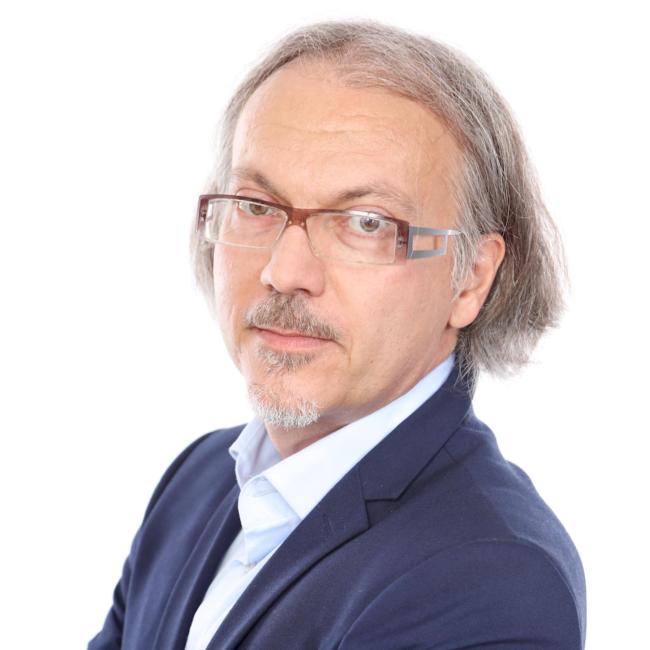
Mariano Scazzariello is a Lecturer at KTH Royal Institute of Technology, Sweden, affiliated with the School of Electrical Engineering and Computer Science and the Department of Network and Systems Engineering. He teaches the course 'Network Systems with Edge or Cloud Datacenters (IK2227)'. His research focuses on advanced networking topics including machine learning in networks, high-speed packet processing, network emulation, and software-defined networking innovations. His work spans contributions to network emulation tools like Kathará and Megalos, stateful packet processing at terabit scales, and leveraging large language models (LLMs) for network configuration and vulnerability detection. Recent research emphasizes low-latency protocols (e.g., SRv6/DetNet integration) and GPU-centric networking on commodity hardware. Mariano’s publications (2020–2025) highlight expertise in network function virtualization, ASIC-based switching, and optimizing network configurations through AI-driven approaches. He has pioneered frameworks for evaluating routing protocols and virtualizing large network scenarios at scale.
Zhonghai Lu is a Professor of Electronic Systems Design (specializing in Dependable and Autonomous Systems) at KTH Royal Institute of Technology, part of the Department of Electrical Engineering in the School of Electrical Engineering and Computer Science (EECS). He serves as Program Director for KTH's Embedded Systems master's program and Director of Studies at the Division of Electronics and Embedded Systems. His research focuses on Network-on-Chip (NoC), computer architecture, embedded systems, and Prognostics and Health Management (PHM) of power electronics. He leads a research group exploring in-network processing and embedded intelligence, transforming passive networks into active computational frameworks. Lu holds a BSc from Beijing Normal University (1989), MSc and PhD from KTH (2002, 2007), and an MBA in Innovation and Growth from the University of Turku (2012). He has authored over 240 scientific papers, including journal articles and peer-reviewed conferences, with notable recognitions such as Best Paper Awards at NOCS’2015 and EU HiPEAC, and a Featured Paper in IEEE Transactions on Computers (2020). He serves as Associate Editor for ACM Transactions on Architecture and Code Optimization (TACO) and has chaired major conferences like HiPEAC’2017 and NOCS’2018. His research group’s recent work includes integrating AI into hardware acceleration, fault-tolerant neural networks, and RUL estimation for power electronics using recurrent neural networks. Lu has secured grants from the Swedish Research Council and Intel Corporation and developed courses like IL2230 (Hardware Architectures for Deep Learning) and IL2233 (Embedded Intelligence), pioneering embedded AI education at KTH. Education: BSc (Beijing Normal University), MSc/PhD (KTH), MBA (University of Turku) Awards: Best Paper Awards (NOCS, EU HiPEAC), Swedish Research Council Grants, Intel Research Gifts Labs/Teams: Research Group on In-Network Processing and Embedded Intelligence
Zhibo Pang is an Adjunct Professor at KTH Royal Institute of Technology's Department of Intelligent Systems (EECS) and Senior Principal Scientist at ABB Corporate Research Sweden. His work focuses on digital transformation in industry and healthcare, spanning robotics, AI, control systems, and wireless communication. He leads projects in embodied intelligence, Industry 4.0, and Healthcare 4.0, with 23 granted patents and over 120 journal papers. Education: PhD in Electronic and Computer Systems (KTH, 2013), MBA in Innovation & Growth (University of Turku, 2012). Key Roles: IEEE Technical Committee Chair, Editor of 6 IEEE journals, ABB Inventor of the Year (2016, 2018, 2021). Research Interests: Robotics safety, wireless automation, federated learning, digital twins, and IoT security. Recent Projects: Cloud-fog automation frameworks, robot skin systems for healthcare, and latency-aware industrial control. His work bridges academia and industry through cross-functional collaborations.
Marianna Ivashina is a Professor and Head of the Antenna Systems Research Group at Chalmers University of Technology's Department of Electrical Engineering . Her work focuses on array antennas , antenna integration with electronics , optimal beamforming , and over-the-air measurement methods . The group has achieved international recognition for innovations in ultra-wideband (UWB) feeds , Gap waveguide antennas , and Doherty-power-amplifier-integrated antennas for 5G/6G and radio telescope applications. Key projects include the SSF Sweden-Taiwan collaboration , EU Horizon 2020 MyWave , and VINNOVA ENERGETIC initiatives. Her recent publications emphasize millimeter-wave (mmWave) communication and reconfigurable intelligent surfaces (RIS) , with applications in 5G/6G networks , satellite communication (SatCom) , and advanced antenna testing chambers . She explores beamforming optimization , self-interference mitigation , and hybrid OTA environments to enhance wireless system performance. The group's work bridges theoretical advancements with practical implementations, including RFSoC testbeds and high-efficiency antenna arrays . Marianna leads major research programs funded by Ericsson , VINNOVA , and EUREKA EURIPIDES2 , addressing challenges in beamforming , antenna-IC integration , and automated design for 5G/6G . These projects highlight her role in advancing millimeter-wave communication and sensor integration technologies.
Chang Hyun Park is an Assistant Professor at the Department of Information Technology, Uppsala University, where he is part of the Uppsala Architecture Research Team. His research focuses on computer architecture with emphasis on memory systems, virtualization, and system software optimization. Dr. Park completed his doctoral studies at KAIST (Korea Advanced Institute of Science and Technology) in South Korea, where he was advised by Professor Jaehyuk Huh. Prior to his current position, he served as a post-doctoral researcher at Uppsala University working with Professor David Black-Schaffer. Dr. Park's research spans several critical areas in computer architecture and systems: Virtual memory systems and address translation mechanisms Cache hierarchy optimization and memory systems design Support for non-volatile memory and heterogeneous memory systems Virtualization technology and optimizations for cloud environments High-speed I/O device integration and accelerator support His publication record demonstrates a consistent focus on improving memory system performance, particularly in virtualized environments. Over the past decade, his work has evolved from fundamental virtual memory optimizations to addressing challenges in emerging memory technologies and large-scale system architectures. Recent publications show increasing emphasis on heterogeneous memory systems, graph processing workloads, and hardware-software co-design approaches. Dr. Park actively collaborates with researchers at Uppsala University, particularly with Professor David Black-Schaffer, and maintains connections with his alma mater KAIST. His work appears regularly in top-tier computer architecture conferences including ISCA, MICRO, ASPLOS, and MEMSYS.
Claes Beckman is a part-time senior researcher in the Division of Communication Systems at KTH Royal Institute of Technology. He was appointed Professor in antenna systems at KTH in 2013 and previously served as Professor in microwave engineering at HIG in 2004. Beckman was the founding director of the research center Wireless@kth in 2001. His career spans over 40 years across academia, government, and industry, with significant contributions to wireless communications, antenna systems, and spectrum management. Beckman's research interests focus on wireless communications systems, particularly antenna design, MIMO technology, 5G networks, and mobile connectivity solutions for challenging environments including transportation systems and remote regions. His work bridges theoretical research with practical implementation, resulting in numerous patents, products, and industry standards. Recent research has examined satellite-cellular integration, high-reliability communication for transportation systems, and private 5G networks for industrial applications. Analysis of his recent publications reveals a strong focus on practical wireless communication challenges, with particular emphasis on real-world implementation issues in mobile and transportation environments. His work spans theoretical antenna design, field measurements, network performance analysis, and spectrum policy considerations, reflecting his unique position at the intersection of academic research, industry application, and regulatory frameworks. Beckman has advised close to 100 M.Sc. students, 7 licentiate, and 3 PhD theses throughout his career. He has secured over $30 million in research funding through multiple Vinnova, KK-foundation, and SSF projects, including serving as KTH's Principal Investigator for the EU FP7 METIS project on 5G. His industry experience includes roles as a microwave design engineer for Ericsson and research manager for Allgon Systems. Beckman serves as a technical expert for Icomera AB and technical consultant to Proan t AB. He has significant regulatory experience, having served on international standards committees (ETSI and 3GPP) and consulted for the Swedish National Regulator for Post- and Telecommunications (PTS), the Swedish Competition Authority, Swedavia, Teracom, and the Swedish Armed Forces.
Carl-Mikael Zetterling is a Professor and Head of Department at Kungliga Tekniska Högskolan (KTH) in Stockholm, Sweden, affiliated with the School of Electrical Engineering and Computer Science (ICT) and the Electronics and Embedded Systems department. His research focuses on process technology and device design for high-temperature, high-power silicon carbide (SiC) electronics, expanding into SiC-based analog and integrated circuits. He has authored over 300 publications, including books on SiC process technology and plagiarism prevention. Dr. Zetterling has held leadership roles such as Vice Dean of the School of ICT (2013–2017) and teacher representative on KTH's faculty board. He has collaborated internationally at Stanford University, Kyoto University, and Kyoto Institute of Technology. His work addresses applications in extreme environments, including Venus exploration and fusion reactor monitoring, with a focus on radiation tolerance and thermal resilience. The 15 most recent publications highlight trends in wide bandgap semiconductors, gamma irradiation effects on SiC devices, and high-temperature integrated circuits. His articles span structural health monitoring with machine learning, novel SiC diode designs, and radiation-hardened electronics. Key contributions include advancements in self-aligned contacts, trench MOSFETs, and compact modeling for extreme conditions. While no formal awards are listed, his roles in technical program committees (TMS Electronic Materials Conference, IEEE SISC Conference) and editorial work demonstrate significant academic service. He teaches courses ranging from digital design to high-temperature electronics, overseeing degree projects in embedded systems, communication, and nanotechnology.
Professor Ahmed Hemani is a faculty member at the Division of Electronics and Embedded Systems, KTH Royal Institute of Technology, affiliated with the Digital Futures Faculty. He holds the role of PI for the project 'New Chip Architectures for Industrial Vision' and leads research in reconfigurable computing, memristor-based systems, and hardware acceleration for AI and edge computing. His work bridges theoretical computer science with practical VLSI design and embedded systems development. He actively contributes to cross-disciplinary initiatives at Digital Futures, a joint center with Stockholm University and RISE Research Institutes of Sweden focused on digital innovation. His research emphasizes scalable FPGA/HPC architectures, low-power neuromorphic systems, and optimization techniques for custom silicon solutions. Current projects include a Lego-inspired edge AI framework and memristor-driven MIMO acceleration. Teaching responsibilities span advanced courses in SOC design, digital system verification, and embedded systems. He supervises advanced-level degree projects across computer engineering and ICT innovation specializations, emphasizing hands-on hardware-software co-design methodologies. Recent publications highlight innovations in memristor applications, FPGA-based acceleration, and reconfigurable architectures for neural networks and bioinformatics. His work addresses challenges in dark silicon utilization, energy-efficient computation, and high-performance embedded systems.
Alireza Saberkari is an Associate Professor and Docent at Linköping University, affiliated with the Department of Electrical Engineering and the Division of Electronics and Computer Engineering (ELDA). His work bridges analog, digital, and mixed-signal electronics with applications in biomedical systems, wireless power, and energy-efficient integrated circuits. Research Interests: His research spans low-power analog and mixed-signal IC design, energy harvesting, RF circuits, and the miniaturization of Nuclear Magnetic Resonance (NMR) systems for portable spectroscopy. He is actively involved in developing integrated solutions for wireless cell fluorescence detection and intelligent surfaces for mid-range wireless power transfer. Recent Publication Trends: His recent publications (2024–2025) emphasize circuit-level innovations in switched-capacitor amplifiers, RF-DC rectifiers, and NMR front-ends, reflecting a strong focus on energy efficiency, integration, and system co-design for portable and biomedical applications. Scientific Projects: Nuclear Magnetic Resonance (NMR) Miniaturization for Spectroscopy (VR, 2023–2026) Efficient Mid-Range Wireless Power Transfer with Intelligent Surfaces (EMPTIS, ELLIIT, 2023–2027) ENGINED - Efficient Organic Energy Module (Vinnova, Phase I, 2023–2024) Micrometer-Scale Wireless Cell Fluorescence Detection Device (SSF Med-X, 2020–2024) Advising and Grants: While no formal students are listed, his leadership in multiple externally funded projects indicates active supervision and mentorship. He has secured funding from major Swedish research agencies including VR, ELLIIT, Vinnova, and SSF, demonstrating strong grant acquisition and collaborative research capabilities. Labs and Research Teams: He is a core member of the Electronics and Computer Engineering (ELDA) division at Linköping University, contributing to a multidisciplinary team focused on advancing electronics for real-world applications in healthcare, energy, and communication systems.
Ioannis Sourdis is a Full Professor at the Department of Computer Engineering, Chalmers University of Technology, Sweden. His research focuses on computer architecture, reconfigurable computing, network-on-chip (NoC) design, memory systems, and fault-tolerant embedded systems, with applications in biomedical informatics and hardware security. Current projects include EUMMSS (Efficient Uncore Mechanisms for Multicore Space Systems, funded by the Swedish National Space Board) and eProcessor (European Processor Ecosystem, funded by the European Commission). Past initiatives include the DeSyRe project (on-demand system reliability), ECOSCALE (exascale reconfigurable computing), and SHARCS (secure hardware-software architectures). His work spans NoC router design (e.g., FastTrackNoC, DDRNoC), memory compression (MemSZ, L2C), and biomedical security applications (heartbeat-based protocols). He has published extensively in venues like DATE, ICS, PACT, and IEEE Transactions on Networking. Key research areas: Chiplet-based systems , hybrid memory architectures , FPGA acceleration , and real-time stream aggregation .
Mahdi Fazeli is an Associate Professor at the School of Information Technology, Halmstad University, Sweden, specializing in hardware security and trust, energy-efficient computing, and embedded and cyber-physical systems. His academic journey began with a Ph.D. in Computer Engineering from Sharif University of Technology, Iran, in 2011. His career progression includes positions as Associate Professor at Bogazici University (2019-2021) and Iran University of Science and Technology (2016-2019), and Assistant Professor at the same institution (2011-2016). His research interests focus on hardware security and trust, reliable VLSI circuits and systems, energy-efficient computing, and dependable embedded systems. His work bridges the gap between theoretical security concepts and practical implementations in real-world systems, particularly in IoT and embedded environments. He has established himself as a leading researcher in Physical Unclonable Functions (PUFs), hardware trojans detection, and energy-efficient security solutions for resource-constrained devices. His publication record shows a clear progression and deepening expertise in hardware security, with recent work focusing on cutting-edge applications in edge computing, vehicular networks, and IoT security. His 2023-2025 publications demonstrate significant contributions to magnetic memory-based security primitives, anomaly detection systems, and energy-efficient security mechanisms. Throughout his career, Fazeli has led multiple research initiatives including the Dependable Systems and Architecture Lab (DSA) and the Networked and Embedded Systems Lab at Iran University of Science and Technology. His leadership extends to heading the Hardware Group and serving as Vice Chair for Educational Affairs, demonstrating his commitment to both research excellence and academic administration.
Monica Bellgran is a Professor of Industrial Production at the Royal Institute of Technology (KTH). Her research focuses on optimizing production systems for efficiency and sustainability, emphasizing lean production, circular economy principles, and Industry 4.0 applications. She explores challenges faced by SMEs in adopting advanced technologies and scaling production processes. Key research areas include green design methodologies, circular production frameworks, and the integration of digital tools in manufacturing. Bellgran has contributed to studies on environmental sustainability improvements in pharmaceutical production and the operationalization of circular economy concepts at factory levels. Her work spans collaborations with industries like automotive, pharmaceuticals, and hardware startups, addressing topics such as production localization, deviation management, and the role of advanced digital technologies in strategic decision-making. She emphasizes the importance of balancing operational effectiveness with environmental responsibility in industrial systems.
Andreas J. Kassler is a Full Professor of Computer Science at Karlstad University, Sweden, where he has been since 2005. He co-chairs the Distributed Systems and Communication (DISCO) group and focuses on networking, cloud computing, and wireless networks. His research includes software-defined networking, future internet architectures, and network optimization. He has authored/co-authored over 130 peer-reviewed publications, holds 6 patents, and serves on editorial boards of journals like Journal of Internet Engineering . Education : Ph.D. in Computer Science, Universität Ulm (2002) Docent (Habilitation), Karlstad University (2007) M.Sc. in Mathematics/Computer Science, Universität Augsburg (1995) Research Interests : Software Defined Networking (SDN) Programmable Dataplanes Wireless Mesh Networks Time-Sensitive Networking (TSN) Edge Computing Machine Learning for Network Optimization Recent Directions : His work spans TSN scheduling, hybrid P4 solutions for 5G, and explainable AI in energy communities. He explores network resilience, latency optimization, and multi-objective control in microgrids. Service Contributions : Track co-chair for VTC 2015 General chair for Wired/Wireless Internet Communications (WWIC) 2013 Editor-in-Chief of IARIA Journal on Advances in Internet Technology Labs/Teams : Leads DISCO group at Karlstad University. Collaborates with global teams on projects like mmWave backhaul networks and SDN-enabled industrial control systems.
Emil Björnson is a Professor of Wireless Communications and Head of the Communication Systems Department at KTH Royal Institute of Technology since 2024. He received his Master of Science in Engineering Mathematics from Lund University (2007) and PhD in Telecommunications from KTH (2011). After postdoctoral work at SUPELEC, France (2012-2014), he held faculty positions at Linköping University (2014-2021) before returning to KTH in 2020. Research Focus: MIMO communications, reconfigurable intelligent surfaces, radio resource allocation, machine learning for communications, and energy efficiency Editorial Roles: Editor for multiple IEEE transactions and magazines His research has significantly advanced wireless communication technologies, particularly in Massive MIMO and cell-free systems. He has authored four textbooks, including Massive MIMO Networks (2017) and Introduction to Multiple Antenna Communications and Reconfigurable Surfaces (2024). Scientific awards include: IEEE Fellow Clarivate Highly Cited Researcher Wallenberg Academy Fellow Digital Futures Fellow Multiple IEEE and EURASIP awards (2014-2024)
Professor Per Stenström is affiliated with the Department of Computer Science and Engineering at Chalmers University of Technology . His research focuses on computer architecture , memory systems optimization , and energy-efficient computing , with significant contributions to DNN accelerator design and cache management . Research Trends : His recent publications emphasize Memory compression techniques for energy efficiency Hardware-software co-design for DNN acceleration Security in microarchitectural optimizations Hybrid memory systems for near-memory computing These works span both theoretical and applied aspects of computer architecture, with a particular focus on data redundancy elimination , parallel processing , and quality-of-service constraints . His work has influenced the development of energy-aware resource management frameworks and resilient EU HPC systems , as evidenced by his long-standing contributions to the field since the early 2010s.