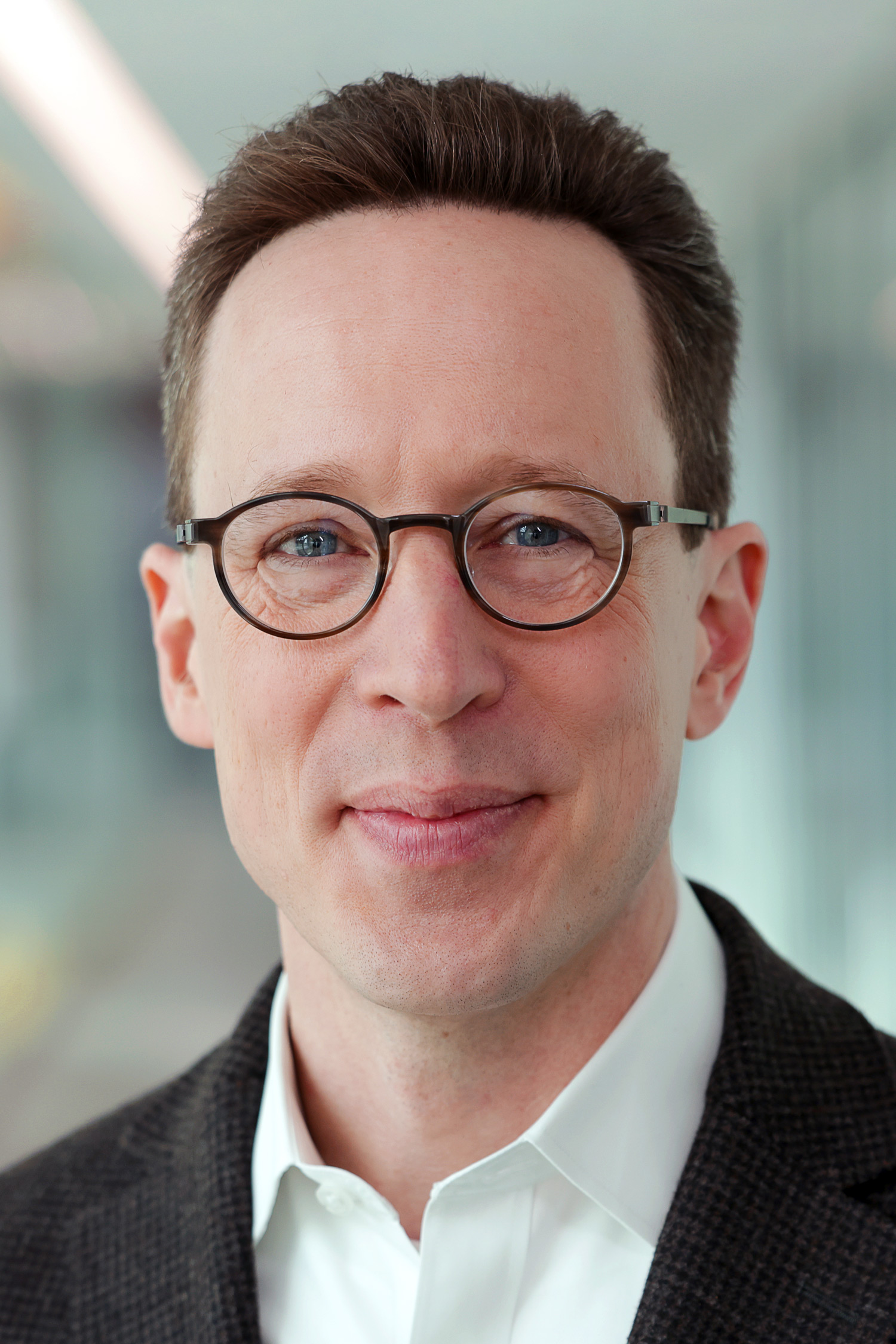
Peter Bui is a Teaching Professor in the Computer Science and Engineering department at the University of Notre Dame , located within the College of Engineering. He teaches courses such as Data Structures, Systems Programming, and Ethical and Professional Issues, while also managing the core Elements of Computing programming sequence for the Computing & Digital Technologies minor. Education: Ph.D. in Computer Science and Engineering from University of Notre Dame (2012) His research interests span systems programming, operating systems, parallel computing, cloud computing, distributed computing, programming languages, compilers, and web services . He actively integrates these domains into his teaching and extracurricular work with the Linux Users Group. Recent publications highlight his work in distributed computing frameworks , including the development of tools like WorkQueue and Madeup for scalable scientific workflows and 3D printing integration. Projects such as ROARS and Weaver demonstrate his focus on robust data management and workflow automation. Outside academia, he stewards the Linux Users Group , engages with open-source communities, and balances personal interests like gaming in RuneScape with family time.
Giles Reger is a Senior Lecturer in the Formal Methods Group of the School of Computer Science at the University of Manchester. He completed his BA in Computer Science at the University of Cambridge in 2009, followed by an MSc in Advanced Computer Science at the University of Manchester in 2010 (awarded Highest Achiever of the Year), and earned his PhD from the University of Manchester in 2014 with a thesis titled "Automata based monitoring and mining of execution traces". His research spans several key areas within computer science: Automated Theorem Proving (first-order) Saturation-based techniques Reasoning with theories and quantifiers Finite Model finding Collaborative and Concurrent proof attempts Runtime Monitoring/Verification Temporal specification languages Specification Mining/Inference Dr. Reger leads multiple EPSRC-funded research projects including SCorCH (Secure Code for Capability Hardware), CAPS (Collaborative Architectures for Proof Search), and QuTie (reasoning with Quantifiers and Theories). His work on the Vampire theorem prover and MarQ monitoring tool demonstrates his bridge between theoretical computer science and practical applications. Recent publications show strong focus on runtime verification, theorem proving, and program analysis with applications to security and performance monitoring. Notable awards: Highest Achiever of the Year Award for MSc studies Dr. Reger collaborates extensively with institutions including the University of Oxford, Arm, Amazon Web Services, and CERN (CMS Experiment). As Manchester lead on the SCorCH project, he develops formal analysis tools for security-aware hardware chips. His work on the VyPR framework enables developers to analyze Python program performance through temporal specification languages and monitoring algorithms.
Karl Böhringer is Professor of Electrical & Computer Engineering and Bioengineering at the University of Washington, where he also directs the Institute for Nano-Engineered Systems (NanoES). He holds an adjunct faculty position at the Paul G. Allen School of Computer Science & Engineering. With international academic engagements at institutions in Japan, Brazil, and Switzerland, his work focuses on interdisciplinary research bridging engineering and life sciences. Education Diplom-Informatiker, University of Karlsruhe (1990) MS in Computer Science, Cornell University (1993) PhD in Computer Science, Cornell University (1997) Postdoctoral training includes positions at Stanford University (1994-1995) and UC Berkeley (1996-1998). Research Focus Böhringer leads research in micro/nano-scale systems with applications spanning robotics, biotechnology, and computing. Key areas include: Design of microelectromechanical systems (MEMS) Precision manipulation from macro to nano scales Microfluidics for life science applications Autonomous microrobotics systems Convergence of photonics, nanotechnology, and biological computing Laboratory Leadership He directs the Böhringer Lab, developing innovations like parallel microactuator arrays, walking microrobots, and multi-batch self-assembling systems.
Pasquale Scarlino is a Tenure Track Assistant Professor in the Institute of Physics at École Polytechnique Fédérale de Lausanne (EPFL), where he founded and leads the Hybrid Quantum Circuits (HQC) Laboratory. He holds a dual appointment with the School of Basic Sciences (SB) and the Physics Section (SB-SPH), conducting research at the intersection of semiconductor and superconducting quantum technologies. His laboratory develops hybrid quantum hardware for advanced quantum information processing. His educational background includes a Master's degree in Physics from the University of Salento (Italy, 2011), where he was a student of Scuola Superiore ISUFI, followed by a Ph.D. from TU Delft (2016) in the Spin Qubits group of Prof. L.M.K. Vandersypen at the Kavli Institute of Nanoscience-Qutech. His doctoral work focused on Si/SiGe spin qubits in collaboration with the M. Eriksson Group at Wisconsin University. Scarlino's research centers on experimental quantum physics using hybrid superconductor/semiconductor devices with electrostatically defined quantum dots coupled to high-impedance microwave resonators. He investigates light-matter interactions in unconventional regimes, quantum transport in low-dimensional systems, and spin/charge qubit implementations. His work aims to merge semiconductor and superconducting platforms to expand quantum information capabilities, with applications in quantum computing, quantum optics, and analog quantum simulation. Early career achievements include establishing the first coherent interface between superconducting and semiconducting quantum systems using high-impedance resonators. His publication record shows strong focus on microwave photon-mediated interactions between quantum systems, with recent work exploring quantum acoustics, topological band engineering, and criticality-enhanced sensing. The articles demonstrate increasing specialization in hybrid quantum hardware, with a shift toward germanium-based systems and advanced resonator designs in the latest publications. Scarlino has advised eleven Ph.D. students at EPFL and teaches courses including General Physics (Electromagnetism), Solid State Systems for Quantum Information, and Introduction to Quantum Science and Technology. His teaching emphasizes experimental quantum hardware approaches and critical assessment of quantum computing platforms. The Hybrid Quantum Circuits Laboratory operates within EPFL's Institute of Physics, utilizing state-of-the-art nanofabrication facilities and cryogenic measurement setups. The team collaborates extensively with leading quantum research groups worldwide, maintaining strong ties with previous institutions including ETH Zurich, TU Delft, and Microsoft Station Q Copenhagen.
Aleksandra Radenovic is a Full Professor at École Polytechnique Fédérale de Lausanne (EPFL) holding multiple positions across the institution. She is a Full Professor at the Laboratory of Nanoscale Biology (LBEN) within the School of Engineering (STI), a Full Professor in Teaching at the School of Life Sciences (SV), and a Full Professor in Teaching at the School of Engineering (STI). Additionally, she serves as Co-Director of both the IBI-STI and IBI-SV administrative units, and is a Member of both the STI School direction and SV School direction. Dr. Radenovic received her PhD from the University of Lausanne in 2003, where she worked with Prof. Dietler in the Laboratory of Physics of Living Matter. Prior to that, she studied physics at the University of Zagreb from 1994-1999, and completed her baccalaureate at a Classical gymnasium in 1994. She conducted postdoctoral research at the University of California, Berkeley from 2004-2007 in the group of Prof. Liphardt. Her research focuses on single molecule biophysics, with particular emphasis on developing techniques and methodologies based on optical imaging, biosensing, and single molecule manipulation. Her laboratory works on three major research directions: (i) developing and using nanopores as platforms for molecular sensing and manipulation, particularly solid-state nanopores in glass nanocapillaries and 2D-material membranes; (ii) studying biomolecular function, especially protein and nucleic acid interactions, using force-based manipulation techniques like optical tweezers and Anti-Brownian Electrokinetic traps; and (iii) developing super-resolution optical microscopy based on single molecule localizations for quantitative cellular imaging. Her work bridges physics, engineering, and biology to create innovative tools for understanding molecular processes at the nanoscale. Analysis of her recent publications reveals a strong focus on nanofluidics, 2D materials (particularly MoS 2 and hBN), nanopore sensing, super-resolution microscopy, and the development of novel instrumentation for biophysical applications. Her research demonstrates increasing interdisciplinary collaboration, integrating materials science, nanotechnology, and biological applications to address fundamental questions in molecular biophysics. Dr. Radenovic has received numerous prestigious awards and grants, including: 2021: ERC Advanced Grant 2021: Optica Fellow 2016: CCMX Materials challenge award 2015: SNSF-ERC Consolidator Grant 2010: ERC Starting Grant 2003: SNSF Fellowship She has successfully advised numerous PhD students whose research spans single molecule biophysics, nanofluidics, and optical techniques. Her laboratory, the Laboratory of Nanoscale Biology (LBEN), is well-equipped for advanced biophysical research, with capabilities in nanopore fabrication, optical trapping, super-resolution microscopy, and 2D materials characterization. Dr. Radenovic has secured significant research funding through competitive grants, including multiple ERC grants, which have supported her innovative research program at the intersection of physics, engineering, and biology.
Hongjun Wu is an Associate Professor at the Division of Mathematical Sciences, School of Physical & Mathematical Sciences, Nanyang Technological University, Singapore. His research focuses on Cryptography and Computer Security , with contributions to authenticated encryption, stream ciphers, hash functions, and cryptographic vulnerabilities. Doctor of Engineering (2005-2008), Electrical Engineering, Katholieke Universiteit Leuven Master of Engineering (1998-2000) & Bachelor of Engineering (1994-1998), Electrical Engineering, National University of Singapore Research spans Lightweight Cryptography (TinyJAMBU finalist 2021), Authenticated Encryption (CAESAR winners ACORN/AEGIS), Hash Function Design (JH finalist in SHA-3), and Stream Cipher Development (HC-128 in eSTREAM). He has advised PhD students Huang Tao, Ivan Tjuawinata, Yu Haiwan, and Master students Peng Lunan. Former team members include Tao Biaoshuai, Wei Lei, and Yosua Michael Maranatha. Key publications include work on AES biclique attacks (2015), ICEPOLE differential-linear analysis (2015), Microsoft Office encryption flaws (2005), and CAESAR/AEGIS (2013-2015). Awards: Finalist, NIST Lightweight Competition (2021) CAESAR Competition Winner (2019) SHA-3 Finalist (2011) eSTREAM Selection (2008) He leads the JH Hash Function and TinyJAMBU projects, with hardware/software implementations and active participation in cryptographic standards development. His work involves security analysis of Microsoft Office encryption (2005) and advisories on Adobe Reader vulnerabilities (CVE-2014-0522 to CVE-2014-9165).
David W Parent serves as Professor in the Electrical Engineering Department at San José State University's College of Engineering. He holds office ENGR 355 with contact (408) 924-3963 and email david.parent@sjsu.edu. As co-Principal Investigator and Project Coordinator for Project Engineering Success—a five-year, $5 million Department of Education grant—he leads initiatives to improve Hispanic and low-income student outcomes in engineering and computer science through partnerships with San Jose City College and Gavilan Community College. Professor Parent's research spans two critical domains: semiconductor device engineering and innovative engineering education. His technical work focuses on neuromorphic circuits, particularly ReRAM implementations, semiconductor fabrication, MOS devices, solar cells, and MEMS technologies. His education research targets student success mechanisms for underrepresented populations, including directed self-placement exams, transfer student pathways, and faculty development for inclusive teaching practices. The Microscale Process Engineering Laboratory under his direction supports hands-on semiconductor research. Analysis of his recent publications reveals a strategic shift toward addressing systemic barriers in engineering education while maintaining technical expertise. His work demonstrates growing emphasis on Hispanic student retention, community college transfer pathways, and faculty development programs—complementing his ongoing contributions to neuromorphic hardware design. This dual focus creates meaningful bridges between advanced technical research and practical educational interventions. As co-PI of Project Engineering Success, Parent manages multiple grant-funded activities including the 3-Day Summer Faculty Workshop (focused on active learning strategies for diverse classrooms), Model Transfer Curriculum Pathways development, and industry outreach programs with partners like SEMI. He provides critical leadership in creating structured support systems that help students rapidly progress through core engineering courses at SJSU and partner institutions. Professor Parent directs several key project components: Activity 3 (Faculty Development), Activity 4 (Transfer Pathways), and Activity 5 (Industry Outreach). His laboratory work in the Microscale Process Engineering Laboratory continues to advance semiconductor research while his educational innovations reach beyond campus through partnerships with community colleges and industry. He maintains active research profiles on Research Gate, ORCID, and Google Scholar while developing course materials for EE110/EE110L and providing student success guidance for electrical engineering coursework.
Aslan Askarov is an Associate Professor in the Department of Computer Science at Aarhus University, where he leads research in computer security and programming languages. He is a member of the Logic and Semantics Group and maintains an active research program with several ongoing projects. Dr. Askarov's research interests span computer security and privacy, with a focus on foundations, information-flow, covert channels, metadata privacy, and formal methods for security. He also works extensively in programming languages, particularly in semantics, design, type systems, and program analysis. His work bridges theoretical foundations with practical security applications, particularly in web and mobile security contexts. His active projects include Troupe, a programming language for concurrent and distributed programming with dynamic information flow control, and DenIM, a protocol for secure instant messaging with metadata privacy. These projects reflect his commitment to developing practical security solutions grounded in formal methods. Dr. Askarov has published extensively in top security and programming languages venues, with recent work focusing on metadata privacy in instant messaging, separation logic for virtual machine security, and oblivious execution techniques for reactive programs. His research demonstrates a consistent pattern of addressing fundamental security challenges through formal methods and language-based approaches. CSF 2026 ESOP 2026 PLDI 2025 CSF 2025 CSF 2022 CSF 2021 CSF 2020 PriSC 2020 Nordsec 2019 (co-chair) POST 2019 Euro S&P 2018 PLAS 2017 FCS 2017 (co-chair) HotSpot 2017 FCS 2016 (co-chair) CSF 2016 ESSOS 2015 FCS-FCC 2014 ARES 2014 FCS 2013 ARES 2013 PLAS 2013 ARES 2012 PLAS 2011 (co-chair) ISARCS 2010 PLAS 2009 VODCA 2008 Dr. Askarov teaches advanced courses in computer science, including Compilers in Fall 2024 and Language-Based Security in Spring 2024. He is actively recruiting PhD students and postdocs to work in the areas of Programming Languages and Computer Security, demonstrating his ongoing commitment to mentoring the next generation of researchers.
Deian Stefan is an Associate Professor in the Department of Computer Science and Engineering at the University of California at San Diego. His research focuses on secure systems spanning security, programming languages, and systems. He is particularly interested in WebAssembly, JavaScript JITs, language-based security (constant-time programming, memory safety, information flow control), verification for security, and program analysis tools. Co-founder and Chief Scientist at Intrinsic (acquired by VMWare) Contributor to W3C WebAppSec and Node.js Security Working Groups Research Interests: His work addresses secure systems through principled approaches, including: Web frameworks security Browser design security Sandboxing techniques Runtime systems security Constant-time programming WebAssembly and JavaScript JITs Scientific Awards: Distinguished paper award at POPL 2023 IEEE Cybersecurity Award for Practice 2022 Best paper award at CollaborateCom 2010 Most Influential Paper Award at ICFP 2022 First place at CSAW 2020 for applied research Advising: Deian has mentored students including Shravan Narayan, Evan Johnson, Sunjay Cauligi, and Fraser Brown, focusing on security, systems, and programming languages.
Jaydeep Kulkarni serves as an Assistant Professor holding the AMD Development Chair in the Department of Electrical and Computer Engineering at The University of Texas at Austin. He earned his Ph.D. from Purdue University in 2009 and previously worked as a Senior Staff Research Scientist at Intel Labs from 2009 to 2017. His educational background includes a doctoral degree in Electrical and Computer Engineering from Purdue University (2009). Dr. Kulkarni's research centers on energy-efficient digital circuit design, memory systems, power management architectures, nanotechnology applications, and hardware accelerators for data-intensive computing. His work bridges theoretical circuit innovations with practical implementations to enhance computational efficiency across modern electronic systems. He has received notable recognition including: 2008 Intel Foundation Ph.D. fellowship award 2010 Purdue School of ECE Outstanding Doctoral Dissertation Award 2015 IEEE Transactions on VLSI Systems Best Paper Award 2015 SRC Outstanding Industrial Liaison Award Dr. Kulkarni actively contributes to academic service through technical program committees for A-SSCC, DAC, ISLPED, ISCAS, and ASQED conferences. During his Intel tenure, he served as an IEEE Circuits and Systems Society Industrial Distinguished Lecturer and SRC/NSF Industrial Liaison. He currently chairs ISLPED 2018 and serves as Associate Editor for IEEE Solid-State Circuit Letters and IEEE Transactions on VLSI Systems as a Senior IEEE Member. He is affiliated with UT Austin's Microelectronics Research Center, focusing on collaborative semiconductor research initiatives.
Alexey Evgenievich Osadchiy is a Professor at the National Research University Higher School of Economics (HSE University), where he serves as Director of the Center for Bioelectric Interfaces at the Institute of Cognitive Neuroscience. He has been working at HSE since 2013 with 21 years of scientific and teaching experience. His academic appointments include Professor at the Faculty of Computer Science in the Department of Data Analysis and Artificial Intelligence. 2023 - Doctor of Science: National Research University Higher School of Economics 2003 - PhD: University of Southern California, specialty "Physical and Mathematical Sciences" and "Neurobiology" 1997 - Specialty: Bauman Moscow State Technical University, major in Autonomous Information and Control Systems Professor Osadchiy's research focuses on digital signal processing, magnetoencephalography (MEG), electroencephalography, inverse problems, synchronization, non-invasive detection, and brain mapping. His work bridges neuroscience, computer science, and medical applications, with particular emphasis on brain-computer interfaces, neurofeedback systems, and precision medicine applications for neurological disorders. He has pioneered methods for real-time brain activity monitoring and developed novel approaches for functional connectivity estimation in neural networks. His recent publications demonstrate a strong trend toward developing hardware-enabled low-latency systems for brain-state dependent stimulation, improving MEG technology with optically pumped magnetometers, and advancing speech mapping techniques for neurosurgical applications. His work increasingly integrates AI and deep learning approaches with traditional neuroimaging techniques to create more precise and accessible brain measurement and modulation systems. Scientific Awards and Recognition HSE University "Recognition - 10 Years of Successful Work" Medal (July 2025) Letter of Gratitude from the Higher School of Economics (September 2021) Letter of Gratitude from the Faculty of Computer Science at HSE (August 2018) Allowance for defending a doctoral dissertation (2023–2026) Bonuses for publications in international peer-reviewed journals (2015–2029) Professor Osadchiy has successfully advised numerous graduate students and doctoral candidates, with eight dissertation research projects currently under his supervision. His research has been supported by significant grants including a Russian Ministry of Education and Science contract for "System for registration and decoding of human brain bioelectric activity" (2014-2017), RFBR grants for "New non-invasive experimental-mathematical paradigm for preoperative magnetoencephalographic mapping of speech cortex" (14-02-00917, 16-04-01863), and projects on "Endogenous enhancement of brain-computer interface efficiency." As Director of the Center for Bioelectric Interfaces at the Institute of Cognitive Neuroscience, Professor Osadchiy leads a multidisciplinary team working on cutting-edge neurotechnology. His center collaborates with the Federal Brain and Neural Technology Centre at the Federal Medical and Biological Agency, where they established the Laboratory of Medical Neural Interfaces and Artificial Intelligence for Clinical Applications. The center is actively involved in developing brain-computer interfaces for rehabilitation, particularly for stroke patients and those with locomotor function disorders, and has created Russia's first neurointerface for controlling exoskeletons using imagined lower limb movements.
Peter Baltus is Full Professor of High-Frequency Electronics in the Department of Electrical Engineering at Eindhoven University of Technology. With industry experience at Philips/NXP and academic credentials from TU/e, his research focuses on high-frequency integrated circuit and system design. Research domains include: Ultra-low power transceivers Millimeter-wave wireless power transfer Efficient wideband beamforming Sensor swarm networks RF system architecture His educational contributions feature innovative RF laboratory designs for remote learning environments. Current projects include photonic-electronic integration and satellite communication systems.
Dr. Faisel Tubbal is a Lecturer, Laboratory Manager, and Work Integrated Learning Coordinator at the School of Electrical, Computer and Telecommunications Engineering, University of Wollongong. He holds a PhD in Telecommunication Engineering from the University of Wollongong (2017) and has extensive experience in research and academia. His roles include managing laboratories and coordinating work-integrated learning programs. Education: B.E. in Telecommunication Engineering, College of Electronic Technology, Libya (2004) Graduate Diploma in Engineering Technology, University of Wollongong (2011) M.S. in Telecommunication Engineering, University of Wollongong (2012) M.S. in Engineering Management, University of Wollongong (2013) Ph.D. in Telecommunication Engineering, University of Wollongong (2017) Research Interests: Dr. Tubbal specializes in antenna designs for CubeSat communications, wearable antennas, metamaterials, and wireless power transfer. His work bridges theoretical advancements with practical applications in satellite technology and IoT. Recent trends in his publications focus on RF energy harvesting, 5G/IoT integration, and medical wearable systems. Awards: 2021 and 2016 Vice-Chancellor's OCTAL Awards for teaching excellence Fellow at Wollongong Academy for Tertiary Teaching and Learning Excellence (WATTLE) Grants & Supervision: Currently supervising four PhD students on CubeSat systems, medical wearable antennas, and wireless power reception. He led an institutional grant (2024) on alternative learning content development. Labs & Teams: Manages engineering laboratories and coordinates industry-linked projects at the University of Wollongong. Active in IEEE as a Senior Member and contributes to conference organizing (e.g., ICSPCS 2019 Technical Committee).
J. Alex Halderman is the Bredt Family Professor of Computer Science & Engineering at the University of Michigan, directing both the Center for Computer Security and Society and the Michigan CSE Systems Lab. His work critically examines the societal impacts of security and privacy technologies through empirical research and policy engagement. Halderman's research spans computer security and privacy with emphasis on election integrity, censorship resistance, and the intersection of technology with law and policy. He investigates real-world vulnerabilities in systems ranging from voting infrastructure to encrypted communications, prioritizing measurable societal impact through forensic analysis and large-scale measurement studies. His publication record demonstrates consistent focus on high-stakes security challenges, particularly in democratic processes and user privacy. Notable contributions include internet-wide scanning tools (ZMap), forensic investigations of election systems, and foundational work on cryptographic vulnerabilities affecting global infrastructure. Scientific recognitions include: USENIX Security Best Paper Award (2024) USENIX Security Best Paper Award (2022) USENIX Security Best Paper Award and Internet Defense Prize (2022) IEEE Symposium on Security and Privacy Best Student Paper Award (2020) Pwnie Award for Best Crypto Attack (2016) ACM CCS Best Paper Award (2015) ACM IMC Applied Networking Research Prize (2015) ACM IMC Best Paper Award (2014) USENIX Security Best Paper Award and Test of Time Award (2012) USENIX Security PET Award Runner-up (2011) USENIX Security Best Student Paper Award (2008) Halderman advises a dynamic research group including current members Braden Crimmins, Erik Chi, and Dhanya Narayanan, with over two dozen alumni who have advanced the field. His leadership extends to developing practical security solutions like Let's Encrypt and conducting court-admissible forensic analyses of election systems. He directs the Michigan CSE Systems Lab, which pioneers research in computer systems security, and the Center for Computer Security and Society, which bridges technical research with policy impact through cross-disciplinary collaboration.
Ti John is a Research Fellow at Aalto University's Department of Computer Science within the School of Science. He is affiliated with Professor Marttinen's research group and the Probabilistic Machine Learning group led by Professor Samuel Kaski. His work connects with the Finnish Center for Artificial Intelligence (FCAI) and the Helsinki Institute for Information Technology (HIIT). Dr. John's research focuses on machine learning, particularly Bayesian optimization, Gaussian processes, and point process models. His work spans theoretical developments in neural processes and practical applications in healthcare analytics and large language models. He has made significant contributions to equivariant neural processes, causal mediation analysis in healthcare, and interpretability of additive models. His publication record shows consistent output with 17 publications between 2021-2024, including multiple papers at top AI conferences like NeurIPS, ICML, and ICLR. His research demonstrates strong interdisciplinary connections between statistical modeling, artificial intelligence, and healthcare applications. Active reviewer for NeurIPS, ICLR, AISTATS Reviewer for Journal of Machine Learning Research Member of Finnish Center for Artificial Intelligence project Dr. John has been actively contributing to the machine learning community through peer review and conference participation, demonstrating expertise across multiple subfields of artificial intelligence and statistical modeling.