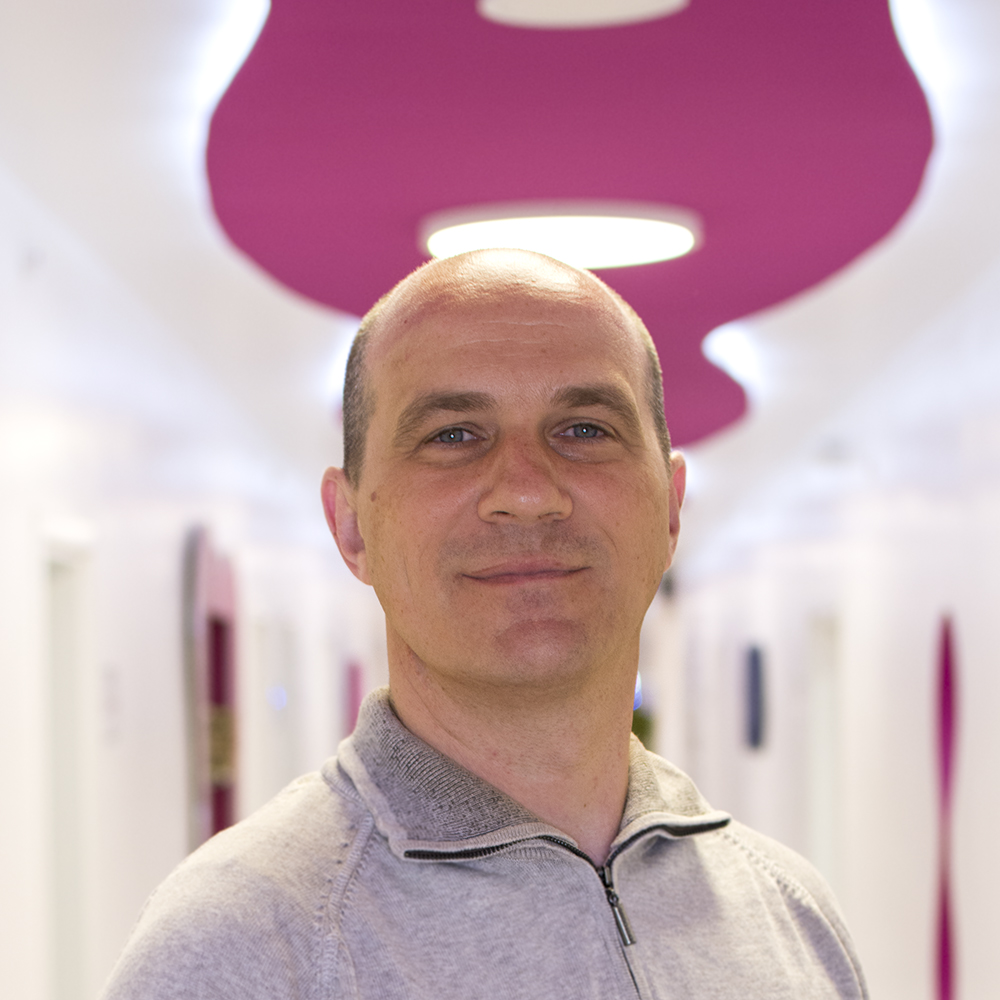
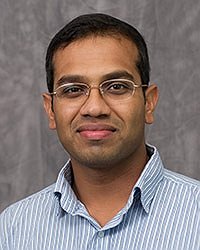
Kazuhiko Tamesue is an Associate Professor at the Faculty of Science and Engineering , Waseda University , with a focus on Terahertz Communication , Artificial Intelligence , and IoT Network Security . His academic journey spans academia and industry, including long-term roles at Panasonic Corporation (1991–2009) and current leadership in advanced wireless systems since 2022. Research Areas : Telecommunications, Wireless Hardware, Data Science, Machine Learning, Atmospheric Sensing Key Contributions : Pioneering 300GHz OFDM transceivers, AI-driven GNSS spoofing detection, and dual-frequency THz radar for cloud physics Projects : NICT-funded terahertz networks (2023–2024), ultra-low-latency systems (2022–2024), and security-enhancing radar technologies His 15 most recent publications (2024–2008) demonstrate expertise in (1) terahertz propagation for NTN/HAPS platforms, (2) machine learning for security (LSTM, GANs), and (3) next-generation IoT protocols (LPWAN, distributed ledger). He holds 20+ patents in antenna design, direct-conversion receivers, and power line communication. As an IEEE and IEICE member, he contributes to standards in 5G/6G and EMC.
Maximilian Schüle serves as Assistant Professor in the Department of Data Engineering at the University of Bamberg's Faculty of Information Systems and Applied Computer Sciences since October 2022. Previously, he held research positions at Technical University of Munich (2017-2022). His research bridges database systems and machine learning through compiler-based approaches. His research focuses on in-database machine learning , GPU-accelerated query processing , and recursive SQL extensions . Key contributions include: Developing MLIR-based compilers for automatic differentiation in SQL (DuoLingo-AutoDiff) Creating GPU code generators for database kernels using NVRTC Designing higher-order lambda functions for expressive query languages Implementing end-to-end neural network training within database engines His recent publications (2023-2025) demonstrate consistent output in top venues including ICDE, VLDB workshops, and BTW conferences, with growing emphasis on hardware-aware optimization and compiler techniques for analytical workloads. He currently leads a DFG-funded project on elastic memory hierarchies for memory-intensive applications (2025-2028), supporting multiple PhD researchers. His supervision emphasizes open-source contributions to database systems like Umbra and practical implementation skills alongside theoretical foundations. As an active member of the database community, he serves as workshop chair for BTW 2025 and regularly reviews for ACM TODS, VLDB Journal, and Information Systems. His work on public transport analytics demonstrates real-world impact through collaborations with urban mobility initiatives in Bamberg.
Ivan Tot is an Associate Professor at the University of Defense's Military Academy in Belgrade, with a career spanning roles as Teacher (1999-2010) and Assistant Professor (2015). His academic foundation includes a Doctorate from the Military Academy (2010), a Master's from the University of Kragujevac (2008), and an undergraduate degree from the Military Technical Academy (1999). His research bridges Information Systems , Biometric Verification , and IoT Security , with applications in defense logistics, mobile communications, and healthcare technology. Recent publications explore biometric maternity verification, encrypted SMS applications, and military data-gathering techniques. He contributed to key projects: New information technologies for analytical decision-making (Ministry of Science, 2010-2016) Performance Analysis of Tactical Telecommunications Systems (Military Academy, 2010-2015) Database models for logistics decision support (Military Academy, 2013-2015) He authored the textbook Information Systems for Decision Support (2013) and maintains a focus on practical, security-oriented solutions.
Lévis Thériault serves as a Lecturer in the Department of Computer Engineering and Software Engineering within Polytechnique Montréal's Faculty of Engineering. He is also a member of the Institute for Data Valorization (IVADO), contributing to Montreal's AI research ecosystem. His academic credentials include a B.Eng., DESS from UQAC, M.Sc.A., and PhD coursework at Polytechnique Montréal. His research spans two dynamic domains: artificial intelligence applications in healthcare (notably the Marvin chatbot system for HIV treatment adherence) and innovative educational technologies for engineering education. Recent work focuses on conversational agents for patient self-management, digital learning environments, and active learning methodologies. His publication trend shows a strategic pivot toward health AI since 2020, with multiple presentations at International AIDS Conferences, while maintaining his educational technology research thread. Dr. Thériault actively supervises graduate students across multiple cohorts, with current advisees working on AI-driven clinical tools and educational software. His supervision record includes 14 professional Master's graduates between 2021-2024 and ongoing PhD and research Master's projects. Student theses demonstrate strong industry alignment, with implementations at organizations including Desjardins, Intact Assurance, and Criteo. Teaching responsibilities include core courses in operating systems, discrete structures, and software design, where he implements his research on active learning strategies. His 2020 publication on smartphone-based assessment for large engineering classes exemplifies his practical approach to educational innovation. The May 2022 press coverage of his AI solution for Alloprof's homework help platform highlights real-world impact of his educational technology research.
Mustafa AKSU is a Lecturer at Ahi Evran University, Faculty of Engineering and Architecture, Department of Computer Engineering. He holds a Doctorate (2016) from İnönü University in Computer Hardware, a Master's (2004) in Electrical and Electronics Engineering from Kahramanmaraş Sütçü İmam University, and a BSc (1998) in Computer Science Engineering from Kocaeli University. Current Position: Doctor Öğretim Üyesi (Lecturer) since 2022 Previous Role: Full-time Teaching Staff at Kahramanmaraş Sütçü İmam University (2001-2022) His research focuses on Data Structures and Algorithms , with significant contributions to skip ring/skip list innovations and their applications in robotics, artificial intelligence, and image processing. Key interests include: Algorithm optimization Machine learning applications Image segmentation techniques Mobile system development Renewable energy simulations Publications showcase expertise in data structures, robotics, and energy systems, with a recent 2024 paper on COVID-19 prediction algorithms and a 2023 book chapter on robotic simulation importance . Collaborations span institutions including İnönü University, University of Turku, and Gaziantep University. As a thesis advisor, he has guided three Master's students in 2024. Professional experience includes department chairmanship (2011-2014) and extensive teaching roles since 2001.
Sang-Hoon Kim is an Associate Professor in the Department of Software and Computer Engineering and Department of Artificial Intelligence at Ajou University, South Korea. He leads the Systems Software Lab (Paldal Hall 1004-2) and maintains active collaborations with Virginia Tech as a Visiting Scholar since August 2024. His academic journey includes a Ph.D. in Computer Science from KAIST (2016) under advisors Seungryoul Maeng and Jin-Soo Kim, and a B.S. in Computer Science from KAIST (2002). His research spans operating systems, memory management, and storage systems with focus on mobile platforms, heterogeneous architectures, and SSD technologies. Key interests include memory fragmentation control , distributed thread execution , key-value storage optimization , and resource disaggregation . His work bridges theoretical innovation with practical system implementations, particularly for mobile and datacenter environments. Kim's publication portfolio shows consistent output in top-tier venues including USENIX FAST, VLDB, ICDCS, and ASPLOS. His research demonstrates evolution from mobile memory management (2015-2017) toward distributed systems and hardware-aware software (2019-present), with recent emphasis on resource-disaggregated environments and heterogeneous-ISA computing. The 2024 Best Paper Award at USENIX FAST highlights his impact in storage systems research. Best Paper Award at USENIX FAST'24 Multiple patents including US-9588912B2 for memory control He directs significant research projects funded by ETRI, NRF, and US ONR, including current work on memory-centric computing systems (2020-2023) and disaggregated non-volatile memory systems using RDMA (2018-2020). His Systems Software Lab maintains strong industry partnerships with Samsung Electronics and NHN, with prior projects improving Android memory management and developing SSD-based storage systems for large-scale internet services.
Mayur Naik is the Misra Family Professor in the Department of Computer and Information Science at the University of Pennsylvania's School of Engineering and Applied Science. He holds office in Room 642B, Amy Gutmann Hall and maintains an active research program focused on the intersection of programming languages and artificial intelligence. Before joining UPenn, he was faculty at Georgia Institute of Technology and a researcher at Intel Labs, Berkeley. Naik received his PhD in Computer Science from Stanford University in 2008 under Alex Aiken, a Masters from Purdue University in 2003 under Jens Palsberg, and a Bachelors from BITS Pilani in 1999. He grew up in Goa, India. His primary research interests center around neurosymbolic programming, which combines symbolic reasoning with machine learning to create more accurate, interpretable, and domain-aware AI systems. His group develops language design, learning algorithms, and compiler optimizations in this space, with their most mature effort being the Scallop neurosymbolic programming language and compiler toolchain. He also conducts research in trustworthy AI for healthcare applications and AI-enabled programming tools that improve programmer productivity. Analysis of his recent publications shows a strong trend toward neurosymbolic programming frameworks (Scallop, TorchQL), LLM-assisted program analysis (IRIS), and applications of these techniques to security, healthcare, and computer vision. His work consistently bridges theoretical foundations with practical implementations, often releasing open-source systems. Misra Family Professor (endowed chair, effective July 2024) Multiple distinguished paper awards (PLDI 2019, FSE 2015, PLDI 2014) Test-of-Time Paper Awards (FSE 2013, FSE 2012, EuroSys 2011) His student Elizabeth Dinella won the 2025 ACM SIGSOFT Outstanding Dissertation award Naik has advised numerous PhD students who have gone on to faculty positions at top institutions including Peking University, University of Toronto, Ashoka University, Bryn Mawr College, and Johns Hopkins University. His research is supported by grants from NSF, Google, Amazon, and other industry partners. His lab maintains active collaborations with clinicians and bioinformatics researchers to apply neurosymbolic programming to healthcare problems. His research group, which includes current PhD students and postdocs, develops practical open-source systems and applies them to diverse domains including computer vision, cybersecurity, medicine, and bioinformatics. The group maintains strong industry connections with Google, Microsoft, Amazon, and other tech companies.
Clément Pit-Claudel is an assistant professor at École Polytechnique Fédérale de Lausanne (EPFL) in the School of Computer and Communication Sciences, Department of Computer Science. He leads the SYSTEMF lab which he founded in January 2023. Prior to joining EPFL, he was a PhD candidate at MIT with Adam Chlipala and subsequently worked as a senior applied scientist at Amazon AWS. His academic journey began at École Polytechnique in France, followed by doctoral studies at MIT. Dr. Pit-Claudel's research focuses on programming languages, compilers, and formal verification, with broader interests spanning systems engineering, hardware design languages, security, performance engineering, databases, and type theory. His work centers around three main axes: extensible compilation (teaching compilers domain-specific optimization tricks), hardware design languages and verification, and tooling for proof assistants. He has developed several influential systems including Elk (a linear-time engine for JavaScript regexes), Warblre (a Coq translation of JS regex specification), Fiat (a library for correct-by-construction refinement), Narcissus (for verified binary encoders/decoders), F2F (a program extraction framework), Rupicola (a compiler-construction toolkit), Kôika (a rule-based hardware design language), Cuttlesim (a fast hardware simulator), and Alectryon (a literate programming system for Coq). His publications span top venues including PLDI, POPL, ICFP, ASPLOS, and SLE, with recent work focusing on verified JavaScript regular expressions, foundational integration verification of cryptographic servers, and relational compilation techniques. His research aims to build small, fast, and completely verified components for critical systems through a combination of machine-checked proofs, hardware-software co-design, low-level compiler engineering, and new tools for interactive theorem proving. His notable awards include the Distinguished Artifact award at SLE 2020 for 'Untangling Mechanized Proofs,' the William A. Martin Memorial Thesis Award from MIT in 2016, and the Frederick C. Hennie III Teaching Award from MIT in 2016. He has served on program committees for numerous conferences including PLDI, POPL, ICFP, and SPLASH, and has organized workshops such as the Coq Workshop and Proof Systems. As an educator, he teaches 'Software Construction' (undergraduate level, ~400 students) and 'Interactive Theorem Proving' (graduate level) at EPFL. His teaching philosophy emphasizes hands-on learning, continuous assessment through oral examinations, and designing assignments that lead students to build concrete artifacts they can be proud of. His approach is informed by hundreds of hours of in-class instruction in Europe and the US, resulting in stellar student reviews and multiple teaching awards.
Professor Michael Beck holds a HTA Professorship in Sustainable Horticultural Management at the University of Applied Sciences Weihenstephan-Triesdorf (HSWT), where he also serves as Director of the Institute of Horticulture. He is affiliated with the Department of Horticulture and Food Technology, contributing to HSWT's research focus on sustainable land use and horticultural production. His research interests span Sustainable Horticultural Management , Water Resource Management in Agriculture , Digital Knowledge Bases for Agricultural Decision Support , and LED Lighting Control in Horticulture . Professor Beck has pioneered work in developing decision support systems for nutrient management using semantic web technologies and fuzzy logic, as well as exploring energy-saving strategies through dynamic LED lighting in plant production. His recent publications demonstrate a strong trend toward digital transformation in agriculture, focusing on data integration, knowledge management, and precision farming techniques. These works consistently address practical challenges faced by farmers while incorporating cutting-edge technologies to improve sustainability and efficiency. Lead researcher on water-saving potential assessment in horticultural irrigation systems Principal investigator for projects bundling research capacities in sustainable horticulture Key contributor to Bavaria's agricultural data space initiatives Professor Beck's advisory approach centers on practical, field-tested solutions that bridge the gap between academic research and real-world agricultural challenges. His projects typically involve close collaboration with industry partners, ensuring research outcomes directly benefit farming practices. As Director of the Institute of Horticulture, he oversees research activities focused on optimizing horticultural production while maintaining environmental sustainability.
Ahmed Ezzeldin Khaled is an Associate Professor in the Department of Computer Science at Northeastern Illinois University (NEIU) in Chicago, USA, and a Visiting Associate Professor in the Masters Program in Computer Science at The University of Chicago since March 2024. He joined NEIU in August 2018 after completing his Ph.D. in Computer Engineering from the University of Florida. His educational background includes: Ph.D. in Computer Engineering from University of Florida (2018) M.S. in Computer Engineering from Cairo University (2013) B.S. from Cairo University Dr. Khaled's research focuses on designing systems and applications for distributed systems with the Internet of Things (IoT) as a primary use case. His work spans three main areas: smart healthcare systems and e-Health applications, location-aware services for smart spaces, and utilizing data management techniques for descriptive and predictive analytics. He has developed the Atlas IoT Framework, which includes IoT Device Description Language (IoT-DDL), Atlas Thing Architecture, and Inter-Thing Relationship Framework. His research involves software and hardware platforms from different vendors with various operating environments, focusing on creating interoperable systems for smart spaces. Analysis of Dr. Khaled's recent publications shows a strong trend toward practical implementations of IoT frameworks, particularly in healthcare applications. His work bridges theoretical concepts with real-world deployments, emphasizing context-aware systems, data pipelines, and location-based services. The research demonstrates expertise in creating frameworks that can work across different hardware platforms and communication protocols while addressing specific challenges in healthcare monitoring and smart space development. Dr. Khaled actively mentors students across multiple research domains including IoT applications, healthcare systems, and cloud architecture. His advising approach emphasizes connecting research with teaching, believing that "through the teaching process, we gain a deeper perspective of the subjects we teach and a better view on how the various concepts are linked into a 'bigger picture'." He has developed courses related to operating systems, computer networks, parallel computing, database systems, and the Internet of Things, bringing his research expertise directly into the classroom. Dr. Khaled leads the IoT & Systems Lab at NEIU, which focuses on developing practical IoT solutions for real-world applications. Current active projects include the Atlas IoT Framework for smart spaces, IoMT and Digital Healthcare systems, IoT Emulator (E-IoT) for application development and testing, and Location Based Services for smart tourism. The lab works with various hardware and software platforms to develop and test IoT applications before deployment in real environments, with a particular emphasis on healthcare applications and location-aware services.
Myoungsoo Jung is the KAIST Endowed Chair Professor and Full Professor at Korea Advanced Institute of Science and Technology, holding primary appointment in the School of Electrical Engineering with additional affiliations in the School of Semiconductor System Engineering, Graduate School of AI Semiconductor, Graduate School of System Architect, and Graduate School of AI. His research focuses on cutting-edge computer architecture and operating systems with specialization in memory and storage systems. Professor Jung's research interests span computer architecture, operating systems, flash memory, solid-state drives, non-volatile memory, file systems, parallel processing, and heterogeneous computing. He has pioneered work in CXL-based memory expansion, computational SSDs, and memory disaggregation technologies that are transforming modern data centers and AI infrastructure. His recent publications demonstrate significant advancements in CXL-driven architectures, computational storage, and memory systems. The research trends show increasing integration of storage and memory technologies with AI workloads, particularly in large-scale graph processing, federated learning, and billion-scale data management. His team's work frequently appears in top-tier venues including ISCA, HPCA, SOSP, and USENIX ATC. Hall of Fame, IEEE/ACM ISCA (2024) Digital Innovation Award from Minister of Science and ICT (2024) CES Innovation Award Winner, CXL-Enabled AI Accelerator (2025) Korea Innovative Startup Award, Ministry of Science and ICT (2025) Samsung Best Paper Award Winner (Grand Prize) (2022) Professor Jung has successfully advised numerous PhD students including Miryeong Kwon (recipient of KAIST Outstanding PhD Dissertation Award) and Donghyun Gouk. His CAMEL research lab has secured over $13M in funding from sources including DOE, NSF, and Korean government agencies. The lab maintains strong industry partnerships with Samsung, SK Hynix, and Panmnesia, focusing on translating research into practical systems. Current projects include CXL-based memory expansion, computational SSDs for AI acceleration, and next-generation storage architectures for hyperscale data centers.