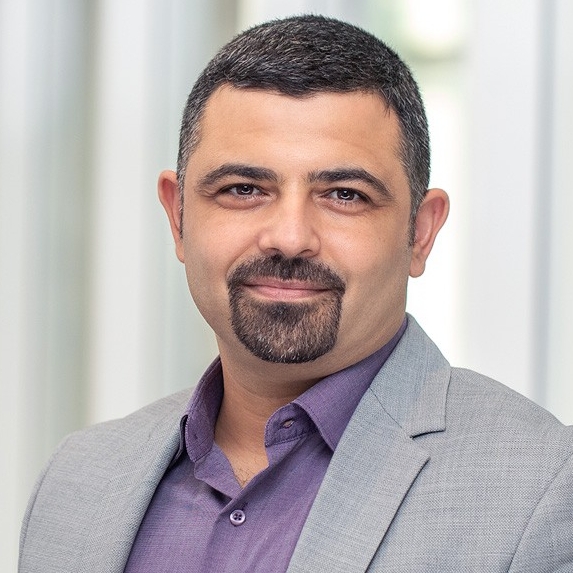
Robin T. Bye is a Professor and Deputy Head of Research at the Department of ICT and Natural Sciences at NTNU Ålesund. He serves as Academic Program Director for the MSc in Mechatronics and Automation and BSc in Automation and Intelligent Systems programs. His research focuses on cyber-physical systems, autonomous systems, and biomechanical engineering, with collaborations involving the NTNU SFI AutoShip initiative and Ålesund Biomechanics Lab. Bye actively contributes to projects addressing maritime safety, surgical simulation, and educational technology. Research interests include: Autonomous ships and maritime robotics Machine vision and haptic feedback systems Computational modeling of human movement Flipped classroom methodologies in engineering education Recent publications emphasize: Autonomous coastal navigation frameworks Biomechanical stability analysis using industrial robots Haptic rendering for surgical simulations Collision avoidance algorithms for autonomous vessels Labs/Teams: Leads the CPS Lab at NTNU and collaborates with SAFEMATE and NTNU SFI AutoShip. Active in interdisciplinary projects combining robotics, haptics, and maritime systems.
Jean Botev is a Research Scientist and co-head of the Collaborative and Socio-Technical Systems (COaST) group at the University of Luxembourg's Faculty of Science, Technology and Medicine. He directs the VR/AR Lab, focusing on immersive technologies and human-centered design. His work bridges physical and digital realities through mediated reality approaches, emphasizing collaborative virtual environments and interaction techniques. Dr. Botev holds a PhD in Computer Science (2011, University of Luxembourg) and master's/bachelor's degrees from the University of Trier (Germany). He teaches courses in Virtual/Augmented Reality, Immersive Media, and programming disciplines across multiple university programs. His research spans 85+ peer-reviewed publications, with notable contributions to IEEE VR, ACM IVA, and TVCG. He leads €5M+ in grants, including the EU H2020 FET Open ChronoPilot project (€3M) exploring time perception modulation. Awards include the 2024 EuroXR Best Demonstration Award and multiple best paper recognitions. Botev actively engages in public outreach, organizing events like ACM SIGGRAPH Asia Demo Scene and promoting ethical design principles. His work integrates socio-technical systems, human factors, and interdisciplinary collaboration to advance immersive technology applications in education, cultural heritage, and healthcare.
Dong Yang is a Researcher and PhD candidate at the Chair of Media Technology, Technical University of Munich (TUM) , since October 2021. His work bridges Computer Vision, Machine Learning, and Robotics to advance haptic teleoperation systems. B.Eng in Electrical Engineering and Automation (Fuzhou University, China) B.Sc in Electrical Engineering and Information (Technical University of Kaiserslautern, Germany) M.Sc in Electrical Engineering and Information (TUM, Germany) Research focuses on haptic communication , teleoperation , and scene understanding for robots. Key contributions include: Developing SRI-Graph for scene-robot interaction Creating ISSC for semantic shared control Advancing depth estimation in adverse weather Designing HPF-SLAM for visual navigation His publications span top conferences like ICRA , IROS , and RO-MAN , addressing topics in haptic teleoperation , sensor fusion , and collaborative robotics . Supervises thesis projects including Diffusion Model-based Imitation Learning and Scene Graph-based Real-time Scene Understanding Collaborates on projects like Centre for Tactile Internet with Human-in-the-Loop (CeTI) and Teleoperation over 5G
Tony Tang is a tenured Associate Professor at the School of Computing and Information Systems , Singapore Management University , leading the RICELab (Rethinking Interaction, Collaboration and Engagement). His research spans Human-Computer Interaction (HCI), Computer Supported Cooperative Work (CSCW), and Ubiquitous Computing. Previously affiliated with the Faculty of Information at the University of Toronto and the Department of Computer Science at the University of Calgary , he has built a career focusing on technologies that enhance human-AI interaction, mixed-reality collaboration, and immersive analytics. Education : PhD in Electrical and Computer Engineering (2010, University of British Columbia), MSc in Computer Science (2005, University of Calgary), BSc in Computer Science and Psychology (2002, Simon Fraser University) His research explores human-AI interaction (user intent expression, AI feedback), mixed reality interfaces for collaborative learning, and digital workrooms with large interactive surfaces. Recent work focuses on embodied AI agents, VR gesture design, and neurodiverse engagement in digital spaces. Key trends in his publications include immersive analytics , haptic feedback systems , and inclusive design for marginalized user groups. His work bridges theoretical insights from HCI with practical implementations in virtual and augmented environments. Grants & Funding : Current: SMU-SUTD Tier 1 Grant (S$100,000), NAVER ($1,250,000 over 5 years), Meta gift ($30,000) Past: SSHRC Partnership Engage Grant, NSERC Discovery Grant, GRAND NCE funding, MITACS Accelerate Program Scientific Awards : NSERC Post-Doctoral Fellow (2011) Eyes High Doctoral Recruitment Award (University of Calgary, 2010) Teaching & Supervision : Supervised 3 postdoctoral fellows, 26 graduate students, and 35 undergraduate students. Served as PhD Director at the University of Toronto. Developed frameworks for graduate student competencies and research proposal writing. Service & Leadership : General Co-chair for CSCW 2022 , Associate Editor for International Journal on Human-Computer Studies and HCI Journal . Held administrative roles including Associate Dean, Research at the University of Toronto (2020-2022). Labs & Teams : Leads the RICELab , which investigates novel interaction paradigms for collaboration and engagement. Collaborated on projects involving drones, 360 video systems, and haptic proxies.
Sinan Haliyo is a Professor at the Institute of Intelligent Systems and Robotics (ISIR), Sorbonne University, Paris, where he leads the 'Multiscale Interactions' research team. His academic career spans over two decades, with significant contributions to robotics, particularly in micromanipulation, haptics, and human-computer interaction. Dr. Haliyo earned his Doctorate from Pierre and Marie Curie University in 2002 with a thesis on "Adhesion forces and dynamic effects for micromanipulation," supervised by Prof. Jean-Claude Guinot. In 2019, he obtained his Habilitation to Direct Research (HDR) from Sorbonne University with the thesis "Multi-Scale Interactions," demonstrating his capacity to lead independent research and supervise doctoral candidates. His research broadly focuses on robotics and interactivity—designing teleoperated robots for specific applications and developing systems that allow operators to perceive what they are controlling through haptic and multimodal interfaces. Starting with microrobotics in the late 1990s, his work has expanded to encompass human-robot interaction, haptics, virtual reality, and human-machine interfaces. His multidisciplinary approach involves collaboration with roboticists, psychologists, neuroscientists, and biologists. Analysis of his recent publications (2023-2025) reveals a strong focus on optical microrobotics, biomedical applications, and haptic interfaces. His team is advancing techniques for precise micro-manipulation using optical tweezers combined with deep learning, developing medical microrobots for applications like biliary procedures and in vitro fertilization, and creating innovative haptic interfaces for surgical training and virtual reality. The research spans multiple disciplines including robotics, biomedical engineering, computer vision, and neuroscience. IROS'09 Best application Mechatronics Journal 2010 Triennal Best paper MARSS 2019 Best Paper World Haptics 2021 Best ToH Short Paper Hon. Ment. ISOT 2021 Best Student Paper INTERACT 2021 IFIP TC13 Pioneers' Award for Best Doctoral Student Paper Dr. Haliyo has supervised 14 theses to completion with 6 currently in progress, representing a total supervision rate of 390% (approximately 60% per thesis on average throughout his career). He has coordinated multiple significant research projects including ANR IOTA (Interactive Optical Tweezers), ANR OptoBots, and 3BIOT (Robotic Optical Tweezers for Biology). His research is funded by Sorbonne University, the Ile-de-France Region, ANR grants, and private companies including Percipio Robotics, Robeauté, and Segula. As leader of the Multiscale Interactions team at ISIR (since January 2019), Dr. Haliyo oversees a research group comprising 4 faculty members, 4 researchers, and 15 PhD students. Previously, he animated the Microrobotics group within the ISIR interaction team (2016-2019) and has been responsible for the ISIR Assisted Micromanipulation Platform since 2015, which serves as a node of the CNRS National Micro-Nanorobotics Platform and recipient of the Labex Robotex.
Elaine Chen is the Cummings Family Professor of the Practice in Entrepreneurship and Director of the Derby Entrepreneurship Center at Tufts University's School of Engineering. She holds a BS and MS in Mechanical Engineering from MIT. Her expertise spans entrepreneurship education, corporate innovation, and mission-driven ventures. She oversees the Entrepreneurship Minor program and co-curricular initiatives like accelerators and internships, fostering diverse student engagement. Previously, she served as Senior Lecturer at MIT's Martin Trust Center, developing scalable entrepreneurship programs. She is a board member at the Center for Open Science and Cybernetix Ventures. Notable awards include the MIT Monosson Prize for mentoring and recognition as an Invention Ambassador by AAAS and the Lemelson Foundation. Education: Master of Science, Mechanical Engineering, MIT, 1993 Bachelor of Science, Mechanical Engineering, MIT, 1991 Research Interests: Elaine focuses on advancing entrepreneurship education through equitable access, corporate innovation strategies, and supporting startups and non-profits. Her work emphasizes mentorship, digital infrastructure, and global entrepreneurship, particularly in Asia-Pacific regions. Awards: MIT Monosson Prize for Entrepreneurship Mentoring Invention Ambassador, AAAS and Lemelson Foundation Advising & Grants: She advises students through experiential courses like Entrepreneurial Internship and Field Study. Her consulting firm, ConceptSpring, assists corporations in innovation across healthcare, FinTech, and government sectors. She holds 22 patents and has led product development at companies like Rethink Robotics and Zeo. Labs & Teams: Leads the Derby Entrepreneurship Center, fostering cross-disciplinary innovation and student ventures through workshops, accelerators, and grants.
Dr. Franck Vidal is a Senior Lecturer and Acting Director of Research at the School of Computer Science & Electronic Engineering at Bangor University, where he is also a member of the Visualization and Medical Graphics (VMG) Group and the Research Institute of Visual Computing (RIVIC). His educational background includes: PhD in Computer Science from Bangor University (2008) Postgraduate Certificate in Higher Education (2016) Diplôme d'études approfondies Images et Systèmes from Institut National des Sciences Appliquées de Lyon (2003) Master of Science in Computer-Aided Graphical Technology Applications from Teesside University (2002) Dr. Vidal's research focuses on X-ray imaging and simulation, non-destructive testing by ionising radiation, inverse problems, optimisation and artificial evolution, high performance computing, computer vision, image analysis and machine learning, and image-based simulation. His work has significant applications in medical imaging and medical physics, including X-ray, CT, MRI, PET and radiotherapy. He applies evolutionary algorithms to solve complex inverse problems in medical imaging. His recent publications demonstrate a strong focus on GPU-accelerated X-ray simulation technologies, particularly through the gVirtualXRay library, which enables real-time simulation of X-ray images and CT volumes. His work bridges the gap between computational physics, medical imaging, and practical clinical applications, with significant contributions to PET reconstruction algorithms using the Fly algorithm. Among his notable achievements: 2nd place in the Eurographics 2009 Medical Prize for ImaGINe-S David Duce Prize for the Best Short Paper (2019) Best Poster Presentation award (2022) Development of the gVirtualXRay open source library Multiple publications on evolutionary algorithms for medical imaging Dr. Vidal has supervised multiple research students including Julien Lavauzelle and Adrien Dutertre from ENSTA ParisTech. He has secured funding for significant projects including Fly4PET (focused on PET reconstruction for radiotherapy) and RAMPVIS (visualization for pandemic response). He actively collaborates with institutions worldwide, including INRIA in France and the University of California, San Diego. He leads the development of several innovative projects including gVirtualXRay (a GPU-based X-ray imaging library), Fly4Arts (evolutionary art using the Fly algorithm), and RASimAs (a regional anaesthesia simulator and assistant), demonstrating his ability to translate theoretical research into practical applications across medical and non-medical domains.
René Schäfer is a Researcher at RWTH Aachen University's Department of Computer Science, specializing in Human-Computer Interaction (HCI). His primary focus is countering deceptive patterns in user interfaces and developing ethical design strategies. He has contributed to projects like RIME (textile interfaces) and ARPen (mid-air interaction), and coordinates the university's Fab Lab. As the i10 librarian, he manages publication databases and library systems. His research spans dark patterns, accessible AI applications, and tactile interfaces. He has supervised over 30 student theses, emphasizing deceptive pattern mitigation and HCI ethics. Schäfer actively reviews for top conferences like CHI and NordiCHI, and co-organizes academic workshops. His work bridges theoretical HCI research with practical tools, such as Flowboard for embedded programming education and tactile slider evaluations. Key contributions include cross-cultural studies on linguistic barriers in HCI, collaborative strategies against online booking deceptive practices, and developing generative AI solutions for digital accessibility. His 2020 master’s thesis on ARPen interaction design showcases his long-standing interest in innovative UI paradigms.
Jiying Zhao is a Professor at the School of Electrical Engineering and Computer Science (EECS) at the University of Ottawa. He holds a Ph.D. in Engineering from Keio University (Japan) and multiple engineering degrees from North China Electric Power University (China). His academic career includes roles as an instructor and associate professor at Thompson Rivers University (Canada) before joining the University of Ottawa in 2001, where he advanced to full professor in 2009. Dr. Zhao's research focuses on image/video processing , multimedia communications , and digital watermarking . Notable contributions include advancements in video super-resolution techniques, perceptual quality assessment of stereoscopic images, and robust watermarking algorithms resistant to geometric attacks and compression. His professional affiliations include IEEE, IEICE, and membership in Professional Engineers Ontario. While no specific awards or grants are listed, his extensive publication record demonstrates significant contributions to multimedia and signal processing fields. Advising and student mentorship details are not provided in the available text. Research interests are centered around 3D imaging , haptic communication , and content security , with applications in telepresence systems and video authentication. He maintains an active research website linked to the School of EECS.
Shinjiro Sueda is an Associate Professor in the Department of Computer Science & Engineering at Texas A&M University, where he leads the Aggie Graphics Group. His research focuses on physically-based modeling, biomechanical simulation, and computational fabrication. He also holds an adjunct appointment at Baylor University. Education: Ph.D. in Computer Science, University of British Columbia (2011) M.S. in Computer Science, Rutgers University (2006) B.Sc. (Hons) in Computer Science, University of British Columbia (2003) Postdoctoral Fellowships: Disney Research Boston & MIT (2011–2013) Research Interests: Computer Graphics and Animation Computational Biomechanics (musculoskeletal systems, muscle dynamics) Computational Fabrication (3D printing, mechanical design) Robotics and Haptic Interaction Virtual and Augmented Reality Applications Publications: His work spans 100+ peer-reviewed articles in top venues like ACM Transactions on Graphics (SIGGRAPH), with recent focus on neural simulation techniques, deformable physics, and robotics integration. Notable contributions include REDMAX (articulated dynamics), AutoConnect (3D-printable connectors), and Simit (physical simulation language). Awards: NSF CAREER Award (2019) Disney Inventor Award (2013) Best Paper Awards (SIGGRAPH Asia 2020, SWS 2023) Teaching & Service: Teaches courses on computer graphics, animation, and computational fabrication Program Chair: Motion, Interaction & Games (2020); Eurographics (2023) Associate Editor: ACM Transactions on Graphics (2022–present) Labs: Directs the Aggie Graphics Group, collaborating with industry partners like Disney Research and MIT. Active in developing open-source tools for physical simulation (Simit) and VR educational platforms (Anatomy Builder VR).
Mohamad Eid is an Associate Professor of Electrical and Computer Engineering at New York University Abu Dhabi (NYUAD), with a Global Network Associate Professor appointment at NYU Tandon School of Engineering. He leads the Applied Interactive Multimedia Laboratory (AIMLab), focusing on cutting-edge research in haptics and multimodal interaction. His research interests include haptics, affective haptics, EEG-based neurohaptics, soft haptics, biofeedback technologies, and human-computer interaction. He explores how tactile feedback can enhance virtual and augmented reality, assistive technologies, and medical simulation. His recent publications demonstrate strong activity in IEEE Transactions on Haptics, ACM TOMM, and other top venues, with work spanning vibrotactile alarms, mid-air haptics, emotion communication via touch, and haptic dental simulation. His research integrates engineering, neuroscience, and multimedia to create immersive and affective user experiences. Best Paper Award, ICBAE 2016 Best Paper Award, DS-RT 2008 ACM Multimedia 2009 Grand Challenge Most Entertaining Award Mohamad Eid advises students through capstone projects in computer science and biology and has contributed to educational initiatives such as robotic handwriting assistance for Arabic script. He holds multiple patents in haptic feedback systems and is an active editor for IEEE Transactions on Haptics. His work is supported by grants and has been featured in media outlets like Wired and The National. He leads the Applied Interactive Multimedia Laboratory (AIMLab), a multidisciplinary research group developing innovative haptic and interactive systems for healthcare, education, and entertainment.
Vivian H Shen is an Assistant Teaching Professor at Carnegie Mellon University's Entertainment Technology Center while completing her PhD in Robotics under Prof. Chris Harrison. Her work bridges embedded systems, sensing technology, and immersive VR/AR experiences with a focus on haptic feedback solutions. Education: Pursuing PhD in Robotics at Carnegie Mellon University Research Interests: Haptics, Human-Computer Interaction, Virtual/Augmented Reality, Embedded Systems Current research explores novel haptic modalities beyond traditional vibrotactile feedback, including synthetic jet mid-air haptics and electroosmotic pump-driven wearable arrays. Her work targets practical implementations for consumer VR/AR while advancing tactile immersion through technical characterizations and extensive user studies. Recent publications demonstrate technical innovations in haptic glove miniaturization, mouth-focused tactile rendering, and extended-range touch sensing systems. These contributions span hardware prototyping, algorithm development, and application case studies across extended reality, medical, and automotive domains. Scientific Awards: Jane Street Graduate Research Fellow, Swartz Entrepreneurial Fellow, NSF GRFP Honorable Mention, Best Paper Awards at TOCHI 2023 and CHI 2022 Technical Expertise: VR/AR Systems, Embedded Sensing, Wearable Actuators, Depth Camera Applications
Dr. Oleg Fryazinov is a Lecturer in Computer Animation at Bournemouth University's National Centre for Computer Animation (NCCA). His expertise spans mathematical modeling, hybrid modeling, and real-time rendering, with a focus on applications in 3D printing and accessibility. He holds a PhD in Mathematical Modelling from Moscow State Technological University (2005) and has over 30 publications in peer-reviewed venues. Education: BSc (1999), MSc (2001), PhD (2005) from Moscow State Technological University Research Interests: He investigates function-based shape modeling, hybrid modeling for animation, and procedural methods. His work includes web-based modeling, transfinite interpolation of material properties, and applications in rehabilitation technologies (e.g., SHIVA project) and cultural heritage. Publications Trends: Recent works focus on VR/AR for rehabilitation, 3D-printed haptic aids, and mathematical frameworks for heterogeneous object representation. Collaborative efforts with researchers like Pasko and Adzhiev emphasize implicit surfaces and signed distance fields. Projects & Collaborations: Co-leads international initiatives such as SHIVA (3D printing for disabilities) and Hyperfun. Served as deputy editor of the "Computer Graphics and Geometry" journal and reviewed for top conferences.
Professor Jian Chang is a leading academic at Bournemouth University with over 15 years of research experience in computer animation. He works at the National Centre for Computer Animation (NCCA), recognized as the UK's No.1 educational and research base for computer animation. His affiliation spans multiple research projects and collaborations with international institutions, NHS surgeons, and organizations like RNLI. His research interests focus on physics based modelling (deformation & fluid), motion synthesis, virtual reality (surgery simulation), and novel HCI (eye tracking, gesture control and haptic). He actively exploits computer animation techniques for cross-disciplinary applications, resulting in significant international research collaborations. His work bridges computer science, engineering, and medical fields through innovative virtual reality applications. Professor Chang's recent publications (2021-2024) demonstrate a strong focus on physics-based fluid simulation, facial animation techniques, surgical instruction generation, and advanced rendering methods. His work shows a consistent trajectory toward more sophisticated physics modeling, particularly in fluid dynamics using SPH methods, and expanding applications in medical training and virtual reality environments. International Travel Grant (TG091783) from The Royal Society (2009) FP7 MC-IIF project 'AniM' - 623883 (Principal Investigator) FP7 MC-IRSES project 'AniNex' - 612627 (Chief Scientist) FP7 funded 'Dr Inventor' project - 611383 (€2.65M) InterReg VA France (Channel) England investment of €5.3M Professor Chang has secured substantial funding from diverse sources including the Royal Society, EU FP7, InterReg VA France (Channel) England, and HEIF. He has taken project management and supervision roles in prestigious EU-funded research projects. His research has directly contributed to innovative developments like the 'virtual surgery theatre' with NHS surgeons and 'virtual lifeboat launching' with RNLI, demonstrating significant cross-sectoral impact potential. His work bridges academic research with practical applications in healthcare, heritage preservation, and maritime safety.
Steven Hayward is a Professor of Computational Biology at the School of Computing Sciences , University of East Anglia. He serves as Director of Research and is affiliated with the Computational Biology Group , Centre for Japanese Studies , and Visual Computing and Signal Processing units. His work bridges computational methods with biological questions. Education: BSc(Hons) in Physics from University of Bristol, Diplom in Physics from Johannes-Gutenberg University, Mainz, and PhD in Molecular Biology from University of Edinburgh. Hayward's research focuses on protein structure and conformational changes , particularly their relationship to function. He employs biogeometry , molecular dynamics , and bioinformatics to investigate: DynDom software and its database for protein domain movements α-sheet structure in amyloid formation for diseases like Alzheimer’s and Parkinson’s Interactive docking tools (e.g., DockIT) using VR and haptic devices Recent articles show his expertise in HDAC6 inhibition , amyloid protofilament modeling , and GPU-accelerated molecular visualization . His 15 most recent works span 2017–2025 and include collaborative projects with European and Japanese institutions. Scientific awards include: Biophysics and Physicobiology Editors' choice award (2017) Great Britain Sasakawa Foundation Fellowship (2024) JSPS Bridge Fellowship (2015) Hayward collaborates with Professor Akio Kitao (Tokyo Tech), Professor James Milner-White (Glasgow), and Dr Stephen Laycock (UEA). He has secured grants from ELIXIR Europe , Daiwa Anglo-Japanese Foundation , and JSPS for projects including PDBe-KB database development and VR-based education tools. Current initiatives involve creating a system for studying protein conformational landscapes and interactive docking platforms.