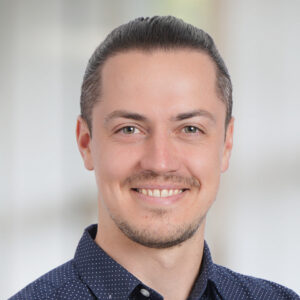
Paul Hemeren is an Associate Professor of Informatics at the University of Skövde , specializing in biological motion perception and human-robot interaction. His research spans cognitive science, artificial intelligence, and transportation safety, with emphasis on understanding how humans perceive actions and intentions in dynamic environments. Academic Background : Ph.D. in Cognitive Science (Lund University, 2008), B.A. from Hope College (USA) Current Research : Focuses on action representation, driver-cyclist interaction modeling, and multimodal perception systems Applied Projects : Developing intelligent driver support systems (I2Connect) and predictive collision detection models Methodologies : Combines experimental psychology with machine learning and computational modeling Recent publications examine kinematic primitives in action similarity judgments, attentional synchrony in films, and data-driven collision prediction models. His work bridges theoretical cognitive science with practical implementations for traffic safety and robotic systems, particularly through collaborations with Swedish research foundations and European robotics initiatives. Professional affiliations include membership in the Cognitive Science Society and European Network for Artificial Cognitive Systems. Research has been funded by Swedish insurance research funds and EU Horizon programs.
Thomas Stieglitz is a Professor and Director of the Professorship for Biomedical Microtechnology at the Faculty of Engineering, University of Freiburg. He maintains strong affiliations with the Bernstein Center Freiburg, the Institute for Microsystems Technology (IMTEK), BrainLinks-BrainTools, and the Intelligent Machine-Brain Interfacing Technology initiative. His research program focuses on developing advanced neural interfaces and biomedical microsystems for restoring lost body functions after neurological injury or amputation. Professor Stieglitz's research spans multiple cutting-edge areas in neural engineering. His work centers on neural implants for long-term stable interface with the nervous system, brain-computer interfaces for restoring communication and control, and neuroprosthetics for restoring sensory and motor functions. He investigates microfabrication techniques for creating biocompatible neural interfaces, wireless power and data transfer methods for implantable devices, and sensory feedback systems for prosthetic limbs. His research also addresses neuromodulation approaches for treating neurological conditions and biomechanical analysis of human movement in amputees and patients with neurological disorders. His recent publications reveal a strong emphasis on developing miniaturized neural interfaces with improved biocompatibility, enhancing wireless communication for implantable devices, and creating advanced neuroprosthetic systems with sensory feedback. The research spans from fundamental materials science for neural interfaces to clinical applications in rehabilitation, with particular focus on long-term stability of neural implants and restoring natural sensory experiences in prosthetic users. Among his notable scientific achievements is being named an IEEE Fellow in 2022, recognizing his significant contributions to biomedical engineering and neural interface technology. This prestigious honor places him among the top researchers in his field worldwide. Professor Stieglitz has advised 37 doctoral and master's students throughout his career. He has managed an impressive portfolio of 25 research projects, serving as project manager for 14 major initiatives including AI-Hand, Active Stents, and BaroLoop. His leadership extends to significant administrative roles including Geschäftsführender Direktor of IMTEK (2021-2025), membership in the University Senate, chairing the admissions committee for BSc/MSc programs, and serving as General Co-Chair for major international conferences. He leads the Intelligent Machine-Brain Interfacing Technology research group and collaborates extensively with the BrainLinks-BrainTools cluster of excellence. His laboratory combines expertise in microsystem technology, neuroscience, and clinical rehabilitation to develop next-generation neural interfaces that bridge engineering and medicine, with the ultimate goal of restoring natural function to individuals with neurological impairments.
Emmanuel Guigon is a CNRS Research Fellow at Sorbonne University , affiliated with the IRIS team. His primary research focuses on computational neuroscience of motor control , exploring principles like optimal feedback control and sensorimotor integration. He is based at ISIR (Institute des Systèmes Intelligents et de Robotique), Campus Pierre et Marie Curie, Paris, and can be contacted at emmanuel.guigon@sorbonne-universite.fr. Guigon's research addresses the neural mechanisms underlying movement control , particularly how the brain manages kinematic redundancy and optimizes motor commands. His work spans biomechanics, robotics, and computational modeling, proposing unified frameworks for posture-movement coordination and explaining phenomena like Fitts' law and motor equivalence. Applications include humanoid robot control and brain-robot interfaces. His scientific contributions are evident in publications in journals such as PLoS Computational Biology , Journal of Neurophysiology , and Biophysical Journal . While no explicit awards or grants are listed, his models have been highlighted in F1000 Biology. Guigon's collaborations include researchers like Agnès Roby-Brami, Pierre Baraduc, and Nathanael Jarrasse.
Nizar Ouarti is an Associate Professor at ISIR (Institute of Intelligent Systems and Robotics), Sorbonne University, and a member of the ASIMOV research team. His work focuses on robotics, haptics, and human-computer interaction. His research spans haptic communication of emotions using air jet stimulation, operator-controlled nanomanipulation with virtual reality, and gaze tracking systems enhanced by visual attention models. He also applies signal processing techniques, including non-stationary wavelet packets, to denoising problems. His work bridges human perception and machine interfaces for applications in medical and industrial robotics. His publications demonstrate a strong trend in multimodal human-robot interaction, with emphasis on tactile and visual feedback. Key areas include nanomanipulation, emotion recognition through haptics, and real-time gaze tracking, showing interdisciplinary integration of robotics, signal processing, and cognitive science. Ouarti is an active member of the ASIMOV team at ISIR, which develops intelligent robotic systems for precise manipulation and human-centered applications.
Chenyu Wen is an Assistant Professor at the Department of Electrical Engineering; Solid State Electronics , Uppsala University . His research focuses on: Solid-State Nanopores DNA Sequencing Technologies Signal Processing Algorithms Wearable Electronic Sensors His recent work explores neuromimetic tactile systems and machine learning applications for nanopore sensing. Key collaborations include researchers like Shiyu Li , Zhen Zhang , and Shi-Li Zhang . Publications span high-impact journals including Science , Nature Nanotechnology , and ACS Nano .
Dr. Zhangxian Deng is an Assistant Professor at Boise State University's Department of Mechanical and Biomedical Engineering. He holds a Ph.D. in Mechanical Engineering from Ohio State University and a B.E. in Mechatronics Engineering from Zhejiang University. His research focuses on smart materials, structural health monitoring, vibration control, and energy harvesting, with applications in aerospace, nuclear, and biomedical systems. Education: Ph.D., Mechanical Engineering, Ohio State University B.E., Mechatronics Engineering, Zhejiang University Dr. Deng's work integrates multiphysics modeling and additive manufacturing to develop advanced sensors and actuators. Key areas include: Magnetostrictive and piezoelectric materials for vibration control Triboelectric nanogenerators for energy harvesting Flexible electronics for structural health monitoring 3D printing of multifunctional sensors Wireless sensing systems for harsh environments Nanosynthesis of magnetic alloys via ball milling Recent publications highlight his efforts in printing MXene-based nanogenerators, modeling surface acoustic wave thermometers, and developing nuclear reactor monitoring systems. His research aligns with UN Sustainable Development Goals related to clean energy and resilient infrastructure. Dr. Deng collaborates with NASA Glenn Research Center and the NSF I/UCRC Smart Vehicle Concepts Center, focusing on: High-temperature microelectronics Graphene patterning Adaptive magnetoelastic metamaterials Coaxial magnetic gears Ultrasonic waveguides Biomimetic tactile arrays Projects include NEUP-funded nuclear reactor monitoring transducers and NSF MRI grants for optical measurement workstations.
Andrii Matviienko is an Assistant Professor (tenure track) in Computer Science specializing in Human-Computer Interaction at KTH Royal Institute of Technology, Sweden. He works at the Department of Media Technology and Interaction Design (MID) within the School of Electrical Engineering and Computer Science. His research focuses on Extended Reality (XR) and interaction with and within immersive spaces, where he leads the Immersive Technologies Lab. Dr. Matviienko received his Ph.D. in Computer Science from the University of Oldenburg while working at the Media Informatics and Multimedia Systems group with Susanne Boll. His academic journey includes: Postdoctoral researcher at the Telecooperation Lab, Technical University of Darmstadt, Germany Research visit at the Multimodal Interaction Group, University of Glasgow (UK), working with Stephen Brewster Work at the Exertion Games Lab led by Florian 'Floyd' Mueller at Monash University (Australia) His research focuses on Extended Reality (XR) and interaction with and within immersive spaces. He leads the Immersive Technologies Lab, where his team explores ways of improving users' XR experiences through novel input techniques, haptic feedback, locomotion methods, taste interfaces, simulations, and exertion games. His work particularly emphasizes cycling interfaces and safety systems for cyclists, as well as child-computer interaction and tangible interfaces. He has made significant contributions to understanding how people interact with technology in physical movement contexts, especially while cycling. Analysis of Dr. Matviienko's recent publications (2023-2025) reveals a strong focus on immersive technologies with several key trends emerging. His work spans virtual reality, augmented reality, and mixed reality applications across diverse domains including cycling safety, medical training, social interaction, and multisensory experiences. A significant portion of his research investigates novel input methods and sensory feedback in XR environments, with particular attention to how physical movement and embodiment affect user experience. His publications demonstrate growing interest in AI integration with immersive technologies, as seen in projects involving generative AI for museum experiences and human-AI interaction for dementia care. Dr. Matviienko actively mentors students and collaborates with researchers worldwide. He encourages students interested in thesis work to reach out to him and his team. His research is supported by various grants that enable: Development of VR bicycle simulators and cycling safety systems Exploration of haptic feedback and novel input techniques in XR Investigation of multisensory experiences, including taste modulation Creation of medical simulation tools for surgical training Dr. Matviienko leads the Immersive Technologies Lab at KTH, where his team explores ways of improving users' XR experiences via novel input techniques, haptic feedback, locomotion, taste, simulations, and exertion games. The lab collaborates with international partners including researchers from Monash University, Technical University of Darmstadt, and University of Glasgow. Current projects focus on cycling interfaces, social navigation in VR, medical simulations, and multisensory experiences that integrate audio, visual, and taste stimuli.
Christopher Katins is a Researcher at the Institute of Computer Science within the Faculty of Mathematics and Natural Sciences at Humboldt University of Berlin. His work focuses on Human-Computer Interaction , particularly in Mixed Reality , Extended Reality , and applications to safety-critical environments such as aviation. Research Trends : Recent publications emphasize Large Language Models in UX design, XR user studies , and safety-critical interface challenges . Key areas include public perceptions of XR , spatial interaction techniques , and empathic interface development . Labs & Teams : Affiliated with the Human-Computer Interaction for Scientific Software group, driving innovation in immersive analysis and aviation-specific interfaces.
Robert Teather is an Associate Professor and Director at the School of Information Technology , Carleton University . With a PhD in Computer Science from York University (2013) and postdoctoral experience at McMaster University (2015), Dr. Teather specializes in Human-Computer Interaction with focus on 3D user interfaces, virtual reality systems, and game interface design. PhD: Computer Science, York University (2013) Postdoc: McMaster University (2015) His research explores Virtual Reality interaction fundamentals including input device comparison , cybersickness mitigation , and haptic feedback systems. He has developed 3D interface evaluation frameworks for comparing mouse vs 3D tracker inputs, and investigates mobile game control schemes and diegetic display design in gaming contexts. Dr. Teather's recent publications demonstrate focus on VR interaction techniques (58% of recent work), input device evaluation (33%), and mobile XR systems (9%). NSERC Postgraduate Scholarship Ontario Graduate Scholarship Best Demo Award - ACM Symposium on Spatial User Interaction (SUI 2017) Best Paper Honourable Mention - ACM Symposium on Applied Perception 2020 He supervises graduate students in Human-Computer Interaction and Digital Media programs, and leads research in CFI-supported labs exploring shape-changing haptic interfaces and VR scalability frameworks .
UĞUR TÜMERDEM is a faculty member in the Department of Machine Theory, System Dynamics and Control at the Faculty of Engineering, Marmara University, Istanbul. He holds a B.Sc. in Mechatronics from Sabanci University (2005), an M.Sc. and Ph.D. in Integrated Design Engineering from Keio University, Tokyo (2007 and 2010). Postdoctoral research was conducted at IBM Research - Tokyo. His research focuses on haptics in robotic surgery systems, including force estimation algorithms, haptic teleoperation architectures, and mechanism design for surgical tools. He has advised 3 theses and contributed to 11 projects. His research areas include Machine Theory, System Dynamics, Robotics, and Modeling of Dynamic Systems.
Mark Kovic, O.T.D., OTR/L, is a Professor and Associate Program Director in the Occupational Therapy Program at Midwestern University's College of Health Sciences-Downers Grove. He holds a Post-Professional Occupational Therapy Doctorate from the University of Illinois at Chicago (2008) and a Master of Science in Humanitarian Action from the University of San Diego (2025). His research focuses on stroke rehabilitation protocols, global healthcare workforce certification, and implementation of the WHO ICF model in international settings. Dr. Kovic's leadership roles include Chairperson of the American Congress of Rehabilitation Medicine Stroke SIG, Therapy Missions President, and CGFNS Global Healthcare Worker Certification Team Lead. He has received prestigious awards such as the Thelma Cardwell Research Award and is a Fulbright Specialist. His interdisciplinary work spans postacute stroke care standards, 3D-printed assistive technologies, and Parkinson’s disease therapy practices. Teaching activities include courses like Professional Development II/III and Data-Based Decision Making. His research emphasizes bridging clinical practice with global health challenges, particularly through technology-driven solutions and policy advocacy.
Dr. Xiangru Xu is a Professor in the Department of Mechanical Engineering at the University of Wisconsin-Madison, leading the Autonomous & Resilient Controls Laboratory (ARC Lab). His research focuses on developing control methodologies for trustworthy autonomous systems, emphasizing safety-critical control, cyber-physical systems, and artificial intelligence applications. He holds affiliations with both the Mechanical Engineering Department and the Electrical & Computer Engineering Department within the College of Engineering. Dr. Xu earned his PhD (2014) from the Institute of Systems Science, Chinese Academy of Sciences, and a BS (2009) in Mathematics from Beijing Normal University. His work has been recognized with prestigious awards, including the NSF CAREER Award (2023) and the IEEE Best New Application Paper Award (2019). His research explores adaptive safety protocols for nonlinear systems, neural feedback systems verification, and robust control strategies. Recent publications highlight advancements in hybrid zonotope-based reachability analysis, safety-critical control barrier functions, and autonomous vehicle development. His contributions bridge theory and practice, with applications in robotics, autonomous vehicles, and control system design. Awards: NSF CAREER Award, IEEE Best Paper Award, and multiple scholarships from Beijing Normal University. Teaching: Courses include Advanced Control Systems, Dynamic Systems, and interdisciplinary design projects. Labs: ARC Lab focuses on resilient control algorithms for autonomous systems, emphasizing simulation-to-reality validation.
Dr. Warrick Roseboom is an Associate Professor in Psychology and Informatics at the University of Sussex's School of Engineering and Informatics. His research focuses on human perception, particularly time perception, memory, and the neural mechanisms underlying these processes. He holds joint appointments in the Department of Informatics and the School of Psychology. Dr. Roseboom completed his PhD at the University of Queensland and conducted postdoctoral research at NTT Communication Science Laboratories in Japan. His work integrates machine learning, neuroimaging, and behavioral experiments to develop models of time perception and episodic memory, with applications in digital memory augmentation. He is affiliated with the AI Research Group and the Centre for Sensory Neuroscience and Computation at Sussex. His research interests include temporal perception, phenomenal causality, and the interaction of sensory input with conscious experience. He supervises students across Informatics, Psychology, and Neuroscience, and teaches modules on neuroscience, AI, and consciousness. Recent publications highlight his work on predicting subjective time from brain activity, Bayesian models of intentional binding, and critiques of methodologies like the rubber hand illusion. His peer-reviewed articles span journals in computational neuroscience, psychology, and AI.
Dr. Joanna Lewis is an Assistant Professor in the Department of Psychological Sciences at the University of Northern Colorado (UNC), part of the College of Education and Behavioral Sciences. She holds a Ph.D. in Human Factors and Cognitive Psychology from the University of Central Florida (2018), supported by a National Science Foundation Graduate Fellowship. Her research focuses on visual attention mechanisms, particularly attentional capture in dynamic environments, anxiety's impact on perception, aging-related cognitive changes, and cybersecurity categorization. Education: Ph.D. in Human Factors and Cognitive Psychology, University of Central Florida (2018) B.S. in Psychology, Colorado State University (USA) Research Interests: Visual attention dynamics, especially for looming/abrupt stimuli Threat perception and anxiety's influence on visual processing Human factors in aging populations and wearable technology design Cybersecurity behaviors and phishing susceptibility Technology's impact on cognitive performance (e.g., AR/VR applications) Publications Trends: Recent work addresses VR/AR usability, cybersecurity education, and pandemic-era social behaviors. Her articles often bridge fundamental psychology with applied domains like medical training, ergonomics, and online safety. Awards: National Science Foundation Graduate Fellowship Advising & Grants: Mentored undergraduate and graduate students in independent research; all mentored undergraduates pursued doctoral programs. Collaborates on projects involving visual search training and phishing detection. Active in securing grants related to human factors and aging populations.
Antonello Giannitrapani is an Associate Professor at the Department of Information Engineering and Mathematics at the University of Siena, Italy. He is affiliated with the Systems and Control Group and focuses on research in smart grids, multi-agent systems, aerospace applications, and mobile robots. His work emphasizes distributed control, energy storage optimization, and SLAM (Simultaneous Localization and Mapping) for robotics. Giannitrapani holds a PhD and MSc in Information Engineering from the University of Siena (2004 and 2000, respectively). Research interests include: Smart grid optimization for voltage control and energy storage systems Distributed algorithms for multi-agent systems and consensus problems Aerospace control, including spacecraft guidance and rendezvous Mobile robotics with a focus on SLAM, cooperative systems, and haptic interfaces Selected projects include CIDCABIP (2018-2020), addressing data collection and predictive maintenance, and participation in initiatives like the Energy-Aware Factory of the Future (2020-2023). Teaching roles span courses in Data Analysis, Decision Analysis, and Robotics (in Italian). Key contributions include: Optimal energy storage placement in low-voltage grids A distributed asynchronous method of multipliers for nonconvex optimization Variable-horizon guidance for spacecraft docking Development of remote labs for multi-robot experiments His research integrates control theory, optimization, and robotics to address challenges in energy systems, autonomous systems, and distributed intelligence.