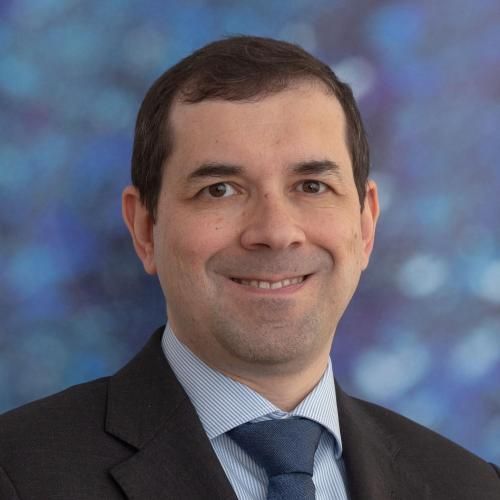
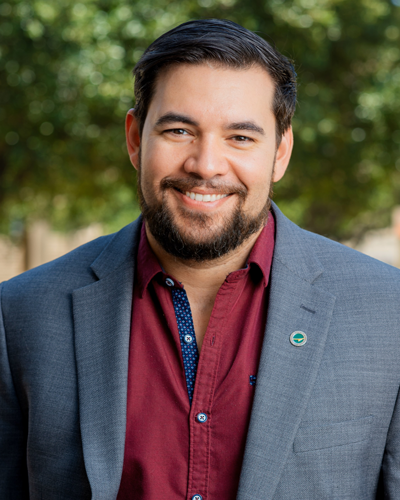
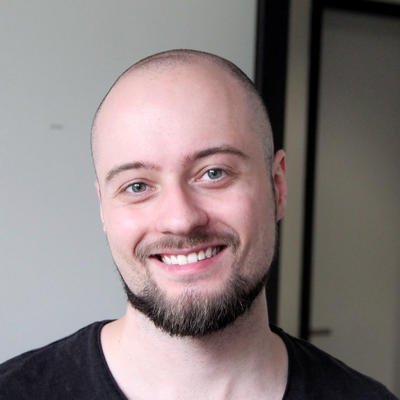
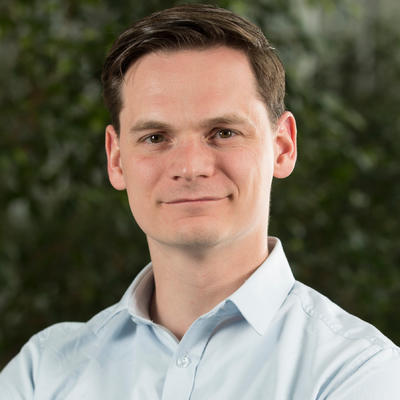
Dr. Jorge Juan Gil Nobajas is a Professor of Control Engineering and Robotics at Tecnun (School of Engineering, University of Navarra). His research focuses on robot control, haptic interfaces, and biomedical robotics, with a particular emphasis on stability analysis, haptic rendering algorithms, and mechatronic systems for medical and industrial applications. Research Interests: Robot control systems, haptic interface design, stability analysis in virtual environments, biomedical device development (e.g., bone drilling tools, allergy diagnostic systems), and mechatronic solutions for aerospace and rehabilitation. Publications: His work spans robotics, mechatronics, and biomedical engineering, with recent studies on collaborative haptic robots, automated disassembly of e-waste, and gravity compensation in rehabilitation systems. Patents: He holds international patents for haptic systems in surgical assistance and automated allergy testing.
R. Lyle Hood is an Associate Professor in the Department of Mechanical Engineering at The University of Texas at San Antonio (UTSA), within the Margie and Bill Klesse College of Engineering and Integrated Design. He leads the Medical Design Innovations Laboratory, focusing on developing life-saving medical devices for military and civilian emergency applications. His educational background includes: B.S. from the University of Houston M.S. from Virginia Tech-Wake Forest University Ph.D. from Virginia Tech-Wake Forest University Hood's research spans Biomedical Engineering with emphasis on military medical technology , nanofluidic drug delivery , and emergency airway management . His work addresses critical battlefield medical challenges through innovations in portable suction devices, fail-safe drug delivery systems, and optical tissue characterization, significantly enhancing performance and portability in resource-limited environments. Analysis of his 2023-2025 publications reveals dominant trends in military medical technology (40% of recent work), particularly battlefield-ready suction systems and airway management solutions. Substantial research (30%) focuses on nanofluidic drug delivery platforms for HIV prevention and cancer treatment, while optical tissue characterization comprises 20% of his output. While no specific awards are documented in available sources, his military-focused research suggests significant funding from Department of Defense initiatives and biomedical grants. Dr. Hood mentors graduate students in the Medical Design Innovations Laboratory, though specific advisee names aren't publicly listed. His team collaborates extensively with military medical personnel, biomedical engineers, and nanotechnology specialists to rapidly translate laboratory innovations into field-deployable medical solutions.
Apoorva Kapadia serves as a Visiting Assistant Professor in the Electrical and Computer Engineering Department at Clemson University's College of Engineering. Joining the department in 2014 after previously working as a Lecturer in General Engineering at the same institution, Dr. Kapadia focuses on electrical circuits, control systems, robotics, and integrated system design while advising the Electrical & Computer Engineering Graduate Student Association. Dr. Kapadia's educational background includes a Ph.D. in Electrical Engineering from Clemson University (with a graduate certificate in Engineering and Science Education), an M.S. in Electrical Engineering from Clemson, and a B.S. in Instrumentation Engineering from the University of Mumbai. Prior to doctoral studies, they worked as a Research Engineer in Brooklyn College's Biomimetic and Cognitive Robotics Laboratory. Research interests span novel robot manipulators , nonlinear control strategies , animated architecture , and robotics pedagogy . Their publication trends reveal deep specialization in continuum robotics, with significant contributions to variable-topology manipulators, teleoperation interfaces, and space robotics applications. Keywords across recent works emphasize biomimetics, adaptive structures, and control theory. Dr. Kapadia actively contributes to the academic community as an IEEE member (Robotics & Automation and Control Systems societies), reviewer for robotics journals, and participant in Clemson's Intelligent Materials, Systems and Environments (IMSE) Institute. Their work has received funding from NASA, DARPA, and NSF. Teaching remains central to their role, with development of laboratory manuals, lecture notes, and an online class development guide. Current advising includes graduate student association leadership, though specific student names aren't documented in public sources.
Tom Davis is an Associate Professor in Music and Audio Technology at The Media School, Bournemouth University , where he teaches on the BA Music and Sound Production degree. He is a practicing artist specializing in sound installation and live performance , with exhibitions across Europe and the United States. His research focuses on the interface between music and technology , including instrument building, technologically mediated improvisation, and enaction. Education: PhD in Sonic Art (Queen's University Belfast, 2008) PGCert in Education Practice (Bournemouth University, 2015) MA in Communication Media: Creative Sound Production (University of the West of England, 2004) BSc (Hons) in Physics with Music (University of Edinburgh, 2001) Research Interests span interdisciplinary domains such as Music Technology , Human-Computer Interaction , and Sonic Art , with a focus on enactive and postphenomenological frameworks. His work explores networked performance ecosystems , actuated instruments , and AI-mediated creativity . Publications and Research Trends reflect his expertise in digital music interfaces , human-AI collaboration , and cultural heritage digitization . Key themes include improvisational agency , assistive technology , and generative sound systems . Grants and Leadership: Davis leads projects like Shared Post-Human Imagination: Human-AI Collaboration in Media Creation (AHRC, 2024) and Improving Educational Outcomes for SEN Students (HEIF, 2017). He serves as an external examiner for institutions like London College of Communication (UAL) and contributes to peer review for journals and funding bodies. Labs and Collaborations: As an affiliate member of CIPPM (Centre for Intellectual Property Policy & Management) , he engages in cross-disciplinary research on emerging technologies and global IP policy .
Edward Claflin is a Clinical Associate Professor in the Department of Physical Medicine and Rehabilitation at the University of Michigan. His roles include Program Director , Program Assistant , and Associate Medical/Clinical Director for the same department. He is actively involved in research related to stroke rehabilitation, gait analysis, and robotic therapy. Current NIH grants (2023-2028) exploring stroke and Botulinum Neurotoxin effects on gait NIH-funded NewGait low-cost rehabilitation system (2022-2025) NSF grant on semi-passive robots for stroke recovery (2018-2023) His research focuses on neuromotor mechanisms in post-stroke recovery, biomechanics of gait , and virtual reality applications in modulating cortical pathways. Over the past decade, he has published extensively on ankle stiffness modulation, corticospinal excitability, and rehabilitation technology validation. Collaboration network includes researchers in Biomedical Engineering, Neurology, and Physical Therapy departments. His work bridges clinical rehabilitation with technological innovation, particularly in semi-passive robotics and sensory feedback systems.
Dirk Wollherr is a Senior Researcher and Lecturer (Privatdozent) at the Institute of Automatic Control Engineering, Faculty of Electrical Engineering and Information Technology, Technical University of Munich (TUM). He received his Dipl.-Ing. (2000), Dr.-Ing. (2005), and Habilitation (2013) from TUM. His career includes research at TU Berlin and a JSPS Fellowship at the University of Tokyo. He led the Cluster of Excellence 'Cognition for Technical Systems' (2006-2008) and is a TUM Carl-von-Linde Junior Fellow (2010-2013). Research Interests: Autonomous mobile robots, human-robot interaction, SLAM, real-time trajectory planning, stochastic model predictive control, and robotic manipulation under uncertainty. His work bridges control theory and practical applications in urban robotics, agriculture automation, and autonomous vehicles. Publication Trends: Recent articles (2021-2025) focus on robust control under uncertainty, human-robot collaboration, agricultural automation, and probabilistic motion planning. Key themes include constraint violation minimization, data-driven control, and ethical human-robot interaction. Awards & Recognition: Japanese Society for the Promotion of Science (JSPS) Research Fellowship (2004) TUM Carl-von-Linde Junior Fellowship (2010-2013) Projects & Leadership: Principal investigator in EU projects (Robot@CWE, IURO), General Chair of Robotik 2008, and Co-Chair of ARSO 2013. Leads research on the Autonomous City Explorer and human-robot interaction frameworks.
Nassim Sehad is a Doctoral Researcher at Aalto University's Department of Information and Communications Engineering, focusing on immersive communication technologies and UAV applications. Their work intersects with 6G network development, digital twinning, and virtual reality systems. Honors include a Nokia Foundation personal grant for thesis work . Recent publications analyze generative AI for Internet-of-Senses, UAV control mechanisms, and real-time aerial video streaming challenges, reflecting interdisciplinary research in telecommunications and autonomous systems.
Marc Schubhan is a doctoral researcher at the German Research Center for Artificial Intelligence (DFKI) , associated with the Ubiquitous Media Technology Lab (UMTL) on the Saarland Informatics Campus . He contributes to research in gamification, ambient interfaces, and interactive systems. Research Interests: Gamification, Interactive Systems, Prototyping, Human-Computer Interaction, Ubiquitous Computing, User Experience Teaching: Supervised bachelor's and master's theses on gamification, sound feedback, and interactive design; involved in lectures like "Grundlagen der Medieninformatik". Projects: Participated in initiatives such as MarKIeR and Mittelstand-Digital Zentrum Handel, focusing on gamification, ambient interfaces, and VR applications. Publications: Co-author on 14+ papers in CHI, CHI Play, MUM, and MindTrek, addressing topics like gamified hygiene systems, ambient plant-based interfaces, and multi-modal VR interactions. Contact: Email: Marc.Schubhan@dfki.de
Dr. Maurice Rekrut is an Associated Member at the German Research Center for Artificial Intelligence (DFKI) in Saarbrücken, Germany, and part of the Ubiquitous Media Technology Lab (UMTL) at Saarland University. Based at the Saarland Informatics Campus, he conducts cutting-edge research at the intersection of neural engineering and interactive systems, with a focus on translating EEG-based discoveries into practical human-machine interfaces across diverse domains including autonomous vehicles and medical technology. His research centers on Human-Computer Interaction, Brain-Computer Interfaces, Neural Engineering, and Applied Machine Learning, with specialized expertise in silent speech recognition, intent detection, and adaptive interface design. He pioneers techniques for electrode reduction in EEG systems, transfer learning from overt to silent speech, and multimodal integration of physiological signals to overcome current BCI limitations. His work bridges theoretical neuroscience with real-world applications in neurosurgery, virtual reality, and public transport accessibility, emphasizing user-centered design to enhance system robustness and usability. Analysis of his 15 most recent publications (2020-2024) reveals a strategic shift toward deployable BCI solutions, characterized by three key trends: optimization of silent speech recognition through gamified training and transfer learning, hardware constraint reduction via electrode minimization, and multimodal data fusion (EEG/eye-tracking) for context-aware interaction. This trajectory demonstrates increasing focus on practical implementation challenges across autonomous driving, surgical robotics, and VR environments, moving beyond proof-of-concept toward clinically and industrially viable systems. Dr. Rekrut has mentored 14 graduate students through thesis supervision, guiding research on silent speech BCIs, EEG-based intent recognition, and VR neurofeedback applications. His advisees have produced significant work including automated BCI training frameworks, electrode reduction methodologies, and surgical microscope control systems. While specific grant details aren't provided, his research is institutionally supported by DFKI and Saarland University, with notable contributions to the Mobia project for inclusive public transport and collaborations on autonomous systems development. As a core member of the Ubiquitous Media Technology Lab within DFKI's Cognitive Assistants department, he collaborates in a multidisciplinary team exploring human factors in interactive systems. The lab's research ecosystem spans virtual reality illusions, haptic feedback systems, and sports technology, with recent achievements including IEEE VR best paper awards and novel toolkits for psychophysical experimentation. Current initiatives focus on perceptual detection thresholds for VR hand redirection and GPU-accelerated reinforcement learning frameworks.
Donald Degraen is a Lecturer at the University of Canterbury 's Human Interface Technology Laboratory (HIT Lab NZ) within the Faculty of Engineering . His research intersects haptic perception , digital fabrication , and virtual reality , focusing on physical artifacts that enhance digital experiences. Current appointments: Lecturer at HIT Lab NZ (2024-present) Education: PhD in Computer Science (2023), M.Sc. in Electrical Engineering (2012), B.Sc. in Industrial Engineering (2005) Research Expertise spans multiple domains: Human-Computer Interaction : User-centered design methods, psychophysical experiments Virtual Reality : Physical gamification, haptic feedback systems Digital Fabrication : 3D printing (FDM, SLA, SLS), procedural generation Haptic Experience Design : Tactile texture generation, sensory substitution Living Media Interfaces : Ambient feedback systems, plant-based interfaces Recent publications demonstrate expertise in: Haptic feedback mechanisms (TactStyle, WinDirect) Physical gamification (EcoMeal, Hakoniwa) VR interaction techniques (CollabJam, spatial haptics) Exergaming applications Metamaterials for haptics Passive haptic devices Supervision : Registered to guide Master's/Doctoral students with 6 research-based degrees supervised (2023-2025). Courses taught include Human Interface Technology - Design and Evaluation (HITD602) and Human Interface Technology - Prototyping and Projects (HITD603).
Mark Driscoll is an Associate Professor at McGill University , affiliated with the Department of Mechanical Engineering and serving as an Associate Member in the Department of Biomedical Engineering. His research focuses on biomechanical understanding of spinal stability and musculoskeletal disorders through interdisciplinary approaches combining engineering, rehabilitation, and medical expertise. Primary Affiliation: Department of Mechanical Engineering, McGill University Secondary Affiliation: Department of Biomedical Engineering, McGill University Research Interests: Investigating intrinsic control systems of spinal stability Mechanical performance of medical devices Physiological stress shielding mechanisms Integration of in vivo , ex vivo , and in silico methodologies Biomechanical evaluation of thoracolumbar fascia and intra-abdominal pressure Recent Article Trends: Driscoll's work emphasizes 3D-printed analogues of lumbar spine models, VR/AR surgical simulators with haptic feedback, finite element analysis of spinal mechanics, and physiological stress shielding in soft tissues. His studies explore interactions between muscular systems, fascia, and intra-abdominal pressure in spinal stability. Laboratory Overview: The Musculoskeletal Biomechanics Research Lab fosters collaboration between engineers, rehabilitation therapists, and physicians. Their work includes biomechanical testing, computational modeling, and development of surgical training systems with applications in spinal surgery, medical device design, and musculoskeletal disorder research.
Dr. Yurii Vlasov is a Professor at the University of Illinois at Urbana-Champaign , holding tenured positions in Electrical and Computer Engineering, Physics, Bioengineering, and Materials Science and Engineering. He serves as the John Bardeen Endowed Chair and is Inaugural Professor at the Carle Illinois College of Medicine. At UIUC, he founded the Integrated Neurotechnology Lab , focusing on silicon-based neural probes, in vivo neurobiology, and machine learning for neural datasets. Prior to academia, he led IBM's Silicon Nanophotonics project for 15 years, driving its commercialization for datacenters. Education: MS in Biophysics (1988, University of St.-Petersburg), PhD in Physics (1994, Ioffe Institute) His research spans three threads: Neuro-engineering (nanofluidic/neurophonic probes), Neuro-biology (in vivo brain activity mapping), and Neuro-informatics (machine learning for neural networks). Recent work in ACS Nano and Lab on a Chip demonstrates attomole-level neurochemical detection using silicon nanofluidics. His innovations in droplet microfluidics and optogenetics have been featured in over 100 invited talks and 300+ patents. Scientific awards include National Academy of Engineering membership , Scientific American's Scientist of the Year , and multiple IBM Technical Achievement Awards . He is a Fellow of APS, IEEE, and OSA. Dr. Vlasov teaches core courses in semiconductor devices, silicon photonics, and neural interface engineering. His lab's silicon microfluidic platforms have enabled breakthroughs in neurochemical sampling and implantable probe fabrication, supported by NIH BRAIN Initiative grants (UF1NS107677, RF1NS126061).
Maria Giannaccini is an Honorary Lecturer at the School of Engineering, University of Aberdeen. Her research focuses on soft robotics, rehabilitation systems, and bioinspired designs, often integrating control systems and human-robot interaction principles. Research Interests: Soft Robotics for Medical Applications Control Systems in Pneumatic Actuators Bioinspired Robotic Simulators Tactile Sensing and Haptic Feedback Human-Robot Cognitive Interaction Recent publications highlight advancements in wearable rehabilitation devices, neural network-based actuator control, and auditory-induced perceptual distortions in robot motion prediction. Her work spans both theoretical and applied robotics, with collaborations across engineering and medical disciplines. Key Article Trends: Soft Robotics: 40% of publications Rehabilitation & Medical Robotics: 30% Control Systems & AI: 25% Human-Robot Interaction: 20% Biomimetic Sensors: 15%
Morten Dinhoff Pedersen is an Associate Professor at the Norwegian University of Science and Technology (NTNU), affiliated with the Department of Technical Cybernetics. He holds a Master of Science in Technical Cybernetics and a Ph.D. in wind turbine modeling and control technology from NTNU. His research spans Control Engineering , Wind Energy Systems , and Biomedical Applications . Education : MSc in Technical Cybernetics, NTNU; Ph.D. in Wind Turbine Control, NTNU Key Research Areas : Wind turbine dynamics, cybernetic control systems, real-time structural modeling, and haptic feedback for arthroscopic surgery Publications : 15 most recent works focus on multirotor wind turbines, biomedical modeling, and cybernetic systems. Broad keywords include Wind Energy, Control Engineering, and Biomedical Engineering. Email : morten.d.pedersen@ntnu.no
Joni-Kristian Kämäräinen serves as Professor of Signal Processing within the Computing Sciences department at Tampere University, where he leads research in the Vision Group. Previously, he held faculty positions at LUT University's School of Engineering Science for five years before joining Tampere University in 2012 (tenured 2017, promoted to full professor in 2020). His academic journey includes a postdoctoral fellowship at the University of Surrey's Center of Vision, Speech and Signal Processing under Josef Kittler. His research centers on robot vision and robot learning , with significant contributions to computer vision and machine learning. Key focus areas include visual place recognition, RGB-D tracking, color constancy, and anthropometric measurements. His group maintains strong industry collaborations with Huawei, Nokia Technologies, and Business Finland-funded projects. His publication portfolio shows a clear trajectory toward real-world robotic applications, with recent work emphasizing visual place recognition under varying conditions (2022-2024), depth-aware video processing (2023-2024), and reinforcement learning for industrial manipulators (2023-2025). The 2023 textbook Koneoppimisen perusteet (Machine Learning Fundamentals) demonstrates his commitment to education. Expert Statement for Finnish Parliament (2022) on AI solutions Contributor to Finnish Roadmap: Robots and the Future of Welfare Services (2021) Featured in YLE Uutiset (2018), Aamulehti (2021), and multiple technical press outlets He has supervised 20 PhD students since 2007, including Vivienne Huiling Wang (2025), Samu Koskinen (2025), and Fatemeh Shokollahi Yancheshmeh (2024), with alumni placed at Aalto University, Ericsson AB, and Huawei. His group receives funding from the Academy of Finland, EU Horizon 2020, Business Finland, Huawei, and Nokia Technologies. The Vision Group operates from Tampere University's Hervanta Campus, maintaining close ties with industrial partners through applied research projects.