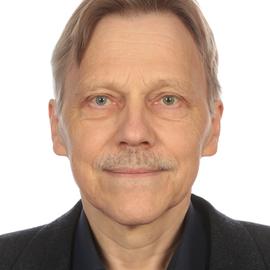
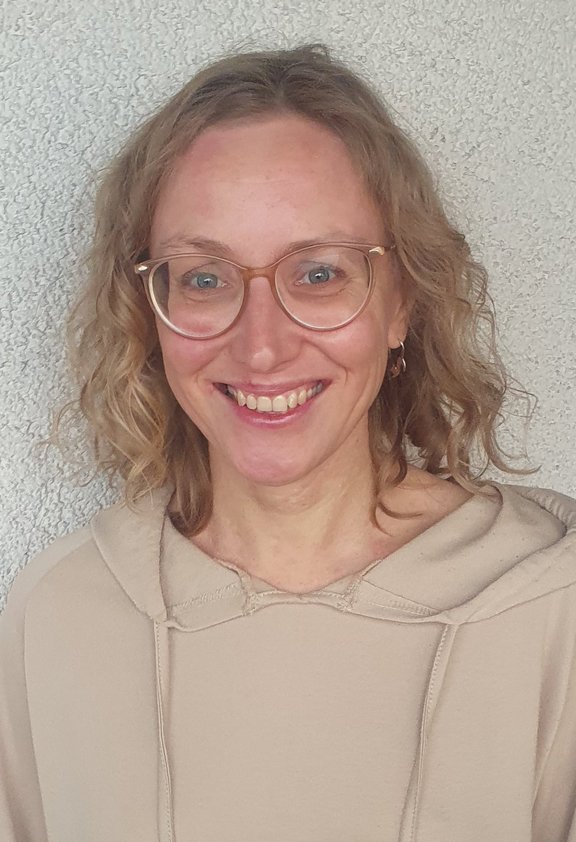
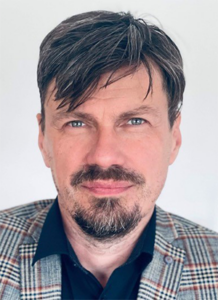
Harvey B. Meyer is a Professor of Theoretical Physics at Johannes Gutenberg University Mainz since 2014. Previously, he held positions including Junior Professor at Mainz (2010), Fellow at CERN's Theoretical Physics Division (2009), Research Scientist at MIT (2008), and postdoctoral roles at MIT (2006-2008) and DESY (2004-2006). He earned his D.Phil. in Theoretical Physics from the University of Oxford (2001-2004) and a Diplome de Physique from the University of Lausanne (1996-2001). His research focuses on lattice field theory, QCD phase diagrams, thermal field theory, and hadron structure. He leads the NEPhEuQCD collaboration and has received the ERC Consolidator Grant (2018) for the SIMDAMA project. Meyer teaches courses in theoretical physics and mathematical methods at Mainz, including 'Theoretische Physik 4' and 'Mathematische Rechenmethoden'. His work integrates advanced computational techniques to address fundamental questions in particle and nuclear physics. Key achievements include pioneering studies on the muon's anomalous magnetic moment, hadronic light-by-light scattering, and quark-gluon plasma dynamics. Collaborations include MIT, CERN, and institutions globally through lattice QCD projects. His lab and team contributions are central to the PRISMA+ Cluster of Excellence at Mainz.
Prof. Dr. Michael Klasen is a leading theoretical physicist at the Institute of Theoretical Physics at the University of Münster, where he heads his eponymous research group. His work bridges nuclear and particle physics, with significant contributions to quantum chromodynamics and physics beyond the Standard Model. His research focuses on Particle Physics , Quantum Chromodynamics , and Physics beyond the Standard Model , with particular emphasis on understanding the quark-gluon structure of atomic nuclei and dark matter phenomena. His innovative approach connects microscopic quark-gluon dynamics with nuclear binding phenomena, creating a crucial bridge between nuclear and particle physics. Prof. Klasen's recent work analyzing nucleon binding at the quark-gluon level was recognized as a "Breakthrough of the Year 2024" by Physics World. His research group's publication in Physical Review Letters demonstrated how quarks and gluons behave differently in nucleon pairs than in free nucleons, fundamentally advancing our understanding of nuclear binding. Breakthrough of the Year 2024 from Physics World Leadership of Research Training Group 2149 "Strong and weak interactions - from hadrons to dark matter" Supervision of award-winning doctoral research including the Infineon Dissertation Prize 2025 Prof. Klasen has successfully mentored numerous PhD students, with 20 of his group's graduates continuing their academic careers at prestigious institutions including CERN and Stanford University. His research has been supported by major funding bodies including the German Research Foundation (DFG), the Helmholtz Alliance for Astroparticle Physics, and BMBF collaborative research programs. The Klasen working group maintains active collaborations with international research networks including CTEQ, DM@NLO, and RESUMMINO.
Prof. Dr. Wolfgang Hillert is a leading physicist at the University of Hamburg , serving as the Bjørn-Wiik Professor for Accelerator Physics since 2016. Affiliated with the Institute of Experimental Physics under the Faculty of Mathematics, Informatics and Natural Sciences, he specializes in Accelerator Physics , Superconducting Accelerator Technology , and Free-Electron Lasers (FEL) . His work focuses on polarized electron beams, SRF cavity optimization, and gravitational wave detection methods. Education: Physics degree from University of Bonn (1987), Promotion in Atmospheric Physics (1992), Habilitation in Physics (2001) Leadership Roles: Head of Accelerator Physics Group (2016–present), Managing Director of Institute of Experimental Physics (2019–2021) Research Trends: His recent work spans superconducting RF cavities for gravitational wave detectors ( 2025 ), resonant slow extraction in electron boosters, and atomic layer deposition of superconducting thin films. Publications highlight advancements in beam dynamics , cryogenic systems , and terahertz generation . Teaching & Outreach: He has lectured on Accelerator Physics since 2002 and engaged in public science communication, including talks on Physics of Music (2005–2021) and teacher training programs at DESY. Labs & Collaborations: Leads the Accelerator Physics Group at DESY, collaborates on projects like XFELO and BGO-OD beamline , and contributes to international schools (CAS) and symposia.
Prof. Dr. Johanna Stachel is Chair of the Institute for Experimental Physics at Heidelberg University, where she leads research in high-energy nuclear physics. She maintains active affiliations with CERN's ALICE collaboration and serves on multiple international scientific committees including the American Physical Society Council. Her academic background includes a Doctorate in Physics from Mainz University (1982) under Prof. N. Kaffrell and earlier studies in Chemistry and Physics at Mainz University and ETH Zürich (1972-1978). Stachel's research focuses on Quantum Chromodynamics (QCD) and Quark-Gluon Plasma characterization through heavy-ion collisions. Her work examines particle production mechanisms , strangeness dynamics , and collective phenomena in proton-proton and nucleus-nucleus collisions. Key methodologies include femtoscopic correlation studies, heavy-flavor decay analysis, and multiplicity-dependent measurements to probe QCD phase transitions. Recent publications reveal strong emphasis on multiplicity-dependent phenomena across collision systems, with significant contributions to charm hadronization , vector meson production , and jet modification studies using ALICE data. Her team pioneers techniques for accessing hadronic interactions through correlation measurements. Stern-Gerlach-Medal of the German Physical Society (2019) Lise Meitner Prize of the European Physical Society (2014) Order of Merit of the Federal Republic of Germany (1999) Member of German National Academy of Science (2015) Presidential Young Investigator Award (1988) Stachel has directed major research initiatives including the ALICE Transition Radiation Detector project and served as spokesperson for the CERES experiment at CERN. Her leadership extends to institutional roles as former Dean of Heidelberg's Physics Department and President of the German Physical Society (2012-2014). She leads experimental teams within the Collaborative Research Center projects A02 ('From QCD transport to particle yields') and formerly C05 ('Probing the QCD phase structure with heavy quarks'), coordinating international efforts in heavy-ion collision analysis at the LHC.
Jochen Heitger is an Adjunct Professor at the University of Münster, Department of Physics, where he has been a permanent academic member since 2000. He was promoted to Privatdozent in 2005 and became an außerplanmäßiger Professor in 2018. His research is centered on theoretical particle physics, particularly lattice quantum chromodynamics (QCD), with a focus on precision computations of Standard Model parameters, heavy quark systems (charm and beauty), B- and D-meson decays, and non-perturbative renormalization. His research interests include: Lattice Quantum Chromodynamics (QCD) Heavy Quark Physics (charm, beauty) Monte Carlo Simulations Heavy Quark Effective Theory (HQET) Non-perturbative Renormalization and O(a) Improvement Precision Computation of Quark Masses and Decay Constants Flavor Physics and Hadron Structure The analysis of his recent publications reveals a consistent focus on advancing lattice QCD methodologies for precision calculations in heavy quark physics. His work emphasizes non-perturbative renormalization, O(a) improvement, and the determination of fundamental parameters such as quark masses and meson decay constants using state-of-the-art lattice simulations with dynamical fermions. His contributions span both theoretical development and phenomenological applications, particularly in B- and D-meson physics. Scientific awards and honors: Member of the Scientific Council of the John von Neumann Institute for Computing (NIC), 2020 He has held significant research fellowships, including a DFG Research Fellowship (2013–2016) and a DESY Theory Fellowship (1997–2000). His collaborative work involves extensive participation in the CLS (Coordinated Lattice Simulations) consortium and contributions to major lattice field theory conferences. He has not publicly listed any advisees or students. His research is conducted within the theoretical particle physics group at the University of Münster, focusing on high-precision lattice simulations.
Prof. Hartmut Wittig is a Full Professor at the Institute of Nuclear Physics, Johannes Gutenberg University Mainz since 2005. He leads the Cluster of Excellence PRISMA+ (Precision Physics, Fundamental Interactions and Structure of Matter). His research focuses on Lattice QCD, hadron structure, and precision calculations of the muon's anomalous magnetic moment. Wittig holds a PhD from the University of Hamburg (1992) and habilitation in theoretical physics (1998). He has held positions at the University of Southampton (1992–1995), DESY-Zeuthen (1995–1996), and the University of Oxford (1996–2000 as PPARC Advanced Fellow). His research interests include lattice QCD applications to hadron spectroscopy, muon g−2, and precision electroweak observables. Notable achievements include pioneering work on the hadronic vacuum polarization contribution to the muon’s magnetic moment and advancing machine learning techniques in lattice calculations. He has advised over 20 PhD students, many focusing on lattice QCD and precision physics. Awards include CERN Scientific Associate (1999/2000) and a teaching award from Mainz University (2013). Wittig’s lab contributes to global initiatives like the FLAG (Flavour Lattice Averaging Group) and collaborates on projects such as the Muon g−2 experiment. His work bridges theoretical calculations with experimental precision demands in particle physics.
Prof. Dr. John Bulava is a Professor of Theoretical Hadron Physics at Ruhr University Bochum, affiliated with the Faculty of Physics and Astronomy. His research focuses on computer simulations of the strong nuclear force using lattice Quantum Chromodynamics (QCD) to study hadron properties and interactions, particularly hyperon scattering processes relevant to neutron stars. Prof. Bulava holds a B.Sc. in Physics and Mathematics from The George Washington University, an M.Sc. from Carnegie Mellon University, and a Ph.D. in Nuclear and Particle Physics from Carnegie Mellon University under Prof. Colin Morningstar. His research explores the dynamics of quarks within protons and neutrons, with special attention to how changes in fundamental constants like quark masses affect physical phenomena. Computational approaches form the cornerstone of his investigations into quantum field theories. Prof. Bulava's recent publications demonstrate consistent focus on resonance states and scattering processes in particle physics, employing lattice QCD methodologies. Key themes include baryon/meson resonances, finite-volume spectral analysis, and coupled-channel scattering studies. He has held positions at DESY (Germany), CERN (Switzerland), Trinity College Dublin (Ireland), and University of Southern Denmark before joining Ruhr University Bochum in 2023.
Rhenish Friedrich Wilhelm University of BonnGermany
Ulf-G. Meißner is a Professor of Theoretical Physics at the University of Bonn and head of the Theory Group (TH) at the Helmholtz Institute for Radiation and Nuclear Physics (HISKP). He also serves as a director at the Institute for Advanced Simulation (IAS-4) at Forschungszentrum Jülich. His research focuses on nuclear structure, hadron physics, effective field theories, and lattice simulations. Education: Habilitation in Theoretical Physics, University of Regensburg (1988) PhD in Physics, SUNY Stony Brook (1984) Diplom in Physics, Ruhr-Universität Bochum (1982) Research Interests: Nuclear lattice simulations, hadron interactions, strangeness physics, baryon-baryon dynamics, and anthropic considerations. He explores phenomena like electric dipole moments, soliton models, and effective field theories applied to graphene nanoribbons and exotic states. Key Awards: ERC Advanced Grant 'EXOTIC' (2021–2026) Lise Meitner Prize (2016) Distinguished Scientist Award (Chinese Academy of Sciences, 2018) Doctor honoris causa (2018) Leadership & Grants: Spokesperson of CRC 110 'Symmetries and the Emergence of Structure in QCD' (2012–2024) Director of the Bethe Center for Theoretical Physics (2020–2024) Former Dean of the Faculty of Mathematics and Natural Sciences (2008–2016) Labs/Teams: Leads the HISKP Theory Group and contributes to collaborations like the HGF Virtual Institute 'Spin and Strong QCD'.
Prof. Dr. Achim Denig is a Professor at the Institute of Nuclear Physics , Johannes Gutenberg University Mainz. He leads research at the PRISMA Cluster of Excellence and Helmholtz Institute Mainz , with collaborations at accelerators like MAMI , GSI , and BES-III . His career includes leadership roles in the German Physical Society and the SFB/CRC 1044 project. Education: PhD from University of Karlsruhe (summa cum laude) Key Positions: Co-Spokesperson of SFB/CRC 1044, Acting Director of Institute of Nuclear Physics (2016-2019), Section Leader at Helmholtz Institute Mainz Research Interests focus on hadron physics with electromagnetic probes , precision measurements of hadronic cross sections , and flavor physics (kaons, B, and charm particles). He specializes in tracking detector technology and experimental low-energy frontier studies . His publication trends span particle oscillations (D0–anti-D0 mixing), dark sector gauge bosons, hadron spectroscopy (charmonium-like structures), and precision detector calibrations. Collaborations include KLOE , BaBar , A1 , and BES-III experiments. Scientific Awards : Marie Curie Fellow (EU) Leadership Roles : Head of Emmy Noether Young Investigator Group Co-Spokesperson of SFB/CRC 1044 Section Leader at Helmholtz Institute Mainz Acting Director of Institute of Nuclear Physics He contributes to international accelerator collaborations at Stanford Linear Accelerator Center , Mainzer Mikrotron , and IHEP Beijing .
Natalia S. Oreshkina is a researcher at the Max Planck Institute for Nuclear Physics (MPIK) in Heidelberg, Germany, with a focus on atomic and nuclear physics. She holds a Habilitation and Venia Legendi from Heidelberg University (2019) and a PhD from Saint-Petersburg State University (2008). Her research interests include heavy muonic atoms, relativistic atomic structure, QED effects, nuclear deformation in ions, and precision spectroscopy. She has been a PostDoc at MPIK since 2011 and previously held postdoctoral and fellow positions at Saint-Petersburg State University. Education: Habilitation in Physics, Heidelberg University (2019) PhD in Physics, Saint-Petersburg State University (2008) M.Sc. in Physics, Saint-Petersburg State University (2004) B.Sc. in Physics, Saint-Petersburg State University (2001) Research Interests: Spectra of heavy muonic atoms, variation of fundamental constants, relativistic atomic structure, electron correlation and QED effects, nuclear deformation in highly charged ions, time-dependent dynamics in laser fields, hyperfine splitting, g-factors, and kaonic atoms. Publications & Talks: Oreshkina has authored/co-authored over 50 peer-reviewed articles, including recent work on muonic atom spectroscopy, nuclear radii determinations, and QED corrections in unstable vacuum. She frequently presents at international conferences and workshops, such as the 45th EAS Meeting (2025) and the REHE Conference (2024), focusing on exotic atoms and precision measurements. Labs & Collaborations: She collaborates with teams at MPIK, the University of Groningen, and other institutions on projects involving trapped ions, laser spectroscopy, and nuclear physics. Her work contributes to experiments like the ALPHATRAP and collaborations on muonic X-ray measurements.
Prof. Laura Fabbietti is a Professor at the Technical University of Munich (TUM), leading the Professorship of Dense and Strange Hadronic Matter within the TUM School of Natural Sciences and Department of Physics. Her research focuses on high-energy physics, particle physics, and nuclear physics, particularly in the context of quantum chromodynamics (QCD) and the study of hadronic matter under extreme conditions. She is a core member of the ALICE Collaboration at the LHC, investigating phenomena such as heavy-ion collisions, jet quenching, and strangeness production. Her work explores topics like beauty and charm quark dynamics, collective flow in heavy-ion collisions, and the properties of the quark-gluon plasma. She also contributes to detector development and machine learning applications in particle physics experiments. Recent studies include measurements of photon production, jet modifications, and femtoscopic correlations in various collision systems. Her publications highlight advanced analyses of LHC data, emphasizing precision measurements, theoretical comparisons, and novel experimental techniques. While no specific awards or grants are mentioned, her involvement in major collaborations like ALICE underscores her significant contributions to the field. Prof. Fabbietti’s research group actively engages in interdisciplinary projects, including hypernuclei studies and precision kaonic atom spectroscopy. No advisees or specific laboratory affiliations are explicitly listed in the provided text.
Prof. Stephan Paul is a Professor of Physics at the Technical University of Munich (TUM), holding the Chair of Physics I within the TUM School of Natural Sciences. His office is located at James-Franck-Str. 1, 85748 Garching b. München, Germany, where he maintains active research and teaching responsibilities. Prof. Paul received his doctorate from the University of Heidelberg after studying physics at the University of Bonn. His academic career includes research positions at the Max Planck Institute for Nuclear Physics in Heidelberg and CERN, where he continues to work as a visiting scientist. He has established significant collaborations with research institutions worldwide, including KEK in Japan, MLZ in Garching, and ILL in Grenoble. His research focuses on high energy particle physics and neutron physics , with particular emphasis on hadron physics and particle physics with neutrons. Prof. Paul's work primarily involves precision measurements in B meson decays, proton structure studies, and spin physics using data from major international collaborations like Belle, Belle II, and COMPASS. His publication record shows consistent research output across decades, with 471 total publications and particularly high productivity in recent years (39 publications in 2021 alone). Analysis of his recent publications reveals strong trends in precision measurements of branching fractions, CP violation studies, investigations of exotic hadronic states, and spin-dependent phenomena in particle interactions. His research fingerprint shows dominant contributions to hadron physics (64%), muon physics (63%), and meson physics (55%), reflecting his specialization in fundamental particle interactions. His significant contributions to physics have been recognized with prestigious awards: Max Planck Fellow (2019) Federal Cross of Merit (2010) Call to the Chair of Experimental Physics at ETH Zurich and Head of the Institute for Particle Physics at PSI (rejected) (2008) Prof. Paul has held substantial leadership roles in major research initiatives. From 2006 to 2018, he coordinated the Cluster of Excellence 'Origin and Structure of the Universe' at TUM. Since 2019, he has served as co-coordinator of the Cluster of Excellence ORIGINS, which continues this important research mission addressing fundamental questions about the universe's origins and structure. He maintains an active teaching schedule, offering courses including 'Detectors for Nuclear and Particle Physics,' 'Nuclear, Particle, and Astrophysics for Students of Education,' and 'Seminar on Physics of Strong Interaction' for the Winter term 2024/25 and Summer term 2025. His teaching spans both theoretical concepts and practical applications in particle physics, reflecting his commitment to training the next generation of physicists.
Dr. Andro Kacharava is a researcher at Forschungszentrum Jülich's Institute of Nuclear Physics (IKP) , specializing in the Experimental Hadron Dynamics (IKP-2) department. He is based in Building 07.1 / Room 359 in Jülich, Germany, and can be contacted via phone at +49 2461/61-6982 or +49 2461/61-3930. His research focuses on nuclear physics and hadronic interactions , aligning with the experimental work conducted at IKP-2. The institute investigates fundamental questions in particle and nuclear physics using advanced experimental techniques and facilities. As a member of the Experimental Hadron Dynamics group, he contributes to studies involving subatomic particles, quantum mechanics, and accelerator-based experiments. His work supports broader efforts in understanding nuclear structure and dynamics through cutting-edge research.
Dr. Vladimir Pascalutsa is a Staff Scientist at the Institute of Nuclear Physics, Johannes Gutenberg-Universität Mainz, Germany. He holds a PhD in Theoretical Physics from Utrecht University (1998) and has held positions at NIKHEF (Netherlands), Flinders University (Australia), Ohio University (USA), and the European Centre for Theoretical Studies in Nuclear Physics (ECT*, Italy). His research focuses on QCD, hadron structure, dispersion relations, chiral perturbation theory, and light-by-light scattering effects in precision experiments like muon g-2. He has advised PhD students Nadia Krupina and Franziska Hagelstein. His work includes contributions to lattice QCD calculations, muonic hydrogen spectroscopy, and theoretical frameworks for nuclear structure. Key roles include: Staff Scientist, University of Mainz (2008–present) Assistant Professor, ECT* Trento (2006–2008) Research Associate Professor, College of William and Mary (2003–2006) Research Interests: QCD and hadron structure Dispersion relations and sum rules Chiral effective field theories Lattice QCD applications Muon hydrogen precision measurements Publications emphasize advancements in muon g-2 calculations, hyperfine splitting in hydrogen-like atoms, and nuclear structure effects in QED. His 2024 textbook 'Causality Rules' formalizes dispersion theory concepts.
Volker Lindenstruth is a Senior Fellow at FIAS and Full Professor of Computer Science at Goethe University Frankfurt. He leads the Architecture of High-Performance Computing research group, focusing on energy-efficient architectures, distributed systems, and applications in particle physics. His work spans high-performance computing (HPC) for experiments at CERN and FAIR, including the ALICE and CBM projects. He also contributes to the CMMS initiative for multi-scale biological modeling. Education : Studied physics at TU Darmstadt (diploma 1989), PhD in physics at GSI Darmstadt (1993). Postdoc as Feodor v. Lynen Fellow at LBNL, USA (1993–1995). Research : Specializes in HPC architecture for nuclear physics experiments, GPU-based real-time data processing, and cloud computing. Key projects include the ALICE HLT system and the LOEWE-CSC supercomputer. Collaborates with CERN, FAIR, and industrial partners like e3c Computing GmbH. Awards : World-ranking efficiency award (2014), German Rechenzentrumspreis (2012), Green-IT Best Practise (2011). Secured >35M€ in third-party funding since 2010. Leadership : Chair of FIAS Board (2012–present), Director of Scientific IT at GSI Helmholtzzentrum (2010–present), former head of Technical Computer Science at Heidelberg University (until 2009).