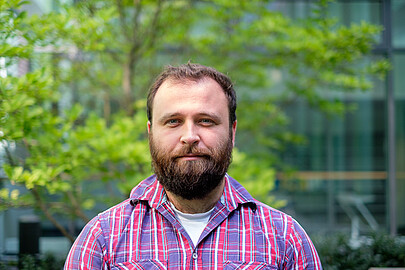
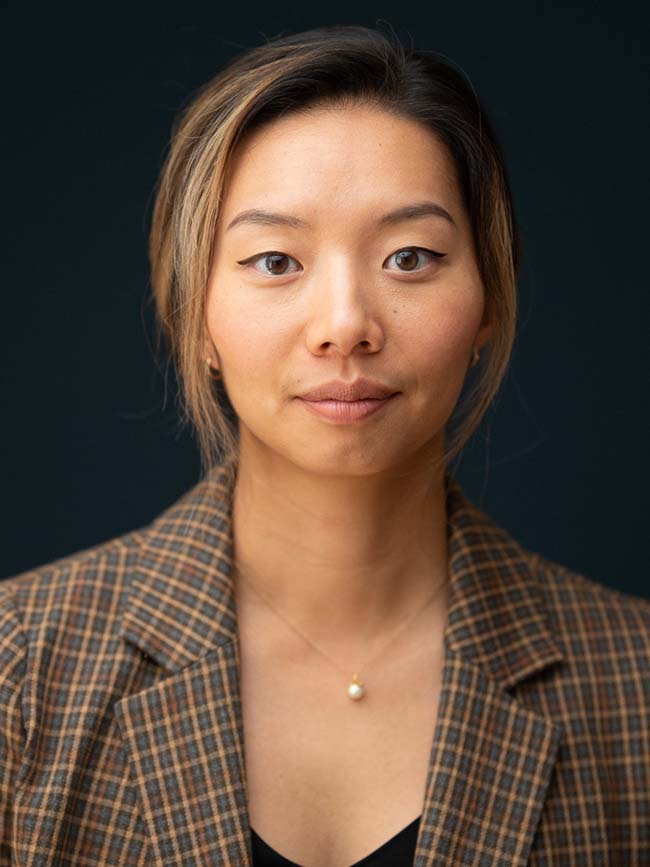
Oliver Donnerhack, M.Sc., is a researcher at the Institute of Soil Science under the Faculty of Natural Sciences at Leibniz University Hannover. His work focuses on soil chemistry within the broader context of earth system sciences. He is based in Hannover, Germany, at Herrenhäuser Straße 2 (Building 4110, Room 005). Contact: donnerhack@ifbk.uni-hannover.de | IESW Website
Cozen W , Professor at the University of California, Los Angeles Fielding School of Public Health , Department of Epidemiology , has contributed extensively to cancer epidemiology, focusing on genetic susceptibility and environmental risk factors for hematologic malignancies.
Dr. Mark C. Allenby is a Senior Lecturer in Biomedical Engineering at the University of Queensland (UQ) , with an adjunct position at Queensland University of Technology (QUT) . He leads the BioMimetic Systems Engineering (BMSE) Lab , focusing on vascularized tissue engineering, biomedical imaging, and computational modeling. His work bridges bioprocess engineering and clinical applications in hematology, vascular surgery, and radiology. Research interests span biomedical engineering , with emphasis on: Tissue engineering of blood systems and vascularized tissues Biomedical image analysis for diagnostics and tissue modeling Computational biology for mechanobiology relationships 3D bioprinting for patient-specific implants Cell therapy manufacturing at reduced costs His recent publications demonstrate expertise in microfluidic tissue models , computational biomechanics , and biomaterials design . Scientific awards include the 2025 Heart Foundation Future Leader Fellowship , 2024 UQ Foundation Research Excellence Award , and 2023 TERMIS-AP Young Investigator Award . Funding includes $3.8M as Chief Investigator across grants from the National Heart Foundation , Australian Research Council , and Ramaciotti Philanthropy . Teaching roles encompass Quantitative Methods in Biomedical Engineering and Process Modeling & Dynamics , with leadership in UQ's BME major (#2 in Australia).
Sherrie Wang is a Professor and Principal Investigator at Massachusetts Institute of Technology , leading the Earth Intelligence Lab . Her research focuses on developing machine learning methods to monitor planetary systems and advance sustainable development, particularly in low- and middle-income regions where ground truth data is scarce. She obtained her PhD in Computational and Mathematical Engineering from Stanford University in 2021 under David Lobell , following a Ciriacy-Wantrup Postdoctoral Fellowship at UC Berkeley with Solomon Hsiang and the Global Policy Lab . Her academic work bridges Earth observation , machine learning , and global sustainability , with a focus on agricultural management and climate change mitigation . Recent publications highlight her leadership in benchmarking vision-language models for Earth data ( CVPRW 2024 ), mapping Clean Water Act-regulated water bodies ( Science 2024 ), and advancing weakly supervised cropland segmentation techniques ( Remote Sensing 2020 ). Her work frequently utilizes satellite imagery , LiDAR , and crowdsourced data to address environmental challenges. Scientific recognition includes the Best Paper Award at ICLR ML4RS Workshop (2024) and the Sloan Research Fellowship . She collaborates with institutions like USDA , NSF , and Stanford Human-Centered AI , with funding from USAID and the Global Innovation Fund . Advising and collaboration : She mentors PhD students like Chenhui Zhang and Jordi Laguarta , with notable partnerships at the Stanford Sustainability and AI Lab . Her team's work mapping Thai agricultural systems ( MIT News 2024 ) exemplifies her commitment to real-world impact.
Liangyou Rui is a Professor at the University of Michigan, holding joint appointments in the Medical School and the Department of Molecular and Integrative Physiology . They are also the Louis G D'Alecy Collegiate Professor , a distinguished named chair, and participate in mentoring students and researchers. Education: PhD from the University of Michigan Medical School Postdoctoral Training: Harvard Medical School and Joslin Diabetes Center Rui's research focuses on the molecular and epigenetic mechanisms underlying metabolic disorders. Key areas include: Epigenetic and epitranscriptomic regulation Obesity and related metabolic dysfunctions Type 2 Diabetes and NASH RNA methylation (e.g., m6A) and its impact on metabolic pathways Hepatic glucose production and lipid metabolism Neuronal signaling in energy balance Inflammation and immune-metabolic crosstalk Rui's recent publications highlight interdisciplinary work bridging molecular biology, endocrinology, and oncology, with a focus on: Non-canonical NFκB signaling in metabolic tissues Role of NIK in tumor-brown adipose crosstalk Epigenetic regulators like Slug in adipogenesis RNA methylation's influence on hypothalamic control of metabolism Awards and recognitions include the prestigious Louis G D'Alecy Collegiate Professor chair, reflecting their leadership in metabolic research. Rui collaborates with multidisciplinary centers at the University of Michigan, including: Caswell Diabetes Institute Rogel Cancer Center Global REACH Center for Cell Plasticity and Organ Design Biosciences Initiative Their work is further disseminated through the Liangyou Rui Lab , which explores epigenetic mechanisms in metabolic diseases.
Prof. Dr. Anna Schroeder is a Tenure-Track Assistant Professor (W2) in Neuroscience at LMU Munich’s Faculty of Biology , leading the Schroeder Lab . Her research focuses on understanding how neural circuits in the zona incerta process internal states (e.g., emotions, hunger) to adapt behavior in dynamic environments. She combines molecular, cellular, and circuit-level neuroscience with in vivo imaging , optogenetics , and machine learning to explore mechanisms underlying psychiatric diseases and develop neuromodulation therapies . ERC Starting Grant recipient (2024) Rise up! grant awardee (2025) DFG-funded 2-photon microscope project (2025) Her lab investigates the intersection of synaptic plasticity , learning and memory , and neural circuit mapping , with recent work highlighting the role of layer 1 NDNF interneurons in cortical inhibition and the zona incerta’s disinhibitory circuits in behavioral memory. She mentors PhD students like Hüma Erbörü and Julian Wettlaufer , while collaborating with institutions such as the Max Planck Institute of Psychiatry and Italian Institute of Technology.
Isabel Grimm-Stadelmann is a Research Fellow at the Institute for Ethics, History and Theory of Medicine of Ludwig-Maximilians-University Munich. Her work focuses on Byzantine Medicine and the History of Science . Contact: Lessingstr. 2, 80336 Munich Website: Bayerische Akademie der Wissenschaften
Markus Reinmöller is a Professor of Thermal Energy and Material Conversion at the University of Stuttgart , where he serves as Head of the Institute of Combustion and Power Plant Technology (IFK). His work focuses on energy conversion processes, combustion systems, and power plant technologies. Contact: Pfaffenwaldring 23, 70569 Stuttgart, Germany | Phone: +49 711 685 63488 / +49 711 685 63491 | Office Hours: Tuesdays, 2:00–3:00 p.m. (by appointment via email). His research interests include thermal energy systems, advanced combustion techniques, and sustainable material conversion technologies.
Nikolay V. Dokholyan is the G. Thomas Passananti Professor of Pharmacology and Professor of Biochemistry and Molecular Biology at Penn State College of Medicine . His research integrates computational and experimental approaches to study molecular mechanisms underlying neurodegenerative diseases (ALS, Alzheimer's, Parkinson's) and cancer . He leads the Dokholyan Laboratory, affiliated with the Huck Institutes of the Life Sciences, focusing on protein and RNA structure prediction , allosteric regulation , and nano-biocomputing agents for disease intervention. Education: Directly inferred from his academic leadership and publications, though formal education details are not explicitly stated in the text. Research Highlights: Decoding protein allostery and RNA folding to control biological function Developing quantum machine learning tools for protein classification and drug discovery Designing RNA/protein nanocomputing agents for programmable cellular behavior Elucidating SOD1 trimer toxicity in ALS progression Engineering light-inducible enzymes for optogenetic control Mapping miRNA dysregulation in ALS for liquid biopsy biomarkers Recent Scientific Awards: American Association for the Advancement of Science (AAAS) Fellow (2019) Grants and Collaborations: National Science Foundation (NSF) grant for quantum AI in drug discovery (2022) Penn State Clinical and Translational Science Institute (CTSI) pilot funding recipient Collaborations with Huck Institutes of the Life Sciences, Penn State Cancer Institute, and interdisciplinary teams Advising: Mentors numerous PhD students and postdoctoral researchers in computational biology, structural biophysics, and nanobiotechnology. His lab emphasizes cross-disciplinary training in biochemistry, bioinformatics, and synthetic biology .
Sofia Kankkunen is a Visiting Doctoral Researcher at Aalto University's Metsähovi Radio Observatory , specializing in high-energy astrophysics and multiwavelength observations of active galactic nuclei (AGN). Her research focuses on blazar variability, gamma-ray emission mechanisms, and radio astronomy, particularly through long-term monitoring of sources like Markarian 421 and PKS 0735+178. Primary affiliation: Metsähovi Radio Observatory (Aalto University) Key collaborators: Merja Tornikoski, Talvikki Hovatta, Anne Lähteenmäki Her work integrates time-dependent modeling of transient astrophysical events with broadband spectral analysis, aiming to unravel particle acceleration processes in AGN jets. Recent projects involve leptohadronic modeling, X-ray polarization measurements, and Lorentz invariance violation constraints using novel methods. Analysis of her publications reveals trends in TeV gamma-ray astronomy (6 entries), AGN variability studies (5 entries), and multiwavelength polarization research (2 entries). She actively contributes to understanding cosmic accelerators like blazars through radio-to-gamma-ray observations.
Trish Gorely is a Professor in Physical Activity for Health at the University of the Highlands and Islands and leads research initiatives at the Centre for Rural Health Sciences. Her work bridges behavioral epidemiology with practical health interventions. PhD, University of Western Australia MEd, University of Western Australia BPhEd (Distinction), University of Otago Research Interests focus on: Psychological and behavioral determinants of physical activity Sedentary behavior measurement Behavior change interventions for chronic disease prevention Physical activity in high-risk populations (diabetes, cardiovascular disease) Recent Publications examine behavior change trials (100+ citations), wearable technology validation, and pandemic-related spatial health disparities. Her OPTIMA systematic review (2025) and Girls Active RCT (2021) demonstrate intervention effectiveness. Grants include funding from: Medical Research Council National Institute for Health Research (NIHR) Government health departments Commercial health technology partners Public Engagement includes 2018 RSE Science Masterclasses and widespread media coverage of digital health studies (BBC, The Times, 2021).
Max Ryynänen serves as a Principal University Lecturer (academic rank: Senior Lecturer) in the Department of Art and Media at Aalto University, maintaining an active research profile with publications spanning 2023–2025. His contact details include email ( max.ryynanen@aalto.fi ) and phone (+358 50 3365394), with additional resources available at maxryynanen.net and Aalto University's research portal. His research centers on critical aesthetics and cultural theory, with deep expertise in kitsch studies, vernacular culture, and the philosophy of art. Key interests include: Somaesthetics and embodied methodology Heritage reconstruction ethics Pasolini's cinematic realism Global art system diversification Interdisciplinary aesthetic frameworks His work consistently bridges theoretical philosophy with contemporary cultural production, challenging traditional hierarchies of artistic value. Analysis of his 2023–2025 publications reveals three dominant trajectories: (1) The evolving sociocultural acceptance of kitsch in digital-era art production, (2) Critical interrogations of architectural heritage through philosophical lenses, and (3) Expansion of somaesthetics into cross-disciplinary research methodologies. These threads demonstrate his commitment to decolonizing art discourse while examining vernacular cultural forms. No scientific awards or formal advising relationships are documented in available sources. Similarly, research grants, laboratory affiliations, or team structures remain unspecified in the provided materials.
Claude Le Bris is a Researcher at École Nationale des Ponts et Chaussées and scientific leader of the MATHERIALS team (formerly MICMAC) at INRIA. His work focuses on multiscale computational mechanics, quantum chemistry, and numerical analysis. Voice: +33 1 64 15 35 73 Email: lebris@cermics.enpc.fr Address: CERMICS - ENPC, 6 et 8 avenue Blaise Pascal, Cité Descartes - Champs sur Marne, 77455 Marne la Vallée Cedex 2, FRANCE Research Interests : His expertise spans multiscale modeling , partial differential equations , and mathematical chemistry , with applications in computational mechanics and quantum systems. He has contributed significantly to numerical analysis of nonlinear PDEs and stochastic differential equations. Scientific Leadership : He serves as Managing Editor for Networks and Heterogeneous Media and on editorial boards for journals including Archive for Rational Mechanics and Analysis and Journal de Mathématiques Pures et Appliquées . He has held advisory roles for institutions like the University of Chicago, Sorbonne Université, and Université de Montreal.
Palle Torsson is a Senior Lecturer in Art at Konstfack – University of Arts, Crafts and Design in Stockholm. As an artist, hacker, and programmer, he operates at the intersection of digital technology and artistic practice through his running of a hackerspace and mixed reality lab. Research Focus: Collaborative hacker-art practices Projects: Piratbyrån (2004-2010), Sparvnästet (2012-2016), CryptoParty (2013-2017) Artistic Approach combines AI-enhanced visual journeys , sculptural confluence of textile art and physics , and immersive VR-gaming environments . His works often challenge societal norms through digital subversion while exploring pattern recognition , authorship concepts , and network culture implications . Notable Techniques include: 3D model repurposing from public repositories Game engine manipulation for artistic expression Real-time data visualization through network surveillance Physical-digital hybrid installations His practice bridges media freedom activism with experimental digital art through platforms like Sketchfab and Half-Life 2's physics engine.
Andriy Panasyuk is a full-time Professor at the School of Exact Sciences , Cardinal Stefan Wyszyński University , specializing in Mathematics with a focus on Integrable PDEs , Self-Dual Metrics , and Nijenhuis Operators . His research intersects Mathematical Physics and Differential Geometry , particularly in Ricci-flat metrics and integrable systems. ORCID: 0000-0002-2025-4177 Scopus h-index: 1 WoS h-index: 1 Total SNIP: 1.319 Ministerial Score: 160 Research Areas Panasyuk's work centers on advanced mathematical structures in theoretical physics and geometry. His contributions include: Integrable partial differential equations (PDEs) with applications to physical systems. Self-dual metrics and Ricci-flat metrics in differential geometry. Nijenhuis operators, crucial in geometric and algebraic studies. Publications & Metrics He has documented 2 publications in the university repository, with metrics indicating foundational impact. The Scopus and Web of Science citations align with an h-index of 1, reflecting early-stage recognition. Contact & Identifiers Email: a.panasyuk@uksw.edu.pl ORCID: 0000-0002-2025-4177 Scopus Profile Web of Science Profile Repository URI: https://bazawiedzy.uksw.edu.pl/info/author/UKSW-51915/