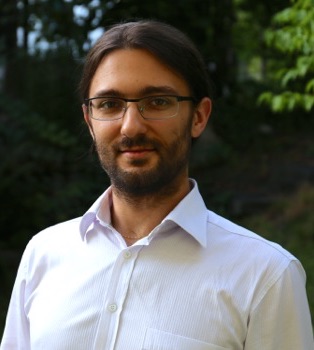
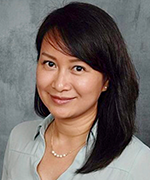
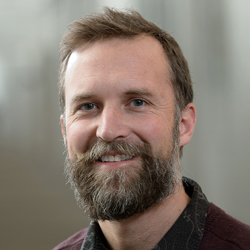
Sohan Lal is a postdoctoral researcher at the Technical University of Berlin (TU Berlin), focusing on advanced modeling and runtime support for large-scale HPC clusters under a DFG-funded project. His PhD in Computer Engineering from TU Berlin (2019) explored power modeling and architectural techniques for energy-efficient GPUs. He contributed to EU-funded LPGPU projects on low-power GPU computing, leading tasks and collaborating across consortium members. Previously, he lectured at Shri Mata Vaishno Devi University and worked as an IT specialist in the Government of India. Education: PhD in Computer Engineering, TU Berlin (2019) Masters in Computer Science, IIT Delhi (2011) Bachelor in Computer Science and Engineering, GCET Jammu (2003) His research interests span GPU architecture, power/performance modeling, memory systems, and applied machine learning. Notable contributions include techniques like Selective Lossy Compression (SLC) for GPUs and entropy encoding-based memory compression (E²MC). He received HiPEAC travel/grants and was an ACM SRC semifinalist (2018). Grants & Collaborations: HiPEAC Collaboration Grant for joint work with TU/e DFG-funded postdoctoral research He actively teaches advanced computer architectures and multicore systems at TU Berlin, reflecting his passion for education developed during his early teaching career.
René Widera is a researcher at the Helmholtz-Zentrum Dresden-Rossendorf (HZDR), specifically within the Laser Particle Acceleration department of the Institute of Radiation Physics. His work focuses on advancing high-performance computing (HPC) techniques for plasma simulations, particularly leveraging GPU architectures and exascale computing frameworks. He contributes to the development and optimization of the PIConGPU code, a leading particle-in-cell (PIC) simulation tool. His research integrates machine learning for real-time data analysis, parallel algorithms for HPC scalability, and cross-platform visualization strategies. Areas of expertise include laser plasma acceleration, high-energy-density physics, and the design of efficient numerical methods for large-scale simulations. He explores hardware-agnostic solutions for computational challenges, including memory access optimizations and DAG-based parallelism. Collaborations involve international HPC initiatives and open-source software projects like openPMD and alpaka . Key projects include the TWEAC initiative to overcome limitations in laser-wakefield acceleration and the development of in-situ visualization pipelines for real-time simulation insights. He also evaluates modern GPU architectures (e.g., AMD, ARM-based systems) for scientific workloads. His contributions bridge theoretical plasma physics with practical computational advancements, aiming to enable next-generation high-intensity laser experiments.
Maciej Besta is a leading researcher at ETH Zurich's Institute for Computing Platforms, where he heads research initiatives at the Scalable Parallel Computing Lab (SPCL) and contributes to the ETH Future Computing Laboratory (EFCL). Working under the mentorship of Professor Torsten Hoefler, he has established himself as a prominent figure in high-performance computing, graph processing, and large language models. Position: Researcher at Institute for Computing Platforms, ETH Zurich Research Leadership: Head of Sparse Graph Computations and Large Language Models Research at SPCL Collaboration: Leads project management for SPCL's contributions to ETH Future Computing Laboratory Besta's research spans multiple abstraction levels, from hardware and network topologies to middleware, algorithms, and programming models. His primary focus areas include graph-enhanced language models, graph neural networks, graph databases, and sparse models, with applications across various computational settings. He approaches these problems through rigorous performance modeling and formal reasoning, emphasizing both scalability and practical implementation. His recent publications reveal a clear trend toward integrating graph structures with language models and AI systems. Besta has pioneered work on graph databases, knowledge graphs of thoughts, and higher-order graph neural networks, while maintaining his strong foundation in high-performance computing and network topology design. His research bridges traditional HPC with cutting-edge AI, creating novel approaches for efficient large-scale computation. IEEE TCSC Award for Excellence in Scalable Computing (Early Career, 2023) Multiple Best Paper Awards at Supercomputing conferences (2022, 2023) ACM SIGHPC Doctoral Dissertation Award (2022) ETH Medal for outstanding doctoral thesis (2021) Fellow of The Explorers Club (2022) Besta actively mentors ETH Zurich students through semester projects, Bachelor's, and Master's theses, focusing on graph processing and related computer science challenges. His mentorship extends beyond technical guidance, incorporating lessons from his extensive polar and mountaineering expeditions that emphasize mental resilience, efficient risk management, and leadership. He has supervised numerous student projects that have resulted in high-impact publications at top-tier conferences. As a core member of the Scalable Parallel Computing Lab, Besta collaborates with researchers across ETH Zurich and international institutions. His unique approach integrates insights from extreme environment expeditions into research methodology, creating a distinctive framework for tackling complex computational problems. The lab's work under his leadership spans theoretical modeling, practical implementation, and real-world deployment of high-performance systems.
Alexandru Calotoiu is a Researcher in the Department of Computer Science at ETH Zürich, affiliated with the Professorship for Scalable Parallel Computing. His work focuses on performance modeling, high-performance computing (HPC), serverless systems, and cloud computing. He leads research in empirical performance modeling for complex applications, optimization of parallel algorithms, and scalable cloud architectures. Key research areas include noise-resilient performance models, serverless computing frameworks, and compositional parallel programming. He has contributed to benchmarking tools like SeBS and developed techniques for loop scheduling, static analysis, and resource disaggregation in HPC environments. His publications from 2023–2025 emphasize serverless systems (e.g., FaaSKeeper, Cppless), performance embeddings for optimization, and specialized supercomputing for climate science. These studies address scalability, reproducibility, and cross-platform performance portability in data-centric workloads. No scientific awards are explicitly listed, but his work has been presented at leading conferences such as ISCA and IEEE/ACM events. He collaborates on projects like rFaaS (RDMA-enabled serverless platforms) and Process-as-a-Service frameworks. His research bridges theoretical models with practical implementations in distributed systems and cloud infrastructure.
Dr. Bernadette Fritzsch is a researcher at the Alfred Wegener Institute (AWI), specializing in scientific computing, data management, and research software engineering. She leads initiatives in High-Performance Computing (HPC) resource utilization and manages the Meereisportal.de sea ice data platform. Her work emphasizes sustainable research software practices and interdisciplinary collaboration in climate and polar research. Key Responsibilities: Research software development and lifecycle management Leadership in HPC resource coordination (DKRZ) Maintenance of the meereisportal.de information platform Advocacy for open science and FAIR data principles Research Interests: Focuses on advancing research software engineering (RSE), improving data management frameworks, and creating scalable solutions for climate and polar data analysis. Active in policy development for sustainable software practices through Helmholtz initiatives and national/international collaborations. Recent Contributions: Her work includes defining best practices for research software (2019), advancing collaborative climate data grids (C3Grid), and developing workflows for distributed environmental data processing. Publications span software sustainability, interdisciplinary computing, and sea ice data platform development. Grants & Projects: Core contributor to Helmholtz Digitalization Strategy initiatives Member of German Reproducibility Network (GRN) Lead in EU-funded projects like REKLIM and MarESys Labs & Teams: Part of the AWI Computing and Data Centre team, collaborating with Helmholtz Centres and international partners on infrastructure for climate modeling and data analysis.
Philipp Neumann is a Professor of Informatics with a focus on High Performance Computing and Data Science, holding a joint appointment at DESY and the University of Hamburg. As a Leading Scientist and Head of IT at DESY, he coordinates the Helmholtz Federated IT Services (HIFIS) and specializes in HPC for molecular and multiscale simulations. Diploma in Engineering Mathematics (2008), Friedrich-Alexander-University Erlangen-Nuremberg Doctorate in Scientific Computing (2013), Technical University of Munich Habilitation in Scientific Computing (2019), University of Hamburg Neumann's research spans high-performance computing, molecular dynamics, machine learning, and exascale applications. He develops tools like MaMiCo and AutoPas for multiscale and particle simulations, with applications in climate modeling, proteomics, and industrial use cases. His work emphasizes energy efficiency, fault tolerance, and automated algorithm selection. Recent publications highlight advancements in HPC software (e.g., xbat ), data harmonization (e.g., HarmonizR ), and simulation methodologies (e.g., aerodynamic lens systems, multiscale fluid dynamics). These reflect his expertise in bridging molecular and continuum-scale simulations with data-driven techniques. At DESY, Neumann leads IT infrastructure initiatives, including federated IT services for the Helmholtz Association. He contributes to projects like hpc.bw and serves on committees for international HPC conferences, demonstrating leadership in software development and computational science education.
Josie Esteban Rodriguez Condia is a Fixed-term Assistant Professor in the Department of Control and Computer Engineering (DAUIN) at Politecnico di Torino. She is a member of the CARS@PoliTO Interdepartmental Center - Center for Automotive Research and Sustainable Mobility and serves as an invited member of both the College of Electronic, Telecommunications, and Physics Engineering and the College of Computer, Film, and Mechatronics Engineering. Her research focuses on computer architecture reliability, particularly in GPU and AI accelerator systems. Key areas include functional testing, general purpose graphics processing units (GPGPUs), hardware accelerators, hardware architecture, and parallel processing. Her work addresses critical challenges in reliability assessment of AI-based automotive systems, self-test libraries for tensor cores, and hardening techniques for neural networks on GPUs. Her recent publications demonstrate a strong trend toward reliability engineering for AI hardware, with particular emphasis on automotive applications and GPU-based neural network implementations. The research spans fault injection methodologies, error modeling, and architectural solutions to enhance system resilience against soft errors and permanent faults. Dr. Rodriguez Condia actively supervises PhD students including Gustavo Vilar De Farias, Giuseppe Esposito, and Robert Alexander Limas Sierra, all working on reliability evaluation and enhancement of neural networks. She is a member of the PNRR Research Group for the National Center for HPC, Big Data and Quantum Computing (2022-2025). She teaches multiple courses including GPU Programming and High Performance Computing for both Computer Engineering and Quantum Engineering programs. Her editorial work includes serving as Guest Editor for APPLIED SCIENCES in 2024.
Fang Liu is an Adjunct Associate Professor in the School of Computational Science and Engineering (CSE) at Georgia Institute of Technology. She holds a Ph.D. in Computer Science from Indiana University (2009) and serves as a Research Scientist at the Partnership for Advanced Computing Environment (PACE) center. Her primary roles include diagnosing complex technical issues in HPC systems, developing HPC software stacks, teaching courses on Linux and Python, and conducting research on big data analytics. She has also served in leadership roles for HPC conferences since 2014, including program chair for HPC2012 and HPC2013. Education: Ph.D. in Computer Science, Indiana University Bloomington (2009) Dissertation: "Building Sparse Linear Solver Component for Large Scale Scientific Simulation and Multi-physics Coupling" Advisor: Professor Randall Bramley Research Interests: Her work focuses on High Performance Computing (HPC) , parallel/distributed scientific computing , multi-physics coupling , big data infrastructure , and data management systems . She actively explores Hadoop/Spark-based solutions for graph databases and streaming data security, collaborating with Prof. Polo Chau's group. Recent projects include optimizing HPC cluster operations through big data analytics and developing provenance-capturing frameworks. Technical Contributions: She has pioneered tools like ProvBench for performance tracking and Phoenix for cost model modernization at Georgia Tech. Her work on automated storage cleanup and hybrid software deployment workflows has improved research computing efficiency across heterogeneous systems. Professional Activities: Served as program committee member for HPC, ICCS, and ICCSA conferences. Currently chairs the HPC conference steering committee since 2014. Labs & Teams: Works within the PACE center and collaborates closely with CSE faculties on computational science projects. Leads instructional initiatives via the ICE federated cluster environment.
Assoc. Prof. Anton Stoilov is an Associate Professor at South-West University in Blagoevgrad, Bulgaria. He holds a Ph.D. in Energy Conversion Technology (2006) and a Master's in Physics (2001), both from South-West University. His teaching focuses on personal productivity with IT and website development. His research spans mathematical modeling, PDEs, numerical methods, computer science, engineering, and physics, with notable work in bioinformatics, HPC, embedded systems, and medical instrumentation. Education: Ph.D. in Energy Conversion Technology and Systems, South-West University, 2006 Master of Physics, South-West University, 2001 Research Interests: Mathematical modeling and numerical methods Partial differential equations (PDE) and their applications High Performance Computing (HPC) in bioinformatics Embedded systems and sensor technology Web design and server administration Particle physics and collider experiments (e.g., HERA) Publications Trends: Recent work includes hypermedia communication technologies (2019), MATHDebate teaching methodologies (2018), and bioinformatics algorithms (2018–2016). Earlier contributions focused on particle physics experiments at HERA (2006–2007) and thermal analysis of solar systems (2004–2006). His articles bridge computational science, engineering, and education. Awards: None explicitly listed. Advising/Grants: No student advisees or grants mentioned in the provided text. Labs/Teams: Not specified in available information.
Michele Martone is a Researcher at the High Performance Systems Division of the Leibniz Supercomputing Centre (LRZ) in Garching, Germany. His work focuses on High Performance Computing (HPC) , sparse matrix computations , and code restructuring techniques , with a strong emphasis on OpenMP/MPI parallelization and semantic patching using the Coccinelle tool. Research Interests : HPC, automated code restructuring, sparse matrix optimization, semantic patching, and free/open source software (FLOSS) development. Key Tools : Author of the librsb library for sparse matrix operations, SparseRSB for Octave, PyRSB for Python integration, and the FIM image viewer. Publications : His recent work includes semantic patching for HPC refactorings, Coccinelle-based tooling, and performance optimization of sparse linear algebra libraries. Teaching : Delivers trainings and talks on Coccinelle, OpenMP/MPI, and FLOSS at events like HIPS25 , FOSDEM , and deRSE conferences. Advocacy : Strongly promotes free software, transparency in science, and public access to code developed with taxpayer funding.
Ivona Brandic is a Full Professor of High Performance Computing Systems at TU Wien's Institute of Information Systems Engineering, leading the HPC Research Group. She specializes in Computational Sustainability, Cloud/Edge Computing, and Quantum-Classical Systems. Her roles include Head of the Computational Sustainability Research Unit and membership in TU Wien's Faculty Council. She teaches courses such as AI/ML in Climate Change and Hybrid Quantum-Classical Systems. Her research focuses on sustainable IT, energy-efficient systems, and hybrid quantum-classical workflows. Projects include computational sustainability initiatives funded by the Austrian Science Fund (FWF) and industry partnerships like the Virtual Shepherd project. She has contributed to over 50 publications, emphasizing edge computing, quantum algorithms, and HPC optimization. Notable contributions include developing frameworks like RIGOLETTO for hybrid scientific workflows and FRESCO for edge offloading. Her work bridges theoretical advancements with practical applications in environmental monitoring and energy efficiency.
Stefan M. Wild serves as Director of the Applied Mathematics and Computational Research (AMCR) Division and Senior Scientist at Lawrence Berkeley National Laboratory, while holding an adjunct faculty position in the Industrial Engineering and Management Sciences (IEMS) department at Northwestern University's McCormick School of Engineering. He also serves as a Senior Fellow at NAISE (Northwestern Initiative for AI and Society). Dr. Wild earned his Ph.D. and M.S. in Operations Research from Cornell University (2009, 2007) and his M.S. and B.S. in Applied Mathematics from the University of Colorado, Boulder (2003, 2002). His academic journey includes an Argonne Director's Postdoctoral Fellowship (2008-2010) and the DOE Computational Science Graduate Fellowship (2005-2008). His research program focuses on developing numerical optimization and automated learning algorithms for challenging science and engineering problems at interfaces involving computer simulations, complex data, and physical experiments. Dr. Wild leads multiple community software projects including BAND, parMOO, libEnsemble, deepHyper, NUCLEI, POptUS, and surmise, with applications spanning nuclear physics, materials science, and astrophysics. His work bridges derivative-free optimization, uncertainty quantification, high-performance computing, and scientific machine learning. Dr. Wild has advised numerous postdocs who have established successful careers at national laboratories and academic institutions. His editorial responsibilities include Mathematical Programming Computation, INFORMS Journal on Computing, Data Science in Science, and SIAM Review. U.S. Department of Energy Early Career Research Award (2020) STS Forum Future Leader (2018) IDC HPC Innovation Excellence Award (2015) SIAM SIGEST Award (2014) Strategic Laboratory Leadership Program (UChicago Booth School) (2013) DOE Computational Science Graduate Fellowship (2005-2008) As AMCR Division Director, he leads a diverse team of applied mathematicians, computational scientists, and software engineers addressing some of the world's most challenging computational problems across scientific and engineering disciplines. His leadership emphasizes both technical excellence and commitment to inclusion, diversity, equity, and accountability in scientific research.
Professor Vincent Heuveline serves as Professor and Head of the Engineering Mathematics and Computing Lab (EMCL) at Heidelberg University's Interdisciplinary Center for Scientific Computing (IWR). He concurrently holds the positions of Chief Information Officer (CIO) and Director of the Computing Centre at the university, while leading the Data Mining and Uncertainty Quantification (DMQ) group at HITS gGmbH. His academic background includes: Studies in Mathematics, Physics, and Computer Science at Caen (France) and Würzburg (Germany) PhD in Computer Science (1997) from Université de Rennes and INRIA Habilitation in Mathematics (2002) at Heidelberg University Research focuses on uncertainty quantification (UQ) , high-performance computing (HPC) , and data-intensive computing with applications in medical engineering. He is deeply engaged in IT security research and teaching, developing practical frameworks for industrial deployment of numerical simulations and secure computing infrastructures. Recent publications reveal converging trends in biomedical image segmentation (e.g., Biomedisa platform), metabolic modeling for newborn diagnostics, and cybersecurity solutions like DGA detection. Key interdisciplinary themes include machine learning for medical applications, HPC algorithm optimization, and network security frameworks addressing real-world industrial challenges. He leads the EMCL and DMQ research groups, driving innovation in computational science. As CIO, he shapes Heidelberg University's digital infrastructure strategy while maintaining active industry collaborations for translating academic research into simulation and security solutions.
John O'Donnell is an Honorary Lecturer at the University of Glasgow's School of Computing Science. His research spans functional programming, hardware description languages, parallel computing, and computer science education, with notable applications in music technology. Key research areas: Functional approaches to hardware design and simulation Parallel data structures and algorithms for specialized architectures Programming misconception identification and pedagogical tools Computational modeling of musical performance techniques Publications demonstrate consistent innovation in applying functional programming paradigms to diverse domains, from circuit design to music pedagogy. Recent work focuses on educational aspects of computer systems and programming.
Prof. Weikuan Yu is a Professor in the Department of Computer Science at Florida State University. His research focuses on computer architecture, high-performance computing (HPC), cloud computing, parallel file systems, and deep learning applications. He holds the role of Chair and can be contacted via yuw@cs.fsu.edu or (850) 644-5442. His expertise includes optimizing storage systems and I/O behaviors in scientific workflows, developing scalable distributed systems, and applying machine learning to improve computational efficiency. Notable projects include work on burst buffer systems (e.g., BurstFS, TRIO), persistent memory management (PHAST), and distributed deep learning frameworks (e.g., compression techniques for time-evolutionary data). Recent research trends emphasize enhancing HPC storage efficiency through novel file systems and I/O emulation, as well as leveraging machine learning for fault tolerance and configuration tuning. His work bridges hardware-software co-design to address challenges in exascale computing and big data analytics. Prof. Yu has contributed to multiple open-source projects and frameworks, including OpenSHMEM-based key-value stores and MapReduce optimizations. His publications highlight advancements in parallel processing, distributed algorithms, and energy-efficient memory architectures.