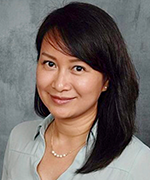
Justin M. WozniakView profile
Researcher
Justin M. Wozniak is a computational scientist at Argonne National Laboratory’s Mathematics and Computer Science Division within the Computing, Environment and Life Sciences directorate. He is a key contributor to advanced scientific workflow systems such as Swift/T and Parsl, enabling scalable, distributed, and many-task computing for data-intensive science. His work supports major initiatives in cancer research (CANDLE), epidemiological modeling, and exascale computing (ExaWorks). He collaborates extensively with leading researchers including Ian T. Foster, Michael Wilde, and Kyle Chard. His research focuses on high-performance computing, scientific workflows, distributed systems, and machine learning applications in science. He has pioneered techniques in workflow automation, fault tolerance, in-situ data analysis, and performance optimization. His work enables robust, scalable execution of complex computational pipelines across heterogeneous environments, from supercomputers to cloud platforms. His recent publications (2021–2025) emphasize workflow interoperability, resilience, benchmarking, and applications in cancer and epidemic modeling. Themes include automated model comparison, job management portability (PSI/J), adaptive workflow steering, and exascale-ready workflow toolkits. These works reflect a strong trend toward reproducibility, scalability, and real-world scientific impact. Justin M. Wozniak has no listed scientific awards in the provided text. However, his leadership in major DOE-funded projects and high-impact publications in top venues (SC, HPDC, e-Science) underscores his significant contributions to computational science. He has mentored or collaborated with numerous researchers, though specific advisees are not listed. His work is supported by large-scale computing grants and initiatives such as the ExaWorks project and CANDLE, which aim to accelerate scientific discovery through advanced computing infrastructure. He contributes to open science through tools like Parsl and Swift/T, which are widely used in the scientific community. He is a core developer in the ExaWorks ecosystem and contributes to workflow frameworks that integrate with AI/ML pipelines, containerization, and real-time data analysis. His work on Braid-DB and provenance tracking supports AI-driven science with full reproducibility. These efforts are central to modern computational laboratories aiming for autonomous, data-intensive discovery.