Vicky Kalogeiton is a Professor in AI at École Polytechnique's Computer Science Laboratory (LIX) and heads the VISTA team. She is a core member of ELLIS Paris, contributing to multimodal generative AI with focus on efficiency, structured outputs, and medical applications. Her work appears in top venues like CVPR, ICCV, ECCV, and IJCV, emphasizing open science and slow research principles. PhD from University of Edinburgh/INRIA Grenoble with Vittorio Ferrari and Cordelia Schmid Research Fellow at VGG, University of Oxford Organizer of CVPR 2025 and Hi!Paris Summer School Her research spans generative AI (diffusion models, flow matching), medical imaging (renal transplant analysis, brain disorders), and cinematic AI (camera control, humor detection). Key projects include E.T. dataset for camera trajectories, FunnyNet-W for multimodal humor analysis, and SCAM for semantic image generation. Recent work demonstrates state-of-the-art performance in visual geolocation (CVPR 2024), optical video generation (AKiRa), and character-aware camera motion (E.T. dataset). She has secured grants from ANR, Hi!Paris, and Microsoft. Program Chair, CVPR 2027 Diversity Chair & Area Chair, ICCV 2025 Best Paper Awards (ICCV-W 2021, ACCV 2022 Honorable Mention) Outstanding Reviewer Awards (ICCV 2021, ECCV 2020) She supervises PhD candidates in generative modeling , medical AI , and reinforcement learning . Collaborations span institutions including Inria, MBZUAI, and MPI.
Mourad ZRIBI is a Maître de Conférences (Associate Professor) with Habilitation à Diriger des Recherches (HDR) qualification. He is affiliated with the IMAP research team, focusing on statistical methods and image processing. His academic work spans multiple disciplines including statistics, computer vision, and medical imaging. Dr. ZRIBI's research interests primarily center around statistical modeling for image processing applications. His work encompasses Bayesian estimation techniques, particle filtering methods, and advanced image restoration algorithms. He has made significant contributions to medical image analysis, particularly in brain MR image segmentation, and has developed innovative approaches for content-based image retrieval systems using deep learning techniques. His research bridges theoretical statistics with practical applications in computer vision and medical diagnostics. His publication record shows a consistent focus on applying statistical methods to image processing challenges. Recent work emphasizes Bayesian approaches, particle filters, and deep learning techniques for image restoration, segmentation, and retrieval. His research demonstrates a progression from fundamental statistical modeling to increasingly sophisticated applications in medical imaging and computer vision. Dr. ZRIBI collaborates extensively with researchers across multiple institutions, as evidenced by his co-authored publications. His work has appeared in reputable journals including Hacettepe Journal of Mathematics and Statistics, Communications in Statistics, and Computer Methods in Biomechanics and Biomedical Engineering. He is an active member of the IMAP research team, which appears to focus on image processing and analysis methodologies. His research contributes to advancing statistical techniques for practical applications in medical imaging and computer vision.
Ehsan Miandji is an Assistant Professor and Docent at Linköping University's Department of Science and Technology (ITN), part of the Faculty of Science and Engineering. His research focuses on computer graphics, computer vision, and machine learning, with a particular emphasis on BRDF modeling, light field imaging, compressed sensing, and sparse representation techniques. He is affiliated with the Computer Graphics and Image Processing group and the Wallenberg Autonomous Systems Program (WASP). His work spans both theoretical advancements and applied methodologies in visual data processing. Recent research includes optimizing BRDF acquisition via FROST-BRDF, advancing multidimensional compressed sensing for spectral light fields, and developing sparse representation frameworks for bidirectional texture functions (BTF). Miandji collaborates with interdisciplinary teams within the Media and Information Technology (MIT) division, contributing to projects that bridge computational imaging, algorithm design, and real-world applications. His publications reflect a strong commitment to pushing boundaries in visual data compression, rendering efficiency, and perceptual quality assessment of material models.
Prof. Dr.-Ing. Eckehard Steinbach is a Full Professor of Media Technology at the Technical University of Munich (TUM), affiliated with the TUM School of Computation, Information and Technology. His research focuses on haptic communication, the Tactile Internet, multimedia systems, and machine learning-driven analysis of sensory data. He holds an IEEE Fellowship (2015) for contributions to visual and haptic communications and has led projects like the Centre for Tactile Internet with Human-in-the-Loop (CeTI). Education: Studied Electrical Engineering at the University of Karlsruhe, University of Essex, and ESIEE Paris. Earned a Ph.D. from Friedrich-Alexander University of Erlangen-Nuremberg (1999). Postdoc at Stanford University (2000–2002). Research Interests: Haptic data compression, teleoperation, networked multimedia systems, and applications of machine learning in sensory data analysis. Key projects include the IEEE 1918.1.1-2024 standard for haptic codecs and 5G-based teleoperation systems. Awards: ERC Starting Grant (2011–2015), Alcatel-Lucent Research Award (2011), VDE-ITG Publication Award (2009). Grants and Projects: Led initiatives in tactile internet, 5G testbeds for eHealth, and radar-based human activity monitoring. Collaborates on robotics and remote collaboration systems via platforms like the Munich 5G Research Hub. Labs/Teams: Chair of Media Technology at TUM, contributing to TUM-IAS and the Munich Institute of Robotics and Machine Intelligence (MIRMI).
Aurélia FRAYSSE is an Associate Professor at CentraleSupélec, affiliated with the Laboratoire des Signaux et Systèmes (L2S). Her research focuses on inverse problems, signal and image processing, with applications in electromagnetics, astrophysics, and computational imaging. She earned her HDR (Habilitation) in 2017 on methodological contributions using sparsity for inverse problems, and her PhD in 2005 from Université Paris XII Val de Marne, specializing in multifractal analysis. Her work emphasizes Bayesian methods, sparse representations, and optimization algorithms in challenging imaging scenarios. Her research areas include variational Bayesian approaches for image reconstruction, sparse coding techniques, and applications in gravitational wave detection, electromagnetic imaging, and multispectral data processing. She has collaborated on projects involving wavelet-based methods, low-rank approximations, and machine learning for inverse problems. Key contributions include advancements in contrast source inversion methods for nonlinear electromagnetic imaging, efficient algorithms for sparse gradient priors, and the development of small-scale networks for seismic pattern classification. Her work bridges theoretical foundations (e.g., minimax theory, Sobolev space regularity) with practical applications in engineering and astrophysics. Dr. FRAYSSE has published extensively in IEEE journals and conferences, including Transactions on Antennas and Propagation, Signal Processing, and European Signal Processing Conferences. Her research also extends to the energy, industry, and health domains through transversal axes at L2S. She is actively involved in the lab’s initiatives for the future of industry and sustainable energy solutions.
Frederic Cordier is an Associate Professor (HDR) at the University of Haute-Alsace, affiliated with the LMIA department within the Faculty of Science and Technology (FST). His research focuses on computer graphics, 3D modeling, and geometric algorithms. He holds a PhD in Computer Science from the University of Geneva (2004) and advanced degrees from the University of Lyon. His work spans sketch-based interfaces, cloth simulation, medical modeling, and texture mapping. Key projects include inferring mirror symmetry from sketches, compressing 3D mesh sequences, and reconstructing organ models from medical data. His contributions to real-time cloth simulation and dressed virtual humans have been influential in interactive systems and virtual garment design. Publications emphasize geometric algorithms for shape reconstruction, symmetry detection, and medical applications. He has held visiting roles at KAIST (South Korea) and conducted postdoctoral research in computational geometry. Teaching includes graduate-level computer science courses in Geneva and Haute-Alsace.
Dr. Angela Huo is an Associate Professor at the School of Computer Science within the Faculty of Engineering and Information Technology at the University of Technology Sydney (UTS). She holds multiple leadership roles including Deputy Director of Transnational Education for the Faculty of Engineering and IT, Responsible Academic Officer for Teaching and Learning of the School of Computer Science, Course Director for the Bachelor of Computing Science (Honours) program, and site coordinator for the South Pacific Programming Contests region of the International Collegiate Programming Contest (ICPC). Dr. Huo's research spans several key areas in computer science, with a primary focus on Data Analysis, Recommendation Systems, and Responsible AI. She specializes in utilizing AI and data analysis techniques to improve the efficiency and security of modern software systems. Her recent research interests include recommendation systems, anomaly detection, and privacy-preserving through data mining and deep learning. She has made significant contributions across multiple domains including multimodal learning, federated learning, causal inference, and human behavior recognition. Dr. Huo's publication record demonstrates a strong trajectory in cutting-edge AI research, with recent work focusing on conditional diffusion models for trajectory prediction, hybrid recommendation systems, causal learning to mitigate echo chambers, and adaptive waste detection. Her research shows a consistent pattern of addressing real-world challenges through innovative AI approaches, often combining multiple techniques to achieve superior results. Dr. Huo has secured research funding for projects including "Churn prediction scoping study" and "Army sovereign Software-Defined Battlefield Network." She has been actively involved in teaching and curriculum development, having created Industrial sub-majors for Google, AWS and iOS, Information Security sub-major, Data Analytics for Cybersecurity Microcredentials, and Cybersecurity and Privacy major since 2019. She has taught programming and cybersecurity management courses at the undergraduate level and served as HDR Coordinator of the School of Computer Science during 2021-2022.
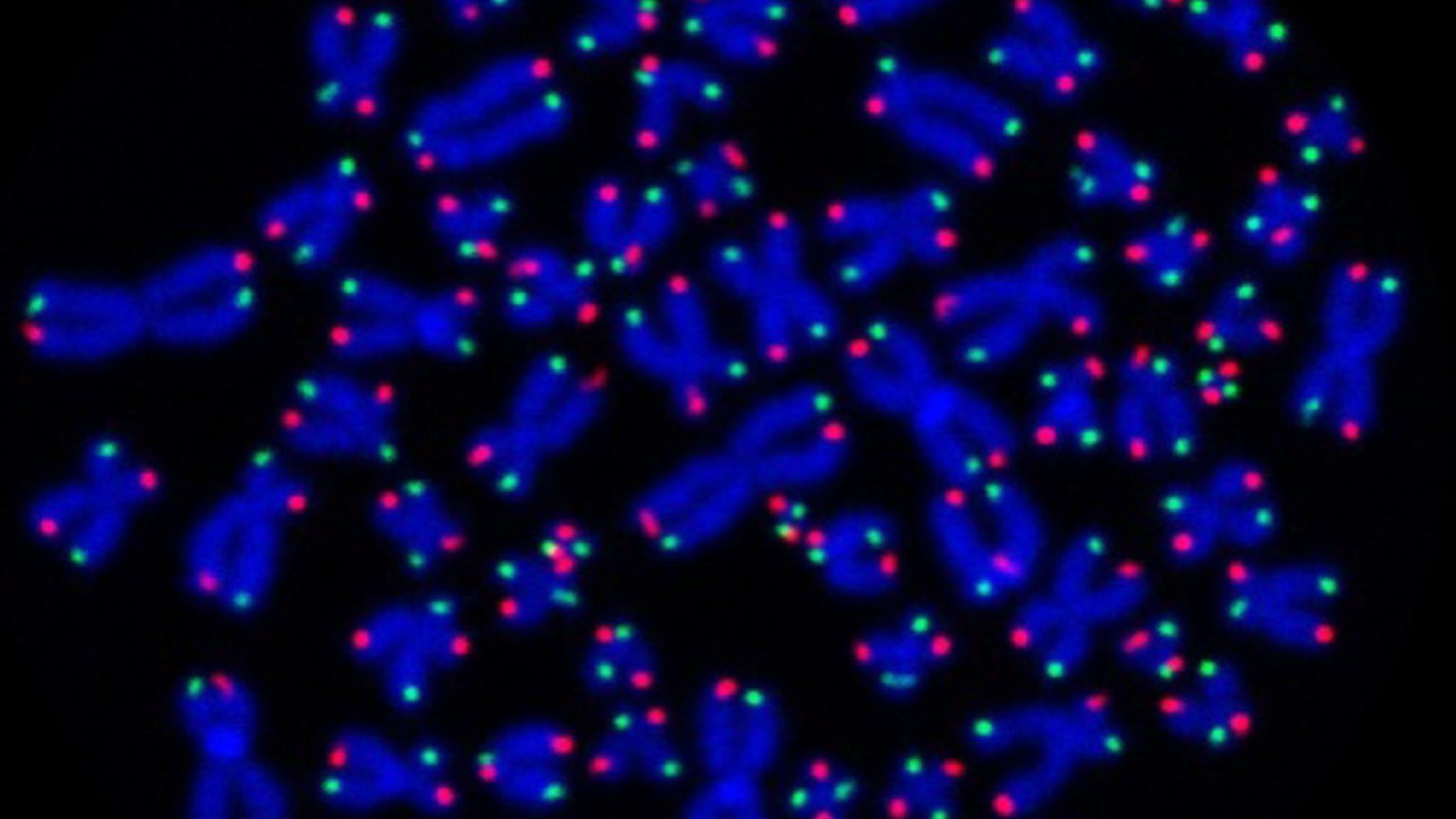
Joachim Lingner is a Full Professor at École Polytechnique Fédérale de Lausanne (EPFL), affiliated with the School of Life Sciences (SV), Institute of Bioengineering (ISREC), and leads the Unit of Prof. Lingner (UPLIN). He holds multiple teaching roles in Life Sciences Engineering, EDMS, and SSV programs. His research focuses on telomere biology, chromatin dynamics, and their implications in aging and cancer. He also contributes to doctoral education and curriculum development at EPFL. Research Interests: Dr. Lingner's work centers on the molecular mechanisms of telomere maintenance, particularly the role of telomerase and the long noncoding RNA TERRA. His lab investigates how telomeres protect chromosome ends, regulate cellular lifespan, and respond to oxidative stress. They study the telomeric proteome using advanced techniques like QTIP (Quantitative Telomeric chromatin Isolation Protocol) and explore the interplay between telomeric R-loops, DNA repair, and replication. Key areas include telomerase regulation, oxidative damage protection via PRDX1 and MTH1, and chromatin remodeling during aging and disease. Scientific Trends from Publications: His recent work (2019–2025) shows a strong focus on TERRA-mediated regulation, R-loop dynamics, oxidative stress responses, and the proteomic characterization of telomeres during replication and damage. There is increasing integration of biochemical, cell biological, and proteomic approaches to dissect telomere function in both normal and pathological states, particularly in cancer and aging. START-fellowship from the Swiss National Science Foundation (1997) Friedrich Miescher prize (2002) ERC advanced investigator award (2008) Elected member of EMBO (2005) Elected member of Academia Europaea (2020) Advising and Grants: Dr. Lingner has supervised over 14 PhD students and continues to mentor postdoctoral researchers and students at EPFL. His lab has been supported by major grants, including an ERC Advanced Investigator Award and SNSF funding. He actively recruits motivated candidates for postdoctoral and student projects related to telomere biology. Labs and Teams: He leads the Lingner Lab at EPFL, which is part of ISREC and focuses on telomere chromatin, oxidative damage, and replication. The lab employs a multidisciplinary approach combining mass spectrometry, biochemistry, cell biology, and molecular genetics. Key collaborators include researchers in DNA repair, chromatin, and cancer biology at EPFL and beyond.
Vicky Kalogeiton is a Professor in AI at École Polytechnique's Computer Science Laboratory (LIX) and leads the VISTA team. As an ELLIS member, her research focuses on multimodal generative AI with applications in medical imaging, efficient generation, and structured output modeling. She actively publishes in top venues like CVPR, ICCV, and IJCV, and supports Slow/ Open Science principles. PhD from University of Edinburgh and INRIA Grenoble Habilitation (HDR) from École Polytechnique 2024 Hi!Paris Chaire and multiple grants (ANR, Microsoft, DIM RFSI) Her recent work explores diffusion models for visual geolocation (Around the World in 80 Timesteps), camera motion control (AKiRa & E.T. dataset), and multimodal humor detection (FunnyNet-W). She pioneered coherence-aware training frameworks and cinematic trajectory analysis methods. Scientific recognition includes CVPR 2024 Highlight paper ACCV 2022 Student Honorable Mention ICCV-W 2021 Best Paper Award Outstanding Reviewer Awards (CVPR, ICCV, ECCV) She supervises current PhD candidates and has mentored numerous students across institutions like MBZUAI, Inria, and Telecom Paris. Her teaching includes Advanced Deep Learning and Computer Vision courses at École Polytechnique.
Aurélien Bénel is an HDR Lecturer (Associate Professor) in Computer Science at the University of Technology of Troyes, affiliated with the LIST3N laboratory's 'Technologies and Practices' research axis. He teaches across multiple academic levels, including undergraduate courses in Software and Information Systems Engineering (e.g., Information System Analysis), graduate courses in software innovation (e.g., Service-Oriented Architectures, Agile Methods), and doctoral seminars on Socio-Technical Systems and research methodologies. His research focuses on software technologies for intellectual work instrumentation , with experimental applications in archaeology, sociology, translation, and engineering. He develops and maintains open-source tools through the Hypertopic suite, including participatory platforms (Porphyry, LaSuli, TraduXio) and infrastructure components for image corpus management and semantic categorization. His interdisciplinary work intersects with digital humanities, knowledge engineering, and human-computer interaction. Bénel actively contributes to scientific communities as a reviewer in Digital Humanities, Digital Document studies, Knowledge Engineering, Artificial Intelligence, and Computer-Supported Cooperative Work. His publications emphasize participatory systems, semantic technologies, and the sociotechnical aspects of digital tools.
Professor Haifeng Shen is a faculty member in the Discipline of Engineering and Information Technology at Southern Cross University’s Faculty of Science and Engineering. He holds dual senior memberships with ACM and IEEE and has led multiple academic roles including Head of Discipline, Research Lab Director, and HDR Discipline Chairperson. His research focuses on intelligent software systems, AI-driven interaction technologies, and real-world applications in defense, healthcare, education, sports, and sustainability. Education: PhD in Computing (Griffith University), MEng in Computer Architecture (Tianjin University), and BEng in Computer Applications (Tianjin University). He has taught across all academic levels, with expertise in online/blended teaching models and program accreditation leadership. Research leadership includes founding HilstLab at Australian Catholic University and organizing international conferences. His recent work emphasizes AI in software engineering (code review, vulnerability detection), IoT analytics, and human-AI collaboration in healthcare/education. Over 200 publications span topics like DevOps security, logging practices, and ADHD attention interface design. Awards: Not explicitly listed in provided texts but his roles and conference leadership suggest significant academic recognition. Professional service includes university committees on research ethics and HDR strategy.
Yifan (Evan) Peng is an Assistant Professor at the University of Hong Kong, jointly affiliated with the Departments of Electrical & Electronic Engineering and Computer Science. He leads the WeLight Lab, focusing on interdisciplinary research at the intersection of Optics, Graphics, Vision, and Artificial Intelligence. His work emphasizes computational imaging systems, holography, and human-centered visual technologies. Education: PhD in Computer Science from the Imager Lab, University of British Columbia Postdoctoral Research Scholar at Stanford University's Computational Imaging Lab Visiting Student Researcher at KAUST's Visual Computing Center and Stanford MS & BS in Optical Science and Engineering from Zhejiang University Research Interests: His research explores computational optics, holographic displays, VR/AR/MR systems, and low-level vision techniques. Recent efforts include developing snapshot hyperspectral imaging systems, lighting-robust machine vision, and neural rendering frameworks for dynamic scenes. He investigates hardware-software co-design in imaging systems and explores applications in medical imaging and mixed reality. Publications: Recent work focuses on advancing holographic display technologies, neural rendering, and hybrid optical-computational imaging systems. Key contributions include metasurface-based AR displays, speckle reduction techniques, and learned optical systems for hyperspectral imaging. His research bridges physical optics with digital algorithms to achieve high-quality imaging and display solutions. Grants & Advising: Hosts visiting scholars and collaborates with industry partners like Ford, Sony, and Intel. Openings exist for PhD students, postdocs, and research assistants in computational imaging and optics. Labs & Teams: Leads the WeLight Lab at HKU, collaborating with global institutions on projects like neural holography and diffractive optics. Active in conferences like SIGGRAPH, CVPR, and ISMAR as program committee member.
Rafał Mantiuk is a Professor of Graphics and Displays at the Department of Computer Science and Technology , University of Cambridge, UK. He leads the Rainbow Research Group and works on visual perception, display algorithms, and computational imaging. His academic journey includes a PhD (summa cum laude) from Max-Planck-Institut (2006) and an MSc from Technical University of Szczecin (2003). His research spans applied visual perception , high dynamic range imaging , display algorithms , and machine learning for image synthesis . Recent work focuses on ColorVideoVDP (HDR video metrics), AR-DAVID (AR display artifacts), and elaTCSF (flicker modeling). His methodologies combine psychophysics with computational models to enhance display technologies. His awards include: SIGGRAPH Test-of-Time Award (2023) ICME Grand Challenge Second Place (2025) CIC Best Paper Awards (2022, 2020) Human Vision and Electronic Imaging Best Paper (2020) Heinz Billing Award (2006) Key grants: ERC Consolidator Grant (2017) for EyeCode, MSCA RealVision (2018), and EPSRC funding (2017, 2011). He supervises projects involving novel display technologies like HDR multi-focal stereo displays and 10-bit LCD systems.
Peter Vangorp is an Assistant Professor in the Visualization and Graphics group of the Department of Information and Computing Sciences at Utrecht University in the Netherlands. He leads research in computer graphics, visual perception, and virtual reality, with a particular focus on material perception and realistic rendering techniques. Dr. Vangorp obtained his Ph.D. in Computer Science at the University of Leuven (Belgium) in 2009. His doctoral research focused on "Human Visual Perception of Materials in Realistic Computer Graphics." Prior to his current position, he held postdoctoral positions at REVES/Inria Sophia-Antipolis (France), Giessen University (Germany), Max Planck Institute for Informatics (Germany), and Bangor University (UK). He also served as a Senior Lecturer at Edge Hill University (UK) from 2016 to 2022. Dr. Vangorp's research interests span several interconnected domains within computer graphics and visual perception. His primary focus is on understanding how humans perceive materials and gloss in computer-generated imagery, which has direct applications in realistic rendering. He has made significant contributions to the study of hazy gloss perception, BRDF modeling, and material editing techniques. His work bridges the gap between computer graphics and human visual perception, using rigorous experimental methods to inform rendering techniques. More recently, his research has expanded into virtual reality applications, particularly in medical visualization and rehabilitation. Analysis of Dr. Vangorp's recent publications reveals a consistent focus on material perception and realistic rendering, with increasing attention to virtual reality applications. His work often combines computer graphics techniques with psychophysical experiments to understand human visual perception. Recent publications show expansion into medical applications of VR, 3D point cloud processing, and gamification in educational contexts. The interdisciplinary nature of his research is evident in collaborations with researchers from computer science, psychology, medicine, and education fields. Dr. Vangorp has received research funding through an NWO grant for the VR4eVR project (Virtual Reality for enhanced Visual Rehabilitation), which runs from 2024 to 2030. This project involves collaboration with multiple institutions including UMCG, Royal Visio, RUG, and UT. Dr. Vangorp has supervised numerous graduate students, including PhD candidate Vanderfeesten (2025) and multiple Master's students in Game & Media Technology and Artificial Intelligence programs. His students have worked on diverse topics including real-time rendering techniques, neural denoising, 3D Gaussian splatting, and volumetric sampling methods. He serves as a PhD supervisor and researcher in the VR4eVR project, mentoring students working at the intersection of computer graphics and medical applications. Dr. Vangorp is actively involved in the Visualization and Graphics research group at Utrecht University, where he contributes to research on advanced rendering techniques, material perception, and virtual reality applications. His work on the VR4eVR project demonstrates his commitment to applying computer graphics research to real-world medical challenges, particularly in visual rehabilitation.
Naim Ozturk, PhD is a Clinical Professor in the Department of Radiation Oncology at Washington University School of Medicine. He serves as the Chief Physicist at Cox Health Springfield, a position he has held since joining the Washington University Radiation Oncology faculty in 2018. Dr. Ozturk's educational background includes: BS in Physics from Boğaziçi University, Istanbul, Turkey (1984) MS in Physics from University of Toledo, Toledo, OH (1989) PhD in Physics from University of Toledo, Toledo, OH (1993) MS in Medical Physics from East Carolina University, Greenville, NC (2003) Dr. Ozturk is certified by the American Board of Radiology in Therapeutic Medical Physics (2007). His clinical expertise spans advanced radiation therapy techniques including Stereotactic Radiosurgery (SRS), Stereotactic Body Radiation Therapy (SBRT), Volumetric Modulated Arc Therapy (VMAT), and High Dose Rate Brachytherapy (HDR). His scholarly work demonstrates a significant focus on ethics and professionalism in medical physics. Dr. Ozturk has contributed to the development of ethical standards through his involvement with the American Association of Physicists in Medicine (AAPM), including work on the revised Code of Ethics. His publications reveal consistent emphasis on improving clinical workflows while maintaining the highest ethical standards in medical physics practice. Dr. Ozturk's professional recognition includes board certification by the American Board of Radiology in Therapeutic Medical Physics (2007), reflecting his expertise and commitment to excellence in the field. As Chief Physicist at Cox Health Springfield, Dr. Ozturk oversees the physics component of the radiation oncology program, ensuring accurate and safe delivery of radiation therapy to patients. His work bridges technical aspects of radiation therapy with professional responsibilities of medical physicists.