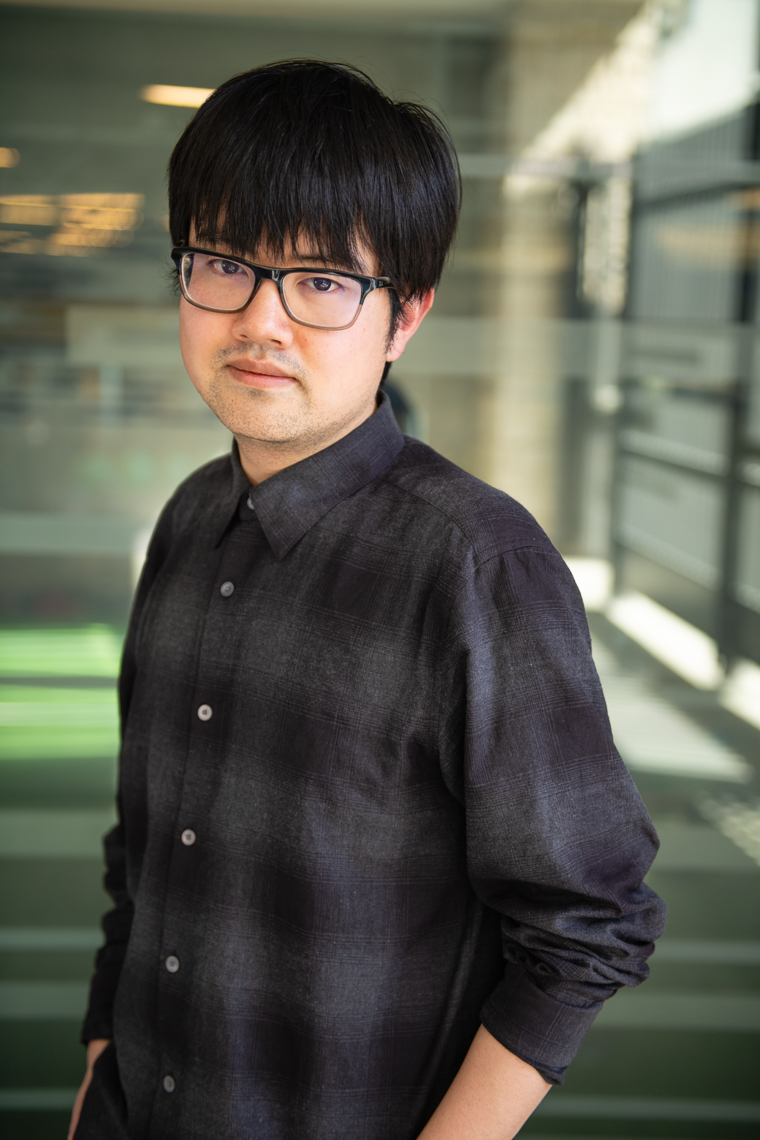
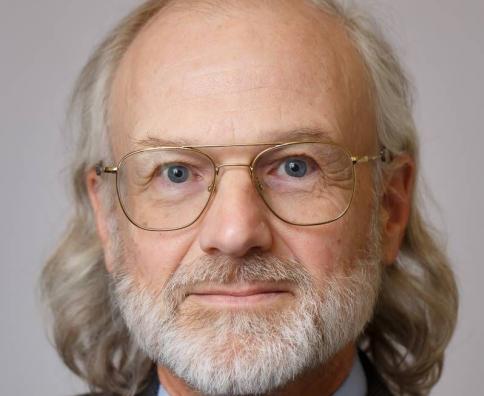
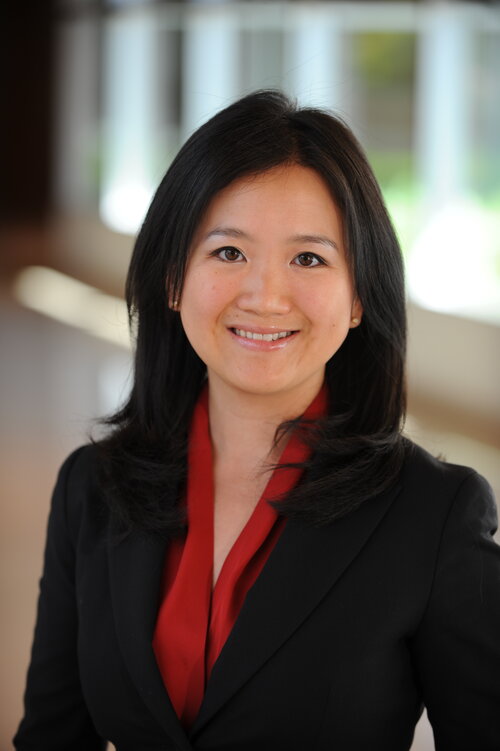
Chen Lian is an Assistant Professor in the Department of Economics at UC Berkeley. Holding a PhD from MIT, their research bridges macroeconomics, behavioral economics, and finance, with a focus on bounded rationality, monetary theory, and macro-finance interactions. Education: PhD in Economics, MIT Chen’s work explores how incomplete information and behavioral biases shape macroeconomic outcomes. Key themes include inflation effects on households, fiscal-monetary policy interactions, and financial stress dynamics. They employ heterogeneous-agent models and analyze how micro-level shocks propagate through the economy. Their publications and working papers address topics like credit cycles, demand shock propagation, and the psychological underpinnings of economic decisions. Papers such as Low Interest Rates and Risk Taking (2019) and Confidence and the Propagation of Demand Shocks (2022) highlight their interdisciplinary approach.
Dr. Herb Lin is the Hank J. Holland Fellow in Cyber Policy and Security at the Hoover Institution and Senior Research Scholar for Cyber Policy and Security at the Center for International Security and Cooperation (CISAC), both at Stanford University. He also serves as Chief Scientist, Emeritus for the Computer Science and Telecommunications Board of the National Academies, where he worked from 1990 to 2014, and as Adjunct Senior Research Scholar and Senior Fellow in Cybersecurity at Columbia University's Saltzman Institute for War and Peace Studies. Dr. Lin received his doctorate in physics from MIT, providing him with a strong technical foundation that informs his policy work at the intersection of technology and national security. His academic background bridges the gap between deep technical understanding and policy application in the cybersecurity domain. Dr. Lin's research focuses on the policy dimensions of cybersecurity and cyberspace, with particular emphasis on offensive cyber operations as instruments of national policy, information warfare, and influence operations affecting national security. His work addresses critical challenges at the intersection of emerging technologies like artificial intelligence, quantum computing, and their implications for nuclear security, election integrity, and democratic processes. He has been instrumental in analyzing how cyber capabilities are transforming traditional security paradigms and how policy frameworks must adapt to these changes. His extensive publication record reveals a consistent focus on the evolving relationship between cyber capabilities and national security strategy. Lin's work demonstrates increasing attention to the implications of artificial intelligence for warfare, the vulnerabilities created by quantum computing for current cryptographic systems, and the growing threat of cyber-enabled information warfare to democratic institutions. His research trajectory shows a progression from traditional cybersecurity issues toward the broader implications of digital technologies for national and international security. Member of Science and Security Board of Bulletin of the Atomic Scientists Served on President Obama's Commission on Enhancing National Cybersecurity (2016) Regular congressional testimony on cybersecurity matters Contributor to Stanford Emerging Technology Review As a mentor and collaborator, Dr. Lin works extensively with policymakers, military officials, and technology experts to translate complex cybersecurity concepts into actionable policy recommendations. His approach emphasizes practical solutions to emerging threats while recognizing the technical limitations and policy constraints that shape real-world security outcomes. Dr. Lin is associated with multiple research initiatives including Stanford's Center for International Security and Cooperation and the Stanford Emerging Technology Review, which aim to connect technological advances with policy considerations for national security decision-makers.
Christian Wolf is an Assistant Professor at the Massachusetts Institute of Technology (MIT) Department of Economics and a Faculty Research Fellow at the National Bureau of Economic Research (NBER). His work bridges macroeconomics, monetary economics, and econometric methodology. Research Interests: Wolf specializes in macroeconomics and monetary policy , with a focus on econometric techniques like structural vector autoregressions (VARs) and local projections . His research explores policy counterfactuals, heterogeneous-agent models, and fiscal-monetary interactions. Recent Publications: His work spans topics such as equivalence between fiscal and monetary tools in HANK models, robust identification in VARs, and the interplay between inequality and macroeconomic dynamics. Articles appear in journals like Econometrica , Journal of Political Economy , and American Economic Review . Awards: Faculty Research Fellow, NBER Contact: ckwolf@mit.edu | Office: E52-554, MIT
Benjamin Born serves as Professor of Macroeconomics at Frankfurt School of Finance & Management and Research Director at the ifo Institute. He is a Research Fellow at CEPR and CESifo, advises the European Commission's DG ECFIN, serves on the European Parliament's Expert Group on Monetary Policy, and sits on the CEPR–EABCN Euro Area Business Cycle Dating Committee. Starting in September 2025, he will join the University of Bonn as Professor of Macroeconomics. Education PhD in Economics, 2011, University of Bonn, Germany MSc in Econometrics and Economics, 2007, University of York, UK BA/MA in Economics, 2006, University of Siegen, Germany Professor Born's research focuses on business cycles, fiscal and monetary policy, heterogeneous agent models, and empirical methods in macroeconomics. His work bridges theoretical modeling with empirical analysis, often using innovative data sources including firm surveys and social media data. He has made significant contributions to understanding how monetary policy affects different segments of the economy, how fiscal policy transmits through various channels, and how firms form expectations about the future. His recent publications reveal a strong trend toward analyzing heterogeneous effects in macroeconomics, particularly examining how different groups (firms, workers, consumers) respond differently to economic shocks and policies. His work increasingly incorporates social media data and novel survey methodologies to capture real-time economic behavior. A significant portion of his research addresses policy responses to the COVID-19 pandemic, including fiscal stimulus packages and lockdown effects. Professor Born is actively involved in the academic community, serving on the editorial boards of the Journal of Monetary Economics and the European Economic Review. He regularly organizes major academic conferences including the BASEforHANK Winterschool and the ifo Conference on Macroeconomics and Survey Data. Teaching and Supervision Currently teaches Macroeconomics II (first-year Ph.D. course at BGSE) Has taught Macroeconomics and Econometrics at all levels Supervises theses in macroeconomics and applied econometrics
Adrien Auclert is an Associate Professor in the Department of Economics at Stanford University. He holds prestigious research affiliations including Research Fellow at the Centre for Economic Policy Research (CEPR), Senior Fellow at the Stanford Institute for Economic Policy Research (SIEPR), Research Associate at the National Bureau of Economic Research (NBER), and member of the French Council of Economic Analysis. His research centers on inequality, macroeconomics, and international economics with a focus on heterogeneous-agent models (HANK). He develops computational tools like the Sequence-Space Jacobian to analyze fiscal/monetary policy, debt relief, and global imbalances. His work bridges theoretical macroeconomics with urgent policy questions, particularly examining how distributional heterogeneity shapes aggregate economic dynamics. Recent publications reveal a dominant trend in studying household-level heterogeneity's role in macroeconomic transmission mechanisms. Auclert demonstrates how fiscal stimulus, monetary policy, and trade shocks propagate asymmetrically through income/wealth distributions, with significant implications for inequality dynamics and policy design in open economies. His scientific honors include: Research Fellow, Centre for Economic Policy Research Senior Fellow, Stanford Institute for Economic Policy Research Research Associate, National Bureau of Economic Research Member, French Council of Economic Analysis Auclert actively engages in policy formulation through the French Council of Economic Analysis, co-authoring influential notes on fiscal consolidation and monetary policy. He is co-organizing the upcoming SITE workshop "Macroeconomics in the Sequence Space" at Stanford (September 8-10, 2025), advancing methodological frontiers in heterogeneous-agent modeling.
Hank Childs is a Professor in the School of Computer and Data Sciences at the University of Oregon, specializing in scientific visualization and high-performance computing. He leads the Research Group on Computing and Data Understanding at eXtreme Scale (CDUX) and has held leadership roles including Interim Executive Director of the School of Computer and Data Sciences. His educational background includes a Ph.D. (2006) and B.S. (1999) in Computer Science from the University of California at Davis. Prior to academia, he worked for 14 years at Lawrence Livermore and Lawrence Berkeley National Laboratories, where he served as architect of the VisIt open-source visualization tool. Research interests center on visualizing extreme-scale scientific datasets from supercomputers, with a focus on in situ visualization for cosmology, seismology, and fluid dynamics. He has pioneered projects like VTK-m and Ascent, and his work explores power-performance tradeoffs and data-parallel algorithms for GPUs. Recent publications emphasize scalable visualization techniques for exascale computing, with 15 notable works from 2021-2020 covering particle advection, in situ triggering, and power-aware frameworks. His research has been honored with multiple best paper awards at IEEE LDAV, EGPGV, and SC conferences. DOE Early Career Award (2012) University of Oregon Faculty Excellence Award (2018) 4+ million dollars in research funding since 2013 5 Best Paper awards in 2021 alone As an educator, he received four consecutive CIS Best Teacher Awards (2014-2019). He has served as Associate Editor for IEEE Transactions journals and organized numerous visualization workshops including Dagstuhl seminars and Shonan workshops.
Charles A. O'Reilly is The Frank E. Buck Professor of Management in the Organizational Behavior area at Stanford Graduate School of Business, where he has been on faculty since 1993. Previously, he served as Professor at University of California, Berkeley (1980-92) and Assistant Professor at University of California, Los Angeles (1976-80). His educational background includes a PhD in Organizational Behavior from University of California Berkeley (1975), MBA from University of California, Berkeley (1971), and BS in Chemistry from University of Texas El Paso (1965). O'Reilly's research focuses on leadership, organizational culture, innovation and change, organizational demography and diversity, and executive compensation. His work has increasingly concentrated on narcissistic leadership and its organizational consequences, ambidextrous organizations that can simultaneously exploit existing capabilities while exploring new opportunities, and the relationship between organizational culture and performance. His influential papers on person-organization fit, organizational ambidexterity, and leadership have shaped contemporary organizational theory. His publications reveal a strong trend toward examining the dark side of leadership, particularly narcissism in executives, and how CEO personality shapes organizational culture. His recent work explores the connection between narcissistic leadership and organizational outcomes including unethical behavior, legal vulnerabilities, and cultural toxicity. Distinguished Scholar Award by the Academy of Management Organizational Behavior Division Lifetime Achievement Award (2010) Distinguished Teaching Award for MBA teaching at Stanford Graduate School of Business (2001) California Management Review Best Paper Award (1996, 2009, 2019, 2020) Administrative Science Quarterly Scholarly Contribution Award (1995, 1998) Hank McKinnell-Pfizer Inc. Faculty Fellow (2022-23) O'Reilly has developed and directed executive education programs including Culture as a Competitive Advantage and Leading Change and Organizational Renewal. He has consulted for numerous public and private firms globally and has taught at UC Berkeley, UCLA, Columbia, and Harvard Business School. His research has been supported by various academic and corporate funding sources that enable his extensive studies of organizational dynamics and leadership. As Co-Director of Culture as a Competitive Advantage and Leading Change and Organizational Renewal programs, O'Reilly works with executive teams to transform organizational culture and implement strategic change. His research on organizational ambidexterity has influenced how companies approach innovation within established organizations, particularly through his work with Michael Tushman on the concept of 'corporate explorers' who drive innovation from within.
Henry F. (Hank) Korth is a Professor of Computer Science and Engineering at Lehigh University, with a courtesy appointment in the Department of Decision and Technology Analytics in the College of Business. He serves as Director of the Blockchain Lab in the Center for Financial Services and Co-Director of the Computer Science and Business Program. Korth is a Fellow of the ACM and IEEE, and a recipient of the VLDB 10-Year Award and Bell Labs President's Silver Award for contributions to database technologies. PhD in Computer Science from Princeton University MA, MSE in Computer Science from Princeton University BA in Mathematics from Williams College Korth's research spans database systems, blockchain systems, distributed systems, and real-time systems. He has pioneered transaction management in parallel and distributed systems, query processing, and the impact of modern computing architectures on database performance. His recent work focuses on blockchain applications in enterprise databases, including acceleration of zero-knowledge proofs, benchmarking frameworks, central-bank digital currencies, and private-yet-provable accounting systems. His contributions are rooted in both theoretical advancements and practical implementations, such as the QTM™ aggregation engine and the DataBlitz™ main-memory storage manager. Scientific awards include: ACM Fellow IEEE Fellow 10-Year Award at the VLDB Conference Bell Labs President's Silver Award Korth actively supervises research within the Blockchain Lab and is affiliated with the Scalable Software Systems Research Group at Lehigh. His scholarly output reflects a deep engagement with blockchain benchmarking, concurrency control, verifiable databases, and the evolution of database systems in response to technological shifts.
Prof. Dr. Wolfgang Steimle is a Professor at the Institute of Mathematics within the Faculty of Mathematics, Natural Sciences and Technology at the University of Augsburg, Germany. He serves as the Erasmus representative for the Institute and is a core member of the Differential Geometry research team, collaborating with Professors Bernhard Hanke and Peter Quast. His office is located in space 3020 (L1) with contact email wolfgang.steimle@math.uni-augsburg.de. Steimle completed his academic training at the University of Münster, earning a diploma (Master's equivalent) in 2007 with thesis "Whitehead-Torsion und Faserungen" and a PhD in 2010 under Tom Farrell and Wolfgang Lück with dissertation "Obstructions to Stably Fibering Manifolds". His research centers on Differential Geometry and Algebraic Topology , with primary focus on manifold classification , automorphisms of manifolds , Algebraic K- and L-theory , and positive scalar curvature . He bridges abstract homotopy theory with geometric applications, particularly through cobordism categories, Waldhausen K-theory, and the assembly map. His work connects higher category theory with classical manifold problems, yielding insights into metric spaces and curvature constraints. Analysis of his recent publications reveals a dominant trend in applying stable infinity-categories to geometric topology, with significant contributions to Hermitian K-theory and the topology of positive scalar curvature metrics. His research consistently integrates algebraic techniques with differential geometric structures, advancing understanding of manifold automorphisms and classification. As an educator, Steimle has taught extensively across all levels, including Bachelor courses in Linear Algebra and Topology, Master lectures in Algebraic Topology and K-Theory, and specialized seminars on Lie Groups, Reflection Groups, and Cobordism Categories. He has supervised doctoral researchers including Georg Frenck, Helge Frerichs, Andreas Huber, and Lukas Schönlinner within the Differential Geometry group.
Ralph Luetticke is a Professor of Economics at the University of Tübingen, affiliated with the Centre for Economic Policy Research and the Stone Centre on Wealth Concentration at University College London. His research focuses on fiscal/monetary policy, business cycles, and computational methods, emphasizing household heterogeneity. Key contributions include analyzing liquidity channels of fiscal policy, military multipliers, and unconventional policy shocks. Recent work explores military spending multipliers, endogenous gridpoint methods for distributional dynamics, and the distributional impacts of monetary policy. His 2023 ERC Starting Grant ('AIRMAC') supports research into aggregate uncertainty in business cycles. Teaching includes advanced macroeconomics courses at UCL and Tübingen, emphasizing HANK models and policy analysis. Scientific awards include the ERC Starting Grant (2023). Research tools developed include the BASE for HANK toolbox (Julia) and open-source codes for heterogeneous agent modeling. His work bridges theoretical macroeconomics with empirical policy analysis, addressing modern challenges like inequality and pandemic stimulus effectiveness.
Christian Bayer is a Professor of Economics at the University of Bonn , specializing in macroeconomics with a focus on inequality , heterogeneous agent models , and business cycles . His research explores the interplay between economic shocks and income inequality, emphasizing the role of financial frictions in shaping macroeconomic outcomes. Key Research Areas: Macroeconomics, Inequality, Heterogeneous Agent Models, Financial Frictions, Business Cycle Analysis Recent Publication Trends: 2024 work on U.S. business cycle inequality, monetary unions, and pandemic consumption dynamics; 2023 studies on fiscal policy liquidity channels, energy shock responses, and wage determinants. Scientific Awards: Three ERC Grants for inequality research Collaborative Approach: Bayer actively mentors young researchers through international collaborations and peer-to-peer team dynamics, fostering interdisciplinary work with economists like Benjamin Born, Ralph Luetticke, and Moritz Kuhn. He leads projects on topics such as monopsony in East Germany and HANK model applications. Contact: Department of Economics, University of Bonn; christian.bayer@uni-bonn.de
Morten O. Ravn is a Professor of Economics and Chair of Macroeconomics at University College London (UCL). He holds a PhD from the University of Southampton (1993) and a MSc from Aarhus University (1990). Previously, he held positions at the University of Southampton, European University Institute, London Business School, and Universitat Pompeu Fabra. His research focuses on macroeconomics, monetary and fiscal theory, applied economics, and international economics. He is a Fellow of the Econometric Society, European Economic Association, and an Advanced ERC Grantee. He has supervised over 40 PhD students and serves as Co-Editor of Quantitative Economics and Chairman of the Royal Economic Society Publications Committee. Ravn's academic contributions span theoretical and empirical macroeconomics, including work on business cycles, tax policy effects, and financial frictions. His research has been published in top journals like the American Economic Review and Econometrica . He actively participates in policy discussions, emphasizing evidence-based approaches to economic challenges. His recent work explores the interplay between economic uncertainty, labor markets, and policy responses. Education: PhD in Economics, University of Southampton (1993) MSc in Economics (cand.oecon), Aarhus University (1990) Awards & Roles: Fellow of the Econometric Society Fellow of the European Economic Association Advanced ERC Grant Recipient Co-Editor, Quantitative Economics Grants & Activities: Recipient of European Research Council (ERC) Advanced Grant Member of the Selection Board for Riksbankens Jubileumsfond Ravn’s research lab and collaborative networks focus on macroeconomic modeling, fiscal policy analysis, and international economic dynamics. His work frequently integrates empirical evidence with theoretical frameworks to address contemporary economic issues.
Pedro Fonseca is an Assistant Professor at the Department of Computer Science, Purdue University. He leads the Reliable and Secure Systems Lab, focusing on building reliable and secure core software systems such as operating systems, hypervisors, and distributed systems. His research has been recognized with awards including the NSF CAREER Award and Google Faculty Research Awards. Before Purdue, he completed a postdoc at the University of Washington, working with Arvind Krishnamurthy, Hank Levy, and Xi Wang. He earned his PhD from MPI-SWS and the University of Saarland under Rodrigo Rodrigues. His academic contributions span over 30 peer-reviewed publications in top-tier conferences like SOSP, OSDI, EuroSys, and ASPLOS. He teaches courses including CS503 (Operating Systems), CS592 (Reliable and Secure Systems), and CS408 (Software Testing). He actively serves on program committees for major systems conferences including SOSP, OSDI, EuroSys, and ASPLOS.
Jing Cynthia Wu is a Professor and Paul W. and Catherine A. Boltz Chair in the Department of Economics at the University of Illinois at Urbana-Champaign, part of the College of Liberal Arts & Sciences. Her research focuses on macroeconomics and finance, with an emphasis on monetary policy, fiscal policy, and financial market dynamics. She holds editorial roles at the Journal of Money, Credit and Banking and the American Economic Journal: Macroeconomics , and is a Research Associate at the National Bureau of Economic Research (NBER). Her work examines unconventional monetary policies such as quantitative easing (QE), central bank digital currencies (CBDC), and the implications of zero lower bound constraints. Key themes include fiscal-monetary policy interactions, inflation targeting strategies, and the transmission mechanisms of global financial integration. Recent studies address post-pandemic inflation dynamics, policy normalization, and the distributional effects of monetary interventions. Dr. Wu’s contributions span both theoretical modeling (e.g., New Keynesian frameworks, heterogeneous agent models) and empirical analysis of financial markets. She has published extensively on yield curve dynamics, bond risk premia, and the macroeconomic impacts of unconventional policies. Her research bridges academic theory with policy relevance, informing central bank decision-making on tools like QT (quantitative tightening) and forward guidance. Awards/Honors: Paul W. and Catherine A. Boltz Chair, NBER Research Associate, Journal Editorial Roles Grants/Advising: Active in funding and mentorship through UIUC and NBER collaborations, though specific grants/students are not listed in available data. Her work often addresses pressing policy questions such as optimal QE design, CBDC frameworks, and the role of international financial linkages in policy transmission. Current projects likely explore evolving central bank toolkit strategies and inflation dynamics in a post-pandemic world.
Jennifer Johnson-Hanks serves as Professor and Executive Dean of the College of Letters & Science at the University of California, Berkeley, holding a joint appointment in the Departments of Sociology and Demography. She currently chairs the Berkeley Division of the Academic Senate, demonstrating significant administrative leadership within the university structure while maintaining active scholarly contributions to demographic theory and methodology. Her educational background includes: BA in Anthropology from University of California, Berkeley MA in Anthropology from Northwestern University PhD in Anthropology from Northwestern University Johnson-Hanks' research examines the intersection of cultural anthropology and demography, with particular focus on how intentions shape family formation and fertility decisions in contexts of uncertainty. Her work integrates ethnographic evidence with demographic analysis to explore life course transitions, especially in sub-Saharan Africa where she has conducted extensive fieldwork on educated women's motherhood timing. Central to her scholarship is the critique of methodological individualism in demographic research, emphasizing how material and schematic structures influence vital events. Analysis of her 2015-2022 publications reveals persistent thematic threads: methodological innovation in measuring intentions, the social construction of statistical norms, and the cultural embeddedness of demographic behavior. Her work consistently challenges assumptions about preference stability while developing frameworks like 'conjunctural action' to integrate social theory with demographic analysis. Regional expertise in African demographic systems informs broader theoretical contributions about how uncertainty shapes life decisions across diverse contexts. While specific advising relationships and grant funding details aren't documented in available sources, Johnson-Hanks' leadership roles and theoretical contributions indicate significant institutional influence. Her directorship of the College of Letters & Science positions her at the nexus of academic administration and demographic scholarship, where she shapes both research agendas and educational infrastructure.