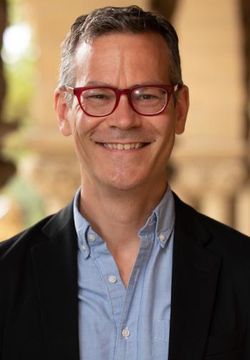
Simon Chadwick is a Professor of Sport and Geopolitical Economy at Skema Business School in France. He specializes in the intersection of sports, geopolitics, and economic transformation in the Middle East, particularly focusing on Gulf states' strategic investments in global sports ecosystems. His research examines how nations like Saudi Arabia and Qatar leverage sports to diversify economies, enhance soft power, and address unemployment. Key themes include the commercialization of football leagues, privatization of sports clubs, and the role of multinational corporations in shaping regional sports markets. Chadwick’s recent articles analyze the Gulf’s pursuit of the 2036 Olympics, the integration of esports into national strategies, and the challenges of building fan loyalty in the Saudi Pro League. His work also explores the economic implications of acquiring European football clubs and the long-term sustainability of Gulf-led sports initiatives. He has contributed to debates on 'sportswashing' and argues that Gulf investments extend beyond PR to systemic economic restructuring. His insights are frequently cited in analyses of Saudi Vision 2030 and its sports-related giga-projects like Neom and Diriyah.
Najib Ghadbian serves as Associate Professor in the Department of Political Science within the College of Arts & Sciences at the University of Arkansas, with additional affiliation to Middle East Studies. He has been a frequent political commentator for al-Jazeera Satellite TV Channel since January 2000 and contributes to US, European, and Middle Eastern media outlets. His academic credentials include: BA in Political Science from United Arab Emirates University, Al Ain MA in Political Science from Rutgers State University, Newark Campus PhD in Political Science from CUNY Graduate School & University Center (1995) Dr. Ghadbian's research centers on democratization dynamics in the Arab world, Syrian political structures, Islamic movements, and US-Mideast relations. His work examines constitutional design in Syria and international dimensions of the Syrian conflict, bridging scholarly analysis with real-world policy applications through publications in journals like Middle East Journal and al-Mustaqbal al-`Arabi . His publication timeline (1997-2016) reveals evolving scholarly focus from theoretical democratization frameworks toward urgent Syrian transition issues, with recent works analyzing GCC-Syria relations (2016) and no-fly zone proposals (2015) reflecting immediate policy engagement amid the Syrian conflict. Professional roles include board membership at the Center for the Study of Islam & Democracy (2003-2005), the Day After Project for Syrian democratic transition, and service as special representative of the Syrian National Coalition to Washington and the UN (2013-2018). While holding significant policy advisory positions, no formal scientific awards are documented in available materials. He teaches undergraduate and graduate courses on Middle East politics, Islam and politics, and contemporary regional issues. Professional affiliations span the Middle East Studies Association (2005-2021), American Political Science Association (2005-2014), and Middle East Institute (2005-2021), though details about research grants, student advising, or laboratory teams remain unspecified.
GIGA German Institute of Global and Area StudiesGermany
Dr. Jessica Watkins is a prominent academic affiliated with the German Institute for Global and Area Studies (GIGA) since 2021, serving as an Associate at the Institute for Middle East Studies . Prior to this, she held roles as Research Fellow (2021), Guest Teacher in International Relations at the London School of Economics (2020-2021), and Postdoctoral Research Officer at the London School of Economics (2017-2021). Her academic journey includes positions at King's College London and the Rand Corporation . PhD War Studies (Civil policing in Jordan), King's College London MA International Relations , King's College London BA Hons in Middle Eastern Studies , University of Cambridge Her research explores global orders and foreign policies with a focus on the Gulf Cooperation Council (GCC) states, Iraq, and Jordan. She investigates democratization barriers in post-conflict settings, community policing dynamics, and statebuilding approaches through qualitative analysis and case studies. Key publication trends include post-conflict governance, tribal-state interactions, and critiques of international coalition strategies in Iraq. Her work emphasizes the interplay between political legitimacy, institutional corruption, and grassroots trust in security frameworks. Dr. Watkins contributes to the GIGA Doctoral Program and collaborates with researchers like Dr. Falah Mubarak Bardan and Mustafa Hasan. Her projects bridge academic research with policy advice, particularly in democratization and security studies.
Prof. Rasmus Gjedssø Bertelsen is Professor of Northern Studies and inaugural Barents Chair in Politics at UiT The Arctic University of Norway. A Danish scholar raised in Iceland, he directs work package 2 on Power with Science Diplomacy in the H2020 InsSciDE consortium, collaborating with Prof. Maria Rentetzi. His research spans transnational knowledge flows between USA-Europe-Middle East-East Asia-Arctic and focuses on elite socialization, epistemic communities, and science diplomacy’s role in adapting Arctic governance to global shifts. Education: PhD (Cambridge, with year at Sciences Po), postdoc (Harvard, UNU), studies in Copenhagen, Reykjavik, Geneva, Lausanne, Amsterdam Key Research Areas: Arctic International Relations, Science Diplomacy, Brain Circulation, Transnational Knowledge Networks, Power Transition, GCC Triple-Helix Relations His 15 most recent articles (2012–2024) examine Arctic governance, Sino-Arctic engagement, energy systems, and science diplomacy. Trends include historical learning for policy adaptation, China’s Arctic strategies, and the Arctic as a laboratory for global governance models. Bertelsen initiated UiT’s UNFCCC observer status and participated in COP15 (2009) and COP21 (2015). He coordinates the Norwegian-Russian PhD course Society and Advanced Technology in the Arctic and the Norway-EU Science Diplomacy Network. Additional roles include advising on EU Arctic policy, analyzing US-China-Russia Arctic dynamics, and exploring space science applications in Arctic development.
Nazila Ghanea is a Professor of International Human Rights Law at the University of Oxford, serving as an Associate Director of the Oxford Human Rights Hub and a Fellow of Kellogg College. Her academic affiliations include the Bonavero Institute of Human Rights and the Public International Law @ Oxford research group. She holds a BA from Keele University, an MA from the University of Leeds, a PhD from Keele University, and an MA from the University of Oxford (Oxon). Her research interests focus on freedom of religion or belief, minority rights, women’s rights, and human rights in the Middle East. She examines intersections between these areas, such as the legal protections of religious minorities in England and Wales, the role of international standards in addressing discrimination, and the domestic impact of UN treaty ratification in Gulf states. Her work also explores expressions of hate speech, particularly related to race and religion, and their implications for international law. Nazila’s publications emphasize critical analysis of UN human rights mechanisms, including the evolution of the Human Rights Council and sessions of the Commission on Human Rights. She has contributed to reports on religious intolerance, discrimination, and advocacy strategies. Her research has been funded by significant grants from the UK Arts and Humanities Research Board, UK Economic and Social Research Council, Open Society, and QNRF. In 2021, she received the Recognition of Distinction Award for her academic achievements. Beyond academia, she advises governments, the UN, and international organizations on human rights issues and has conducted field research in countries such as Malaysia, Qatar, and Iran. She actively participates in media discussions on human rights topics. Her advisory roles include membership in the OSCE Panel of Experts on Freedom of Religion or Belief and the Board of Trustees of the Universal Rights Group. She has co-led research on GCC treaty ratification impacts and collaborated on projects examining religion, equality, and discrimination in England and Wales.
Professor Luca Anceschi is a faculty member in the Department of Central & East European Studies at the University of Glasgow, where he holds the title of Professor of Eurasian Studies (Political & International Studies). He joined the university in 2013 and became a full professor in 2021. His research focuses on post-Soviet Central Asia’s foreign policy, Eurasian energy geopolitics, and personalist rule. Anceschi previously held a Discovery Early Career Fellowship at La Trobe University (2012–2013) and currently edits Europe-Asia Studies , a leading journal for post-socialist studies. His research explores three core themes: (1) foreign policy-making mechanisms in Central Asian states, including Turkmenistan and Kazakhstan; (2) the intersection of energy infrastructure projects (e.g., TAPI pipeline) with domestic and international politics; and (3) comparative analysis of personalist regimes in the region. He has authored monographs such as Turkmenistan’s Foreign Policy (2008) and Analysing Kazakhstan’s Foreign Policy (2020), and co-edited Personalism and Personalist Regimes (2024). Anceschi contributes to public discourse through media engagements, including writing for Open Democracy and podcast appearances on Radio Free Europe/Radio Liberty. His work frequently addresses authoritarian governance, energy security, and the geopolitical implications of Eurasian integration. He supervises doctoral students on topics such as the Eurasian Economic Union, remittance regimes, and natural resource management in Azerbaijan and Kazakhstan. Key Awards: Australian Research Council Discovery Early Career Fellowship (2012–2013) Editorial Role: Editor of Europe-Asia Studies (2015–present)
GIGA German Institute of Global and Area StudiesGermany
Dr. Sara Bazoobandi is a Research Fellow at the GIGA Institute for Middle East Studies, part of the German Institute for Global and Area Studies (GIGA), a Leibniz Institute based in Hamburg, Germany. She has been associated with GIGA since February 2020. Her research focuses on International Political Economy and Energy Economics, with a regional emphasis on Iran and the Gulf Cooperation Council (GCC) countries. Her academic background includes a PhD in Middle East Political Economy from the Institute of Arab and Islamic Studies at the University of Exeter, an MSc in Economic Development in Emerging Markets from the University of Reading, and a BSc in Civil Engineering from Tehran, Iran. Prior to her current role, she served as a Senior Lecturer and Lecturer in International Political Economy at Regent's University London (2015–2018), and as a Research Fellow at the Middle East Institute, National University of Singapore (2012). Dr. Bazoobandi’s research centers on the political economy of the Middle East, particularly Iran’s economic resilience, diversification strategies, and digital transformation. She examines how Iran navigates international sanctions, develops its knowledge-based economy, and strengthens strategic alliances. Her work also explores the geopolitical implications of the Russo-Iranian nexus, focusing on military, economic, and ideological cooperation. More recently, she has been involved in the Digital Transformation Lab (DigiTraL), analyzing digitalization as a tool for international cooperation, particularly between Germany and the Global South. Her recent publications and policy studies highlight trends in AI governance, GCC digital transformation, and the weaponization of knowledge in authoritarian contexts. These works reflect a strong interdisciplinary approach, combining political science, economics, and security studies. She regularly contributes to media outlets such as Frankfurter Allgemeine Zeitung , WirtschaftsWoche , and Deutsche Welle , offering expert commentary on Middle Eastern geopolitics, Iranian foreign policy, and regional conflicts. Dr. Bazoobandi has taught at the Department of Political Science, University of Hamburg (2024), offering a seminar on ideology, state ethos, and power projection in Iran. She has also been a lecturer and speaker at international forums including the Gulf Research Meeting at Cambridge University, the Istituto per gli studi di politica internazionale (ISPI), and the GIGA Forum, where she has addressed topics such as gender equality in the MENA region and the 2022 Iranian protests. She is also the Managing Director of Middle East Risk Consulting, a role she has held since May 2018, demonstrating her engagement with applied policy and risk analysis in the region.
Matteo Legrenzi is a Full Professor at the Department of Economics, Ca' Foscari University of Venice, specializing in International Relations and Middle Eastern Studies. He holds a D.Phil. from St. Antony's College, Oxford, and has taught globally at institutions like Oxford, Ottawa, and Seoul. His research focuses on Gulf monarchies, regional security, and political economy, with notable works on Arab Gulf states' diplomatic strategies and China's Gulf relations. He is a former coordinator of the Philosophy, International Studies, and Economics (PISE) program and founding director of the Master in Strategic Studies and International Security (SSSI). Legrenzi leads the Research Institute for International Studies and advises on Middle East relations as Rector's Delegate. His editorial roles include the Cambridge University Press' Elements in Middle East Politics series. He has received the Capital Educators' Award 2009 and oversees multiple Marie Curie Fellowships. His research spans Gulf security dynamics, Middle East-EU relations, and North-East Asia's geopolitical shifts. Publications highlight his expertise in GCC diplomacy, regional cooperation challenges, and monarchical resilience. He collaborates internationally, including with Tsinghua University's IIAS and SOAS' Middle East Institute.
Dr. Simeon Kaitibie is an Associate Professor in the Department of Agribusiness and Markets at Lincoln University (New Zealand), specializing in agricultural economics and international development. His academic appointments include prior roles as Associate/Assistant Professor at Qatar University (2010–2018) and Research Assistant Professor at North Dakota State University (2002–2006). He holds a PhD in Agricultural Economics from Oklahoma State University and a BSc in Agriculture from the University of Sierra Leone. His research focuses on: Agribusiness value chain optimization in developing economies Food security implications of international trade policies Socioeconomic drivers of smallholder farm productivity Gender-inclusive livestock development Impact of agricultural certifications (e.g., GlobalGAP) on rural incomes Kaitibie's recent publications (2019–2024) predominantly analyze food security trade dynamics in import-dependent economies (Qatar, GCC), efficiency of livestock systems (Botswana, Myanmar), and certification impacts on African smallholders. Methodologies feature econometric modeling, system dynamics, and meta-frontier analysis. He actively supervises postgraduate research on topics including agricultural cooperatives in Malawi, women's empowerment in livestock systems, and value chain upgrading in Myanmar. Professional affiliations include the International Association of Agricultural Economists and editorial roles for Agriculture & Food Security and Frontiers in Veterinary Science .
Dr. Elizabeth Monier is an Assistant Professor of Modern Arabic Studies at the University of Cambridge's Faculty of Asian and Middle Eastern Studies. Her research focuses on identity politics, contemporary Middle Eastern politics with a regional emphasis on Egypt and the Gulf Cooperation Council (GCC) states, and the inclusion of religious minorities. She holds a PhD in Politics and International Studies from the University of Cambridge and is affiliated with the Cambridge Interfaith Research Forum, Cambridge Zero Advisory Board, and the Centre for Geopolitics. Her work explores themes such as nationalism, state-building, sectarianism, and the intersection of regional power dynamics with global politics. Education: PhD in Politics and International Studies (University of Cambridge) Key Research Projects: Nations and state-building in Egypt/Iraq; geopolitics, security, and Middle East global order Teaching: Undergraduate/postgraduate courses on modern Middle East history/politics, Arab world studies Her recent research addresses the securitization of religious minorities, minority media's role in identity formation, and the evolving tolerance policies in Arab Gulf states. She has published widely on Coptic Christians in Egypt, Iraqi Christian communities, and regional diplomacy. A notable achievement is her 2025 Gulf Studies Journal Article Award. Dr. Monier actively contributes to policy discussions, serving on the Academic Advisory Board for Cambridge Zero and advising projects such as the Young Scientists’ Support Program (Armenia). Her interdisciplinary approach bridges historical, political, and sociological dimensions of Middle Eastern studies.
Henriette Mueller is an Assistant Professor of Gender, Governance, and Society at New York University Abu Dhabi (NYUAD), affiliated with the Arts and Humanities Faculty. She holds a doctoral degree (Dr.) from Humboldt University Berlin and has held visiting scholar positions at institutions including the WZB Social Science Center in Berlin, Sciences Po Paris, and Georgetown University. Her research focuses on gender, political leadership, and governance within complex systems, with regional expertise in the European Union (EU), Gulf Cooperation Council (GCC) states, and international organizations. Her academic contributions include the book *Political Leadership and the European Commission Presidency* (Oxford UP, 2020), co-editing *Women and Leadership in the European Union* (Oxford UP, 2022), and leading special issues on topics like *Women Opposition Leaders* (Politics & Governance, 2023). She co-convenes the Gender & Leadership Roundtable and Gender Brown Bag at NYUAD. Müller’s research interests span EU governance, women’s leadership trajectories, and gendered state-building. She explores how gender intersects with political institutions and leadership in diverse contexts, including GCC states and supranational frameworks. Her courses cover women and leadership, statehood, and gender and governance from a global perspective. Her recent work examines Margrethe Vestager’s leadership in EU competition policy, the EU Commission under Ursula von der Leyen, and women’s empowerment in the UAE and GCC. She has received scholarships from the German Historical Institute, Fondation Jean Monnet, and others.
Professor Nazila Ghanea is a Professor in International Human Rights Law at the University of Oxford and a Fellow of Kellogg College. She holds academic affiliations with the Oxford Human Rights Hub, the Universal Rights Group, and the OSCE Advisory Panel of Experts on Freedom of Religion or Belief. Her research focuses on freedom of religion, minority rights, non-discrimination, and human rights in the Middle East. She has taught at institutions including Columbia University, NYU, and Keele University, and has conducted field research in Malaysia, Qatar, and the UAE. Dr. Ghanea’s educational background includes a BA from Keele University, MA from Leeds University, PhD from Keele University, and an MA from the University of Oxford. She has led significant research projects, including studies on religion and equality in England/Wales and the impact of UN treaty ratification in Gulf Cooperation Council states. Her work is funded by organizations such as the ESRC, Qatar Foundation, and Open Society Institute. Her research interests span human rights law, religious minorities, and the interplay between international law and domestic practices. She has authored nine books, numerous journal articles, and UN publications, and serves on editorial boards for leading journals. Additionally, she advises governments and international bodies like the UN, UNESCO, and the EU on human rights matters. Her contributions include designing training programs for professionals globally and engaging in media commentary on human rights issues. Professor Ghanea has held administrative roles such as Women’s Officer and Harassment Officer at Kellogg College and contributes to equality initiatives. Her work bridges academic research, policy advocacy, and practical fieldwork, making her a leading voice in international human rights discourse.
Tyler B. Parker serves as Assistant Professor of Political Science in the Department of Political Science at Mercer University's College of Liberal Arts and Sciences, joining the faculty in 2024 after postdoctoral research at the University of Idaho’s Martin Institute and Idaho Society of Fellows. His academic credentials include: Ph.D. in Political Science (International Politics concentration) from Boston College M.A. in Islamic and Near Eastern Studies from Washington University in St. Louis B.A. in Arabic from The Ohio State University Dr. Parker specializes in Middle Eastern international relations with emphasis on Gulf security dynamics, U.S. foreign policy in the region, and GCC alliance politics. His research examines how Gulf monarchies navigate shifting American authority while pursuing strategic autonomy, with particular attention to small-state diplomacy and defense diversification. He teaches courses spanning international relations theory, Middle Eastern politics, and Arabic language-politics intersections, reflecting his fieldwork experience teaching Modern Standard Arabic in Morocco. Analysis of his 2024-2025 publications reveals consistent focus on U.S.-Gulf partnership evolution amid perceived American decline, with recurring themes of strategic autonomy, small-state agency, and defense policy adaptation across six peer-reviewed works in top international relations journals. His scholarship bridges theoretical frameworks with empirical analysis of GCC states' foreign policy recalibration. Information regarding doctoral advisees, grant funding, or laboratory affiliations is not documented in available sources.
Colin Kahl is a Steven C. Házy Senior Fellow at Stanford University’s Center for International Security and Cooperation (CISAC) and a courtesy Professor of Political Science. He serves as faculty director of CISAC’s Program on Geopolitics, Technology, and Governance. Previously, he held senior U.S. government positions including Under Secretary of Defense for Policy (2021-2023), where he authored the 2022 National Defense Strategy and led responses to crises in Ukraine and the Indo-Pacific. He also served as Deputy National Security Advisor to Vice President Biden (2014-2017) and Deputy Assistant Secretary of Defense for the Middle East (2009-2011). His academic credentials include a Ph.D. in Political Science from Columbia University (2000) and a B.A. from the University of Michigan (1993). Kahl has held teaching positions at Georgetown University and the University of Minnesota, along with fellowships at Harvard University, the Council on Foreign Relations, and the Penn Biden Center. Research focuses on U.S. defense policy, nuclear nonproliferation, Middle East security, and the intersection of technology with global governance. Key publications include Aftershocks: Pandemic Politics and the End of the Old International Order (2021) and States, Scarcity, and Civil Strife in the Developing World (2006). His recent work addresses AI governance, U.S.-China strategic competition, and diplomatic solutions to Iranian nuclear challenges. Recipient of the Department of Defense Distinguished Public Service Medal (2023), Kahl’s career bridges academia and policy-making. He advises on NATO modernization, AUKUS defense agreements, and India’s role in Indo-Pacific stability. Current research explores post-pandemic geopolitical shifts and the evolving international order.
Nadia Naim is a Senior Lecturer at Aston Law School within the College of Business and Social Sciences at Aston University. She holds a PhD from Aston University (2016), focusing on intellectual property regimes in the Gulf Cooperation Council (GCC) states. Her research interests span intellectual property law, artificial intelligence ethics, Islamic finance frameworks, and international trade policy. She actively supervises PhD students in intellectual property rights, Islamic finance, and international trade. Dr. Naim's work bridges legal, economic, and technological domains, with a focus on GCC policy development. Recent publications explore AI's impact on intellectual property laws, Islamic finance-based IP valuation frameworks, and the tangible economic value of IP assets. Her research often intersects with ethical considerations under Sharia principles and global digital transformation trends. Her academic contributions include books like *Intellectual Property and Innovation: Contemporary Developments in the GCC States* (2025) and peer-reviewed articles addressing AI ownership rights and cross-border IP strategies. While no specific awards are listed, her prolific output underscores her leadership in emerging interdisciplinary legal fields. Nadia advises on PhD projects involving ISDS mechanisms, GCC economic integration, and digital innovation governance. Her work frequently engages with international legal cooperation and public policy challenges in globalized economies.