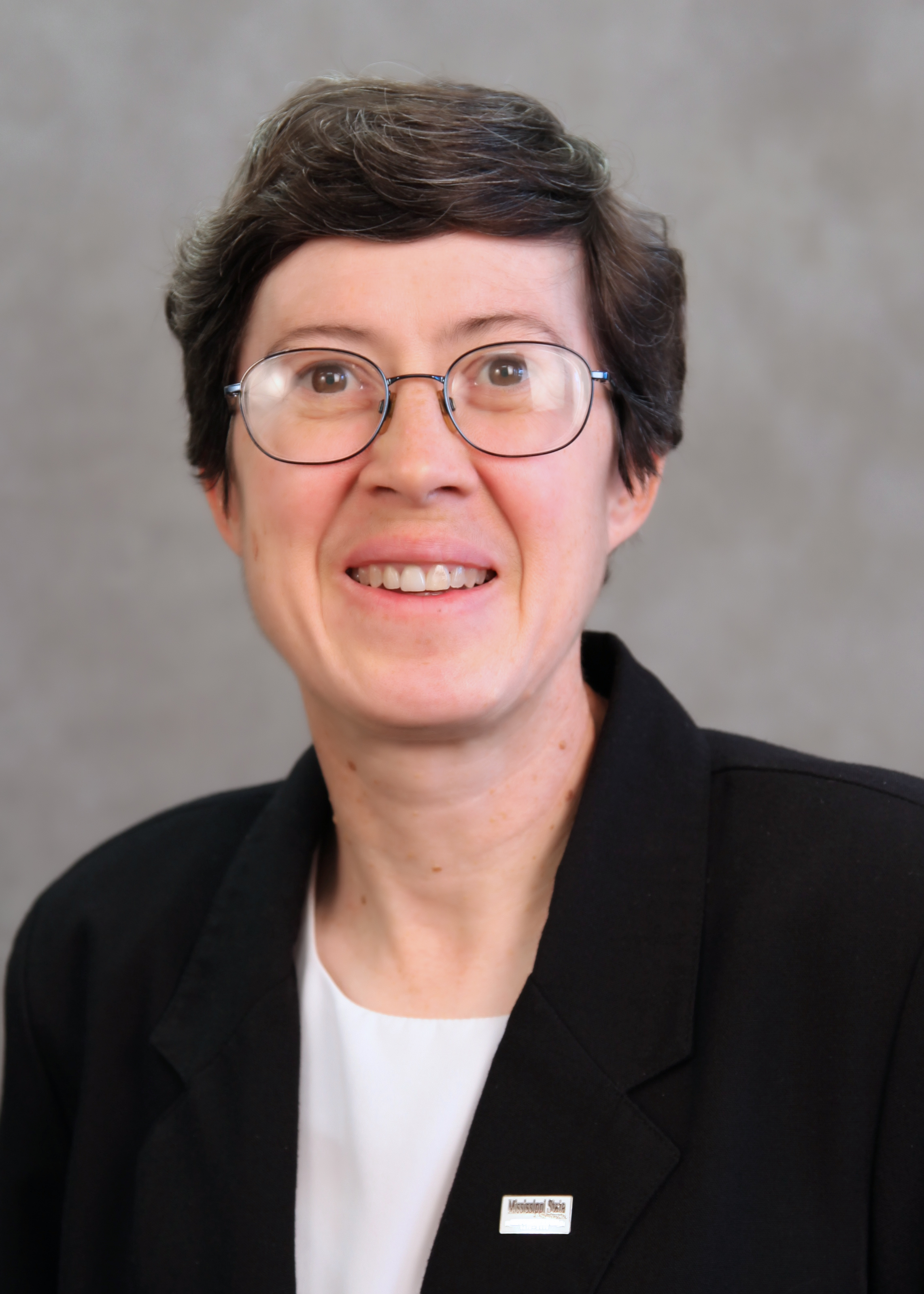
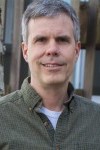
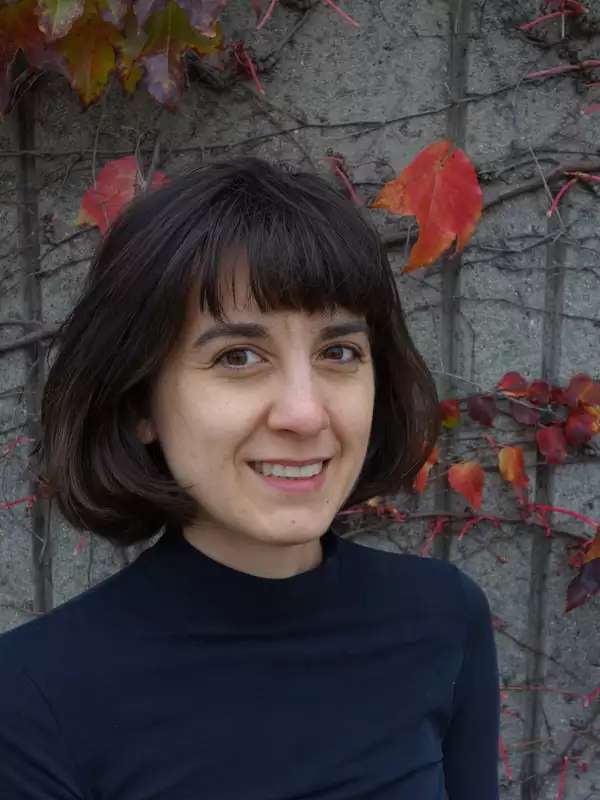
Priscilla J. Hill is a Professor in the Dave C. Swalm School of Chemical Engineering at Mississippi State University's Bagley College of Engineering. She holds a PhD from the University of Massachusetts (1996) and MS/BS degrees from Clemson University. Her research develops particle technology and crystallization processes, with NSF CAREER Award recognition for contributions to particle engineering. Research interests include particle size distribution modeling, crystallization mechanism analysis, breakage/agglomeration processes, and nanotechnology education. Recent educational scholarship focuses on process intensification and nanotechnology integration in chemical engineering curricula. Publications demonstrate sustained contributions to particle process modeling and engineering education reform. Earlier work established numerical methods for population balance equations in solids processing. Awards: National Science Foundation CAREER Award (2005) Educational initiatives include NanoExposed! nanotechnology modules, hybrid separations teaching materials, and K-12 outreach demonstrations. Collaborations advance multidisciplinary nanotechnology education and process intensification curriculum development.
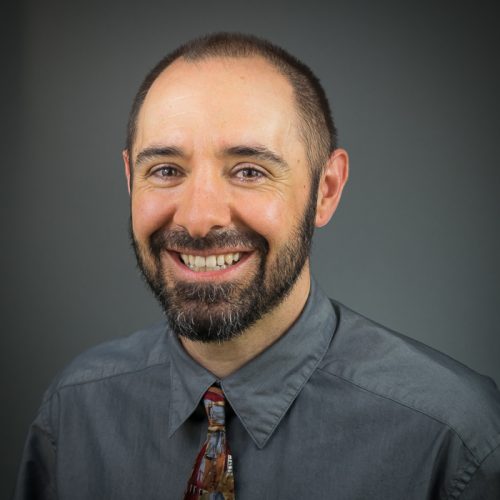
Dr Christopher Henderson is a Senior Lecturer in Animal Ecology at the University of the Sunshine Coast (UniSC), affiliated with the School of Science, Technology and Engineering. He holds a PhD and BSc (Honours) in relevant fields. His research focuses on marine ecology, spatial ecology, and ecosystem functions, particularly in marine protected areas, fish ecology, and conservation prioritization. He has extensive experience with acoustic telemetry studies on fish and sharks in Australia and South Africa. Dr Henderson coordinates the Bachelor of Animal Ecology, Diploma in Animal Ecology, and Undergraduate Certificate in Animal Ecology programs. His work emphasizes the ecological impacts of human activities, including urbanization and coastal development, on marine and terrestrial ecosystems. He has published widely on topics such as functional diversity in coastal seascapes, restoration ecology, and the effects of habitat modification on fish assemblages. His research highlights the importance of seascape context and connectivity in maintaining ecological functions. Recent studies explore how urbanization affects animal assemblages and ecosystem resilience, with a focus on identifying restoration hotspots and optimizing conservation strategies. Dr Henderson collaborates on projects such as the Noosa River Oyster Restoration and Pumicestone Shellfish Habitat Restoration, applying systematic conservation planning to enhance ecosystem services.
Eric Sandvol is a Curator's Distinguished Professor in the Department of Geological Sciences at the University of Missouri's College of Arts and Science. His research focuses on solid earth geophysics with specialization in regional-scale seismology, crustal structure imaging, and tectonic processes. He investigates mountain formation through seismic wave analysis, with extensive fieldwork in collision zones including eastern Turkey and the Tibetan Plateau. Professor Sandvol's research employs diverse techniques including seismic tomography, receiver function analysis, attenuation measurements, and shear wave splitting. His work aims to characterize lithospheric structure and deformation mechanisms in active tectonic regions. Current projects span multiple continents including studies of the Zagros Mountains, Anatolian Plateau, and Central Andean Plateau. His teaching portfolio includes Physical Geology, Geophysics, Earthquake Seismology, and Applied Numerical Analysis. Professor Sandvol maintains active research collaborations globally and directs graduate research in seismology and tectonics.
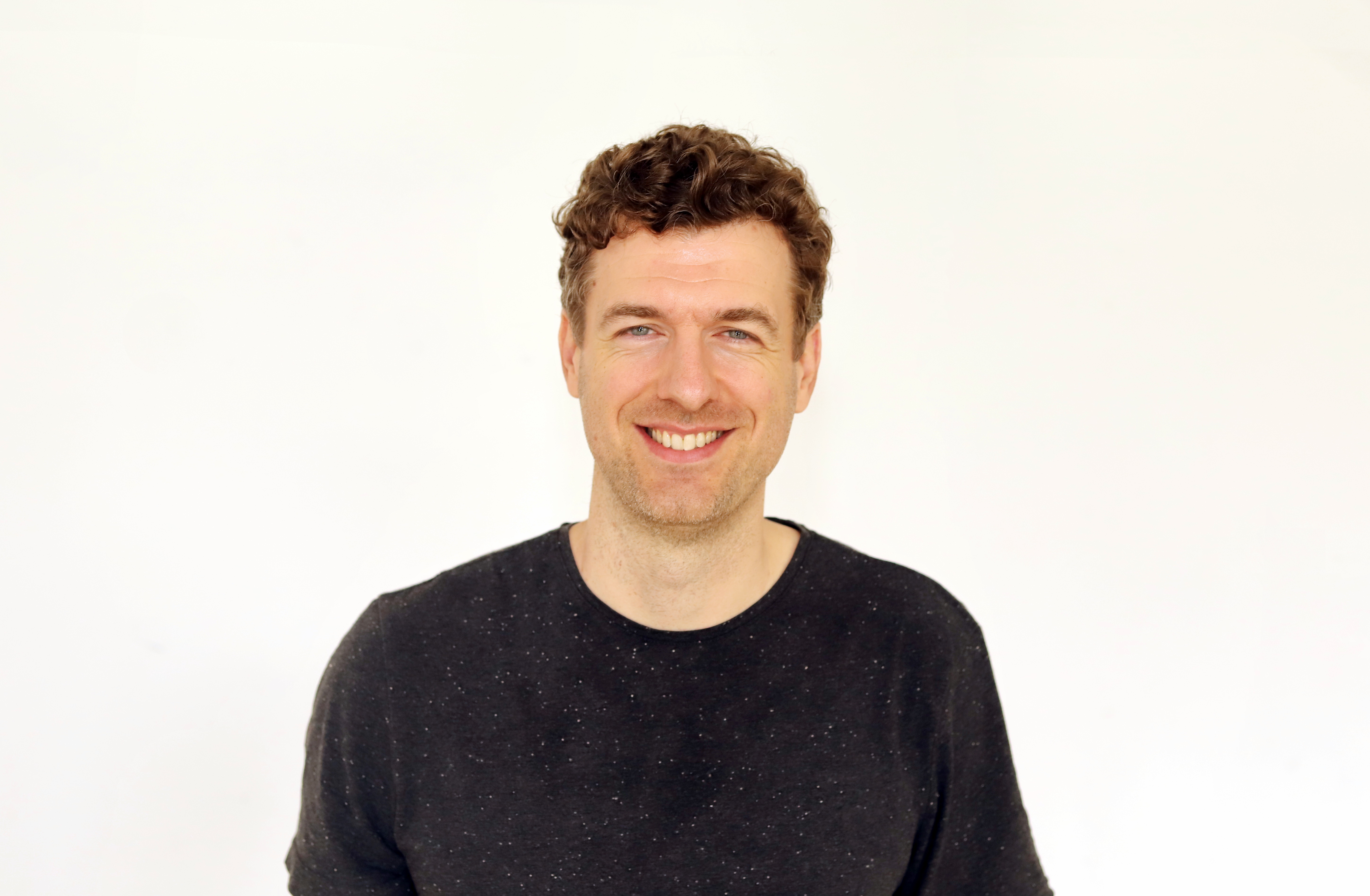
Dr. John Dwyer is an Associate Professor in the School of the Environment at the University of Queensland. His research focuses on applied and theoretical questions in restoration ecology, population and community ecology, particularly examining how human activities and climate change impact species diversity and ecosystem function. He holds a PhD from The University of Queensland (2009) in ecological restoration and carbon sequestration in Australian subtropical ecosystems. His research interests include plant community responses to environmental gradients, invasive species management, and the use of natural regrowth vegetation for carbon sequestration. He has published extensively on topics such as tree growth dynamics, climate impacts on plant communities, and restoration strategies in fragmented landscapes. Recent work highlights his contributions to understanding climate-driven trait coordination in forests, the effects of cyclones on tropical trees, and the role of herbivory in coral reef ecosystems. His studies often bridge theory and application, aiming to inform conservation and restoration practices. Dr. Dwyer collaborates widely, with projects spanning Australia and international ecosystems. He has advised numerous research projects and contributes to interdisciplinary efforts in global ecological networks like NutNet.
Romeo V. Turcan is a Professor at Aalborg University Business School within the Faculty of Social Sciences and Humanities, affiliated with the International Business Research Group and Theory Building Research Programme (TBRP). His research focuses on international business, entrepreneurship, organizational legitimation, globalization dynamics, and leadership authenticity. He has supervised at least one PhD student (Lines, L. G. T.) and contributed to over 168 publications since 2002, with emphasis on de/re-internationalization strategies, business model innovation, and theory-building methodologies. Key areas of exploration include the intersection of organizational change and legitimacy, the VUCA-world implications for firms, and the paradoxes of leadership authenticity in modern contexts. His work bridges theoretical advancements with empirical rigor, addressing contemporary challenges such as Brexit impacts, fintech ecosystem transformations, and sustainable entrepreneurship. Turcan has engaged in 22 research projects and developed courses like the PhD program in Authentic Leadership. His contributions span multiple disciplines, including sociology of knowledge, international entrepreneurship, and higher education curriculum development.
John Vogler is a Researcher at the Center for Geospatial Analytics, North Carolina State University. His work focuses on geospatial analysis of land change patterns, particularly urbanization, landscape fragmentation, and per capita land consumption. He combines geospatial data, modeling, and cartographic design to inform sustainable development strategies. Vogler also supports research administration, project management, and event coordination, including the Geospatial Forum series. His research interests emphasize spatial modeling of land-use dynamics, floodplain management, and the application of LiDAR and remote sensing technologies. Key areas include FUTURES land-change simulation model development, spatial interaction modeling for urban growth, and integrating citizen science into ecological risk assessment. Vogler's publications analyze topics like regulatory floodplain paradoxes, spatially interactive land-change adaptations, and human footprint trends in the U.S. His work bridges technical geospatial methods with policy-relevant outcomes, aiming to enhance environmental resilience through evidence-based approaches.
Marc HOFFMANN is a Professor at Université Paris Dauphine-PSL and holds the Fundamental Chair at the Institut Universitaire de France since 2024. His academic journey includes roles at institutions such as INRIA (2020-2022), École Polytechnique (2007-2015), and Université Gustave Eiffel (2003-2012). Research Focus: Statistics of random processes, nonparametric statistics, and applications in financial modeling and population biology. Key Contributions: Adaptive estimation, confidence bands, inverse problems, rough volatility modeling, and growth-fragmentation processes. Advising: Supervised 19 PhD students with topics spanning statistical inference, Hawkes processes, and stochastic volatility. Collaborations include CIFRE grants with EDF, SCOR, and Banque de France. Scientific Awards : Fundamental Chair at Institut Universitaire de France (2024).
Márk Áron Éber is a Habilitated Associate Professor at Eötvös Loránd University's Institute of Sociology and Department of Sociology . His research focuses on class structures, social theory, and critical analyses of Hungarian society within global contexts. Fields of Interest : Social theory, class structure analysis, political economy, postcolonial critique, historical sociology Contact : eber.mark.aron@tatk.elte.hu Éber's recent work explores intersections between Gramscian hegemony, Bourdieuian theory, and contemporary Hungarian political economy. His publications address themes of class fragmentation, semiperipheral positioning, and contradictions in neoliberal transitions. His professional profile and blog provide additional context for his academic contributions.
Professor Jocelyn McPhie is affiliated with the School of Natural Sciences, Earth Sciences at the University of Tasmania . Her research spans Volcanology , Resource Geoscience , and Igneous Petrology , focusing on submarine volcanism, ore deposit formation, and volcanic facies analysis. Her funded projects include studies on the Olympic Dam deposit and Heard Island volcanism . She has supervised numerous PhD and Master's students in topics like explosive eruptions , hydrovolcanic interactions , and volcanic-hosted mineralization . Key grants: Australian Research Council Linkage Projects , BHP Billiton funding Expertise: Argon-Argon dating , tephrostratigraphy , volcanic architecture
Kaiguang Zhao is an Associate Professor of Environmental Modeling and Spatial Analysis at The Ohio State University's School of Environment and Natural Resources. His research focuses on mapping, monitoring, modeling, and managing terrestrial environments across scales, especially in the context of global environmental changes. He employs a combined toolset including geotechnology, spatial analysis, machine learning, biophysical & climate modeling, ecological modeling, Bayesian statistics, and eddy-covariance to characterize ecosystem status and changes. Ph.D. in Forestry, Texas A&M University, 2008 M.S. in Geography, Beijing Normal University, 2004 B.S. in Physics, Beijing Normal University, 2001 Dr. Zhao's research interests span remote sensing & GIS, spatial modeling, data analytics, environmental modeling, climate change, and machine learning applications to environmental systems. His work particularly emphasizes developing geospatial applications using hyper spectral imaging, high-resolution imagery, hyper-temporal remote sensing, and lidar to characterize ecosystem structure and functioning. His research addresses critical questions about carbon storage in forests, ecosystem disturbance patterns, vegetation community mapping, climate change impacts on vegetation activities, and climate regulation services from forestry and land-use activities. His extensive publication record demonstrates strong trends in applying advanced statistical and machine learning methods to environmental remote sensing data. His work increasingly focuses on integrating multiple data sources and developing novel algorithms for environmental monitoring, with particular emphasis on crop modeling, water quality assessment, carbon cycling, and climate change impacts. The research shows a clear trajectory toward more sophisticated modeling approaches that combine physical principles with data-driven techniques. 2022 Best Paper award for 'Mapping crop types in fragmented arable landscapes using AVIRIS-NG imagery and limited field data' published in the International Journal of Image and Data Fusion Dr. Zhao actively seeks self-motivated graduate students with quantitative and computational backgrounds to apply their skills to environmental issues in natural or human-dominated ecosystems. His research has been supported by numerous grants focused on environmental monitoring, climate change impacts, and sustainable resource management. While specific grant details aren't listed in the provided text, his extensive publication record suggests substantial research funding across multiple environmental domains. His work involves collaboration with various research teams and laboratories focused on remote sensing, environmental modeling, and climate change research. He has developed significant computational tools including the Rbeast package for Bayesian Change-Point Detection and Time Series Decomposition, indicating leadership in developing methodological approaches for environmental data analysis.
Yiluan Song is a Schmidt AI in Science Postdoctoral Fellow at the University of Michigan, with a PhD from the same institution. Starting January 1, 2026, they will join the University of Pittsburgh as an Assistant Professor, where they plan to recruit a postdoctoral researcher, research technician, and PhD student. Research Interests span environmental data science and global change biology. Their work synthesizes big data to address phenology shifts under climate change, their impacts on biodiversity and human health (e.g., allergen seasons), and the development of ecological forecasting frameworks. Key areas include: Phenological responses to climate change Biodiversity dynamics AI and machine learning in ecological modeling Human-environment interactions Scientific Awards include the Schmidt AI in Science Postdoctoral Fellowship, reflecting their interdisciplinary focus on data science and ecology. Publications demonstrate expertise in applying satellite data (PlanetScope), citizen science, and long-term observations to study phenological mismatches, fungal spore seasons, and grassland community resilience under climate change. Notable journals include Ecology Letters , Global Change Biology , and PNAS . They currently use email yis218@pitt.edu for professional correspondence, though this will become active at the University of Pittsburgh in 2026.
Michael Kinnison is an Associate Professor at the University of Maine's School of Marine Sciences, with a research focus on contemporary evolution, eco-evolutionary dynamics, and conservation genetics in wild populations. His work bridges theoretical and applied evolutionary biology, emphasizing salmonid fishes but extending to other species. His research explores rapid evolution, population genetics, and the interplay between ecological and evolutionary processes. Key themes include adaptation to anthropogenic pressures, invasion biology, and the practical applications of evolutionary theory in conservation. Recent publications highlight his contributions to understanding eco-evolutionary feedback, phenotypic plasticity in invasive species, and human impacts on trait dynamics. These works span tropical stream ecosystems, salmonid life cycles, and Arctic charr divergence. Dr. Kinnison's lab integrates population ecology, genetics, and behavior to study colonization, adaptation, and diversity maintenance. He collaborates extensively across disciplines to address conservation challenges.
Paul Catanzaro serves as Professor & State Extension Forester at the University of Massachusetts Amherst, Department of Environmental Conservation, and Co-Director of the Family Forest Research Center, a collaborative effort between the USDA Forest Service, Northern Research Station and UMass Amherst. His work integrates research and outreach to family forest owners across Massachusetts and the Northeast, focusing on conservation-based estate planning and ecological forestry across multi-owner landscapes. As an extension faculty member, he bridges academic research with practical land management applications for the 70% of Massachusetts forests classified as family forests. Dr. Catanzaro's research interests center on family forest management, with particular emphasis on landowner decision-making processes, conservation-based estate planning, and ecological forestry across multi-owner landscapes. His work addresses critical challenges in forest continuity, exploring how landowners can make informed decisions about the future of their land while maintaining forest cover. He investigates gender differences in land management, the application of behavioral models to conservation planning, and the economic and social dimensions of forest stewardship. His research consistently connects theoretical frameworks with practical applications for landowners. Analysis of Dr. Catanzaro's publication record reveals a consistent focus on family forest ownership dynamics, with particular attention to estate planning, landowner decision-making, and forest conservation. His work spans multiple disciplines including forestry, sociology, economics, and extension education, reflecting the interdisciplinary nature of family forest management. Recent publications increasingly address emerging challenges such as invasive species impacts (particularly emerald ash borer) and gender perspectives in land management, while maintaining his core focus on ensuring forest continuity through effective estate planning and conservation tools. Through his role as State Extension Forester, Dr. Catanzaro leads several significant outreach initiatives including MassWoods (an online resource for Massachusetts landowners), MassKeystone (a training program for landowners and community leaders), and programs focused on conservation-based estate planning and restoring old-growth forest characteristics. His extension publications translate complex forestry concepts into accessible resources for landowners, covering topics from timber harvesting to will preparation for land transfer. He has developed numerous outreach materials adopted across multiple states, demonstrating the regional significance of his work. Dr. Catanzaro teaches Forest Resources Management (NRC 540) and has previously taught Land Protection Tools and Techniques (NRC 574), Forest Ecology and Conservation (NRC 270), Silviculture (NRC 526), Forest Measurements (NRC 534), Timber Harvesting (NRC 521), and Natural Resources Inventory of Local Lands (NRC 586). His courses integrate his extension experience, professional relationships, and applied research, providing students with practical knowledge grounded in real-world forestry challenges. His teaching emphasizes the connection between academic forestry principles and on-the-ground management decisions faced by family forest owners.
Alyssa Battistoni serves as Assistant Professor of Political Science at Barnard College, specializing in environmental and climate politics, feminist theory, Marxist thought, and political economy. Her scholarship critically examines capitalism's relationship with ecological systems through interdisciplinary frameworks that bridge historical analysis and contemporary policy debates. She earned her PhD from Yale University in 2019 and previously held the Environmental Fellowship at Harvard University. Her academic trajectory demonstrates consistent engagement with both theoretical rigor and practical political concerns, particularly regarding climate justice and social reproduction. Battistoni's research centers on the political economy of nature, exploring how capitalism fails to value nonhuman ecosystems and reproductive labor. Her work interrogates the intersections of feminist theory, Marxist analysis, and environmental crisis, with particular focus on Green New Deal frameworks and the revaluation of care work. She argues that capitalism's fundamental inability to commodify certain natural and social processes creates systemic vulnerabilities that manifest in ecological collapse. Her recent publications, notably the forthcoming Free Gifts: Capitalism and the Politics of Nature (2025), establish connections between theoretical critiques of value formation and practical climate policy. The Google Scholar corpus reveals consistent output across environmental political theory, feminist economics, and Marxist analysis, with increasing attention to state theory and climate governance in the Capitalocene era. Environmental Fellow at Harvard University Battistoni maintains significant public intellectual engagement through co-authoring A Planet to Win: Why We Need a Green New Deal (2019) and regular contributions to The Nation , Dissent , Jacobin , and Boston Review . She serves on the editorial boards of Jacobin and Dissent , demonstrating commitment to bridging academic scholarship and movement politics. Her work consistently emphasizes the need for transformative political-economic alternatives that center both ecological sustainability and social reproduction.
Prof. Dr. Björn Rasch is a Professor at the Department of Psychology, University of Fribourg, within the Faculty of Humanities. His research focuses on the interplay between sleep, memory consolidation, and cognitive processes. Key areas include sleep-dependent learning mechanisms, neural correlates of memory reactivation during sleep, and the impact of environmental factors (e.g., stress, media consumption) on sleep quality and cognitive performance. Education and academic background are not explicitly detailed in the provided text, but his extensive publication record indicates expertise in cognitive neuroscience and sleep research. His work spans experimental paradigms involving targeted memory reactivation, stress effects on sleep architecture, and translational applications such as wearable technologies for sleep interventions. Research interests prominently feature sleep’s role in memory processing, including declarative and emotional memory consolidation. He investigates how sleep stages (e.g., slow-wave sleep, REM sleep) modulate learning outcomes and how external stimuli (e.g., olfactory cues, auditory feedback) can enhance or disrupt these processes. His studies also address clinical implications, such as improving exposure therapy outcomes through sleep interventions. Recent articles highlight advancements in understanding sleep’s first-night effects, the efficacy of theta-tACS stimulation, and the design of olfactory wearables for targeted memory reactivation. His work bridges basic neuroscience with applied research, addressing real-world challenges like optimizing sleep for learning and mitigating stress-induced sleep disruption. No awards or grants are explicitly mentioned, but his prolific publication record and leadership in sleep research underscore significant contributions to the field. He collaborates with interdisciplinary teams and contributes to the department’s research groups in cognitive biopsychology and methods.