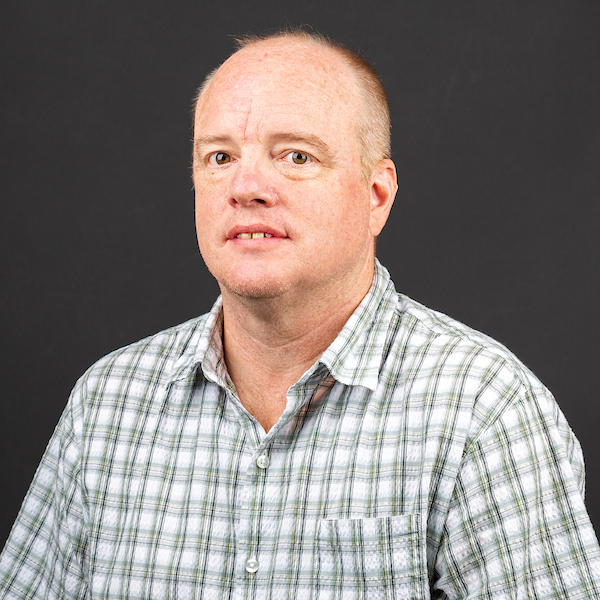
Dr David Cooke is a Subject Area Leader in Chemistry & Chemical Engineering at the Department of Physical and Life Sciences, School of Applied Sciences, University of Huddersfield. He is a member of the Structural, Molecular and Dynamic Modelling Centre and Associate Member of multiple research centers including the Centre for Functional Materials and Catalysis Research Centre. Background: PhD in Computational Solid State Chemistry (Prof SC Parker, University of Bath) Postdoctoral Research: University of Bath and Materials Science department at the University of Cambridge Research Interests: Computational Solid State Chemistry, mineral surface modeling, biomineralization processes, crystal growth, and surface defect analysis. His work aligns with UN Sustainable Development Goals for environmental and health applications. Publications: 15 recent works focus on cerium oxide interfaces, plutonium hydration, oxide-polymer composites, and defect dynamics using Density Functional Theory and Molecular Dynamics. Key collaborations include M. Molinari, L. Gillie, and S. Parker. Scientific Activities: Active in research output since 2001 (50+ publications) 5 supervised works 35+ research activities including oral presentations
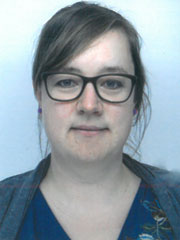
Dr. Lea Scharff is a Staff Scientist in Volcanology at the University of Hamburg, affiliated with the Center for Earth System Research and Sustainability (CEN) and the Department of Geophysics. She holds a PhD in Volcanology from the University of Hamburg (2012) and a Diplom in Geophysics (2006). Her research focuses on volcanic ash cloud modeling, volcano monitoring systems, and Doppler radar technology development for eruption dynamics analysis. She leads the development of software for volcano radar data processing and collaborates with Metek GmbH on radar innovations. Education: 2006: Diplom in Geophysics, University of Hamburg 2012: PhD in Volcanology, University of Hamburg Research Interests: Her work emphasizes understanding volcanic systems' physics to improve hazard mitigation. Key areas include Doppler radar analysis of eruption plumes, interdisciplinary data integration, and real-time monitoring tools. She investigates volcanic ash transport, pyroclastic density currents, and eruption mechanisms using radar, thermography, and numerical models. Grants & Projects: Lead developer of volcano radar software under DFG-funded projects Collaborator on Sakurajima volcano electrification studies (Japan) Member of MeMoVolc international workshop on volcanic data integration Labs/Teams: Physical Volcanology Group at the University of Hamburg Institute of Geophysics. Active in field installations of radar networks at volcanoes like Colima (Mexico) and Turrialba (Costa Rica).
Professor Brendan Kelaher is a marine biologist with over 20 years of experience at Southern Cross University , where he serves as Chief Remote Pilot and Chair of the Animal Care and Ethics Committee. His work integrates drone technology with marine ecology to address critical challenges in coastal ecosystems and climate change adaptation. With a BSc (Hons) and PhD from the University of Sydney , his research spans marine wildlife monitoring , 4D habitat mapping , fisheries biology , and cloud brightening to prevent coral bleaching. He teaches Marine Megafauna and Drone Technology units in the Bachelor of Science program. His recent publications highlight advancements in drone-based marine monitoring , plastic pollution impacts on macroalgal decomposition, and climate engineering for reef preservation. Thematic keywords include Marine Ecology , Climate Change Mitigation , and Drone Technology , with sub_fields like Shark Behavior Analysis and Plastic-Biodegradation Interactions . Outstanding Teaching Award (2021) Senior Researcher Award for Research Excellence (2022) Outstanding Teaching Excellence Award (2023) He supervises students in marine wildlife monitoring , drone habitat mapping , and climate change adaptation research. His affiliations include the National Marine Science Centre and Faculty of Science and Engineering at Southern Cross University.
Hiroshi Toyoizumi is a Professor at Waseda University's Faculty of Commerce and Graduate School of Accountancy, with a Ph.D. in Mathematical Physics from Waseda University. His work bridges Applied Probability , Operations Research , and Computational Biology , focusing on stochastic modeling across biological and network systems. Research Interests Stochastic Models in Biology : Analyzing social queues in hover wasps and meiotic DSB regulation using quasi-birth-death processes and survival analysis. Network Security : Modeling computer virus spread on scale-free networks and proposing active defense strategies. Queueing Theory : Developing analytical frameworks for on-demand streaming, quantum merging, and blockchain-based systems. Article Trends Recent work (2020-2024) explores nonlocal diffusion , quantum queueing , and swarm behavior in financial markets . Mid-2010s studies focus on cooperative breeding and DNA recombination dynamics . Early papers (pre-2010) examine computer virus ecology , secure group communication , and deterministic queue analysis . Scientific Awards Biotechno 2013 Best Paper Award IEICE Switching Workshop SSE Research Award (1999) IEICE Young Research Engineer Award (1997) Teaching Activities Graduate-level courses in Operations Research and Financial Engineering . Undergraduate and graduate seminars in Applied Mathematics and Probabilistic Models .
Manfred Zinn serves as a Professor at the University of Applied Sciences and Arts Western Switzerland (HES-SO), specifically within the School of Chemistry and Life Sciences. He leads the Biotechnology and Sustainable Chemistry research group at the Life Science Engineering department in Sion, Switzerland. His academic position includes significant research leadership responsibilities and active contributions to the field of bioplastics and sustainable materials. Professor Zinn's research focuses primarily on biotechnology applications for sustainable materials, with particular expertise in polyhydroxyalkanoates (PHAs) and other bioplastics. His work spans microbial biosynthesis, material characterization, and industrial applications of biodegradable polymers. He investigates the metabolic pathways of PHA-producing microorganisms, develops novel analytical methods for biopolymer characterization, and explores practical applications of bioplastics in medical and industrial contexts. His research integrates microbiology, polymer chemistry, and process engineering to address challenges in sustainable materials development. Analysis of his recent publications (2019-2024) reveals a strong focus on advancing the science and technology of bioplastics, particularly polyhydroxyalkanoates. His work addresses key challenges in monomer composition control, polymer characterization, biosynthesis optimization, and industrial applications. A significant trend in his research involves developing sophisticated analytical methods for biopolymer production monitoring and exploring novel applications for biodegradable materials in medical and industrial contexts. His collaborative work spans multiple countries and institutions, reflecting the international nature of bioplastics research. Professor Zinn has secured significant research funding through multiple competitive grants, including Innosuisse and Swiss National Science Foundation projects. His research portfolio includes projects on biosynthesis of Chlorella, electroplating processes for biodegradable materials, and online flow cytometry analysis for microbial bioplastic production. These projects demonstrate his ability to secure funding for interdisciplinary research at the intersection of biotechnology, materials science, and sustainable chemistry. His collaborations extend to institutions including the Frauenhofer Institute and Chulalongkorn University in Bangkok. The Biotechnology and Sustainable Chemistry research group led by Professor Zinn maintains strong laboratory facilities for microbial cultivation, biopolymer synthesis and characterization. The group utilizes advanced equipment including bioreactors, flow cytometry systems, and polymer analysis instrumentation. Their research bridges fundamental science with practical applications, focusing on developing sustainable alternatives to conventional plastics while addressing technical challenges in production, characterization, and implementation.
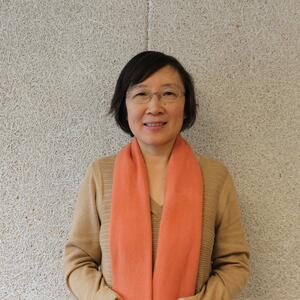
Dr. Dongmei Chen is a Professor in the Department of Geography and Planning at Queen's University, affiliated with the Faculty of Arts and Science. She holds cross appointments in the School of Environmental Studies and the Beaty Water Research Centre. Her research focuses on understanding human-environment interactions through GIS and remote sensing, with specialties in land use modeling, climate change impacts, and spatial data analysis. Education: PhD in Geography (2001, San Diego State University/UCSB); M.Sc. in GIS/Remote Sensing (Chinese Academy of Sciences); B.Sc. in Geography (Peking University). Pre-Queen's career included work as a GIS product specialist at ESRI. Research interests include geomatics, environmental science, and applying machine learning to remote sensing challenges. Recent work addresses flood susceptibility modeling, urban sprawl analysis, and spatial-temporal disease risk. Her interdisciplinary approach bridges geospatial technologies with environmental and social science. Active in research centers like LaGISA, she explores topics like air pollution monitoring and spatial data privacy. Grants and advising are integral to her role, though specific details are not detailed here. Collaborations span global contexts, including Brazil, Thailand, and China.
John Kieffer is a Professor in the Department of Materials Science & Engineering at the University of Michigan College of Engineering. His research focuses on simulation-based predictive design of materials for energy applications, combining computational methods with experimental validation. M.S. in Metallurgy from Clausthal Technical University (1980) Ph.D. in Materials Science from Clausthal Technical University (1985) His research integrates first-principles quantum mechanical calculations , reactive molecular dynamics simulations , and hybrid Monte Carlo/molecular dynamics techniques to study materials for photovoltaics, batteries, and composite materials. Experimental validation includes dielectric impedance spectroscopy and inelastic light scattering , complemented by sol-gel synthesis of organic-inorganic hybrids. Current projects sponsored by NASA and the National Science Foundation explore amorphous systems , self-healing polymers , Li-ion battery electrolytes , and high-pressure materials . His work also involves multiscale simulation of nucleation and crystal growth. Morey Award Lecture (2002) Kieffer's facilities include a unique tandem Fabry-Perot interferometer for concurrent Raman and Brillouin light scattering measurements, enabling non-contact nano-scale monitoring of reacting systems.
Scott Mangan is an Associate Professor of Ecology in the Biological Sciences department at Arkansas State University's Beck College of Sciences & Mathematics. His research program investigates the mechanisms driving biological community organization through the lens of plant-microbial interactions, spanning tropical and temperate ecosystems. Education: PhD in Ecology, Indiana University – Bloomington (2006) MS in Ecology, University of Wisconsin – Oshkosh (1999) BS in Botany, University of Wisconsin – Oshkosh (1996) Dr. Mangan's work fundamentally re-evaluates classic plant ecology theories by incorporating microbial interactions, demonstrating their critical role in species coexistence, abundance patterns, and ecosystem functioning. His research integrates field experiments in tropical forests and temperate woodlands with greenhouse studies, molecular techniques, and analytical modeling. Key focus areas include plant-soil feedbacks, conspecific density dependence, and the conservation implications of microbial symbioses for endangered species. The Mangan Lab actively explores how anthropogenic disturbances like land-use change alter plant-microbe dynamics and community assembly processes. Recent publications reveal a dominant research trajectory centered on plant-soil-microbial feedback loops across diverse ecosystems, with significant emphasis on conservation applications for endangered legumes and tropical tree communities. His work consistently bridges theoretical ecology with practical restoration challenges, particularly examining how microbial communities mediate responses to habitat fragmentation and land-use history. Scientific Awards: No awards specified in source materials. Dr. Mangan mentors undergraduate and graduate students through the Biological Sciences program, welcoming energetic researchers to join his lab. His collaborative projects include NSF-funded research on genetic diversity and pathogen-mediated density dependence in tropical tree dynamics, reflecting his commitment to large-scale ecological questions requiring interdisciplinary approaches. The Mangan Lab operates from Lab Science West (Room 330-B) at Arkansas State University, maintaining active field sites in tropical forests and temperate ecosystems. The lab's research philosophy, captured by their motto 'Nothing in Ecology makes sense except in the light of microbial interactions,' drives investigations into how microscopic processes scale to ecosystem-level patterns.
Alessandra Pesce is an Associate Professor at the Department of Physics (DIFI) of the University of Genoa, Italy. Her research focuses on structural biology of globins, protein aggregation, and cold-adapted enzymes, with applications in life sciences, environmental monitoring, and cultural heritage preservation. She teaches Applied Physics and Biophysics at both undergraduate and graduate levels in Physics and Biological Sciences. Her work spans from atomic-level characterization of protein crystals using Atomic Force Microscopy to large-scale ecological projects like the LIFE+ WHALESAFE initiative for sperm whale conservation through acoustic monitoring. Email: alessandra.pesce@unige.it Phone: +39 010 33 56243 Research Interests: Structural characterization of hexa-coordinated globins in marine organisms Thermodynamic and kinetic analysis of truncated hemoglobins in pathogenic bacteria Quaternary structure adaptations in Antarctic enzymes Development of acoustic monitoring systems for marine mammal conservation Protein aggregation mechanisms in amyloid-related diseases Publication Trends: Over 15 years, her research demonstrates expertise in combining X-ray crystallography with biophysical techniques to study globin family proteins across diverse species (from nematodes to whales). Key themes include heme reactivity modulation, ligand diffusion pathways, and structure-function relationships in extremophile proteins, with recent emphasis on marine conservation technology.
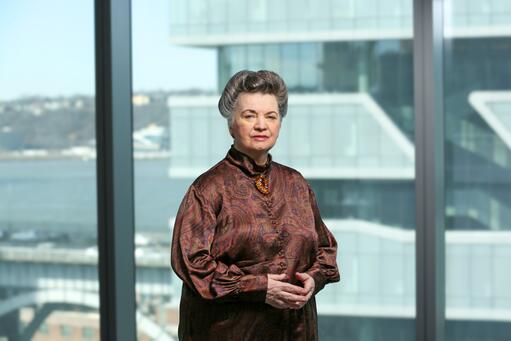
Kathryn Harrigan is the Henry R. Kravis Professor of Business Leadership at Columbia Business School, affiliated with the Management Division. She joined CBS in 1981 and specializes in corporate strategy, strategic alliances, mergers & acquisitions, and turnaround management. Education: BA from Macalester College (1972), MBA from University of Texas, Austin (1976), and DBA from Harvard (1979). Her research focuses on corporate renewal, technological synergies, and demand-side diversification in industries like telecommunications and media. She has authored prize-winning books and serves on boards of publicly-traded firms. Research interests include strategic flexibility, private equity-driven turnarounds, and competitive strategies for declining industries. Key articles analyze AT&T’s decline, new conglomerate strategies in the digital era, and the impact of M&A on innovation. Awards include recognition for her books on strategic management. Teaches courses on corporate growth, turnarounds, and strategy formulation. Her case studies cover companies like Johns Manville, Motorola, and Warner Bros. Discovery. She has contributed to media discussions on corporate restructuring via outlets like The Wall Street Journal and Yahoo Finance. Labs/teams: Active in Columbia’s strategic management research community, focusing on empirical analyses of corporate governance and joint ventures. Future work explores digital-era conglomerates and innovation dynamics in emerging markets.
Dr. Christopher Hansen is a Senior Lecturer in the School of Chemistry at the University of New South Wales, where he conducts research at the intersection of physical chemistry, photochemistry, and atmospheric science. His work spans laboratory-based molecular spectroscopy, atmospheric chemistry modeling, and astrochemical applications, with particular expertise in UV/VUV photodissociation dynamics and spectroscopic characterization of molecular systems. Dr. Hansen's research interests focus on molecular photodissociation dynamics , atmospheric photochemistry , UV/VUV spectroscopy , and astrochemical processes . His work examines how molecules fragment following photoexcitation, with applications ranging from understanding atmospheric degradation of fluorocarbons to interstellar chemistry. He has made significant contributions to understanding the photodissociation mechanisms of molecules like CF 3 CHO, H 2 S, and various aromatic systems, with implications for atmospheric chemistry and astrochemistry. His recent publications reveal a strong trend toward interdisciplinary research connecting laboratory measurements with atmospheric and astrochemical applications. Approximately 40% of his recent work addresses atmospheric chemistry concerns, particularly fluorocarbon degradation and greenhouse gas formation, while 30% focuses on fundamental photodissociation dynamics, and 30% explores astrochemical applications related to interstellar molecular processes. Dr. Hansen actively collaborates with researchers across multiple institutions and countries, as evidenced by his extensive co-authorship network spanning Australia, Europe, and North America. His research group utilizes advanced experimental techniques including molecular beam methods, velocity map imaging, and ultrafast spectroscopy to investigate photochemical processes at the molecular level.
Christopher Blackwood is a Professor in the Department of Plant Biology at Michigan State University, with additional appointments in Plant Soil and Microbial Sciences and the Ecology, Evolution & Behavior Program. Based in the Plant Biology Lab (S124), his research examines soil-plant-microbe interactions and their critical roles in ecosystem processes and soil carbon dynamics. Education: Ph.D. from Michigan State University His research spans community ecology of plants and microorganisms, plant-fungal interactions, root traits, and soil biogeochemistry. Current projects investigate coexistence mechanisms of closely related plant species, cascading effects of tree root traits on pathogens and soil carbon, forest restoration dynamics, and urban green roof performance. His work integrates field studies with molecular approaches to understand belowground ecological processes. Analysis of recent publications (2021-2025) reveals consistent focus on plant-soil feedbacks, fungal community ecology, and soil carbon dynamics. Key themes include mycorrhizal influences on plant-fungal coevolution, root trait evolution across plant lineages, and applications to sustainable land management. His work bridges fundamental ecological theory with practical restoration ecology. Dr. Blackwood leads an active research laboratory funded by competitive grants, mentoring graduate students in plant and soil ecology. His team investigates soil biota across diverse ecosystems including temperate forests, agricultural landscapes, and urban green infrastructure. His laboratory conducts research on soil organism ecology, plant-microbe interactions, and ecosystem functioning, with ongoing projects in forest restoration, green roof optimization, and soil carbon dynamics across multiple spatial scales.
Professor Mfaniseni Fana Sihlongonyane is a faculty member at the School of Architecture and Planning, University of the Witwatersrand (Wits), where he holds the academic rank of Professor. His work focuses on urban planning, African cities, and development, with a strong emphasis on South Africa and Eswatini. He holds a PhD from the University of Oxford, an MSc in Development Planning, and a PGCE. BA PGCE MSc (DP) PhD (University of Oxford) His research interests include urban governance , traditional authority in urban development , smart cities , and participatory planning in African contexts. He critically examines how global urban agendas interact with local realities, particularly in post-colonial African cities. His work often highlights the socio-political dynamics that shape urban transformation and the marginalization of communities in planning processes. The recent publications (2015–2024) reflect a consistent engagement with urban theory , city branding , local economic development , and the role of traditional leadership in urban governance. Themes such as urban centrism , hybrid urbanism , and smart metropolitan strategies recur across his work, indicating a deep scholarly inquiry into the future of African cities. His contributions span journal articles and book chapters in leading urban and African studies publications. Scientific Awards: No awards listed in the provided text. Professor Sihlongonyane has not listed any formal advisees or grant funding in the provided information. However, his extensive publication record and academic leadership suggest active mentorship and research supervision. He is likely involved in collaborative urban research projects, potentially within the School of Architecture and Planning at Wits, though specific labs or research teams are not mentioned in the text.
Professor Jacek Banasiak holds a prestigious DST/NRF SARChI Chair in Mathematical Models and Methods in Biosciences and Bioengineering at the University of Pretoria, Department of Mathematics and Applied Mathematics. He also maintains strong academic ties with Lodz University of Technology in Poland where he serves as a research professor in the Department of Mathematical Modeling. His career spans several decades with extensive contributions to mathematical modeling, particularly in population dynamics, fragmentation-coagulation processes, and epidemiological modeling. Professor Banasiak's research interests center on mathematical modeling of biological and physical processes, with particular expertise in singular perturbation theory, semigroup theory, and transport equations on networks. His work bridges theoretical mathematics with practical applications in epidemiology, ecology, and population biology. He has developed sophisticated mathematical frameworks for understanding fragmentation-coagulation phenomena, malaria transmission dynamics, and savanna ecosystem modeling. His publication record shows a consistent trajectory of high-impact research, with recent work focusing on climate-based malaria models, multiscale epidemiological systems, and mathematical analysis of growth-fragmentation equations. His publications appear in top-tier journals across mathematical analysis, epidemiology, and mathematical biology fields, demonstrating the interdisciplinary nature of his work. DST/NRF SARChI Chair in Mathematical Models and Methods in Biosciences and Bioengineering Author of numerous influential publications spanning from 1984 to 2025 Editor of special issues and author of several books including 'Introduction to Mathematical Methods in Population Theory' (2025) Professor Banasiak has supervised over 15 PhD students, many of whom have gone on to successful academic careers. His mentoring spans topics including fragmentation-coagulation with transport effects, telegraph systems on networks, and mathematical modeling of malaria transmission. His research has attracted significant funding, particularly through his SARChI Chair position which supports advanced mathematical research in biosciences and bioengineering.
Kai Gehring is a Professor for Political Economy and Sustainable Development at the University of Bern , with affiliation to the Wyss Academy for Nature and the ifo Institute in Munich. He holds a PhD in Economics from the University of Göttingen (advisor: Axel Dreher) and a Diplom (M.Sc equivalent) from the University of Mannheim. His academic career includes research stays at Harvard, Cambridge, Stanford, and MIT, along with a 4-year Ambizione Grant from the Swiss National Science Foundation. Member, CESifo Member, European Development Network (EUDN) Member, Development Economics Committee of the German Economic Association Member, Globalization and Development Group (GlaD) His research integrates economics with political science, sociology, and history to examine institutional dynamics in developed and developing countries. Key areas include political economy of international organizations (IMF, World Bank, EU), conflict resolution , sustainable development , and narrative economics using NLP on media/social data. Recent methodological projects employ satellite imagery and machine learning for mining activity tracking. Major article trends span three decades of African government formation challenges ( Minister Project ), climate change policy narratives, artisanal mining impacts, and terrorist propaganda analysis. He has published 17+ peer-reviewed articles across journals like European Economic Review , World Development , and Journal of Development Economics . Scientific Awards Ambizione Grant (Swiss National Science Foundation) As an educator, Gehring has taught at the University of Mannheim, Heidelberg University, Kaiserslautern University of Applied Sciences, and the University of Zurich. His Minister Project actively engages citizen scientists to build comprehensive datasets on African government members' linguistic and regional origins.