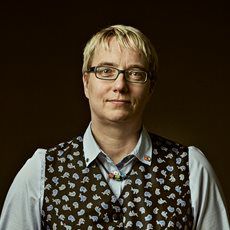
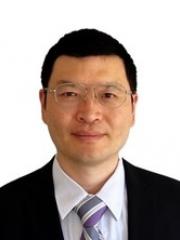
Professor Nicole Metje is a Professor of Infrastructure Monitoring at the Department of Civil Engineering, University of Birmingham, and Director of the National Buried Infrastructure Facility. She also serves as Co-director of the Institute of Quantum Technology. Her research focuses on quantum sensing, geotechnical engineering, and infrastructure monitoring, with a particular emphasis on buried infrastructure detection and sustainable urban development. Education: PhD in Civil Engineering (University of Birmingham, 2001); Dipl.-Ing. in Civil Engineering (Hannover University, Germany, 1998). Key roles and affiliations include membership in EPSRC Infrastructure Strategic Advisory Team, Chartered Institution of Civil Engineering Surveyors, and international advisory boards for Hong Kong Polytechnic University. She has authored/co-authored over 50 journal papers and a textbook on tunnel construction. Research areas include quantum sensor applications for buried asset detection, geophysical soil properties, and sensor development for infrastructure monitoring. She leads projects such as UKCRIC National Buried Infrastructure Facility and Quantum Technology Hub in Sensors and Metrology. Awards and fellowships include FICE, FCInstCES, CEng, FHEA, and multiple committee memberships in national/international bodies. Teaching includes MSc courses on underground construction and geotechnical engineering. She supervises doctoral research on quantum sensors, soil-structure interactions, and sustainable infrastructure.
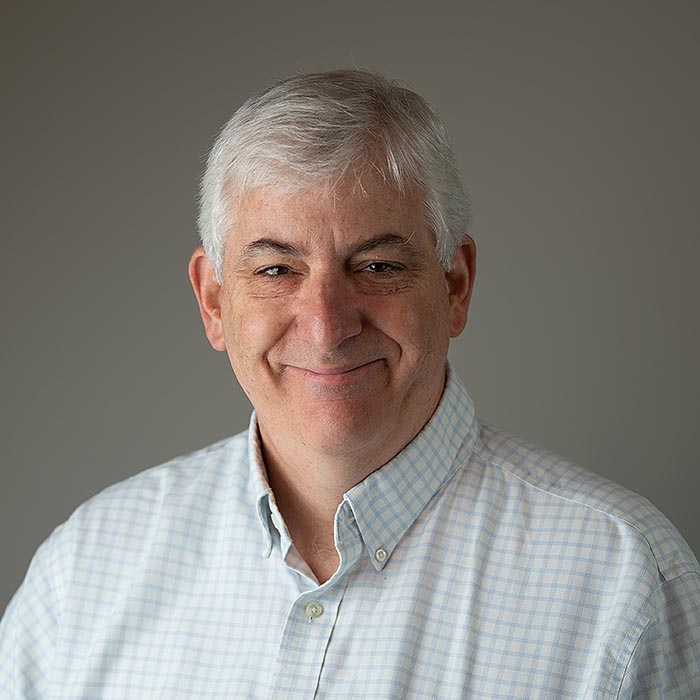
Professor John L Provis is a leading expert in cement materials science at the University of Sheffield 's School of Chemical, Materials and Biological Engineering. He also holds a Visiting Professor position at Luleå University of Technology's Building Materials division. PhD in Chemical Engineering (University of Melbourne) 2013 RILEM Robert L'Hermite Medal 2015 Honorary Doctorate from Hasselt University Editor-in-Chief of Materials and Structures His research focuses on alkali-activated materials and geopolymer binders for sustainable construction, with key themes in chemical speciation , waste immobilization , and novel cement systems for nuclear applications. Recent publications highlight 15 representative articles spanning topics: Radiation-resistant cementitious matrices Geopolymer synthesis for heavy metal containment Thermodynamic modeling of binder systems Corrosion mechanisms in alkali-activated concretes Low-carbon cement alternatives Microstructural analysis via advanced spectroscopy Scientific Recognition : RILEM Robert L'Hermite Medal recipient Hasselt University Honorary Doctorate Editorial leadership roles in major journals Contact: j.provis@sheffield.ac.uk | Sir Robert Hadfield Building, University of Sheffield
Professor Asterios Bakolas is affiliated with the Department of Materials Science and Engineering at the School of Chemical Engineering, National Technical University of Athens (NTUA). His research focuses on materials science, cultural heritage conservation, and sustainable construction technologies. Key areas include the development of compatible restoration mortars for historic structures, analysis of traditional building materials, and application of non-destructive testing (NDT) techniques for heritage assessment. He has contributed to projects involving Hagia Sophia, the Parthenon, and Cretan architectural heritage. Research interests span materials characterization, composite materials, and environmental impact assessment of construction materials. Notable work includes studies on polychromy in ancient art, weathering phenomena in historic buildings, and integration of AI for material property prediction. His interdisciplinary approach combines chemistry, civil engineering, and digital humanities to address challenges in conservation and sustainable building practices. No scientific awards are explicitly listed, but his extensive publications reflect recognition in academic circles. Advising and grants are not detailed here, though his involvement in restoration projects implies active collaboration with funding bodies. He is part of the School’s research groups focused on materials science and heritage preservation.
Weiwei Lin is an Associate Professor in the Department of Civil Engineering at Aalto University, specializing in structural engineering with a focus on bridge systems, composite materials, and structural health monitoring. His research explores fatigue behavior of steel structures, seismic performance of composite systems, and innovative repair techniques. He holds a PhD from Waseda University (2012), MSc from Southeast University (2009), and BEng from Southwest Jiaotong University (2006). Key research areas include: steel-concrete composites, bridge redundancy evaluation, replaceable energy dissipaters, and AI-driven infrastructure diagnostics. Lin leads projects like CCU Structure (EU Horizon Europe) and RCF Mobility initiatives, focusing on sustainable construction and material recyclability. He has published 120+ peer-reviewed articles and secured 6 major grants. Lin has received prestigious awards including the IABMAS Young Award (2014) and Outstanding Reviewing Award (2017). His lab collaborates globally, hosting researchers from institutions like Israel Institute of Technology and Tsinghua University. Current work emphasizes crowdsourcing-based bridge monitoring and physics-guided AI frameworks for infrastructure diagnostics.
Dr. Sourish Banerjee is a Senior Lecturer in Structural Design at the School of Engineering, University of Southern Queensland. He holds a BEng from Jadavpur University, MEng from Bengal Engineering College, and a PhD from the University of Southampton. His research focuses on structural engineering, materials science, and composite materials, with particular emphasis on sustainable infrastructure and advanced material applications. Dr. Banerjee's expertise includes structural rehabilitation, photovoltaic recycling, carbon nanotube dynamics, and composite materials for railway and civil infrastructure. He has supervised multiple doctoral projects, including studies on ultralight lattices, photovoltaic module recycling, and acoustic impacts of launch vehicles. His work bridges theoretical mechanics with practical engineering solutions, addressing challenges in material durability, sensor integration, and environmental sustainability. Key contributions include innovative designs for composite railway sleepers using waste-based panels and advancements in FRP repair systems for corroded pipelines. His research also explores ultrasonic and fiber optic sensing technologies for structural health monitoring. With over 2157 downloads of his outputs and active contributions to global conferences, he maintains a strong academic and applied research profile.
Prof. Dr. Seden Acun Özgünler is a faculty member at the Faculty of Architecture, Istanbul Technical University , where she has served as Professor since 2021. Her research spans material science in architecture, focusing on durability, maintenance, and sustainable building technologies . She has supervised numerous theses and led projects on natural binders, thermal insulation, and historical preservation . Education: PhD in Building Science (Dr), Istanbul Technical University. Academic Roles: Department Head (2023), Associate Professor (2013-2021), Research Assistant (1999-2003). Research Trends include: Material Innovation: Mycelium-based composites, natural hydraulic binders, and geopolymer concrete. Sustainability: LCIA models, waste material utilization, and energy-efficient designs. Historical Preservation: Volcanic tuff conservation, grouting methods for masonry repair, and adaptive reuse of structures. Scientific Awards: 2nd Young Türkiye Summit Academy Award (2017) for Mimar Sinan Cultural Wealth Preservation. Publication-based Academic Performance Awards (2022, 2025) from Istanbul Technical University. Key Projects involve biocomposite materials, natural cement reproduction, and chromic glass applications in facades. Her work bridges traditional building techniques with modern sustainability through experimental and computational approaches.
Nicholas Vlachopoulos is a Professor of Civil Engineering at the Royal Military College of Canada (RMC) with cross-appointments at Queen's University's Department of Geological Science and Geological Engineering and School of Environmental Studies. He holds a PhD (2009) from Queen's University and B/A.Sc/M.A.Sc degrees from RMC. His research focuses on geotechnical engineering, geomechanics, and environmental engineering, emphasizing physical testing, field observations, and analytical techniques to advance engineering practices. Key roles include Research Director of the GeoEngineering Centre, CEO of Geologos Inc., and Director of RMC's Green Team addressing environmental challenges in military facilities. Education: PhD in Geological/Geotechnical Engineering - Queen's University (2009) M.A.Sc in Civil Engineering - Royal Military College (1995) B.A.Sc in Civil Engineering - Royal Military College Research Interests: Geotechnical Engineering (rock mechanics, tunneling) Environmental remediation in defense facilities Structural health monitoring using fiber optics Rock bolt and ground support systems Military infrastructure resilience Professional Contributions: Founder of Geologos Inc., specializing in geotechnical solutions Recipient of DND Innovation Award for environmental solutions Teaching excellence awards (2018) Supervised award-winning graduate students (2017-2021) Lab/Team Leadership: RMC Green Team: Environmental engineering solutions for Canadian Forces bases GeoEngineering Centre: Interdisciplinary geotechnical research
John Grout is the David C. Garrett Jr. Professor of Business Administration and Chair of the Technology, Entrepreneurship, and Data Analytics Department at Berry College, within the Campbell School of Business. He previously served as dean of the school and returned to full-time faculty in 2016, continuing his leadership in academic innovation. His research focuses on quality management, particularly mistake-proofing (poka-yoke), lean manufacturing, and the impact of user innovation on supply chains. He has made significant contributions to healthcare process improvement, with publications guiding error reduction in clinical settings. The recent articles reflect a strong trend in applying operational excellence to healthcare systems, integrating concepts from manufacturing into medical process design. His work emphasizes designing systems that prevent errors through structural and procedural safeguards, supported by economic and behavioral models. Scientific Awards: Shingo Prize for Excellence in Manufacturing (2004) for 'The Human Side of Mistake-Proofing' John Grout has advised various organizational improvement initiatives and led the development of Berry College’s Creative Technologies program and the HackBerry Lab makerspace. His grants include work supported by the Agency for Healthcare Research and Quality (AHRQ), resulting in influential publications on healthcare process safety. He has also consulted widely with firms to improve operational reliability. He is actively involved in academic leadership, curriculum development, and cross-disciplinary innovation, particularly in integrating technology and entrepreneurship into undergraduate education.
Dr. Alraune Zech is an Assistant Professor for Computational Environmental Hydrogeology at Utrecht University, Faculty of Geosciences, Department of Earth Sciences, Hydrogeology group. Her research focuses on groundwater flow and transport processes in heterogeneous environments, with emphasis on practical applications in contaminated aquifers, PFAS remediation, and construction-related groundwater issues. She is affiliated with the Helmholtz-Centre for Environmental Research and serves as convener for EGU sessions on contaminant transport. Dr. Zech's educational background includes: PhD in Computational Hydrosystems from Friedrich-Schiller-University Jena and Helmholtz-Centre for Environmental Research (2010-2013) Prediploma Degree in Business Mathematics from University Leipzig (2011) Diploma in Mathematics with minor in Chemistry from University Leipzig (2003-2009) Her research interests span hydrogeology, groundwater modeling, and environmental remediation. She specializes in stochastic and computational modeling of subsurface processes, with focus on contaminated aquifers, PFAS removal strategies, biodegradation, bioremediation, and heat transport in the subsurface. Her work bridges theoretical approaches with practical applications in construction engineering and environmental protection. Analysis of Dr. Zech's recent publications (2021-2025) reveals strong focus on advancing hydrogeological modeling techniques, particularly in aquifer heterogeneity characterization, machine learning applications in hydrogeology, and practical remediation strategies. Her work spans fundamental research on pore-scale processes to field-scale applications, with increasing integration of artificial intelligence methods for solving complex groundwater problems. Dr. Zech leads several significant research projects: Living Lab PFAS Remediation (2024-2028): Developing strategies for PFAS contamination SilPit (2024-2028): Studying erosion of silicate grouting in construction pits MIBIREM (2022-2027): Creating innovative technological toolbox for bioremediation She actively supervises multiple PhD students including Alexandra Hockin, Kim Bartsch, Mahammad Valibeknejad, Sona Aseyednezad, Hannah Gebhardt, and Martijn van Leer. Her research is supported by funding from the Ministry of Infrastructure and Water Management, NWO, and EU Horizon programs.
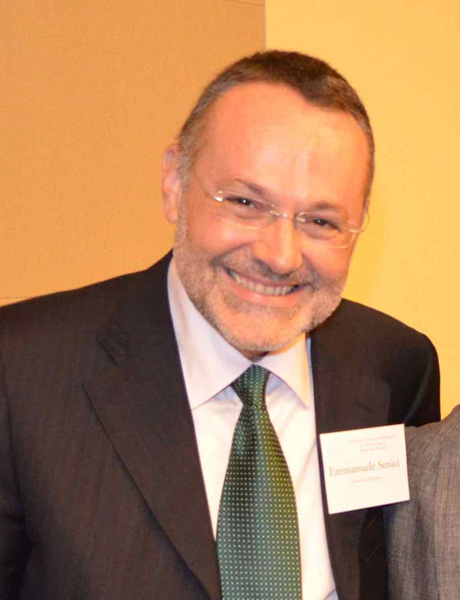
Emanuele Senici is a Full Professor of Music History at Sapienza University of Rome, where he has been teaching since January 2008. Prior to this, he held significant academic positions at the University of Oxford as Reader in Musicology (2006-2007) and University Lecturer in Music (2000-2006), with additional appointments as Tutorial Fellow at St. Hugh's College. His academic career also includes a Junior Research Fellowship at Christ Church, Oxford (1998-2000) and prestigious visiting appointments at King's College London (2009-2023) and Cambridge University (2023). Senici earned his Laurea in Musicology from the University of Pavia (1993), participated in an Erasmus program at King's College London (1992), and completed his MA (1996) and PhD (1998) at Cornell University. His doctoral research focused on Mozart's 'La clemenza di Tito' and its reception in the first thirty years after its premiere. His scholarly work centers on Italian opera of the long nineteenth century, with particular attention to issues of genre, gender, and the historiography of opera. Senici's research explores the intersection of music with broader cultural, political, and technological contexts, examining how opera functions both as historical document and living performance tradition. A significant portion of his recent scholarship investigates opera on screen and in digital media, analyzing how film and television adaptations transform operatic works and their reception. Senici's most recent publications (2023-2025) demonstrate a continued focus on nineteenth-century Italian opera while expanding into new areas of media studies and cultural geography. His work consistently bridges historical musicology with contemporary theoretical frameworks, particularly in gender studies and media studies, showing how historical operatic works remain relevant through modern reinterpretations and adaptations. Leverhulme Visiting Professor (2023) Visiting Professor of Music, King's College London (2009-2023) Edward T. Cone Member, Institute for Advanced Study, Princeton (2006) Jerome Roche Prize, Royal Musical Association (2002) Donald J. Grout Memorial Prize, Cornell University (1997) As an educator, Senici has supervised numerous graduate students and served as Director of Graduate Studies at Oxford. His current teaching at Sapienza includes undergraduate courses on music history and graduate seminars on the medial history of musical theater. He has made significant contributions to academic service through editorial board memberships for major journals including Acta Musicologica, Opera Quarterly, and Il Saggiatore Musicale, and previously served as co-editor of the Cambridge Opera Journal (2003-2008).
Dr. Kingsley Lau is an Associate Professor in the Department of Civil and Environmental Engineering at Florida International University (FIU). He joined FIU in 2012 after serving as a Corrosion Research Scientist at the Florida Department of Transportation (FDOT). He holds a Ph.D. in Civil Engineering from the University of South Florida (2010). His research focuses on infrastructure materials durability, specifically corrosion of engineering materials and durability of reinforced and prestressed concrete. Dr. Lau has authored/co-authored over 15 peer-reviewed manuscripts and conference papers, with recent work emphasizing coastal infrastructure resilience, corrosion monitoring systems, and microbiologically influenced corrosion (MIC). Dr. Lau’s research integrates advanced electrochemical testing, machine learning models for predictive coating analysis, and novel materials development. He has collaborated on critical projects such as the Port of Miami Tunnel corrosion monitoring system and corrosion mitigation strategies for Florida’s marine bridges. His work addresses challenges posed by rising sea levels, aggressive marine environments, and deficient post-tension grout in infrastructure systems. Key areas of expertise include: corrosion mechanisms in alkaline solutions, sulfate-induced steel corrosion, and durability assessment of UHPC (ultra-high-performance concrete) in accelerated bridge construction. His contributions bridge laboratory studies with field applications, aiming to enhance infrastructure longevity and safety in corrosive environments.
Matthew Adams is an Associate Professor in the Department of Civil & Environmental Engineering at New Jersey Institute of Technology (NJIT). He holds a B.S. in Civil Engineering from the University of New Hampshire (2006) and M.S. (2012) and Ph.D. (2016) degrees in Civil Engineering from Oregon State University. His research focuses on sustainable construction materials, durability of infrastructure, and advanced cementitious systems. He is a Fellow of the American Concrete Institute and a member of ASTM International. Awards include the 2021 Excellence in Upper-Level Undergraduate Teaching Award (NJIT), 2020 Richard P. Nathan Fellowship (Rockefeller Institute), and 2019 ASTM Emerging Professional Award. His work emphasizes recycled materials, low-carbon concrete, and corrosion-resistant systems. Adams leads the NJIT Materials Lab (https://sites.google.com/njit.edu/njitmatslab/home), focusing on experimental and computational studies of material behavior under environmental and mechanical stresses. His research integrates numerical modeling, data-driven approaches, and sustainability principles to address challenges in civil infrastructure longevity.
Elena ROMEO is an Associate Professor in the Department of Engineering and Architecture at the University of Parma, where she actively contributes to teaching and research in civil and transportation engineering. She teaches courses such as Pavements Management and Design and Road Infrastructure Laboratory for both first and second cycle degree programs in Civil Engineering. Her research focuses on sustainable pavement materials, including the reuse of industrial by-products and plastic waste in asphalt mixtures, thermo-mechanical modeling of bituminous materials, and durability of geotechnical resins. Her work aligns with circular economy principles and sustainable infrastructure development. The recent publications (2023–2024) highlight her expertise in innovative pavement materials, waste valorization, and advanced modeling techniques. Key themes include steel slag utilization, polymer-modified asphalt, and aging effects on construction chemicals, reflecting a strong commitment to environmentally responsible civil engineering solutions. Scientific Contributions: Published in areas related to asphalt technology and geotechnical materials. Active contributor to international research symposia, including ISAP. Collaborates with researchers across Europe on sustainable pavement systems. Advising and Grants: While specific advisees and funded projects are not listed in the provided text, her ongoing teaching and publication activities suggest active supervision and potential involvement in research grants related to sustainable infrastructure and materials innovation. Labs and Research Teams: Though not explicitly named, her work on laboratory-based testing of asphalt and geotechnical materials indicates involvement in pavement and materials testing laboratories within the Department of Engineering and Architecture.
Dr. Jimmy Li is a Postdoctoral Research Fellow at the School of Mechanical and Mining Engineering, The University of Queensland, with expertise in geophysics and geomechanics for resource and geoenergy exploration. His career spans over a decade in industry roles at Halliburton Energy Services and academic research since completing his PhD in 2021. Bachelor of Petroleum Engineering (2007) from China University of Petroleum Doctor of Philosophy in Petroleum Engineering (2021) from Curtin University Dr. Li's research focuses on theoretical and experimental studies in rock mechanics and geotechnical engineering for underground mining and drilling applications. Key areas include: Machine Learning in Geoscience for tasks like CMRR and UCS prediction Rock Physics involving seismic, microseismic, and ultrasonic wave propagation Weathering in Sedimentary Rock through experiments on fluid-rock interactions Petrophysics and Formation Evaluation using core analysis and laboratory measurements Drilling Engineering in hostile environments (HPHT), geosteering, and borehole stability His recent publications highlight trends in coal geomechanics, shale permeability, CO2 sequestration modeling, and AI applications in upstream geoenergy. He has collaborated on multi-frequency sonic logging tools and established the NATA-accredited Quality Management System for rock mechanics at UQ. Dr. Li is available for supervision and has secured funding from industry partners like Origin Energy, Normet Asia Pacific, and Lihir Gold Limited for projects on coal strength, grout durability, and roadway stability. He contributes to developing machine learning methods for reducing subjectivity in mining safety assessments and optimizing drilling technologies.
Zeynep Başaran Bundur is an Associate Professor and Chair of Civil Engineering at Özyeğin University in Istanbul, Turkey. She leads the Sustainable and Adaptive Materials (SAM) Research Group and oversees the Construction Materials Laboratory at the university. Her academic journey began with a Bachelor's degree in Civil Engineering from Bogazici University in 2009, followed by Master's and Ph.D. degrees from The University of Texas at Austin in 2011 and 2013, respectively. Dr. Başaran Bundur's educational background is impressive and well-focused on her research interests: Bachelor's in Civil Engineering, Bogazici University, 2009 Master's in Civil Engineering, University of Texas at Austin, 2011 Doctorate in Civil Engineering, University of Texas at Austin, 2013 Dr. Başaran Bundur's research focuses on the development of sustainable and adaptive materials for civil engineering applications. Her work centers on understanding the relationship among processing, chemistry, properties, and performance of cement-based materials to develop novel, sustainable, and durable construction solutions. She is particularly known for her pioneering work in bio-based self-healing concrete technologies, where microorganisms are incorporated into cementitious materials to enable automatic crack repair. Her research spans several key areas: Advanced cementitious and mineral building materials (self-healing, self-cleaning) Effect of supplementary cementitious materials and geopolymers Additive manufacturing (3D printing) of cement-based composites Development of bio-based rheology modifying admixtures Use of end-of-life materials as alternative binders in concrete Her publication record demonstrates a consistent focus on sustainable construction materials, with over 40 publications and more than 500 citations as of 2022. The trend in her research shows a progression from fundamental studies on biomineralization in cement-based materials toward practical applications in construction technology, particularly in additive manufacturing and sustainable material development. Her work bridges the gap between biological processes and civil engineering materials, creating innovative solutions for the construction industry's environmental challenges. Dr. Başaran Bundur has received significant recognition for her research contributions: Patent for "CEMENT-BASED COMPOSITIONS WITH IMPROVED RHEOLOGICAL PROPERTIES AND METHODS FOR PRODUCTION THEREOF" (2016) Development of BioCrete, an eco-friendly cement-based mortar with adaptive performance Multiple research grants from TÜBİTAK (The Scientific and Technological Research Council of Turkey) Funding from industrial partners like ÇİMSA A.Ş. for applied research International collaborations with universities in Belgium, France, and the USA As an educator, Dr. Başaran Bundur has supervised numerous graduate and undergraduate students, many of whom have continued their academic careers at prestigious institutions worldwide. Her research group, SAM, actively works on cutting-edge projects that address global challenges in the construction sector, particularly focusing on reducing CO2 emissions and developing sustainable alternatives to traditional construction materials. The group's work aligns with the urgent need to transform the construction industry, which accounts for approximately 8% of global CO2 emissions. The SAM Research Group operates at the intersection of biology, material science, and civil engineering, developing innovative solutions such as: BioCrete: A sustainable and self-healing cement-based grout with improved rheology Geo-3D: Additive manufacturing using fiber-reinforced geopolymers Conc-3D: Additive manufacturing of fiber-reinforced cement-based composites ReCement: Regenerating end-of-life materials for reuse in cement/concrete