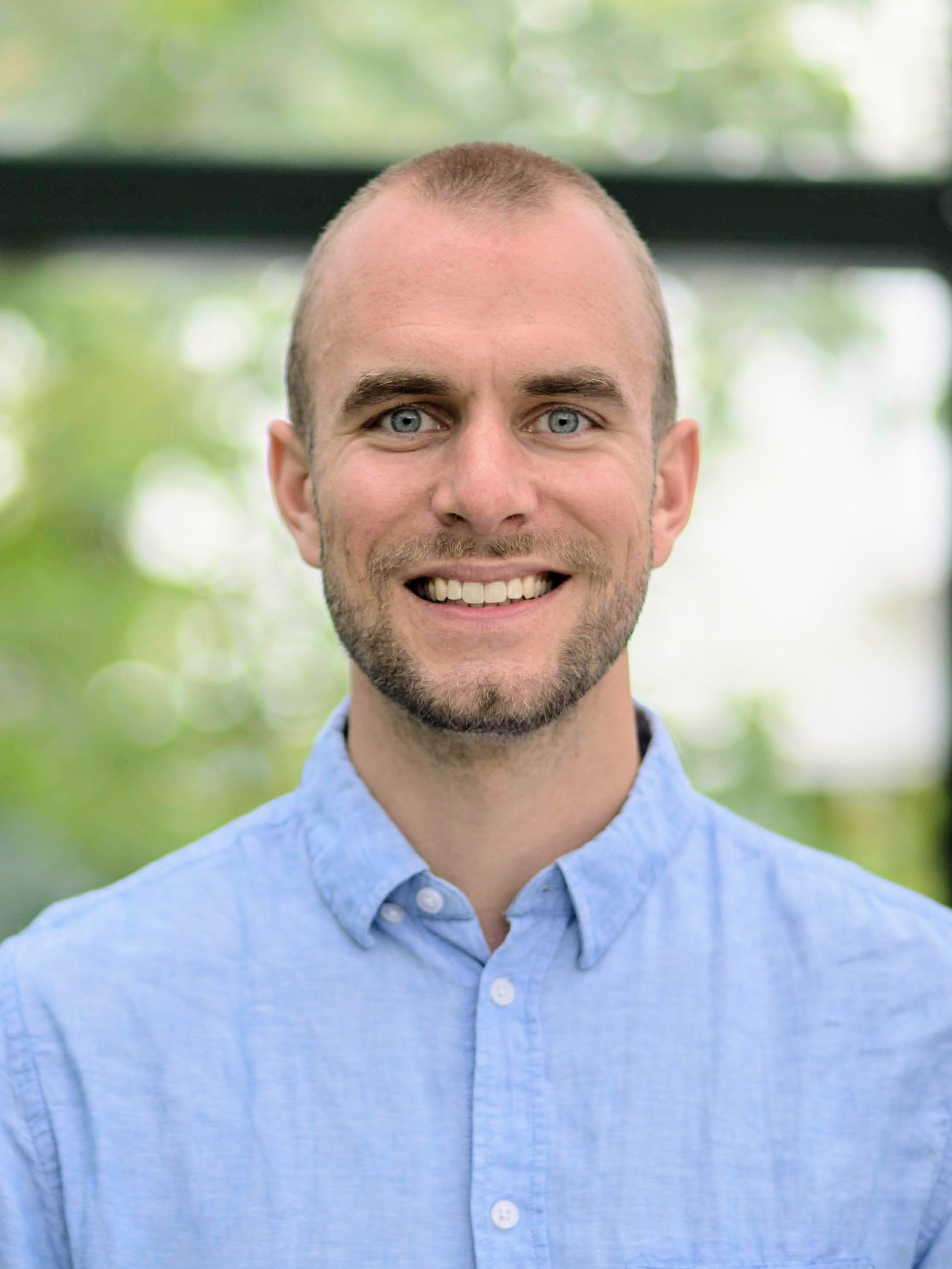
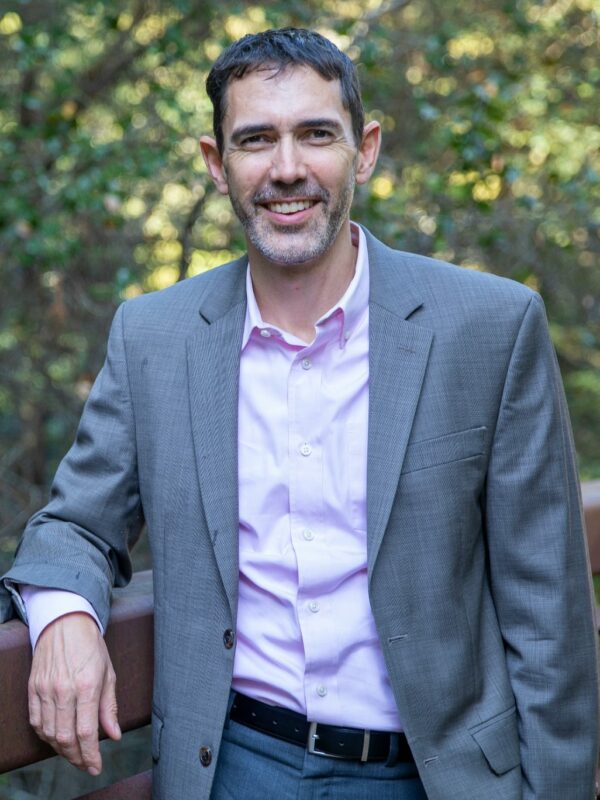
Helleik Rosenvinge Syse is a PhD researcher at the University of Stavanger , affiliated with the Faculty of Science and Technology and the Department of Energy and Petroleum Technology . His work in the Future Energy Hub group focuses on integrating the human dimension into energy use in buildings , supervised by Associate Professor Homam Nikpey and Professor Emeritus Harald Røstvik. He previously studied at the University of Strathclyde and has held roles in startups like Gwing, NablaFlow, and bitUnitor. Academic journey: MSc in Renewable Energy Systems and the Environment (University of Strathclyde) Visiting scholar: University of New South Wales's Artificial Intelligence Institute (2023/24) His research spans techno-economic analysis of renewable energy systems and interdisciplinary exploration of human-engineering interactions . Recent work includes simulation studies of MyBox Energy Lab and data accessibility frameworks for smart city energy systems , emphasizing scalable solutions for urban sustainability. Scientific recognition includes: Nominated '30 under 30 ledestjerner' (Dagens Næringsliv, 2020) Awarded 'young energy talent' (Stavanger Chamber of Commerce, 2022) As an educator, he taught sustainability courses at BI Business School and actively participates in energy transition advocacy through Stavanger Chamber of Commerce groups. His multidisciplinary approach bridges technical systems analysis with behavioral science to address energy efficiency challenges.
James Bain is a Professor in the Electrical and Computer Engineering (ECE) Department at Carnegie Mellon University, with a courtesy appointment in the Department of Materials Science and Engineering. He serves as Associate Director of the Data Storage Systems Center (DSSC) within the College of Engineering. B.S. in Materials Science and Engineering from the University of Pennsylvania (1988) M.S. (1991) and Ph.D. (1993) in Materials Science and Engineering from Stanford University His research spans magnetic, optical, electrical, thermal, and mechanical devices for information storage. Current programs focus on heat-assisted magnetic recording and resistive switches for memory and reconfigurable electronics, with interdisciplinary applications in energy security, industrial decarbonization, and nanofabrication. His work intersects materials science , electrical engineering , and nanotechnology . Scott Institute Seed Grant (2018) for energy research Member of Materials Research Society and IEEE Magnetics, Electron Devices, and Photonics Societies Bain has co-authored over 225 publications and leads research at the interface of data storage and energy systems . He actively contributes to multiphysics modeling, nanoscale thermal transport, and phase-change materials. His lab is affiliated with Carnegie Mellon’s Data Storage Systems Center, advancing technologies for grid-interactive and high-performance buildings.
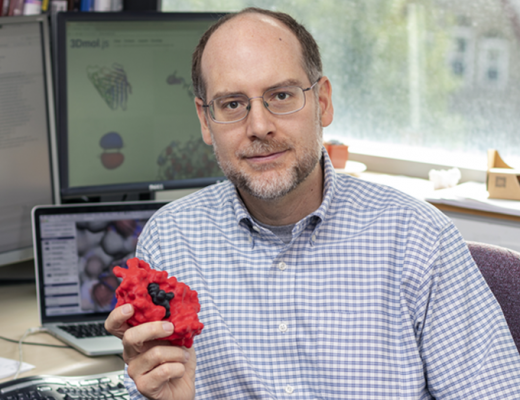
David Ryan Koes is an Associate Professor in the Department of Computational and Systems Biology at the University of Pittsburgh, affiliated with the Joint CMU-Pitt PhD Program in Computational Biology. His research focuses on computational drug discovery, deep learning, and discrete algorithms, aiming to develop novel methods for rapid drug development and open-source software tools. He holds an office at 3064 Biomedical Science Tower 3 and 748 Murdoch Building. Key roles include Associate Director of the CPCB program and leadership in initiatives like CompBio Academy. His software contributions include libmolgrid, gnina, and 3Dmol.js, which advance molecular modeling and visualization. Research interests emphasize AI-driven drug discovery, including molecular docking, pharmacophore modeling, and generative models for molecule design. Recent work involves deep learning for protein structure prediction and pharmacophore elucidation. He has secured NIH grants (e.g., R35GM140753) and collaborations with institutions like CMU and industry partners. Advising over 25 students in computational biology, biotech, and data science programs, Koes bridges academia and industry through projects like Pharmit and the Teach-Discover-Treat initiative. His lab's work spans from foundational ML research to applied drug discovery, with a focus on open science and reproducibility.
Styliana Avraamidou is an Assistant Professor in the Department of Chemical and Biological Engineering at the University of Wisconsin-Madison. She leads research in Process Systems Engineering, focusing on expanding Circular Economy supply chains through mathematical optimization and control. Education: PhD (2018, Imperial College), MEng (2014, Imperial College) Her research interests span Mathematical Optimization and Control , Circular Economy Systems Engineering , Energy Systems Engineering , and the Food-Energy-Water Nexus , with applications in sustainable industrial processes and smart manufacturing. Her recent publications highlight trends in bilevel optimization , distributed model predictive control , and circular economy frameworks for plastic recycling and energy systems. These works integrate data-driven models and multi-parametric programming to address industrial challenges. Scientific Awards: 2024 AIChE’s Institute for Sustainability Managing Board Member 2023 iSoGO Young Researcher Award 2022 Bluemke Assistant Professorship 2022 Faculty Sustainability Fellowship Multiple AIChE and Elsevier awards (2016–2020) Avraamidou teaches graduate courses in process optimization, including CBE 750 (Advanced Process Synthesis) and CBE 470 (Process Dynamics), while mentoring research on sustainable chemical systems.
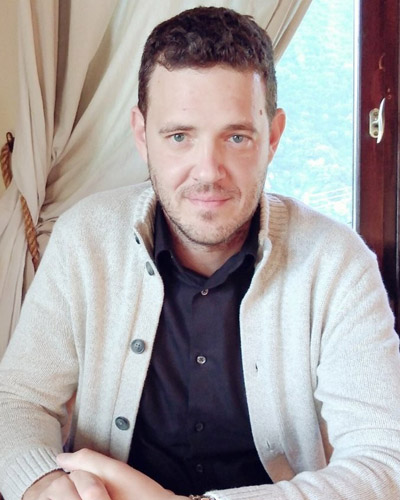
Dr. José Luis Calvo Rolle serves as a Professor in the Department of Industrial Engineering at the School of Engineering, Universidade da Coruña (UDC), specializing in Systems Engineering and Automation. His research focuses on intelligent control systems, fault detection, and virtual instrumentation within the Cybernetic Science and Technology Research Group. Teaches across multiple programs including Master's in Industrial Computing and Robotics, Textile Technology, and Occupational Risk Prevention Coordinates thesis supervision across Industrial Engineering and related disciplines His research spans intelligent control systems and optimization, with significant contributions in virtual sensors, fault detection, and AI-driven modeling for industrial applications. Current projects integrate machine learning with industrial processes for naval construction, wastewater treatment, and precision livestock farming, demonstrating cross-disciplinary impact from energy systems to agricultural technology. Recent publications reveal strong trends in applying deep learning to industrial metaverse frameworks, wastewater optimization, and livestock monitoring systems. His work bridges theoretical control engineering with practical implementations in energy management, naval manufacturing, and sustainable agriculture, frequently utilizing dimensionality reduction and one-class classification techniques. Dr. Calvo Rolle actively mentors students through thesis supervision across multiple engineering disciplines and coordinates research projects with diverse funding sources including the European Commission, Spanish National Research Agency, and industrial partners like Navantia and Telefónica. His laboratory work centers on the Cybernetic Science and Technology Research Group, developing testbeds for industrial automation, virtual instrumentation, and AI-driven monitoring systems. Current initiatives include digital twin implementations for naval manufacturing and smart energy management systems.
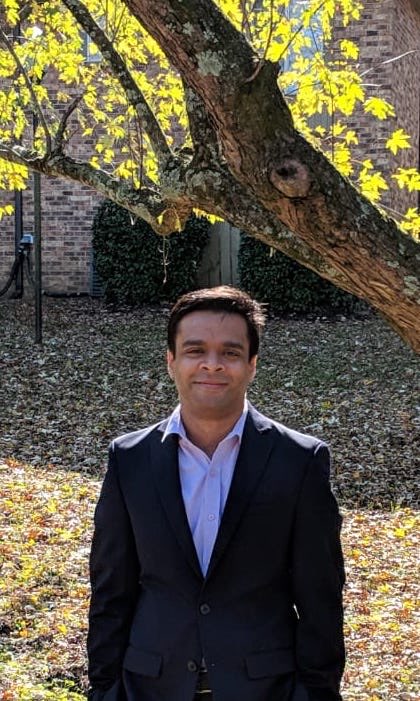
Dr. Ayan Mukhopadhyay serves as a Senior Research Scientist in the Department of Electrical Engineering and Computer Science at Vanderbilt University's School of Engineering. Previously, he was a Post-Doctoral Research Fellow at Stanford Intelligent Systems Lab where he received the 2019 CARS post-doctoral fellowship. His academic journey includes a Ph.D. from Vanderbilt University's Computational Economics Research Lab with a doctoral thesis nominated for the Victor Lesser Distinguished Dissertation Award 2020. His research spans critical domains in smart infrastructure systems with particular focus on: Developing robust decision-making frameworks for cyber-physical systems under uncertainty Creating multi-agent solutions for emergency response optimization Designing machine learning approaches for urban mobility and energy management Building proactive incident detection pipelines using heterogeneous data sources Analysis of his recent publications reveals strong thematic continuity in applying artificial intelligence to real-world infrastructure challenges, particularly in transportation systems, emergency response, and energy management. His work consistently bridges theoretical AI advances with practical implementation in smart city contexts, demonstrating expertise in both algorithmic innovation and systems integration. Award highlights include: CARS Post-Doctoral Fellowship (2019) Best Paper Award at ICLR's AI for Social Good Workshop Victor Lesser Distinguished Dissertation Award Nomination (2020) Dr. Mukhopadhyay leads significant research initiatives through ScopeLab, focusing on creating deployable solutions for public transit, emergency response, and energy systems. His work on vehicle-to-building charging, traffic incident localization, and equitable transit network design demonstrates commitment to solving high-impact urban challenges through rigorous computational methods. Current projects involve developing simulation environments for non-stationary environments (NS-Gym) and explainable planning frameworks integrating formal logic with large language models.
Dr Abigail Hathway is a Senior Lecturer at the School of Mechanical, Aerospace and Civil Engineering , University of Sheffield, specializing in Building Physics and Indoor Airflow Dynamics . Her work bridges energy efficiency with occupant health , focusing on human-building interactions. Education: PhD in CFD modeling of bioaerosols (University of Leeds) Research interests include: Computational Fluid Dynamics (CFD) for indoor environments Human activity impacts on airflow and infection risk Sustainable drainage systems (SuDS) for urban climate mitigation Smart building controls integrating machine learning Her recent publications address ventilation strategies and airborne transmission mitigation across healthcare, hospitality, and urban settings. She leads research on SuDS microclimate impacts and battery storage optimization in buildings. Current PhD opportunities in her group focus on: Urban stormwater-climate interactions Low-energy ventilation systems Occupant-driven building performance
Miltos Alamaniotis is an Associate Professor and GreenStar Endowed Fellow in the Department of Electrical and Computer Engineering at the University of Texas at San Antonio (UTSA). His research focuses on applied artificial intelligence in nuclear security, smart grids, and radiation detection systems, with a particular emphasis on maritime nuclear applications and nonproliferation. Academic Appointments: Associate Professor (2023–Present), UTSA Education: Ph.D. in Applied Intelligent Systems, Purdue University Research interests include: Nuclear Security and Nonproliferation Smart Grids and Distributed Energy Systems Explainable AI for Radiation Detection Quantum Machine Learning Applications Intelligent Control of Nuclear Reactors Fuzzy Logic in Energy Management Recent publications highlight trends in AI-driven nuclear security systems, matrix profile methods for radiation anomaly detection, and quantum neural networks for thermographic image analysis. His work bridges nuclear engineering, cybersecurity, and smart city technologies. Scientific honors include: Top 0.5% ScholarGPS Ranking (2024) Best Paper Award at IEEE Texas Power and Energy Conference (2025) Luthcher Brown Fellowship (2023) GreenStar Endowment Fellowship (2023) NAE Frontiers of Engineering Symposium Selection (2023) UTSA President’s Distinguished Achievement Award (2022) He has supervised PhD students like Thanos Arvanitidis and secured over $15M in grants from DOE, NSF, and NRC for projects including the $25M NNSA Consortium. His AI Lab at UTSA collaborates with Argonne, Idaho, and Los Alamos National Laboratories.
Dr. sc. nat. Hilko Hoffmann is a researcher at the German Research Center for Artificial Intelligence (DFKI) within the Agents and Simulated Reality department in Saarbrücken, Germany. His work focuses on the intersection of artificial intelligence, cloud-based IoT systems, and smart living environments, with particular emphasis on security, contextual awareness, and human-AI collaboration. Role: Researcher Institution: DFKI Saarbrücken Research Unit: Agents and Simulated Reality Key research interests include: Secure orchestration of heterogeneous IoT devices Context-sensitive smart living services Federated data ecosystems for autonomous systems Human-centric AI integration in safety-critical domains Recent publications analyze technical and sociotechnical aspects of AI in cloud-IoT architectures, with specific applications in building automation and energy systems. Collaborations span 11 European countries through the InterConnect project, demonstrating cross-domain integration of smart homes, buildings, and electricity grids.
Sandra Bellekom is a Lecturer-researcher at Hanze University of Applied Sciences, working within the Entrance – Center of Expertise Energy. Her work focuses on system integration in the energy transition, with particular expertise in renewable energy systems, solar power optimization, and smart grid technology. She contributes significantly to research projects related to sustainable energy solutions and environmental systems analysis. Education: Ph.D. in Electrical Engineering from Delft University of Technology (1993-1998) Master's degree in Energy and Environmental Sciences, cum laude, from University of Groningen (2002-2005) Basic Teaching Qualification (BKO) from University of Groningen (2010-2011) Master's degree in Electrical Engineering (ir), cum laude, from Delft University of Technology (1989-1993) Sandra Bellekom's research interests span the critical areas of energy transition and sustainable systems. Her work emphasizes practical applications of renewable energy technologies, particularly focusing on system integration challenges. She investigates how solar energy systems perform under real-world conditions, examining factors like panel contamination and cleaning effectiveness. Her research also extends to hydrogen energy systems, smart grid integration, and the economic optimization of renewable energy solutions. Through her work, she addresses key challenges in making the energy transition technically feasible and economically viable, with a strong focus on data-driven analysis and system modeling. Her recent publications (2019-2025) demonstrate a clear trend toward applied research in solar energy optimization and hydrogen systems. The research shows increasing focus on practical field studies examining how real-world factors like bird droppings, dust, and other contaminants affect solar panel performance. There's also a notable shift toward system-level analysis, particularly in hydrogen energy configuration and the integration of multiple renewable sources. Her work consistently bridges technical analysis with practical implementation considerations, making it highly relevant for industry applications. Sandra actively participates in multiple research projects including 'Effect of pollution and cleaning of solar parks,' 'Hydrogen Works,' and studies on sensible heat storage systems. Her collaborative approach is evident in her numerous co-authored publications across various energy domains. While specific mentoring relationships aren't detailed in the available information, her background includes supervising master's students during previous academic positions. Her research laboratory and team work primarily through the Entrance – Center of Expertise Energy, focusing on practical field studies and system modeling. Current projects involve monitoring solar parks across the Netherlands, developing hydrogen configuration tools, and optimizing energy storage solutions for buildings. The team employs a combination of field measurements, data analysis, and system modeling to address real-world energy challenges.
Kathryn Johnson is a Professor in the Department of Electrical Engineering at Colorado School of Mines with a joint appointment at the National Renewable Energy Laboratory (NREL). She holds the Ben Fryrear Chair for Innovation and Excellence and earned her B.S. from Clarkson University (2000), and M.S./Ph.D. from University of Colorado Boulder (2002/2004). Her research spans wind energy control systems (floating offshore turbines, ultra-scale rotors, wind farm optimization) and sociotechnical engineering education (macroethics, social justice integration). Research Focus: Dr. Johnson leads pioneering work in aerodynamic control of floating offshore wind turbines, developing morphing rotor technologies for 50-MW systems, and optimizing wind-hydrogen integration. Her education research examines how sociotechnical thinking develops in engineering students, with fieldwork validated through international collaborations. Publication Trends: Recent works (2021-2023) demonstrate dual emphasis on: 1) Advanced wind turbine control (aerodynamic load mitigation, floating platform stabilization, grid integration) and 2) Engineering pedagogy (sociotechnical identity formation, ethics frameworks, justice-oriented curriculum design). Over 75% of recent publications involve experimental validation through NREL field tests. Awards & Honors: Fulbright Canada Research Chair in STEM Education (2021) Clare Boothe Luce Endowed Professorship (2005) IEEE Senior Member recognition Educational Leadership: Teaches core courses including Feedback Control Systems, Modern Control Design, and Wind Energy Systems. Developed Mines' first sociotechnical integration modules for control engineering curricula. Supervised 15+ graduate students in wind energy and education research. Facilities & Collaboration: Leads experimental work at NREL's National Wind Technology Center, directing the SUMR (Segmented Ultralight Morphing Rotor) consortium. Collaborates with 10+ institutions on DOE-funded projects including USFLOWT floating turbine initiative.
Adam Millard-Ball is Professor of Urban Planning at the UCLA Luskin School of Public Affairs, where he conducts research at the intersection of transportation systems, environmental sustainability, and urban data science. Trained in economics, geography, and urban planning, he employs geospatial analysis, econometric modeling, and qualitative methods to evaluate transportation and land-use policies aimed at reducing greenhouse gas emissions. His research spans street-network sprawl measurement, parking policy reform, active transportation infrastructure, and climate action planning. Key methodological approaches include large-scale geospatial data analysis, network connectivity metrics, and community-engaged research frameworks. His work consistently addresses equity dimensions in urban environmental policy, examining how transportation and land-use decisions disproportionately impact vulnerable populations. Analysis of his 2023-2025 publications reveals three dominant research trajectories: (1) Quantifying urban form through street-network sprawl metrics at global scales, (2) Evaluating active transportation infrastructure for health and climate co-benefits, and (3) Developing equity-centered frameworks for climate adaptation planning. His recent work demonstrates increasing integration of community-based participatory methods with computational urban analytics.
Prof. Frank T. Piller ist Chair of Technology and Innovation Management an der RWTH Aachen University und Mitbegründer der RWTH Business School . Er forscht seit 2007 zu Disruptiver Geschäftsmodellinnovation , Industrie 4.0 und Kundenco-creation . Als Träger des ERC Synergy Grants SAFEr Grid (2025-2031) entwickelt er modulare Energienetze für die Zukunft. Lehrstuhlinhaber für Technologie- und Innovationsmanagement Gründungsdekan der RWTH Business School Internationaler Forschungskoordinator Seine Forschungsschwerpunkte umfassen: Business Model Innovation in etablierten Unternehmen AI-gestützte Wertschöpfung und digitale Plattformen Ökosystem-Governance für dezentrale Industrienetze Circular Economy Integration in massgeschneiderte Produktion Er erhielt: Co-Creation Award der PDMA Nominierung für HBR/McKinsey Innovation Award Mehrfachauszeichnung für "Flipped Classroom"-Lehre Google Scholar H-Index 73 mit >25.000 Zitierungen Als Keynote-Speaker und Executive-Education-Dozent an führenden Business Schools (MIT, IE, Vlerick) unterstützt er globalen Wandel. Sein Forschungsteam ( >30 Doktoranden ) arbeitet mit Industriepartnern wie Siemens , Vodafone und 3M .
Hamed Nabizadeh Rafsanjani, Ph.D., P.E., ENV SP is a Lecturer at the University of Georgia (UGA) College of Engineering since 2018. He holds a Ph.D. and master’s degrees in Construction Engineering and Management from the University of Nebraska-Lincoln (UNL). Prior to UGA, he served as an assistant professor and visiting lecturer at various universities, earning accolades such as the Best Teacher Award and Best Researcher Award. His research focuses on IoT, AI, and Digital Twin technologies applied to Architecture, Engineering, and Construction (AEC) industries. As director of iSC-LAB, he develops IoT-based platforms to analyze building occupants’ energy-use behaviors and improve learning environments. His research interests span smart building systems, non-intrusive energy monitoring, and occupant behavior analysis. Key projects include a global occupant behavior database and an IoT-based smartphone energy assistant (iSEA). He has secured grants from agencies like the National Science Foundation (NSF), contributing to studies on energy efficiency, construction project management, and sustainability in built environments. Rafsanjani’s publications (2018–2023) emphasize AI-driven solutions for AEC, IoT applications in energy management, and adaptive learning systems. His work bridges technology and human behavior to optimize building performance and educational outcomes. Awards reflect his dual excellence in pedagogy and research, with ongoing contributions to the Sustainable Human-Building Ecosystems field.
Elke U. Weber is the Gerhard R. Andlinger Professor in Energy and the Environment, Professor of Psychology and Public Affairs at Princeton University, and Associate Director for Education at the Andlinger Center for Energy and the Environment. She is affiliated with the Behavioral Science for Policy Lab (BSPL) at Princeton and has previously held leadership roles at Columbia University’s Center for Decision Sciences and Center for Research on Environmental Decisions. Professor, Psychology & Public Affairs, Princeton University Co-Director, BSPL Emeritus Co-Director, Columbia’s Center for Decision Sciences Dr. Weber’s research focuses on human decision-making in environmental contexts , particularly examining social norms , climate policy acceptance , and behavioral spillover effects . Her work integrates neuroeconomics , cognitive psychology , and social network modeling to address sustainability challenges. Recent publications highlight her contributions to climate adaptation strategies , energy transition policies , and behavioral interventions . She has served on advisory boards for the Intergovernmental Panel on Climate Change (IPCC) , World Economic Forum , and National Academies of Sciences . Lead Author, IPCC 5th & 6th Assessment Reports Chair, National Intelligence Council Associate Editorial Board, Psychological Review (2015-2020) Co-Director, Columbia’s Center for Decision Sciences (2000-2017) Her lab (BSPL) trains graduate students and postdocs in behavioral policy research , with members working on topics like energy justice , social norm correction , and extractive community transitions . She has received multiple fellowships and served as president of three professional organizations.