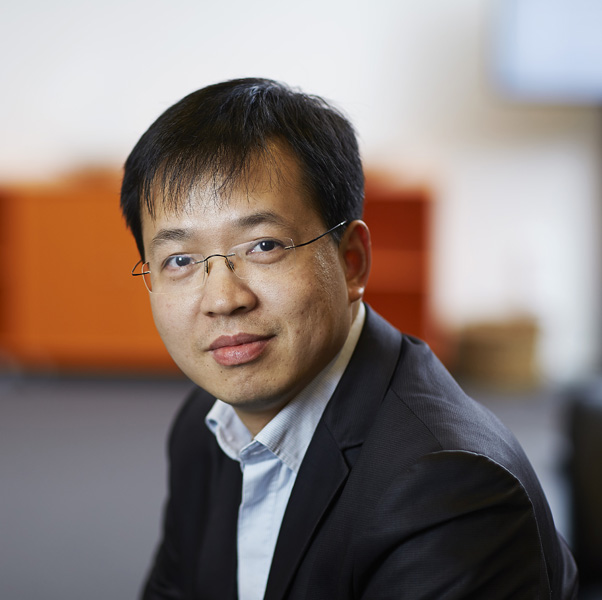
Zhang Yan is a Full Professor at the Department of Informatics, University of Oslo, Norway. He previously served as Head of Department and Chief Scientist at Simula Research Laboratory (2014–2016). His research focuses on advanced communication technologies including Internet of Things (IoT), 5G/6G networks, mobile edge computing, and blockchain applications. He has held significant roles such as IEEE VTS Distinguished Lecturer (2016–2020) and Chair of IEEE TCGCC (2019–2021). His honors include IEEE Fellow (2020), election to Academia Europaea (2020), and recognition as a Web of Science Highly Cited Researcher (2018–2019). Research interests span interdisciplinary areas like network dynamics, socio-economic systems, and algorithmic design. His work bridges theoretical foundations with practical applications in smart grids, vehicular networks, and global trade systems. Recent publications emphasize network science methodologies applied to economic complexity and information diffusion. Professional contributions include editorial roles for top journals and leadership in EU-funded projects. His awards reflect impactful contributions to both technical innovation and scientific leadership in informatics and communications.
Leif Kobbelt is a Full Professor of Computer Science and Head of the Visual Computing Institute at RWTH Aachen University . He previously held academic positions at the Max-Planck-Institute for Computer Science, University of Erlangen-Nürnberg, and University of Wisconsin-Madison. Diploma in Computer Science (1992), Karlsruhe Institute of Technology PhD in Computer Science (1994), Karlsruhe Institute of Technology His research focuses on computer graphics and geometry processing , with specific interests in 3D reconstruction, quad mesh generation, real-time rendering, and geometric modeling algorithms. He has pioneered techniques for efficient mesh processing, anisotropic geodesic computation, and procedural facade visualization. Recent publications analyze nonlinear constraints in geometric modeling, quad layout optimization, and real-time rendering techniques. Key themes include mesh parameterization, multiresolution analysis, and computational geometry for interactive applications. Scientific recognitions include: 2014 Gottfried Wilhelm Leibniz Prize (Germany's most prestigious research award) 2013 ERC Advanced Grant (ACROSS project) 2008 Eurographics Fellow 2004 Eurographics Outstanding Technical Contribution Award 2000 Heinz-Maier-Leibnitz Award He leads major research initiatives like the excellence clusters UMIC (€40M) and AICES (€15M), and the ERC-funded ACROSS project (€2.5M, 2014-2018). He serves as principal investigator and reviewer for international journals and organizations.
Tomasz Miksa is a researcher affiliated with TU Wien's Department of Research Data Management, focusing on machine-actionable data management plans (maDMPs), semantic web technologies, and data reproducibility. He collaborates extensively on projects involving automated assessment of data management workflows, FAIR data implementation, and privacy-preserving analysis platforms. Primary affiliation: TU Wien Department: Research Data Management Key projects: WellFort, FAIR Data Austria, openEO API His research integrates semantic technologies with data governance to enhance reproducibility in scientific workflows, particularly in domains like environmental monitoring and legal informatics. Recent publications emphasize ontological frameworks (DCSO), API harmonization, and auditable machine learning systems. Notable collaborative works include: Reproducibility standards for soil moisture data Knowledge graph applications in cyber-physical energy systems Dynamic data citation mechanisms He supervises students in theses related to maDMP integration, data citation frameworks, and institutional research data planning architectures.
Prof. Sandford Bessler is affiliated with the Technische Universität Wien's Faculty of Informatics, specifically within the Compilers and Languages department. His research focuses 75% on Information Systems Engineering and 25% on Logic and Computation. He teaches courses such as Bachelor Thesis for Informatics and Business Informatics . His work emphasizes smart grids, electric vehicle management, scheduling algorithms, and distributed systems. Research interests include optimizing energy networks, resilience in power grids, and integrating renewable energy systems. He has contributed to projects like ARTE (2012–2017) , exploring disruption-tolerant vehicle-infrastructure communication. Supervised theses include Electric vehicles recharge scheduling with time windows and A service overlay network for telematic applications . Key projects involve improving grid resilience through demand-side management and collaborative frameworks. He collaborates with industry and academia on smart grid technologies and electric vehicle infrastructure.
Marcus Hilbrich is a Professor in Computer Science with extensive academic experience across multiple institutions. His primary affiliation is Chemnitz University of Technology, where he held roles including Assistant Professor, Acting Professor of Software Engineering, and Research Assistant. He also served as Scientific Coordinator at Humboldt University of Berlin (SFB 1404 FONDA) from 2022–2024. Education: He earned a Doctor of Engineering (Dr.-Ing.) from Dresden University of Technology in 2015, focusing on job/user-centric monitoring in distributed environments. His diploma thesis (2008) explored performance analysis of parallel simulations using the SUN Niagara II architecture. Research Interests: Hilbrich specializes in distributed systems, software engineering, cloud computing, and workflow management. He investigates microservices architecture, resilience engineering, and scalable monitoring techniques. His work bridges theoretical foundations (e.g., formal methods for workflows) with practical applications in HPC and data analysis. Publications: He has authored/co-authored over 15 peer-reviewed articles, including key contributions on ßMACH software management guidance, validity constraints in data workflows, and microservices design patterns. His research often addresses interdisciplinary challenges in computational systems and software lifecycle management. Projects: Active involvement in third-party funded projects like SFC (Cloud Computing for Secure Financial Transactions), ECOUSS (parallel simulations), and WisNetGrid (knowledge networks in grids). His work often integrates performance analysis and system scalability. Labs/Teams: Central to his work is the SFB 1404 FONDA collaborative research center, focusing on foundational aspects of distributed heterogeneous environments.
Stefan Rass is a full Professor at Alpen-Adria-Universität Klagenfurt (AAU), with additional affiliation at Johannes Kepler University Linz (JKU). He holds the academic title Univ.-Prof. (Universitätsprofessor) and possesses advanced degrees including PD (Privatdozent), Dipl.-Ing. (Diplom-Ingenieur), and Dr. (Doctor). His research spans multiple institutions and projects, with a focus on security and risk management through game theory applications. Professor Rass's research interests center around Security and Risk Management, Decision and Game Theory for Security, Security Infrastructures (including Key Distribution and Management, PKI, and Authentication), Unconditional and network security, Applied Quantum Cryptography, and Complexity Theory and Statistics in Security. His work bridges theoretical computer science with practical security applications, particularly in quantum networks and critical infrastructure protection. His recent publications demonstrate a strong trend toward interdisciplinary security research, combining game theory with quantum cryptography, robotics security, and AI-powered penetration testing. The articles reveal increasing focus on practical applications of theoretical security concepts, with notable work in quantum networks, deniable encryption techniques, robotics security benchmarking, and AI-assisted security testing. His research shows consistent evolution from theoretical foundations toward real-world implementation challenges. Professor Rass leads multiple ongoing research projects including Machine Learning for Risk Management, Safe and Secure Robotic Systems Engineering (SEEROSE), Simulation and analysis of critical network infrastructures in cities (ODYSSEUS), and security for cyber-physical value networks Exploiting smaRt Grid systems (synERGY). These projects, primarily funded by FFG (Austrian Research Promotion Agency), demonstrate his leadership in securing critical infrastructure and developing next-generation security frameworks.
Udo Bachhiesl is an Associate Professor and Deputy Head of the Institute of Electricity Economics and Energy Innovation at Graz University of Technology. With a background in energy economics, he has established himself as an expert in energy and electricity economics, renewable energies, and energy innovation. His research focuses on energy transition modeling, power system economics, and renewable energy integration. Bachhiesl has contributed significantly to understanding the challenges of integrating renewables into electricity markets and developing modeling frameworks for energy system optimization. His work spans regional (particularly Styrian and Austrian), European, and international contexts including Africa and the Indian subcontinent. Bachhiesl's recent publications reveal a strong focus on hydrogen integration, energy system optimization models (including LEGO and ATLANTIS), and regional energy transition pathways. His work combines technical power system analysis with economic modeling to provide comprehensive insights into energy transitions. Klimaschutzpreis 2003 der Österreichischen Bundesregierung Young Scientist Best Paper Award 2003 As Deputy Head of the Institute, Bachhiesl oversees numerous research projects including UrbanHP (heat pump integration), iKlimET (climate and energy system models), and the Styria Energy Report series. His work connects academic research with practical energy policy implementation, particularly in the Styrian region of Austria. He has also contributed to the Energy Innovation Symposium series at TU Graz and maintains the ATLANTIS simulation model for European electricity systems.
Dr. Keshav Pingali is the W.A. 'Tex' Moncrief Chair of Computing and Professor of Computer Science at The University of Texas at Austin, where he also directs the Center for Grid and Distributed Computing at the Oden Institute. Previously, he held the India Chair of Computer Science at Cornell University (2003–2006) and served as a professor in Computer Science and Electrical Engineering at Cornell (1999–2006). He completed his B.Tech. at IIT Kanpur (1978), followed by S.M., E.E., and Sc.D. degrees from MIT (1983, 1986). Research Interests: Focuses on programming languages, compilers, and runtime systems for parallel computing, with emphasis on optimizing irregular applications in domains like graphics and data mining. His work addresses challenges in high-performance computing and multicore processor programming methodologies. Awards & Honors: ACM SIGPLAN Programming Languages Achievement Award (2024) ACM/IEEE CS Ken Kennedy Award (2023) IEEE Charles Babbage Award (2023) Foreign Member of Academia Europaea (2020) Fellow of ACM (2012), AAAS (2010), and IEEE (2010) NSF Presidential Young Investigator Award (1989–1994) President’s Gold Medal, IIT Kanpur (1978) Professional Activities: Keynote speaker at major conferences like ACM PACT (2018), HPCA/PPoPP/CGO (2016), and HIPEAC (2012). Served as editor-in-chief of ACM TOPLAS (2007–2010) and on NSF advisory committees. Currently teaches courses on compiler optimization and performance programming.
Thomas Neubauer is a PostDoc Researcher at the Department of Information Systems Engineering, Technische Universität Wien. His research focuses on Smart Farming, Explainable AI, and Digital Agriculture with applications in precision livestock farming and sustainable agricultural systems. He leads projects on Precision Livestock Farming (PLFDoc), Legume-cereal intercropping, and Agricultural Photovoltaics integration (PlusIQ). Key projects include: Austrian Competence Centre for Feed and Food Quality, Safety & Innovation (2025–2028) Austrian Science Fund (FWF)-funded work on legume-cereal intercropping (2023–2027) EU-funded ICT4DecisionMaking in Farming (2017–2021) His research spans Digital Twin development for agriculture, machine learning in crop rotation planning, and data security solutions for e-Health. He has supervised over a dozen PhD and Master’s students since 2007. Notable publications include work on reinforcement learning for crop optimization and digital twin frameworks in smart farming.
Michael Fellows is an Elite Professor of Informatics at the University of Bergen, Norway (2016–present). He has held prominent academic positions at Charles Darwin University, Australia; University of Newcastle, Australia; University of Victoria, Canada; and Victoria University, New Zealand. He is a leading figure in parameterized complexity theory and computer science education. Education : Ph.D. in Computer Science, University of California (1985) M.A. in Mathematics, University of California (1982) Research Interests : Dr. Fellows has pioneered parameterized complexity theory and kernelization algorithms. His work bridges theoretical computer science with interdisciplinary applications in mathematical sciences communication. The Google Scholar articles suggest a secondary focus on sustainability science, life cycle assessment (LCA), and regional energy systems planning. Scientific Awards : 2018 Toppforsk Award (Norwegian Research Council) 2016 Order of Australia, Companion to the Queen (AC) 2014 Honorary Fellow of the Royal Society of New Zealand 2014 Inaugural EATCS Fellow 2014 EATCS–IPEC Nerode Prize 2014 ETH Zurich International Gold Medal of Honor 2007 Alexander von Humboldt Research Prize Advising and Grants : He has supervised notable PhD students including Lars Jaffe (University of Bergen) and Elena Prieto-Rodriguez (Newcastle). Research funding includes U.S. NSF grants, Australian Research Council Discovery Grants, and the 2018 Norwegian Toppforsk Award. His editorial roles span the Journal of Computer and System Sciences and ACM Transactions on Algorithms .
Michael Feischl is a Univ. Prof. at TU Wien's Institute for Analysis and Scientific Computing (E101). He specializes in numerical methods for partial differential equations, computational micromagnetism, and optimal adaptivity. Feischl leads the ERC Consolidator Project 'New Frontiers in Optimal Adaptivity' and has held academic positions at TU Wien, University of Bonn, and Karlsruhe Institute of Technology. His research interests span stochastic perturbations, finite element methods, and machine learning applications in computational mathematics. Feischl's work includes groundbreaking contributions to adaptive finite element methods, optimal mesh refinement strategies, and the numerical analysis of the Landau-Lifshitz-Gilbert equation in micromagnetics. His recent publications focus on advancing computational techniques for PDEs, neural operator networks, and stochastic collocation methods. He has developed algorithms with guaranteed convergence properties and optimal complexity, contributing to both theoretical and applied aspects of computational science. Education: Dipl.-Ing. Dr.techn. (PhD in Technical Mathematics) from TU Wien Awards: ERC Consolidator Grant 2022 Labs/Teams: Heads the 'Computational PDEs' research group at TU Wien's Institute for Analysis and Scientific Computing
Andrea M. Tonello is a Full Professor at the Institute of Networked and Embedded Systems, University of Klagenfurt, Austria, where he chairs the Embedded Communication Systems Lab. He previously held positions at the University of Udine, Italy, where he was an Associate Professor and founded the Wireless and Power Line Communication Lab (WiPLi Lab). His research spans power line communications, wireless systems, embedded communications, smart grids, and machine learning applications in signal processing. Doctor of Engineering, University of Padova (1996) Doctor of Research, Telecommunications, University of Padova (2003) His research interests focus on next-generation communication systems, including power line and wireless networks, signal processing, machine learning for communications, UAV systems, and smart grid technologies. He has made significant contributions to PLC channel modeling, full-duplex communications, and information-theoretic learning for communication systems. His work integrates theoretical innovation with practical implementation in real-world networks. The most recent publications highlight a strong trend toward integrating machine learning and information theory into communication systems, particularly in power line and wireless networks. Themes include f-divergence based classification, mutual information estimation, neural decoding (MIND), noise-robust receivers, and topology-aware machine learning for PLC quality prediction. There is also a notable focus on UAV control, full-duplex PLC, and digital pre-distortion techniques for high-speed converters. IET 2016 Premium Award Best Paper Award, ISPLC 2016 Best Student Paper Award, ISPLC 2016 Aerospace Best Paper Award, 2018 Best Paper Award, ISPLC 2021 Best PhD Dissertation Award, 2019 IEEE ComSoc Distinguished Lecturer (2018) Two Awards from IEEE ComSoc TC-PLC (2019) University of Klagenfurt Technology Scholarships (2019) Dr. Tonello has supervised numerous PhD and Master’s students, including notable advisees such as Nunzio A. Letizia, Davide Righini, and Babak Salamat. He has led over 10 institutional and multiple industrial research projects with a total funding exceeding 20 million euros. He played a key role in promoting international academic collaboration, including Erasmus agreements, joint PhD programs with INSA Rennes and Ecole Polytechnique de Grenoble, and a joint master’s program with the University of Klagenfurt. He founded and led the WiPLi Lab at the University of Udine, which received around 3 million euros in funding and involved over 60 researchers and students. He also founded WiTiKee s.r.l., a spin-off company specializing in PLC for smart grids. Currently, he chairs the Embedded Communication Systems Lab at the University of Klagenfurt, focusing on next-generation networked and embedded communication technologies.
Henri Ruotsalainen is a Researcher at the University of Applied Sciences St. Pölten (FH St. Pölten) , affiliated with the Institute of IT Security Research and the Department of Computer Science and Security . His work focuses on IoT security , wireless network protection , and sensor system resilience , with particular emphasis on LoRaWAN and critical infrastructure security . PhD in Technical Sciences (Dr. Techn.) from Vienna University of Technology (2011–2015) Diploma in Engineering (Dipl.-Ing.) from Helsinki University of Technology (2002–2010) Prior roles as University Assistant (Helsinki, 2007–2008) and Project Assistant (Vienna, 2011–2015) Ruotsalainen's research explores physical layer security for IoT, including radio-based key generation , supply voltage watermarking , and reactive jamming detection . His projects like LoRaKey and Substation Security aim to strengthen wireless communication integrity in industrial environments. Recent publications highlight trends in sensor network security and smart home vulnerabilities , with a focus on metadata differencing and attack countermeasures . Scientific contributions include: 15+ peer-reviewed articles in journals like Sensors and IEEE Transactions Participation in conferences including IEEE ETFA , ARES , and IT-SECX Development of security testbeds for LoRaWAN and critical infrastructure systems
Lukas Radl is a University Assistant and PhD Student at the Institute of Visual Computing, Graz University of Technology, where he works on 3D Scene Representations for View Synthesis under the supervision of Markus Steinberger. His research focuses on advancing real-time rendering techniques, particularly in Neural Radiance Fields (NeRF) and Gaussian Splatting, to bridge digital and physical world representation. Education: Master of Science in Computer Science (with distinction), Graz University of Technology, 2018-2023 Bachelor of Science in Software Engineering, Graz University of Technology, 2018-2023 Research Focus: Radl's work intersects Computer Graphics, Computer Vision, Machine Learning, and Parallel Processing. He pioneers practical implementations of Radiance Field Representations, addressing critical challenges in view consistency, anti-aliasing, and real-time performance for interactive applications. His innovations enable robust rendering in virtual reality and complex lighting scenarios through novel geometric and neural approaches. Publication Impact: Recent publications (2024-2025) demonstrate a cohesive trajectory toward production-ready radiance field systems. Key advances include sorting algorithms for view consistency (StopThePop), anti-aliasing frameworks for Gaussian Splatting (AAA-Gaussians), and VR-optimized pipelines (VRSplat). These contributions establish new standards for real-time performance while maintaining visual fidelity across diverse hardware platforms. Scientific Recognition: Dean's List (top 5% of students) at Graz University of Technology (2019, 2020) Mentorship & Service: Radl actively shapes academic discourse as a reviewer for premier venues (CGF, ICCV, TVCG) and mentors students through open projects in real-time rendering. His teaching portfolio spans exercise coordination for core visual computing courses since 2020, with current leadership in Real-Time Graphics and Computer Graphics instruction. He fosters talent through student projects advancing Gaussian Splatting implementations. Research Ecosystem: Embedded in Graz University of Technology's Institute of Visual Computing, Radl collaborates within a specialized team focused on radiance field optimization. The group maintains active pipelines for NeRF and Gaussian Splatting research, with strong industry connections evidenced by his upcoming Meta Reality Labs internship. Current projects target foveated rendering, geometric consistency, and editing capabilities for next-generation AR/VR systems.
Daniel Heidenthaler serves as a Researcher at the Design and Green Engineering Center for Alpine Construction (Zentrum Alpines Bauen), specializing in energy performance analysis of built environments. His work directly supports UN Sustainable Development Goals 7 (Affordable and Clean Energy) and 11 (Sustainable Cities and Communities) through data-driven approaches to climate-neutral urban development. His research centers on Energy Performance Certificates (EPCs) as foundational tools for urban building energy modeling, heat load prediction, and energy flexibility assessment. Key focus areas include residential building stock analysis, district-level energy modeling, and alpine-specific construction challenges. His methodology combines structured EPC data analysis with advanced simulation techniques to address thermal mass utilization and renewable energy integration in building systems. Recent publications (2022-2024) reveal a consistent trajectory toward practical applications of EPC data for district energy planning, with increasing emphasis on climate resilience in alpine regions. His work bridges theoretical modeling and real-world implementation through projects focused on building densification and component activation. Heidenthaler actively contributes to major research initiatives including 'Energy flexibility through buildings' (2025-2030) as Deputy Project Manager and 'IEA ES Task 43' as Project Leader, securing funding from Austrian Climate and Energy Fund (Klima- und Energiefonds) and international consortia. His peer review activities for journals like Building and Environment demonstrate scholarly engagement. As part of the interdisciplinary Center for Alpine Construction, he collaborates on integrated solutions for sustainable building densification in mountainous regions, with recent work presented at international conferences on component activation and residential cooling systems.