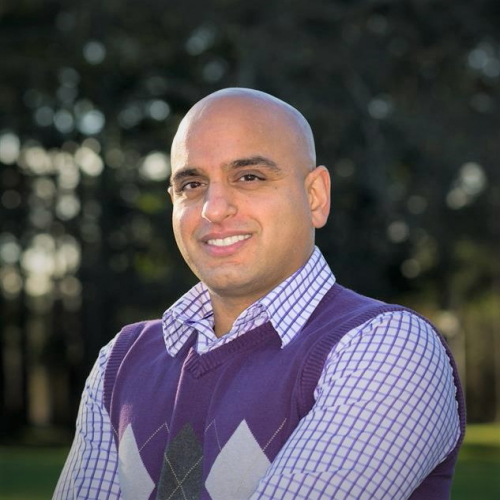
Nathaniel Daw holds the Huo Professorship in Computational and Theoretical Neuroscience at the Princeton Neuroscience Institute , Princeton University. His research integrates computational, neural, and behavioral approaches to study decision-making through trial-and-error learning and reward/punishment processing. Research Interests: Computational Neuroscience Decision-Making Under Uncertainty Model-Based and Model-Free Learning Neural Mechanisms of Self-Control Publications (2025-2019) explore intersections of machine learning and neuroscience, focusing on reward-guided behavior, memory systems, and psychiatric implications like anorexia nervosa and obsessive-compulsive disorder. Key themes include neural replay, cognitive effort allocation, and predictive modeling of human and animal learning. Scientific Awards: Princeton-Rutgers $16M Research Grant for mental illness studies Grants and Collaborations: Highlighted by a major interdisciplinary grant with Rutgers University to advance understanding of mental illness through computational frameworks. Labs and Teams: Leads the Daw Lab at Princeton Neuroscience Institute, focusing on neurocomputational models of decision-making and self-control.
Dr. Sumit Kothari is a Research Fellow at University College London's Bartlett School of Environment, Energy and Resources, specializing in climate finance and low-carbon transition dynamics. His work bridges financial systems analysis with environmental sustainability, leveraging industry experience from Morgan Stanley and entrepreneurial background in Indian investment startups to address real-world climate finance challenges. His educational foundation includes: PhD in Sustainable Resources and Climate Policy (UCL, 2019-2024) MSc Economics and Policy of Energy and the Environment (UCL, 2016-2017) Post Graduate Diploma in Management (IIM Calcutta, 2002-2004) Bachelor of Commerce (University of Mumbai, 1998-2001) Dr. Kothari's research centers on Climate Finance and Energy Transition Dynamics , employing Complexity Economics to analyze investment networks and risk underwriting in developing countries. His work on Technology Scaling examines financial mechanisms for accelerating renewable adoption, while his expertise in Computational Statistics informs analysis of environmental resource economics and policy design. Key contributions address financial tipping points, equity in climate finance flows, and fossil fuel finance phase-out challenges. His publication record (2021-2025) reveals three dominant trends: 1) Systemic analysis of financial mechanisms driving sustainability transitions, 2) Critical examination of equity gaps in international climate finance, particularly for developing nations, and 3) Application of complexity theory to low-carbon finance markets. These works, published in Nature Communications, Nature Climate Change, and Earth System Dynamics, demonstrate increasing impact with multiple papers exceeding 100 citations. No major scientific awards were identified in the source materials, though his research has influenced policy discussions and been covered by numerous news outlets including Financial Times and Bloomberg. Dr. Kothari's advisory activities focus on sustainable development goals 7, 11, and 13, with collaborations spanning UCL, University of Strathclyde, and industry partners. Current research grants investigate: Financial tipping points for accelerated decarbonization Equity frameworks for international climate finance Complexity modeling of low-carbon investment networks He contributes to UCL's Climate Finance and Technology Scaling research cluster, collaborating with environmental economists and complexity scientists to develop practical financial instruments for the low-carbon transition while maintaining industry connections through his private investment startup cofounding role.
Dr. Md Rabiul Islam is an Associate Professor at the School of Electrical, Computer and Telecommunications Engineering at the University of Wollongong (UOW), Australia. His research focuses on renewable energy technologies, power electronics, smart grids, and electrical machines. He holds a Ph.D. in electrical engineering from the University of Technology Sydney (2014) and has over 400 publications including 130 IEEE Transactions papers and 9 authored/edited books. He has secured $5.48M in ARC grants, including leadership in the ARC Training Centre in Energy Technologies for Future Grids. Dr. Islam's research interests span renewable energy systems, power electronic converters, grid stability, and hydrogen energy integration. He leads projects on solid-state transformers, grid resilience, and high-frequency magnetic links. His work has been recognized with IEEE Best Paper Awards and over 20 conference awards. He serves as Associate Editor for IEEE Transactions on Industrial Electronics and Energy Conversion, and as Book Series Editor for Taylor & Francis. His academic contributions include pioneering advancements in multiport converters, grid-connected inverters, and energy storage systems. Current supervision focuses on advanced control techniques for grid stability and inverter performance optimization.
Yehia Abd Alrahman is a Senior Lecturer at the Department of Formal Methods within the University of Gothenburg. His work focuses on formal methods, model checking, and reconfigurable systems, with particular emphasis on multi-agent systems and attribute-based communication. He develops verification tools like R-CHECK and contributes to theoretical foundations for collective adaptive systems. His research integrates formal verification techniques with practical applications in distributed systems and energy grids. Key research interests include formal verification of reconfigurable systems, attribute-based communication models, and correct-by-design teamwork plans for multi-agent systems. He has published extensively on topics such as bisimulation theory, distributed coordination frameworks, and protocol analysis. His work often bridges theoretical computer science with practical implementation in domains like power grid control and system resilience. Academic contributions span programming language design for CAS, verification frameworks, and pedagogical approaches to formal methods education. Collaborations include projects on runtime verification, distributed API design, and adaptive system coordination protocols. Current research trends emphasize enhancing system correctness through automated synthesis and rigorous formal methods.
Dr. Maher Al-Greer is an Associate Professor (Research) at Teesside University's School of Science, Engineering and Design Technology (SCEDT), specializing in electrical engineering with a focus on power electronics, battery management systems, and smart grids. He holds a PhD from Newcastle University (2012) and has extensive academic and industry experience, including roles as a post-doctoral researcher and senior lecturer. Education: PhD in Control of Power Electronic Converters (Newcastle University, 2012) Key Roles: Associate Editor of IET Power Electronics, Co-Chair of UPEC 2021 Conference, External Examiner for multiple universities Awards: Best Paper Award (IEEE UPEC 2022), Fellow of the Higher Education Academy (FHEA) Research Interests: Battery Management Systems, Renewable Energy Integration, Smart Grids, Signal Processing, and AI-driven solutions for energy systems. His work emphasizes translating research into practical applications, such as battery health monitoring and grid stability. Grants & Projects: Over £100K secured from UKRI, Lloyd’s Register Foundation, and others. Notable projects include solar-PV hybrid systems, battery recycling frameworks, and adaptive fast-charging for EVs. Research Highlights: 70+ publications, 8 supervised PhD students, and collaborations with global institutions like the Technical University of Munich and Middle East Technical University. Consulting: Advised companies on maritime HVDC systems and portable battery solutions.
Nathan Dahlin is an Assistant Professor in the Department of Electrical and Computer Engineering at the University at Albany's College of Nanotechnology, Science, and Engineering. He holds a BS, MS, and PhD in Electrical Engineering and an MA in Applied Mathematics from the University of Southern California. Prior to joining UAlbany, he was a Postdoctoral Research Associate at the University of Illinois Urbana-Champaign and a senior audio DSP research engineer at Audyssey Laboratories. Dr. Dahlin's research focuses on fundamental problems in machine learning, stochastic control, optimization, and microeconomics, with applications in developing computationally efficient decision-making approaches for smart energy systems. His work emphasizes reliability in uncertain environments and risk management. His recent publications demonstrate strong focus on machine learning applications in control systems, energy management, and algorithm design. Articles frequently address topics like imitation learning, economic dispatch optimization, neural network transformation, and kernel-based learning methods, often with practical implementations in energy systems and smart grids. Dr. Dahlin is active in professional organizations including the Institute of Electrical and Electronics Engineers (IEEE) and the Association for the Advancement of Artificial Intelligence (AAAI). He serves as a reviewer for leading conferences and journals including AAAI Conference on Artificial Intelligence, IEEE Transactions on Control of Network Systems, IEEE Transactions on Power Systems, and IEEE Transactions on Smart Grid.
Dr. Yacine Chakhchoukh is Associate Professor in Electrical and Computer Engineering at the University of Idaho. He teaches energy systems, power systems analysis, and cybersecurity courses, including sustainable energy and resilient infrastructure control. Research focuses on cybersecurity for critical power infrastructure , particularly smart grid state estimation under cyber threats. Specializations include Phasor Measurement Unit (PMU) integration, false data injection detection, and resilient estimation methods. His work combines statistical robustness with power system dynamics. Publications develop algorithms for attack detection in smart grids, outlier diagnosis in PMU networks, and decomposition methods for resilient estimation. Methodologies integrate machine learning, robust statistics, and dynamic system modeling. Industry experience includes research with French Electrical Transmission System Operator (RTE). International collaborations span Japan (Tokyo Tech), Germany (TU Darmstadt), and Arizona State University.
Laura ANDOLFI is a Doctoral Researcher at the Interdisciplinary Centre for Security, Reliability and Trust (SnT) within the FINATRAX department at the University of Luxembourg. Her work focuses on the intersection of energy systems, policy, and consumer behavior. Key research areas include smart grids, building energy management, and the sociotechnical aspects of energy literacy. Her research explores how energy policies and technological advancements can be harmonized with public engagement to drive sustainable practices. Notable contributions include studies on European electricity market structures, early adopter behaviors in smart energy technologies, and the impact of environmental values on energy flexibility provision. Laura’s publications reflect a multidisciplinary approach, blending policy analysis with technological and sociological insights. She is affiliated with the University of Luxembourg’s Belval Campus, office JFK E02 224.
Dr. I-Ling Yen is a Professor of Computer Science at The University of Texas at Dallas (UTD), affiliated with the Erik Jonsson School of Engineering and Computer Science. She holds a Ph.D. in Computer Science from the University of Houston (1992), an M.S. in Computer Science from the same institution (1985), and a B.S. in Physics from National Tsing-Hua University (1979). Her research focuses on high assurance systems, parallel and distributed computing, secure systems, grid computing, and component-based design. Research Interests High assurance systems Secure and dependable systems Parallel/distributed computing Grid and peer-to-peer computing Systems engineering Component-based adaptive systems Key Contributions Her work emphasizes QoS-driven service composition, reconfigurable systems, and dependability in cloud and distributed environments. Notable outputs include frameworks for cloud computing dependability metrics, role-based security models, and optimization for intelligent transportation systems. Grants & Funding NSF MRI Consortium (2011–2014): $977K for cloud computing instrumentation NSF QoS-Assured Service Composition (2011–2013): $198K Multiple industry grants from Lockheed Martin, Cisco, Texas Instruments, and Alcatel Professional Service Extensive leadership roles in conferences like IEEE HASE, SOSE, and SRDS, including program chair positions and steering committee memberships. Active as a reviewer for top journals and conferences in systems engineering and software reliability. Academic Leadership UTD service roles include Department By-Law Committee Chair (2007–2010), Search Committee member, and graduate student admissions involvement.
Paolo Scarabaggio is an Assistant Professor (RTDA) at the Decision and Control Laboratory of Polytechnic University of Bari, Italy. He received his Ph.D. in Electrical and Information Engineering from the same institution and completed a research visit at the Delft Center for Systems and Control, Technical University of Delft in 2019. His academic work spans multiple high-impact publications across IEEE journals and conferences, with a focus on interdisciplinary applications of control theory. His research interests center around modeling, optimization, game theory, and control of complex multi-agent systems , with practical applications in energy distribution systems, social networks, warehouse automation, and collaborative robotics. His work demonstrates strong interdisciplinary connections between theoretical control concepts and real-world industrial applications, particularly in Industry 4.0 contexts. Dr. Scarabaggio's publications reveal a consistent trajectory of increasingly sophisticated applications of game theory and optimization techniques to emerging challenges in energy systems, logistics automation, and human-robot interaction. His research shows particular strength in developing mathematically rigorous frameworks that address practical constraints in real-world systems. 2022 IEEE CSS Italy Best Young Author Journal Paper Award As an educator, Dr. Scarabaggio teaches courses including Analisi e Simulazione dei Sistemi, Fondamenti di Automatica, and Game Theory for Controlling Autonomous Systems. His research collaborations span multiple institutions and industries, with frequent co-authorship with researchers from Polytechnic University of Bari and international partners. His work often addresses practical implementation challenges while maintaining theoretical rigor, making significant contributions to both academic knowledge and industrial applications.
Dr. Adib Allahham is an Assistant Professor in the Department of Mathematics, Physics and Electrical Engineering at Northumbria University. His research focuses on advancing energy systems through innovative control strategies and sustainable technologies. He specializes in microgrid optimization, renewable energy integration, and smart grid development, with a particular emphasis on hydrogen storage, energy storage systems, and decarbonization challenges. His work addresses critical issues such as building-to-building energy trading, grid security, and the transition to net-zero infrastructure. He explores hybrid control systems, predictive algorithms, and the impact of weather on renewable energy outputs. Dr. Allahham collaborates on projects like port electrification and Jordan’s energy regulatory reforms, emphasizing real-world applications of his research.
Kush Bubbar is an Assistant Professor at the University of New Brunswick's J Herbert Smith Centre for TME, with expertise in systems modeling for sustainable energy and product development. His research applies graph-theoretical frameworks to multi-physics problems, particularly in marine renewable energy. Industrial experience includes senior engineering roles at SCIEX™ (biomedical tech) and BlackBerry™ (manufacturing systems). Teaching includes Product Design & Development (TME 4025/6025) and Battery Technology Modeling (TME 6386). Professional affiliations include the Canadian Society for Mechanical Engineering and Design Society. He leads the Sys-MoDEL Lab, collaborating with industry partners including Potential Motors™ and NB Power™.
Dr. Mahmoud H. Qutqut is an Assistant Teaching Professor in the Faculty of Computer Science at the University of New Brunswick (UNB) in Fredericton, Canada since September 2023. Previously, he served as Chair of the Cybersecurity and Cloud Computing Department at Applied Science University in Jordan (July 2022–August 2023) and was promoted to Associate Professor there in December 2019. He has held academic positions since 2014, including a visiting role at Queen’s University (2017–2019) where he contributed to research and teaching. His educational background includes a Ph.D. (2014) and M.Sc. (2008) in Telecommunication Systems, and a B.Sc. (2004) in Computer Systems. Research interests focus on smart city technologies, IoT, cybersecurity, and data-driven networks. He actively publishes in top-tier venues such as IEEE Access and has served on technical committees for conferences and journals. Notable achievements include a Teaching Excellence Award nomination (2018) and founding the Cisco Academy at Applied Science University (2015). Dr. Qutqut’s academic career spans teaching roles at Queen’s University, where he instructed courses on computer networks and computing fundamentals. His research bridges theoretical advancements with practical applications in network security, machine learning, and IoT systems. He has supervised impactful student projects, such as winning entries in graduation competitions (2017).
Roles & Affiliations: Professor in the Department of Systems and Computer Engineering at Carleton University, Ottawa. Holds a Dr.-Ing. from the Technical University of Darmstadt (Germany). Active in research and academic leadership, including serving on Carleton's Board of Governors (2012-15). Education: Dr.-Ing., Technical University of Darmstadt, Germany (1994) Postdoctoral experience: University of Waterloo (1994-1997) Research Focus: Internet of Things (Smart Grid/City) Mobile computing systems & wireless networks Software-defined networking (SDN) and network function virtualization (NFV) Machine learning applications in networking Adaptive mobile systems and tactical radio networks Key Achievements: World's Top 2% Most-Cited Scientists (2022, Stanford-Elsevier) Top 0.5% Global Scholars (2024, ScholarGPS) Carleton Research Achievement Awards (2012-13, 2004-05) Carleton Graduate Mentoring Award (2010) Advising & Labs: Supervised numerous graduate students (see linked list) Developed NetAnalyzer , an open-source network analysis tool
Dr Yehdego Habtay is a Senior Lecturer at the School of Engineering within the Faculty of Engineering and Science at the University of Greenwich. He holds BEng, MSc, and PhD degrees, with expertise in power systems engineering and control systems. His research focuses on power systems modeling/operation, Flexible AC Transmission Systems (FACTS), induction motor starting in isolated systems, and control instrumentation. Key contributions include work on fault ride-through mechanisms in HVDC systems, power hardware-in-the-loop (PHIL) testing for grid stability, and DC microgrid design. His publications span topics like inverter droop control, voltage regulation in low-voltage grids, and energy-efficient communication systems in healthcare. Dr. Habtay has held academic roles since 2004, complemented by industry experience at Bowman Power Systems and Scottish Power. His research integrates theoretical models with practical experimentation, emphasizing renewable energy integration and grid resilience.