Professor Gregor Verbic is a faculty member at the University of Sydney in the School of Electrical and Computer Engineering , where he serves as Director of the Centre for Future Energy Networks . Previously, he held an assistant professor position at the University of Ljubljana and was a NATO-NSERC Postdoctoral Fellow at the University of Waterloo. His career spans academic research, industry leadership as Head of Interenergo's Investment Department, and extensive collaboration with IEEE. PhD in Electrical Engineering (University of Ljubljana) Senior IEEE Member Research Interests focus on transforming power systems to zero-carbon grids through: Aggregation and control of distributed energy resources (DERs) Frequency control with wind generation and electric vehicles Stochastic optimization for multi-energy systems Smart home energy management with phase change materials Notable Contributions include: 2006 IEEE prize paper for voltage instability prediction 2010-2024: 15 recent publications on DER coordination, network tariffs, and low-inertia grid stability Teaching includes courses on: ELEC3203/ELEC9203: Electricity Networks ELEC5213: Engineering Optimisation ELEC5206: Sustainable Energy Systems Labs & Initiatives Centre for Future Energy Networks The Net Zero Institute
Irina Oleinikova is a Professor at the Norwegian University of Science and Technology (NTNU) in the Department of Electric Energy, Faculty of Information Technology and Electrical Engineering. She leads the Power System Operation and Analysis research group and serves as the NTNU Smart Grid Team Leader. She is a steering committee member of the European Energy Research Alliance (EERA) Joint Programme on Smart Grids and an expert in the International Smart Grid Action Network (ISGAN) WG6. Research Interests : Power System Operation, Digital Power System Protection and Control, Grid Resilience, Energy Flexibility, Cybersecurity in Power Systems, and Hydrogen Technology Integration. Her work focuses on advancing smart grids, grid flexibility, and cybersecurity through projects like FME CINELDI, HONOR, ASAP, and ZeroKyst. Key Projects : CINELDI : Developing intelligent electricity distribution grids. HONOR : Cross-sectoral energy flexibility markets. ASAP : Next-generation system protection schemes. ZeroKyst : Hydrogen and charging infrastructure along Norway’s coast. COSPAT : Stability of AC/DC transmission grids via co-simulation. Advising & Grants : Supervises PhD students in digital protection and cybersecurity. Active in projects funded by RCN, STATNETT, and EU Horizon 2020. Leads the Power System Operation and Analysis group and collaborates with SINTEF and industry partners. Labs/Teams : NTNU Smart Grid Team and the Power System Operation research group.
Sahar Pirooz Azad is an Assistant Professor in the Department of Electrical and Computer Engineering at the University of Waterloo. She holds a PEng designation and specializes in power systems engineering, particularly in HVDC systems and grid stability. Previously, she served as an Assistant Professor at the University of Alberta (2015–2017) and conducted postdoctoral research at the University of Toronto’s CAPE Centre and KU Leuven in Belgium. Her research focuses on enhancing power grid stability through advanced control schemes for HVDC grids, converter modeling, and fault protection mechanisms. Dr. Azad’s work addresses challenges in multi-terminal HVDC systems, offshore wind grid integration, and multi-vendor system compatibility. She has taught courses like Power System Protection and Relaying (ECE 765) and Electromechanical Energy Conversion (ECE 260), reflecting her expertise in both theoretical and applied electrical engineering. Her recent publications emphasize innovative protection schemes for HVDC grids, fault detection algorithms using signal processing (e.g., Hilbert-Huang Transform), and robust controller designs for multi-vendor VSC systems. These contributions aim to improve grid reliability, fault resilience, and renewable energy integration efficiency. Dr. Azad is actively recruiting graduate students and holds Sole-Supervisory Privilege Status (SSPS) at Waterloo. Her research has been supported by European Commission-funded projects like MEDOW and leverages interdisciplinary approaches to tackle modern grid challenges.
Professor Raja Ayyanar is a faculty member in the School of Electrical, Computer and Energy Engineering at Arizona State University (ASU), where he has served since 2000. He holds a Ph.D. in Power Electronics from the University of Minnesota (2000), an M.S. from the Indian Institute of Science (1995), and a B.E. in Electrical Engineering from PSG College of Technology (1989). His research focuses on power electronics, renewable energy systems (including PV and wind integration), electric vehicles, motor drives, and wide bandgap devices. Notable contributions include advancements in DC-DC converters, power conversion for renewable energy interfaces, and high-frequency power electronics. He has published over 200 journal/conference papers and holds 8 U.S. patents. Ayyanar is a Fellow of the IEEE and has received the Office of Naval Research Young Investigator Award (2005). He leads or participates in major research initiatives, including the ACEPS Center and the Power Systems Engineering Research Center (PSERC). His work spans industry collaborations with entities like Sandia National Labs, Intel, and BP Solar. He teaches advanced courses in power electronics and has advised numerous students. His grants include projects on smart grid technologies, inverter reliability standards, and high-penetration renewable integration. He is affiliated with ASU’s Center for Efficient Vehicles and Sustainable Transportation Systems (EV-STS). Education: Ph.D. Power Electronics, University of Minnesota, 2000 M.S. Power Electronics, Indian Institute of Science, 1995 B.E. Electrical Engineering, PSG College of Technology, 1989 Affiliations: Professor, Ira A. Fulton Schools of Engineering Professor, PSERC and EV-STS Centers Grants & Projects: Over 60 grants from NSF, DOE, ONR, and industry partners Recent projects include dynamic sub-transmission-distribution co-simulation and EV/HEV traction drives
Prof. Ivan Martinovic is a Professor of Computer Science at the University of Oxford's Department of Computer Science, holding a Fellowship at the institution. He specializes in cyber-physical systems security, wireless network security, and behavioral biometrics. His research focuses on authentication mechanisms, intrusion detection, and trade-offs between security and performance in systems like satellite communications, EV charging infrastructure, and aviation networks. Education: PhD (TU Kaiserslautern); MSc (TU Darmstadt, Germany). Prior roles include postdoctoral research at UC Berkeley (2011) and UC Irvine (2009–2010), supported by a Carl-Zeiss Foundation Fellowship (2009–2011). He has also been an associate lecturer at TU Kaiserslautern. Research Interests: Cyber-physical systems security, wireless networks, behavioral biometrics (e.g., continuous authentication via physiological signals), robust communication protocols, and analysis of security vs. performance trade-offs in distributed systems. Technologies include software-defined radios, NFC/RFIDs, and EEG/eye-tracking devices. Scientific Awards: Carl-Zeiss Foundation Fellowship (2009–2011). Advising & Grants: No explicit student listings; however, his work involves interdisciplinary collaborations and has been funded by government and industrial grants. His research spans labs and teams focused on satellite cybersecurity, smart infrastructure security, and biometric systems. Labs/Teams: Engages with groups exploring satellite communication security, EV charging infrastructure vulnerabilities, and behavioral authentication systems, though specific lab names are not disclosed in the text.
Giancarlo Ferrari Trecate is an Adjunct Professor at the Swiss Federal Institute of Technology Lausanne (EPFL) , affiliated with the School of Engineering and the SCI-STI-GFT department. He is also involved in teaching and research through the STI-SGM and EDRS-ENS programs. Research Interests : Automatic control, state estimation, system identification, machine learning, distributed control, hybrid systems, microgrids, biochemical networks, voltage and frequency stabilization in AC/DC microgrids. Publications Trends : His recent work focuses on integrating Neural ODEs and Hamiltonian structures for stable control systems, regret minimization in distributed control, and robust state estimation under uncertainty. Applications include autonomous mobility-on-demand , power grid optimization , and secure microgrid control against cyber-attacks. Scientific Awards : No specific awards mentioned in the provided data. Teaching & Advising : He supervises PhD students in mechanical engineering and teaches courses on Multivariable control and Networked control systems . His lab, DECODE , specializes in Dependable Control and Decision systems.
Wenzel Jakob is an Associate Professor and leader of the Realistic Graphics Lab at EPFL's School of Computer and Communication Sciences , currently on sabbatical at the University of Tokyo until Fall 2025. His work bridges inverse graphics , physically based rendering , and compiler/systems research , with a focus on developing robust differentiable rendering frameworks. Key research themes include: Backpropagation through rendering algorithms for inverse problems Material appearance modeling and optical measurement systems Compiler design for differentiable rendering pipelines Manifold sampling techniques and light transport derivatives His group created Mitsuba renderer , Dr.Jit , and Instant Meshes (recipient of the SGP Software Award). Recent publications (2021–2024) explore volumetric rendering, SDF-based differentiable systems, and efficient Monte Carlo estimators. Awards include the ACM SIGGRAPH Significant Researcher Award , Eurographics Young Researcher Award , and ERC Starting Grant . Teaching roles (2016–2024) span Advanced Computer Graphics and Numerical Methods for Visual Computing courses at EPFL.
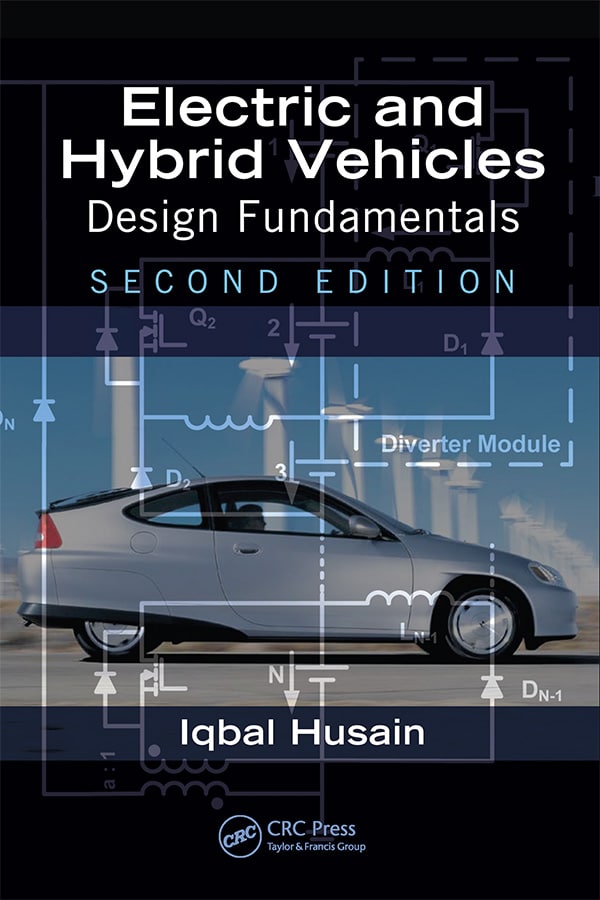
Dr. Iqbal Husain is the Director of the FREEDM Center and an ABB Distinguished Professor in the Department of Electrical and Computer Engineering at North Carolina State University. Previously, he served at the University of Akron for 17 years before joining NC State. He holds a Ph.D. (1993), M.S. (1989), and B.S. (1987) in Electrical Engineering from Texas A&M University and Bangladesh University of Engineering and Technology, respectively. His research focuses on power electronics, electric drives, and renewable energy systems, with applications in transportation, automotive, and aerospace. Notable contributions include advancements in electric machine design, inverter controls, and grid synchronization. He authored the textbook *Electric and Hybrid Vehicles: Design Fundamentals*, now in its third edition. Dr. Husain’s awards include the NSF CAREER Award (1997), SAE Vincent Bendix Award (2006), and IEEE Fellow (2009). His recent work includes developing AI-enabled tools for power grid cybersecurity and medium-voltage solid-state transformers for EV fast charging. He leads interdisciplinary projects at the FREEDM Systems Center, addressing challenges in clean energy and smart grid technologies.
Ben Seiyon Lee is an Assistant Professor in the Department of Statistics at George Mason University's College of Science. His work bridges computational statistics, climate modeling, and environmental risk assessment. Education: PhD in Statistics, Pennsylvania State University (2020) Lee specializes in computational methods for high-dimensional spatiotemporal data and uncertainty quantification in climate models. His research explores climate change impacts on extreme hydrological events, wildfire emissions, and medical decision-making. Recent publications focus on Bayesian spatiotemporal frameworks for extreme precipitation analysis, zero-inflated spatial models, and multisector uncertainty quantification. His work addresses challenges in flood risk assessment, agricultural yield projections, and healthcare compliance metrics.
Rachid Cherkaoui is a Senior Scientist at École polytechnique fédérale de Lausanne (EPFL), affiliated with the School of Engineering, specifically within the Department of Electrical Engineering. He is actively associated with research units SEL-ENS, EDEY-ENS, and DESL, contributing to the Distributed Electrical Systems Laboratory (DESL). His work focuses on advanced power system optimization, smart grids, and energy market modeling. Ph.D. in Electrical Engineering, EPFL, 1992 M.S. in Electrical Engineering, EPFL, 1983 Dr. Cherkaoui's research interests include electrical power and distribution systems, distributed generation, energy storage, electricity market deregulation, and power system vulnerability mitigation. His work bridges theoretical modeling and real-world applications, particularly in flexibility provision, grid resilience, and market integration of renewable energy. His recent publications (2020–2025) reflect a strong focus on smart grid technologies, energy storage integration, and market mechanisms. Key themes include optimal dispatch of hybrid systems, TSO-DSO coordination, frequency control, and stochastic optimization under uncertainty. His work is frequently published in top-tier journals such as IEEE Transactions on Power Systems and IEEE Transactions on Smart Grid. ABB Swiss Award '83 Senior Member, IEEE Member, CIGRE Task Forces C5-2 IEEE Swiss Chapter Officer since 2005 Dr. Cherkaoui actively supervises doctoral students and collaborates extensively with researchers like Mario Paolone. He has contributed to numerous projects funded by industry, CTI/Innosuisse, and Horizon 2020. His research includes experimental validation and real-time control systems, particularly in hydropower and battery storage applications. He is also involved in national and international energy strategy discussions, including Switzerland's path to carbon neutrality.
Ted Brekken is Professor of Energy Systems at Oregon State University, where he co-directs the Wallace Energy Systems and Renewables Facility (WESRF). His research advances renewable energy technologies with focus on wave energy conversion and grid integration. Current projects include control optimization for wave energy converters using machine learning, reinforcement learning for marine turbine durability, and hybrid simulations for floating offshore wind turbines. His work addresses critical challenges in power quality, fault resilience, and energy storage for marine renewable systems. Recent publications demonstrate innovation in real-time wave prediction, power electronics durability, and earthquake resilience for power grids. Brekken has received the NSF CAREER award and IEEE PES Outstanding Young Engineer honor for sustainable energy contributions. He teaches power electronics and energy conversion while leading DOE-funded marine energy initiatives.
Duminda Wijesekera serves as Professor in the Department of Cyber Security Engineering and Department of Computer Science at George Mason University, where he was inaugural chairman of the Cyber Security Engineering Department until December 2022. He concurrently held the position of visiting research scientist at the National Institute of Standards and Technology (NIST) from 2007-2022 and maintains status as a fellow at the Potomac Institute of Policy Studies. He leads the Mason Innovation Laboratory at Mason Square, driving translational research in cyber-physical security. His educational foundation includes: PhD in Computer Science, University of Minnesota (1997) PhD in Mathematical Logic, Cornell University (1990) BSc in Mathematics, University of Colombo Professor Wijesekera's research centers on cyber-physical system security , with pioneering work in Intelligent Transportation Systems spanning trains, aircraft, and connected vehicles. His digital forensics innovations establish frameworks for evidence-based scenario reconstruction and error management, while his formal methods research provides mathematical guarantees for safety-critical systems. Current projects address Next G-based edge services, digital twin vulnerability detection, and healthcare security architectures, consistently bridging theoretical rigor with real-world infrastructure protection. Analysis of his 2022-2025 publications reveals intense focus on autonomous vehicle security (38% of recent output), including traffic signal control optimization, ramming attack countermeasures, and CARLA-based scenario validation. Digital forensics using AI (20%) and secure manufacturing/edge computing (27%) constitute other major thrusts, demonstrating how formal verification and machine learning converge to solve complex cyber-physical security challenges across transportation, energy, and healthcare domains. His scientific recognition includes: CCI Impact Award (2022) for groundbreaking cyber-physical security contributions Fellowship at the Potomac Institute of Policy Studies for cybersecurity policy leadership Professor Wijesekera has secured substantial research funding through: NIST grants for health record security frameworks (2014-2015) US Department of Transportation projects on wireless frequency mapping for high-speed rail (2013-2014) Cyber Security Research Alliance funding for trust architectures in cyber-physical systems (2014) Commonwealth Cyber Initiative awards for autonomous vehicle security and energy-efficient manufacturing His industry partnerships with Honeywell and NIST ensure practical impact of theoretical research. The Mason Innovation Laboratory under his direction serves as an interdisciplinary hub for cyber-physical security, integrating researchers from computer science, electrical engineering, and policy studies to develop deployable solutions for transportation networks, power grids, and critical infrastructure protection.
Dr. Majid Pahlevani is an Assistant Professor at the Department of Electrical and Computer Engineering, Queen's University, affiliated with the Smith School of Engineering. He holds a Ph.D. from Queen's University (2012) and has prior roles as an Assistant Professor at the University of Calgary (2016–2019) and Chief R&D Engineer/VP of Technology at SPARQ Systems, Inc. (2011–2016). His research focuses on power electronics, renewable energy systems, smart grids, and energy storage, with a lab environment emphasizing interdisciplinary collaboration. He has authored over 130 publications, holds 50 U.S. patents, and serves as an Associate Editor for the IEEE Journal of Emerging and Selected Topics in Power Electronics. Education: Ph.D. (2012) – Queen's University; B.Sc./M.Sc. (2002) – Isfahan University of Technology. Research Interests: Power Electronics Technology, Renewable Energy Systems, Micro-Grids, Smart-Grids, Electric Vehicles, Energy Storage Systems, Solar Technology, LED Technology. His lab, ePOWER Lab, engages in industrial projects across these domains, fostering teamwork and cross-disciplinary innovation. Scientific Awards: Includes the Early Research Excellence Award (Alberta), Research Achievement Award (University of Calgary), Teaching Achievement Award, and IEEE Canada's Research Excellence Award. Current Supervision: Postdoctoral Fellows Laleh Saleh Ghadimi, Sergey Dayneko, and Pavel Linkov (2022). He leads the ePOWER Lab, collaborating with industry partners like Freescale Semiconductor and SPARQ Systems. Affiliations: Member of the IEEE Power Electronics Society and the Queen's Centre for Energy and Power Electronics Research.
Anh Tuan Le is an Associate Professor at the Department of Electrical Engineering, Chalmers University of Technology. He holds a PhD in Power Systems from Chalmers (2004) and a Master's in Energy Economics from the Asian Institute of Technology (1997). Specializes in power grid planning, electricity market modeling, and renewable energy integration Active in electric vehicle-grid interaction and battery storage systems Develops voltage stability solutions and decentralized control strategies His recent research focuses on: Flexibility markets for congestion management Machine learning applications in load forecasting Real-time security margin control using AI Key projects include: DigiRES (2024-2027): Digital integration of multi-energy flexibility POTENT-X (2024-2027): Port energy transition hubs FLEXIGRID (2019-2023): Distribution grid flexibility solutions
Dr Brandon M Grainger is an Eaton Faculty Fellow and Associate Professor of Electrical and Computer Engineering at the University of Pittsburgh’s Swanson School of Engineering, where he also directs the Electric Power Technologies Laboratory, serves as Associate Director of the Energy GRID Institute, and co-directs Pitt AMPED. A key architect of Pitt’s electric power program since 2008, he focuses on advanced power conversion, high-voltage electronics, wide-band-gap semiconductors, and aerospace power systems. Education PhD, Electrical Engineering (Power Conversion), University of Pittsburgh, 2014 MS, Electrical Engineering, University of Pittsburgh, 2011 BS, Mechanical Engineering & Minor in Electrical Engineering, University of Pittsburgh, 2007 Executive Education Certificate, Tepper School of Business, Carnegie Mellon University, 2019 Research Focus Dr Grainger’s work lies at the intersection of power electronics, high-voltage engineering, and sustainable energy systems. He specializes in medium- and high-voltage power electronics (HVDC, STATCOM), resonant converters, and ultra-high-power-density designs leveraging SiC and GaN semiconductors. His investigations extend to electric-vehicle traction drives, solid-state transformers, optimized magnetics for aerospace applications, and resilient microgrids. He and his students routinely collaborate with NASA JPL, Johns Hopkins APL, Honeywell Aerospace, and the Naval Research Laboratory, leveraging Pitt’s NSF SHREC center to push the boundaries of power conversion in space and defense systems. Selected Research Themes High-frequency, high-density DC/DC converters for satellite power systems Radiation-tolerant GaN converters and point-of-load power stages Medium-voltage testbed development (13.8 kV, 5 MVA) Rare-earth-free permanent-magnet machine topologies Model-predictive control of multi-phase drives and microgrids Honors & Awards 2024 IEEE Region 2 Outstanding Educator Award 2024 Pitt STRIVE Outstanding DEI Service Award 2019 ESWP Engineer of the Year 2019 ASEE 2nd Place Best Paper Award 2019 SRI Undergraduate Best Mentor Award Richard K. Mellon Endowed Graduate Fellowship National Academies of Science & Engineering Ambassador Senior Member, IEEE Grants & Industry Partnerships Dr Grainger’s research has been continuously funded by federal agencies and industry partners including NASA JPL, Johns Hopkins APL, Honeywell Aerospace, the Naval Research Laboratory, Eaton, and the National Science Foundation through the SHREC Center. These awards support graduate students and post-docs working on next-generation power systems for aerospace, naval, and terrestrial applications. Laboratories & Teams Director, Electric Power Technologies Laboratory (EPTL) Associate Director, Energy GRID Institute Co-Director, Pitt AMPED (Advanced Multimodal Power and Energy Development) Faculty Affiliate, NSF SHREC Center