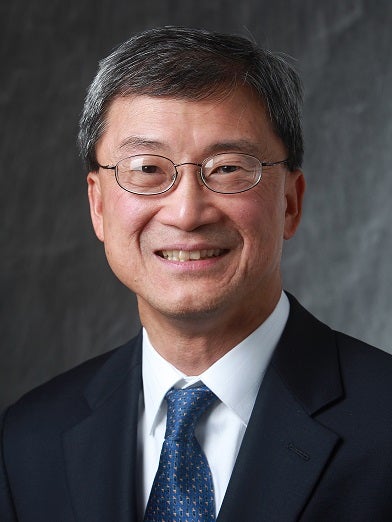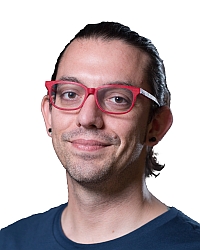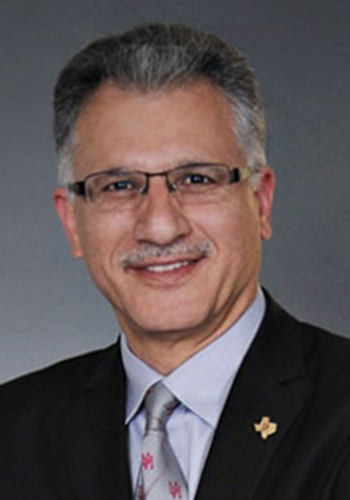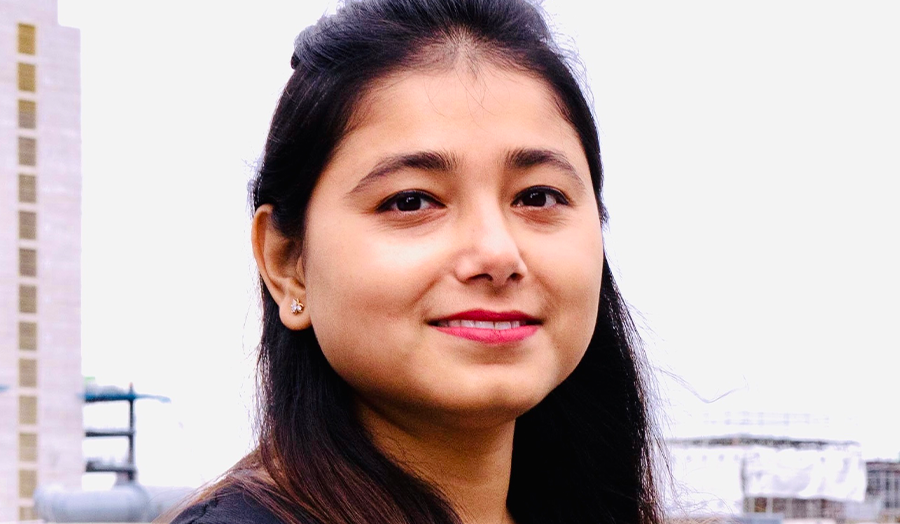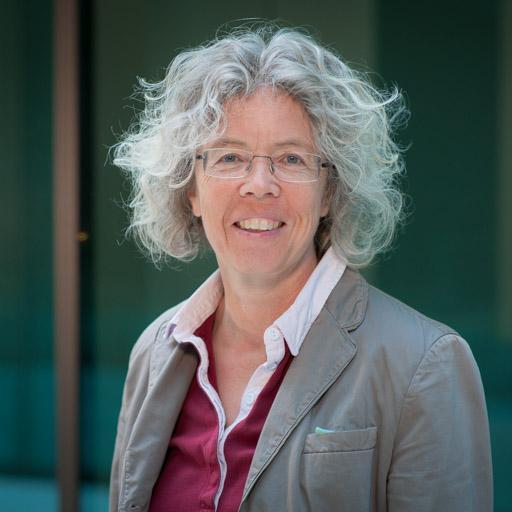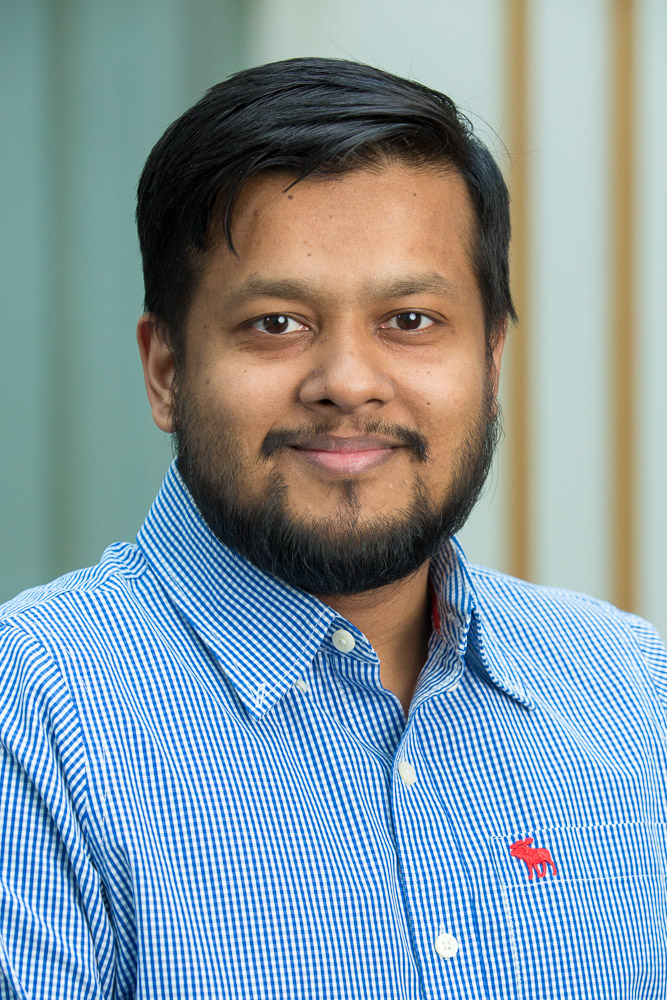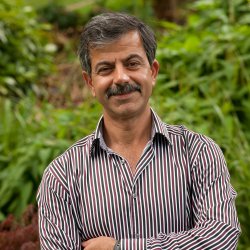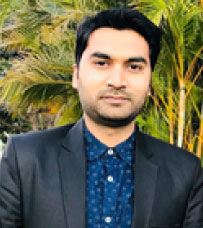
Fareed Ud-Din is Senior Lecturer in Computer Science at the University of New England's School of Science and Technology. His research develops computational frameworks for Industry 4.0 applications including the Extended Agent-Oriented Smart Factory (xAOSF) for small-medium enterprises. Current projects apply AI and machine learning to healthcare project management, medicinal plant identification, and organizational agility prediction. He leads research on distributed systems and cyber-physical systems integration. Ud-Din has received multiple academic awards including Best Research Paper (2018) and Best Conference Presentation (2020). He teaches programming, software engineering, and project management courses.
Kaiqi Xiong is a Professor at the University of South Florida, affiliated with the Florida Center for Cybersecurity, the Department of Mathematics and Statistics, and the Department of Electrical Engineering. He holds dual Ph.D. degrees in Computer Science (North Carolina State University) and Mathematics (Claremont Graduate School), with expertise in computer and network security, distributed systems, and mathematical modeling. Research Interests Security Assurance and Performance Optimization via Software Defined Networking (SDN) Cyber Physical Systems (Power Grids, Emergency Response, Transportation) Internet of Things (IoT) and Smart Cities Applied Cryptography and Theoretical Foundations Mathematical Modeling for Health-Care Problems Recent Publications focus on SDN-based security, IoT, cloud computing, and cyber-physical systems, with applications to smart cities, power grids, and emergency response. His work combines experimental validation and theoretical modeling. Awards Best Demo Award, GEC22 and US Ignite Application Summit (2015) Best Paper Award, IEEE DASC (2014) Fellow, AFRL Summer Faculty Research Program Faculty Teaching Excellence Award & Student Recognition Award, Texas A&M (2010) Invention Achievement Award & Publication Award, IBM (2003–2004) Professional Activities include Steering Committee Co-Chair (CNERT 2014–2016), TPC Chair (FGRE, CNERT, ICA3PP), and leadership roles in IEEE and ACM conferences. His research is funded by NSF, AFRL, Amazon AWS, FC2, and ONR.
Joe H. Chow is an Institute Professor in the Department of Electrical, Computer, and Systems Engineering at Rensselaer Polytechnic Institute (RPI). He is affiliated with the Center for Future Energy Systems (CFES) and the Center for Materials, Devices, and Integrated Systems (CMDIS). BSEE and B.Math, University of Minnesota, Minneapolis-St. Paul M.S. and Ph.D. in Electrical Engineering, University of Illinois, Urbana-Champaign Chow’s research focuses on power system dynamics and control, with specializations in synchrophasor technology, control of renewable resources, voltage stability analysis, and computational tools for large-scale power systems. His work addresses challenges in grid resilience, stability enhancement, and real-time monitoring for systems with high renewable penetration. His recent publications emphasize data-driven modeling techniques, oscillation source detection, inertia assessment, and stability control strategies for power systems. These works span applications of machine learning, signal processing, and mathematical optimization to ensure grid reliability. 1992 IEEE Fellow for contributions to control systems 2017 US National Academy of Engineering (NAE) member 2020 Foreign Fellow, Chinese Society of Electrical Engineering 2014 IEEE Charles Concordia Power System Engineering Award 2022 IEEE Outstanding Power Engineering Education Award Chow contributes to power systems through leadership in the ALSET Lab, which develops precise timing and communication solutions for digital power grids. His work bridges academic research and practical industry applications, particularly in renewable energy integration and grid stability.
Luigi Vanfretti is a Full Professor in the Department of Electrical, Computer, and Systems Engineering at Rensselaer Polytechnic Institute (RPI), leading the ALSETLab. His research focuses on energy systems, cyber-physical systems (CPS), aircraft electrification, and synchrophasor technologies. He holds an IEEE Senior Member designation and Modelica Association membership. Previously, he served as an associate professor at RPI and held roles at KTH Royal Institute of Technology in Sweden and Statnett SF in Norway. Education includes a Ph.D. and M.Sc. in Electric Power Engineering from RPI, and a Visiting Researcher stint at the University of Glasgow. His work spans power grid dynamics, renewable integration, and hardware-in-the-loop testing. Notable projects include NSF/DOE-funded initiatives on grid resilience, HVDC systems, and smart inverter protocols. He has held visiting positions at institutions like École Centrale de Lyon and Mitsubishi Electric Research Laboratories (MERL), contributing to collaborative research in building energy systems and grid-interactive technologies. Research interests emphasize CPS modeling, synchrophasor data analytics, and machine learning applications in power systems. His ALSETLab develops open-source tools like OpenIPSL and S3DK for power system simulation. Recent publications address generative networks for building scenarios, wideband impedance passivation, and oscillation analysis in power grids. Collaborations include industry partners like Dominion Energy and academic institutions worldwide.
Heidar A. Malki is a Professor of Engineering Technology and Senior Associate Dean of the Technology Division at the Cullen College of Engineering, University of Houston (UH). He holds a joint appointment in the Electrical and Computer Engineering Department and has over three decades of academic and research experience. He earned his Ph.D. in Electrical Engineering from the University of Wisconsin-Milwaukee (1990). His roles include Department Chair (2009–present) and Associate Dean for Research (2004–2009). He is a Senior Member of IEEE and serves as an Associate Editor for the IEEE Transactions on Fuzzy Systems. Education: Ph.D. in Electrical Engineering, University of Wisconsin-Milwaukee (1990) M.S. in Electrical Engineering, University of Wisconsin-Milwaukee (1985) B.S. in Electrical Engineering, University of Wisconsin-Milwaukee (1983) Research Interests: Dr. Malki specializes in control systems, neural networks, fuzzy logic, and smart grid optimization. His work bridges academic research with industrial applications, particularly in the energy and telecommunications sectors. Notable areas include neuro-fuzzy controllers, power system dynamics, and cyber-security for critical infrastructure. He has collaborated with organizations like Southwestern Bell and the oil/gas industry on neural network applications. Publications & Awards: With over 100 publications, Dr. Malki’s work spans journals like IEEE Transactions on Fuzzy Systems and International Journal of Bifurcation and Chaos . His awards include the Fluor Daniel Outstanding Faculty Award (2001, 2003) and recognition in Who's Who in America . He has authored textbooks on control systems and contributed to academic volumes on fuzzy logic applications. Grants & Leadership: He secured funding for initiatives like the Houston Information Technology Workforce Certification Center and led conferences such as the 1997 IEEE International Conference on Neural Networks. His educational contributions include pioneering web-based control systems laboratories and interdisciplinary graduate programs in technology. Labs & Teams: His research teams focus on advanced wireless sensor networks, mechatronics, and energy system optimization. Collaborations extend to NASA and the U.S. Department of Energy, emphasizing applied engineering solutions for real-world challenges.
Nur Imtiazul Haque is a Visiting Assistant Professor at the University of Cincinnati's School of Information Technology within the College of Education, Criminal Justice, and Human Services (CECH). He holds a Ph.D. and M.Sc. in Electrical and Computer Engineering and Computer Engineering from Florida International University, USA, and a B.Sc. in Computer Science and Engineering from Khulna University of Engineering and Technology (Bangladesh). Previously, he served as a lecturer at Daffodil International University and a graduate research assistant in the Analytics for Cyber Defense lab, where he contributed to NSF and DOE projects. His research focuses on securing cyber-physical systems through formal methods, machine learning, and mathematical optimization, particularly in smart healthcare, smart homes, and industrial IoT. He has published 12 peer-reviewed papers, one book chapter, and patented a tool. Notable achievements include the Best Paper Award at IEEE/IFIP DSN 2023 and the Dissertation Year Fellowship Award. Dr. Haque has organized the International Workshop on AIOTS as publication chair and is an active IEEE member. His work addresses critical infrastructure vulnerabilities, with contributions to frameworks like SHATTER, PHASE, and iDDAF for detecting and mitigating advanced cyber threats.
Dr. Maitreyee Dey is a Senior Lecturer in Computer Science and Applied Computing at London Metropolitan University. She leads the GENESIS Research Lab and serves as Deputy Director in Business Engagement at the Cyber Security Research Centre. Her research focuses on machine learning applications in smart grids, healthcare technology, IoT security, and HVAC systems optimization. She has pioneered projects involving fault detection in HVAC terminal units, cybersecurity compliance for IoT devices, and non-invasive medical diagnostics using microwave technology. Her work integrates machine learning with domain-specific challenges such as voltage anomaly detection in solar farms, predictive modeling for early-stage diabetes, and grid stability analysis using micro-PMU data. She also explores educational technology innovations like the VEMeter tool for virtual classroom participation tracking and AI-driven student engagement strategies. Dr. Dey has contributed to international conferences and authored numerous papers on topics ranging from smart building automation to radiation-free medical imaging systems. Her interdisciplinary approach bridges computer science, engineering, and healthcare, with a focus on real-world impact through industry partnerships and technology commercialization.
Jianying Zhou serves as Professor and Centre Director at Singapore University of Technology and Design (SUTD), leading the iTrust Centre for Research in Cyber Security. He holds a PhD in Information Security from Royal Holloway, University of London and maintains active leadership roles including co-founding ACNS, chairing ACM AsiaCCS steering committee, and serving on Asiacrypt steering committee. PhD in Information Security, Royal Holloway, University of London His research spans applied cryptography, cyber-physical systems security, and mobile/wireless security with emphasis on industrial control systems, blockchain, and automotive networks. Recent work focuses on practical security solutions for critical infrastructure including maritime systems, smart grids, and IoT ecosystems, combining cryptographic innovation with real-world deployment challenges. Analysis of his 2025 publications reveals concentrated efforts in blockchain security (selfish mining, payment channels), industrial IoT protection (PLC authentication, CAN bus intrusion detection), and privacy-preserving machine learning (federated learning attacks/defenses). Maritime cybersecurity and automotive security represent rapidly growing application domains reflecting real-world critical infrastructure needs. Scientific recognition includes: ESORICS Outstanding Contribution Award (2020) ACM Distinguished Member status As iTrust Centre Director, Zhou oversees multi-institutional research teams developing security frameworks for critical infrastructure. While specific student advising details aren't public, his leadership in major conferences indicates extensive mentorship activities. His research program demonstrates strong industry collaboration focus with practical security implementations for maritime, healthcare, and industrial systems. iTrust operates as SUTD's flagship cybersecurity research center under Zhou's direction, bringing together interdisciplinary teams to address cyber-physical security challenges through testbed development, protocol design, and risk assessment frameworks for critical infrastructure protection.
Jaeung Sim is an Assistant Professor at the University of Connecticut's School of Business, Department of Operations and Information Management. His research focuses on understanding consumer interactions with information technology, digital platforms, and energy systems, with emphasis on sustainable operations and policy implications. He holds a Ph.D. in Management Engineering from KAIST and a B.S. in Industrial & Management Engineering (Summa Cum Laude) from POSTECH. Prior to academia, he served in the Republic of Korea Army as a sergeant and published data analytics work on music streaming trends. Research interests include: Online platform governance and consumer behavior Digital marketing strategies Energy economics and policy analysis Econometric field experiments Data-driven decision-making in operations Recent work explores topics like AI ethics in knowledge sharing, autocomplete impact on search behavior, smart metering effectiveness, and racial disparities in energy burdens. His music analytics research examines pandemic effects on streaming consumption and live-streaming economies. Teaching includes courses on data mining/business intelligence (OPIM 5671) and Python-based data science (OPIM 5512). Active in UConn's Stamford campus, he contributes to initiatives like decentralized AI education programs.
Marina Astitha is an Associate Professor at the University of Connecticut's College of Engineering , specifically within the School of Civil and Environmental Engineering . Her research bridges atmospheric science with practical applications in energy systems and environmental management. Ph.D. in Physics from the University of Athens (2007) Specializes in high-resolution weather modeling and machine learning integration Research Interests include: Atmospheric Physics, Dynamics, and Chemistry Extreme Weather Event Prediction Multi-Media Modeling Systems Uncertainty Quantification in Atmospheric Models Climate Change Impacts on Wind Energy Resources Real-Time Weather and Air Quality Forecasting Scientific Awards : No awards explicitly mentioned in the provided data, but her publications and research activities indicate significant contributions to meteorology and environmental engineering fields. Advising and Grants : Specific details about grants and students are not provided in the available information, though her research focus suggests involvement in funded projects related to climate change, renewable energy, and environmental modeling. Labs and Teams : Leads the Atmospheric Modeling Group at UConn, integrating numerical weather prediction with machine learning techniques for environmental and energy applications.
Prof. Ursula Eicker is the Canada Excellence Research Chair in Smart, Sustainable and Resilient Cities and Communities at Concordia University , leading cutting-edge research in urban energy systems. Her work integrates 3D city modeling, renewable energy systems, and sustainable transport to develop zero-carbon city strategies. PhD in Solid State Physics (Heriot-Watt University) Habilitation in Renewable Energy Systems (Technische Universitat Berlin) Research Interests focus on urban simulation platforms, district energy networks, and climate-resilient infrastructure. The INSEL4Cities platform enables holistic urban modeling for building demands, transportation, and greenery. Her Residential Densification studies demonstrate 65% energy reduction through retrofits and solar integration. Recent publications explore urban solar shading , transactive energy systems , green infrastructure equity , and decentralized hydrogen production . Awards include the German-African Innovation Incentive and recognition for photovoltaic research in Egypt. Over 50 graduate students in her lab examine zero-carbon pathways. Teaches ENCS 691 on urban energy systems. Secured 10M CAD for the CERC chair and multiple grants. Co-Director of Concordia's Next Generation Cities Institute .
Emmanuel Stefanakis is a Professor and Department Head of Geomatics Engineering at the Schulich School of Engineering, University of Calgary. He holds a PhD in Electrical and Computer Engineering (National Technical University of Athens, 1997), an MScE in Geodesy and Geomatics Engineering (University of New Brunswick, 1994), and a Dipl.Eng in Rural and Surveying Engineering (National Technical University of Athens, 1992). His research focuses on Geospatial Data Science, Discrete Global Grid Systems (DGGS), GeoAI, and applications of Geomatics in natural hazards, transportation, and climate change . He has led over 140 student projects and authored/co-authored five textbooks and 150+ articles. Notable awards include the 2023 Canadian Cartographic Association’s Award of Distinction and the 2023 UCalgary Teaching Excellence Award. Recent articles emphasize high-performance trajectory analysis, DGGS integration, and geospatial quantum computing . His work bridges theoretical advancements with practical tools for flood modeling, epidemiology, and urban planning. Grants include NSERC Discovery Grants and collaborations with industry partners like McElhanney Ltd. Professional memberships span the Canadian Institute of Geomatics, Canadian Cartographic Association, and APEGA. He served as Editor-in-Chief of Cartographica (2014–2022) and actively contributes to international conferences on geoinformatics. His educational initiatives include innovative course designs in online and distance learning. Current roles include leadership in the HALOS and Geospatial Quantum Computing projects, advancing geomatics engineering education in the digital era.
Ashfakuddin Rubel, PhD, is an Associate Teaching Professor in the Department of Economics at the Faculty of Business and Information Technology (FBIT), Ontario Tech University since 2013. He holds a PhD in Economics from York University, specializing in development and environmental economics. His research focuses on development economics, environmental economics, applied microeconomics (with emphasis on gender and women’s empowerment), and policy-oriented analysis. Dr. Rubel has extensive teaching experience, having instructed undergraduate courses across multiple institutions (Schulich School of Business, York University, University of Guelph-Humber) as a part-time lecturer. He also taught economics in the MBA program at Schulich School of Business. His pedagogical interests include linking theoretical concepts to real-world applications, particularly in development economics, natural resource economics, and environmental policy. His research spans topics such as sustainable transportation infrastructure, supply chain resilience, and environmental disclosure policies. Recent work explores multi-objective optimization for EV charging stations, risk-averse supplier strategies, and recovery frameworks for supply chain disruptions. These studies emphasize practical solutions for economic challenges while prioritizing environmental and social equity. Dr. Rubel’s contributions extend to curriculum development and experiential learning initiatives within FBIT, fostering analytical skills in students through data-driven problem-solving. His office is located in the Business and Information Technology Building, Room 2024, North Oshawa campus.
Dr. Long Zhang is a Senior Lecturer in the Department of Electrical and Electronic Engineering at the University of Manchester. His research focuses on data-driven intelligence and control systems, including machine learning, neural networks, and their applications in renewable energy, robotics, and transportation. He leads the first industrial-scale wind turbine pitch bearing and blade laboratory at the university and directs the MSc program in Advanced Control and System Engineering. His work is supported by over £2.5m in research funding from EPSRC, Innovate UK, and industry partners. Research interests include data-driven modeling, system identification, wind turbine condition monitoring, and smart device design. His group has supervised 12 PhD students, 50 MSc students, and 50 undergraduate projects. Key contributions include fault diagnosis methodologies for wind turbines and robotics, and predictive maintenance frameworks using advanced signal processing and machine learning techniques. Recent publications highlight advancements in autonomous system fault detection, energy grid flexibility mechanisms, and wave energy converter monitoring. Dr. Zhang collaborates with interdisciplinary teams across robotics, aerospace, and digital futures, contributing to UN Sustainable Development Goals related to affordable energy and climate action.
Dr. Haitham Cruickshank is a Professor at the University of Surrey, affiliated with the Institute for Communication Systems within the School of Computer Science and Electronic Engineering. His expertise spans cybersecurity, IoT, vehicular networks, blockchain, and delay-tolerant networking. He holds a PhD, MSc, and BSc in relevant disciplines. His research focuses on enhancing security and privacy in emerging technologies such as smart grids, 5G-IIoT, and vehicular communication systems. He has extensively explored federated learning, intrusion detection systems, and blockchain-based solutions for privacy preservation and authentication. Recent work includes secure battery swapping protocols and mesh connectivity for smart meters. His publications reflect a strong emphasis on practical applications of theoretical concepts, addressing challenges in distributed networks, edge computing, and hybrid satellite-terrestrial systems. Collaborations with industry and academia highlight his commitment to bridging research and real-world implementation. Key contributions include frameworks for secure key management, trust models in disaster communication networks, and QoS optimization in heterogeneous networks. His work often integrates interdisciplinary approaches to tackle complex security and efficiency challenges in modern communication systems.