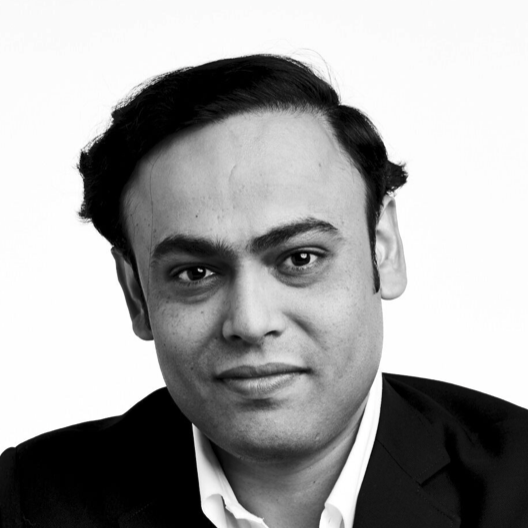
Henrik Sandberg is a Professor at the Division of Decision and Control Systems , KTH Royal Institute of Technology , Stockholm, Sweden. He holds the title of Deputy Head of Division and is affiliated with the School of Electrical Engineering and Computer Science . Education: MSc in Engineering Physics (1999) PhD in Automatic Control (2004) from Lund University Postdoctoral position at Caltech (pre-2007) Research Interests: Focus on cyber-physical systems security , power systems , model reduction , and fundamental limitations of control systems . Key sub-areas include attack detection , networked control , privacy-preserving estimation , and resilient control architectures . Publications: Over 150 papers across IEEE Transactions and Automatica , covering topics like stealthy attacks , distributed control , LQG optimization , and thermodynamic costs in filtering . Recent work includes LWE-based encrypted control and Bayesian deception mechanisms . Scientific Awards: Best Student Paper Award Finalist at IEEE CASE 2014; Best Student-Paper Award at IEEE CDC 2004. Grants & Projects: Leads the DYNACON project (WASP Cybersec cluster) and collaborates on CERCES (critical infrastructure resilience). Serves as examiner for multiple advanced courses in cybersecurity and control systems. Contact: Email: hsan@kth.se Phone: +46 (0)8 790 7294 Room: A:607, Malvinas Väg 10, Stockholm
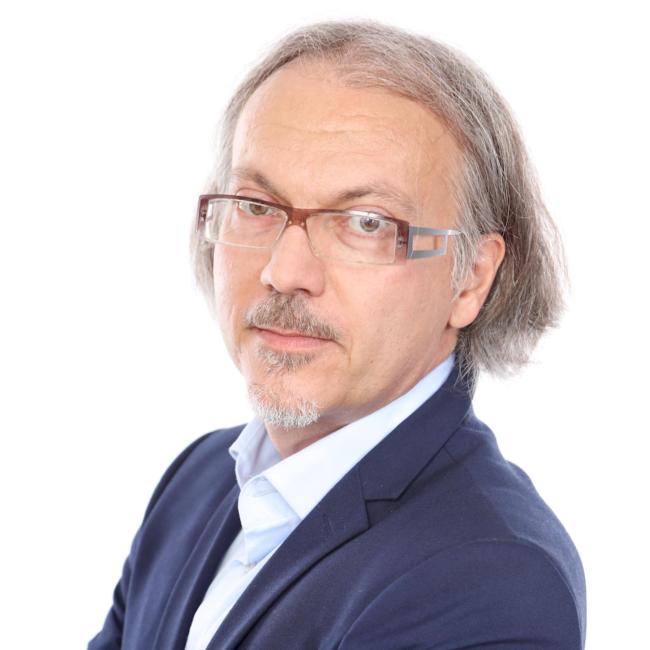
Lina Bertling Tjernberg is a Professor at the Department of Electrical Engineering, KTH Royal Institute of Technology, and Deputy Head of the School of Electrical Engineering and Computer Science (EECS) with responsibility for research conditions and impact. She served as Director of KTH's Energy Platform during 2018-2024 and holds memberships in IVA (Swedish Royal Academy of Engineering Sciences) and the IEEE Power & Energy Society. Research Focus: Applying mathematics (statistics, optimization, life cycle assessment) to enhance reliability and predictive maintenance in electric power systems, with emphasis on future electricity grids integrating microgrids, battery storage, HVDC, nuclear/pumped/hydro/wind/solar power, hydrogen, and electrified transport. Collaborations: Engaged with Comillas Pontifical University (Madrid), Addis Ababa University, Norwegian University of Science and Technology (NTNU), and IEA Wind. Key Research Trends: Recent articles highlight advancements in microgrid control (2025), SMR nuclear energy integration (2025), AI-driven asset management (2024), hydrogen sector coupling (2024), and renewable forecasting techniques (2024). Awards: 2021 Power Woman of the Year 2022 Energy Power List (Sweden’s top 20 energy influencers) Leadership Roles: Swedish Electromobility Center (SEC) board Chair of Swedish Electrical Standards (SEK Svensk Elstandard) Member, IEEE PES ISGT Europe steering committee
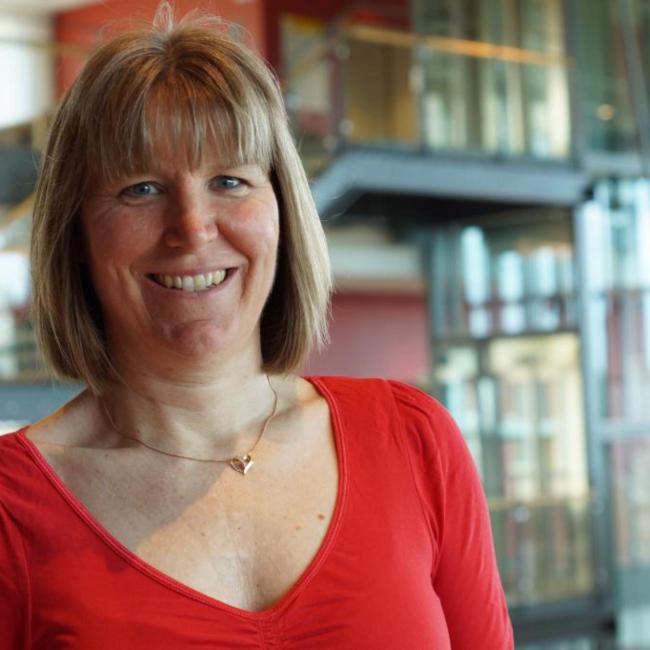
Olof Runborg is a Professor in Numerical Analysis at the Royal Institute of Technology (KTH) in Stockholm, Sweden. He works in the Division of Numerical Analysis, Optimization and Systems Theory within the Department of Mathematics at KTH. His research focuses on developing and analyzing numerical methods for partial differential equations, particularly for wave propagation problems. His educational background includes: MSc in Electrical Engineering from KTH (1992) BSc in Economics & Business Administration from SSE (1994) PhD in Numerical Analysis/Applied Mathematics from KTH (1998) Postdoc at Paris VI University (1999) Postdoc at Princeton University's Program in Applied and Computational Mathematics (2000-2001) Became Docent at NADA in 2003 Appointed Professor at KTH in 2010 Professor Runborg's research centers on the numerical treatment of partial differential equations, with special emphasis on wave propagation problems. His work spans multiple areas including high-frequency waves, multiscale phenomena, numerical homogenization, uncertainty quantification, multiresolution analysis, Gaussian beams, and mesh generation. A recurring theme in his research is developing methods to solve computationally expensive problems more efficiently while maintaining accuracy. His approach often involves coupling different numerical methods or reformulating equations to create more efficient computational approaches. His research has applications across physics and engineering domains where wave phenomena are important. An analysis of his recent publications (2015-2025) shows continued focus on high-frequency wave propagation with expanding applications to areas like the Landau-Lifshitz equation for magnetic materials and elastic wave propagation. His work bridges theoretical numerical analysis with practical computational techniques, often developing novel methods like the WaveHoltz iteration for solving the Helmholtz equation. The publications demonstrate increasing attention to uncertainty quantification and multiscale methods while maintaining strong theoretical foundations in error analysis. Professor Runborg teaches several courses at KTH including Numerical Methods (basic course), Applied Numerical Methods, Numerical Algorithms for Data-Intensive Science, and Selected Topics in Numerical Analysis II. He serves as examiner for degree projects in Scientific Computing. His teaching reflects his research expertise in numerical methods and computational mathematics, providing students with both theoretical foundations and practical implementation skills. Beyond his core research, Professor Runborg has engaged in interesting side projects, such as his analysis of 'Numbers on the Web' where he investigated the frequency of numbers 11-1000 in web content, revealing patterns related to dates, time, computer systems, and cultural phenomena. This demonstrates his broader interest in data analysis and computational approaches to understanding patterns in information.
Lars Nordström is a Professor at the Division of Electric Power and Energy Systems within KTH Royal Institute of Technology, Stockholm, Sweden. His work bridges control systems , communication networks , and power systems , with a focus on future architectures, functionality, and quality aspects of ICT for power grid operations. He has led initiatives such as the Swedish Centre of Electric Power Engineering and served as Thematic Leader for Smartgrids in KIC InnoEnergy. In 2014, he was a Visiting Professor at Washington State University. Education : Ph.D., MSc.EE Nordström's research explores the intersection of smart grids , machine learning , and cybersecurity for power systems. Key areas include: Wide-Area Monitoring and Control (WAMC) systems Decentralized control strategies for DC microgrids Impedance modeling using neural networks Data-driven methods for islanding detection ICT reliability and protocol design for grid operations His recent publications emphasize machine learning applications in power systems, including LSTM networks for EV charging management, graph attention networks for stability monitoring, and digital twin approaches for cyber-attack mitigation. These works span disciplines such as Smart Grids, Power Electronics, and Data Science. Scientific Recognitions : Senior Member, IEEE Senior Member, CIRED Senior Member, Cigre Past Chairman, Swedish IEC TC57 Mirror Committee Nordström actively teaches and examines graduate courses like Communication and Control in Electric Power Systems and Computer Applications and Machine Learning in Electric Power Systems . His work influences industry practices through collaborations on digital substations, energy market analysis, and resilience strategies.
Saurabh Amin is a Professor in the Department of Civil and Environmental Engineering at the Massachusetts Institute of Technology (MIT), where he also serves as the Edmund K. Turner Professor and Undergraduate Officer. He is a Principal Investigator at the Laboratory of Information and Decision Systems and holds affiliations with the Operations Research Center and the Center for Computational Science and Engineering. His educational background includes: B.Tech. 2002, Indian Institute of Technology (IIT) Roorkee M.S. 2004, University of Texas (UT) Austin Ph.D. 2011, University of California (UC) Berkeley Saurabh Amin's research focuses on the design and control of infrastructure systems using game theory and optimization in networks. His work spans three main areas: resilient network control, information systems and incentive design, and optimal resource allocation in large-scale infrastructure systems. By concentrating on critical infrastructure domains including highway transportation, electric power distribution, and urban water networks, his research develops innovative theory and tools to enhance system performance against both stochastic and adversarial disruptions. His approach involves modeling cyber-physical interactions in infrastructures to assess vulnerabilities, developing detection and response tools for failures at various scales, and designing economic incentive schemes that improve aggregate public good while accounting for dependencies and private information among strategic entities. Amin's work bridges mathematical systems theory with practical civil engineering applications, creating a rigorous theoretical foundation for infrastructure resilience that addresses diverse failure mechanisms from natural disasters to deliberate malicious actions. His recent publications demonstrate a strong focus on decarbonization of energy systems, resilient infrastructure planning under climate uncertainty, optimization methods for complex networked systems, and game-theoretic approaches to sustainable infrastructure management. His work increasingly integrates artificial intelligence and machine learning techniques with traditional control theory to address contemporary challenges in infrastructure resilience and sustainability. The research shows a clear trajectory toward addressing climate change impacts on infrastructure systems while maintaining economic efficiency and operational reliability. Professor Amin has received numerous prestigious awards and honors: Common Ground Excellence in Teaching Award, 2025 HSCC Test-of-Time Award, 2024 MIT CEE, Distinguished Service and Leadership Award, 2023 Samuel M. Seegal Prize (SoE) – inspiring students in pursuing and achieving excellence, 2022 Earll M. Murman for Excellence in Undergraduate Advising, 2022 C3.ai Digital Transformation Institute Research Award, 2020 MIT, Ole Madsen Mentoring Award, 2020 MIT, Energy Initiative Research Award, 2020 National Academy of Engineering, China-America Frontiers of Engineering Symposium speaker, 2019 MIT, Robert N. Noyce Career Development Professor, 2015-2018 Google Faculty Research Award, 2015 National Science Foundation CAREER Award, 2015 Siebel Energy Institute Research Award, 2015 MIT, Solomon Buchsbaum AT&T Research Fund Award, 2012 Professor Amin has been actively involved in significant research projects including the C3.ai DTI project on Causal Reasoning for Real-Time Attack Identification in Cyber-Physical Systems and another on Learning in Routing Games for Sustainable Electromobility. He serves as the chief scientist on multi-institutional NSF grants, including the $9 million Foundations of Resilient Cyber-Physical Systems (CPS) project. His teaching portfolio includes courses such as 1.008 Engineering for a Sustainable World, 1.104 Sensing and Intelligent Systems, 1.020 Engineering Sustainability: Analysis and Design, and 1.208 Resilient Networks. As Undergraduate Officer, he plays a key role in shaping the educational experience for civil and environmental engineering students at MIT. Professor Amin leads the Resilient Infrastructure Networks Lab at MIT, where his team develops theoretical foundations and practical tools for infrastructure resilience. The lab focuses on the intersection of control theory, game theory, and optimization applied to cyber-physical infrastructure systems. Current research directions include pandemic-resilient urban mobility and hurricane-resilient smart grid operations, reflecting the lab's commitment to addressing pressing societal challenges through rigorous systems engineering approaches.
Patrik Hilber is a Professor at KTH Royal Institute of Technology, working in the Division of Electromagnetic Engineering and Fusion Science within the School of Electrical Engineering and Computer Science (EECS). He serves as Deputy Director of First and Second Cycle Education at EECS and heads the QED AM research group. He is also a board member of YH-electrical engineering. Research Interests: His research focuses on reliability engineering, asset management, maintenance optimization, and smart grid technologies in electric power systems. Key areas include transmission and distribution systems, dynamic line and transformer rating, wind power integration, multiobjective optimization, condition monitoring, and data quality in power systems. He applies advanced modeling and data-driven approaches to improve power system planning, operation, and resilience. The recent trends in his publications (2020–2025) highlight a strong emphasis on dynamic rating technologies (DLR and DTR), data quality and machine learning applications in outage analysis, reliability-centered planning for wind farms and distribution systems, and the integration of renewable energy and electric vehicles. His work bridges theoretical modeling with practical utility applications. Teaching and Academic Leadership: He is examiner and course responsible for several degree projects in electrical engineering, power systems, and energy innovation. He also teaches courses on reliability evaluation, asset management, and innovation in electric power engineering. Publications and Books: He has authored a book titled Reliability Analysis and Asset Management Applied to Power Distribution (2014) and a book chapter on cable segment replacement optimization. His scholarly output includes numerous peer-reviewed articles in leading journals such as IEEE Transactions on Power Systems , Reliability Engineering & System Safety , and Applied Energy . Education: He holds a Ph.D. (2008), a Licentiate degree (2005), and an M.Sc. (2000), all from KTH. He became a Docent (Associate Professor) in 2014.
Tobias Oechtering is a Professor at the Division of Information Science and Engineering within the School of Electrical Engineering and Computer Science at KTH Royal Institute of Technology. His research focuses on information theory, privacy-preserving technologies, statistical signal processing, machine learning, and smart grid systems. He has held academic positions at KTH since 2008, advancing from Post-Doctoral Researcher to Assistant Professor (2010–2013), Associate Professor (2013–2018), and Professor (2018-present). He has supervised over 20 PhD students and contributed to numerous postdoctoral programs. Research Interests: - Network information theory and physical-layer security - Privacy mechanisms with provable guarantees - Distributed statistical inference and sensor calibration - Reinforcement learning and privacy-aware machine learning - Smart grid privacy and energy management - Wireless communication algorithms and signal processing - Networked control systems and stability analysis He currently supervises 7 PhD students and hosts 3 postdocs. His work has led to over 150 peer-reviewed publications, with recent contributions in privacy-preserving smart grid strategies, adversarial inference control, and information-theoretic security. He has served as editor for IEEE Transactions on Information Forensics and Security and held leadership roles in KTH's Digitalisation Research Platform.
Anna-Karin Tornberg is a Professor in Numerical Analysis at the Department of Mathematics, KTH Royal Institute of Technology. She holds positions as Vice Chair of the Department of Mathematics and previously served as Head of the Numerical Analysis division (2011–2023). Her research focuses on numerical methods for PDEs, particularly boundary integral methods for fluid flows involving particles and drops. She is active in the Linne FLOW Centre and Swedish e-Science Research Center (SeRC). Key roles include membership in the Royal Swedish Academy of Engineering Sciences (IVA), Royal Academy of Sciences, and receipt of awards like the Göran Gustafsson Prize (Mathematics, 2014). She has advised numerous PhD students and postdocs, including current supervisees Anna Broms, David Krantz, and Emanuel Ström. Her work spans theoretical, computational, and applied fluid dynamics with emphasis on microfluidics and high-accuracy numerical techniques. Education includes a PhD in Numerical Analysis from KTH (2000) followed by postdoctoral positions at NYU’s Courant Institute. Promoted to Full Professor at KTH in 2012. Service roles include membership in KTH’s University Board, Faculty Council, and editorial roles at Advances in Computational Mathematics and BIT Numerical Mathematics . Active in international conferences, delivering plenary/invited lectures at ICIAM, ECM, and ICM. Research group projects include development of fast numerical methods for microfluidics and molecular dynamics simulations. Current openings for PhD candidates in numerical methods for non-elliptic PDEs in time-dependent domains. Her lab collaborates on high-performance computing and fluid-structure interaction problems.
Malin Göteman is an Associate Professor at the Department of Electrical Engineering, Uppsala University. Her research focuses on offshore renewable energy systems, particularly modeling and optimizing large-scale wave power farms and analyzing their resilience to extreme weather conditions. Deputy Director, Center for Natural Disaster Studies (CNDS), Sweden Specialized in wave energy converter dynamics and hybrid offshore energy systems Collaborates on SPH-based numerical wave-current tanks and CFD validation Research Interests: She investigates wave energy farm interactions, hydrodynamic performance of floating platforms, extreme wave load modeling, and survivability strategies using machine learning. Her work spans renewable energy integration, coastal protection, and power system stability under extreme conditions. Recent Publications: Her 2025 articles address resilience of offshore energy systems to metocean extremes and reduced-order modeling via Bayesian design. Earlier works (2023-2024) cover SPH validations for floating wind-wave systems, neural network survivability approaches, and hybrid energy-water supply solutions. Collaborations: She works with international teams on projects like Lysekil wave energy test sites and DeepCwind floating platforms. Key areas include grid-connected wave parks, multi-fidelity surrogate modeling, and comparative studies on offshore wind dependencies.
Lina von Sydow is a Professor in Computational Science at Uppsala University's Department of Information Technology. She serves as Section Dean for the Mathematical-Computer Science Section since July 2023. Her academic journey includes becoming an Associate Professor in 2000, Senior Lecturer since 1997, and leading the Department of Information Technology from 2018 to 2023. PhD in Domain Decomposition Methods (1995, Uppsala University) Postdoctoral Fellow at Oxford University (1996-1997) Her research spans computational science with dual focuses on Computational Finance and Ice Sheet Modeling . In finance, she develops numerical methods for option pricing using PDEs, radial basis functions, and stochastic volatility models. In climate science, she contributes to ice sheet dynamics through full Stokes models and adaptive time-stepping approaches, particularly in simulating grounding line migration. Recent publications (2025) address gender disparities in IT education, including comparative analysis of admission trends and intervention studies to boost female enrollment. Earlier works (2020-2015) focus on high-order finite difference methods for financial derivatives, BENCHOP benchmarking projects, and preconditioning techniques for PDEs. Scientific awards include Excellent Teacher (2013) She actively collaborates on educational reforms, co-authoring studies like Gender-aware course reform in Scientific Computing (2013). Her leadership roles include Head of Department (2018-2023) and Section Dean (2023-present), influencing academic governance and interdisciplinary research. Labs and teams: Works with Uppsala University's Computational Science group, Elmer/ICE project collaborators (e.g., Per Lötstedt, Gong Cheng), and international partners in numerical finance and climate modeling.
Andreas J. Kassler is a Full Professor of Computer Science at Karlstad University, Sweden, where he has been since 2005. He co-chairs the Distributed Systems and Communication (DISCO) group and focuses on networking, cloud computing, and wireless networks. His research includes software-defined networking, future internet architectures, and network optimization. He has authored/co-authored over 130 peer-reviewed publications, holds 6 patents, and serves on editorial boards of journals like Journal of Internet Engineering . Education : Ph.D. in Computer Science, Universität Ulm (2002) Docent (Habilitation), Karlstad University (2007) M.Sc. in Mathematics/Computer Science, Universität Augsburg (1995) Research Interests : Software Defined Networking (SDN) Programmable Dataplanes Wireless Mesh Networks Time-Sensitive Networking (TSN) Edge Computing Machine Learning for Network Optimization Recent Directions : His work spans TSN scheduling, hybrid P4 solutions for 5G, and explainable AI in energy communities. He explores network resilience, latency optimization, and multi-objective control in microgrids. Service Contributions : Track co-chair for VTC 2015 General chair for Wired/Wireless Internet Communications (WWIC) 2013 Editor-in-Chief of IARIA Journal on Advances in Internet Technology Labs/Teams : Leads DISCO group at Karlstad University. Collaborates with global teams on projects like mmWave backhaul networks and SDN-enabled industrial control systems.
Anna Brunström is a Full Professor and Head of the Distributed Intelligent Systems and Communications Research Group (DISCO) at Karlstad University's Department of Computer Science. She holds a part-time role as a Researcher at the University of Malaga's Institute of Software Engineering and Technologies (ITIS). Her research focuses on computer networking, Internet architectures, low latency communication, and 5G/6G mobile systems. She leads the nationally funded DRIVE initiative and collaborates on European projects like 6G-PATH. She actively contributes to IETF standardization, notably as a former rmcat WG chair. Her work spans over 200 publications, emphasizing network measurement, latency optimization, and multipath protocols. Education: Ph.D. (1996) and M.Sc. (1993) from College of William & Mary, B.Sc. (1991) from Pepperdine University. Research Interests: Distributed systems, IoT networking (NB-IoT), satellite communication (Starlink), machine learning for positioning, and transport protocols (QUIC, MPTCP). Recent work includes latency-aware scheduling, 5G/6G performance analysis, and edge computing frameworks. Publications highlight trends in: 1) Satellite network throughput modeling, 2) 5G/6G architecture validation, 3) Machine learning applications for positioning and network analysis, 4) Cross-layer optimization of latency-critical services. Collaborations with industry and academia drive applied research in smart grids, healthcare, and automotive communication. Labs/Teams: DISCO group at Karlstad University, leading the DRIVE research profile and 6G-PATH consortium involvement.
Dr. Pei Huang is a Senior Lecturer in Energy Engineering at Dalarna University, Sweden, working within the Department of Information and Technology. His academic career focuses on multidisciplinary research at the intersection of energy systems, electromobility, and sustainable urban development, with significant contributions to both teaching and research in renewable energy and energy efficiency. Dr. Huang received his Ph.D. from the City University of Hong Kong in 2017. His educational background has provided a strong foundation for his current research in energy systems and sustainable technologies, bridging engineering principles with practical applications in the energy transition. Dr. Huang's research interests span several critical areas in modern energy systems. He specializes in peer-to-peer energy sharing, urban energy systems, and electromobility, with particular focus on electric vehicles as mobile power sources. His work also encompasses positive energy districts, district heating systems, building energy efficiency, and HVAC systems. A distinctive aspect of his research involves applying machine learning to address uncertainty in energy systems, creating more resilient and adaptive solutions for the energy transition. His multidisciplinary approach connects energy engineering with computer science, urban planning, and sustainability science. Analysis of Dr. Huang's recent publications reveals a strong emphasis on integrating electric vehicles into energy systems as flexible resources. His work demonstrates how vehicle-to-grid technology can enhance grid resilience and enable community energy sharing through innovative solutions like the Electric Vehicle based virtual Electricity Network (EVEN). There's also a notable focus on applying artificial intelligence to optimize energy systems, particularly in data-scarce scenarios where he combines clustering analysis and transfer learning. His research bridges the gap between theoretical models and practical implementation, with several studies based on real-world data from Sweden, demonstrating immediate relevance to current energy challenges. Dr. Huang has been highly successful in securing research funding, with approximately SEK 10 million secured for projects at Dalarna University. His current research portfolio includes: PI for a 2023-2026 Energy Agency project on enhancing grid resilience through electric vehicle-based virtual electricity networks (SEK 2.64 million) PI for a 2023-2026 FORMAS project on photovoltaic and electric vehicle utilization (3.75 million SEK, with a competitive success rate of 13.8%) Co-PI and national coordinator for a 2023-2026 CETPartnership project on thermal energy storage in district heating (2.32 million Euro) Co-PI for a 2024-2026 Swedish Energy Agency project on electric vehicles for frequency regulation (3.25 million SEK) Dr. Huang serves on the editorial board of the journal Buildings and has published extensively, with 49 journal articles, 1 book, 5 book chapters, and 19 conference papers to his name. His research has active participation in IEA tasks, demonstrating international recognition of his expertise. In addition to his primary energy research, Dr. Huang has made significant contributions to neuroscience, particularly in Parkinson's disease diagnostics and treatment, showing the breadth of his interdisciplinary approach.
Yacine Atif is a Professor of Information Technology at the University of Skövde, affiliated with the School of Informatics and Department of Information Technology. He maintains an active research profile with numerous publications spanning from 2002 to the present, demonstrating sustained academic contribution in his field. His research interests focus on Internet of Things (IoT), Cybersecurity, Cyber-Physical Systems, Digital Transformation, Cloud Computing, and Educational Technologies. Professor Atif's work bridges theoretical research with practical applications, particularly in smart city technologies, critical infrastructure protection, and educational innovations. His research has evolved from early work in e-commerce trust (2002) to contemporary work on metaverse learning experiences (2023) and vehicle collision prediction (2025). Analysis of his recent publications (2018-2025) reveals a strong focus on cybersecurity applications for cyber-physical systems, particularly in critical infrastructure protection. His work demonstrates a progression from foundational IoT concepts toward sophisticated integration of machine learning and cognitive approaches in security analysis. The research portfolio shows consistent collaboration with both academic and industry partners across multiple countries. Professor Atif leads or contributes to significant research projects including the ongoing 'Intelligent Driver Support Systems and Safety Enhancement' (I2Connect) project (2023-2026) focused on developing next-generation Advanced Driver Assistance Systems for trucks, and previously led the 'Infrastructure Resilience – ELVIRA' project (2017-2020) which developed time-based infrastructure dependency analysis for power-grid risk assessment. His teaching responsibilities include multiple courses at both bachelor's and master's levels, with course credits ranging from 3 to 7.5 credits across various technology domains. His office is located in room PA420K at the University of Skövde, and he can be contacted at yacine.atif@his.se or by phone at 0500-448312.
Torbjörn Thiringer is a Professor in Electrical Engineering at Chalmers University of Technology. His research focuses on electrical systems for wind turbines and electric vehicles, with particular emphasis on system-level analysis and component-level studies of electrical machines, power electronics, and battery systems. Key research areas: Wind turbine systems, Electric vehicle drives, Battery degradation, Power electronics optimization Recent work explores graphene-based thermal management, fuel cell hybrid vehicles, and direct current building distribution efficiency His publications demonstrate interdisciplinary engagement with topics spanning: Finite element analysis of motor designs Life cycle assessment of energy systems Thermal modeling of SiC inverters Wave energy converter optimization Core loss measurement techniques Hydrogen fuel cell integration Professor Thiringer's collaborations span multiple institutions and industry partners, focusing on both theoretical modeling and practical implementation of advanced energy systems.