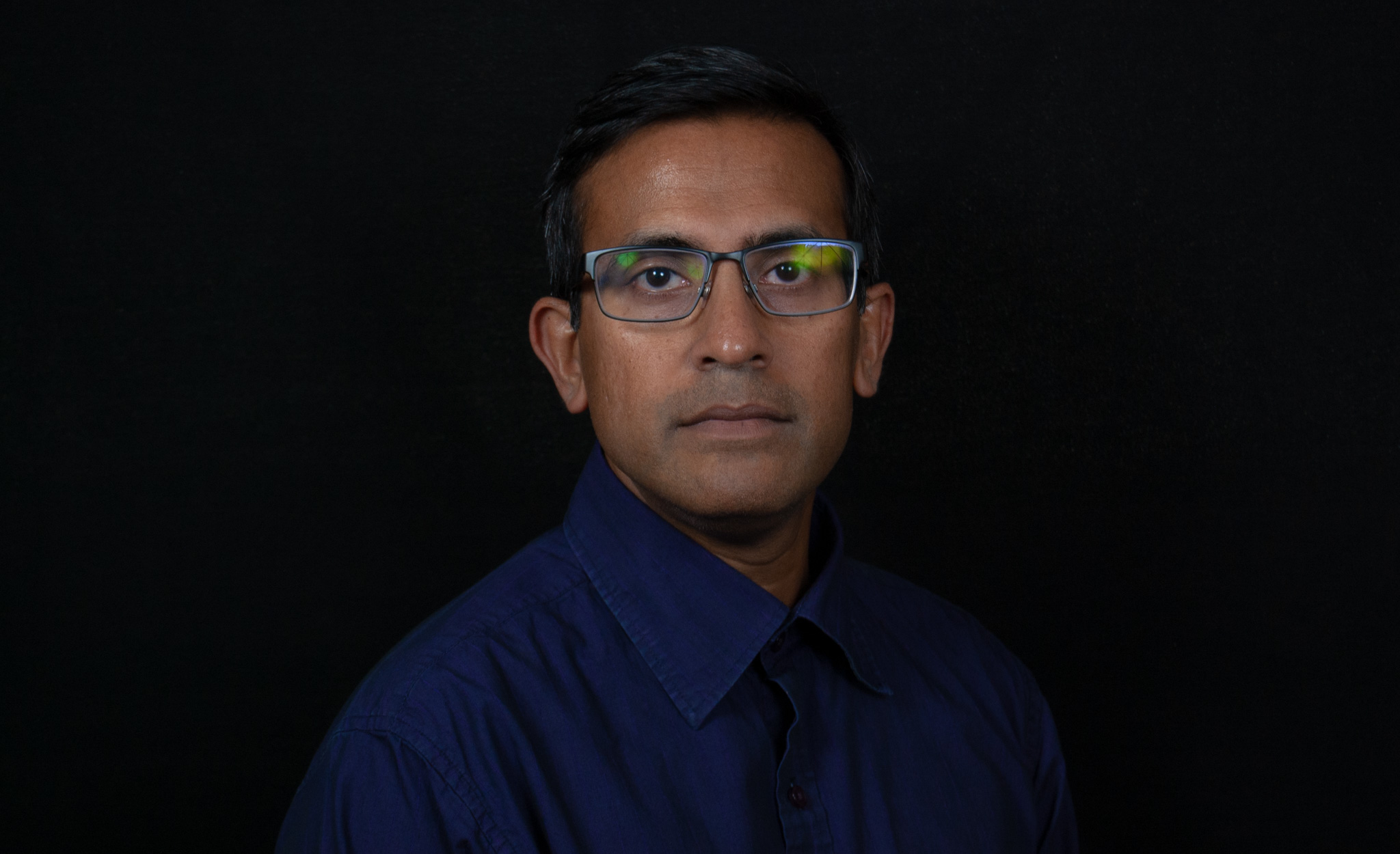
Antonio Pietrabissa is an Associate Professor at the Department of Computer, Control, and Management Engineering “Antonio Ruberti” (DIAG) of the University of Rome Sapienza, where he earned his degree in Electronics Engineering (2000) and PhD in Systems Engineering (2004). He has been teaching Automatic Control and Process Automation since 2010 and holds the National Scientific Qualification as Full Professor in Systems and Control Engineering (09/G1). Research interests include networked systems, robust control, Markov decision processes, and deep reinforcement learning. His work spans telecommunications, biomedical applications, and space systems, with a focus on federated learning and decentralized control. He has authored ~70 journal papers (Scopus h-index 22) and co-invented a patent for model predictive control in motor disability assistance. Awards include the 2021 Cybersecurity Award and ETRI Journal Best Paper. Current projects are NANCY (6G networks) and CADUCEO (AI-driven medical diagnostics). He is also CEO of Sapienza startup Automation Intelligence and Control (AICO), commercializing AI solutions for space, telecom, and biomedical sectors.
Professor Hoai Phuong Ha is affiliated with UiT The Arctic University of Norway's Department of Computer Science. A leading expert in green computing and cyber-physical systems, they contribute to Arctic research through the Distributed Arctic Observatory (DAO) and Arctic Green Computing (AGC) group. Founded ARC (Arctic Center for Sustainable Energy) PI in EU FP7 EXCESS and H2020 TAILOR projects WP-leader in EEA POLNOR HAPADS and RCN PREAPP projects Their research focuses on energy-efficient computing, including IoT systems, edge computing, and parallel algorithms. Recent work addresses wireless charging trajectories (eU2U, 2025), smart grid networks (GridWatch, 2024), and pollution monitoring (2024). Publications span cyber-physical observatories, sensor calibration, and distributed systems optimization. Key trends in their 15 most recent articles (2017-2025) include: energy-aware data structures, Arctic-adapted IoT deployments, and sustainable computing methods. Collaborations span EU and Norwegian grants with applications in smart grids, environmental sensing, and high-performance computing. Co-founder of Arctic Center for Sustainable Energy (2017) Active in EEA POLNOR (2019-2023) and RCN eX3 infrastructure project Their lab (Realfagbygget A237) develops systems for Arctic tundra monitoring, including UAV-powered networks and energy-harvesting protocols. Students include researchers from multiple international collaborations.
Fabrizio Giuliano is a Researcher at the University of Palermo in the School of Mathematics and Computer Science , focusing on Wireless Networks , Internet of Things (IoT) , and Network Protocols . His academic activities include teaching courses like Computer Networks , Internet of Things , and IoT and Cloud Security to students in Informatics, Biomedical Engineering, and Cyber-Physical Systems programs. Research Interests : Giuliano's work spans Wireless communication (LoRaWAN, Sigfox, WiFi, ZigBee) Smart water distribution systems and energy-autonomous IoT Interference detection and cross-technology coexistence 5G network infrastructure Augmented Reality for accessibility Privacy-preserving smart grid systems Publication Trends : His recent articles (2025–2023) focus on AI integration in IoT testbeds Scalable water distribution monitoring Information-theoretic analysis of fNIRS signals Interference mitigation in LPWANs Context-aware 5G architectures Hybrid VLC/WiFi networks Academic Contributions : Giuliano has edited theses on fNIRS signal analysis and IoT-integrated biosensors , reflecting his interest in biomedical applications of wireless systems.
Liang Zhao is a Professor in the Department of Computer Science at Harbin Institute of Technology's School of Computer Science and Technology. His research spans multiple areas of natural language processing, artificial intelligence, and machine learning, with a particular focus on large language models, graph neural networks, and explainable AI systems. His research interests include natural language processing, graph neural networks, large language models, model explainability, federated learning, sparse attention mechanisms, hallucination mitigation, transformer length extrapolation, and uncertainty quantification. His work addresses fundamental challenges in modern AI systems, particularly in improving the reliability, efficiency, and interpretability of large language models. Professor Zhao's research output shows a clear trend toward addressing critical limitations in large language models, with recent work focusing on hallucination mitigation, model attribution, uncertainty quantification, and efficient attention mechanisms. His publications demonstrate strong interdisciplinary connections between NLP, machine learning theory, and practical system implementation. Through his extensive collaboration network with researchers including Xiaocheng Feng, Bing Qin, Weihong Zhong, and Yuntong Hu, Professor Zhao has established himself as a leading researcher in the Chinese NLP community. His work appears consistently in top-tier conferences including ACL, EMNLP, and NAACL.
Dr. Masoud H. Nazari is an Assistant Professor in the Department of Electrical and Computer Engineering at Wayne State University's College of Engineering. His research focuses on resilience and optimization of modern power systems through applications of stochastic hybrid systems, machine learning, and control theory. He holds leadership positions including Chair of IEEE Smart Buildings, Loads, and Consumer Systems Architecture Subcommittee and serves on IEEE Technology Conferences editorial boards. Education: Ph.D. in Electrical & Computer Engineering/Engineering & Public Policy from Carnegie Mellon University (2012), with visiting research at Massachusetts Institute of Technology. M.S. in Engineering & Public Policy from Carnegie Mellon University (2010). Research Focus: Primary interests include modern power systems resilience, stochastic hybrid systems, large-scale grid optimization, AI-enabled community resilience assessment, cyber-physical systems, and IoT applications in energy management. His work bridges theoretical control systems with practical energy infrastructure challenges. Publication Trends: Recent articles demonstrate strong focus on distributed control systems, resilience engineering in power grids, AI/ML applications for anomaly detection and optimization, and microgrid management. Work frequently addresses communication failures, stochastic variations, and cyber-physical security challenges in energy systems. Awards and Honors: WSU Excellence in Teaching Award (2024) Top 10 Team - ARPA-E Grid Optimization Challenge (2022-23) DTE E-Challenge Winner (2022) IEEE Senior Member (2019) Best Paper Award - North American Power Symposium (2017) Research Leadership: Principal Investigator for NSF AMPS ($200K): Stochastic contingency detection in power systems Co-PI for DOE RACER ($1M): Energy-water nexus resilience planning PI for ARPA-E Grid Optimization Challenge ($400K) Led DTE E-Challenge project developing AI-controlled HVAC systems Research Group: Leads the Modern Power Systems research team with current PhD students Hamid Varmazyari and Antar Kumar Biswas. Former advisees include Dr. Siyu Xie (now Assistant Professor in China) and multiple graduate/undergraduate researchers. The group focuses on control algorithms, resilience analytics, and optimization frameworks for power infrastructure.
Bryan Watson is an Assistant Professor of Systems Engineering in the College of Engineering at Embry-Riddle Aeronautical University, affiliated with the Department of Electrical Engineering and Computer Science. His work bridges systems engineering, resilience, and sustainable design, with applications in manufacturing, energy, and infrastructure systems. B.S. in Systems Engineering, United States Naval Academy (2009) M.S. in Mechanical Engineering Ph.D. in Mechanical Engineering, Georgia Institute of Technology His research focuses on enhancing the resilience of Systems of Systems through biologically inspired design, sustainable development, and distributed demand estimation. He integrates principles from nature to improve reliability, safety, and sustainability in interconnected systems. His interdisciplinary work spans mechanical, electrical, and industrial engineering domains. The recent publications highlight a strong trend in resilience engineering, sustainable systems design, and biologically inspired solutions. Key domains include smart grids, manufacturing networks, aerospace systems, and cyber-physical infrastructures. The research emphasizes modeling, optimization, fault tolerance, and human-centered design, often leveraging systems thinking and model-based approaches. Nuclear Professional Engineer Certification Master Training Specialist Certification (military’s highest instructor accreditation) Naval Achievement Medal (x2) Military Outstanding Volunteer Service Medal Naval Commendation Medal 2024 ERAU College of Engineering Teacher of the Year 2024 ERAU Research Mentor of the Year 2022-2023 ERAU Outstanding Small Teaching Practice Award Bryan Watson is an active mentor and educator, recognized for excellence in teaching and research guidance. He leads student projects in systems engineering and resilience, and his grants support innovation in sustainable and adaptive systems. Though specific grant titles are not listed, his recognition as Research Mentor of the Year underscores his leadership in student development and sponsored research. His work is associated with the Computation and Advancement of Sustainable Systems Lab and the Sustainable Design and Manufacturing Lab during his doctoral studies. At Embry-Riddle, he continues to develop frameworks for resilient, user-safe, and sustainable systems, likely leading a research group focused on systems-of-systems engineering and bio-inspired design.
Dimitrios Karolidis is a Lecturer at the Department of Informatics and Computer Engineering within the School of Engineering at the University of West Attica (UniWA). He holds a Bachelor's degree in Physics from the University of Ioannina and a Master's in New Information and Communication Technologies from the National and Kapodistrian University of Athens (NKUA). Education: BSc in Physics, University of Ioannina MSc in New Information and Communication Technologies, NKUA His research focuses on Web Application Development , Internet Technologies , and Machine Learning . He has contributed to photovoltaic system optimization through projects like SmartPV , emphasizing fault detection, energy efficiency, and IoT integration. His publications highlight advancements in smart photovoltaic systems , including fault detection algorithms and communication protocols, aiming to reduce maintenance costs and improve energy output. He has also authored textbooks on programming languages like C and Python, widely used in academic settings. He has previously held academic positions at the Technological Educational Institute of Athens (2007-2018) and TEI Piraeus , working on laboratory and teaching roles related to computer systems and networks.
Johanna Mathieu serves as an Associate Professor in the Department of Electrical Engineering and Computer Science at the University of Michigan, focusing on reducing environmental impact and inefficiency in electric power systems through innovative operational strategies. Her academic background includes: S.B. from the Massachusetts Institute of Technology (MIT) M.S. and Ph.D. from the University of California, Berkeley Postdoctoral research at ETH Zurich's Power Systems Laboratory Professor Mathieu specializes in integrating distributed energy resources—such as energy storage, flexible loads, and renewable generation—into power grids with high renewable penetration. Her methodology combines control systems theory and optimization techniques to develop active grid management strategies while bridging engineering analysis with energy policy formulation. She actively mentors graduate students and leads research initiatives as Director of the Institute for Energy Solutions and member of the Michigan Power and Energy Lab (MPEL), where her team develops solutions for modern grid challenges.
Professor Torben Bach Pedersen at Aalborg University's Department of Computer Science within The Technical Faculty of IT and Design is a leading expert in Data Engineering, Artificial Intelligence, and Energy Systems. With over 394 publications and 19 completed projects, he directs research at the Daisy – Center for Data-intensive Systems and leads innovations in energy flexibility and smart grid technologies. Key research areas: Data Warehousing, AI/ML, Energy Systems, Smart Grids Major projects: domOS (Smart Building OS), FEVER (Virtual Power Plants), DiCyPS (Cyber-Physical Systems) His research spans data-intensive systems, AI applications in energy management, and smart infrastructure development. Recent work focuses on transformer-based network AI and energy flexibility metrics. Scientific recognition includes: Æresdoktor (Honorary Doctor) at TU Dresden (2021) Best Paper Award Runner-Up (2019) WWW 2017 Best Demo Award Best Poster Award World Smart Grid Forum (2013) Member of Danish Academy of Technical Sciences (2013) As principal investigator and supervisor in 17 PhD projects, he advances AI-driven solutions for 6G wireless systems, smart buildings, and energy market optimization.
Dr. Yaser Al Mtawa is a faculty member with a focus on the Internet of Things (IoT), Wireless Sensor Networks, Cyber-Physical Systems, and Network Security. His research spans Smart Home Security, SDN-based Networking, Reliability, and Quality of Service (QoS). Education: PhD in Computer Science from Queen's University, Canada Research Interests: Dr. Al Mtawa investigates IoT and its intersections with AI/Machine Learning, Autonomous Networks, and Traffic Engineering. His work optimizes network reliability, security, and efficiency using advanced computational methods. Publication Trends: Recent articles focus on SDN optimization, anomaly detection, federated learning security, and IoT applications in agriculture. Keywords include Machine Learning, Network Reliability, and Wireless Technologies. Teaching: He teaches courses such as Operations Research in Computer Science , Wireless Networking Paradigms , and Advanced Internet Programming , emphasizing learner-centered environments and practical applications. Research Team: Supervises current MSc students (MD Imtiaz Ahmed, Sayed Saminur Rahman, Tanvir Ornob) and past students (Mohammadreza Khorramfar, Arnold Brendan Osei), fostering interdisciplinary collaboration in IoT and network security.
Marco MAMEI is a Full Professor at the Department of Engineering Sciences and Methods (DISMI) of the University of Modena and Reggio Emilia. His research focuses on digital twins, pervasive computing, and smart city technologies. He leads projects like NOUS (European cloud services) and MODENA AUTOMOTIVE SMART AREA, emphasizing Industry 5.0 and human-centric manufacturing. MAMEI teaches courses on Data Science, Pervasive Computing, and Cloud Services in Management and Engineering programs. His work bridges IoT, edge computing, and AI to solve challenges in energy systems, urban mobility, and disaster management. Roles: Full Professor, DISMI Director Affiliations: NOUS Project Lead, MODENA AUTOMOTIVE SMART AREA Research spans: IoT/Edge/Cloud Continuum Digital Twin Entanglement Metrics (ODTE) AI-Driven Telecom Security Smart Grid Optimization Publications (2025): 8+ papers on digital twin applications, accessibility theory, energy forecasting, and pandemic modeling. Recent work emphasizes fluid computing architectures and federated learning in decentralized systems. Teaching includes: Data Science & Management Pervasive Computing Programming Fundamentals Student reception: Mondays 14-17.
Yu Chen is a researcher affiliated with Binghamton University (College of Engineering and Applied Sciences, Department of Computer Science) and University of Southern California , with additional ties to institutions like Chinese Academy of Sciences and Tsinghua University. Their work spans cybersecurity, blockchain technology, edge computing, and IoT systems , focusing on decentralized architectures for public safety, privacy-preserving surveillance, and defense against deepfake attacks. Primary Affiliation: Binghamton University, NY, USA Previous Affiliation: University of Southern California, CA, USA Yu Chen’s research explores blockchain-enabled security frameworks for IoT networks, UAV systems, and smart cities. Recent projects include the Microverse metaverse model and ELOCESS smart grid management. They specialize in real-time data authentication using Electrical Network Frequency (ENF) signals and edge-based privacy solutions for video surveillance and personal drones. Their 15 most recent publications address digital twin security , decentralized data marketplaces, and lightweight protocols for IoT devices. Key areas include UAV network resilience , smart city surveillance , and metaverse classroom models . Yu Chen collaborates with researchers such as Erik Blasch , Ronghua Xu , and Genshe Chen . No student names or specific awards are listed in the provided data.
Dr. Jian Liu is an Assistant Research Professor at the Kummer Institute Center for Artificial Intelligence and Autonomous Systems and the Department of Electrical and Computer Engineering at Missouri University of Science and Technology. He holds a Ph.D. in Electrical Engineering from Missouri S&T and another Ph.D. in Management Science and Engineering from Nanjing University of Aeronautics and Astronautics. His research focuses on artificial intelligence, energy systems optimization, and operations research with applications in sustainable energy, queueing theory, and supply chain management. He has held visiting positions at prestigious institutions including Penn State University and Tsinghua University. Research Interests: Artificial Intelligence (Explainable AI, Reinforcement Learning) Energy Economics (Electricity Markets, Renewable Integration) Behavioral Operations (Queueing Systems, Fairness in Service) Complex System Optimization (Supply Chains, Manufacturing) Publications reflect expertise in AI applications for edge computing, energy storage optimization, and behavioral queueing models. Recent work addresses fairness in service systems, dynamic pricing strategies, and multi-period energy dispatch optimization. His research spans interdisciplinary areas including smart grids, sustainable materials, and industrial process optimization. Liu has advised multiple collaborative projects at the intersection of AI and energy systems. His work has been published in top journals like Applied Energy and IEEE Transactions on Power Systems .
Tuhin Das is a Professor of Mechanical and Aerospace Engineering at the University of Central Florida (UCF), where he has been since 2011. He holds a B.Tech from IIT Kharagpur (1997), and M.S. and Ph.D. from Michigan State University (2000, 2002). His research focuses on dynamics and controls applied to energy systems (fuel cells, wind energy), robotics (mobile/biomimetic systems), and sensing (compressive sensing). His work is funded by NSF, ONR, Siemens Energy, and ARPA-E. He is an ASME Fellow and co-founder of the Energy Systems Technical Committee. Education: Bachelor of Technology in Mechanical Engineering, Indian Institute of Technology, Kharagpur (1997) M.S. and Ph.D. in Mechanical Engineering, Michigan State University (2000, 2002) Research Interests: Energy systems (wind turbines, hybrid fuel cells) Nonlinear dynamics and control Robotics and mobile systems Advanced modeling/simulation techniques Phase-space kinematics and Hamiltonian systems Recent Work Trends: Recent publications emphasize offshore wind energy systems, floating platform dynamics, and advanced control strategies for energy systems. Experimental validation of models (e.g., tuned mass dampers for semisubmersible platforms) and theoretical advancements in system dynamics (Hamiltonian approaches) are prominent themes. Awards: UCF College of Engineering Excellence in Graduate Teaching Award (2016) ASME Fellow Inductee into Pi Tau Sigma (2009) Grants & Advising: Leading a $3.3M project for floating offshore wind turbine simulators Received $771K grant for offshore wind turbine simulation tools Active in mentoring graduate students in mechanical systems research Labs/Teams: Directs the Hybrid Sustainable Energy Systems Lab at UCF, focusing on interdisciplinary energy solutions and advanced control system development.
Dr. Angela Meyer is an Assistant Professor of Energy Meteorology and Artificial Intelligence at TU Delft, Faculty of Civil Engineering and Geosciences, Department of Geoscience and Remote Sensing since October 2023. She concurrently leads the Energy Weather & AI Lab at the Bern University of Applied Sciences (BFH), School of Engineering and Computer Science. She earned her PhD in atmospheric physics from ETH Zurich (2015) and a master’s degree in mathematics from the University of Cambridge (2009). Research Focus: Intersection of data science, atmospheric science, and renewable energy applications. Machine learning for solar and wind energy forecasting. Federated learning for privacy-preserving wind turbine condition monitoring. Satellite-based solar radiation retrieval and bias correction. Probabilistic intraday and sub-seasonal forecasting. Her research is supported by major grants from the Swiss National Science Foundation (SNSF) and Innosuisse , and she is a project partner in the Horizon Europe UrbanAIR initiative. Scientific Contributions: Over 40 peer-reviewed publications since 2015 in journals such as Applied Energy , Solar Energy , Energy and AI , and Journal of Climate . Key publications include advances in deep generative models for solar forecasting, federated learning in renewable energy, and AI-based satellite retrieval of solar radiation. Active reviewer for Applied Energy , Energies , and program committee member for ECML PKDD and LOD conferences. Research Team & Supervision: Dr. Meyer currently supervises six PhD candidates and six postdoctoral researchers across her labs at TU Delft and BFH. Her group focuses on AI-driven solutions for renewable energy reliability and resilience. Laboratories & Collaborations: Energy Weather & AI Lab – Bern University of Applied Sciences. GRS Lab – TU Delft, Department of Geoscience and Remote Sensing. Active collaborations with ETH Zurich, Siemens Smart Infrastructure, Hexagon AB, and NVIDIA. For more information, visit her personal website or ResearchGate profile .



.jpg)