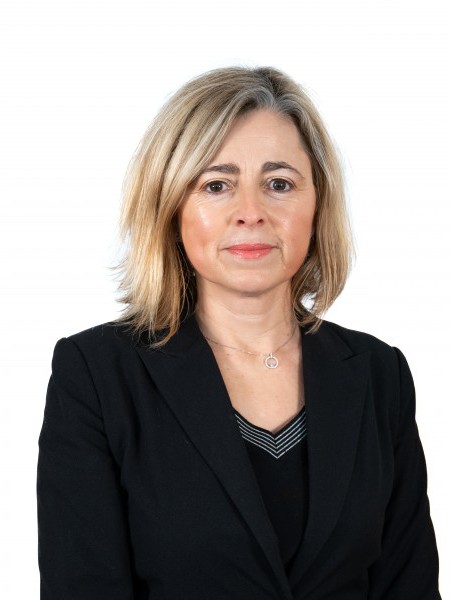
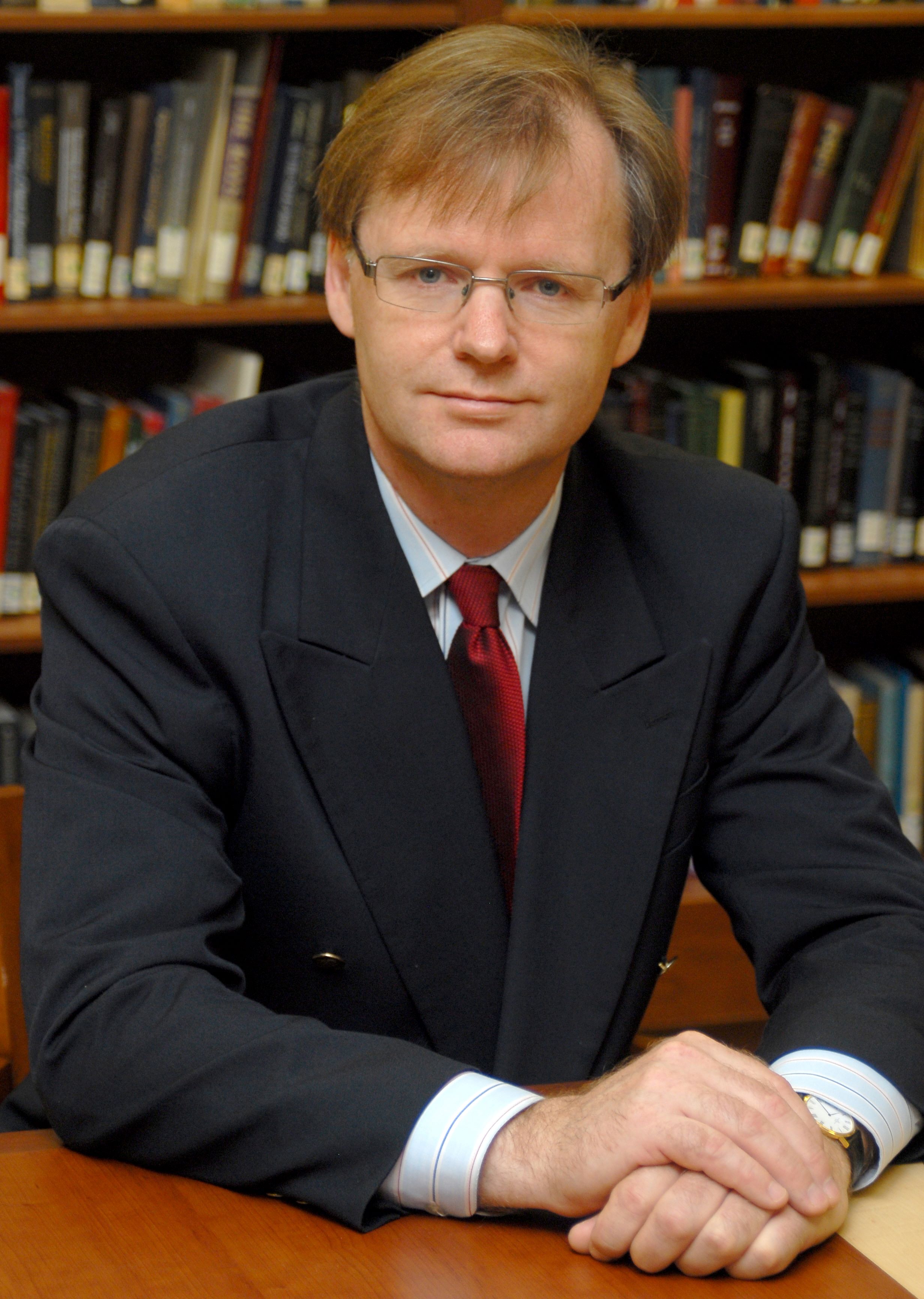
Anabela A. Valente is Principal Researcher at CICECO-Aveiro Institute of Materials, University of Aveiro, where she leads research on catalytic biomass valorization and sustainable materials. Her team develops heterogeneous catalysts for converting renewable feedstocks into chemicals. Recent publications focus on niobium catalysts for furanics valorization and molybdenum systems for olefin epoxidation. Chemistry Europe Fellow (2020/2021) Supervises PhD and MSc students in catalysis and materials science. Coordinates the Central Laboratory of Analysis and maintains industry collaborations with Merck KGaA and Bosch.
Daria Camilla Boffito is a Full Professor in the Department of Chemical Engineering at Polytechnique Montréal , holding the Tier-2 Canada Research Chair in Intensified Mechano-chemical Processes for Sustainable Biomass Conversion. Her research spans process intensification , catalysis , sonochemistry , photocatalysis , and metal extraction , with a focus on sustainability. Education: B.Sc. and Ph.D. in Industrial Chemistry from the University of Milan, M.Sc. in Industrial Chemistry and Management Current Research: Developing ultrasound-assisted extraction , CO2 conversion , and floating photocatalysts for wastewater treatment Collaborations: Works with Canadian and international companies on sustainable chemical processes Scientific Awards include the Canada Research Chair Tier-2 (2016-2021), NSERC Banting Postdoctoral Fellowship (2013-2016), and FRQNT PBEEE Postdoctoral Fellowship (2013-2016). Advising has seen 5 Ph.D. and 9 Master's students graduate. She leads the Engineering Process Intensification and Catalysis (EPIC) Laboratory and is a member of the Institut de génie biomédical .
Professor George Jackson, FRS, holds the position of Professor of Chemical Physics at the Department of Chemical Engineering, Imperial College London (since 2001), and has affiliations with multiple institutions including the University of Sheffield and Cornell University. His academic career spans roles from Lecturer (1989–1994) to Reader (1994–2001) in Physical Chemistry and Chemical Physics. He leads the Molecular Systems Engineering group and chairs the journal Molecular Physics . Research focuses on theoretical and computational chemistry, thermodynamics, and fluid phase equilibria. Key contributions include the SAFT (Statistical Associating Fluid Theory) equation of state, applied to CO2 capture, polymer physics, and pharmaceutical processes. He has pioneered models for electrolytes, solvents, and complex fluids, emphasizing sustainability and industrial applications. Notable accolades include the Rossini Award (2023), Fellowship of the Royal Society (2020), and the Bakhuis Roozeboom Medal (2019). His work has been recognized through Imperial College's President's Medal (2016), the Guggenheim Medal (2014), and over 400 citations in Google Scholar. Collaborations span institutions globally, including the Sargent Centre for Process Systems Engineering and the Thomas Young Centre. Current initiatives include the HiRECORD project for CO2 capture technology scaling and the development of phase-change solvents. His research integrates molecular simulation, process design, and sustainability assessment, addressing challenges in energy, environment, and pharmaceuticals.
Michael Organ is a Full Professor at the University of Ottawa's Department of Chemistry and Biomolecular Sciences, affiliated with the Faculty of Science. He also serves as Director of the Centre for Research and Innovation in Catalysis. His research focuses on catalysis, flow chemistry, and medicinal chemistry, emphasizing sustainable and efficient synthesis methods. Organ has held adjunct roles at the University of Toronto and has extensive industry collaborations, including with GlaxoSmithKline and Abbvie. Education: PhD (University of Guelph, 1992), MSc (University of Guelph, 1988), Hons. BSc (University of Guelph, 1986). Research Interests: Catalysis, microwave-assisted continuous synthesis, reactive intermediates in flow systems, and drug discovery methodologies. His work bridges organic chemistry with engineering, developing scalable and green processes. Publications & Impact: Over 200 publications, including seminal works in Journal of the American Chemical Society and Chemistry – A European Journal . Key contributions include the Pd-PEPPSI-IPent catalyst and the MACOS flow chemistry platform. Awards: NSERC John C. Polanyi Award (2018), Encyclopedia of Reagents Best Reagent Award (2017), Raymond Lemieux Award (2016). Recognized internationally for catalytic innovations. Grants & Funding: Over $45M in research funding, including NSERC Discovery Grants and industry partnerships. Notable projects include CFI JELF grants for sustainable manufacturing and pandemic-related flow chemistry for SARS-CoV-2 diagnostics. Labs & Teams: Leads the Organ Group, collaborating with chemical engineers and industry partners. Specializes in reactor design, catalyst development, and continuous processing systems.
Carsten Sievers serves as Adjunct Professor in the Department of Chemical and Biomolecular Engineering at Georgia Institute of Technology, where he leads research in sustainable catalytic processes for fuel and chemical production from alternative resources. His work bridges fundamental spectroscopy with industrial reactor design to address petroleum dependence. Education: Diploma, Technical University of Munich, Germany (2003) D.Sc., Technical University of Munich, Germany (2006) Research Focus: Sievers' program integrates fundamental studies using IR, NMR, XAS, and Raman spectroscopy to probe catalyst structure-reactivity relationships with applied research on flow reactor systems for biomass conversion (hydrodeoxygenation, sugar upgrading) and mechanocatalytic polymer depolymerization. Key initiatives target CO 2 -neutral chemical production from biomass and waste plastics, emphasizing catalyst stability and regeneration. Publication Trends: Recent work (2023-2025) reveals a strategic pivot toward mechanocatalysis for plastic recycling (polyethylene, polystyrene) and ammonia synthesis, while maintaining expertise in hydrocarbon catalysis. Dominant themes include reaction environment engineering in ball mills, metastable surface characterization, and process intensification for CO 2 electrolysis. Scientific Recognition: 2012 Young Scientist Award, International Congress on Catalysis 2023 ACS Fellow designation Academic Leadership: As Director and Past President of the Southeastern Catalysis Society, former ACS Division Director, and Editor of Applied Catalysis A: General , Sievers shapes catalysis research direction. His Sievers Group has secured competitive fellowships for students like Yuchen George Change (Eastman Chemical Fellowship) and Victor Brandão (Ziegler Award), reflecting strong mentorship in sustainable reaction engineering. Research Infrastructure: The group operates advanced flow reactors, spectroscopic characterization suites, and mechanochemical systems for in-situ catalyst analysis, supporting collaborations with industry partners on technology translation.
Alois Jungbauer is a full Professor and Head of the Institute of Biochemical Engineering at the University of Natural Resources and Life Sciences Vienna (BOKU), within the Department für Biotechnologie und Lebensmittelwissenschaften. He is a leading expert in bioprocess engineering, with a focus on downstream processing, continuous manufacturing, and sustainable biopharmaceutical production. Doctorate, University of Natural Resources and Life Sciences Vienna Habilitation, 1991 His research interests center on advanced purification technologies for biologics, including monoclonal antibodies, viral vectors, virus-like particles (VLPs), and gene therapy products. He is a pioneer in continuous integrated biomanufacturing, real-time process monitoring, and the development of platform processes for non-mAb proteins. His work integrates computational modeling, digital twins, and process intensification to improve efficiency and reduce environmental impact. He has made significant contributions to affinity chromatography, membrane adsorbers, and non-chromatographic separation methods. Recent publications highlight trends in continuous downstream processing, water conservation, in-situ buffer preparation, and the purification of complex biomolecules like secretory IgA and VLPs. His work spans both fundamental biophysical studies and industrial applications, reflecting a strong industry-academia interface. His scientific awards include: ISMR Thermo Fischer Award for Affinity Technologies (2011) Bia Separations Award (2000) Fulbright Award, Austrian-American Fulbright Commission (1996) Award of Japanese Society for Promotion of Science (1994) Golden Award 93 Professor Jungbauer actively supervises university theses and leads a dynamic research group. He has delivered numerous lectures and keynotes worldwide, indicating active engagement in knowledge transfer. His research is supported by ongoing projects and collaborations, with a strong emphasis on environmental and economic modeling of bioprocesses. He is affiliated with the Institute of Biochemical Engineering at BOKU, a hub for innovation in bioprocessing and industrial biotechnology.
Christoph Müller is a Full Professor of Energy Science and Engineering at ETH Zürich's Department of Mechanical and Process Engineering. He leads the Laboratory of Energy Science and Engineering, focusing on sustainable energy generation, heterogeneous catalysis, and granular systems. His research integrates experimental methods like Magnetic Resonance Imaging (MRI) and Discrete Element Modelling (DEM) with mathematical modeling to address industrial energy challenges. Education: Dipl.-Ing. from Technical University of Munich (2004), PhD in Chemical Engineering from the University of Cambridge (2008). Notable awards include the Danckwerts-Pergamon Prize (2009) and DAAD Scholarship (2005). He teaches courses such as Thermodynamics I and Thermo- and Fluid Dynamics. Research interests span CO₂ capture via chemical looping, catalytic hydrogenation, and granular flow dynamics. Recent work explores catalyst design for propane dehydrogenation, MXene-based ammonia synthesis, and MgO-based CO₂ sorbents. His lab employs advanced techniques like operando X-ray absorption spectroscopy to study catalyst behavior under reaction conditions. Key achievements include developing stable PtGa propane dehydrogenation catalysts and advancing understanding of Na₂CO₃-promoted CO₂ sorbents. His work on fluidized bed hydrodynamics via MRI contributes to reactor design optimization. Müller's interdisciplinary approach bridges fundamental science and industrial application, addressing global energy sustainability challenges.
Michael Tsapatsis is the 36th Bloomberg Distinguished Professor at Johns Hopkins University in the Whiting School of Engineering. He leads cutting-edge research in sustainable chemical engineering with focus on energy-efficient materials and processes. Education: Engineering Diploma (1988), University of Patras, Greece M.S. (1991), California Institute of Technology Ph.D. (1994), California Institute of Technology Postdoctoral Fellow, California Institute of Technology (1993-1994) Professor Tsapatsis pioneers hierarchical porous materials design for molecular separation and catalysis. His work integrates reaction engineering, mathematical modeling, and materials science to develop ultra-thin zeolite nanosheets and metal-organic frameworks that enable unprecedented selectivity in separation membranes and catalytic processes. The research group focuses on industrial scalability of these materials for cleaner chemical production. His publication trajectory reveals consistent innovation in nanomaterials for sustainable engineering, with landmark papers in Science and Nature demonstrating breakthroughs in membrane technology and catalytic conversion. These works establish foundational principles for molecular-sieving materials that balance selectivity, flux, and industrial viability. Major Honors: Alpha Chi Sigma Award for Chemical Engineering Research (AIChE) Breck Award (International Zeolite Association) Charles M.A. Stine Award (AIChE) David and Lucile Packard Foundation Fellowship National Science Foundation CAREER Award Camille Dreyfus Teacher-Scholar Award North American Membrane Society Fellowship Fellow, American Association for the Advancement of Science (2011) Member, National Academy of Engineering (2015) He directs a highly collaborative research program with extensive industrial partnerships and multiple patents. Current initiatives include the "Greener Skies Ahead" sustainable jet fuel project with the University of Alabama and Oak Ridge National Laboratory, and the DARPA-funded "Cornucopia" program developing air-to-food conversion technology with Johns Hopkins APL. His group trains students in molecular sieve membrane synthesis while advancing process intensification for decarbonization. The Tsapatsis Research Group operates at the forefront of materials-driven chemical engineering, translating fundamental discoveries in nucleation control and crystal growth into scalable separation and catalytic technologies for industrial applications.
Ceri Hammond is a Senior Lecturer and Reader in Catalysis at Imperial College London's Department of Chemical Engineering, Faculty of Engineering. He leads the Hammond Lab, focusing on catalytic processes, biomedical engineering, and sustainable chemistry. His research integrates materials design, in situ spectroscopy, and reaction engineering. Key areas include biomass upgrading, C1 chemistry, and nanotechnology-driven cancer therapies. Education: PhD from Cardiff Catalysis Institute under Prof. Graham J. Hutchings. Postdoctoral work at ETH Zürich and Stanford University. Affiliations: Hammond Lab, Institute for Molecular Science and Engineering. Funding: Royal Society, Leverhulme Trust, RSC, EPSRC, and industry partners. Research Interests: Catalysis: Development of heterogeneous catalysts for biomass conversion, CO 2 methanation, and C1 chemistry. Innovations in catalyst stability and process intensification. Bio-medical Engineering: Nanoparticle-based targeted cancer therapies, leveraging expertise in nanotechnology. Publications: Over 50 peer-reviewed articles, with notable work on Sn-Beta catalysts, methane oxidation, and photocatalytic fluorination. Recent trends emphasize sustainable catalytic processes and biomedical applications. Awards: Harrison-Meldola Memorial Award, Royal Society University Research Fellowship. Lab Team: 1 PI, 2 PDRA, 7 PhD students, and undergraduate researchers. Labs/Teams: Hammond Lab at Imperial's South Kensington Campus, collaborating with multidisciplinary groups like the Institute for Molecular Science and Engineering.
Dr. Xi Yu is a Lecturer in Chemical Engineering at the University of Southampton, affiliated with the Faculty of Engineering and the Environment. He holds a Bachelor's from Tianjin University and a Ph.D. from the University of Sheffield. His research focuses on low carbon fuels, granulation techniques, and computational fluid dynamics. He has supervised PhD students such as Jerin Jacob and is currently accepting new PhD applicants in these areas. Dr. Yu's educational background includes degrees in Chemical Engineering and prior academic roles at Aston University and the Energy and Bioproducts Research Institute (EBRI). His work spans bioenergy systems, particle technology, and multi-physics modeling. Key research projects include advancements in biomass gasification, biofuel production, and sustainable energy systems. His publications emphasize computational modeling, fluid dynamics, and biomass utilization. Recent articles explore topics like absorption chiller systems, fluidization validation, and bio-oil aging strategies. He contributes to teaching modules such as CHEG3000 and CHEG3004, reflecting his commitment to both research and education.
Shu Hu is an Assistant Professor in the Department of Chemical & Environmental Engineering at Yale University, affiliated with the Energy Sciences Institute. He holds a PhD from Stanford University and a B.S. from Tsinghua University. His research focuses on solar energy conversion, photocatalytic devices, and sustainable chemical synthesis using CO₂ and water. The Hu Lab develops photocatalysts and reactor designs for producing H₂, CO, and small molecular-weight chemicals from renewable sources. Key areas include semiconductor photoelectrochemistry, functional coatings, and cascade catalysis under molecular flux. Notable achievements include an ACS ENFL Emerging Researcher Award (2024), a DOE Early Career Award (2021), and the Scialog Fellow designation (2020). The lab has published 86 peer-reviewed papers, graduated 5 PhD students, and employs 14 researchers. Funding comes from prestigious grants supporting energy-efficient AI hardware and scalable PEC systems. Research interests span semiconductor-electrochemistry interfaces, non-equilibrium catalysis, and multi-scale modeling. The lab’s work integrates photocatalyst discovery, device engineering, and practical reactor design to advance clean energy technologies.
Roberto Pastres is an Associate Professor at the Department of Environmental Sciences, Informatics and Statistics, Ca' Foscari University of Venice. He specializes in ecology, with a focus on coastal ecosystems, aquaculture sustainability, and environmental modeling. His research integrates interdisciplinary approaches to address challenges in marine resource management, including aquaculture impacts, water quality, and climate change adaptation. Teaching: He teaches Environmental Modelling (Master's level) and Ecology courses in Environmental Engineering and Cultural Heritage programs. Recent teaching roles include: Environmental Modelling (6 cfu) for M.Sc. in Environmental Sciences Ecology of Cultural Heritage (6 cfu) for M.Sc. in Conservation Science Research Interests: Pastres' work spans ecological modeling, sustainable aquaculture practices, and ecosystem services valuation. Key projects include: Leading the GAIN H2020 project for green aquaculture intensification Contributing to EU-funded initiatives like BeBlue (aquaponics) and FORCE (Egyptian fisheries) Modeling coastal zone management strategies for the Venice Lagoon Grants & Projects: He coordinates or participates in multiple EU and national grants, including: H2020 GAIN (2018-2022): €6M for sustainable aquaculture innovation Interreg BeBlue (2023-2025): Promoting sustainable aquaponics Life12 NAT/IT/000331: Restoring Venice Lagoon seagrass beds Labs/Teams: Active in the Research Institute for Green and Blue Growth and the Interconnected Nord-Est Innovation Ecosystem. Collaborates with international teams on digital twin systems for aquaculture and precision farming tools.
Professor Steven V. Ley leads the Yusuf Hamied Department of Chemistry at the University of Cambridge, focusing on transformative research in flow chemistry, organic synthesis, and green chemistry. His work emphasizes sustainable methodologies and the integration of advanced technologies like microcontrollers and automation to revolutionize chemical processes. In 2018, he received the prestigious Arthur C. Cope Award—the first UK-based recipient—recognizing groundbreaking contributions to organic chemistry. Research interests include developing continuous flow systems for hazardous reaction management, immobilized reagents, and machine-assisted synthesis. Collaborations span academia and industry, notably through spin-off company New Path Molecular , which applies cutting-edge synthesis techniques to pharmaceuticals and agrochemicals. Key publications highlight innovations in flow chemistry applications, sustainable process design, and automation. His work bridges chemistry with engineering, aiming to address global challenges in resource efficiency and environmental impact. Awards: Arthur C. Cope Award (2018) Lab/Teams: Active research group at the University of Cambridge; collaborates with New Path Molecular on commercial applications.
Prof. Dirk Ziegenbalg is a Professor of Chemical Engineering and Deputy Director at the Institute of Chemical Engineering at Ulm University. He holds a doctorate from Friedrich-Schiller-University Jena (2013) and previously served as Group Leader at the Institute of Chemical Technology, University Stuttgart (2012-2018). His research focuses on photochemical engineering, reactor design, and photocatalytic processes for applications in energy and environmental technology. Key contributions include advancements in photoreactor engineering, light-driven catalysis, and scalable water purification systems. He has been recognized with the Hanns Hofmann Award (2017) for innovations in microstructured reactor design. Teaching responsibilities include courses such as Strömungsmechanik , Chemische Prozesstechnik , and Industrial Catalysis . His research group, Photochemical Engineering, develops modular and industrially scalable photoreactor systems, emphasizing process intensification and dynamic irradiation control. Recent work addresses challenges in CO₂ conversion, selective Grignard reagent formation, and real-time process analytics using spectroscopy. Publications highlight interdisciplinary approaches, integrating chemical engineering with materials science and environmental applications. Ongoing projects involve 3D-printed catalytic materials, radiation field tomography for photoreactor characterization, and cross-disciplinary collaborations for sustainable water treatment technologies.
Prof. Robert Güttel is the Director of the Institute for Chemical Engineering at the University of Ulm. He is a member of the Ulm Center for Thermal and Environmental Technology (UZWR) since 2016 and serves on its executive board. His work focuses on catalytic reaction engineering, particularly in CO2 utilization, methanation, Fischer-Tropsch synthesis, and process intensification. Research emphasizes catalyst design, reaction kinetics, and reactor modeling under dynamic conditions. Educations : Not explicitly stated in the provided text. His academic career is highlighted through his leadership roles and publications. Research Interests : Güttel’s research spans heterogeneous catalysis for CO/CO2 hydrogenation, transient kinetic analysis, polymeric reactors for extraterrestrial applications, and AI-driven reactor design. His team develops advanced catalysts (e.g., Ru/TiO2, cobalt@silica core-shell structures) and investigates novel reactor concepts like fibrous structured catalysts and sorption-enhanced processes. Recent work explores in-situ methanation on Mars and the impact of light on catalytic selectivity. Publications Trends : His 2024–2025 articles focus on low-temperature methanation beyond Earth, AI-based residence time analysis, and deactivation mechanisms. Studies highlight both experimental and computational approaches to optimize catalytic systems for sustainability and industrial relevance. Awards : No specific scientific awards mentioned in the text. Grants/Labs : Leads the Institute for Chemical Engineering at Ulm, collaborating on EU-funded projects related to power-to-X technologies and extraterrestrial chemistry. Active in developing lab-scale reactor systems and industrial partnerships for catalyst testing. Labs/Teams : Directs research groups focused on catalytic reactor design, transient kinetic methods, and sustainable process engineering. Collaborates with institutions on Mars habitat resource utilization and green hydrogen production systems.